Introduction
Are you struggling with space constraints while needing extended linear motion in your production line? Many engineers face the dilemma of requiring long stroke lengths without the luxury of extra floor space. Traditional cylinders can be bulky, expensive, and impractical for tight installations. 🤔
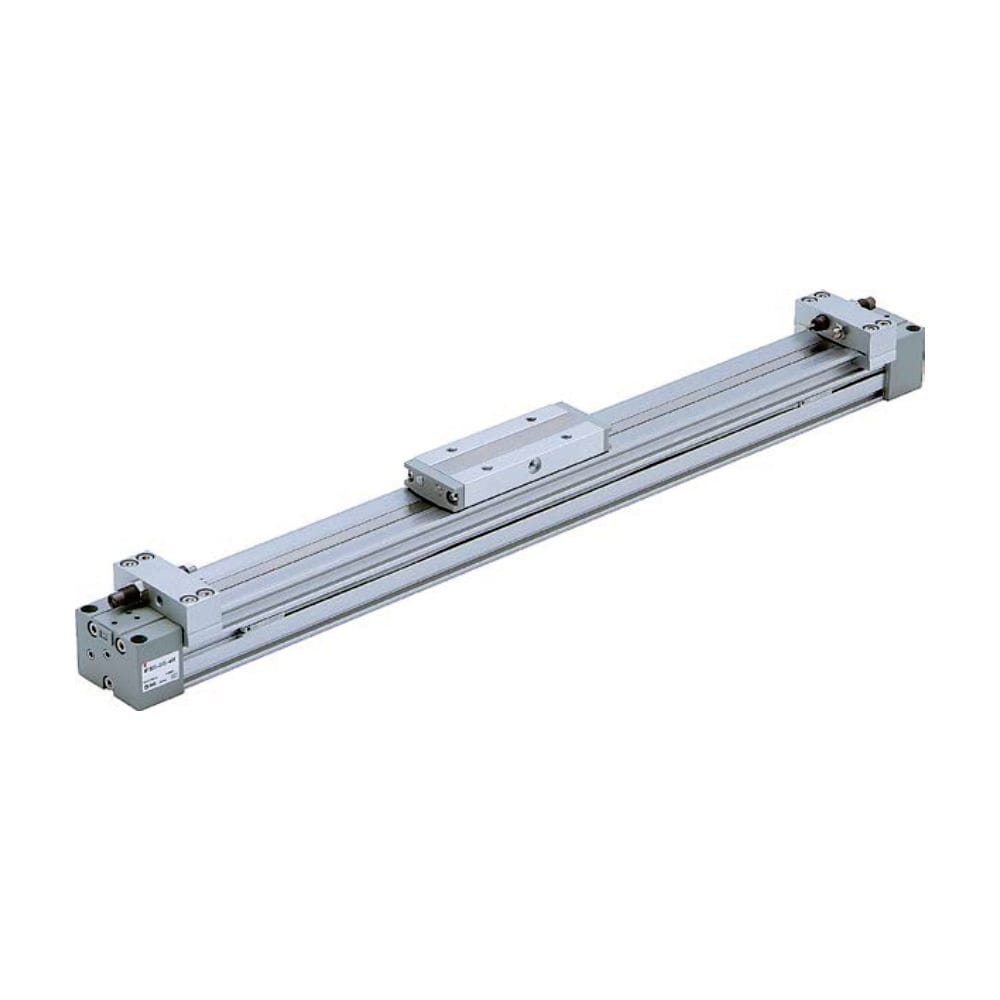
A long-stroke pneumatic cylinder is a linear actuator1 designed to deliver extended travel distances—typically exceeding 1000mm—while maintaining compact dimensions and reliable performance. Unlike conventional rod cylinders that grow proportionally with stroke length, long-stroke solutions like rodless cylinders offer space-efficient alternatives for applications requiring significant linear displacement.
I recently spoke with David, a maintenance engineer from a packaging facility in Michigan, who was facing exactly this challenge. His conveyor system needed 1500mm of travel, but the factory floor couldn’t accommodate a 3-meter traditional cylinder assembly. Let me walk you through what long-stroke cylinders are and how they can solve problems like David’s.
Table of Contents
- What Defines a Long-Stroke Pneumatic Cylinder?
- How Do Long-Stroke Cylinders Differ from Standard Cylinders?
- What Are the Main Types of Long-Stroke Pneumatic Cylinders?
- When Should You Choose a Long-Stroke Cylinder for Your Application?
- Conclusion
- FAQs About Long-Stroke Pneumatic Cylinders
What Defines a Long-Stroke Pneumatic Cylinder?
The term “long-stroke” isn’t just about length—it’s about engineering solutions for extended motion requirements.
A long-stroke pneumatic cylinder is generally classified as any cylinder with a stroke length exceeding 500-1000mm, though in practice, strokes can extend to 6000mm or more. These cylinders are specifically engineered with reinforced construction, specialized sealing systems, and optimized guidance mechanisms to maintain accuracy and prevent buckling2 over extended distances.
Key Characteristics
Long-stroke cylinders feature several critical design elements:
- Enhanced rod support: Anti-buckling mechanisms and larger diameter rods
- Precision guidance: Linear bearings or guide rails to prevent deflection
- Advanced sealing: Multi-stage seals to maintain pressure over long distances
- Modular construction: Often built in sections for easier installation and maintenance
At Bepto, we’ve supplied long-stroke rodless cylinders to automotive assembly lines where precision positioning over 2-meter spans is non-negotiable. The compact profile of our rodless designs saves up to 50% of installation space compared to traditional rod cylinders. 🎯
How Do Long-Stroke Cylinders Differ from Standard Cylinders?
Understanding these differences helps you make informed purchasing decisions.
Long-stroke cylinders differ from standard cylinders primarily in their stroke-to-mounting-length ratio, structural reinforcement, and guidance systems. While a standard 100mm stroke cylinder might be 300mm long overall, a long-stroke rodless cylinder with 1500mm stroke requires only about 1600mm of space—a dramatic space savings compared to the 3+ meters needed for a traditional rod cylinder.
Comparison Table
| Feature | Standard Cylinder | Long-Stroke Rodless Cylinder |
|---|---|---|
| Stroke Range | 10-500mm typical | 500-6000mm+ |
| Space Required | ~3x stroke length | ~1x stroke length |
| Rod Buckling Risk | High on long strokes | Eliminated (no external rod) |
| Cost per mm | Higher on long strokes | More economical |
| Maintenance Access | Requires full stroke clearance | Compact footprint |
This is where David’s story becomes relevant. His facility was quoted $3,200 for an OEM long-stroke rod cylinder with all the mounting hardware. We provided a Bepto rodless cylinder replacement that fit his existing mounting points for 40% less, and it shipped within 48 hours. His line was back up in three days instead of the three weeks the OEM quoted. ⚡
What Are the Main Types of Long-Stroke Pneumatic Cylinders?
Not all long-stroke solutions are created equal—each type serves specific applications.
The three main types of long-stroke pneumatic cylinders are: (1) Rodless cylinders with magnetic or cable coupling, (2) Guided rod cylinders with external linear guides, and (3) Telescopic cylinders for ultra-compact retracted lengths. Rodless cylinders dominate the market for strokes over 1000mm due to their superior space efficiency and cost-effectiveness.
Rodless Cylinders (Our Specialty)
These are the workhorses of long-stroke applications:
- Magnetic coupling type: Sealed design, ideal for clean environments
- Cable/band type: Higher force capacity, better for heavy loads
- Typical applications: Material handling, gantry systems, packaging lines
Guided Rod Cylinders
Traditional cylinders with external guidance:
- Best for moderate strokes (500-1500mm)
- Require significant installation space
- Higher maintenance due to exposed rod
Telescopic Cylinders
Multi-stage nested design:
- Extremely compact when retracted
- Limited to specific applications (dump trucks, lifting platforms)
- More complex maintenance requirements
When Should You Choose a Long-Stroke Cylinder for Your Application?
Making the right choice saves both money and headaches down the line.
Choose a long-stroke cylinder when your application requires linear travel exceeding 500mm, especially in space-constrained environments. Rodless cylinders are ideal for horizontal applications with strokes over 1000mm, while guided rod cylinders suit moderate strokes with vertical mounting. Consider total cost of ownership—including installation space, energy consumption, and maintenance accessibility.
Decision Criteria
Ask yourself these questions:
- Stroke length needed? Over 1000mm strongly favors rodless designs
- Available installation space? Tight spaces demand rodless solutions
- Load characteristics? Heavy loads may require cable-type rodless or guided systems
- Environment? Clean rooms benefit from sealed magnetic coupling designs
- Budget constraints? Our Bepto replacements offer 30-40% savings over OEM
I recently worked with Sarah, who manages procurement for a German-based machine builder operating a facility in North Carolina. She was specifying equipment for a new production line and initially planned on OEM cylinders throughout. After reviewing her specifications, we demonstrated how Bepto rodless cylinders could meet her performance requirements while reducing her pneumatics budget by $47,000 across the project. She’s now a regular customer and has expanded to using our products in her European facilities as well. 🌍
Conclusion
Long-stroke pneumatic cylinders—especially rodless designs—offer space-efficient, cost-effective solutions for extended linear motion requirements. Understanding the types and applications ensures you specify the right solution for your needs. 💡
FAQs About Long-Stroke Pneumatic Cylinders
What is the maximum stroke length available for pneumatic cylinders?
Rodless pneumatic cylinders can achieve stroke lengths up to 6000mm or more, though 1000-3000mm is most common. Beyond 6 meters, mechanical considerations and air consumption typically make alternative technologies more practical. At Bepto, we regularly supply cylinders in the 1500-2500mm range for conveyor and gantry applications.
Are long-stroke cylinders more expensive than standard cylinders?
Per-unit cost is higher, but cost-per-millimeter of stroke is often lower, especially for rodless designs. A 2000mm rodless cylinder from Bepto costs significantly less than a comparable guided rod cylinder, plus you save on installation hardware and floor space. Our replacement cylinders offer additional savings of 30-40% compared to OEM pricing.
Can I replace my OEM long-stroke cylinder with a Bepto alternative?
Yes, in most cases Bepto rodless cylinders can directly replace major OEM brands with identical mounting dimensions. We maintain compatibility with leading brands’ mounting patterns and port configurations. Send us your cylinder model number or specifications, and we’ll confirm compatibility within 24 hours—often with same-week shipping available.
How do I prevent buckling in long-stroke applications?
Use rodless cylinders for horizontal long-stroke applications to eliminate buckling entirely. For guided rod cylinders, ensure proper external guidance with linear rails rated for the load and stroke length. Proper mounting alignment is critical—even 0.5° misalignment can cause premature wear on long strokes.
What maintenance do long-stroke cylinders require?
Rodless cylinders require minimal maintenance—typically just periodic inspection of seals and lubrication checks every 6-12 months. The sealed design protects internal components from contamination. We provide detailed maintenance schedules with every Bepto cylinder, and replacement seal kits are readily available with fast shipping to minimize your downtime.