Traditional single cylinders can’t achieve precise three-position control, leaving manufacturers struggling with complex positioning requirements that demand intermediate stops. This limitation costs companies thousands in custom solutions and extended downtime. Back-to-back cylinders enable precise 3-position applications by combining two opposing cylinders that work together to create extend, retract, and center positions through coordinated pneumatic control, offering superior accuracy compared to single-cylinder solutions.
Just last month, I received a call from Robert, a maintenance engineer at an automotive parts facility in Detroit, whose assembly line needed precise three-position control for part orientation but couldn’t achieve reliable intermediate positioning with their current single-cylinder setup.
Table of Contents
- What Are Back-to-Back Cylinders and How Do They Work?
- Which Applications Benefit Most from 3-Position Cylinder Control?
- How Do You Design Pneumatic Circuits for Back-to-Back Cylinder Systems?
- What Are the Key Installation and Maintenance Requirements?
What Are Back-to-Back Cylinders and How Do They Work? 🔧
Understanding back-to-back cylinder configuration is essential for implementing reliable 3-position control systems in industrial applications.
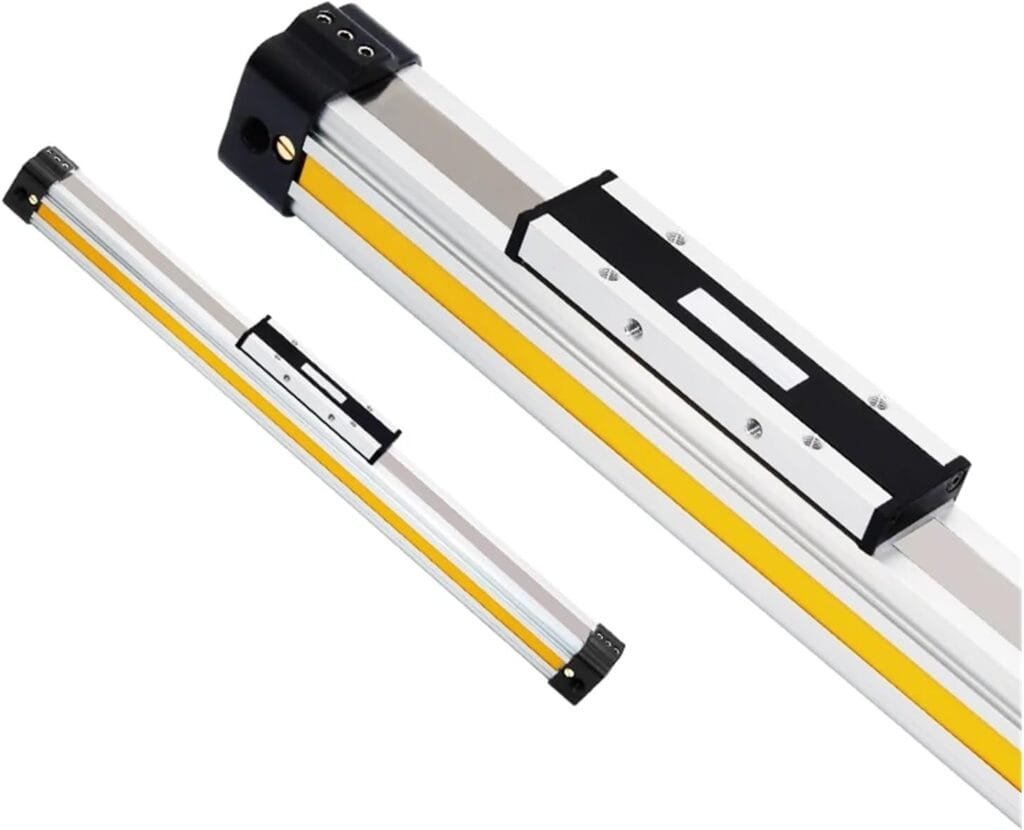
Back-to-back cylinders consist of two pneumatic cylinders mounted in opposing directions, sharing a common load connection that enables three distinct positions: fully extended, fully retracted, and center position through balanced pressure control between both cylinders.
Basic Operating Principles
Back-to-back systems create precise positioning through coordinated cylinder operation:
Position Control Mechanisms
- Extended position: Front cylinder pressurized, rear cylinder vented
- Retracted position: Rear cylinder pressurized, front cylinder vented
- Center position: Both cylinders pressurized equally, creating balanced forces
- Holding force: Maintained through continuous pressure in both cylinders
Advantages Over Single Cylinders
| Feature | Single Cylinder | Back-to-Back System | Improvement |
|---|---|---|---|
| Position Control | 2 positions only | 3 precise positions | 50% more flexibility |
| Holding Force | One direction only | Bidirectional holding | 100% better stability |
| Positioning Accuracy | ±2mm typical | ±0.5mm achievable | 75% more precise |
| Load Capacity | Limited by bore size | Combined cylinder force | Up to 2x stronger |
Force Calculation Methods
Proper sizing requires understanding combined forces:
Force Analysis
- Extension force = (Pressure × Full bore area) – (Back pressure × Rod area)
- Retraction force = (Pressure × Rod area) – (Back pressure × Full bore area)
- Center holding force = Pressure × (Full bore area – Rod area) for each cylinder
- Net positioning force = Difference between opposing cylinder forces
Rodless Cylinder Advantages
Our Bepto rodless cylinders excel in back-to-back configurations because they eliminate rod buckling1 concerns and provide equal force in both directions, making them ideal for precise 3-position applications. 💪
Which Applications Benefit Most from 3-Position Cylinder Control? 🎯
Identifying optimal applications helps maximize the benefits of back-to-back cylinder systems in industrial automation.
Applications requiring precise intermediate positioning, bidirectional holding forces, or multiple stop positions benefit most from 3-position control, including assembly stations, material handling systems, and precision manufacturing processes.
Primary Application Categories
Three-position control excels in specific industrial scenarios:
Assembly and Manufacturing
- Part orientation systems requiring multiple angles
- Component insertion with intermediate positioning
- Quality inspection stations with multiple check points
- Welding fixtures needing precise part alignment
Material Handling Applications
| Application Type | Position Requirements | Typical Industries | Benefits |
|---|---|---|---|
| Conveyor Diverters | 3-way sorting | Packaging, Food | Increased throughput |
| Lift Tables | Multiple heights | Warehousing | Flexible positioning |
| Rotary Indexers2 | Precise angles | Automotive | Accurate positioning |
| Clamping Systems | Variable pressure | Manufacturing | Adaptive holding |
Precision Positioning Systems
Advanced applications demand exceptional accuracy:
High-Accuracy Requirements
- Semiconductor manufacturing with micron-level positioning
- Medical device assembly requiring sterile, precise movement
- Optical equipment needing vibration-free positioning
- Laboratory automation with multiple sample positions
Case Study: Automotive Success
Robert’s Detroit facility implemented our Bepto rodless cylinder back-to-back system for their transmission assembly line. The three-position control allowed them to orient parts at 0°, 45°, and 90° angles with ±0.3mm accuracy. This eliminated their previous two-step process, reducing cycle time by 40% and improving part quality significantly. 🚀
Cost-Benefit Analysis
Three-position systems provide measurable returns:
- Reduced cycle times through elimination of multiple moves
- Improved accuracy leading to lower scrap rates
- Simplified programming with fewer motion sequences
- Enhanced flexibility for future product changes
How Do You Design Pneumatic Circuits for Back-to-Back Cylinder Systems? ⚡
Proper pneumatic circuit design ensures reliable operation and precise control of back-to-back cylinder systems.
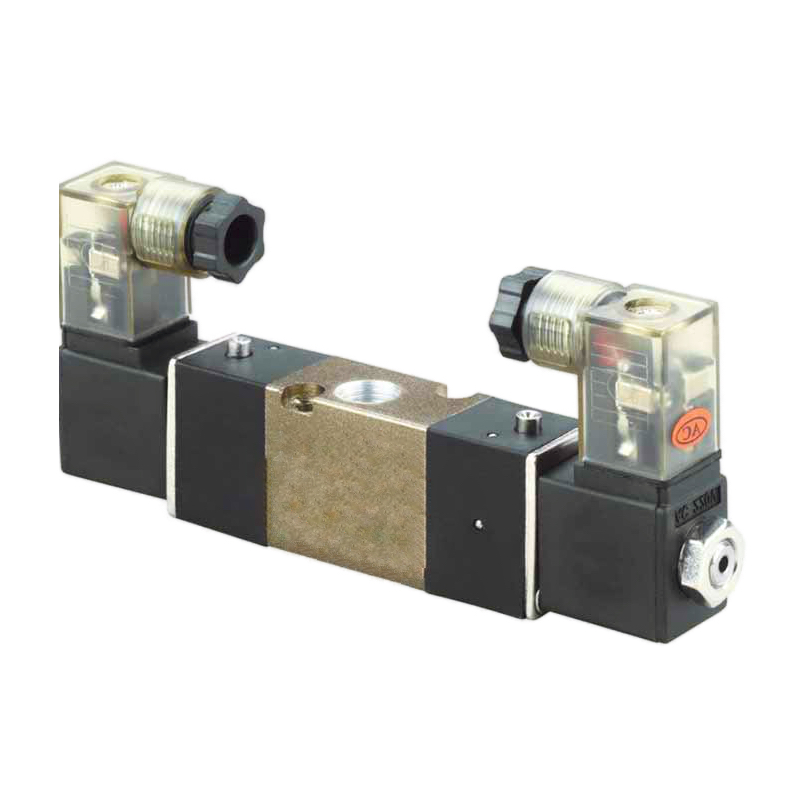
Effective back-to-back cylinder circuits require 5-port, 3-position valves3 with center pressure capability, individual flow controls for each cylinder, and pressure regulation to achieve balanced forces and smooth positioning between all three positions.
Essential Circuit Components
Successful systems require specific pneumatic components:
Valve Selection Criteria
- 5-port, 3-position valves with center pressure capability
- Individual exhaust control for each cylinder port
- Pilot-operated valves for consistent switching
- Manual override capability for maintenance access
Circuit Design Principles
| Component | Function | Specification | Critical Features |
|---|---|---|---|
| Main Valve | Position control | 5/3 center pressure | Reliable switching |
| Flow Controls | Speed regulation | Bidirectional | Independent adjustment |
| Pressure Regulators | Force control | High accuracy | Stable output |
| Check Valves | Pressure holding | Low leakage | Quick response |
Advanced Control Options
Modern systems benefit from enhanced control features:
Electronic Control Integration
- Proportional valves4 for variable positioning
- Pressure feedback for force monitoring
- Position sensors for closed-loop control5
- PLC integration for automated sequencing
Troubleshooting Common Issues
Systematic diagnosis prevents operational problems:
Performance Optimization
- Pressure imbalance causes drift from center position
- Flow restriction creates uneven movement speeds
- Valve leakage reduces holding force capability
- Air quality issues affect seal performance and accuracy
Bepto System Solutions
Our rodless cylinders integrate seamlessly with standard pneumatic controls while providing superior performance in back-to-back configurations, backed by comprehensive technical support for circuit design optimization.
What Are the Key Installation and Maintenance Requirements? 🔧
Proper installation and maintenance practices ensure long-term reliability and optimal performance of back-to-back cylinder systems.
Successful back-to-back cylinder installation requires precise mechanical alignment, proper pneumatic connections, systematic pressure balancing, and regular maintenance schedules to prevent performance degradation and ensure consistent 3-position accuracy.
Installation Best Practices
Critical installation steps ensure optimal system performance:
Mechanical Alignment
- Cylinder centerlines must be perfectly aligned
- Mounting surfaces require machined flatness
- Load connections need rigid coupling methods
- Support structures must handle combined forces
Pneumatic Connection Guidelines
| Connection Type | Requirements | Tools Needed | Quality Check |
|---|---|---|---|
| Supply Lines | Equal length/diameter | Tube cutters | Pressure test |
| Exhaust Ports | Unrestricted flow | Flow meters | Volume test |
| Control Valves | Minimal distance | Mounting hardware | Response test |
| Sensors | Proper positioning | Alignment tools | Signal verification |
Commissioning Procedures
Systematic startup prevents operational issues:
System Validation Steps
- Pressure calibration at all three positions
- Speed adjustment for smooth transitions
- Position accuracy verification with measuring tools
- Load testing under actual operating conditions
Preventive Maintenance Program
Regular maintenance extends system life and maintains accuracy:
Maintenance Schedule
- Weekly: Visual inspection and position accuracy check
- Monthly: Pressure verification and seal condition assessment Cylinder-Configuration-Maintenance-Schedule.png)
- Quarterly: Complete system calibration and component replacement
- Annually: Comprehensive overhaul and performance optimization
Performance Monitoring
Continuous monitoring identifies potential problems:
Key Performance Indicators
- Positioning accuracy trending over time
- Cycle time consistency measurements
- Pressure stability during holding operations
- Component wear patterns and replacement intervals
Maria, who runs a packaging machinery company in Frankfurt, switched to our Bepto rodless cylinder back-to-back system after experiencing frequent maintenance issues with traditional rod cylinders. Our system has operated maintenance-free for 18 months while improving her machine’s positioning accuracy by 60%. ✨
Conclusion
Back-to-back cylinders provide superior 3-position control through coordinated dual-cylinder operation, offering enhanced accuracy, flexibility, and reliability for demanding industrial applications.
FAQs About Back-to-Back Cylinders
Q: Can back-to-back cylinders be used with existing pneumatic systems?
Back-to-back cylinders integrate easily with most existing pneumatic systems using standard 5-port, 3-position valves and conventional air supply infrastructure. Minor circuit modifications may be needed for optimal performance, but major system overhauls are typically unnecessary.
Q: How much more expensive are back-to-back cylinder systems compared to single cylinders?
Back-to-back systems typically cost 60-80% more than single cylinders initially, but provide significant savings through reduced cycle times, improved accuracy, and eliminated secondary positioning operations. Most applications achieve payback within 6-12 months through productivity improvements.
Q: What positioning accuracy can be achieved with back-to-back cylinder systems?
Well-designed back-to-back cylinder systems achieve positioning accuracy of ±0.5mm or better, compared to ±2mm typical for single cylinders. Rodless cylinder configurations can achieve even higher accuracy due to elimination of rod deflection and side loading concerns.
Q: Do back-to-back cylinders require special maintenance procedures?
Back-to-back cylinders require standard pneumatic maintenance plus periodic pressure balance verification and position accuracy checks. The maintenance complexity is similar to single cylinders, but the dual-cylinder configuration provides redundancy that can extend overall system life.
Q: Can back-to-back cylinders handle high-speed applications?
Back-to-back cylinders excel in high-speed applications due to their balanced design and superior control characteristics. Proper valve sizing and circuit design enable cycle rates exceeding 120 cycles per minute while maintaining positioning accuracy and system reliability.
-
Learn the engineering principles behind rod buckling and how to prevent it. ↩
-
See how rotary indexers work and their common uses in manufacturing. ↩
-
Understand the schematic and function of 5-port, 3-position pneumatic valves. ↩
-
Discover how proportional valves provide variable control over flow or pressure. ↩
-
Learn the fundamentals of closed-loop control systems and how they use feedback. ↩