Every day, manufacturing facilities lose thousands of dollars due to pneumatic system inefficiencies. Internal leakage in cylinders silently drains compressed air1, reduces performance, and increases operational costs. The frustration builds as productivity drops and energy bills skyrocket. 💸
空圧シリンダーの内部漏れは、圧縮空気がピストンとシリンダー内径の間から漏れることで発生し、通常はシール部の摩耗、表面損傷、または汚染が原因である。これにより出力力の低下、サイクル時間の遅延、エネルギー消費量の増加が生じる。.
I recently spoke with David, a maintenance engineer from a packaging plant in Michigan, who was puzzled by his production line’s declining performance. His pneumatic cylinders were consuming 30% more air than usual, yet delivering inconsistent results.
目次
- What Exactly Is Internal Leakage in Pneumatic Systems?
- Why Do Pneumatic Cylinder Seals Fail and Cause Internal Leakage?
- How Can You Detect Internal Leakage in Your Pneumatic Cylinders?
- What Are the Most Cost-Effective Solutions for Internal Leakage?
What Exactly Is Internal Leakage in Pneumatic Systems?
Understanding internal leakage is crucial for maintaining efficient pneumatic operations.
Internal leakage refers to the unwanted flow of compressed air from the high-pressure side to the low-pressure side within a pneumatic cylinder, bypassing the intended flow path through worn or damaged sealing components.

The Mechanics Behind Internal Leakage
In a properly functioning pneumatic cylinder, compressed air should only flow through designated ports. However, when seals deteriorate, air finds alternative paths:
- ピストンシール2 bypass: Air leaks around the piston from one chamber to another
- Rod seal failure: Compressed air escapes along the piston rod
- Bore surface damage: Scratches or corrosion create leak paths
システム性能への影響
| Performance Metric | 通常運転 | With Internal Leakage |
|---|---|---|
| 出力 | 100% rated force | 60-80% rated force |
| サイクルタイム | Optimal speed | 20-40% slower |
| 空気消費量 | Standard flow rate | 30-50% higher |
| エネルギーコスト | ベースライン | 25-45% increase |
Why Do Pneumatic Cylinder Seals Fail and Cause Internal Leakage?
Seal failure doesn’t happen overnight – it’s usually the result of multiple factors.
Pneumatic cylinder seals fail primarily due to normal wear, contamination, improper lubrication, excessive temperature, and chemical incompatibility, with contamination being the leading cause in industrial environments.
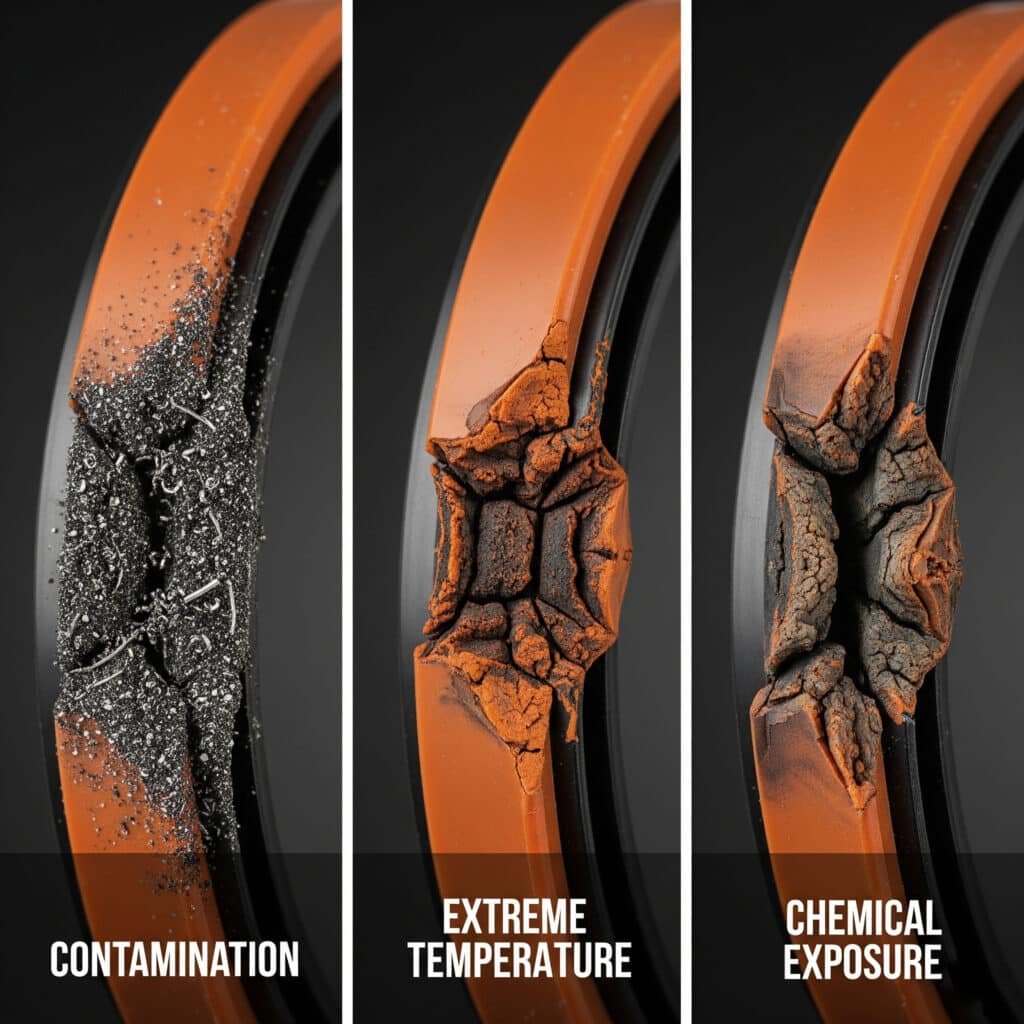
Primary Causes of Seal Degradation
汚染問題
- Particulate matter3: Dust, metal shavings, and debris act like sandpaper
- 湿気: Causes seal swelling and accelerated wear
- 化学物質への曝露: Incompatible fluids break down seal materials
Operational Factors
- 温度の極端な変化: Heat hardens seals, cold makes them brittle
- 圧力スパイク4: Sudden pressure changes damage seal lips
- Improper installation: Twisted or pinched seals fail prematurely
This reminds me of Sarah, a procurement manager from a textile machinery company in North Carolina. Her team was replacing cylinder seals every few months until we discovered that inadequate filtration was allowing contaminated air into their system. After upgrading to our Bepto replacement cylinders with enhanced sealing technology, her maintenance intervals extended to over two years. 🎯
How Can You Detect Internal Leakage in Your Pneumatic Cylinders?
Early detection saves money and prevents unexpected downtime.
You can detect internal leakage through performance monitoring (reduced speed/force), acoustic detection (hissing sounds), pressure testing, and thermal imaging5, with performance degradation being the most noticeable early indicator.
Practical Detection Methods
Visual and Auditory Inspection
- Listen for unusual hissing sounds during operation
- Check for oil mist or air bubbles in hydraulic systems
- Monitor cylinder movement for jerky or inconsistent motion
性能テスト
- 負荷テスト: Compare actual vs. rated force output
- Speed analysis: Measure cycle times under standard conditions
- Pressure drop testing: Monitor pressure decay in isolated chambers
What Are the Most Cost-Effective Solutions for Internal Leakage?
The right solution depends on severity, budget, and operational requirements.
The most cost-effective solutions include seal replacement for minor leakage, cylinder rebuilding for moderate damage, and complete cylinder replacement for severe cases, with Bepto offering compatible alternatives that cost 30-40% less than OEM options.
Solution Comparison Matrix
| 解決策 | コスト範囲 | Downtime | 有効性 | 最適 |
|---|---|---|---|---|
| Seal Kit Replacement | $50-200 | 2-4 hours | 85-95% | Recent installations |
| Cylinder Rebuild | $300-800 | 1-2 days | 90-98% | Mid-life equipment |
| Bepto Replacement | $400-1200 | 4-8 hours | 98-100% | Any application |
| OEM Replacement | $800-2000 | 1~3週間 | 100% | 重要アプリケーション |
Why Choose Bepto Solutions?
Our rodless cylinders and standard pneumatic components offer:
- Immediate availability: No waiting weeks for OEM parts
- Cost savings: 30-40% less than original equipment
- 強化されたシール: Advanced materials resist contamination
- テクニカルサポート: Direct access to our engineering team
Internal leakage doesn’t have to cripple your operations – with proper detection and the right replacement strategy, you can restore peak performance while controlling costs. 💪
FAQs About Internal Leakage in Pneumatic Cylinders
How much internal leakage is acceptable in pneumatic cylinders?
Generally, internal leakage should not exceed 1-2% of the cylinder’s rated flow capacity under normal operating conditions. Higher leakage rates indicate seal wear and require attention to prevent performance degradation and increased operating costs.
Can internal leakage cause complete cylinder failure?
While internal leakage rarely causes catastrophic failure, it progressively reduces performance and can lead to secondary damage if left unaddressed. Excessive leakage forces the air compressor to work harder, potentially causing system-wide issues and significantly higher energy costs.
How often should pneumatic cylinder seals be replaced?
Seal replacement intervals typically range from 1-3 years depending on operating conditions, with contaminated environments requiring more frequent service. Regular monitoring and preventive maintenance can extend seal life and prevent unexpected failures.
What’s the difference between internal and external leakage?
Internal leakage occurs within the cylinder between chambers, while external leakage involves air escaping to the atmosphere through damaged external seals or fittings. Both types reduce efficiency, but external leakage is usually more noticeable and easier to detect.
Are aftermarket seals as reliable as OEM parts?
High-quality aftermarket seals from reputable suppliers like Bepto often match or exceed OEM performance while offering significant cost savings. The key is choosing suppliers with proven track records and proper material specifications for your specific application.
-
Explore the fundamentals of compressed air, including its properties and common industrial applications. ↩
-
Learn about the various types of piston seals and their critical role in pneumatic cylinder efficiency. ↩
-
Understand how particulate matter is classified and its abrasive effect on pneumatic components. ↩
-
Discover the causes of pressure spikes and how they can damage seals and other system components. ↩
-
See how thermal imaging technology can be used to quickly and accurately locate air leaks. ↩