

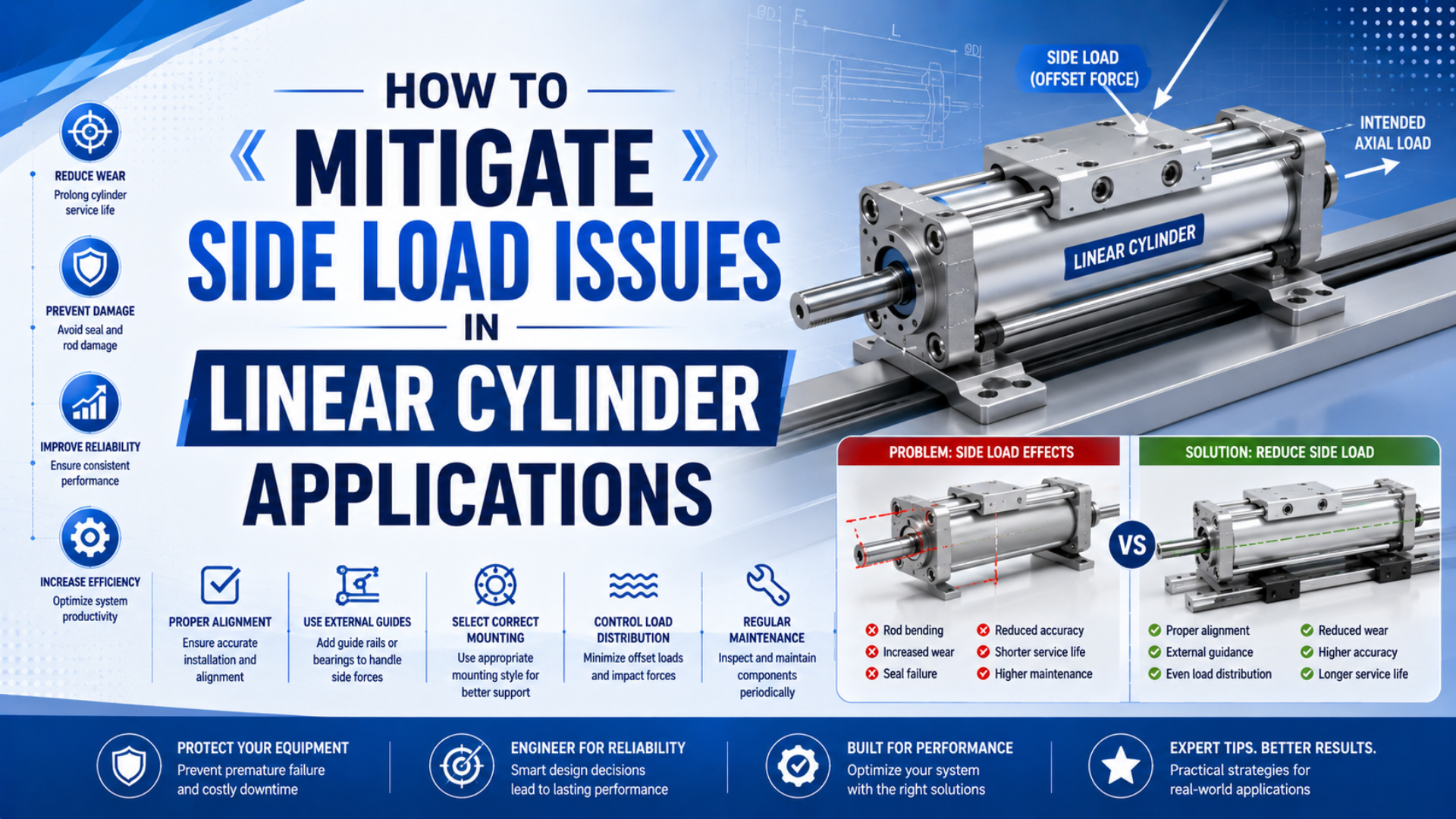
การลด side load ใน linear cylinder ต้องแยก guidance ออกจาก thrust วัด load-center offset ตรวจแรงและ moment ทุกตัวกับ catalog รุ่นจริง และแก้ mounting alignment ก่อนเปลี่ยน actuator Bore ที่ใหญ่ขึ้นอาจเพิ่ม axial force ได้ แต่ไม่ได้แก้ rod-bearing load, carriage moment, structural deflection หรือ mechanism ที่ over-constrained โดยอัตโนมัติ
ตัวอย่าง DSBC ของ Festo แสดงเหตุผลว่าทำไม generic side-load ratings จึงเสี่ยง: ตัวอย่าง protected-rotation ขนาด 32 mm หนึ่งกรณีอนุญาต 9.5 N ที่ stroke 150 mm แต่ค่าที่อนุญาตเปลี่ยนตาม stroke และ lever arm ดังนั้นให้ถือ cylinder, guide, tooling, mount และ stop เป็น load path เดียวกัน ไม่ใช่ component แยกชิ้น
ประเด็นสำคัญ
- ตัวอย่าง Festo 32 mm ที่อนุญาต 9.5 N ไม่ใช่ rating สากล
- External guides ควรรับ lateral force และ moment ส่วน cylinder ให้ axial thrust
- ก่อน restart ให้ตรวจ alignment แบบ unloaded และ loaded ที่ retracted, mid-stroke และ extended positions แล้ว verify deceleration กับ production mass และ speed เทียบกับ guide/cushion limits ที่ configured
สำหรับ suspended loads, safety-critical axes หรือเมื่อขาด center-of-gravity data ให้ confirm load case ด้วย drawings ก่อนระบุ hardware ปัญหา side-load มักเป็นปัญหา load-path ไม่ใช่ปัญหาของกระบอกสูบอย่างเดียว
Side Load ใน Linear Cylinder คืออะไร?
Side load คือแรงใด ๆ ที่ตั้งฉากกับ stroke axis ที่ตั้งใจไว้ และผลของมันจะโตขึ้นเมื่อแรงกระทำผ่าน offset ความสัมพันธ์พื้นฐานคือ M = Fq x s โดย M คือ bending หรือ โมเมนต์ที่ชุดนำทาง ที่ bearing, carriage, mounting structure และ fasteners ต้องต้าน Fq คือ transverse force และ s คือระยะตั้งฉากจาก centerline ที่รองรับถึง load
Load moment คือผลการหมุนที่เกิดเมื่อ transverse force กระทำผ่าน offset ระยะนี้พลาดได้ง่าย ตัวอย่างเช่น tooling plate อาจมีน้ำหนักเท่าเดิมหลัง redesign แต่สร้าง moment สูงขึ้นเพราะ center of gravity ย้ายไกลจาก guide มากขึ้น Axis ที่เคย stable แล้วเริ่มสึก rod seal ด้านเดียวอาจไม่ได้ต้องการ bore ใหญ่ขึ้น แต่ต้องการ bracket geometry ที่ถูกต้องกว่า
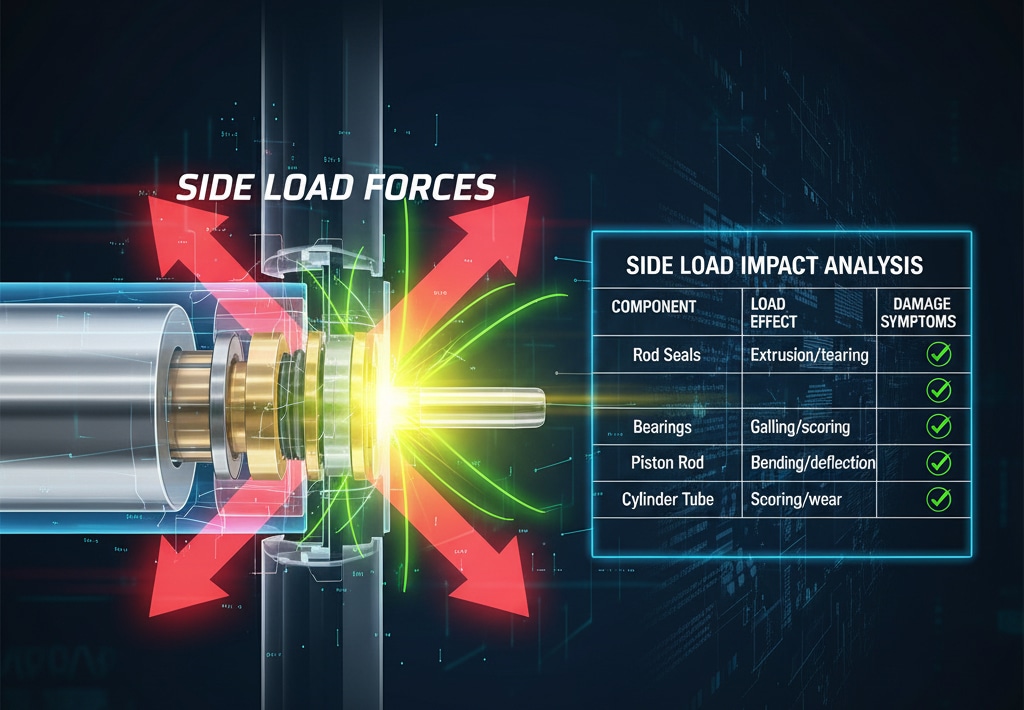
ภาพ legacy นี้เป็น qualitative illustration ใช้ชี้ component ที่ได้รับผล ไม่ได้ให้ side-load rating แบบสากล
Side Loads ทำลาย Rod, Bearings และ Seals อย่างไร?
Side loading เปลี่ยน contact pressure และ alignment ก่อน จากนั้น wear จะเห็นที่ rod gland, bearing, guide หรือ tube การตรวจ wear pattern จึงเป็น clue ไม่ใช่ verdict ถ้า rod seal รั่ว การเปลี่ยน seal โดยไม่แก้ alignment แค่รีเซ็ตเวลาเสีย Rough travel อาจมาจาก external rail ที่เอียง bracket งอ guide preload ไม่เท่ากัน contaminated bearings หรือ cylinder mount ที่ขยับใต้ load
| Symptom | Side-load mechanism to check | Evidence to collect before repair |
|---|---|---|
| Seal wear concentrated on one side | Rod หรือ carriage ถูกดันออกจาก center | Seal pattern, rod witness marks, load direction |
| Scored rod or gland | Bearing contact pressure สูงเกินไป | Surface marks ที่ full extension และ retraction |
| Motion smooth unloaded but binds loaded | Structure หรือ guide deflects ใต้ payload | Indicator readings unloaded และ loaded |
| Harsh stop followed by new leakage | Dynamic force เกิน cushion, guide หรือ mount capacity | Moving mass, speed, stop position, cushion setting |
| Repeated bolt movement | Mount รับ moment ที่ไม่ได้ออกแบบไว้ | Dowel, key, bolt torque, frame stiffness |
Static และ dynamic failures ทิ้ง evidence ต่างกัน Axis ที่ bind ตอนจอดชี้ไปที่ geometry, preload, gravity load หรือ structural distortion ส่วน binding เฉพาะช่วง acceleration หรือ stopping ต้องวัด speed, pressure during motion, load offset และ cushion behavior ไม่ใช่ถ่ายภาพตอนหยุดอีกใบ
จะ Diagnose Load Path อย่างไร?
Diagnose load path ทั้งชุด ไม่ใช่ component ทีละตัว ใช้ coordinate system ของ configured model อย่าสมมติว่า supplier ทุกเจ้ากำหนด axes และ positive directions เหมือนกัน สำหรับ guided หรือ rodless carriage ให้ตรวจ normalized terms เช่น Fy, Fz, Mx, My และ Mz ทั้งแบบ static และ dynamic
Fy/Fymax + Fz/Fzmax + Mx/Mxmax + My/Mymax + Mz/Mzmax <= 1เริ่มจาก sketch mechanical datums ทั้งหมด mark gravity, แรงจากกระบวนการ, cable drag, hose reaction, acceleration และ stop force วัด perpendicular offsets ไปยัง bearing หรือ carriage center คำนวณ static moments แล้วทำซ้ำสำหรับ acceleration และ deceleration ถ้า drawing แสดงว่า cylinder rod กำลังรองรับ tooling weight architecture นั้นกำลังใช้ thrust component เป็น linear bearing ควรย้าย reaction ไปยัง guide ก่อนเพิ่ม bore
ทำไม External Guidance ควรรับ Lateral Force?
External guidance คือ bearing system ที่ควรรับ lateral force ขณะที่ cylinder ให้ centerline thrust Standard rod cylinder ทำงานได้ดีเมื่อ external linear guide รับ weight และ moment independently ข้อต่อระหว่าง rod กับ guided tooling ควรถ่ายทอด axial force โดยไม่บังคับให้ bearing systems สองชุดที่ align ไม่สมบูรณ์มาต่อสู้กัน
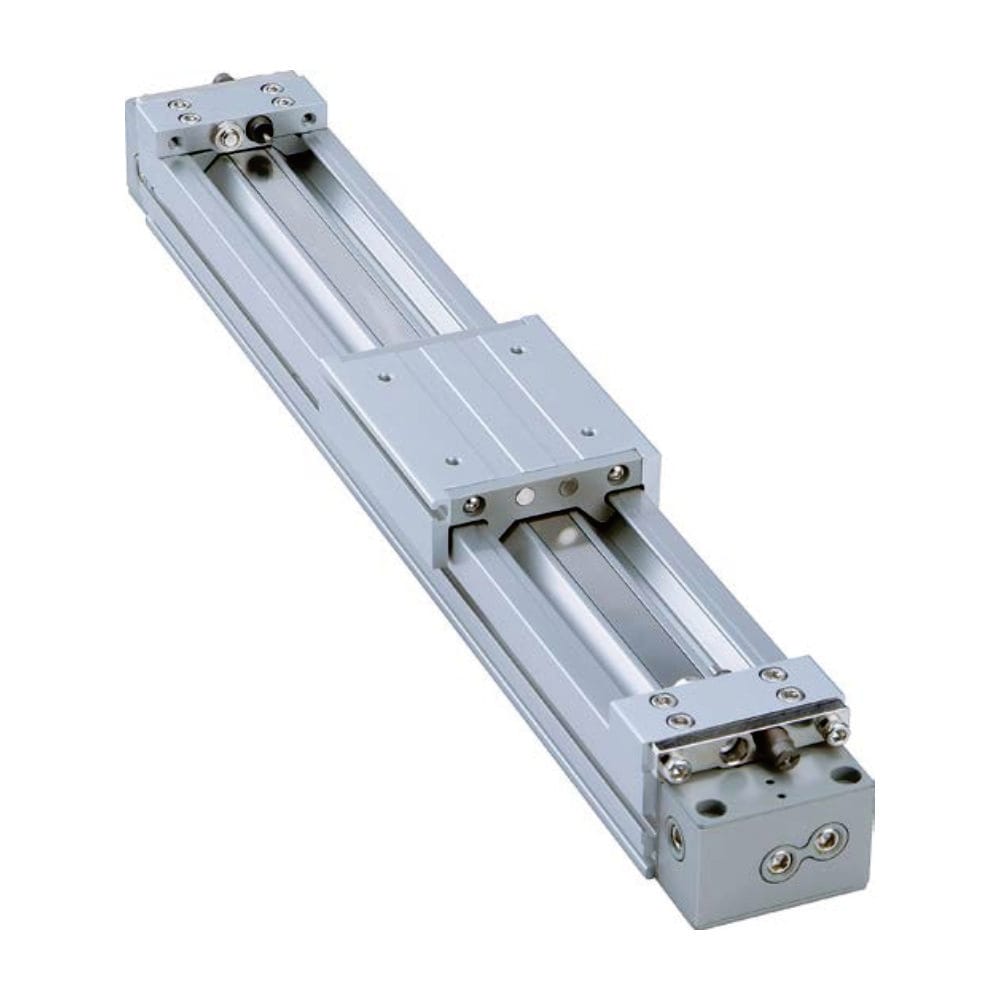
| Layout | Where thrust is generated | Where side load and moment should go | Selection caution |
|---|---|---|---|
| Standard rod cylinder plus rail | Piston and rod | External rail and carriage | Keep rod and rail parallel through full stroke |
| Compact guided cylinder | Piston | Integrated guide rods or bearings | Use exact lateral-load and torque curves |
| Guided rodless cylinder | Internal piston and carriage coupling | Integrated carriage guide | Check combined forces, moments, speed, and stop energy |
| Basic rodless cylinder plus external guide | Internal piston and carrier | Separate rail | Use tolerant carrier connection to avoid over-constraint |
Mounting Style ใดช่วยป้องกัน Binding?
Mount ที่ถูกต้องต้องตาม real motion และเก็บ major force ใกล้ cylinder centerline ใช้ centerline fixed mount เมื่อ driven member เคลื่อนเป็นเส้นตรงจริง ใช้ pivot mount เมื่อ load วิ่งเป็น arc ในระนาบเดียว และใช้ spherical bearing หรือ alignment coupler เมื่อมี angular/radial mismatch เล็กน้อยที่อยู่ใน rating อย่าใช้ accessory เป็น structural guide
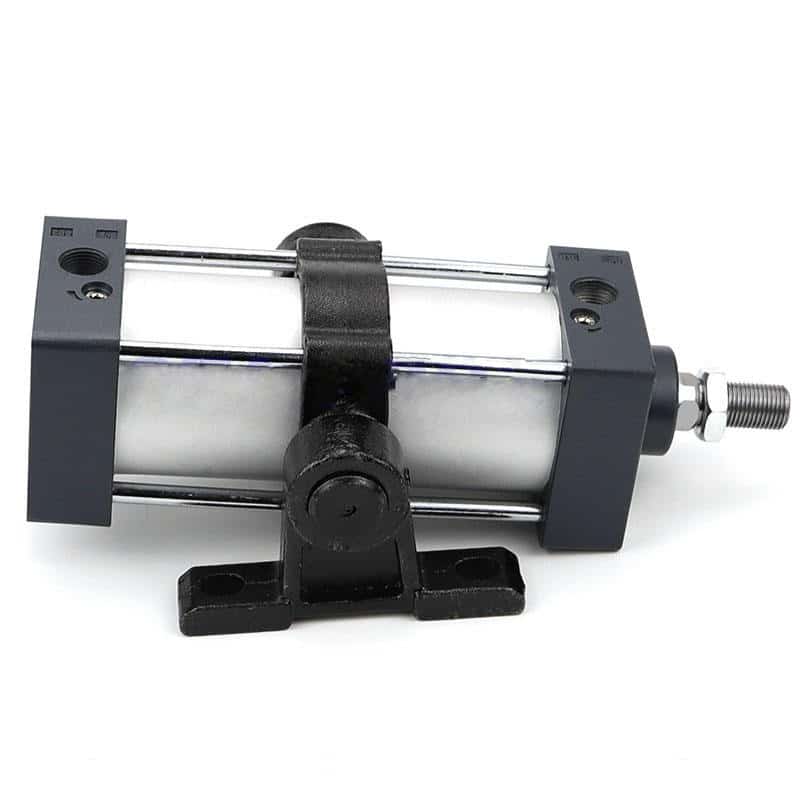
Trunnion pins ถูกออกแบบให้รับ shear ไม่ใช่ bending Support bearings ควรแข็ง align และยาวอย่างน้อยเท่ากับ pins ภาพ trunnion ไม่พิสูจน์ installation ที่ปลอดภัย support spacing, load direction และ true pivot plane เป็นตัวตัดสินว่า mount ลด side load หรือสร้าง side load ใหม่
| Motion path | Appropriate starting point | Common side-load mistake |
|---|---|---|
| Straight, centerline push or pull | Fixed centerline mount | Mounting body off-center on flexible plate |
| Arc in one plane | Clevis or trunnion | Locking rod end so it cannot follow arc |
| Small angular and radial mismatch | Rated spherical bearing or alignment coupler | Treating accessory as structural guide |
| Curved motion in more than one plane | Purpose-designed multi-axis joint | Forcing single-plane clevis through compound motion |
Flexible Couplings ช่วย Misalignment อย่างไร?
Self-aligning coupling คือ force-transfer accessory ที่ป้องกัน assembly errors เล็ก ๆ ไม่ให้กลายเป็น bearing loads แต่มันไม่ได้ support payload เลือก accessory จาก permitted movement, tensile/compressive rating, thread, pressure limitation และ installation instructions Joint อาจดูดซับ offset เล็กน้อย แต่ไม่สามารถเปลี่ยน fixture 40 kg ที่ไม่มี guide ให้เป็น rod load ที่ยอมรับได้
หาก flexible joint แตะสุด travel ทุก cycle นั่นไม่ใช่ compensation แล้ว แต่ mechanism ใช้ coupling เป็น stop ต้องแก้ load path, guide position หรือ mounting geometry ตรวจ over-constraint ด้วย Guides สองชุดที่ parallel กันแต่มี datum ต่างกันสามารถ bind ได้ แม้แต่ละ guide ผ่าน catalog calculation ของตัวเอง ให้กำหนด primary guide หนึ่งตัว ใส่ controlled compliance ที่ force-transfer joint และอย่าเพิ่ม rigid locator ที่สองโดยไม่มี tolerance analysis
Verification ก่อน Restart Production
Verify repair โดยไม่ปล่อยคนหรือ hardware ไปสู่ full-speed motion ทันที ก่อนเข้าพื้นที่ machine ให้ isolate energy ทุกแหล่ง release stored pressure, block gravity loads และ verify safe state จากนั้นย้าย guide/load ด้วยมือผ่าน full stroke เมื่อ procedure อนุญาต ทำ manual strokes โดยไม่มี air pressure, reconnect load โดยไม่ใช้ fasteners ดึง component ให้เข้าศูนย์ วัด parallelism และ offset ที่ retracted, mid-stroke และ extended positions แล้วค่อย pressurize ช้า ๆ และเริ่ม low speed
เฝ้าดู motion zone ครบถ้วน: collision, stick-slip, bolt movement, changing clearance, hose pull หรือ guide deflection ปรับ cushioning แล้ว verify dynamic force และ moment ที่ production payload และ speed ด้วย configured guide limits, stop-energy data และ acceptance measurements ที่บันทึกก่อน release Smooth empty cycle เป็นแค่ gate แรก ต้องบันทึก unloaded และ loaded indicator readings ที่ stroke positions เดียวกันเพื่อเห็น structural deflection ที่ static alignment check อาจซ่อนอยู่
Side-Load Retrofit RFQ ควรมีอะไร?
Retrofit RFQ ต้องใช้ geometry และ operating data ไม่ใช่เพียง bore กับ stroke Model number เป็นแค่จุดเริ่มต้น ส่ง marked-up drawing หนึ่งชุดและ operating table หนึ่งชุด ระบุว่าค่าใด measured, calculated, assumed หรือ copied จาก current nameplate แยก axial force calculation ออกจาก transverse-force และ guide-moment review
Geometry and Duty Inputs
| RFQ input | What to record | Why it changes side-load risk |
|---|---|---|
| Cylinder identity | Manufacturer, full model, bore, stroke, rod, mount | Connects review to correct catalog |
| Payload | Mass, center of gravity, bracket drawing | Defines gravity force and moment arms |
| Motion | Orientation, stroke time, cycles, dwell, acceleration | Separates static from dynamic loading |
| Pressure and flow | Pressure during motion, valve, tube size, exhaust control | Distinguishes low thrust from mechanical binding |
Integration and Evidence Inputs
| RFQ input | What to record | Why it changes side-load risk |
|---|---|---|
| Guidance | Rail model, carriage spacing, preload, lubrication | Defines lateral-force and moment capacity |
| Connections | Rod-end joint, clevis, spherical bearing, coupler | Shows where compliance or constraint enters |
| Stops | Cushion type, shock absorber, hard stop, stop position | Defines deceleration force and โมเมนต์ที่ชุดนำทาง |
| Evidence | Wear photos, indicator readings, failed-part history | Tests whether proposed fix addresses cause |
FAQs เกี่ยวกับ Side Load Mitigation
ไม่มีเปอร์เซ็นต์สากลสำหรับ side load ให้ผูกคำตอบกับ configured model, guide, stroke, orientation, speed และ deceleration condition แทน site-wide rating แบบกว้าง ๆ
Pneumatic cylinder รับ side load ได้เท่าไร?
ใช้ lateral-force, stroke, lever-arm และ mounting data ของ model จริง ตัวอย่าง Festo DSBC 32 mm, 150 mm stroke อนุญาต 9.5 N แต่ไม่ใช่ generic rating เมื่อ offset, guide option, speed หรือ orientation เปลี่ยน ค่าที่อนุญาตก็เปลี่ยนได้
Piston rod ใหญ่ขึ้นแก้ side-load problem ได้หรือไม่?
ไม่ใช่โดยตัวมันเอง Rod ที่ใหญ่ขึ้นอาจเพิ่ม stiffness หรือ buckling margin แต่ไม่ได้ align guide ที่เอียงหรือกำจัด offset moment ต้องแก้ load path ก่อน แล้วค่อย size rod และ bearings ของ configuration จริง
Self-aligning coupling แทน external guide ได้หรือไม่?
ไม่ได้ Coupling ลด radial หรือ angular assembly stress ที่ force-transfer joint แต่ไม่ support payload weight, pitch, roll, yaw หรือ แรงจากกระบวนการ Guide ยังต้องมี model-specific load calculation แยกต่างหาก
ควรเลือก guided cylinder เมื่อใด?
เลือกเมื่อ actuator ต้องต้าน lateral load หรือ torque ที่กำหนดใน compact assembly และ catalog limits ครอบคลุม duty ตรวจ bearing type, stroke, orientation, moment, speed, stop energy และ environment ด้วย
ควร test side-load retrofit อย่างไร?
ทำตาม energy-control procedure ของเครื่องก่อน ทำ manual travel without pressure, run zone ทั้งหมดที่ low speed, pressurize ช้า ๆ, adjust cushioning และเปรียบเทียบ loaded alignment ที่ retracted, mid-stroke และ extended positions หยุดหาก clearance, bolt position หรือ indicator readings เปลี่ยนผิดปกติ
แหล่งข้อมูลและลิงก์อ้างอิง
- Festo DSBC catalog, Festo DSBC catalog, Parker Cylinder Safety Guide, Festo DGC catalog, rodless cylinder load-capacity guide
- SMC Web Catalog, rodless versus standard cylinder comparison, rodless cylinder types guide, Parker Catalog 0900P-6, Mounting Information, Festo DSBC catalog
- Parker OSP-P Operating Instructions, OSHA 1910.147, pneumatic cylinder cushioning guide, ISO 15552:2018, pneumatic cylinder theory guide
- Festo DGC catalog, Festo's 2026 DSBC catalog, ISO 15552:2018, Festo's 2026 DSBC catalog, SMC's current catalog, Parker's OSP-P instructions