

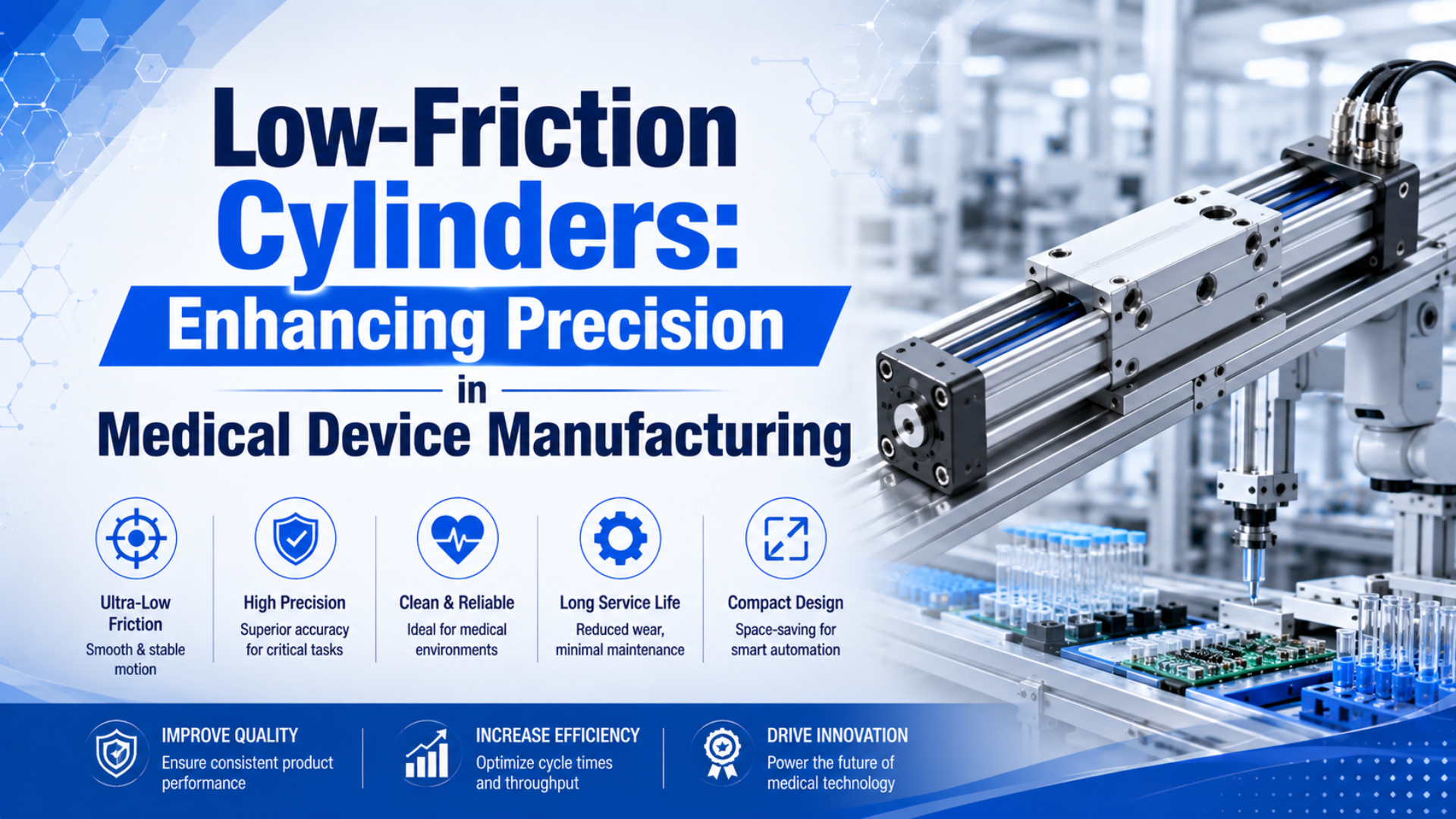
Low-friction cylinder คือ pneumatic actuator ที่ออกแบบเพื่อลด breakaway และ running resistance ระหว่าง controlled motion ในงานผลิตอุปกรณ์การแพทย์ มันช่วยให้ low-speed motion เรียบขึ้นหรือควบคุม contact force ได้ดีขึ้น แต่ไม่ได้รับประกัน positioning accuracy ความแม่นยำยังขึ้นกับ valve, ตัวควบคุมแรงดัน, guide, load, sensor, controller, mounting และ acceptance test ของเครื่องจริง
ความแตกต่างนี้สำคัญใน medical device manufacturing เพราะ smooth motion ไม่ใช่ measured position ตัวเลขอย่าง 0.5 mm/s minimum piston speed หรือ 0.001 MPa pressure floor เป็นข้อมูลเฉพาะ series ไม่ใช่ tolerance สากลของ low-friction cylinder ทุกตัว คู่มือนี้แสดงวิธีเปลี่ยน catalog data ให้เป็น specification ที่ตรวจสอบได้สำหรับ assembly, test, dispensing, handling และ cleanroom equipment รวมถึงเมื่อควรขยับไปใช้ servo-pneumatic หรือ electric control
ประเด็นสำคัญ
- Low friction ช่วย motion และ force control แต่ไม่สร้าง position feedback หรือ closed-loop correction
- CQ2X ระบุ 0.5 mm/s เป็น catalog value เฉพาะรุ่น ไม่ใช่ความสามารถสากล
- Cleanroom suitability ต้องมี model-level particle evidence และ installed-equipment assessment
- Validate speed, force, position, leakage, particles และวงจรทั้งหมดบนเครื่องจริง
อย่าพึ่ง universal FDA tolerance, customer story ที่ verify ไม่ได้ หรือ product-performance numbers ที่ไม่มี matching test records ทุก numeric specification ควรผูกกับ named series, source และ operating condition เสมอ
Low Friction ปรับปรุงอะไรจริง ๆ?
Low friction ลด pressure และ force ที่ต้องใช้เพื่อเริ่มหรือคง motion เป็นหลัก ถ้า seal adhesion และ sliding resistance สูง pressure จะขึ้นขณะที่ piston ยังนิ่ง แล้ว axis อาจกระโดดเมื่อแรงที่มีมากกว่า resistance ในที่สุด พฤติกรรม stick-slip นี้คือสิ่งที่ low-friction design ตั้งใจลด แต่ประโยชน์ที่แท้จริงขึ้นกับงาน: contact roller ต้องการแรงคงที่ pipette fixture ต้องการ approach ที่นุ่มนวล test nest ต้องการ clamp ที่ repeatable โดยไม่ทำลาย molded part
Requirement ที่ดีจึงไม่ใช่ “high precision cylinder” แต่เป็น operating window ที่วัดได้ เช่น minimum stable speed, available force at regulated pressure, allowable lateral load, leakage, sensor behavior และ acceptable variation สำหรับ process ที่ติดตั้ง คำแบบนี้ป้องกันไม่ให้ component ที่เคลื่อนเรียบถูกเข้าใจผิดว่าเป็น positioning system สำเร็จรูป Model code ต้องมาก่อน และ catalog boundaries ไม่ใช่ acceptance results

ภาพ: TECNIC Bioprocess Solutions via Unsplash. Cleanroom classification ใช้กับสภาพแวดล้อมควบคุม ส่วน equipment suitability ยังต้องมี evidence ของตัวเอง
Published Specifications ใดสำคัญที่สุด?
เริ่มจาก exact series code เพราะ catalog limits ต่างกันมากกว่าหนึ่ง order of magnitude บันทึก minimum/maximum piston speed, minimum operating pressure, force-control range, leakage, lateral-load allowance และ cushion/kinetic-energy limit ก่อนเทียบ supplier เสมอ Minimum operating pressure เป็น catalog boundary ไม่ใช่ pressure ที่ guarantee stable movement ในทุก installation ส่วน leakage อาจ intentional ใน metal-seal low-friction designs ต้องบันทึก test pressure, temperature และ reference-air convention ของ supplier
SMC MQP แสดงเหตุผลว่าทำไม model code สำคัญ เพราะ thrust-control range ต่างกันตาม bore เช่น 0.01 ถึง 8 N ที่ 4 mm และ 0.30 ถึง 200 N ที่ 20 mm Actual control ยังขึ้นกับ piston area และ pressure accuracy อย่านำค่าเหล่านี้ไปเทียบกับ theoretical force table ราวกับเป็น test เดียวกัน Real controlled force ยังมี ตัวควบคุมแรงดัน error, pressure loss, seal resistance, moving mass, gravity, acceleration, guide friction และ contact geometry
Low-Friction Cylinder ให้ Precise Positioning ได้หรือไม่?
Low-friction cylinder ทำให้ motion consistency ดีขึ้นได้ แต่ไม่สามารถสัญญา positioning tolerance แบบสากล Endpoint work อาจ repeatable มากเมื่อ load หยุดกับ mechanical datum ที่ออกแบบไว้และ switch confirm final state แต่ mid-stroke stopping ยากกว่า เพราะ compressed air ยืดหยุ่น valve flow เปลี่ยนตาม pressure ratio load อาจแปรผัน และ open-loop cylinder ไม่มี measurement ของ remaining position error
Mid-stroke work ต้องใช้ deliberate position feedback Sensor วัด position ได้ แต่ยังต้องมี control architecture ที่เหมาะสมหาก cylinder ต้องแก้ error คำกล่าวที่ซื่อสัตย์สำหรับ medical manufacturing ไม่ใช่ “cylinder achieves 0.01 mm” แต่เป็น “installed axis ผ่าน acceptance band ที่กำหนดสำหรับ load, speed, fixture, sensor, pressure และ test method นี้” ประโยคยาวกว่า แต่ traceable และอยู่รอดเมื่อ supplier เปลี่ยน
Cleanroom Suitability ต้องมี Equipment-Level Evidence
Equipment suitability คือหลักฐานว่าเครื่องจักรทำงานภายใน cleanliness requirements ของ environment ที่ตั้งใจ ไม่สามารถสรุปจากคำว่า “low friction” ได้ ISO 14644-14:2026 ใช้วิธี based on airborne particle concentration ส่วน ISO 14644-1:2015 classify air โดย particles 0.1 ถึง 5 micrometres Clean-series code ที่ exact อาจให้ evidence มีประโยชน์ แต่ต้องตรวจ complete assembly รวม relief port, vacuum suction, exhaust path, tubing material, lubricant chemistry, exposed materials, seals, coatings, fittings, silencers, switches, cable jackets, guides, shock absorbers และ external grease
Particle suitability ต้องแยกจาก cleanability และต้องทดสอบใน operating state ที่ realistic speed, stroke, load และ maintenance condition Exhaust อาจปนเปื้อน process ได้ ให้ review compressed-air quality, filtration, dew point, material และ microbial controls แยกกัน Component evidence อาจ invalid เมื่อติดตั้งผิด circuit หรือระบายอากาศเข้าพื้นที่ process
งานผลิตอุปกรณ์การแพทย์ใดเหมาะกับ Low-Friction Cylinders?
Low-friction cylinders เหมาะกับงานที่ smooth low-speed motion หรือ controlled contact force สำคัญกว่า arbitrary multi-position accuracy ตัวอย่างงานที่ดีคือ probe approach โดยไม่กระแทก, light pressure บน roller หรือ membrane, clamping molded parts โดยไม่ทำให้ measurement ผิด, dispenser advance ที่ verified low speed และ fixture transfer ระหว่าง hard stops สองจุดพร้อม endpoint confirmation
งานที่ไม่เหมาะคือ free mid-stroke positioning without feedback, precision metrology ที่อิง piston location เท่านั้น, high side-load motion without guide และ installation ที่ supplier ไม่สามารถ document materials หรือ particle behavior Process risk ไม่ใช่ marketing label ควรตัดสิน technology Pneumatic component อาจเป็นส่วนหนึ่งของ manufacturing equipment แต่ไม่ได้มอบ compliance ให้ finished device โดยอัตโนมัติ
Engineers ควร Size Low-Friction Cylinders อย่างไร?
เริ่มจาก force และ speed แล้วเพิ่ม margin สำหรับ friction และ variation สำหรับ double-acting cylinder ให้คำนวณ theoretical extension force จาก piston area และ pressure ส่วน retraction ต้องลบ rod area จากนั้นคำนึงถึง regulated pressure ที่ cylinder, guide friction, seal behavior, gravity, acceleration, process contact force และ ตัวประกอบความปลอดภัย ตาม machine risk
Specification low-speed ที่ดีที่สุดควรระบุทั้ง target speed และ available force at that speed เพราะ speed value อย่างเดียวซ่อน ตัวควบคุมแรงดัน droop, tubing loss และ load variation Circuit design อาจ erase advantage ของ low-friction cylinder ได้ Undersized valves, long small-bore tubing, ตัวควบคุมแรงดัน droop, trapped volume และ exhaust restriction ทำให้ delay และ pressure cycling ได้ อย่าทำให้ axis “นิ่ง” ด้วยการ choke จนเสียพฤติกรรมจริง
Calculator เป็น screening tool เท่านั้น ไม่สามารถ predict stick-slip, ตัวควบคุมแรงดัน response, seal breakaway, guide friction, particle emissions หรือ cleanroom suitability ใน installed machine ต้องบันทึกสิ่งเหล่านี้แยกใน component specification และ validation protocol
Acceptance Testing: วัด Installed Axis
Acceptance test ต้อง reproduce actual load และ operating environment ใช้ specified pressure และ speed วิ่ง full stroke และออกแบบ protocol ตาม process failure mode บันทึก model code, bore, stroke, orientation, load, guide, valve, tubing, supply pressure, pressure at cylinder, commanded speed, dwell time, sensor resolution, ambient condition และ cycle count รายงาน distribution ของ speed, force หรือ endpoint measurements ไม่ใช่ best cycle เพียงครั้งเดียว
| Requirement | Test method | Record |
|---|---|---|
| Smooth start | Command motion after defined dwell times | Breakaway pressure, delay, overshoot |
| Low-speed travel | Measure displacement against time | Mean speed, velocity ripple, stalls |
| Contact force | Use calibrated load cell | Peak, steady value, drift, cycle variation |
| Endpoint repeatability | Measure against machine datum | Distribution, not only best result |
| Leakage | Apply supplier stated method | Pressure, temperature, measured leakage |
| Clean suitability | Follow approved particle protocol | Operating state, locations, size channels |
| End-of-stroke behavior | Test maximum credible moving mass | Impact, rebound, cushion setting |
เขียน limits ก่อน testing begins หากเขียน protocol หลังเห็น data แล้วจะ rationalize unstable result ง่ายเกินไป แยก component qualification ออกจาก process qualification: component evidence พิสูจน์ ordered cylinder ตรง catalog/material requirements ส่วน process evidence พิสูจน์ complete machine ทำ manufacturing step ได้จริง สำหรับ axes ที่ sensitive ต่อ impact ให้ตรวจ cushioning แยก เพราะ low sliding resistance ไม่ได้ลบ พลังงานจลน์ ของ payload, tooling และ moving piston ที่ end of stroke
เมื่อใดควรเลือก Actuator Strategy อื่น?
เลือก strategy อื่นเมื่อ process requirement เกินสิ่งที่ open-loop low-friction cylinder พิสูจน์ได้ Architecture ต้อง match controlled variable ถ้างานมีสอง endpoints และต้องการ gentle motion low-speed/low-friction cylinder พร้อม switches อาจพอ ถ้าต้อง stable contact force ให้ใช้ low-friction cylinder พร้อม precision pressure regulation ถ้ามีหลาย commanded positions ให้เริ่มจาก servo-pneumatic axis with continuous feedback ถ้าต้อง tight path control และ high stiffness ให้ดู electric servo actuator ถ้า environment clean ต้องใช้ documented clean-series actuator และ equipment assessment ถ้ามี side load สำคัญ ต้องใช้ guided actuator หรือ external guide ที่ verify alignment แล้ว
| Process requirement | Better starting point |
|---|---|
| Two endpoints, gentle motion | Low-speed or low-friction cylinder with switches |
| Stable contact force | Low-friction cylinder plus precision pressure regulation |
| Several commanded positions | Servo-pneumatic axis with continuous feedback |
| Tight path control and high stiffness | Electric servo actuator |
| Clean environment | Documented clean-series actuator and equipment assessment |
| Significant side load | Guided actuator or external guide with verified alignment |
นี่ไม่ใช่ ranking จากถูกไปแพง แต่เป็น control decision Low-friction cylinder อาจเป็นคำตอบที่เรียบง่ายและเชื่อถือได้สำหรับ soft contact และ two-position work แต่จะกลายเป็นความผิดพลาดราคาแพงเมื่อ process ต้องการ closed-loop position, velocity หรือ force control แล้ว surrounding hardware ไม่ถูกระบุไว้ใน specification
FAQs เกี่ยวกับ Low-Friction Cylinders ใน Medical Manufacturing
คำตอบทั้งห้านี้แทนที่ promise กว้าง ๆ ด้วย boundary ที่วัดได้ ตัวเลขสำคัญจาก catalog เช่น 0.5 mm/s, 0.001 MPa หรือ ISO 14644-14 equipment-assessment scope ไม่ได้สร้าง universal medical-device accuracy หรือ cleanroom claim
Low-friction cylinder ทำ positioning accuracy ได้เท่าไร?
ไม่มี accuracy value สากล Low friction ลด resistance แต่ position performance ขึ้นกับ load, guide, valve, sensor, controller, pressure และ stop design ระบุ installed-axis acceptance band แล้วทดสอบภายใต้ production conditions
Low-friction cylinder ทุกตัวเหมาะกับ ISO Class 7 cleanroom หรือไม่?
ไม่ Cylinder ไม่ cleanroom-ready จาก label อย่างเดียว ISO 14644-14:2026 ประเมิน equipment suitability ด้วย airborne particle concentration Model evidence ยังสำคัญ ต้อง review complete machine ไม่ใช่ assign Class 7 จากคำอธิบาย seal
Low-friction cylinder แทน standard cylinder ได้ตรง ๆ หรือไม่?
ได้เฉพาะหลังตรวจ complete model code Pressure limits, cushioning, leakage และ seals อาจต่างกัน ตรวจ port size, speed range, clean options, mounting dimensions, rod thread, stroke, switches, load และ pneumatic schematic ก่อนอนุมัติ replacement
Speed-control method ใดดีที่สุดสำหรับ low-speed motion?
ใช้ method ที่ระบุสำหรับ exact series บาง force-control circuits ใช้ precision regulation หรือ meter-in control เมื่อจัดการ contact force ที่ low pressure และ low speed ส่วน ordinary cylinders มักใช้ meter-out control ต้อง verify บน machine จริง
Medical device manufacturer ควร validate actuator อย่างไร?
ทดสอบ installed axis กับ predefined process limits บันทึก breakaway behavior, low-speed variation, contact force, endpoint repeatability, leakage, impact และ particle results เมื่อเกี่ยวข้อง QMS framework ไม่ให้ actuator tolerance สากลและไม่แทน process-specific risk analysis
แหล่งข้อมูล
รายการด้านล่างรวม FDA QMSR, ISO updates และข้อมูล SMC/Festo ปัจจุบันเกี่ยวกับ ความดัน ความเร็ว แรง อนุภาค และการตรวจจับ ให้เก็บค่าผู้ผลิตไว้กับ ซีรีส์และรูปแบบที่ระบุชื่อชัดเจน เพื่อแยก มาตรฐาน ขีดจำกัดในแค็ตตาล็อก และผลการตรวจรับเครื่องจักรที่ติดตั้งแล้ว ออกจากกัน
- SMC MQQ/MQM/MQP แค็ตตาล็อก, SMC low-friction แค็ตตาล็อก, SMC CQ2X แค็ตตาล็อก, Festo DSNU เอกสารข้อมูล
- การตรวจจับตำแหน่งกระบอกสูบนิวเมติก, สถาปัตยกรรมกำหนดตำแหน่งแบบเซอร์โวนิวเมติก, แอคชูเอเตอร์และกระบอกสูบไฟฟ้า
- ISO 14644-14, ISO 14644-1, SMC clean CG1 แค็ตตาล็อก, ชั้นคุณภาพลมอัดตาม ISO, coalescing ตัวกรอง
- SMC MQP แค็ตตาล็อก, ISO 13485:2016, FDA QMSR, SMC CQ2X แค็ตตาล็อก, แรงจากความดันและพื้นที่, การควบคุมแบบ meter-in และ meter-out, คู่มือคำนวณอัตราการไหลนิวเมติก
- 21 CFR Part 820, การหน่วงกระบอกสูบนิวเมติก, Festo, SMC, SMC, ISO, 2026 FDA QMSR
- FDA, ข้อกำหนดระบบการจัดการคุณภาพ (QMSR), ประมวลกฎระเบียบอิเล็กทรอนิกส์ของรัฐบาลกลาง, 21 CFR Part 820, ISO 13485:2016, อุปกรณ์การแพทย์: ระบบการจัดการคุณภาพ, ISO 14644-14:2026, การประเมินความเหมาะสมของอุปกรณ์จากความเข้มข้นอนุภาคในอากาศ, ISO 14644-1:2015, การจำแนกความสะอาดของอากาศตามความเข้มข้นอนุภาค
- SMC, กระบอกสูบแรงเสียดทานต่ำ MQQ/MQM/MQP, SMC, กระบอกสูบเคลื่อนที่เรียบและความเร็วต่ำ CJ2X/CM2X/CQSX/CQ2X/CUX, SMC, Clean Series CG1-Z, Festo, DSNU-20 ISO Cylinder เอกสารข้อมูล