

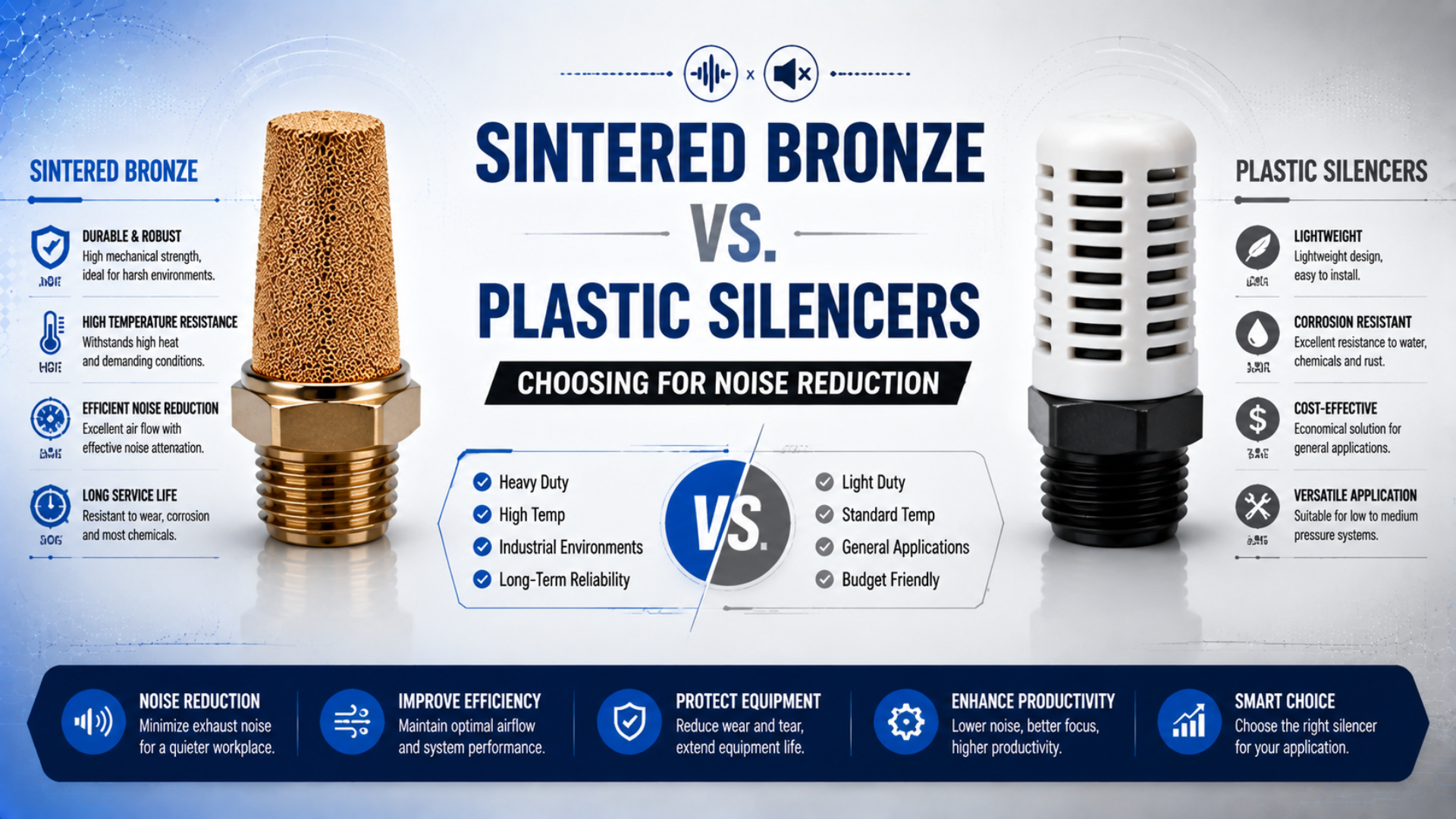
บรอนซ์เผาผนึกและพลาสติกไม่ได้ทำให้ตัวเก็บเสียงนิวเมติกเงียบกว่าโดยอัตโนมัติ การเปรียบเทียบตัวเก็บเสียงบรอนซ์เผาผนึกกับพลาสติกต้องใช้หลักฐานระดับรุ่น วัสดุมีผลต่อช่วงอุณหภูมิ น้ำหนัก พฤติกรรมการกัดกร่อน ความทนต่อแรงกระแทก และทางเลือกด้านบริการ แต่สมรรถนะด้านเสียงและการระบายลมมาจากการออกแบบทั้งชุด ให้เปรียบเทียบข้อมูลเสียง ค่าการนำการไหล แรงดันทดสอบ เกลียว ตัวกลาง และคำแนะนำการบำรุงรักษาของหมายเลขชิ้นส่วนที่แน่นอน
ข้อมูลจากแคตตาล็อกที่ใช้เงื่อนไขตรงกันแสดงประเด็นนี้ได้ชัดเจน ที่ 6 bar และระยะ 1 m IMI Norgren ระบุ T40 บรอนซ์เผาผนึก G1/4 ที่ 81 dBA และ M/S พลาสติกพรุน G1/4 ที่ 84 dBA แต่ที่ G3/8 ลำดับกลับกัน รุ่นพลาสติกอยู่ที่ 81 dBA ส่วนรุ่นบรอนซ์อยู่ที่ 84 dBA (IMI Norgren T40, 2024; IMI Norgren C/S and M/S, 2024).
ประเด็นสำคัญ
- วัสดุเพียงอย่างเดียวไม่สามารถทำนายระดับเสียงหรือความสามารถในการระบายลมได้
- เปรียบเทียบค่า dBA เฉพาะเมื่อแรงดัน ระยะทาง และวิธีทดสอบตรงกัน
- ยืนยันค่าการนำการไหล อุณหภูมิ ตัวกลาง เกลียว และคำแนะนำด้านบริการตามหมายเลขชิ้นส่วน
- ยอมรับตัวเก็บเสียงที่ติดตั้งแล้วจากผลวัดเวลาเคลื่อนที่ภายใต้โหลดและระดับเสียง
สำหรับหลักการทำงานพื้นฐาน ให้เริ่มจาก คู่มือตัวเก็บเสียงนิวเมติก บทความนี้ตอบคำถามด้านการจัดซื้อที่เจาะจงกว่า นั่นคือเมื่อผู้สมัครจากแคตตาล็อกสองรายการใช้วัสดุพรุนต่างกัน ควรใช้หลักฐานใดเป็นตัวตัดสิน
ฉลากวัสดุเป็นเพียงจุดเริ่มต้น
IMI Norgren ระบุให้ซีรีส์ M/S พลาสติกพรุนและซีรีส์ T40 บรอนซ์เผาผนึกใช้งานได้ถึง 10 bar ขณะที่อุณหภูมิตัวกลางสูงสุดที่ระบุคือ 80°C เท่ากัน ขีดจำกัดที่ทับซ้อนกันนี้แสดงให้เห็นว่า กฎทั่วไปอย่าง “ใช้บรอนซ์กับแรงดัน ใช้พลาสติกกับงานเบา” ไม่สามารถแทนที่เอกสารข้อมูลของรุ่นที่แน่นอนได้ (IMI Norgren T40, 2024; IMI Norgren C/S and M/S, 2024).
บรอนซ์เผาผนึก โดยทั่วไปหมายถึงชิ้นส่วนพรุนที่เกิดจากการอัดและยึดประสานอนุภาคบรอนซ์ ชิ้นส่วนนี้อาจประกอบกับฐานเกลียวทองเหลืองหรือฮาร์ดแวร์รองรับอื่น ขนาดอนุภาค ความพรุน ความหนาชิ้นส่วน พื้นที่เปิดรับ และรูปทรงตัวเรือนล้วนมีผลต่อตัวเก็บเสียงสำเร็จรูป
ตัวเก็บเสียงพลาสติก เป็นคำที่ไม่เฉพาะเจาะจงนัก อาจหมายถึงตัวเรือนโพลีเอทิลีน UHMW ที่มีรูพรุน ชิ้นส่วนดูดซับเสียงที่เผาผนึกจากเรซินอยู่ในตัวเรือนแยก หรือเรือนโพลิเมอร์ที่หุ้มตัวกลางชนิดอื่น ตัวอย่างเช่น SMC ระบุว่าทั้งตัวเรือนและวัสดุดูดซับเสียงของรุ่น AN ขนาดกะทัดรัดเป็นเรซิน ขณะที่ตัวเก็บเสียง AN ตัวเรือนโลหะขนาดใหญ่ยังใช้ชิ้นส่วนดูดซับเสียงที่เผาผนึกจากเรซิน (SMC ซีรีส์ AN).
ขอให้ซัพพลายเออร์แยกข้อมูลโครงสร้างต่อไปนี้ให้ชัดเจน:
| หัวข้อใน RFQ | เหตุผลที่สำคัญ |
|---|---|
| วัสดุของชิ้นส่วนพรุน | กำหนดอุณหภูมิ ความเข้ากันได้กับตัวกลาง การตอบสนองต่อสิ่งปนเปื้อน และวิธีบริการที่เป็นไปได้ |
| วัสดุฐานเกลียวและตัวเรือน | มีผลต่อแรงบิดติดตั้ง ความทนต่อแรงกระแทก น้ำหนัก และการสัมผัสการกัดกร่อน |
| ข้อมูลความพรุนหรือข้อมูลจำเพาะของชิ้นส่วน | มีอิทธิพลต่อการต้านการไหลและพฤติกรรมทางเสียง แต่ไม่สามารถสับเปลี่ยนข้ามผู้ผลิตได้ |
| ตัวชี้วัดเสียงและเงื่อนไขทดสอบ | แยกแรงดันเสียงขาออกออกจากการสูญเสียจากการแทรกหรือค่าการลดเสียงที่โฆษณาไว้ |
| ค่าการนำการไหล พื้นที่ใช้งาน หรืออัตราการไหลที่ทดสอบ | ใช้คัดกรองทางระบายลมให้เหมาะกับรอบการทำงานที่ต้องการ |
การเปรียบเทียบที่มีประโยชน์ไม่ใช่ “โลหะกับพลาสติก” แต่คือชุดประกอบที่มีเอกสารรองรับเทียบกับอีกชุดหนึ่ง ตัวเรือนโลหะที่ใช้ชิ้นส่วนเรซินกับตัวเก็บเสียงเรซินทั้งชุดอาจมีพฤติกรรมทางเสียงใกล้เคียงกันมากกว่าที่รูปลักษณ์ภายนอกบอก
วัสดุใดเงียบกว่าภายใต้เงื่อนไขทดสอบที่ตรงกัน
ISO 20145:2026 กำหนดโหมดทดสอบเสียงสองแบบสำหรับตัวเก็บเสียงทางระบายของระบบนิวเมติก ได้แก่ การไหลคงตัวที่แรงดันต้นทางคงที่ และการระบายขณะความดันนิวเมติกลดลง ค่า dBA จะเปรียบเทียบกันได้ก็ต่อเมื่อทราบตัวชี้วัด โหมด เงื่อนไขต้นทาง ระยะทาง และการจัดชุดวัด (ISO 20145:2026).
ข้อมูล Norgren ด้านล่างมาจากผู้ผลิตรายเดียวกัน ใช้แรงดันขาเข้า 6 bar และระยะวัด 1 m ข้อมูลนี้ไม่ได้พิสูจน์ว่าครอบครัวใดดีที่สุดสำหรับวาล์วทุกตัว แต่หักล้างการจัดอันดับวัสดุแบบตายตัวได้
| พอร์ตพิกัด | T40 บรอนซ์เผาผนึก | M/S พลาสติกพรุน | แรงดันเสียงจากแคตตาล็อกที่ต่ำกว่า | การเปรียบเทียบค่าการนำการไหล |
|---|---|---|---|---|
| G1/4 | 81 dBA; C = 7.3 dm³/(s·bar) | 84 dBA; C = 7.5 dm³/(s·bar) | บรอนซ์ต่ำกว่า 3 dBA | พลาสติกสูงกว่าเล็กน้อย |
| G3/8 | 84 dBA; C = 15.0 dm³/(s·bar) | 81 dBA; C = 16.2 dm³/(s·bar) | พลาสติกต่ำกว่า 3 dBA | พลาสติกสูงกว่า |
SMC ให้ข้อเตือนอีกประการเกี่ยวกับความสับสนของตัวชี้วัด ซีรีส์ AN เรซินขนาดกะทัดรัดระบุค่าการลดเสียง 30 dB(A) การลดเสียง ขณะที่รุ่น AN บรอนซ์เผาผนึกโลหะผสมทองแดงระบุ 13, 16, 18 หรือ 21 dB(A) แล้วแต่รุ่น ค่าเหล่านี้เป็นค่าการลดทอน ไม่ใช่ระดับแรงดันเสียงขาออกที่แสดงในตาราง Norgren (SMC AN เรซินขนาดกะทัดรัด; SMC AN เผาผนึก BC).
บทวิเคราะห์ตัวเก็บเสียงแบบการแพร่กับการดูดซับ อธิบายว่าเหตุใดพื้นที่ชิ้นส่วน รูพรุน ห้อง และรูปทรงทางระบายจึงอาจมีผลมากกว่าฉลากวัสดุเพียงคำเดียว
ความสามารถในการไหลและแรงดันย้อนกลับเปลี่ยนการตัดสินใจอย่างไร
SMC ระบุพื้นที่ใช้งานตั้งแต่ 10 ถึง 90 mm² และค่าการนำการไหลเชิงเสียงตั้งแต่ 2 ถึง 18 dm³/(s·bar) ในรุ่น AN เรซินขนาดกะทัดรัดแบบเกลียว ดังนั้นวัสดุครอบครัวเดียวจึงครอบคลุมช่วงพื้นที่ใช้งานถึงเก้าเท่า ขนาดพอร์ตและวัสดุไม่ได้กำหนดความสามารถในการระบายลม (SMC AN เรซินขนาดกะทัดรัด).
ตัวเก็บเสียงทางระบายต่ออนุกรมอยู่กับพอร์ตกระบอกสูบ ข้อต่อ ท่อ ตัวควบคุมการไหล ช่องสปูลวาล์ว แกลเลอรีแมนิโฟลด์ และบรรยากาศ หากค่าการนำการไหลในสภาพสะอาดไม่เพียงพอ หรือสิ่งปนเปื้อนทำให้ค่าดังกล่าวลดลงภายหลัง แรงดันจะค้างอยู่ในห้องที่ควรระบายออก ส่งผลให้เวลาเคลื่อนที่ยาวขึ้นและลดส่วนต่างแรงดันที่ใช้ขับโหลด
อย่าเปรียบเทียบอัตราการไหลของวาล์วกับค่า Cv ของตัวเก็บเสียงโดยตรงราวกับเป็นปริมาณเดียวกัน เอกสารข้อมูลอาจระบุค่าต่อไปนี้ ขึ้นอยู่กับผู้ผลิตและมาตรฐาน:
- ค่าการนำการไหลเชิงเสียง C ใน dm³/(s·bar);
- อัตราส่วนแรงดันวิกฤต b;
- พื้นที่ใช้งาน S ใน mm²;
- Cv หรือ Kv;
- อัตราการไหลของอากาศอิสระที่แรงดันขาเข้าที่ระบุ;
- อัตราการไหลทางระบายที่แนะนำ;
- แรงดันตกคร่อมที่จุดการไหลหนึ่งจุดหรือมากกว่า
การเปรียบเทียบที่ถูกต้องต้องใช้ปริมาณที่เข้ากันได้หรือวิธีคำนวณขนาดของผู้ผลิต หากแคตตาล็อกสองฉบับใช้หน่วยต่างกัน ให้แปลงหน่วยก่อน แล้วคงเงื่อนไขอ้างอิงที่ระบุไว้ พอร์ตพิกัดบอกได้เพียงว่าควรตรวจสอบตระกูลข้อต่อใด
สำหรับพฤติกรรมหลังติดตั้ง ให้สร้างค่าฐานในสภาพสะอาด:
- บันทึกเวลาเคลื่อนที่ออกและหดกลับภายใต้โหลด
- วัดแรงดันขาเข้าวาล์วระหว่างรอบเดียวกัน
- วัดแรงดันในห้องที่กำลังระบายลม
- บันทึกการตั้งค่าควบคุมแบบ meter-out และคุชชัน
- เปรียบเทียบเสียงที่ตำแหน่งวัดซ้ำได้
- ทำซ้ำหลังติดตั้งตัวเก็บเสียงผู้สมัคร
เครื่องจักรที่เงียบลงไม่ได้หมายความว่าผลลัพธ์ดีขึ้นโดยอัตโนมัติ หากเสียงลดลงเพราะชิ้นส่วนทดแทนต้านการไหลมากกว่า กระบอกสูบอาจช้าลงและกักแรงดันลมระบายมากขึ้น ให้ยอมรับผลจากเสียง เวลา และแรงดันร่วมกัน
ตัวเก็บเสียงเฉพาะทาง คู่มือวินิจฉัยการอุดตันของตัวเก็บเสียง ครอบคลุมการติดตามแรงดันและการสับเปลี่ยนด้วยชิ้นส่วนที่ทราบว่าดี ส่วน คู่มือแรงดันย้อนกลับในระบบนิวเมติก อธิบายว่าแรงดันทางระบายเปลี่ยนแรงและความเร็วของแอกชูเอเตอร์อย่างไร
ขีดจำกัดด้านแรงดัน อุณหภูมิ และตัวกลางบอกอะไรจริง
Festo ระบุให้ตัวเก็บเสียงโพลิเมอร์ตระกูล U ใช้งานได้ถึง 10 bar อนุญาตให้ใช้กับลมที่มีสารหล่อลื่น และระบุอุณหภูมิแวดล้อม -10°C ถึง 70°C ตระกูลผลิตภัณฑ์อย่างเป็นทางการนี้เพียงตระกูลเดียวก็ขัดกับกฎทั่วไปที่ว่าพลาสติกจำกัดที่ 6 bar หรือใช้กับลมหล่อลื่นไม่ได้ (Festo ตัวเก็บเสียง U, 2024).
บรอนซ์ยังอาจเป็นผู้สมัครที่ดีกว่าเมื่อแคตตาล็อกรุ่นนั้นรองรับสภาพแวดล้อม Norgren T40 บรอนซ์เผาผนึกระบุช่วง -40°C ถึง 80°C ลมอัดแบบมีหรือไม่มีสารหล่อลื่น สุญญากาศ และก๊าซเฉื่อย ส่วน M/S พลาสติกพรุนระบุ -20°C ถึง 80°C และลมอัดกรองแล้วแบบมีหรือไม่มีสารหล่อลื่น สุญญากาศ และก๊าซเฉื่อย
ช่วงเหล่านี้ทับซ้อนกัน แต่ไม่เหมือนกันทั้งหมด ให้ใช้เงื่อนไขของเครื่องจักรที่กำหนดไว้:
| เงื่อนไข | สิ่งที่ต้องตรวจสอบสำหรับบรอนซ์ | สิ่งที่ต้องตรวจสอบสำหรับพลาสติก |
|---|---|---|
| อุณหภูมิ | ขีดจำกัดของชิ้นส่วน ฐาน การชุบผิว และซีล รวมถึงความเสี่ยงที่คอนเดนเสทจะแข็งตัว | เกรดโพลิเมอร์ การอ่อนตัว ความเปราะ และขีดจำกัดการแข็งตัว |
| ละอองน้ำมัน | การอนุญาตจากผู้ผลิตและการสะสมสิ่งปนเปื้อน | ความเข้ากันได้ของสารหล่อลื่นและพฤติกรรมการอุดตันรูพรุน |
| น้ำหล่อเย็นหรือสารเคมีทำความสะอาด | ความเข้ากันได้ของบรอนซ์ ทองเหลือง การชุบผิว และการกัดกร่อนแบบกัลวานิก | การบวม ความเปราะ การแตกร้าวจากความเค้น และการชะออก |
| การล้างทำความสะอาดหรือการใช้งานกลางแจ้ง | เส้นทางการกัดกร่อน การกักน้ำ และการระบายน้ำของตัวครอบ | รังสี UV ไฮโดรไลซิส การสัมผัสสารเคมี และการกักน้ำ |
| การสั่นสะเทือนและแรงกระแทก | ความแข็งแรงของฐานเกลียว น้ำหนัก และการรองรับชิ้นส่วน | ความเหนียวของตัวเรือน วิธีติดตั้งเกลียว และส่วนยื่นที่ไม่มีตัวรองรับ |
| ลมระบายที่สะอาดหรือไวต่อการปนเปื้อน | การหลุดออกของอนุภาค การพาน้ำมันไปกับลม และข้อกำหนดการเก็บรวบรวมปลายทาง | การหลุดออกของโพลิเมอร์ การอนุมัติตัวกลาง และข้อกำหนดการบำบัดลมระบาย |
แรงดันก็ต้องพิจารณาตามบริบท ตัวเก็บเสียงส่วนใหญ่ติดที่ทางระบายของวาล์ว ดังนั้น “แรงดันใช้งานสูงสุด” ในแคตตาล็อกอาจหมายถึงแรงดันขาเข้าวาล์วหรือเงื่อนไขต้นทางที่อนุญาต ไม่ใช่แรงดันต่อเนื่องที่ค้างอยู่ภายในตัวเก็บเสียง ให้อ่านหมายเหตุ คำจำกัดความของวงจร และคำแนะนำของรุ่นที่เกี่ยวข้อง
สำหรับเสียงในสถานที่ทำงาน อย่าใช้ค่าระดับเสียงเพียงครั้งเดียวสรุปผลด้านกฎหมาย OSHA ระบุ 85 dBA เป็นเวลาแปดชั่วโมงเป็นระดับดำเนินการสำหรับโครงการอนุรักษ์การได้ยิน ขณะที่ตารางระดับการรับสัมผัสที่อนุญาตสำหรับอุตสาหกรรมทั่วไปกำหนด 90 dBA เป็นเวลาแปดชั่วโมง NIOSH แนะนำ 85 dBA เป็นเวลาแปดชั่วโมง โดยใช้อัตราแลกเปลี่ยน 3 dB (OSHA 29 CFR 1910.95; NIOSH, 2024).
การบำรุงรักษาและสิ่งปนเปื้อนขึ้นอยู่กับรุ่น
IMI Norgren ระบุอย่างชัดเจนว่าตัวเก็บเสียง MA และ MB แบบตาข่ายทองเหลืองมีชิ้นส่วนที่ทำความสะอาดได้ ขณะที่ SMC เตือนว่าไม่ควรถอดประกอบตัวเก็บเสียง AN ดังนั้นคำกล่าวว่า “โลหะทำความสะอาดได้” และ “พลาสติกต้องทิ้ง” จึงเป็นการเหมารวมที่ไม่ปลอดภัย วิธีบริการต้องยึดตามคำแนะนำของผลิตภัณฑ์ที่แน่นอน (IMI Norgren MA and MB, 2026; SMC ซีรีส์ AN).
ชิ้นส่วนพรุนอาจสะสมน้ำมัน น้ำ ฝุ่น เศษซีล น้ำยาซีลเกลียว หรือสิ่งปนเปื้อนจากกระบวนการ การต้านการไหลที่เกิดขึ้นขึ้นอยู่กับโครงสร้างรูพรุนและการสัมผัส ไม่ใช่แค่ว่าชิ้นส่วนเป็นบรอนซ์หรือโพลิเมอร์ ตัวเรือนพลาสติกที่แตกร้าวมองเห็นได้ แต่ชิ้นส่วนบรอนซ์ที่ค่อย ๆ อุดตันอาจมองไม่เห็น
ใช้หลักฐานตามสภาพแทนกำหนดปฏิทินเปลี่ยนชิ้นส่วนแบบตายตัว:
- เวลาเคลื่อนที่ภายใต้โหลดออกนอกช่วงที่ยอมรับ;
- แรงดันในห้องที่กำลังระบายเพิ่มขึ้นระหว่างการเคลื่อนที่;
- เสียงเปลี่ยนจากค่าฐานในสภาพสะอาด;
- ชิ้นส่วนมีความเสียหาย การกัดกร่อน การบวม การแตกร้าว หรือสิ่งปนเปื้อนตกค้าง;
- ตัวเก็บเสียงรุ่นเดียวกันที่ทราบว่าดีช่วยคืนสมรรถนะปกติ;
- ถึงขีดจำกัดการตรวจสอบหรือบริการที่ผู้ผลิตกำหนด
การทำความสะอาดต้องไม่ขยายรูพรุน ดันสิ่งปนเปื้อนให้ลึกขึ้น ทิ้งสารละลายตกค้าง หรือทำให้ฐานเกลียวเสียหาย ห้ามใช้ลมอัด ความร้อน การทำความสะอาดด้วยอัลตราโซนิก หรือสารเคมี เว้นแต่คำแนะนำของรุ่นนั้นอนุญาตวิธีดังกล่าว ให้เปลี่ยนชิ้นส่วนที่ไม่สามารถบริการได้
ตัวเก็บเสียงเก่าอาจเปิดให้สิ่งปนเปื้อนเข้าสู่พอร์ตระบายที่เปิดอยู่เมื่อวงจรไม่มีแรงดัน หากการปนเปื้อนจากภายนอกเป็นประเด็น ให้ประเมินทิศทางการติดตั้ง การ์ด ทิศทางการล้าง และความเหมาะสมของอุปกรณ์ป้องกันทางระบายที่ออกแบบมาเฉพาะ เทียบกับตัวเก็บเสียงพรุนทั่วไป
ผู้ซื้อควรเปรียบเทียบตัวเก็บเสียงบรอนซ์เผาผนึกกับพลาสติกอย่างไร
แคตตาล็อกนิวเมติกของ Parker แยกตัวเก็บเสียงเป็นรุ่นพลาสติก โลหะเผาผนึก โลหะทั้งชุด แบบเสียบ แบบปรับได้ แบบงานหนัก และแบบทำความสะอาดตัวเอง ความหลากหลายนี้แสดงว่า “บรอนซ์หรือพลาสติก?” เป็นเพียงหัวข้อหนึ่งใน RFQ ไม่ใช่การตัดสินใจทั้งหมด (แคตตาล็อกนิวเมติกฉบับย่อของ Parker, 2025).
เริ่มจากหน้าที่ใช้งาน แล้วจึงเลือกโครงสร้าง:
- ระบุแหล่งกำเนิดลมระบาย บันทึกรุ่นวาล์ว หน้าที่พอร์ต แรงดัน ปริมาตรกระบอกสูบ เวลาเคลื่อนที่ และรูปแบบรอบการทำงาน
- จับคู่ข้อต่อให้ตรงกัน ยืนยันรหัสเกลียว M, G, R, Rc, Rp หรือ NPT ให้ครบ รวมถึงซีล ระยะขบ และวิธีติดตั้ง
- คัดกรองการไหลในสภาพสะอาด ใช้ค่าการนำการไหล พื้นที่ใช้งาน Cv/Kv หรืออัตราการไหลที่ทดสอบภายใต้เงื่อนไขที่ระบุ
- ปรับข้อมูลเสียงให้อยู่บนฐานเดียวกัน แยกแรงดันเสียงขาออกจากการสูญเสียจากการแทรกหรือค่าการลดเสียงที่โฆษณา
- ตรวจสอบสภาพแวดล้อม บันทึกอุณหภูมิ น้ำมัน น้ำ น้ำหล่อเย็น สารเคมี ฝุ่น การสั่นสะเทือน UV และการล้าง
- ยืนยันกฎด้านบริการ กำหนดว่าชิ้นส่วนที่แน่นอนเปลี่ยนได้ ทำความสะอาดได้ ไม่สามารถบริการได้ หรือมีชิ้นส่วนอื่นป้องกัน
- ทดสอบการยอมรับหลังติดตั้ง เปรียบเทียบเสียง เวลาเคลื่อนที่ แรงดันขณะทำงาน การรั่ว และเสถียรภาพการเคลื่อนที่กับค่าฐานที่อนุมัติ
ใช้บันทึกการเปรียบเทียบแทนคำบอกความชอบ:
| หลักฐาน RFQ ที่ต้องมี | ผู้สมัคร A | ผู้สมัคร B |
|---|---|---|
| หมายเลขชิ้นส่วนเต็มของผู้ผลิต | ||
| วัสดุชิ้นส่วน ฐาน และตัวเรือน | ||
| เกลียวและซีลครบถ้วน | ||
| ค่าการนำการไหล พื้นที่ใช้งาน Cv/Kv หรืออัตราการไหลพิกัด | ||
| ตัวชี้วัดเสียงและเงื่อนไขทดสอบครบถ้วน | ||
| ขีดจำกัดแรงดันและอุณหภูมิ | ||
| ตัวกลางและสภาพสารหล่อลื่นที่อนุญาต | ||
| คำแนะนำการทำความสะอาดหรือเปลี่ยน | ||
| ผลเสียง แรงดัน และเวลาเคลื่อนที่หลังติดตั้ง |
การเปรียบเทียบเกลียวตัวเก็บเสียง อธิบายการตรวจสอบข้อต่อโดยละเอียด ควรใช้ก่อนเปลี่ยนข้ามแบรนด์ เพราะการจับคู่ G1/4, R1/4 หรือ 1/4 NPT เป็นคนละงานกับการจับคู่สมรรถนะเสียงและการไหล
หลังติดตั้งต้องตรวจสอบอะไรบ้าง
NIOSH ใช้อัตราแลกเปลี่ยน 3 dB ในคำแนะนำเรื่องเสียงจากการทำงาน หมายความว่าระยะเวลารับสัมผัสที่แนะนำจะลดลงครึ่งหนึ่งเมื่อเสียงเพิ่มขึ้นทุก 3 dB ความแตกต่าง 3 dBA ในแคตตาล็อกอาจมีความหมาย แต่มีเพียงการวัดหลังติดตั้ง ณ ตำแหน่งผู้ปฏิบัติงานเท่านั้นที่บอกส่วนที่เครื่องจักรมีต่อการรับสัมผัสจริง (NIOSH, 2024).
แยกพลังงานนิวเมติกที่กักเก็บไว้และปฏิบัติตามขั้นตอนความปลอดภัยของเครื่องจักรก่อนเปลี่ยนชิ้นส่วนทางระบาย ติดตั้งผู้สมัครด้วยเกลียว ซีล เครื่องมือ และคำแนะนำแรงขันที่ตรงกับรุ่นนั้น ตัวเรือนเรซิน ตัวเก็บเสียงเมตริกขนาดเล็ก และตัวเรือนโลหะหกเหลี่ยมอาจต้องใช้วิธีต่างกัน
หลังติดตั้ง ให้ทำซ้ำตามเงื่อนไขการทำงานที่บันทึกไว้:
- การตั้งค่าลมจ่ายและสภาพเครื่องจักรเดิม;
- โหลดและทิศทางการเคลื่อนที่เดิม;
- การตั้งค่าตัวควบคุมการไหลและคุชชันเดิม;
- ตำแหน่งและการตั้งค่าเครื่องวัดเสียงเดิม;
- จุดวัดเวลาเคลื่อนที่เดิม;
- ตำแหน่งทรานสดิวเซอร์วัดแรงดันเดิม;
- จำนวนรอบมากพอที่จะเห็นพฤติกรรมที่ไวต่อความร้อนหรือสิ่งปนเปื้อน
ชิ้นส่วนทดแทนจะผ่านก็ต่อเมื่อเสียง แรงดันทางระบายขณะทำงาน เวลาเคลื่อนที่ภายใต้โหลด การรั่ว และเสถียรภาพการเคลื่อนที่ยังอยู่ในขีดจำกัดที่อนุมัติของเครื่องจักร ชิ้นส่วนที่เงียบกว่าแต่ทำให้การเคลื่อนที่ช้าลงไม่ถือว่าเทียบเท่า ส่วนชิ้นส่วนที่คืนความเร็วแต่เพิ่มการรับสัมผัสของผู้ปฏิบัติงานก็ไม่ผ่านเช่นกัน
เก็บค่าฐานพร้อมหมายเลขชิ้นส่วนที่อนุมัติ เงื่อนไขทดสอบ และผลการวัดไว้ การตัดสินใจเปลี่ยนครั้งถัดไปจะเป็นการเปรียบเทียบที่ควบคุมได้ แทนที่จะกลับไปถกเถียงเรื่องวัสดุอีกครั้ง
คำถามที่พบบ่อยเกี่ยวกับตัวเก็บเสียงบรอนซ์เผาผนึกเทียบกับพลาสติก
แคตตาล็อก SMC ระบุตัวเก็บเสียงเรซินที่ลดเสียงได้ 30 dB(A) และรุ่นเผาผนึกโลหะผสมทองแดงที่ 13 ถึง 21 dB(A) ขณะที่ข้อมูล Norgren ที่ 6 bar และเงื่อนไขตรงกันทำให้อันดับวัสดุระหว่าง G1/4 และ G3/8 กลับกัน ดังนั้นคำตอบต่อไปนี้จึงใช้หลักฐานระดับรุ่นแทนกฎวัสดุแบบตายตัว (SMC ซีรีส์ AN; IMI Norgren T40).
บรอนซ์เผาผนึกเงียบกว่าพลาสติกเสมอหรือไม่
ไม่เสมอไป Norgren ระบุรุ่นบรอนซ์ G1/4 ที่ 81 dBA เทียบกับพลาสติก 84 dBA แต่รุ่นพลาสติก G3/8 อยู่ที่ 81 dBA เทียบกับบรอนซ์ 84 dBA ค่าทั้งสี่ใช้ 6 bar และ 1 m รูปทรงชิ้นส่วนและความสามารถในการระบายลมมีความสำคัญร่วมกับวัสดุ
ตัวเก็บเสียงนิวเมติกพลาสติกใช้งานที่ 8 bar ได้หรือไม่
ได้ หากรุ่นที่แน่นอนมีพิกัดรองรับ Festo U ซีรีส์โพลิเมอร์และ Norgren M/S ซีรีส์พลาสติกพรุนต่างระบุไว้ถึง 10 bar ให้ยืนยันว่าแรงดันที่ระบุหมายถึงขาเข้าวาล์วหรือเงื่อนไขต้นทางของตัวเก็บเสียง และตรวจสอบขีดจำกัดอุณหภูมิ ตัวกลาง และการติดตั้ง
ตัวเก็บเสียงประเภทใดอุดตันเร็วกว่า
ไม่มีการจัดอันดับวัสดุที่ใช้ได้ทั่วไป การอุดตันขึ้นอยู่กับโครงสร้างรูพรุน พื้นที่เปิดรับ การพาน้ำมันและน้ำไปกับลม ฝุ่น ความต้องการรอบการทำงาน ทิศทางติดตั้ง และประวัติบริการ ให้สร้างค่าฐานแรงดันและเวลาเคลื่อนที่ในสภาพสะอาด แล้วตรวจการเปลี่ยนแปลงภายใต้รอบที่มีโหลดเหมือนเดิม แทนการประเมินการอุดตันจากรูปลักษณ์
ตัวเก็บเสียงบรอนซ์และพลาสติกทำความสะอาดได้หรือไม่
ทำได้เฉพาะเมื่อคำแนะนำของผู้ผลิตรุ่นนั้นอนุญาต Norgren ระบุว่าชิ้นส่วนตาข่ายทองเหลือง MA และ MB บางรุ่นทำความสะอาดได้ ขณะที่ SMC ระบุว่าไม่ควรถอดประกอบตัวเก็บเสียง AN อย่านำสิทธิ์ของรุ่นหนึ่งไปใช้กับผลิตภัณฑ์บรอนซ์พรุนหรือพลาสติกที่มีโครงสร้าง กาว การชุบผิว หรือขีดจำกัดสารเคมีต่างกัน
หลังเปลี่ยนตัวเก็บเสียงนิวเมติกควรวัดอะไรบ้าง
วัดเสียงที่ตำแหน่งซึ่งเกี่ยวข้องกับผู้ปฏิบัติงานและวัดซ้ำได้ เวลาเคลื่อนที่ออกและหดกลับภายใต้โหลด แรงดันขาเข้าวาล์ว และแรงดันของห้องกระบอกสูบที่กำลังระบาย คงโหลด ลมจ่าย ตัวควบคุมการไหล และคุชชันไว้เหมือนเดิม ยอมรับชิ้นส่วนทดแทนเฉพาะเมื่อเสียง เวลา แรงดัน การรั่ว และเสถียรภาพการเคลื่อนที่ยังอยู่ในขีดจำกัดทั้งหมด
แหล่งที่มาและเอกสารอ้างอิง
- ISO, ISO 20145:2026 กำลังของไหลนิวเมติก - วิธีทดสอบการวัดระดับแรงดันการปล่อยเสียงของตัวเก็บเสียงทางระบาย. สืบค้นเมื่อ 2026-07-27
- OSHA, 29 CFR 1910.95 การรับสัมผัสเสียงจากการทำงาน. สืบค้นเมื่อ 2026-07-27
- NIOSH, ทำความเข้าใจการรับสัมผัสเสียง, 2024 สืบค้นเมื่อ 2026-07-27
- IMI Norgren, ตัวเก็บเสียงบรอนซ์เผาผนึก T40 Quietaire, 2024 สืบค้นเมื่อ 2026-07-27
- IMI Norgren, ตัวเก็บเสียงพลาสติกพรุน C/S และ M/S, 2024 สืบค้นเมื่อ 2026-07-27
- IMI Norgren, ตัวเก็บเสียงงานหนักซีรีส์ MA และ MB, 2026. สืบค้นเมื่อ 2026-07-27
- Festo, ตัวเก็บเสียง U, 2024 สืบค้นเมื่อ 2026-07-27
- SMC, ตัวเก็บเสียง AN ซีรีส์ชนิดเรซินขนาดกะทัดรัด. สืบค้นเมื่อ 2026-07-27
- SMC, ตัวเก็บเสียง AN ซีรีส์ชนิดตัวเรือนเผาผนึก BC. สืบค้นเมื่อ 2026-07-27
- Parker, แคตตาล็อกนิวเมติกฉบับย่อของ Parker, 2025 สืบค้นเมื่อ 2026-07-27