Giriş
Pnömatik silindirleriniz birkaç ayda bir hava sızdırıyor veya contalar aşınıyor, ancak her ikisi aynı anda asla gerçekleşmiyor. 💨 Sinir bozucu bir ikilemle karşı karşıyasınız: sızıntıları durdurmak için sızdırmazlık kuvvetini artırdığınızda sürtünme hızla artarak erken aşınmaya neden oluyor. Sürtünmeyi azalttığınızda ise basınç kaybı kabul edilemez hale geliyor. Bu, bileşen kalitesi sorunu değil, üreticilere milyonlarca dolarlık enerji israfı ve bakım masrafına mal olan temel bir dudak profili tasarım sorunudur.
Dudak profili optimizasyonu, sızdırmazlık dudak geometrisini tasarlama mühendislik sürecidir. Bu süreç, temas açısı (genellikle 8-25°), temas genişliği (0,3-1,5 mm) ve dudak kalınlığı dahil olmak üzere) tasarlama mühendislik sürecidir. Bu süreç, sızdırmazlık kuvveti (sızıntıyı önleme) ve sürtünme kuvveti (aşınma ve enerji kaybını en aza indirme) arasında optimum dengeyi sağlamak için gerçekleştirilir. Uygun şekilde optimize edilmiş profiller, pnömatik silindir uygulamalarında nominal basınçta sızıntı oranlarını 0,1 litre/dakikanın altında tutarken 40-60% sürtünme azalması sağlar.
Geçen çeyrekte, Tennessee'deki bir otomotiv parçaları fabrikasında bakım müdürü olarak çalışan Brian ile çalıştım. Bu fabrikanın üretim hattı, tasarım özelliklerine göre 35% daha fazla basınçlı hava tüketiyordu. OEM silindirleri, aşırı sürtünmeye neden olan agresif conta profilleri kullanıyordu ve bu da ısı birikimine ve contaların hızlı aşınmasına neden oluyordu. Optimize edilmiş dudak profillerine sahip Bepto rodless silindirlerimize geçtikten sonra, hava tüketimi 28% azaldı, conta ömrü üç katına çıktı ve yıllık bakım maliyetleri $43.000 azaldı. 📉
İçindekiler
- Dudak profili optimizasyonu nedir ve silindir performansı için neden önemlidir?
- Temas Açısı ve Dudak Geometrisi, Sızdırmazlık Kuvveti ile Sürtünme Arasındaki Dengede Nasıl Etkili Olur?
- Optimize edilmiş conta dudak profilleri için temel tasarım parametreleri nelerdir?
- Rodless silindirler için en iyi performansı hangi dudak profili tasarımları sağlar?
Dudak profili optimizasyonu nedir ve silindir performansı için neden önemlidir?
Conta dudağı tasarımının arkasındaki mühendislik temellerini anlamak, hem güvenilirlik hem de verimlilik sağlayan silindirleri seçmenize yardımcı olur. 🔧
Dudak profili optimizasyonu, sızdırmazlık için yeterli temas basıncı (genellikle 0,8-2,5 MPa) oluştururken sürtünme kuvvetini en aza indirmek için contanın temas geometrisinin hassas bir şekilde tasarlanmasını içerir. Dudak profili, temas alanını, basınç dağılımını ve yük altındaki deformasyon davranışını belirler ve hava tüketimini (sürtünme, silindir enerji kaybının -80%'sini oluşturur), conta aşınma oranlarını (uygun profiller ömrü 3-5 kat uzatır) ve pnömatik uygulamalarda sistem verimliliğini doğrudan etkiler.
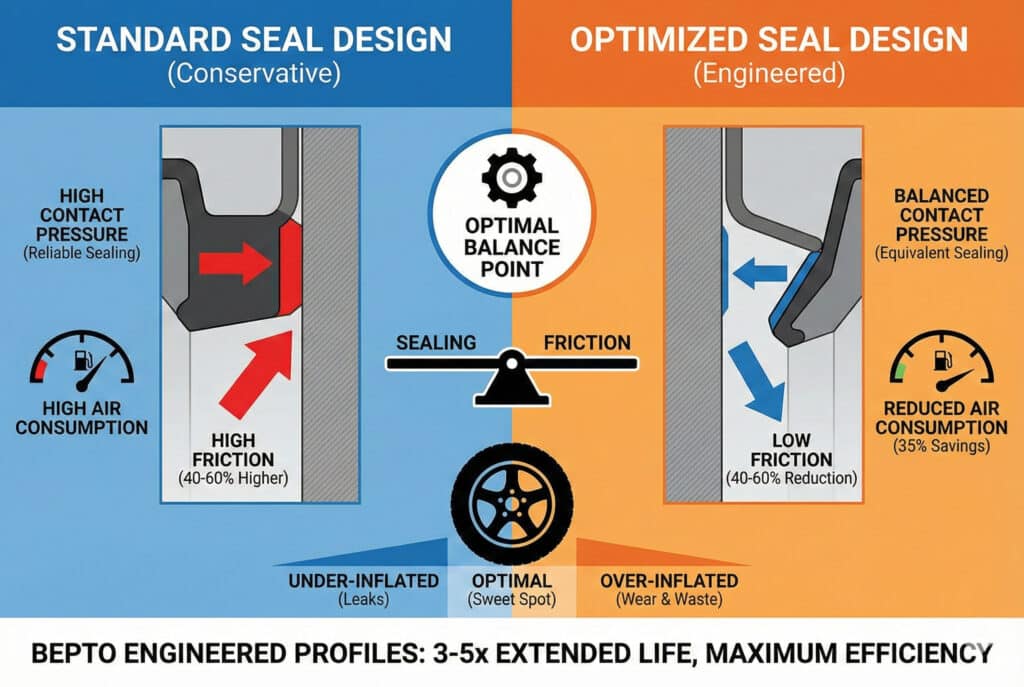
Temel Sızdırmazlık ve Sürtünme Çatışması
Her conta dudağı, sıkıştırılmış havanın kaçmasını önlemek için silindir gövdesine yeterli kuvvetle baskı yapmalıdır. Bu temas basıncı sürtünme yaratır; bu kaçınılmaz bir fizik kuralıdır. Zorluk, temas basıncının sızdırmazlık için yeterli ancak aşırı olmayan “ideal noktayı” bulmaktır.
Bunu bir araba lastiği gibi düşünün: basınç çok düşükse hava kaçar, çok yüksekse hızlı aşınır ve yakıt israfına neden olur. Conta dudakları da aynı şekilde çalışır, ancak temas alanı inç kare yerine milimetre kare cinsinden ölçüldüğü için optimizasyon çok daha karmaşıktır.
Geleneksel mühür tasarımı (muhafazakar yaklaşım):
- Yüksek temas açıları (20-25°)
- Geniş temas bantları (1,0-1,5 mm)
- Aşırı güvenlik marjları
- Sonuç: Güvenilir sızdırmazlık ancak gereğinden fazla sürtünme (40-60%)
Optimize edilmiş conta tasarımı (mühendislik yaklaşımı):
- Orta derecede temas açıları (10-15°)
- Dar temas bantları (0,4-0,7 mm)
- Hesaplanan güvenlik faktörleri
- Sonuç: 40-60% sürtünme azaltma ile eşdeğer sızdırmazlık
Bepto olarak, güvenilirlikten ödün vermeden maksimum verimlilik sağlayan bu optimum denge noktasında yer alan dudak profilleri geliştirmek için sonlu elemanlar analizi ve ampirik testlere büyük yatırımlar yaptık.
Standart Silindirler Neden Aşırı Tasarımlı Conta Profillerine Sahiptir?
Çoğu silindir üreticisi, en kötü senaryoları göz önünde bulundurarak tasarım yaptıkları için muhafazakar conta tasarımları kullanır: kirli ortamlar, yetersiz bakım, aşırı basınçlar. Bu “her duruma uyan tek çözüm” yaklaşımı, normal endüstriyel koşullarda çalışan uygulamaların çoğu için gereksiz yere yüksek sürtünme yaratır.
Bu aşırı tasarımın maliyeti oldukça yüksektir:
- Enerji israfı: Aşırı sürtünme, hava tüketimini -40% oranında artırır.
- Isı üretimi: Yüksek sürtünme, contanın bozulmasını hızlandıran sıcaklıklar oluşturur.
- Azaltılmış hız: Aşırı kopma kuvvetleri silindir hızını sınırlar
- Konumlandırma hataları: Yüksek sürtünme, yapışma-kayma oluşturur ve histerezis1
Performans Etkisini Ölçmek
Bepto'daki test laboratuvarımızda, yüzlerce silindir konfigürasyonunda dudak profili optimizasyonunun gerçek dünyadaki etkisini ölçtük:
Hava tüketimi karşılaştırması (50 mm çap, 8 bar, 500 mm strok, 60 devir/dakika):
- Standart profil: 145 litre/saat
- Optimize edilmiş profil: 95 litre/saat
- Tasarruf: 50 litre/saat = 35% azalma
100 adet bu tür silindir bulunan ve günde 16 saat, yılda 250 gün çalışan bir tesis için:
- Yıllık hava tasarrufu: 20 milyon litre
- Enerji maliyet tasarrufu: $3.600-$7.200 ($0,018-$0,036/m³'de)
- Serbest kalan kompresör kapasitesi: 15-20 kW kompresöre eşdeğer
Bunlar teorik hesaplamalar değil, uygun dudak profili mühendisliğinin somut değerini gösteren müşteri kurulumlarından elde edilen ölçülen sonuçlardır.
Temas Açısı ve Dudak Geometrisi, Sızdırmazlık Kuvveti ile Sürtünme Arasındaki Dengede Nasıl Etkili Olur?
Conta dudağının geometrik parametreleri, performansı belirleyen kuvvet dengesini doğrudan etkiler. 📐
Temas açısı (conta dudağı ile sızdırmazlık yüzeyi arasındaki açı), temas basıncının birincil belirleyicisidir: daha dik açılar (20-25°), daha sığ açılara (8-12°) göre 2-3 kat daha yüksek temas basıncı oluşturur temas genişliği ve dudak kalınlığı ise basınç dağılımını düzenler—optimum profiller, 12-16 bar pnömatik basıncı sızdırmazlık sağlamak için yeterli olan 1,2-1,8 MPa temas basıncını elde etmek için 0,4-0,7 mm temas genişliği ile 10-15° açı kullanır ve sürtünme katsayısını ve aşınma oranını en aza indirir.
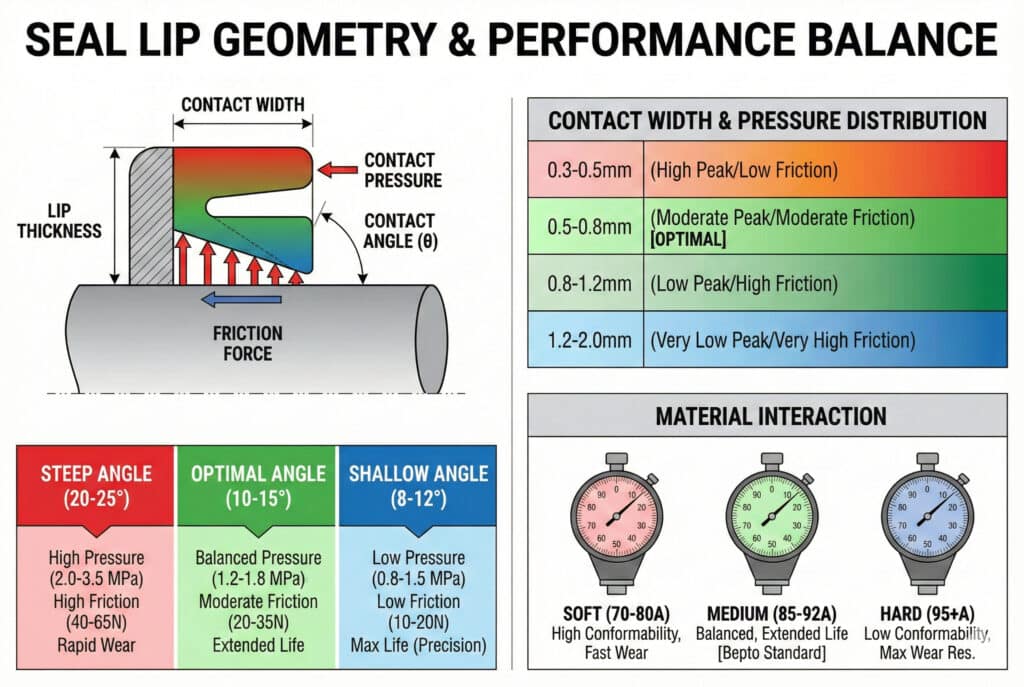
Temas Açısı: Birincil Tasarım Değişkeni
Conta dudağı temas açısı, performans üzerinde en belirgin etkiye sahiptir. Bu açı, contanın müdahalesinin (olukta sıkıştırılma miktarı) namluya karşı temas basıncına nasıl dönüştüğünü belirler.
Dik açı (20-25°) mekaniği:
- Yüksek mekanik avantaj (kuvvet çoğaltma)
- Temas basıncı: 2,0-3,5 MPa
- Mükemmel sızdırmazlık güvenilirliği
- Yüksek sürtünme kuvveti (50 mm çap için 40-65 N)
- Yüksek temas gerilimi nedeniyle hızlı aşınma
Orta dereceli açı (12-18°) mekaniği:
- Dengeli mekanik avantaj
- Temas basıncı: 1,2-2,0 MPa
- İyi sızdırmazlık güvenilirliği
- Orta derecede sürtünme (50 mm çap için 20-35 N)
- Uzatılmış conta ömrü
Sığ açı (8-12°) mekaniği:
- Düşük mekanik avantaj
- Temas basıncı: 0,8-1,5 MPa
- Uygun yüzey kalitesi ile yeterli sızdırmazlık
- Düşük sürtünme (50 mm çap için 10-20 N)
- Maksimum conta ömrü (hassas üretim gerektirir)
Bepto'da, standart çubuksuz silindirlerimiz için 12-15° açıları, düşük sürtünmeli hassas serilerimiz için ise 10-12° açıları kullanıyoruz. Bu açılar daha sıkı üretim toleransları gerektirir, ancak ölçülebilir şekilde üstün performans sağlar.
Temas Genişliği ve Basınç Dağılımı
Temas bandının genişliği, sızdırmazlık arayüzü üzerinde basıncın nasıl dağıtıldığını etkiler. Daha geniş temas, daha düşük tepe basıncı ancak daha yüksek toplam sürtünme kuvveti oluşturur.
| İletişim Genişliği | Tepe Basıncı | Toplam Sürtünme | Sızdırmazlık Özelliği | Aşınma Oranı | En İyi Uygulama |
|---|---|---|---|---|---|
| 0,3-0,5 mm | Çok Yüksek | Düşük | Orta düzeyde | Yüksek (gerilme yoğunluğu) | Düşük sürtünme, orta basınç |
| 0,5-0,8 mm | Orta düzeyde | Orta düzeyde | İyi | Düşük | Optimum denge (Bepto standardı) |
| 0,8-1,2 mm | Düşük | Yüksek | Mükemmel | Orta düzeyde | Yüksek basınçlı, kirlenmiş ortamlar |
| 1,2-2,0 mm | Çok Düşük | Çok Yüksek | Mükemmel | Yüksek (aşırı sürtünme ısısı) | Kaçının (aşırı tasarımlı) |
Çoğu pnömatik uygulama için optimum temas genişliği 0,5-0,8 mm'dir; bu, sürtünmeyi en aza indirecek kadar dar, ancak gerilimi dağıtacak ve erken aşınmayı önleyecek kadar geniştir.
Dudak Kalınlığı ve Esnekliği
Conta dudağının kalınlığı, esnekliğini ve namlu yüzeyindeki düzensizliklere uyum sağlama yeteneğini belirler. Bu, başka bir tasarım ödünleşimi yaratır:
İnce dudaklar (1,0-1,5 mm):
- Yüksek esneklik
- Yüzey farklılıklarına mükemmel uyum
- Belirli bir müdahale için daha düşük temas kuvveti
- Yüksek basınçta ekstrüzyon riski
- Hassas işlenmiş yüzeyler için daha uygun
Kalın dudaklar (2,0-3,0 mm):
- Daha düşük esneklik
- Daha sıkı yüzey toleransları gerektirir
- Belirli bir müdahale için daha yüksek temas kuvveti
- Mükemmel ekstrüzyon direnci
- Yüksek basınçlı uygulamalar için daha uygun
Bepto conta profillerimizi 1,5-2,0 mm dudak kalınlığında tasarlıyoruz. Bu, 16 bar'a kadar basınçlarda yapısal bütünlüğü korurken iyi bir esneklik sağlayan bir uzlaşmadır.
Malzeme Sertliği Etkileşimi
Dudak profili optimizasyonu, geometrinin temas basıncına nasıl dönüştüğünü etkilediği için conta malzemesinin sertliğini (Shore A durometre) dikkate almalıdır:
Yumuşak malzemeler (70-80 Shore A):
- Yeterli basınç oluşturmak için daha dik açılar veya daha geniş temas alanı gerekir.
- Daha iyi uyumluluk
- Daha yüksek sürtünme katsayısı2
- Daha hızlı aşınma
Orta dereceli malzemeler (85-92 Shore A):
- Dengeli profiller için ideal (12-15° açılar)
- Yeterli yapısal bütünlük ile iyi uyumluluk
- Orta derecede sürtünme
- Uzatılmış kullanım ömrü (Bepto standardımız)
Sert malzemeler (95+ Shore A):
- Sızdırmazlığı korurken daha sığ açılar kullanabilir
- Azaltılmış uyumluluk (mükemmel yüzey kalitesi gerektirir)
- Daha düşük sürtünme katsayısı
- Maksimum aşınma direnci
Bu etkileşim, bir malzeme profilini başka bir malzemeye basitçe kopyalayamayacağınızı açıklıyor — tüm sistem birlikte optimize edilmelidir.
Optimize edilmiş conta dudak profilleri için temel tasarım parametreleri nelerdir?
Başarılı bir dudak profili optimizasyonu, birbiriyle ilişkili birçok geometrik ve malzeme parametresinin kontrol edilmesini gerektirir. 🎯
Ana optimizasyon parametreleri arasında temas açısı (çoğu uygulama için en uygun değer 10-15°), gecikmeli geçme3 (15-20% conta kesitinin sıkıştırılması), temas genişliği (0,5-0,8 mm hedef), dudak kalınlığı (yapısal bütünlük için 1,5-2,0 mm), kenar yarıçapı (gerilme yoğunlaşmasını önlemek için 0,2-0,4 mm) ve yüzey kalitesi gereksinimleri (sığ açılı profiller için Ra 0,3-0,6 μm varil kalitesi) — bu parametreler, üretim öncesinde performansı doğrulayan sonlu elemanlar analizi ve ampirik testlerle bağımsız olarak değil, bir sistem olarak optimize edilmelidir.
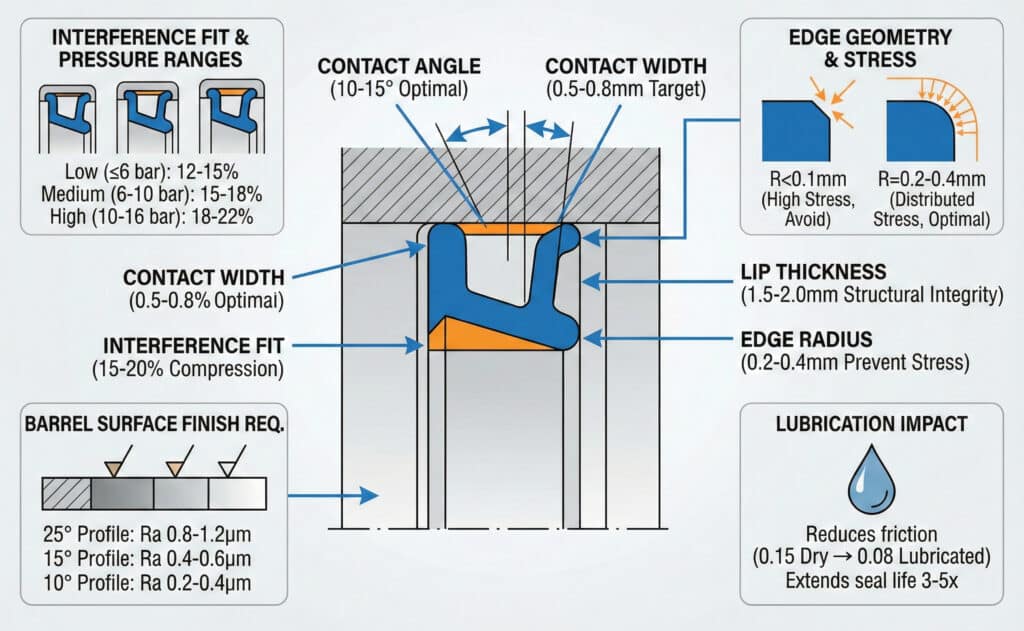
Girişim Sıkıması: Temas Basıncının Temeli
Girişim, contanın serbest çapı ile oluk/namlu çapı arasındaki farktır ve montaj sırasında contanın ne kadar sıkışacağını belirler. Bu sıkışma, sızdırmazlığı sağlayan temas basıncını oluşturur.
Girişim hesaplaması:
için U-cup conta4 50 mm çaplı silindirde:
- Conta dudağı serbest çapı: 51,5 mm
- Namlu çapı: 50,0 mm
- Girişim: 1,5 mm (3% çapında)
- Sonuçta ortaya çıkan sıkıştırma: ~18% dudak kesiti
Optimum müdahale aralıkları:
- Düşük basınç (≤6 bar): 12-15% sıkıştırma
- Orta basınç (6-10 bar): 15-18% sıkıştırma
- Yüksek basınç (10-16 bar): 18-22% sıkıştırma
Çok az müdahale sızıntıya neden olurken, çok fazla müdahale aşırı sürtünme ve ısınmaya neden olur. Bepto'da, tüm silindirlerde tutarlı müdahale sağlamak için conta oluğu boyutlarını ±0,03 mm hassasiyetle kontrol ediyoruz.
Kenar Geometrisi ve Gerilme Yoğunlaşması
Mühür dudağının kenarı — namluyla temas ettiği yer — erken arızaya neden olan gerilme yoğunlaşmasını önlemek için dikkatli bir şekilde yuvarlatılmalıdır:
Keskin kenar (R<0,1 mm):
- Yüksek gerilme yoğunluğu
- Hızlı aşınma başlangıcı
- Kenar yırtılma riski
- Tüm uygulamalarda kaçının
Orta yarıçap (R=0,2-0,4 mm):
- Dağıtılmış gerilme
- Uzun ömür
- Çoğu uygulama için optimum
- Bepto standart özellikleri
Büyük yarıçap (R>0,5 mm):
- Çok düşük gerilme yoğunluğu
- Azaltılmış sızdırmazlık etkinliği (yuvarlak temas)
- Daha yüksek parazit gerektirebilir
- Sadece özel uygulamalar için
Bu görünüşte önemsiz ayrıntı büyük bir fark yaratır—uygun kenar yuvarlatma, yüksek döngülü uygulamalarda conta ömrünü iki katına çıkarabilir.
Namlu Yüzey Kaplama Gereksinimleri
Uygun namlu yüzey kalitesi olmadan dudak profili optimizasyonu anlamsızdır. Düşük açılı, düşük sürtünmeli profiller, agresif yüksek sürtünmeli tasarımlara göre daha iyi yüzey kalitesi gerektirir:
Profil özelinde son kat gereksinimleri:
- 25° agresif profil: Ra 0,8-1,2 μm kabul edilebilir (standart honlama)
- 15° dengeli profil: Ra 0,4-0,6 μm gereklidir (hassas honlama)
- 10° düşük sürtünmeli profil: Ra 0,2-0,4 μm gereklidir (süper finiş)
Bepto'da, çubuksuz silindir gövdelerimizde Ra 0,3-0,5μm'ye ulaşmak için hassas honlama işlemleri kullanıyoruz. Bu yüzey kalitesi, optimize edilmiş dudak profillerimizin tam performans potansiyelini ortaya çıkarmasını sağlıyor.
Massachusetts'teki bir tıbbi cihaz üreticisinde kalite mühendisi olarak çalışan Jennifer ile çalıştım. Jennifer, önceki tedarikçisinden “aynı” silindirleri kullanmasına rağmen tutarsız sızdırmazlık performansı yaşıyordu. Namlu yüzeyini ölçtüğümüzde, Ra 0,6μm ile Ra 1,4μm arasında değişkenlikler tespit ettik; bu tamamen tutarsız bir durumdu. Ra 0,35±0,05μm yüzey kalitesine sahip Bepto silindirlerimiz, Jennifer'ın FDA tarafından düzenlenen süreçleri için ihtiyaç duyduğu tutarlılığı sağladı. 🏥
Yağlama ve Yüzey Kimyası
Mükemmel şekilde optimize edilmiş dudak profilleri bile tasarım performansını elde etmek için uygun yağlamaya ihtiyaç duyar:
Yağlama işlevleri:
- Sınır sürtünme katsayısını azaltır (0,15 kuru → 0,08 yağlanmış)
- Yapışkan aşınmayı önler
- Sürtünme ısısını dağıtır
- Conta ömrünü 3-5 kat uzatır
Yağlayıcı seçim kriterleri:
- Viskozite: Pnömatik uygulamalar için ISO VG 32-68
- Uyumluluk: Contanın malzemesini şişirmemeli veya bozmamalıdır.
- Sıcaklık kararlılığı: Çalışma aralığı boyunca özellikleri korur
- Uygulama yöntemi: Fabrika ön yağlaması ve periyodik yeniden uygulama
Tüm Bepto silindirlerini, contalarımızın malzemelerine özel olarak formüle edilmiş sentetik yağlayıcılarla önceden yağlayarak, ilk strokta optimum performans sağlıyoruz.
Rodless silindirler için en iyi performansı hangi dudak profili tasarımları sağlar?
Rodless silindirler, özel dudak profili optimizasyon yaklaşımları gerektiren benzersiz sızdırmazlık zorlukları sunar. 🚀
Optimum çubuksuz silindir dudak profilleri, 12-15° birincil sızdırmazlık dudağı (basınç tarafı) ve 8-10° ikincil silecek dudağı (atmosferik taraf) ile asimetrik çift dudaklı tasarımlar kullanır. 0,5-0,7 mm temas genişliği ve basınç dengeli geometri ile birleştirilerek net sürtünme kuvvetini en aza indirir. Bu konfigürasyon, tek dudaklı tasarımlara göre 30-40% daha düşük sürtünme kuvvetleri sağlarken çift yönlü sızdırmazlık sağlar. Bu, taşıma contalarının tüm strok uzunluğu boyunca kayarken tutarlı performansı koruması gereken çubuksuz silindirler için çok önemlidir.
Çift Dudaklı Asimetrik Profiller
Rodless silindirler, taşıyıcının her iki tarafında (basınç tarafı ve atmosferik taraf) sızdırmazlık gerektirir. Her iki tarafta da aynı dudak profilleri kullanmak gereksiz sürtünmeye neden olur. Optimize edilmiş tasarımlar asimetrik profiller kullanır:
Birincil conta (basınç tarafı):
- Temas açısı: 12-15°
- Temas genişliği: 0,6-0,8 mm
- İşlev: Basınç tutma (birincil sızdırmazlık)
- Malzeme: 90-92 Shore A poliüretan
İkincil conta (atmosferik taraf):
- Temas açısı: 8-10°
- Temas genişliği: 0,4-0,6 mm
- İşlev: Silecek ve yedek conta
- Malzeme: 88-90 Shore A poliüretan (daha düşük sürtünme için daha yumuşak)
Bu asimetrik yaklaşım, mükemmel sızdırmazlık güvenilirliğini korurken, simetrik çift dudaklı tasarımlara kıyasla toplam sürtünmeyi -35% oranında azaltır.
Basınç Dengeli Geometri
Çubuksuz silindirlerde, basınç taşıyıcı contaların her iki tarafına da etki eder. Akıllı geometri, bu basıncı kullanarak net sürtünme kuvvetini azaltabilir:
Geleneksel tasarım:
- Basınç contaları dışa doğru iter
- Temas basıncını ve sürtünmeyi artırır
- Sürtünme basınçla doğrusal olarak artar
Basınç dengeli tasarım:
- Kontrollü basınç maruziyeti ile zıt conta dudakları
- Basınç kuvvetleri kısmen iptal olur
- Sürtünme, basınçla birlikte sadece 30-50% kadar artar.
Bepto'da, çubuksuz silindirlerimiz, 6-16 bar çalışma aralığında neredeyse sabit sürtünmeyi koruyan tescilli basınç dengeli conta konfigürasyonları kullanır. Bu, tutarlı hız ve konumlandırma hassasiyeti gerektiren uygulamalar için önemli bir avantajdır.
Malzeme Eşleştirme ve Uyumluluk
Optimize edilmiş dudak profilleri, hem conta hem de namlu için uygun malzemelerle birlikte kullanıldığında en iyi sonucu verir:
Conta malzemesi seçimi:
- Standart uygulamalar: 90 Shore A döküm poliüretan
- Düşük sürtünmeli uygulamalar: 92 Shore A iç yağlayıcı içeren poliüretan
- Yüksek sıcaklık: 88 Shore A HNBR (hidrojenlenmiş nitril)
- Ultra düşük sürtünme: Elastomer enerji verici ile doldurulmuş PTFE
Namlu malzemesi ve işleme:
- Standart: Sert eloksallı alüminyum (Ra 0,4-0,6 μm)
- Premium: PTFE emprenye ile sert eloksal kaplama (Ra 0,3-0,4μm)
- NihaiSeramik kaplama (Ra 0,2-0,3 μm, maksimum aşınma direnci)
Malzeme eşleşmesi, dudak geometrisi ile birlikte optimize edilmelidir — anodize alüminyum üzerinde poliüretan için optimize edilmiş bir profil, seramik kaplama üzerinde PTFE ile aynı performansı göstermez.
Performans Doğrulama ve Test
Bepto'da, dudak profillerini sadece teorik olarak tasarlamıyoruz, aynı zamanda titiz testler yaparak performanslarını da doğruluyoruz:
Sürtünme kuvveti testi:
- Basınç aralığı boyunca kopma ve dinamik sürtünmeyi ölçün
- Hedef: 10 bar basınçta 50 mm çap için <15N dinamik sürtünme
- 1 milyon döngü ömür testi üzerinde tutarlılığı doğrulayın
Sızıntı testi:
- Nominal basınçta hava kaybını ölçün
- Hedef: 10 bar basınçta <0,05 litre/dakika
- Aşırı sıcaklıkta (0°C ve 60°C) test edin
Aşınma ömrü testi:
- 120% nominal basınçta hızlandırılmış ömür testi
- Hedef: >2 milyon döngü ile <20% sürtünme artışı
- Mühür durumunu belirli aralıklarla kontrol edin.
Tüm doğrulama kriterlerini geçen profiller üretim silindirlerimize girer ve böylece müşterilerimizin belgelenmiş, doğrulanmış performans elde etmesini sağlar.
Kısa bir süre önce, Oregon'da makine üreticisi olan Robert'a, 3 metrelik stroklu rodless silindir uygulamasında yaşadığı kalıcı bir sorunu çözmesinde yardımcı oldum. Önceki tedarikçisinin silindirleri, 500.000 döngüden sonra 40% sürtünme artışı göstererek hız değişikliklerine ve konumlandırma hatalarına neden oluyordu. Onaylanmış dudak profillerine sahip Bepto rodless silindirlerimiz, 2 milyon döngü boyunca ±8% içinde sürtünmeyi koruyarak, hassas uygulamasının gerektirdiği tutarlılığı sağladı. ⚙️
Uygulamaya Özel Optimizasyon
Farklı uygulamalar, farklı optimizasyon önceliklerinden yararlanır:
Yüksek hızlı uygulamalar (>500 mm/s):
- Öncelik: Sürtünmeyi ve ısı oluşumunu en aza indirgemek
- Profil: 10-12° açı, 0,4-0,6 mm temas genişliği
- Malzeme: Düşük sürtünmeli poliüretan veya dolgulu PTFE
Yüksek basınç uygulamaları (12-16 bar):
- Öncelik: Sızdırmazlık güvenilirliği ve ekstrüzyon direnci
- Profil: 14-16° açı, 0,7-0,9 mm temas genişliği
- Malzeme: 92-95 Shore A poliüretan, destek halkaları ile
Hassas konumlandırma (±0,2 mm tekrarlanabilirlik):
- Öncelik: Tutarlı, düşük sürtünme (minimum histerezis)
- Profil: 11-13° açı, 0,5-0,7 mm temas genişliği
- Malzeme: Dolgulu PTFE veya birinci sınıf poliüretan
Uzun ömürlü uygulamalar (5 milyondan fazla döngü):
- Öncelik: Aşınma direnci ve sürtünme kararlılığı
- Profil: 13-15° açı, 0,6-0,8 mm temas genişliği
- Malzeme: HNBR veya aşınmaya dayanıklı poliüretan
Bepto olarak, müşterilerimizin özel gereksinimlerine en uygun dudak profili yapılandırmasını seçmelerine yardımcı oluyor, performans, maliyet ve uygulama taleplerini dengeleyerek en iyi toplam değeri sunuyoruz.
Sonuç
Dudak profili optimizasyonu, pnömatik silindirlerde sızdırmazlık güvenilirliği ile sürtünme performansı arasındaki geleneksel ödünleşmeyi ortadan kaldırmanın anahtarıdır. Temas açıları, temas genişliği, girişim ve malzeme seçiminin hassas mühendisliği sayesinde, uygun şekilde optimize edilmiş profiller, mükemmel sızdırmazlığı korurken 40-60% sürtünme azaltımı sağlar; bu da daha düşük enerji maliyetleri, daha uzun sızdırmazlık ömrü ve iyileştirilmiş sistem performansı anlamına gelir. Bepto'da, çubuksuz silindirlerimiz, kapsamlı testler ve saha doğrulamalarıyla geliştirilen gelişmiş dudak profili optimizasyonunu içerir ve modern endüstriyel otomasyonun gerektirdiği verimlilik ve güvenilirliği sağlar. 🌟
Seal Lip Profil Optimizasyonu Hakkında Sıkça Sorulan Sorular
S: Sürtünmeyi azaltmak için mevcut silindirlerime optimize edilmiş conta profilleri takabilir miyim?
Yenileme mümkündür, ancak mevcut namlu yüzey kalitesi ve oluk geometrisi ile sınırlıdır. Optimize edilmiş düşük sürtünmeli profiller, Ra 0,3-0,5 μm namlu kalitesi ve standart silindirlerin sağlayamayabileceği hassas oluk boyutları gerektirir. Çoğu durumda, Bepto optimize edilmiş çubuksuz silindirlerimiz gibi özel olarak tasarlanmış silindirlerle değiştirme, belirsiz sonuçlar veren yenileme girişimlerinden daha iyi performans ve maliyet etkinliği sağlar.
S: Optimize edilmiş dudak profillerinden gerçekçi olarak ne kadar sürtünme azalması bekleyebilirim?
Düzgün optimize edilmiş profiller, muhafazakar standart tasarımlara kıyasla sürtünmeyi genellikle 40-60% oranında azaltırken, eşdeğer sızdırmazlık performansını korur. 10 bar basınçta 50 mm çaplı bir silindir için bu, 45-50 N sürtünme (standart) değerinden 18-25 N sürtünme (optimize edilmiş) değerine karşılık gelir. Kesin azalma çalışma koşullarına bağlıdır, ancak Bepto müşterilerimiz genellikle standart silindirlerden geçtikten sonra ölçülen hava tüketiminde 30-45% azalma görürler.
S: Optimize edilmiş düşük sürtünmeli profiller sızdırmazlık güvenilirliğini veya basınç derecesini olumsuz etkiler mi?
Hayır, doğru şekilde tasarlanmış ve optimize edilmiş profiller, sürtünmeyi azaltırken tam sızdırmazlık güvenilirliğini ve basınç derecesini korur. Anahtar, temas basıncını keyfi olarak azaltmak yerine, FEA analizi ve deneysel testler kullanarak sistematik optimizasyon yapmaktır. Bepto tarafından optimize edilmiş silindirlerimiz, 16 bar basınç derecesine sahiptir ve belgelenmiş sızıntı oranları 0,05 litre/dakikanın altındadır. Bu da optimizasyonun güvenilirlikten ödün vermeyi gerektirmediğini kanıtlamaktadır.
S: Dudak profili optimizasyonu, conta ömrünü ve değiştirme sıklığını nasıl etkiler?
Optimize edilmiş profiller, agresif yüksek sürtünmeli tasarımlara kıyasla genellikle conta ömrünü 2-4 kat uzatır, çünkü daha düşük sürtünme daha az ısı ve aşınma oluşturur. Saha verilerimize göre, Bepto tarafından optimize edilmiş contalar, değiştirilmesi gerekmeden önce ortalama 1,5-3 milyon döngü dayanırken, standart agresif profillerde bu sayı 500.000-1 milyon döngüdür. Azalan sürtünme, namlu aşınmasını da azaltarak silindirin genel ömrünü uzatır.
S: Özel uygulamalar için optimize edilmiş dudak profillerini belirlerken hangi bilgileri sağlamam gerekir?
Kritik gereksinimlerinizi belirtin: çalışma basıncı aralığı, gerekli conta ömrü (döngü sayısı), hız aralığı, konumlandırma hassasiyeti gereksinimleri (varsa), çalışma sıcaklığı aralığı ve çevresel koşullar (kirlenme, kimyasallar vb.). Bepto'da uygulama mühendislerimiz bu bilgileri kullanarak standart, düşük sürtünmeli veya yüksek basınçlı varyantlar gibi en uygun dudak profili konfigürasyonunu önerir ve performans gereksinimleriniz ve çalışma koşullarınız için özel olarak tasarlanmış silindirler almanızı sağlar.
-
Pnömatik sistemlerde mekanik histerezisin nedenlerini ve konumlandırma doğruluğu üzerindeki etkisini anlayın. ↩
-
Yaygın endüstriyel conta malzemeleri için sürtünme katsayılarının teknik özetine erişin. ↩
-
Uygun sıkı geçmelerin tanımlanmasında kullanılan mühendislik standartlarını ve matematiksel hesaplamaları gözden geçirin. ↩
-
Akışkan güç sistemlerinde U-cup contaların tasarım özelliklerini ve standart uygulamalarını keşfedin. ↩