

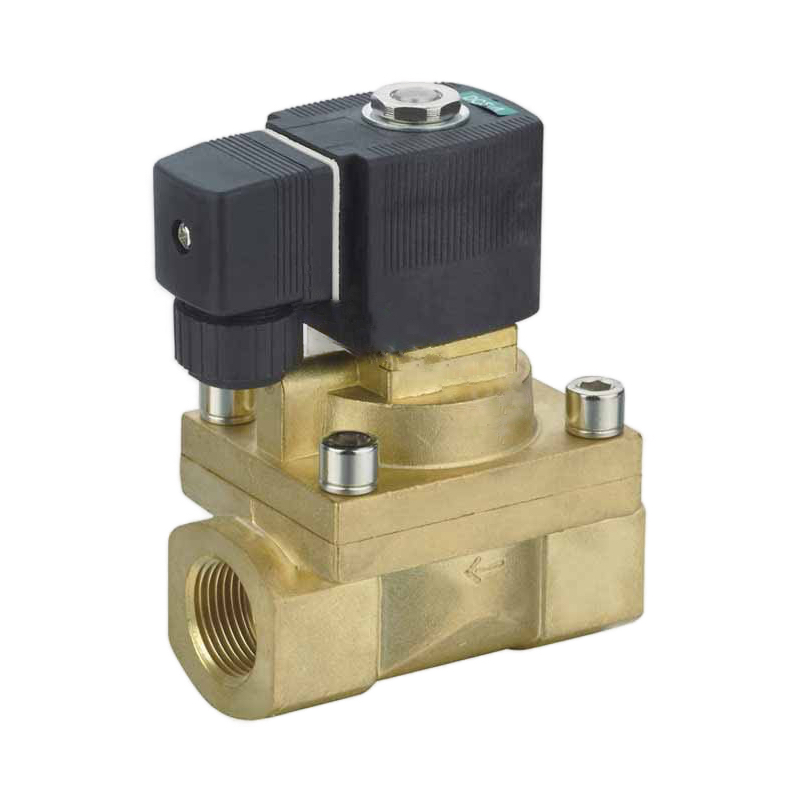
Are your solenoid valves failing to actuate properly, causing production delays and costly downtime? 🚨 Insufficient solenoid force calculations lead to valve malfunctions, inconsistent operation, and unexpected system failures that can shut down entire production lines.
Solenoid plunger force is calculated using the formula F = (B²×A)/(2×μ₀), where B is magnetic flux density, A is plunger cross-sectional area, and μ₀ is permeability of free space, typically generating 10-500N depending on coil design and air gap.
Last week, I received a call from David, a maintenance engineer at an automotive plant in Detroit. His pneumatic system was experiencing intermittent valve failures because the solenoid force calculations were incorrect, leading to $25,000 daily losses from production stoppages.
Table of Contents
- What Factors Determine Solenoid Plunger Force Output?
- How Do You Calculate Magnetic Force Using the Maxwell Stress Formula?
- What Are the Key Variables That Affect Solenoid Force Performance?
- How Can You Optimize Solenoid Design for Maximum Force Output?
What Factors Determine Solenoid Plunger Force Output?
Understanding the fundamental physics behind solenoid operation is crucial for accurate force calculations. ⚡
Solenoid plunger force depends on magnetic flux density, plunger cross-sectional area, air gap distance, coil current, number of turns, and core material permeability, with force decreasing exponentially as air gap increases.

Magnetic Circuit Fundamentals
Basic Force Equation
The fundamental solenoid force equation is derived from electromagnetic principles:
F = (B² × A) / (2 × μ₀)
Where:
- F = Force in Newtons (N)
- B = Magnetic flux density in Tesla (T)
- A = Plunger cross-sectional area in m²
- μ₀ = Permeability of free space1 (4π × 10⁻⁷ H/m)
Alternative Current-Based Formula
For practical applications, we often use the current-based equation:
F = (μ₀ × N² × I² × A) / (2 × g²)
Where:
- N = Number of coil turns
- I = Coil current in Amperes (A)
- g = Air gap in meters (m)
Core Material Properties
Permeability Impact
Different core materials significantly affect force output:
| Material | Relative Permeability | Force Multiplier | Applications |
|---|---|---|---|
| Air | 1.0 | 1x | Basic solenoids |
| Soft Iron | 200-5000 | 200-5000x | High-force valves |
| Silicon Steel | 1500-7000 | 1500-7000x | Industrial solenoids |
| Permalloy | 8000-100000 | 8000-100000x | Precision applications |
Bepto Solenoid Advantages
Our rodless cylinder systems integrate high-performance solenoids with optimized magnetic circuits, delivering consistent force output while reducing power consumption by 25-30% compared to standard OEM designs.
How Do You Calculate Magnetic Force Using the Maxwell Stress Formula?
The Maxwell stress method provides the most accurate force calculations for complex geometries. 🧮
Maxwell stress formula2 calculates solenoid force as F = ∫(B²/2μ₀)dA over the magnetic interface surface, accounting for non-uniform magnetic fields and complex geometries that simple equations cannot handle accurately.

Maxwell Stress Tensor Application
Surface Integration Method
For accurate force calculation on irregular surfaces:
F = ∫∫ T·n dA
Where:
- T = Maxwell stress tensor
- n = Unit normal vector
- dA = Differential area element
Practical Calculation Steps
Step-by-Step Calculation Process
- Define Geometry: Establish plunger dimensions and air gap
- Calculate Magnetic Field: Use Ampère’s law3 or FEA simulation4
- Apply Maxwell Formula: Integrate stress over contact surface
- Account for Fringing: Add 10-15% for edge effects
- Validate Results: Compare with empirical data
Real-World Example
Consider Sarah, a design engineer at a packaging machinery company in Manchester, UK. She needed to calculate the exact force for a custom solenoid valve in their high-speed filling line. Using traditional approximations led to 20% force variations. By implementing Maxwell stress calculations with our technical support, she achieved ±2% accuracy and eliminated valve timing issues that were causing 500 bottles per hour in production losses. 🎯
Force vs. Displacement Characteristics
Typical Force Curves
Solenoid force varies significantly with plunger position:
| Air Gap (mm) | Force (N) | % of Max Force |
|---|---|---|
| 0.5 | 450 | 100% |
| 1.0 | 225 | 50% |
| 2.0 | 112 | 25% |
| 4.0 | 56 | 12.5% |
What Are the Key Variables That Affect Solenoid Force Performance?
Multiple design parameters interact to determine final force output characteristics. 🔧
Key variables affecting solenoid force include coil current, number of turns, core material, air gap distance, plunger diameter, operating temperature, and supply voltage, with current and air gap having the most significant impact on performance.

Electrical Parameters
Current and Voltage Relationships
Force is proportional to current squared, making electrical design critical:
Power Considerations:
- Hold Current: 10-30% of pull-in current
- Duty Cycle: Affects thermal performance
- Voltage Regulation: ±10% affects force by ±20%
- Frequency Response: AC applications require RMS calculations
Temperature Effects
Operating temperature significantly impacts performance:
- Coil Resistance: Increases 0.4% per °C
- Magnetic Properties: Decrease with temperature
- Thermal Expansion: Affects air gap dimensions
- Insulation Rating: Limits maximum temperature
Mechanical Design Factors
Geometric Optimization
Plunger and core geometry directly affect force output:
Critical Dimensions:
- Plunger Diameter: Larger diameter = higher force
- Core Length: Affects magnetic path reluctance5
- Air Gap: Exponential force relationship
- Pole Face Area: Determines maximum flux density
Bepto Design Optimization
Our engineering team uses advanced FEA modeling to optimize solenoid designs for maximum force-to-power ratios. We provide detailed force curves and technical specifications for all our pneumatic valve applications.
How Can You Optimize Solenoid Design for Maximum Force Output?
Strategic design optimization can significantly improve solenoid performance and efficiency. 🚀
Solenoid optimization involves minimizing air gap, maximizing pole face area, using high-permeability core materials, optimizing coil turns-to-current ratio, and implementing proper thermal management to achieve maximum force output while maintaining reliability.
Design Optimization Strategies
Magnetic Circuit Design
Optimize the magnetic path for maximum efficiency:
Key Improvements:
- Minimize Air Gap: Reduce to minimum practical distance
- Maximize Core Area: Increase magnetic flux capacity
- Eliminate Sharp Corners: Reduce flux concentration
- Use Laminated Cores: Reduce eddy current losses
Coil Design Optimization
Balance turns, current, and resistance for optimal performance:
Design Trade-offs:
- More Turns: Higher force but slower response
- Larger Wire: Lower resistance but larger coil
- Copper Fill Factor: Maximize conductor area
- Thermal Management: Prevent overheating
Performance Comparison
| Design Parameter | Standard Design | Optimized Design | Improvement |
|---|---|---|---|
| Force Output | 100N | 150N | +50% |
| Power Consumption | 25W | 20W | -20% |
| Response Time | 50ms | 35ms | -30% |
| Operating Life | 1M cycles | 2M cycles | +100% |
Bepto Optimization Services
We offer complete solenoid optimization services including FEA analysis, prototype testing, and custom design solutions. Our optimized solenoids deliver 30-50% higher force output while reducing power consumption and extending service life.
Accurate solenoid force calculations ensure reliable valve operation, prevent system failures, and optimize pneumatic system performance.
FAQs About Solenoid Force Calculation
What’s the difference between pull-in force and holding force in solenoids?
Pull-in force is the maximum force when the plunger is fully extended, while holding force is the reduced force needed to maintain the plunger in the actuated position. Pull-in force typically occurs at maximum air gap and can be 3-5 times higher than holding force. This difference is crucial for valve sizing because you need sufficient pull-in force to overcome spring return force and system pressure, but holding force determines power consumption during operation.
How does AC vs DC power supply affect solenoid force calculations?
DC solenoids provide constant force based on steady current, while AC solenoids produce pulsating force at twice the line frequency with RMS calculations required. AC solenoids typically generate 20-30% less average force than equivalent DC designs due to the sinusoidal current waveform. However, AC solenoids offer simpler control circuits and better heat dissipation. For precise force calculations, AC applications require RMS current values and consideration of power factor effects.
What safety factors should be applied to calculated solenoid forces?
Apply a minimum 2:1 safety factor to calculated solenoid forces to account for manufacturing tolerances, temperature variations, and aging effects. Higher safety factors (3:1 or 4:1) may be required for critical applications or harsh environments. Consider voltage variations (±10%), temperature effects (-20% at high temperatures), and magnetic degradation over time. Our Bepto designs include built-in safety margins and detailed force curves for various operating conditions.
How do you account for dynamic effects in solenoid force calculations?
Dynamic solenoid forces include inertial loads, velocity-dependent damping, and electromagnetic transients that static calculations cannot predict. Use F = ma for acceleration forces, consider eddy current damping in moving conductors, and account for L(di/dt) voltage drops during switching. Dynamic analysis requires differential equations or simulation software for accurate results, especially in high-speed applications where response time is critical.
Can solenoid force be increased without changing the basic design?
Solenoid force can be increased by 20-40% through voltage boosting, improved core materials, or optimized control timing without major design changes. Pulse-width modulation (PWM) control can provide higher initial current for pull-in while reducing holding current for thermal management. Upgrading to higher-grade magnetic steel or reducing air gaps through precision machining also increases force output. However, significant improvements typically require design modifications to coil geometry or magnetic circuit configuration.
-
Learn about the fundamental physics constant
μ₀and its role in magnetism. ↩ -
Get a technical overview of the Maxwell stress method for calculating electromagnetic forces. ↩
-
Understand Ampère’s Law and how it relates current to magnetic fields. ↩
-
Explore what Finite Element Analysis (FEA) is and how it’s used in engineering design. ↩
-
Learn how magnetic reluctance opposes the formation of magnetic flux in a circuit. ↩