

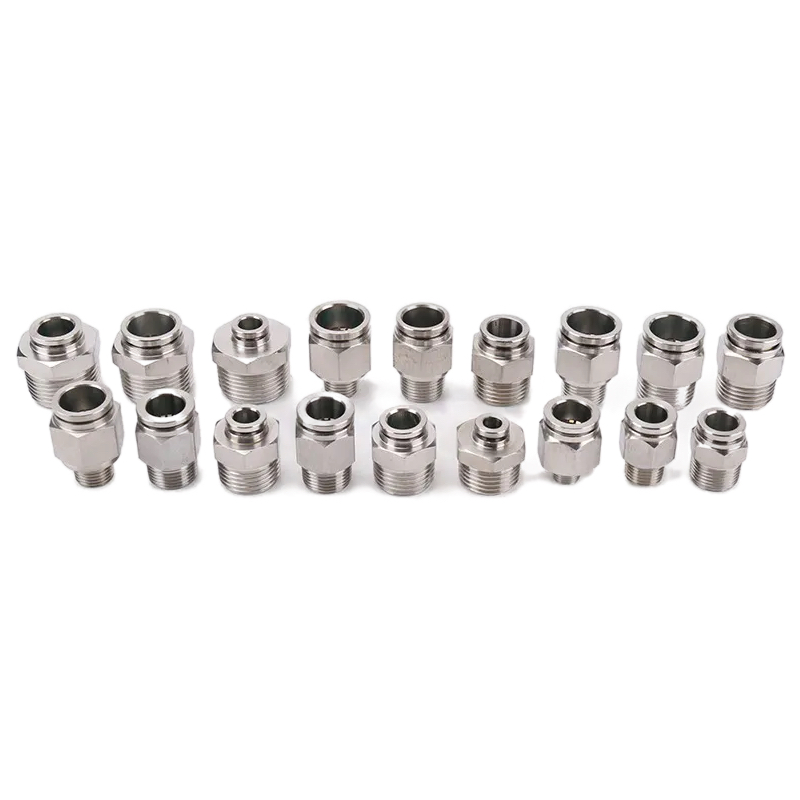
Your standard brass fittings are corroding in harsh environments, causing costly leaks and contaminating your clean processes, while inferior materials threaten both system reliability and product quality. The wrong fitting material can lead to catastrophic system failures, regulatory violations, and thousands of dollars in damaged products. 😨
Stainless steel pneumatic fittings provide superior corrosion resistance, higher pressure ratings, temperature stability from -40°F to 400°F, and contamination-free operation essential for food processing, pharmaceuticals, marine applications, and chemical processing – offering 3-5 times longer service life than brass alternatives while maintaining leak-tight seals and meeting strict sanitary standards.
I recently worked with Michael, a process engineer at a pharmaceutical packaging facility in Massachusetts, who was experiencing frequent fitting failures and contamination issues with his existing brass connections. After switching to our recommended 316L stainless steel fittings, his facility achieved zero contamination incidents over 18 months and reduced maintenance costs by 65%, while meeting FDA compliance requirements effortlessly.
Table of Contents
- What Makes Stainless Steel Pneumatic Fittings Superior to Standard Materials?
- Which Applications Absolutely Require Stainless Steel Pneumatic Connections?
- How Do You Select the Right Stainless Steel Grade for Your System?
- What Installation and Maintenance Practices Ensure Optimal Performance?
What Makes Stainless Steel Pneumatic Fittings Superior to Standard Materials?
Stainless steel fittings offer unmatched durability and performance advantages in demanding industrial environments.
Stainless steel pneumatic fittings excel through exceptional corrosion resistance (withstanding acids, alkalis, and salt spray), higher pressure ratings (up to 6000 PSI vs. 1000 PSI for brass), superior temperature stability (-40°F to 400°F operating range), non-contaminating surfaces for clean applications, and 3-5 times longer service life – making them essential for critical systems where reliability and purity cannot be compromised.

Material Property Comparison
Performance Characteristics:
| Property | Brass Fittings | 304 Stainless | 316L Stainless | Performance Advantage |
|---|---|---|---|---|
| Corrosion Resistance | Fair | Excellent | Superior | 5-10x longer life |
| Pressure Rating | 1000 PSI | 4000 PSI | 6000 PSI | 4-6x higher capacity |
| Temperature Range | -20°F to 200°F | -40°F to 350°F | -40°F to 400°F | 2x wider operating range |
| Chemical Compatibility | Limited | Good | Excellent | Universal application |
| Contamination Risk | High (lead content) | None | None | Clean room suitable |
Corrosion Resistance Benefits
Environmental Durability:
- Salt spray resistance: 1000+ hours without degradation
- Chemical compatibility: Resistant to most acids and alkalis
- Oxidation resistance: No rust or discoloration over time
- Galvanic compatibility1: Prevents dissimilar metal corrosion
Cost Analysis Over Service Life:
- Initial cost: 2-3x higher than brass
- Service life: 5-10x longer than standard materials
- Maintenance reduction: 70-80% fewer replacements
- Total cost of ownership: 40-60% lower over 5 years
Pressure and Temperature Performance
High-Pressure Capabilities:
- Working pressure: Up to 6000 PSI (316L grade)
- Burst pressure: 4x working pressure minimum
- Fatigue resistance: Superior cycle life under pressure
- Safety factor: Higher margins for critical applications
Temperature Stability:
- Cryogenic performance: Maintains ductility to -320°F
- High-temperature strength: Retains properties to 400°F
- Thermal cycling: Excellent expansion/contraction resistance
- Dimensional stability: Minimal creep under sustained loads
Surface Quality and Cleanliness
Sanitary Design Features:
- Surface finish: 32 Ra or better2 for food/pharma
- Crevice-free design: Eliminates bacterial harboring points
- Cleaning compatibility: Withstands aggressive sanitizers
- Validation support: Full material traceability and certifications
Which Applications Absolutely Require Stainless Steel Pneumatic Connections?
Critical industries demand stainless steel fittings to ensure product safety, regulatory compliance, and system reliability.
Applications requiring stainless steel pneumatic fittings include food and beverage processing, pharmaceutical manufacturing, marine and offshore systems, chemical processing, clean room environments, and high-temperature operations – these industries cannot tolerate contamination, corrosion failures, or material degradation that could compromise product quality, safety, or regulatory compliance.

Food and Beverage Industry
Critical Applications:
- Direct food contact: Pneumatic conveying systems
- Packaging machinery: Filling, sealing, and labeling equipment
- Process control: Valve actuation and flow control
- Cleaning systems: CIP (Clean-in-Place) operations
Regulatory Requirements:
- FDA compliance: 21 CFR 177.2600 specifications
- 3-A Sanitary Standards3: Design and material requirements
- HACCP compatibility: Hazard analysis and control points
- Traceability: Full material certification documentation
Pharmaceutical and Medical Device Manufacturing
Sterile Processing Applications:
- Tablet compression: High-pressure pneumatic systems
- Filling operations: Aseptic processing equipment
- Packaging systems: Blister pack and bottle filling
- Laboratory equipment: Analytical instrument pneumatics
Quality Standards:
- USP Class VI4: Biological reactivity testing
- ISO 13485: Medical device quality management
- cGMP compliance: Current Good Manufacturing Practices
- Validation protocols: Installation, operational, performance qualification
Marine and Offshore Environments
Harsh Environment Applications:
- Deck machinery: Winches, cranes, and positioning systems
- Process equipment: Oil and gas processing platforms
- Safety systems: Emergency shutdown and fire suppression
- Subsea operations: ROV and diving support equipment
Environmental Challenges:
- Salt spray exposure: Continuous corrosive atmosphere
- Temperature extremes: Arctic to tropical conditions
- Pressure cycling: Wave action and operational demands
- Maintenance access: Remote location servicing difficulties
When I helped Lisa, a facility manager at a seafood processing plant in Alaska, upgrade from brass to 316L stainless steel fittings, the results were dramatic:
- Zero corrosion failures over 2 years in harsh saltwater environment
- 90% reduction in emergency maintenance calls
- $85,000 annual savings in replacement parts and labor
- Full FDA compliance achieved for export markets
Chemical Processing Industry
Aggressive Chemical Compatibility:
- Acid resistance: Nitric, sulfuric, and phosphoric acids
- Alkali resistance: Sodium hydroxide and potassium hydroxide
- Solvent compatibility: Organic and chlorinated compounds
- Oxidizing environments: Bleach and peroxide systems
How Do You Select the Right Stainless Steel Grade for Your System?
Choosing the appropriate stainless steel grade ensures optimal performance and cost-effectiveness for your specific application.
Select stainless steel pneumatic fitting grades based on corrosion resistance requirements (304 for general use, 316L for chlorides and acids), operating temperature range, pressure requirements, cost considerations, and regulatory compliance needs – proper grade selection prevents premature failure while avoiding unnecessary expense from over-specification.
Grade Selection Matrix
304 Stainless Steel Applications:
- General industrial: Non-corrosive environments
- Food processing: Dry applications, limited chemical exposure
- Indoor pneumatics: Climate-controlled environments
- Cost-sensitive projects: Budget-conscious installations
316L Stainless Steel Applications:
- Marine environments: Salt spray and chloride exposure
- Chemical processing: Acid and chloride resistance required
- Pharmaceutical: Highest purity and corrosion resistance
- High-temperature: Sustained elevated temperature operation
Chemical Compatibility Guide
Corrosion Resistance Ratings:
| Chemical/Environment | 304 SS | 316L SS | Recommended Grade |
|---|---|---|---|
| Fresh water | Excellent | Excellent | 304 (cost effective) |
| Salt water/chlorides | Fair | Excellent | 316L (required) |
| Nitric acid | Good | Excellent | 316L (preferred) |
| Sulfuric acid | Poor | Good | 316L (required) |
| Caustic solutions | Good | Excellent | 316L (preferred) |
| Organic solvents | Excellent | Excellent | 304 (adequate) |
Pressure and Temperature Considerations
Grade-Specific Performance:
| Parameter | 304 Stainless | 316L Stainless | Selection Criteria |
|---|---|---|---|
| Max Working Pressure | 4000 PSI | 6000 PSI | Choose 316L for >4000 PSI |
| Temperature Range | -40°F to 350°F | -40°F to 400°F | 316L for >350°F |
| Fatigue Strength | Good | Excellent | 316L for cycling loads |
| Stress Corrosion | Susceptible | Resistant | 316L for stressed parts |
Economic Analysis
Total Cost of Ownership Comparison:
- 304 SS initial cost: 150% of brass fitting cost
- 316L SS initial cost: 200-250% of brass fitting cost
- Service life advantage: 5-10x longer than brass
- Maintenance savings: 70-80% reduction in replacements
- Payback period: 12-24 months in harsh environments
Bepto’s Stainless Steel Fitting Solutions:
We provide comprehensive stainless steel pneumatic connections for our rodless cylinder systems:
- Grade options: 304 and 316L available
- Size range: 1/8″ to 1″ NPT and metric threads
- Pressure ratings: Up to 6000 PSI working pressure
- Certifications: Full material traceability and compliance documentation
- Custom solutions: Special alloys and configurations available
What Installation and Maintenance Practices Ensure Optimal Performance?
Proper installation and maintenance techniques maximize the performance and service life of stainless steel pneumatic fittings.
Optimal stainless steel fitting performance requires proper thread preparation with compatible sealants, correct torque specifications (typically 25-50% higher than brass), avoiding dissimilar metal contact, regular inspection for stress corrosion, and using appropriate cleaning methods – following these practices ensures leak-tight connections, prevents premature failure, and maintains system integrity throughout the service life.
Installation Best Practices
Thread Preparation and Sealing:
- Thread sealant: Use PTFE tape or anaerobic compounds
- Avoid: Pipe dope containing lead or sulfur compounds
- Thread engagement: Minimum 3-4 full threads for pressure rating
- Cross-threading prevention: Hand-start all connections
Torque Specifications:
| Fitting Size | 304 Stainless | 316L Stainless | Standard Brass | Torque Increase |
|---|---|---|---|---|
| 1/8″ NPT | 12-15 ft-lbs | 15-18 ft-lbs | 8-12 ft-lbs | 25-50% higher |
| 1/4″ NPT | 18-22 ft-lbs | 22-26 ft-lbs | 12-18 ft-lbs | 25-45% higher |
| 3/8″ NPT | 25-30 ft-lbs | 30-35 ft-lbs | 18-25 ft-lbs | 25-40% higher |
| 1/2″ NPT | 35-40 ft-lbs | 40-45 ft-lbs | 25-35 ft-lbs | 25-30% higher |
Maintenance and Inspection
Routine Inspection Schedule:
- Daily: Visual check for leaks and damage
- Weekly: Torque verification on critical connections
- Monthly: Detailed inspection for stress corrosion
- Quarterly: System pressure testing and documentation
Cleaning and Sanitization:
- Compatible cleaners: Alkaline, acid, and chlorine-based sanitizers
- Avoid: Hydrochloric acid and sulfuric acid solutions
- Passivation: Periodic treatment to restore corrosion resistance
- Validation: Cleaning effectiveness verification protocols
Troubleshooting Common Issues
Stress Corrosion Cracking5 Prevention:
- Proper installation: Avoid over-torquing and binding
- Environmental control: Minimize chloride exposure when possible
- Regular inspection: Early detection of crack initiation
- Material upgrade: Consider 316L for susceptible applications
Galling Prevention:
- Lubrication: Use anti-seize compounds during assembly
- Thread quality: Ensure proper thread finish and tolerance
- Installation speed: Slow, controlled assembly process
- Material selection: 316L has better galling resistance
David, a maintenance manager at a chemical processing facility in Texas, implemented our comprehensive stainless steel fitting maintenance program:
- Eliminated all corrosion-related failures over 3 years
- Reduced maintenance labor by 60% through extended service intervals
- Achieved 99.8% system uptime in critical process areas
- Saved $120,000 annually in emergency repairs and downtime costs
Bepto’s Technical Support Services:
We provide complete installation and maintenance support:
- Installation training: Proper techniques and torque procedures
- Maintenance programs: Scheduled inspection and replacement
- Technical consultation: Material selection and system optimization
- Emergency support: 24/7 technical assistance and rapid parts delivery
Regular maintenance of your stainless steel pneumatic fittings is a small investment that ensures years of reliable, leak-free operation. 🔧
Conclusion
Stainless steel pneumatic fittings are essential for critical applications – invest in the right grade and proper installation to ensure long-term system reliability and performance. ⚙️
FAQs About Stainless Steel Pneumatic Fittings
Q: How much more do stainless steel pneumatic fittings cost Compared to brass?
Stainless steel fittings typically cost 150-250% more initially than brass fittings, but their 5-10 times longer service life and reduced maintenance requirements result in 40-60% lower total cost of ownership over 5 years in most applications.
Q: Can I mix stainless steel fittings with brass components in the same system?
While technically possible, mixing stainless steel and brass can cause galvanic corrosion in the presence of moisture, so it’s recommended to use compatible materials throughout the system or install dielectric unions where dissimilar metals must connect.
Q: What’s the difference between 304 and 316L stainless steel for pneumatic applications?
316L stainless steel contains molybdenum for superior corrosion resistance, especially against chlorides and acids, making it essential for marine, chemical, and pharmaceutical applications, while 304 is adequate for general industrial use in non-corrosive environments.
Q: Do stainless steel fittings require special installation tools or techniques?
Stainless steel fittings require 25-50% higher torque values than brass and benefit from anti-seize compounds to prevent galling, but standard pneumatic installation tools and techniques apply with proper torque specifications and thread preparation.
Q: How do I prevent galling when installing stainless steel pneumatic fittings?
Prevent galling by using anti-seize lubricants, ensuring proper thread quality, installing slowly with controlled torque, avoiding cross-threading, and selecting 316L grade which has better galling resistance than 304 stainless steel.
-
Understand the electrochemical process of galvanic corrosion and how to prevent it in your systems. ↩
-
Learn how Roughness Average (Ra) is used to measure and specify surface finish for sanitary applications. ↩
-
Explore the official 3-A Sanitary Standards and their requirements for hygienic equipment design. ↩
-
Review the requirements for USP Class VI biological reactivity testing for medical and pharmaceutical components. ↩
-
Discover the causes and prevention methods for stress corrosion cracking in industrial environments. ↩