

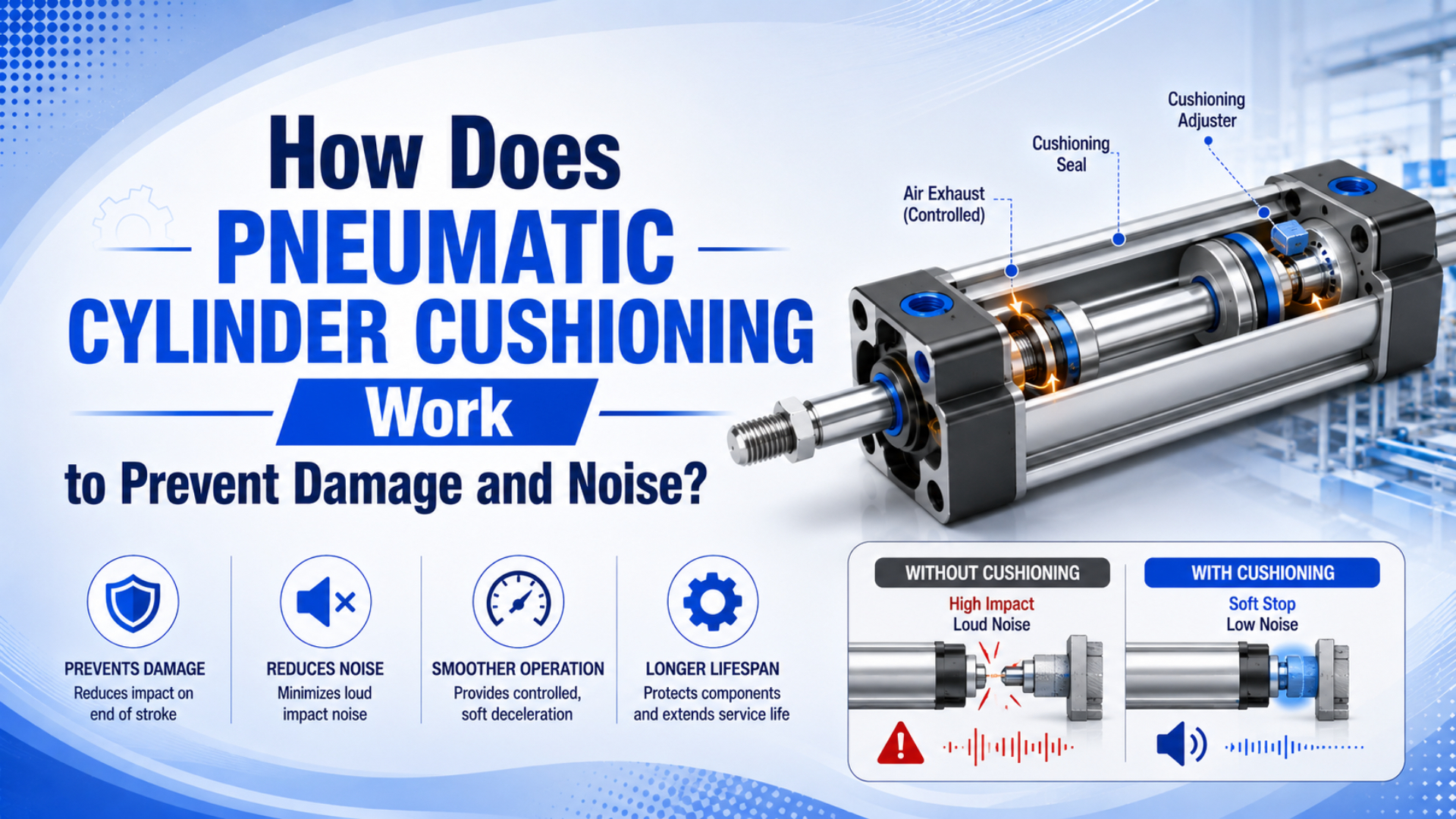
Pneumatic cylinder cushioning slows the piston during the last part of travel by trapping exhaust air, forcing that air through a restricted path, and turning a hard end-cap hit into controlled deceleration. If the cushion is too open, the cylinder bangs. If it is too closed, the piston bounces or crawls into position.
Key Takeaways
- Festo separates end cushioning into 3 methods: elastic, pneumatic or servo-pneumatic, and hydraulic damping.
- Parker warns that piston speed at the start of cushioning is usually about 50% higher than average speed.
- Noise tuning matters because OSHA hearing conservation begins at 85 dBA over an 8-hour TWA.
What Is Pneumatic Cylinder Cushioning in One Sentence?
Pneumatic cylinder cushioning is controlled end-position damping. Festo describes 3 common methods: elastic, pneumatic or servo-pneumatic, and hydraulic damping (Festo, 2022, retrieved 2026-07-08). For factory air cylinders, adjustable pneumatic cushioning is the usual serviceable choice.
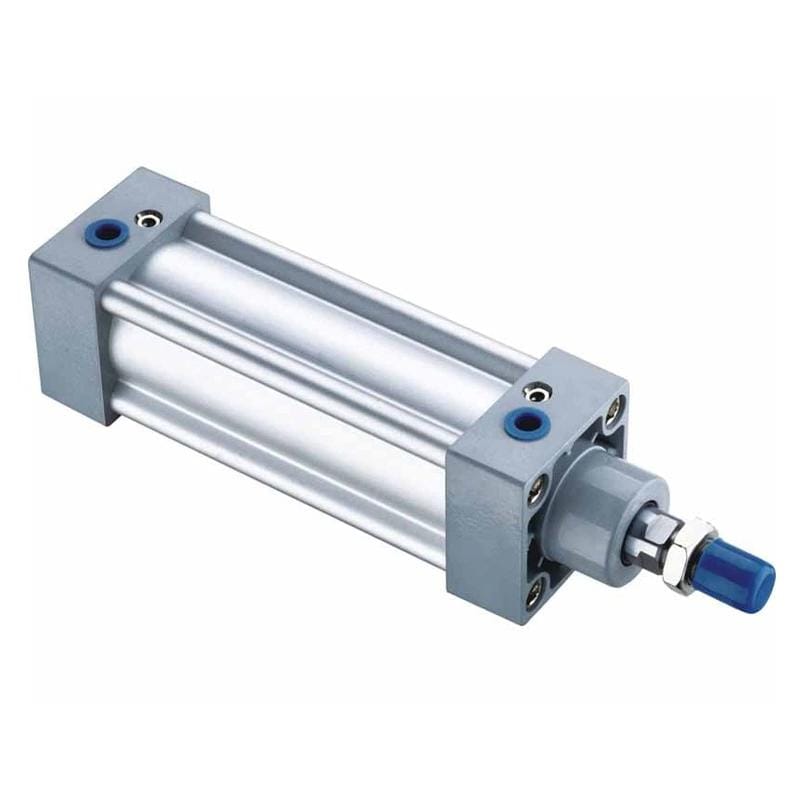
The simplest answer is this: the cylinder lets the piston move at normal speed through most of the stroke, then restricts exhaust flow near the end so the piston slows down before it reaches the cap. That short damping zone protects seals, end covers, piston hardware, mounting bolts, sensors, and machine frames.
The mistake we see in replacement work is treating cushioning as a comfort feature. It is not. Cushioning is part of the load path. The last 10 to 40 mm of travel can decide whether the actuator survives millions of cycles or hammers itself loose in a week.
Good cushioning also changes the sound of the machine. A tuned cylinder should stop with a controlled finish, not a sharp metallic hit. It may still exhaust air, and the muffler may still make noise, but the mechanical impact should disappear.
How Does the Air Cushion Slow the Piston?
Festo explains that adjustable pneumatic damping traps air in the cylinder end chamber, then lets it escape through an adjustment screw (Festo, 2022, retrieved 2026-07-08). That trapped air becomes the brake in the final part of stroke.
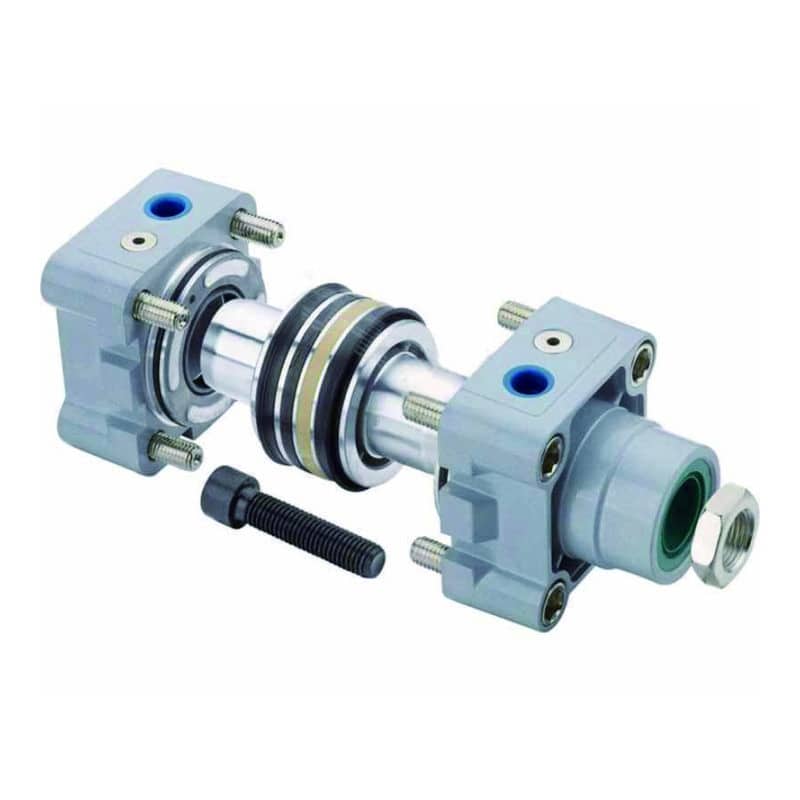
In a typical cushioned double-acting cylinder, the piston carries a cushion sleeve or cushion spear. As the piston approaches the end cap, that sleeve enters a matching bore and blocks the main exhaust path. The remaining air can leave only through a smaller passage controlled by a needle valve.
Cushion energy is the energy that the air cushion, end stop, or external shock absorber must absorb before the piston reaches its final position. Pressure rises in the trapped chamber and pushes back on the piston. What happens if one input changes? The same setting can become too soft or too restrictive.
The physics is simple enough for a shop-floor check:
Kinetic energy = 0.5 x moving mass x impact velocity^2
Drive energy through cushion = drive force x cushion stroke
Required absorbed energy = kinetic energy + drive energy
That formula is why speed hurts more than many teams expect. Doubling the approach velocity makes the kinetic-energy term 4 times larger. Opening a speed controller to save half a second can overload the cushion even when the cylinder bore and pressure never changed.
Components That Control End-of-Stroke Cushioning
Parker lists OSP-P rodless cylinders as double-acting units with adjustable end cushioning and cushion lengths from 11 mm to 39 mm (Parker, 2025). Values differ by series, but the component pattern is the same.
| Component | What it does | What to check during tuning |
|---|---|---|
| Cushion sleeve or spear | Closes the main exhaust path near the end of stroke | Damage, burrs, seal wear, wrong piston assembly |
| Cushion chamber | Holds trapped air during deceleration | Oil, dirt, water, blocked passages |
| Needle valve or cushion screw | Sets how fast trapped air bleeds out | Small turns, clean threads, same setting on both ends only when loads match |
| Main exhaust path | Carries full-flow exhaust before the cushion starts | Muffler restriction, valve flow, tube length |
| End cap and seal package | Carries the final stop load | Looseness, cracking, seal extrusion, cap impact marks |
Do not tune the cushion screw in isolation. The flow control valve, directional valve, port fitting, tube ID, muffler, pressure regulator, and load guide all affect what the cushion sees.
If the cylinder has built-in magnetic sensors, leave enough margin at the end of stroke for reliable detection. A badly over-cushioned cylinder can creep into the sensing zone and make a PLC timer look like the real problem.
How Do You Check Cushion Energy Before You Adjust the Needle Valve?
Parker warns that piston speed at the start of cushioning is typically about 50% higher than average speed (Parker, 2025). Use that warning before you touch the screw.
Average speed is easy to measure: stroke divided by stroke time. Cushion entry speed is harder because the load may accelerate through the middle of the stroke. If you only use average speed, you may understate the actual impact energy.
Use the calculator above when you know moving mass, approach velocity, drive force, cushion stroke, cycle rate, and catalog cushion capacity. It does not replace the cylinder catalog. It does stop guesswork.
In our experience, most field problems are not caused by a missing cushion screw. They are caused by missing input data. Ask for load mass, stroke, measured extend and retract times, working pressure at the cylinder during motion, mounting orientation, and any tooling overhang before changing parts.
Link this check with the pneumatic cylinder formula guide and the pressure differential guide when the same cylinder is also weak, slow, or unstable.
How Should You Adjust Pneumatic Cylinder Cushioning?
Festo says PPV cushion setting depends on mass, speed at damping, target deceleration, working pressure, and cylinder resistance, and recommends starting with relatively high damping when experience is limited (Festo, 2022, retrieved 2026-07-08). That is the safest commissioning habit.
Start slow. Set the cylinder speed lower than production speed, keep personnel clear, and run the machine under the real load. Turn the cushion screw in small increments. A quarter turn can be enough on small cylinders.
Use this sequence:
- Confirm the cylinder is supplied with clean, dry air at the intended working pressure.
- Set speed controls first, preferably meter-out for stable pneumatic motion.
- Close the cushion screw enough to prevent a hard hit.
- Open it gradually until the piston reaches the end position without bounce.
- Repeat on the opposite stroke, because the moving mass and load direction may differ.
- Record the final screw position, cycle time, and pressure.
The target is not the slowest stop. The target is a repeatable stop that reaches the sensor or mechanical end position without impact, rebound, or a long delay. If the piston floats, bounces, or never quite reaches full stroke, the cushion is probably too restrictive or the exhaust path is blocked.
Do not hide a speed problem by closing the cushion too much. If the machine needs a faster cycle, review valve flow, tube length, muffler restriction, and load guidance before you demand more from the cushion. The double-acting cylinder guide is a useful companion when both extend and retract behavior matter.
Symptoms of Poor Cushioning
OSHA notes that 22 million workers are exposed to potentially damaging workplace noise each year, and hearing conservation applies at or above 85 dBA as an 8-hour TWA (OSHA, retrieved 2026-07-08). Cylinder bang is one noise source that is often easy to reduce at the actuator.
| Symptom | Likely cushion condition | What to check first |
|---|---|---|
| Sharp metallic hit at end stroke | Under-cushioned or no effective cushion | Needle valve too open, worn cushion seal, excessive speed |
| Piston rebounds from the end | Too much trapped pressure or load bounce | Needle valve too closed, high approach speed, poor load guidance |
| Slow final travel | Over-cushioned or restricted exhaust | Muffler clogged, cushion screw closed too far, low pressure |
| Seal failure near one end | Repeated pressure spike or impact | Cushion sleeve, cap bore, side load, contamination |
| Mounting bolts loosen | Shock load enters machine frame | Cushion energy, external stops, bracket stiffness |
| Noise improves with lower speed | Cushion capacity is near its limit | Approach velocity, moving mass, shock absorber need |
A loud cylinder is not automatically a bad cylinder. It may be a good cylinder in a bad circuit. We have seen clean new actuators bang because the exhaust muffler was undersized, the load was overhung, or the speed control was fitted on the wrong side of the circuit.
Separating air noise from impact noise helps diagnosis. Exhaust hiss points to mufflers, valves, and flow. A hard knock points to end-stop impact. A squeak or scrape points to alignment, guide wear, or contamination. Record the sound and the stroke direction before changing the setting.
When Do You Need an External Shock Absorber Instead?
Parker says extra shock absorbers are required when permissible cushion values are exceeded, and its load data are based on speeds up to 0.5 m/s (Parker, 2025). Built-in air cushions are not universal shock absorbers.
Move to an external shock absorber, a larger cushion package, or a different motion profile when any of these are true:
- The load is heavy or overhung.
- The cylinder approaches the end faster than the catalog cushion chart allows.
- The machine uses hard stops for repeatability.
- The payload can jam, bounce, or shift during travel.
- The actuator is vertical and gravity adds energy near the end.
- Cycle rate creates heat in the stopping device.
- The cylinder must stop tooling, not just its own piston and rod.
External shock absorbers should sit near the load center of gravity when possible. If the shock absorber is far from the load path, it can reduce cylinder impact while still twisting the guide or frame.
Built-in cushioning still matters after you add an external stop. Use the external device to absorb the main energy, then set the cylinder cushion so the piston does not slam internally after the external stop is reached.
Maintenance and RFQ Records After Tuning
Parker says cylinder choice depends on loads, forces, moments, and end-cushion performance, with cushioned mass and piston speed as main factors (Parker, 2025). That same data belongs in the maintenance record.
Write down these values after tuning:
| Record item | Why it matters |
|---|---|
| Cylinder bore, stroke, and model | Confirms cushion type and catalog limit |
| Extend and retract stroke time | Detects speed drift after valve or muffler changes |
| Working pressure during motion | Catches pressure drop that static gauges hide |
| Load mass and tooling overhang | Explains cushion energy and guide moment |
| Cushion screw position | Gives maintenance a baseline after cleaning or repair |
| Muffler and speed-control part numbers | Separates cushion faults from exhaust restrictions |
| End-position sensor status | Confirms the cylinder reaches the intended stop |
For replacement RFQs, add photos of the end caps, port side, cushion screws, sensor grooves, and mounting brackets. Include whether the current problem is impact, noise, slow final travel, bounce, seal damage, or inconsistent sensor confirmation.
If the cylinder is part of a rodless or guided axis, include guide load and stop method as well. The surface-area and cushioning discussion is a useful cross-check when heat, repeated cushioning work, or high-speed cycling are part of the failure story.
Before sending cylinder photos, load data, or replacement questions, prepare the operating pressure, measured speed, moving mass, orientation, cushion setting, and failure description so the review can separate impact energy from ordinary wear.
FAQs About Pneumatic Cylinder Cushioning
OSHA’s noise page gives two practical sound thresholds for factory troubleshooting: 85 dBA for hearing conservation enrollment and 90 dBA for the 8-hour permissible exposure limit in general industry (OSHA, retrieved 2026-07-08). Cushioning is not a full noise-control program, but it can remove one repeat impact source.
How do I know if cylinder cushioning is adjusted correctly?
Correct cushioning gives a smooth final stop with no metallic hit, no visible rebound, and no long crawl into the sensor position. Check it under real load at production speed. If the stop changes after the muffler, valve, pressure, or tooling changes, retune the cushion.
Should I close the cushion screw completely first?
No. Start with conservative damping, but do not bottom the screw hard. A fully closed cushion can trap too much air, slow the last part of travel, or cause bounce. Use small turns, then watch the real load through several cycles before deciding.
Can I add cushioning to a non-cushioned pneumatic cylinder?
Usually no. Built-in air cushioning needs internal geometry such as a cushion sleeve, matching cap bore, and controlled exhaust path. If a non-cushioned cylinder is causing impact damage, review a cushioned replacement, an external shock absorber, or a lower-speed motion profile.
Why does one end of the cylinder need a different setting?
Extend and retract strokes may carry different moving mass, rod-side area, load direction, pressure, and speed. A vertical load can also help one direction and fight the other. Set each end under its real stroke condition instead of copying screw positions.
Does cushioning reduce compressed-air noise?
It mainly reduces mechanical impact noise at the end of stroke. Exhaust noise still depends on valve flow, muffler design, pressure, and cycle rate. If the hit is gone but the station is still loud, measure sound level and review exhaust routing, mufflers, and general OSHA noise controls.
Sources
- Festo, “Cylinder cushioning: the three most common methods”,
https://www.festo.com/gb/en/e/blog/in-practice/cylinder-cushioning-the-three-most-common-methods-id_1518838. Supports the three cushioning methods, PPV adjustment variables, and regular setting checks. Retrieved 2026-07-08. - Parker-Origa, “OSP-P Pneumatic Rodless Cylinders and Linear Guides”,
https://www.parker.com/content/dam/Parker-com/Literature/Literature-Files/pneumatic/parker_origa/BasicCylinder.pdf. Supports adjustable end cushioning, cushion length ranges, mass and speed selection, 50% start-of-cushioning speed guidance, and external shock absorber limits. Retrieved 2026-07-08. - OSHA, “Occupational Noise Exposure”,
https://www.osha.gov/noise. Supports 22 million exposed workers, 85 dBA hearing conservation action level, and 90 dBA permissible exposure limit guidance. Retrieved 2026-07-08. - AVENTICS, “Adjustable cushioning - Advantages”,
https://www.youtube.com/watch?v=dp_X6EaR4fw. Manufacturer video demo for adjustable cushioning behavior. Retrieved 2026-07-08.