
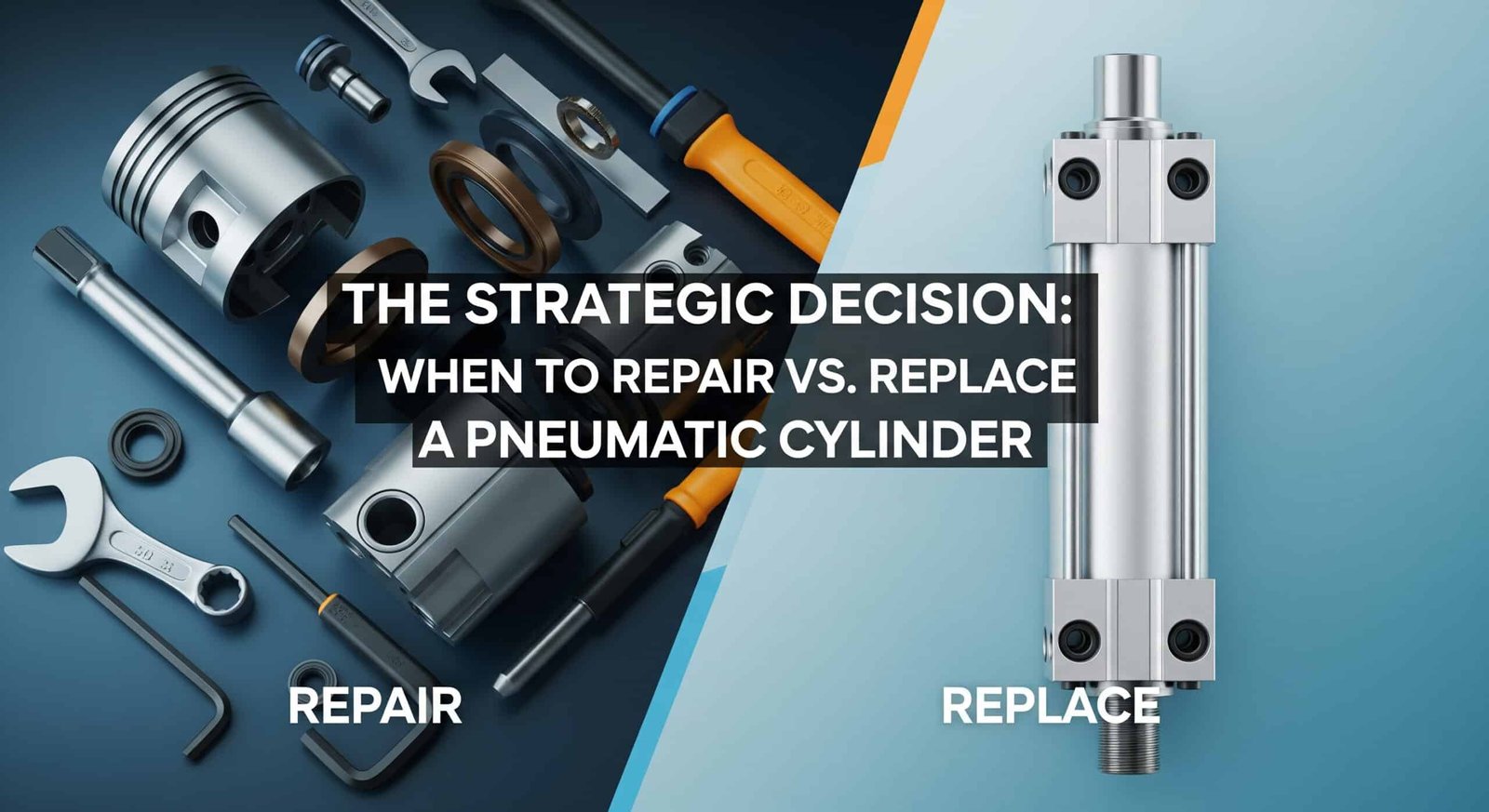

Making the wrong repair versus replacement decision costs manufacturers an average of $25,000 per cylinder in lost productivity, emergency repairs, and cascading equipment failures. A poorly timed repair attempt can turn a $500 maintenance job into a $15,000 production crisis.
The strategic decision between repairing and replacing pneumatic cylinders1 depends on analyzing repair costs versus replacement benefits, considering downtime impact, evaluating remaining service life, and assessing long-term operational requirements to optimize total cost of ownership2. 💰
This morning, David, a maintenance manager at a food processing plant in Oregon, faced this exact dilemma when their critical packaging line cylinder failed during peak production season, forcing a choice between expensive emergency repair or immediate replacement.
Table of Contents
- What Factors Should Drive the Repair vs. Replace Decision?
- How Do You Calculate the True Cost of Each Option?
- Which Cylinder Conditions Favor Repair Over Replacement?
- What Are the Long-Term Strategic Benefits of Replacement?
What Factors Should Drive the Repair vs. Replace Decision?
Multiple technical and economic factors must be evaluated to make the optimal repair versus replacement decision for pneumatic cylinders.
Key factors driving repair vs. replace decisions include cylinder age and condition, repair cost versus replacement cost, downtime requirements, performance expectations, parts availability, and strategic operational goals that determine the most cost-effective long-term solution.
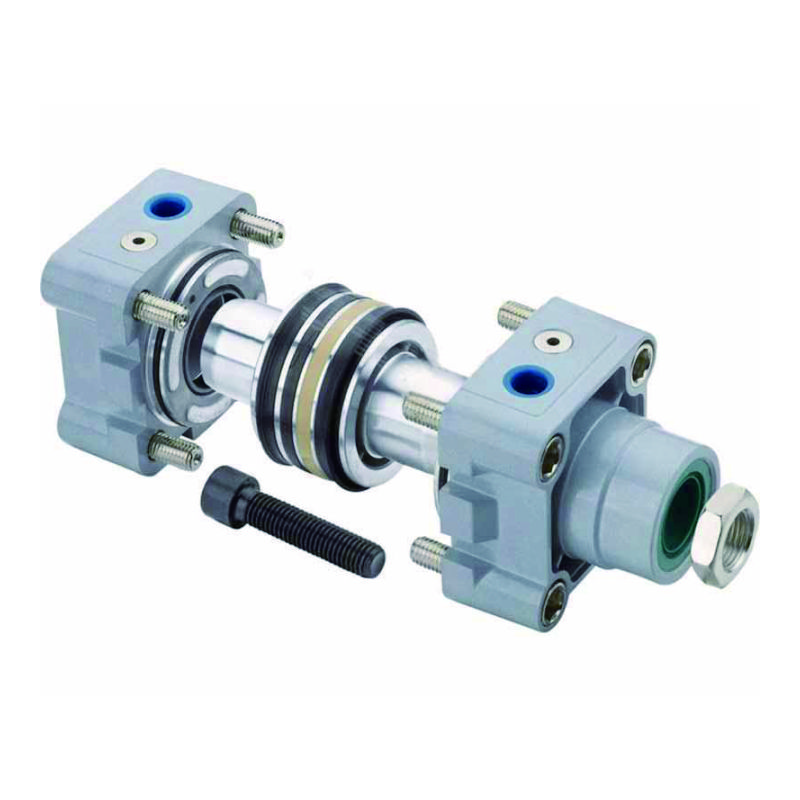
Age and Service History
Cylinders approaching 70% of their expected service life rarely justify major repairs. Our Bepto rodless cylinders typically provide 8-10 years of reliable service, making repair economical only in the first 5-6 years of operation.
Failure Severity Assessment
Minor seal leaks and bearing wear often warrant repair, while major component damage like cracked barrels or bent rods typically require replacement. The extent of damage directly impacts repair feasibility and cost-effectiveness.
Operational Criticality
Critical production equipment demands higher reliability standards that may favor replacement even when repair is technically possible. Non-critical applications can tolerate the higher failure risk associated with repaired components.
Decision Matrix Framework
| Evaluation Factor | Repair Favorable | Replace Favorable | Bepto Recommendation |
|---|---|---|---|
| Cylinder Age | <50% service life | >70% service life | Replace after 6 years |
| Failure Type | Minor wear/seals | Major component damage | Assess case-by-case |
| Downtime Tolerance | Flexible schedule | Critical operations | Replace for reliability |
| Budget Constraints | Limited capital | Investment available | Consider total cost |
David’s Oregon facility faced a 15-year-old cylinder with barrel scoring and seal failure. Despite the high repair quote, the cylinder’s age and condition clearly indicated replacement as the strategic choice.
Performance Requirements
Modern applications often demand higher performance than older cylinders can deliver even after repair. Upgrading to current technology may provide operational benefits that justify replacement costs.
Parts Availability
Obsolete cylinders with limited parts availability create long-term maintenance risks that favor replacement with current production models offering reliable parts support.
How Do You Calculate the True Cost of Each Option?
Accurate cost analysis requires considering all direct and indirect expenses associated with both repair and replacement options.
True cost calculation includes direct repair or replacement costs, downtime expenses, labor requirements, parts availability, warranty coverage, and long-term maintenance implications to determine the most economical decision over the equipment’s remaining service life.
Direct Cost Components
Repair costs include parts, labor, and potential expediting fees for urgent situations. Replacement costs encompass the new cylinder, installation labor, and any required system modifications.
Downtime Impact Analysis
Production losses during repair or replacement often exceed the direct costs. Calculate hourly production value and multiply by expected downtime to determine the true economic impact of each option.
Hidden Cost Factors
Emergency repairs typically cost 2-3 times normal rates due to expedited parts, overtime labor, and rushed scheduling. These premium costs often tip the decision toward replacement.
Comprehensive Cost Comparison
| Cost Category | Typical Repair | New Cylinder | Bepto Advantage |
|---|---|---|---|
| Direct Parts/Equipment | $800-2,000 | $1,500-4,000 | Competitive pricing |
| Labor Costs | $400-800 | $200-400 | Easier installation |
| Downtime Impact | $5,000-15,000 | $2,000-5,000 | Faster deployment |
| Future Maintenance | High uncertainty | Predictable/low | Extended warranty |
Risk Assessment
Repaired cylinders carry higher failure risk, potentially leading to additional downtime and costs. New cylinders provide predictable performance with warranty protection against premature failure.
Total Cost of Ownership
Consider the complete ownership period when evaluating options. A $3,000 replacement that lasts 8 years provides better value than a $1,500 repair lasting 2 years.
Financial Analysis Tools
Use net present value (NPV) calculations3 to compare options over their expected service lives. Include maintenance costs, reliability factors, and productivity impacts in the analysis.
Which Cylinder Conditions Favor Repair Over Replacement?
Specific cylinder conditions and circumstances make repair the more economical and practical choice over replacement.
Conditions favoring repair include recent cylinders with minor component wear, isolated seal failures, cosmetic damage without performance impact, budget constraints requiring immediate solutions, and situations where replacement requires extensive system modifications.
Minor Seal Leakage
Simple seal replacement on newer cylinders often provides years of additional service at reasonable cost. Our Bepto seal kits are designed for field replacement with minimal downtime.
Isolated Component Failures
Single component failures like worn bearings or damaged fittings can be economically repaired if the cylinder barrel and major components remain in good condition.
Recent Installation
Cylinders less than 3 years old with good maintenance history typically justify repair unless major damage has occurred. The remaining service life makes repair investment worthwhile.
Repair-Favorable Scenarios
| Condition | Repair Justification | Expected Outcome | Bepto Support |
|---|---|---|---|
| Seal Leakage | Minor component wear | 2-3 years additional life | Seal kit availability |
| Bearing Wear | Isolated failure | Full performance restoration | Technical guidance |
| External Damage | Cosmetic issues | No performance impact | Replacement parts |
| Recent Purchase | High remaining value | Cost-effective solution | Warranty consideration |
System Integration Factors
Complex installations with custom mounting or integrated sensors may favor repair to avoid extensive modification costs. Standard installations typically favor replacement for improved reliability.
Emergency Situations
When immediate production resumption is critical and replacement cylinders aren’t readily available, repair may be the only viable short-term option despite higher long-term costs.
Lisa, a production supervisor at an electronics manufacturer in North Carolina, chose repair for a 2-year-old cylinder with seal leakage because the custom mounting configuration would have required a week-long shutdown for replacement.
What Are the Long-Term Strategic Benefits of Replacement?
Cylinder replacement offers strategic advantages that extend beyond immediate problem resolution to improve long-term operational performance.
Long-term strategic benefits of replacement include improved reliability and performance, reduced maintenance requirements, enhanced safety features, better energy efficiency, updated technology integration, and predictable service life that supports strategic maintenance planning.
Technology Advancement Benefits
Modern cylinders incorporate advanced materials, improved sealing systems, and enhanced designs that deliver superior performance compared to older units. Our latest Bepto rodless cylinders offer 40% longer service life than previous generations.
Reliability Improvement
New cylinders provide predictable performance with known failure modes and maintenance schedules. This predictability enables proactive maintenance planning and reduces unexpected downtime.
Energy Efficiency Gains
Current cylinder designs optimize air consumption and reduce energy costs. Advanced sealing systems minimize internal leakage, while improved designs reduce operating pressure requirements.
Strategic Replacement Benefits
| Benefit Category | Improvement Factor | Annual Savings | Bepto Advantage |
|---|---|---|---|
| Reliability | 3-5x fewer failures | $10,000-25,000 | Proven track record |
| Energy Efficiency | 15-25% reduction | $2,000-5,000 | Advanced design |
| Maintenance | 50-70% less frequent | $5,000-15,000 | Extended service life |
| Safety | Modern standards | Risk reduction | Enhanced features |
Maintenance Planning Advantages
Replacement enables synchronized maintenance schedules across similar equipment, optimizing spare parts inventory and technician training. Standardization reduces complexity and costs.
Warranty Protection
New cylinders include comprehensive warranty coverage that protects against premature failure and provides predictable maintenance costs during the warranty period.
Performance Enhancement
Replacement opportunities allow upgrading to higher performance specifications that improve overall system capability and productivity beyond the original design parameters.
Documentation and Support
New equipment comes with current documentation, technical support, and training resources that facilitate optimal operation and maintenance throughout the service life.
Strategic replacement transforms maintenance liabilities into operational assets that support long-term business objectives and competitive advantage. 🎯
FAQs About Repair vs. Replace Decisions
Q: What is the typical break-even point for repair versus replacement decisions?
Generally, if repair costs exceed 60% of replacement cost, or if the cylinder has reached 70% of its expected service life, replacement becomes more economical. Our Bepto team provides free cost-benefit analysis to help determine the optimal decision for your specific situation.
Q: How do I evaluate the reliability risk of choosing repair over replacement?
Consider the cylinder’s failure history, operating environment severity, and criticality to production. Repaired cylinders typically have 2-3 times higher failure rates than new units. Document your risk tolerance and factor this into the decision process.
Q: Can I upgrade performance specifications when replacing an older cylinder?
Yes, replacement provides an opportunity to upgrade to higher performance specifications, improved efficiency, or enhanced features. Our engineering team can recommend upgrades that improve overall system performance while maintaining compatibility.
Q: What factors should I consider for emergency repair versus replacement decisions?
Emergency situations require balancing immediate availability against long-term costs. Consider parts availability, repair time requirements, and production impact. Sometimes a temporary repair followed by planned replacement provides the best overall solution.
Q: How do warranty considerations affect the repair versus replace decision?
New cylinders include comprehensive warranty coverage, while repairs typically offer limited warranty on replaced components only. Factor warranty value into your cost analysis, especially for critical applications where failure costs are high.
-
Learn the fundamental principles of how pneumatic cylinders convert compressed air into linear motion. ↩
-
Explore a guide on calculating TCO, which includes factors beyond the initial purchase price. ↩
-
Understand how to use NPV to compare the long-term financial value of different investment options. ↩