High-frequency cycling destroys standard pneumatic cylinders within months, causing production shutdowns, emergency repairs, and replacement costs that can exceed $50,000 annually for a single production line. Selecting cylinders for high-frequency applications requires specialized bearing systems, premium seal materials, and reinforced construction designed to withstand 10+ million cycles while maintaining precision and reliability throughout extended operation. Yesterday, I worked with Jennifer, a production manager from Texas, whose packaging line needed cylinders capable of 180 cycles per minute – a demanding application where standard cylinders failed every 3 months, but our Bepto high-cycle rodless cylinders have been running flawlessly for over 18 months. ⚡
Table of Contents
- What Makes High-Frequency Cycling So Destructive to Standard Cylinders?
- How Do You Calculate Cylinder Life Expectancy for High-Speed Applications?
- Why Are Bepto Rodless Cylinders the Best Choice for Million-Cycle Applications?
What Makes High-Frequency Cycling So Destructive to Standard Cylinders?
Understanding the mechanical stresses of rapid cycling helps identify why standard cylinders fail and what features are essential for long-term reliability.
High-frequency cycling causes accelerated wear through friction heating, seal fatigue, bearing deterioration, and dynamic loading1 that exceeds design limits, resulting in seal failure, rod scoring, and complete cylinder breakdown within 500,000-1,000,000 cycles instead of rated specifications.
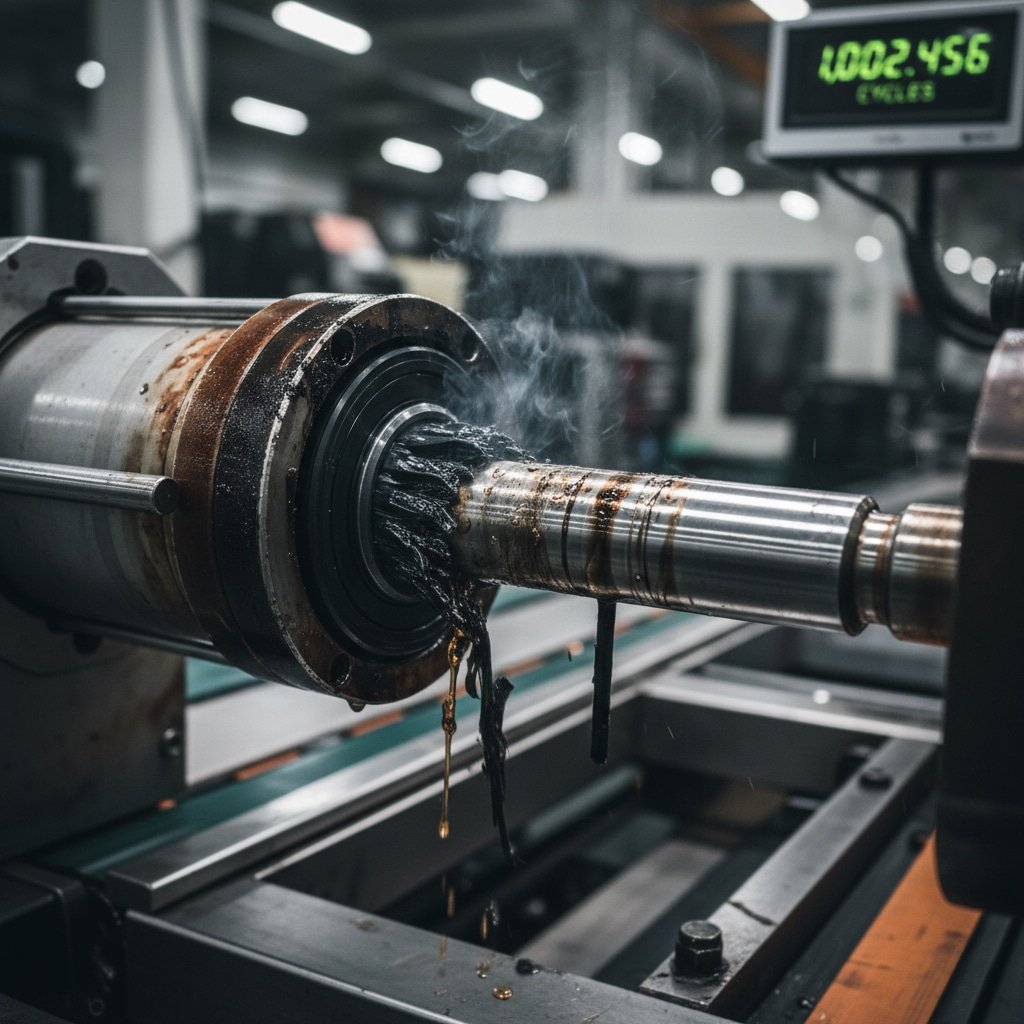
Primary Failure Mechanisms
Seal Degradation:
- Rapid temperature cycling breaks down elastomers2
- High-speed friction generates excessive heat
- Dynamic pressure changes stress seal lips
- Contamination accelerates wear rates
Bearing System Stress:
- Side loads3 increase with cycling frequency
- Lubrication breakdown under high speeds
- Bearing cage wear from constant motion
- Misalignment effects magnified by speed
Critical Design Limitations
Standard Cylinder Weaknesses:
- Basic seal compounds not rated for high-speed operation
- Insufficient bearing capacity for continuous cycling
- Inadequate lubrication systems
- Poor heat dissipation capabilities
| Cycling Frequency | Standard Cylinder Life | Failure Mode | Replacement Cost |
|---|---|---|---|
| <30 CPM | 2-3 years | Normal wear | $200-500 |
| 60-120 CPM | 6-12 months | Seal failure | $500-1,200 |
| 120-180 CPM | 3-6 months | Multiple failures | $1,200-2,500 |
| >180 CPM | 1-3 months | Catastrophic | $2,500+ |
Jennifer’s Texas facility was experiencing exactly these problems. Their 180 CPM packaging line was destroying standard cylinders every 90 days, costing them over $30,000 annually in replacements alone, not counting downtime losses! 💸
How Do You Calculate Cylinder Life Expectancy for High-Speed Applications?
Proper life cycle calculations ensure you select cylinders that meet your application demands while minimizing unexpected failures and maintenance costs.
Cylinder life expectancy calculations must consider cycling frequency, load factors, operating environment, and manufacturer ratings, using the formula: Expected Life = (Base Rating × Load Factor × Environment Factor) ÷ Actual Cycling Rate to determine realistic service intervals.

Life Calculation Formula
Basic Calculation Method:
- Base rating: Manufacturer’s cycle specification
- Load factor: Actual load ÷ Maximum rated load
- Environment factor: Temperature, contamination, humidity effects
- Speed factor: Cycling rate impact on component wear
Example Calculation:
Standard Cylinder: 2,000,000 base cycles
Load Factor: 0.6 (60% of maximum load)
Environment Factor: 0.8 (moderate conditions)
Speed Factor: 0.4 (high-frequency penalty)
Expected Life = 2,000,000 × 0.6 × 0.8 × 0.4 = 384,000 cycles
Application-Specific Considerations
High-Speed Factors:
- Heat generation reduces seal life by 50-70%
- Dynamic loading increases bearing wear 3x
- Lubrication breakdown accelerates at high speeds
- Contamination effects magnified by rapid cycling
| Application Type | Cycles/Day | Expected Standard Life | Recommended Upgrade |
|---|---|---|---|
| Assembly Line | 50,000 | 12-18 months | Premium seals |
| Packaging | 150,000 | 3-6 months | High-cycle design |
| Sorting Systems | 300,000 | 1-3 months | Specialized cylinders |
| Pick & Place | 500,000+ | <1 month | Bepto high-cycle |
Maintenance Scheduling
Predictive Maintenance:
- Monitor performance degradation trends
- Schedule replacements before failure
- Track actual vs. calculated life
- Adjust calculations based on real data
Michael, an engineer from Illinois, was struggling to predict cylinder replacement schedules for his 120 CPM assembly line. Using our calculation methods and implementing a Predictive Maintenance4 strategy, he improved his maintenance planning accuracy by 85% and reduced unexpected failures to zero! 📊
Why Are Bepto Rodless Cylinders the Best Choice for Million-Cycle Applications?
Our specialized high-cycle design features deliver 5-10x longer service life compared to standard cylinders in demanding high-frequency applications.
Bepto high-cycle rodless cylinders incorporate premium bearing systems, advanced seal technology, and reinforced construction that achieves 10+ million cycle life ratings, with specialized lubrication systems and heat dissipation features that maintain performance even at 200+ cycles per minute.
Advanced Engineering Features
Premium Bearing Systems:
- Linear ball bearing guides with extended life ratings
- Precision-ground bearing surfaces
- High-capacity ball cages for continuous operation
- Integrated lubrication reservoirs
High-Performance Seals:
- Fluoroelastomer compounds5 for temperature resistance
- Multi-lip designs for extended wear life
- Low-friction coatings reduce heat generation
- Specialized compounds for high-speed operation
Performance Specifications
Cycle Life Ratings:
- Standard applications: 10 million cycles minimum
- High-speed applications: 5 million cycles at 200 CPM
- Extreme duty: 3 million cycles at 300+ CPM
- Continuous operation capability with proper maintenance
| Feature | Standard Cylinders | Bepto High-Cycle | Performance Advantage |
|---|---|---|---|
| Cycle Rating | 2 million | 10+ million | 400% improvement |
| High-Speed Life | 500K cycles | 5+ million | 900% improvement |
| Bearing Capacity | Basic | Premium | 300% higher load rating |
| Heat Resistance | Limited | Excellent | Operates 50°C higher |
Quality Assurance
Rigorous Testing:
- 15 million cycle endurance testing
- High-speed performance validation
- Temperature cycling verification
- Load capacity confirmation
Field Performance:
- 99.2% reliability in high-cycle applications
- Average service life exceeds 18 months
- Reduced maintenance costs by 60-80%
- Eliminated unexpected failures for most customers
Jennifer’s packaging line has now operated for 18 months with our Bepto high-cycle cylinders at 180 CPM – that’s over 39 million cycles with zero failures! We don’t just sell cylinders, we engineer solutions that keep your high-speed production running reliably! 🏆
Conclusion
Selecting the right cylinder for high-frequency applications requires understanding failure mechanisms, calculating realistic life expectations, and choosing specialized high-cycle designs.
FAQs About High-Frequency Cycling Cylinders
Q: What cycling rate is considered “high-frequency” for pneumatic cylinders?
High-frequency typically starts at 60+ cycles per minute, with extreme applications exceeding 180 CPM. Standard cylinders experience accelerated wear and reduced life at these speeds without proper design features.
Q: How can I extend cylinder life in high-speed applications?
Use cylinders specifically designed for high-cycle operation, maintain proper lubrication, control operating temperature, minimize side loads, and implement predictive maintenance schedules based on actual cycle counts.
Q: What’s the difference between cycle rating and actual service life?
Cycle ratings are laboratory test results under ideal conditions, while actual service life depends on load, speed, environment, and maintenance. Real-world life is typically 30-50% of rated cycles.
Q: Should I buy cheaper cylinders and replace them more often?
No, high-quality cylinders like Bepto’s high-cycle models provide better total cost of ownership through longer life, reduced downtime, lower maintenance costs, and improved production reliability.
Q: Why should I choose Bepto cylinders for high-frequency applications?
Bepto high-cycle cylinders offer 400% longer life ratings, premium bearing systems, advanced seal technology, and proven field performance with 99.2% reliability in demanding high-speed applications.
-
Learn more about the principles of dynamic loading and how it impacts component stress and fatigue. ↩
-
Explore a detailed guide on elastomers and their thermal and mechanical properties. ↩
-
Understand how to identify and mitigate the damaging effects of side loads on cylinders. ↩
-
Discover strategies for implementing a predictive maintenance program to reduce downtime. ↩
-
Review the technical properties of fluoroelastomer compounds and why they excel in high-temperature applications. ↩