

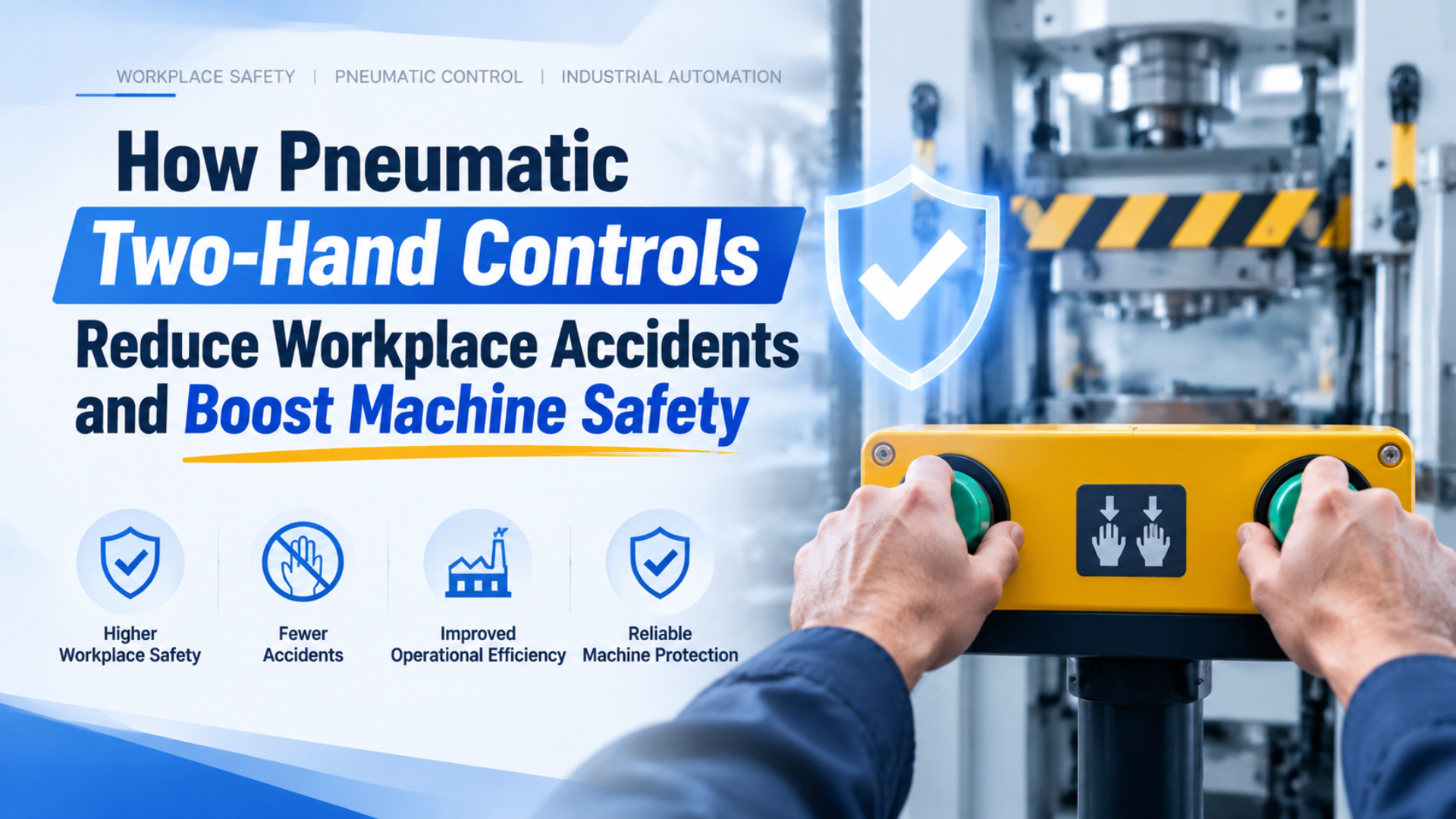
Pneumatic two-hand controls ลดอันตรายจากการเริ่มทำงานของเครื่องจักร โดยกำหนดให้ผู้ปฏิบัติงานวางมือทั้งสองข้างบน actuator แยกกันก่อนที่ cycle อันตรายจะเริ่มได้ ระบบที่ถูกต้องยังตรวจ timing ป้องกันปุ่มที่ถูกกดค้างหรือ bypass ไม่ให้เปิดทางให้ cycle ซ้ำ วาง control ให้อยู่นอกระยะเอื้อมถึง danger zone ที่คำนวณไว้ ตอบสนองต่อ fault อย่างปลอดภัย และ validate การตอบสนองของเครื่องทั้งชุด
นี่เป็นข้อกล่าวอ้างที่แคบกว่า “ปุ่มสองปุ่มป้องกันอุบัติเหตุ” อุปกรณ์ two-hand ปกป้องผู้ที่ใช้งานมันเฉพาะช่วงที่ safety function ทำให้มือของคนนั้นอยู่ในตำแหน่งที่ทราบ ไม่ได้ปกป้องเพื่อนร่วมงานโดยอัตโนมัติ ไม่ป้องกันการเข้าจากด้านข้าง ไม่เอา stored pneumatic energy ออก ไม่ restrain โหลดที่แขวนอยู่ และไม่รับรองวงจร valve รอบข้าง
Two-hand control device (THCD) คือ protective device ที่ output ขึ้นกับการใช้มือกด control actuator สองตัว Two-hand trip เริ่ม cycle ผ่านการกดพร้อมกัน แต่อาจให้ผู้ปฏิบัติงานปล่อย control หลังจากนั้นได้ Safety function คือพฤติกรรมลดความเสี่ยงทั้งชุด รวม input, logic, output, machine response, reset และ fault reaction
ประเด็นสำคัญ
- ISO 13851:2019 นิยาม THCD 3 ประเภท แต่ระบุว่าอุปกรณ์ปกป้องเฉพาะผู้ใช้ของมัน
- ระยะปลอดภัยของ press ตาม OSHA คำนวณจาก stopping time หรือ closing time ไม่ใช่ rule 600 mm สากล
- วาล์ว pushbutton ทั่วไปสองตัวรวมกับ AND element ไม่ได้พิสูจน์ Performance Level ที่ทำได้
- Validation ต้องทดสอบ safety function ที่ติดตั้งจริงและ fault ที่เชื่อถือได้
Pneumatic Two-Hand Controls ปกป้องอะไรจริง ๆ
ISO 13851:2019 นิยาม functional combinations สำหรับ two-hand control device 3 ประเภท แต่ระบุชัดว่า THCD ปกป้องเฉพาะคนที่ใช้งานมัน (ISO 13851, ยืนยัน 2024) อุปกรณ์ลดความเสี่ยงด้วยการทำให้มือของผู้ปฏิบัติงานคนนั้นถูกใช้งานและอยู่ห่างจาก hazard ระหว่างช่วงที่เกี่ยวข้องของ cycle
การปกป้องนี้ขึ้นกับเงื่อนไขหลายข้อที่ต้องยังเป็นจริง actuator ทั้งสองต้องต้องการการใช้มือโดยเจตนา ตำแหน่งของมันต้องป้องกันไม่ให้ผู้ปฏิบัติงานเอื้อมถึง hazard ก่อนปลอดภัย เครื่องต้องตอบสนองตามที่ระบุเมื่อมือข้างใดข้างหนึ่งถูกเอาออก เมื่อเกิด fault หรือเมื่อ supply เปลี่ยน cycle ถัดไปต้องไม่เริ่มจากปุ่มที่ยังถูกกดค้าง
ขอบเขตการปกป้องสำคัญพอกัน ISO 13851 ไม่ได้บอกว่าเครื่องใดต้องใช้ THCD หรือประเภทใดในสามประเภทเหมาะกับทุก application มันส่งการเลือกกลับไปที่ machine risk assessment และ type-C machinery standard ที่เกี่ยวข้อง press, shear, clamp, fixture และ assembly station อาจมีพฤติกรรมปิดและเส้นทางเข้าถึงต่างกันมาก
กฎ machine guarding ทั่วไปของ OSHA กำหนดให้มีวิธี guard หนึ่งวิธีหรือมากกว่าเมื่อการทำงานของเครื่องทำให้พนักงานเสี่ยงบาดเจ็บ และระบุ two-hand tripping devices เป็นวิธีหนึ่งที่เป็นไปได้ ร่วมกับ guards และ electronic devices (OSHA 29 CFR 1910.212) วิธีที่เลือกยังต้องป้องกันไม่ให้ร่างกายเข้าถึง danger zone ระหว่าง operating cycle
อุปกรณ์ two-hand ควบคุมท่าเริ่มต้นของคนคนเดียว มันไม่ได้ควบคุม perimeter การเข้าถึงทั้งหมด หากพนักงานอีกคนเอื้อมถึง hazard จากด้านข้างหรือด้านหลังได้ วิธีแก้ต้องมี guarding เพิ่ม interlocking, presence sensing, separation หรือวิธีทำงานแบบอื่น
Two-Hand Control และ Two-Hand Trip เป็นฟังก์ชันคนละแบบ
OSHA นิยาม two-hand control บน mechanical power press ว่าเป็นอุปกรณ์ที่ต้องใช้แรงกดพร้อมกันระหว่างช่วงสำคัญของ die closing ขณะที่ two-hand trip ต้องใช้พร้อมกันเฉพาะเพื่อเริ่ม clutch (OSHA Press Definitions) ความแตกต่างนี้กำหนดว่าการปล่อยมือหนึ่งข้างยังหยุดการเคลื่อนที่อันตรายได้หรือไม่
สำหรับ part-revolution clutch press OSHA อธิบายว่าผู้ปฏิบัติงานกด control ทั้งสองค้างไว้ระหว่างช่วงอันตรายของ downstroke การปล่อย control ข้างใดข้างหนึ่งจะปลด clutch ใช้ brake และหยุดการเคลื่อนที่ของ slide full-revolution press ที่ใช้ two-hand trip ทำงานต่างกัน: หลังเริ่มแล้ว slide มักจบ cycle ของมันและมือของผู้ปฏิบัติงานเป็นอิสระ (OSHA clarification)
| ฟังก์ชัน | ผู้ปฏิบัติงานทำอะไร | เกิดอะไรหลังปล่อย | ประเด็นวิศวกรรมหลัก |
|---|---|---|---|
| Two-hand control | กด actuator ทั้งสองพร้อมกันและกดค้างต่อเนื่องตามที่กำหนด | การปล่อย input ใด input หนึ่งต้องให้พฤติกรรมหยุดตามที่ระบุ | stopping performance, safety distance, control reliability |
| Two-hand trip | กด actuator ทั้งสองพร้อมกันเพื่อเริ่ม cycle | การเคลื่อนที่อาจเดินต่อหลังปล่อย | ระยะต้องป้องกันการเอื้อมถึง hazard ก่อนการปิดจบ |
| คำสั่งคู่แบบธรรมดา | ให้สัญญาณ control ปกติสองสัญญาณ | ขึ้นกับ logic และ valve ปกติทั้งหมด | ไม่ได้เป็น safety function โดยอัตโนมัติ |
รายละเอียด OSHA เหล่านี้ใช้เฉพาะกับ mechanical power presses ภายใต้ 29 CFR 1910.217 เครื่องอื่นต้องมี risk assessment และ machinery standard ที่เกี่ยวข้องของตัวเอง อย่าคัดลอก control arrangement ของ press ไปใส่ pneumatic clamp หรือ custom fixture โดยไม่ตรวจว่า hazard หยุด, coast, กักแรงดัน หรือเคลื่อนหลังลมหายอย่างไร
จากประสบการณ์ของเรา ข้อผิดพลาด retrofit จำนวนมากเริ่มจากการบรรยายฟังก์ชันผิด drawing เขียนว่า “two-hand start” แต่ risk assessment สมมติว่า “ปล่อยมือข้างใดข้างหนึ่งแล้ว motion หยุด” สิ่งเหล่านี้ใช้แทนกันไม่ได้ ระบุ response ที่คาดไว้ต่อ input transition แต่ละแบบก่อนเลือก hardware
Risk Assessment ควรกำหนด Safety Function ที่ต้องการอย่างไร
ISO 12100:2010 ให้กระบวนการ machinery risk-assessment และ risk-reduction ครอบคลุมการระบุ hazard, risk estimation, evaluation, protective measures, documentation และ verification (ISO 12100, ยืนยัน 2022) ควรเลือก THCD หลังจากกระบวนการนี้นิยามแล้วว่าใครสัมผัสความเสี่ยง การเข้าถึงเกิดเมื่อไร และเครื่องต้องทำพฤติกรรมปลอดภัยอะไร
เริ่มจากงาน ไม่ใช่แค็ตตาล็อกปุ่ม สังเกตการโหลดปกติ การจัดแนว การทำ cycle การ unload การปรับตั้ง การกู้คืนจาก fault การทำความสะอาด และ foreseeable misuse ระบุ point of operation, pinch zone, material ที่อาจถูก eject, แกนรอง, tooling ร้อน, pressure สะสม และกลไกที่รับโหลดด้วยแรงโน้มถ่วง จากนั้นตัดสินว่าคนใดเข้า hazard zone แต่ละจุดได้
นิยาม safety function ให้เป็นเงื่อนไขที่วัดได้:
| องค์ประกอบ safety-function | คำถามที่ต้องตอบ | หลักฐานที่ต้องใช้ |
|---|---|---|
| Initiation | actuator สองตัวใดต้องถูกใช้ และภายใน timing behavior ที่อนุญาตเท่าไร | input specification และ timing test |
| Continued actuation | ทั้งสองมือต้องอยู่ต่อหรือไม่ และสำหรับ hazardous portion ใด | cycle และ release-response test |
| Safe distance | hazardous motion เดินต่อหลัง release หรือ initiation ได้นานเท่าไร | measured stopping หรือ closing time |
เติมนิยามให้ครบด้วย requirement ด้าน restart, fault, output และ integrity:
| องค์ประกอบ safety-function | คำถามที่ต้องตอบ | หลักฐานที่ต้องใช้ |
|---|---|---|
| Reset | ต้องเกิดอะไรขึ้นก่อนอนุญาต output อีกครั้ง | anti-repeat และ restart test |
| Fault reaction | fault เดี่ยวหรือ combined fault ใดต้องยับยั้ง cycle ถัดไปหรือหยุด motion | fault list และ injection results |
| Output behavior | เครื่องต้องหยุด, exhaust, hold pressure, return หรือค้าง clamp หรือไม่ | pneumatic และ mechanical response trace |
| Performance | PLr หรือ integrity target อื่นใดใช้ได้ | risk assessment และ safety calculation |
ผลลัพธ์อาจแสดงว่า THCD ไม่เหมาะ ผู้ปฏิบัติงานที่ต้องจับชิ้นงานใกล้ die ไม่สามารถใช้ two hand controls ตามเจตนาได้ กระบวนการที่มีหลายคนสัมผัสความเสี่ยงอาจต้องใช้ perimeter guarding หรือ presence sensing เครื่องที่หยุดไม่ได้ก่อนเข้าถึงอาจต้องใช้ fixed barrier หรือ trip ที่วางจาก full closing time
สำหรับ hazard นิวเมติก ให้กำหนดสถานะพลังงานที่ปลอดภัยที่สุดด้วย คู่มือการรวม safety exhaust valve อธิบายว่าการ vent มีประโยชน์กับ hazard บางแบบ แต่สามารถปล่อย clamp หรือทำให้โหลดแนวดิ่งตกใน hazard อื่น
ทำไม Pushbutton Valve สองตัวกับ AND Valve จึงยังไม่พอ
ISO 13849-1:2023 ใช้กับ safety-related control-system parts ที่ใช้เทคโนโลยี electrical, hydraulic, pneumatic และ mechanical แต่ไม่ได้กำหนด safety function หรือ PLr สำหรับเครื่องใดเครื่องหนึ่ง (ISO 13849-1, 2023) สัญญาณลมสองเส้นสามารถสร้าง Boolean AND logic ได้โดยไม่ให้ architecture, reliability, diagnostics หรือ fault response ที่จำเป็นต่อ safety
standard dual-pressure valve อาจให้ output เฉพาะเมื่อ inlet ทั้งสองมีแรงดัน นั่นพิสูจน์ truth table ที่ตั้งใจในเงื่อนไขปกติ แต่ไม่ได้บอกอะไรเกี่ยวกับ pushbutton ติดค้าง, tube สลับกัน, exhaust อุดตัน, internal spool fault, shared supply failure, pressure ที่ค้างอยู่ใน input หนึ่ง หรือ output valve ที่ shift ไม่ได้
safety-related control system ทั้งชุดอาจรวม:
- hand actuator สองตัวที่ป้องกันไว้;
- input signal path และ synchronization monitoring;
- anti-tie-down และ anti-repeat logic;
- safety controller หรือ pneumatic logic unit ที่ validate แล้ว;
- output element หนึ่งตัวหรือมากกว่า;
- diagnostic feedback หรือ pressure monitoring;
- actuator และ mechanical stopping behavior;
- reset และ restart logic;
- wiring, tubing, software และ documentation ที่ควบคุมแล้ว
Category และ Performance Level ไม่ใช่ label ที่ใช้แทนกันได้ Category อธิบายพฤติกรรม architecture เมื่อเกิด fault Achieved PL ยังขึ้นกับ component reliability, diagnostic coverage, common-cause measures, mission time และข้อมูลออกแบบอื่น ชิ้นส่วนที่ทำตลาดว่า “Category 3 capable” ไม่ได้ทำให้ทุกวงจรเป็น Category 3 หรือ PL d
คู่มือเดิมเกี่ยวกับ pneumatic logic valves แสดงว่า AND และ OR functions ทำงานอย่างไรในวงจรทั่วไป ขอบเขต safety ของมันจงใจชัดเจน: ไม่ควรให้เครดิต normal logic component เป็น THCD เว้นแต่เอกสารของมันและ complete validated architecture สนับสนุนการใช้นั้น
นิพจน์ Boolean A AND B เป็นส่วนเล็กที่สุดของปัญหา ความปลอดภัยของเครื่องจักรขึ้นกับว่า A และ B อิสระพอหรือไม่ fault ถูกตรวจพบหรือไม่ output ไปถึง safe state จริงหรือไม่ และ input ที่ถูกกดค้างสามารถ enable cycle ถัดไปได้หรือไม่
ระยะปลอดภัยกำหนดอย่างไร
สำหรับ part-revolution mechanical power presses OSHA กำหนดให้ระยะ two-hand control มากกว่า Ds = 63 inches/second × Ts โดย Ts คือ measured stopping time (OSHA 1910.217(c)(3)(vii)(c)) two-hand trip ใช้สูตร closing-time ต่างกัน ไม่มี rule ใดสนับสนุนระยะติดตั้ง 600 mm สากล
ระยะต้องสอดคล้องกับ safeguarding function และเครื่องจริง control arrangement ที่หยุด motion หลัง release ต้องใช้ total stopping time กรณีเลวร้ายที่เชื่อถือได้ trip ที่ interrupt cycle ไม่ได้ต้องใช้เวลาจนกว่า point of operation จะไม่สามารถเอื้อมถึงหรือไม่เป็น hazard แล้ว มาตรฐานที่ใช้ได้อาจเพิ่ม measurement tolerance, response allowance หรือ requirement เฉพาะเครื่อง
ใช้ chain การวัดนี้:
- ระบุ safety input event ที่แน่นอน เช่น การปล่อย hand actuator ข้างใดข้างหนึ่ง
- วัด response ของ logic และ output ไม่ใช่แค่ switching time ในแค็ตตาล็อก valve
- วัด hazardous mechanical stopping หรือ closing behavior ที่ตำแหน่งเกี่ยวข้อง
- ทดสอบสภาพหยุดช้าที่สุดตลอดช่วง pressure, load, speed, temperature และ wear
- ใช้สูตรและ allowance ที่ governing standard กำหนด
- ยึด control station ให้ relocation ที่ไม่ได้รับอนุญาตไม่สามารถลดระยะได้
- revalidate หลังเปลี่ยน brake, valve, tooling, pressure, speed หรือ control
อย่าใช้ cylinder stroke time จาก calculator ทั่วไปแทน measured safety response Flow, load, cushioning, exhaust restrictions, friction, brake condition และ stored energy ส่งผลต่อ motion จริง ผลทางทฤษฎีช่วยประมาณทางวิศวกรรมได้ แต่ไม่สามารถ certify safety distance ที่ติดตั้งแล้ว
คำเตือนเดียวกันใช้กับตัวเลข 500 ms ที่ถูกอ้าง อุปกรณ์ two-hand บางรุ่นเผยแพร่ permitted simultaneity window สำหรับ input ของมัน ตัวเลขนั้นไม่ใช่ stopping time ของเครื่อง ไม่ใช่ valve exhaust time และไม่ใช่ safety-distance value สากล บันทึก timing requirement แต่ละแบบแยกกัน
Controls ควรต้านการ Defeat และ Unexpected Restart อย่างไร
OSHA 1910.217 กำหนดให้ hand controls ของ mechanical press ถูกป้องกันการทำงานโดยไม่ตั้งใจ และจัดวางด้วย construction หรือ separation เพื่อให้ต้องใช้สองมือ (OSHA 1910.217(b)(6)-(7)) สำหรับผู้ปฏิบัติงานหลายคน มาตรฐานกำหนด control แยกและการใช้งานพร้อมกัน หลักการกว้างกว่านั้นคือ foreseeable bypass ต้องถูกออกแบบให้ทำไม่ได้และต้องทดสอบ
button separation อย่างเดียวยังไม่พอ ผู้ปฏิบัติงานอาจใช้มือเดียวกับข้อศอก พิงวัตถุไว้บน actuator หนึ่งตัว เทป valve ลง bridge electrical contacts สองจุด หรือกด pneumatic input ข้างหนึ่งให้ค้างด้วยแรงดัน Control placement, shroud, actuator shape, signal monitoring และ reset logic ควรทำให้วิธี defeat เหล่านี้ใช้ไม่ได้
ลำดับที่มีประสิทธิภาพมักป้องกันเงื่อนไขเหล่านี้:
- actuator หนึ่งถูกกดก่อน sequence พร้อม;
- actuator หนึ่งยังค้างขณะที่อีกตัวถูกปล่อยและกดใหม่;
- actuator ทั้งสองถูกกดค้างผ่าน reset หรือ pressure restoration;
- short pressure pulse ถูกกักไว้นานพอให้ logic ผ่าน;
- output ยังค้างหลังเอา input หนึ่งออกทั้งที่ release ควรหยุด motion;
- fault ถูก acknowledge โดยไม่ได้คืน safe state ที่ตั้งใจ;
- การคืนลมอัตโนมัติเริ่ม hazardous movement
ergonomics ของ control ยังสำคัญ actuator ควรให้ท่าทำงานเป็นกลางและมองเห็นชัดโดยไม่จูงใจให้คน defeat ระบบ แต่ไม่มี rule สากลเรื่องความสูงระดับไหล่หรือ mounting 15 degree ให้ประเมินช่วงขนาดตัวผู้ปฏิบัติงาน gloves, reach, force, workstation adjustment, visibility และ safety distance ร่วมกัน
จากประสบการณ์ของเรา anti-defeat review ที่ดีที่สุดเป็นการตรวจทางกายภาพ ขอให้คนที่ไม่คุ้นกับแบบระบุว่าผู้ปฏิบัติงานอาจทำให้ input หนึ่งค้าง เอื้อมรอบ station หรือขยับ controls เข้ามาใกล้ได้อย่างไร จากนั้นทดสอบความพยายามเหล่านั้นภายใต้ controlled commissioning procedure แทนการเชื่อ drawing อย่างเดียว
Pneumatic Output ต้องทำอะไรหลัง Safety Demand
Festo นิยาม pneumatic THC subfunction อย่างเรียบง่าย: การใช้งานสองมือพร้อมกัน activate output signal (Festo Pneumatic Safety) output signal นั้นไม่ใช่ safe state เอง valve downstream, actuator, load และ stored energy ต้องสร้าง machine response ตาม risk assessment เมื่อ input ใดถูกเอาออกหรือ fault ถูกตรวจพบ
response ที่เป็นไปได้รวมถึงการหยุดและ hold pressure, blocking supply, exhausting zone ที่กำหนด, controlled return, mechanical braking หรือ combination การ exhaust ทันทีไม่ได้ปลอดภัยที่สุดเสมอ cylinder แนวดิ่งอาจไหลลง clamp อาจปล่อยชิ้นงาน และ vacuum tooling อาจปล่อยโหลดหลังเอา pressure ออก
ทบทวน output path ทั้งหมด:
| ประเด็น output | คำถาม failure | วิธี verification |
|---|---|---|
| Directional valve | spool ติดหรือ channel หนึ่ง shift ไม่ได้หรือไม่ | fault injection และ position หรือ pressure feedback |
| Exhaust path | fitting, silencer, tube หรือ check valve ทำให้ venting ช้าหรือไม่ | pressure trace ภายใต้ restriction กรณีเลวร้าย |
| Cylinder | gravity, spring force หรือ trapped pressure ทำให้ motion เดินต่อได้หรือไม่ | loaded motion test ที่ pressure extremes |
| Load holding | air loss ปล่อย clamp หรือ suspended tool หรือไม่ | energy analysis และ mechanical restraint test |
| Restart | pressure restoration สร้าง motion โดยไม่มีคำสั่ง valid ใหม่ได้หรือไม่ | power และ air cycling test |
| Diagnostics | discrepancy ที่ตรวจพบยับยั้ง hazardous cycle ถัดไปหรือไม่ | intentional feedback และ channel faults |
Safety exhaust valve อาจทำส่วน blocking และ venting ของฟังก์ชัน cylinder rod lock อาจช่วย restrain แกนที่เข้ากันได้ ไม่ควรให้เครดิตชิ้นส่วนใดเกินพฤติกรรมที่เอกสารระบุและ validation การติดตั้งจริง
ordinary valves ยังต้องเลือก pressure, flow, exhaust และ environment ให้ถูกต้อง บทความเรื่อง การเลือก manual และ mechanical valve มีประโยชน์สำหรับ normal command functions แต่ ordinary mechanical valves ไม่ได้เป็น safety-rated hand actuators โดยอัตโนมัติ
Validation ของ Safety Function ทั้งชุด
ISO 13849-2:2012 กำหนด validation ด้วยการวิเคราะห์และทดสอบ specified safety functions, achieved Category และ achieved Performance Level สำหรับระบบที่ออกแบบภายใต้ ISO 13849-1 (ISO 13849-2, current edition pending revision) ดังนั้น validation ครอบคลุมเครื่องที่ติดตั้งและ fault response ที่บันทึกไว้ ไม่ใช่แค่ certificate ของชิ้นส่วนแต่ละตัว
สร้าง validation plan จาก safety requirements specification แต่ละ requirement ต้องมี acceptance result, test condition, instrument, expected response, actual response และ reviewer บันทึก configuration ของเครื่อง เพราะการเปลี่ยน tooling, pressure, speed, valves, software, tubing หรือ exhaust อาจเปลี่ยน stopping behavior
minimum test coverage ควรรวม:
- normal concurrent actuation และ release ของแต่ละ input;
- input หนึ่งมาก่อนเร็วเกินไปหรือยังถูกกดค้าง;
- พยายาม repeat cycle โดยไม่มี full release และ reset;
- input tube หนึ่งหลุด สลับ ถูก restrict หรือถูกกดค้างด้วยแรงดัน;
- logic หรือ output channel ไม่เปลี่ยน state;
- diagnostic feedback stuck on และ stuck off;
- supply pressure ต่ำสุดและสูงสุดที่อนุญาต;
- worst-case load, speed, stroke position และ stopping condition;
- loss และ restoration ของ electrical power และ compressed air;
- exhaust blocked หรือ restricted เมื่อ reasonably foreseeable;
- reset หลัง demand และหลัง detected fault;
- การเข้าถึงโดยอีกคนหรือจากอีกด้านของเครื่อง
จับ input states, safety output, valve feedback, downstream pressure และ hazardous motion บน time base เดียวกันเมื่อ timing สำคัญ stopwatch ที่มอง pilot light ไม่พอสำหรับการวัด safety-distance บันทึก measurement uncertainty และใช้วิธีที่ machine standard ที่เกี่ยวข้องกำหนด
จากประสบการณ์ของเรา validation report ที่ดีทำให้การตัดสินใจเปลี่ยนอะไหล่ในอีกหลายปีง่ายขึ้น มันบันทึก part numbers, revisions, B10d หรือ PFHd data ที่เกี่ยวข้อง, pneumatic diagrams, software checksums, pressure settings, test instruments, stopping-time results, fault tests และ approved alternatives
ควรจัดการ Maintenance, Retrofit และ Servicing อย่างไร
OSHA 1910.147 ครอบคลุม servicing ที่ unexpected startup หรือ stored-energy release อาจทำให้คนงานบาดเจ็บ และรวม pneumatic energy อย่างชัดเจน (OSHA Lockout/Tagout) Pushbutton และ control-circuit devices ไม่ใช่ energy-isolating devices two-hand control ปกป้อง production task; มันไม่แทน lockout, stored-energy control หรือ verification
กำหนดช่วง inspection และ test จากคำแนะนำผู้ผลิต, machine risk assessment, applicable standards, operating frequency, contamination, history และ change control อย่าสร้าง schedule รายวัน รายสัปดาห์ หรือรายปีแบบเดียวสำหรับ THCD ทุกตัว high-cycle press ในสภาพมีน้ำมันและ guarded fixture ที่ใช้สองครั้งต่อกะไม่ได้มี exposure เหมือนกัน
Maintenance ควรตรวจมากกว่าการเคลื่อนที่ของปุ่ม:
- actuator guards, shrouds, mounting, labels และ tamper resistance;
- input channels, tubing หรือ wiring, connectors และ exhaust paths;
- synchronization, anti-tie-down, anti-repeat และ reset behavior;
- output valve response และ diagnostic feedback;
- stopping time หรือ closing time เมื่อ maintenance plan ต้องการ measurement;
- fixed control location และ calculated safety distance;
- guards และ protective devices สำหรับคนอื่นที่สัมผัสความเสี่ยง;
- pneumatic isolation, bleed-down, restraint และ LOTO procedure
retrofit ต้องใช้ความเข้มงวดเท่ากับแบบใหม่ การเปลี่ยน foot pedal เป็น palm buttons สองตัวอาจเปลี่ยนวิธีเริ่มเครื่อง แต่ไม่ได้สร้าง control reliability, stopping performance ที่เพียงพอ หรือ protection สำหรับพนักงานคนอื่นโดยอัตโนมัติ วัดเครื่อง นิยาม safety function ออกแบบ architecture ใหม่ และ validate modification ที่เสร็จแล้ว
สำหรับ pneumatic architecture ปกตินอก safety subsystem แนวทางวงจร modular valve ช่วยจัด supply และ function ได้ แต่ต้องแยก normal control channels ออกจาก safety-related channels และ documentation
คำถามที่พบบ่อยเกี่ยวกับ Pneumatic Two-Hand Controls
ISO 13851:2019 มี 21 หน้าและนิยาม THCD functional types สามแบบ แต่ไม่ได้เลือก device type หรือ safety distance ให้เครื่องทุกตัว (ISO 13851) ดังนั้นคำตอบเหล่านี้ระบุ design boundaries ไม่ใช่ dimension, response time, category หรือ inspection interval สากล
ระยะห่างขั้นต่ำระหว่างปุ่ม two-hand control คือเท่าไร
ไม่มี rule 600 mm สากลใน ISO 13851 การจัดวางต้องบังคับให้ใช้สองมือและต้าน foreseeable defeat ขณะที่ control station ทั้งชุดต้องอยู่นอก applicable safety distance จาก hazard ใช้ machine risk assessment, type-C standard ที่เกี่ยวข้อง, ergonomic review และ validated reach หรือ stopping calculation
ต้องกดปุ่มทั้งสองภายใน 500 ms หรือไม่
อุปกรณ์ที่ผ่าน certification บางรุ่นเผยแพร่ simultaneity window เฉพาะ แต่ให้ใช้ requirement ของผลิตภัณฑ์ที่เลือกและ governing standard อย่าสับสน input synchronization กับ machine stopping time Safety distance ขึ้นกับ total stopping หรือ closing behavior ที่เกี่ยวข้อง รวม logic, valves, mechanics, load และ measurement allowances
ใช้ pneumatic AND valve มาตรฐานกับ two-hand control ได้หรือไม่
มันแสดง normal AND logic ได้ แต่เพียงเท่านั้นยังไม่ทำให้เป็น THCD ที่สอดคล้องข้อกำหนด Safety อาจต้องใช้ protected inputs, synchronization, anti-tie-down, anti-repeat, fault detection, defined reset behavior, documented component reliability, architecture ที่เหมาะสม, safe output subsystem และ validation ของเครื่องที่ติดตั้ง
pneumatic two-hand control ทุกระบบต้องใช้ Category 3 หรือ Category 4 หรือไม่
ไม่ ISO 13849-1 ไม่ระบุ PLr ที่ต้องใช้สำหรับเครื่องใดเครื่องหนึ่ง กำหนด risk reduction ที่ต้องการจาก risk assessment และ machinery standard ที่เกี่ยวข้อง จากนั้นออกแบบ safety-related control system ทั้งชุดและคำนวณหรือ validate achieved Performance Level รวม architecture, reliability, diagnostics และ common-cause measures
ปล่อยมือข้างใดข้างหนึ่งแล้วเครื่องต้องหยุดเสมอหรือไม่
ไม่ใช่สำหรับอุปกรณ์ two-hand ทุกชนิด two-hand control ตั้งใจให้ต้องมี continued actuation ระหว่าง hazardous portion ที่กำหนด ส่วน two-hand trip สามารถเริ่ม cycle ที่เดินต่อหลัง release ได้ risk assessment, machine design, governing standard และ safety requirements ต้องระบุ expected release response
two-hand controls ใช้แทน fixed guards หรือ lockout/tagout ได้หรือไม่
ไม่ได้ ISO 13851 ระบุว่า THCD ปกป้องเฉพาะผู้ใช้ของมัน ดังนั้นคนอื่นและเส้นทางเข้าถึงอื่นอาจต้องมี guards หรือ protective devices เพิ่มเติม สำหรับ covered servicing OSHA 1910.147 ต้องใช้ energy isolation, control of stored or residual energy และ verification คำสั่ง pushbutton ไม่ใช่ energy-isolating device
Checklist วิศวกรรมขั้นสุดท้าย
ISO 13851 นิยาม THCD 3 ประเภท ขณะที่ ISO 13849-1 ใช้กับเทคโนโลยี safety-related control ทั้ง pneumatic, electrical, hydraulic และ mechanical (ISO 13851; ISO 13849-1) ใช้มาตรฐานทั้งสองร่วมกับ machine risk assessment และ type-C requirements ที่เกี่ยวข้อง ไม่ใช่ใช้เป็น component labels แทนกัน
-
risk assessment นิยาม hazard, exposed people, operating modes และ foreseeable misuse
-
safety requirements แยก two-hand control ออกจาก two-hand trip
-
actuator ทั้งสองต้องใช้มือโดยเจตนาและต้าน foreseeable defeat
-
ระบุ timing, anti-tie-down, anti-repeat, release และ reset behaviors
-
safety distance อิง measured stopping หรือ closing time ที่ใช้ได้
-
control station ไม่สามารถถูกย้ายเข้าใน validated distance โดยไม่ได้รับอนุญาต
-
PLr หรือ integrity target ที่ต้องใช้มาจาก risk assessment ไม่ใช่ label ของ valve
-
รวม inputs, logic, outputs, feedback, actuator behavior และ mechanical response แล้ว
-
air loss, power loss, trapped pressure, gravity, springs และ suspended loads เข้าสู่ safe condition
-
operator อื่นและเส้นทางเข้าถึงอื่นมี guarding หรือ protective devices ที่เหมาะสม
-
ฉีด credible faults และบันทึก response ที่ติดตั้งจริง
-
production safeguarding แยกจาก servicing lockout/tagout
-
การเปลี่ยน tooling, pressure, speed, valves, tubing, software หรือ controls trigger review
Pneumatic two-hand controls สามารถเป็นส่วนที่มีประสิทธิภาพของ machine safeguarding เพราะต้องใช้ input โดยเจตนาสองจุดและทำให้มือของผู้ปฏิบัติงานที่ activate อยู่ในตำแหน่งที่ทราบ คุณค่าจริงมาจากวิศวกรรมรอบข้าง: risk assessment, การเลือก function ให้ถูกต้อง, measured safety distance, anti-defeat design, output behavior ที่เชื่อถือได้ และ validation ที่มีเอกสาร
หากคุณต้องการความช่วยเหลือในการทบทวน pneumatic safety circuit อ่านเพิ่มเติม เกี่ยวกับพื้นฐานวิศวกรรมของเรา หรือ ส่งรายละเอียดเครื่องจักร รวม hazard, machine type, operating sequence, pressure, valve architecture, stopping-time data, control drawings, exposed people และ regional standards ที่ต้องใช้
แหล่งข้อมูล
-
International Organization for Standardization. ISO 12100:2010, Safety of machinery, risk assessment and risk reduction. ยืนยัน 2022. เข้าถึง July 17, 2026.
-
International Organization for Standardization. ISO 13849-1:2023, Safety-related parts of control systems. เข้าถึง July 17, 2026.
-
International Organization for Standardization. ISO 13849-2:2012, Validation. เข้าถึง July 17, 2026.
-
International Organization for Standardization. ISO 13851:2019, Two-hand control devices. ยืนยัน 2024. เข้าถึง July 17, 2026.
-
Occupational Safety and Health Administration. 29 CFR 1910.147, Control of hazardous energy. เข้าถึง July 17, 2026.
-
Occupational Safety and Health Administration. 29 CFR 1910.212, General machine guarding requirements. เข้าถึง July 17, 2026.
-
Occupational Safety and Health Administration. 29 CFR 1910.217, Mechanical power presses. เข้าถึง July 17, 2026.
-
Occupational Safety and Health Administration. Mechanical power press definitions. เข้าถึง July 17, 2026.
-
Occupational Safety and Health Administration. Mechanical power press clarifications. เข้าถึง July 17, 2026.
-
Festo. Pneumatic safety subfunctions, including two-hand control. เข้าถึง July 17, 2026.