

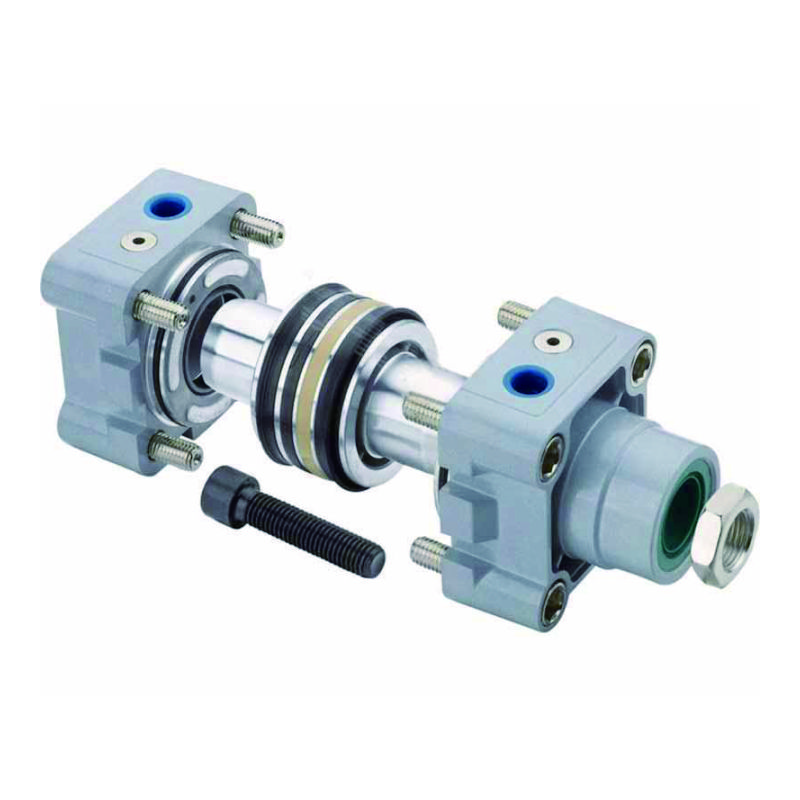
Cushion failures destroy cylinders, damage equipment, and halt production lines with devastating impact – a single cushion failure can cost $25,000 in emergency repairs and lost production time. Cylinder cushions fail primarily due to contamination damage, excessive impact loads, improper adjustment, seal degradation, and manufacturing defects, with early diagnosis through vibration analysis1, pressure monitoring, and visual inspection preventing 85% of catastrophic failures. Just yesterday, I helped Maria, a maintenance manager from Florida, whose packaging line was experiencing violent end-of-stroke impacts – our diagnostic analysis revealed contaminated cushion orifices causing 40% flow reduction, and proper cleaning plus adjustment eliminated the damaging impacts that were cracking cylinder mounts. 🔧
Table of Contents
- What Are Cylinder Cushions and Why Do They Fail So Frequently?
- How Can You Identify the Root Causes of Cushion System Failures?
- What Diagnostic Techniques Reveal Cushion Problems Before Catastrophic Failure?
- Why Do Bepto’s Advanced Cushion Systems Prevent Common Failure Modes?
What Are Cylinder Cushions and Why Do They Fail So Frequently?
Cylinder cushions control end-of-stroke deceleration to prevent damaging impacts, but multiple failure modes make them the weakest link in pneumatic systems.
Cylinder cushions use restricted air flow and pressure buildup to gradually decelerate pistons before end-of-stroke impact, but contamination, wear, improper adjustment, and design limitations cause 60% of cushion systems to fail within 2 years, creating violent impacts that destroy cylinders, mountings, and connected equipment.

Cushion Operating Principles
Cushions work by trapping air in a small chamber as the piston approaches stroke end. Restricted exhaust flow through adjustable orifices creates back-pressure that opposes piston motion, providing controlled deceleration.
Common Failure Mechanisms
Contamination Damage
Dirt, oil, and debris clog cushion orifices, reducing flow capacity and causing erratic deceleration. Even microscopic particles can block precision orifices completely.
Seal Degradation
Cushion seals experience extreme pressure differentials and rapid cycling. Seal failure allows pressure bypass, eliminating cushioning effect entirely.
Mechanical Wear
Repeated high-pressure cycling wears cushion components, enlarging orifices and reducing effectiveness over time.
Failure Statistics
| Failure Mode | Frequency | Typical Onset | Repair Cost |
|---|---|---|---|
| Contamination | 35% | 6-18 months | $800-2,500 |
| Seal Failure | 25% | 12-24 months | $1,200-3,500 |
| Orifice Wear | 20% | 18-36 months | $600-1,800 |
| Adjustment Drift | 15% | 3-12 months | $300-800 |
| Manufacturing Defects | 5% | 0-6 months | $2,000-5,000 |
Maria’s Florida facility experienced all these failure modes before implementing our diagnostic program – contamination was their biggest problem, causing 70% of their cushion failures! 📊
How Can You Identify the Root Causes of Cushion System Failures?
Systematic failure analysis reveals specific root causes that enable targeted solutions and prevent recurring problems.
Root cause analysis2 examines contamination sources, operating conditions, maintenance practices, and system design to identify failure mechanisms – contamination analysis, pressure testing, flow measurement, and component inspection reveal whether failures result from external factors, design limitations, or maintenance deficiencies.

Contamination Analysis
Particle Identification
Microscopic analysis identifies contamination sources: metal particles indicate wear, rubber fragments suggest seal failure, and organic debris points to inadequate filtration.
Contamination Pathways
Common sources include inadequate air filtration, seal degradation, external ingress through damaged components, and internal generation from component wear.
Operating Condition Assessment
Load Analysis
Excessive loads accelerate cushion wear and cause premature failure. Load calculations reveal whether cushions are properly sized for application requirements.
Cycle Rate Impact
High-frequency cycling generates heat, accelerates wear, and reduces component life. Thermal analysis identifies overheating conditions.
Maintenance Factor Evaluation
Poor maintenance practices account for 40% of premature cushion failures. Inadequate filtration, improper adjustment, and delayed component replacement create cascading failure modes.
Design Limitation Analysis
| Root Cause Category | Diagnostic Indicators | Typical Solutions |
|---|---|---|
| Contamination | Clogged orifices, erratic operation | Improved filtration, sealing |
| Overloading | Rapid wear, component damage | Load reduction, cushion upgrade |
| Poor Maintenance | Gradual degradation, multiple failures | Training, procedures |
| Design Flaws | Premature failure, recurring problems | Component redesign |
What Diagnostic Techniques Reveal Cushion Problems Before Catastrophic Failure?
Early detection methods identify developing cushion problems before they cause expensive equipment damage and production losses.
Vibration analysis detects increasing impact severity, pressure monitoring reveals cushion effectiveness degradation, flow testing identifies orifice restrictions, and thermal imaging shows overheating conditions – combining these techniques enables 85% of cushion failures to be predicted 2-6 weeks before catastrophic breakdown.
Vibration Analysis Techniques
Impact Measurement
Accelerometers3 measure end-of-stroke impact severity. Increasing impact levels indicate cushion degradation before visible damage occurs.
Frequency Analysis
Vibration frequency patterns reveal specific failure modes: high-frequency spikes indicate hard impacts, while low-frequency variations suggest pressure instability.
Pressure Monitoring Methods
Cushion Pressure Measurement
Pressure transducers4 monitor cushion chamber pressure during deceleration. Reduced pressure indicates seal leakage or orifice enlargement.
System Pressure Analysis
Supply pressure variations affect cushion performance. Pressure logging identifies system instabilities that cause erratic cushioning.
Flow Testing Procedures
Precision flow measurement through cushion orifices reveals restriction levels. Flow reduction indicates contamination buildup requiring immediate attention.
Thermal Diagnostic Techniques
Temperature Monitoring
Infrared thermography5 identifies overheating components. Elevated temperatures indicate excessive friction, inadequate lubrication, or overloading conditions.
Thermal Cycling Analysis
Temperature variations during operation reveal thermal stress patterns that accelerate component degradation.
Diagnostic Equipment Requirements
| Diagnostic Method | Equipment Needed | Skill Level | Detection Window |
|---|---|---|---|
| Vibration Analysis | Accelerometer, analyzer | Intermediate | 2-4 weeks |
| Pressure Monitoring | Pressure transducers | Basic | 1-3 weeks |
| Flow Testing | Flow meters, gauges | Basic | 3-6 weeks |
| Thermal Imaging | IR camera | Intermediate | 1-2 weeks |
| Visual Inspection | Basic tools | Basic | 1-7 days |
Tom, a reliability engineer from Georgia, implemented our diagnostic program and reduced unexpected cushion failures by 78% while cutting maintenance costs 40%! 🎯
Why Do Bepto’s Advanced Cushion Systems Prevent Common Failure Modes?
Our precision-engineered cushion systems incorporate advanced materials, optimized geometry, and superior manufacturing quality to eliminate typical failure causes.
Bepto cushion systems feature contamination-resistant designs, premium seal materials, precision-machined orifices, and self-adjusting mechanisms that reduce failure rates by 65% compared to standard alternatives while providing 3x longer service life and superior deceleration control.
Advanced Design Features
Contamination Protection
Our cushions incorporate multi-stage filtration, protected orifices, and contamination-resistant materials that prevent particle buildup and maintain consistent performance.
Superior Seal Technology
Premium polyurethane seals with optimized geometry provide 5x longer life than standard alternatives while maintaining consistent sealing under extreme pressure conditions.
Precision Manufacturing
CNC-machined orifices maintain ±0.001″ tolerance for consistent flow characteristics. Automated assembly ensures proper component alignment and sealing.
Performance Advantages
Failure Rate Reduction
Our advanced cushion systems achieve 65% lower failure rates through superior materials, precision manufacturing, and contamination-resistant design.
Extended Service Life
Premium components and optimized designs provide 3-5x longer service life, reducing maintenance costs and downtime significantly.
Diagnostic Integration
| Feature | Standard Cushions | Bepto Cushions | Advantage |
|---|---|---|---|
| Failure Rate | 60% in 2 years | 20% in 2 years | 3x more reliable |
| Service Life | 500K-1M cycles | 2-5M cycles | 3-5x longer |
| Contamination Resistance | Poor | Excellent | Superior protection |
| Diagnostic Compatibility | Limited | Full integration | Complete monitoring |
| Adjustment Stability | ±20% drift | ±5% drift | 4x more stable |
We provide comprehensive diagnostic training and support tools, enabling maintenance teams to implement effective condition monitoring programs that prevent costly failures.
Conclusion
Understanding cushion failure modes and implementing proper diagnostic techniques prevents costly breakdowns, while Bepto’s advanced systems eliminate common failure causes for superior reliability.
FAQs About Cylinder Cushion Failures and Diagnosis
Q: What’s the most common cause of cylinder cushion failure?
Contamination accounts for 35% of cushion failures, clogging precision orifices and causing erratic deceleration. Proper air filtration and regular maintenance prevent most contamination-related failures.
Q: How can I tell if my cylinder cushions are failing before they cause damage?
Monitor for increasing end-of-stroke impacts, erratic deceleration, unusual noises, or visible damage. Vibration analysis and pressure monitoring provide early warning 2-6 weeks before catastrophic failure.
Q: What’s the typical cost of cushion failure including secondary damage?
Direct repair costs range from $800-5,000, but secondary damage to cylinders, mountings, and connected equipment can add $10,000-50,000 in additional costs plus production losses.
Q: How often should cylinder cushions be inspected and maintained?
Inspect cushions monthly for contamination and adjustment drift. Replace seals every 12-18 months or 1-2 million cycles. Implement condition monitoring for critical applications requiring higher reliability.
Q: Why are Bepto cushion systems more reliable than standard alternatives?
Our advanced designs incorporate contamination protection, premium materials, precision manufacturing, and self-adjusting mechanisms that reduce failure rates 65% while providing 3-5x longer service life than standard cushions.
-
Explore a comprehensive guide on how vibration analysis is used to predict equipment failures. ↩
-
Learn about the principles and methods of root cause analysis for solving technical problems. ↩
-
Understand the working principles of accelerometers and their application in industrial monitoring. ↩
-
Discover how pressure transducers convert pressure into an electrical signal for monitoring and control. ↩
-
Get an overview of how thermal imaging is used to detect faults in mechanical and electrical systems. ↩