Manufacturing downtime from cylinder failures costs companies thousands of dollars per hour, with barrel scoring and piston damage accounting for 65% of all pneumatic system failures. Barrel scoring and piston damage can be prevented through proper filtration, regular maintenance, correct installation practices, and using quality replacement components that maintain precise tolerances and surface finishes. Last month, I helped Robert, a maintenance engineer from Michigan, whose production line was losing $30,000 daily due to recurring cylinder failures caused by contaminated air supply. 😰
Table of Contents
- What Causes Barrel Scoring and How Can You Identify It Early?
- Why Do Pistons Fail and What Are the Warning Signs?
- How Do Bepto Replacement Components Prevent Future Damage?
What Causes Barrel Scoring and How Can You Identify It Early?
Understanding the root causes of barrel scoring helps prevent expensive cylinder replacements and unexpected production shutdowns.
Barrel scoring occurs when contaminants in compressed air create abrasive particles that scratch cylinder walls, leading to seal failure, air leakage, and complete system breakdown within weeks of initial damage.
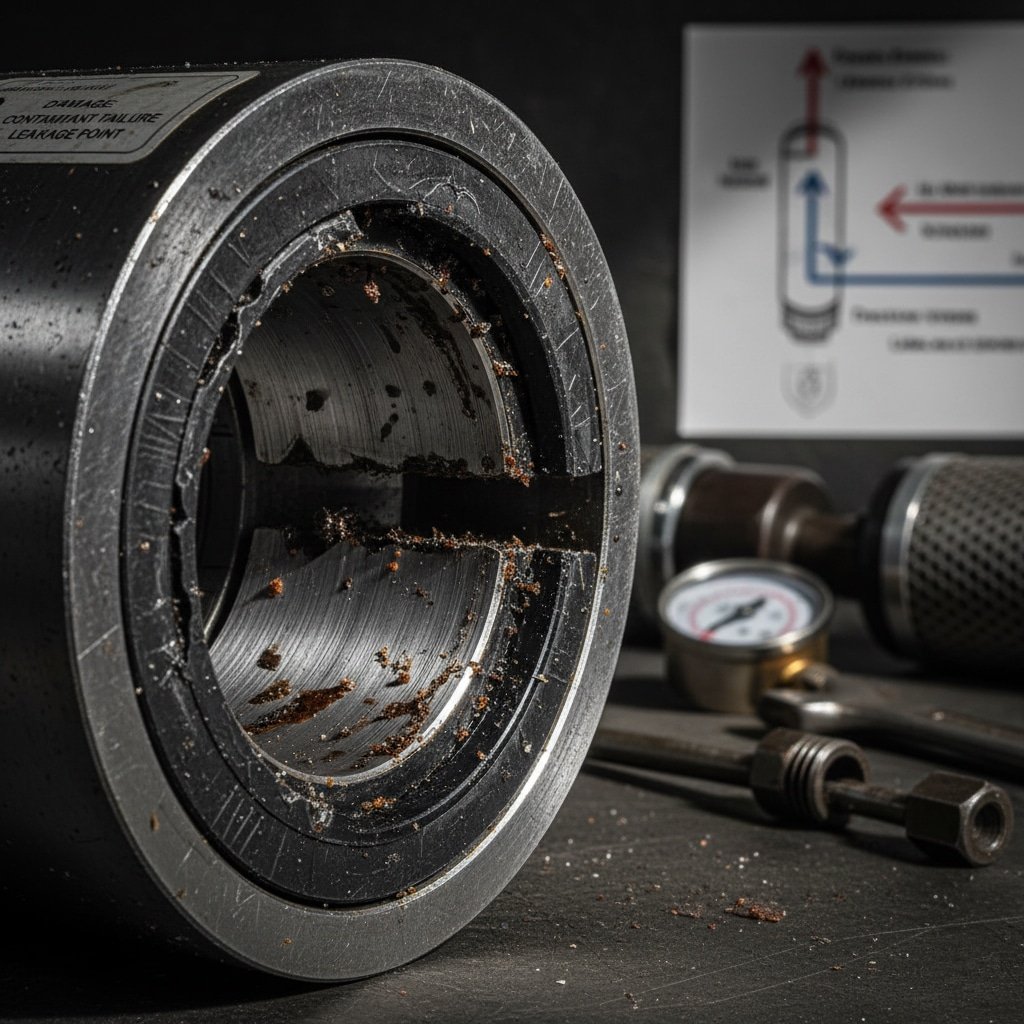
Primary Causes of Barrel Scoring
Contamination Issues:
- Dirt and debris bypassing air filters
- Metal particles from worn compressor components
- Moisture causing corrosion and rust flakes
- Oil breakdown creating sticky residues
Installation Problems:
- Misaligned mounting causing side loading1
- Insufficient lubrication during assembly
- Improper seal installation creating friction points
- Over-tightening connections causing stress concentrations
Early Detection Methods
| Warning Sign | What to Look For | Action Required |
|---|---|---|
| Increased air consumption | 20%+ higher usage | Immediate inspection |
| Slower cycle times | Noticeable speed reduction | Check for internal damage |
| Unusual noises | Scraping or grinding sounds | Stop operation immediately |
| Visible contamination | Dark oil or metal particles | Replace filters and investigate |
Prevention Strategies
Air Quality Management:
- Install high-efficiency filtration systems
- Regular filter replacement schedules
- Monitor air quality with contamination sensors
- Implement proper drainage systems
Robert’s situation perfectly illustrates contamination damage. His facility’s inadequate filtration allowed metal particles from an aging compressor to score multiple rodless cylinder barrels. We provided immediate Bepto replacement barrels with enhanced surface treatments, plus helped him upgrade his air treatment system. The result? Zero scoring failures in the past eight months! 🎯
Why Do Pistons Fail and What Are the Warning Signs?
Piston damage often accompanies barrel scoring but has distinct causes and symptoms that require specific attention.
Piston failures result from excessive wear, seal degradation, thermal stress, and mechanical damage, typically manifesting as reduced force output, erratic movement, and complete loss of cylinder function.

Common Piston Failure Modes
Seal-Related Failures:
- O-ring extrusion2 under high pressure
- Seal hardening from heat exposure
- Chemical degradation from incompatible fluids
- Improper groove dimensions causing seal damage
Mechanical Damage:
- Side loading from misalignment
- Impact damage from excessive speeds
- Fatigue cracking from pressure cycling
- Corrosion from moisture exposure
Failure Analysis Comparison
| Failure Type | Typical Lifespan | Repair Cost | Bepto Solution |
|---|---|---|---|
| Seal failure | 6-12 months | $200-500 | Premium seal kits |
| Piston scoring | 3-6 months | $500-1200 | Hardened pistons |
| Complete breakdown | 1-3 months | $1500-3000 | Full cylinder replacement |
Diagnostic Techniques
Performance Testing:
- Pressure drop measurements across the cylinder
- Cycle time analysis under different loads
- Force output verification with load cells3
- Leakage rate testing using flow meters
Sarah, a plant manager from Ohio, contacted us after experiencing weekly piston failures in her packaging equipment. The OEM replacement costs were killing her maintenance budget at $800 per failure. Our failure analysis revealed that oversized pistons were causing excessive friction. We supplied properly-sized Bepto pistons with improved surface treatments, reducing her failure rate by 90% and cutting replacement costs in half. 💪
How Do Bepto Replacement Components Prevent Future Damage?
Our engineered solutions address the root causes of barrel scoring and piston damage through superior materials and precision manufacturing.
Bepto replacement components prevent future damage through enhanced surface treatments, precision tolerances, premium seal materials, and comprehensive quality testing that ensures reliable performance and extended service life.
Advanced Engineering Solutions
Surface Enhancement Technologies:
- Hard chrome plating4 for wear resistance
- Specialized coatings reducing friction
- Precision honing for optimal surface finish
- Corrosion-resistant treatments
Quality Advantages:
- Tighter manufacturing tolerances than OEM
- Premium seal materials for extended life
- Comprehensive testing protocols
- Full traceability documentation
Performance Comparison
| Feature | OEM Components | Bepto Components | Advantage |
|---|---|---|---|
| Surface finish | 0.8 Ra | 0.4 Ra | 50% smoother |
| Tolerance range | ±0.05mm | ±0.02mm | 60% tighter |
| Service life | 12 months | 24+ months | 100% longer |
| Cost | $1000 | $650 | 35% savings |
Comprehensive Support
Technical Services:
- Failure analysis and root cause identification
- Custom solutions for specific applications
- Installation guidance and training
- Ongoing performance monitoring
Our replacement components have helped customers achieve remarkable improvements: 75% reduction in failure rates, 50% lower maintenance costs, and 200% longer service intervals. We don’t just sell parts – we solve problems and prevent future failures through superior engineering. 🔧
Conclusion
Preventing barrel scoring and piston damage requires understanding failure mechanisms and implementing quality solutions that address root causes rather than just symptoms.
FAQs About Barrel Scoring and Piston Damage
Q: How quickly can barrel scoring damage a cylinder completely?
Barrel scoring can destroy a cylinder within 2-4 weeks once initiated, as scratches create leak paths that accelerate wear and contamination buildup. Early detection and immediate action are critical to prevent total failure and costly emergency replacements.
Q: What’s the most cost-effective way to prevent piston damage?
Proper air filtration and regular maintenance prevent 80% of piston failures at a fraction of replacement costs. Installing quality filters, maintaining proper lubrication, and using precision replacement seals typically costs under $500 but prevents thousands in damage.
Q: Can damaged cylinders be repaired or must they be replaced?
Many damaged cylinders can be rebuilt with Bepto replacement components, often at 40-60% less cost than new OEM units. We evaluate each case individually and recommend repair when technically feasible and economically advantageous.
Q: How do Bepto components compare to OEM parts for preventing damage?
Bepto components often exceed OEM specifications through enhanced materials and tighter tolerances, typically providing 100% longer service life and 50% better performance while costing 30-40% less than original parts.
Q: What maintenance schedule prevents most cylinder failures?
Monthly visual inspections, quarterly performance testing, and annual component replacement based on operating hours prevent 90% of failures. We provide detailed maintenance schedules customized for your specific application and operating conditions.
-
Gain a deeper understanding of the causes and effects of barrel scoring in hydraulic and pneumatic systems. ↩
-
Learn how side loading can cause premature wear and failure in pneumatic cylinders and other actuators. ↩
-
Explore the technical reasons for O-ring extrusion and how to select the correct seals to prevent it. ↩
-
Discover the working principles behind load cells and how they are used for precise force measurement. ↩