

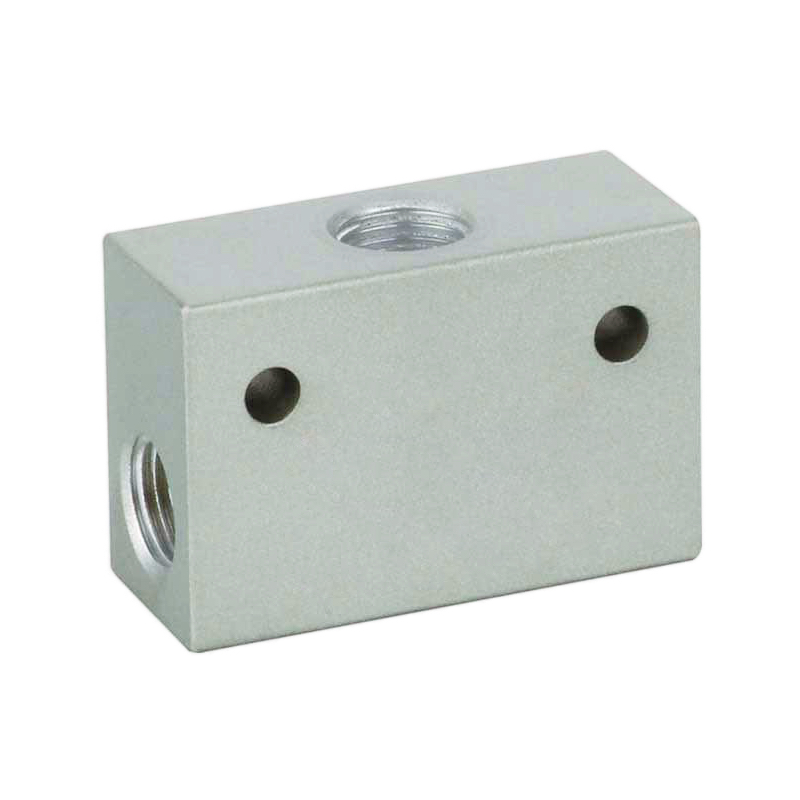
Struggling with complex pneumatic control circuits that need multiple input signals? 🤔 Traditional valve arrangements create confusion, increase failure points, and make troubleshooting a nightmare when you need reliable OR logic functionality.
Pneumatic shuttle valves provide OR logic functionality by automatically selecting the higher pressure input from two sources and directing it to a single output, eliminating the need for complex valve arrangements while ensuring reliable signal transmission in dual-input pneumatic control systems.
Last month, I helped Marcus, a maintenance engineer from a Detroit automotive plant, whose dual-station rodless cylinder control system was experiencing intermittent failures due to overcomplicated valve logic. 🏭
Table of Contents
- What Are Pneumatic Shuttle Valves and How Do They Work?
- When Should You Use Shuttle Valves in Your Pneumatic System?
- How Do You Size and Select the Right Shuttle Valve?
- What Are Common Installation Mistakes to Avoid with Shuttle Valves?
What Are Pneumatic Shuttle Valves and How Do They Work?
Understanding shuttle valve operation is essential for implementing effective OR logic in pneumatic control systems.
Pneumatic shuttle valves contain a floating spool or ball that automatically moves to block the lower pressure input while allowing the higher pressure input to flow through to the output, creating true OR logic where either input A OR input B can activate the downstream component.

Basic Operating Principle
Shuttle valves operate on a simple yet ingenious mechanical principle that requires no external control signals or electrical connections.
Internal Mechanism
The heart of a shuttle valve is its floating element – typically a spool, ball, or poppet that moves freely within the valve body. This element responds automatically to pressure differentials1 between the two inputs.
Operating Sequence
- Equal pressure: When both inputs have equal pressure, the element remains centered and both inputs can flow
- Pressure differential: When one input has higher pressure, the element moves to seal the lower pressure input
- Automatic switching: The element instantly repositions when pressure relationships change
Pressure Selection Logic
| Input A Pressure | Input B Pressure | Output Pressure | Active Input |
|---|---|---|---|
| 80 psi | 0 psi | 80 psi | A |
| 0 psi | 75 psi | 75 psi | B |
| 80 psi | 75 psi | 80 psi | A |
| 60 psi | 85 psi | 85 psi | B |
Applications in Rodless Cylinder Systems
In rodless cylinder applications, shuttle valves excel at:
- Dual-station control: Allowing operation from multiple locations
- Safety circuits: Providing backup control paths
- Priority systems: Ensuring higher pressure sources take precedence
- Signal isolation: Preventing backflow2 between control circuits
I recently worked with Sarah, a controls engineer from a Wisconsin packaging facility, who needed to implement dual-operator control for her high-speed rodless cylinder positioning system.
Her original design used complex valve manifolds with:
- 8 individual valves: Creating multiple failure points
- Complex wiring: Requiring extensive electrical controls
- Slow response: Multiple valve switching delays
- High maintenance: Regular adjustment and calibration needed
Our Bepto shuttle valve solution simplified this to:
- 2 shuttle valves: One for each direction control
- Zero electrical: Purely pneumatic operation
- Instant response: Immediate pressure selection
- Maintenance-free: No adjustments required
The result was a 60% reduction in components and elimination of all control-related downtime. ✅
When Should You Use Shuttle Valves in Your Pneumatic System?
Strategic application of shuttle valves maximizes their benefits while avoiding unnecessary complexity in simpler systems.
Use shuttle valves when you need dual-input control, backup operation capability, priority pressure selection, or signal isolation in pneumatic circuits, but avoid them in applications requiring precise flow control or where simultaneous inputs must be blocked.
Ideal Applications for Shuttle Valves
Certain pneumatic system requirements make shuttle valves the optimal solution for reliable OR logic functionality.
Primary Use Cases
- Dual-station operation: Multiple operator positions controlling the same equipment
- Emergency systems: Backup control paths for critical operations
- Priority circuits: Higher pressure sources overriding lower pressure inputs
- Signal combining: Merging multiple control signals into single output
Industry-Specific Applications
Manufacturing and Assembly
- Multi-operator workstations: Assembly lines with multiple control points
- Safety systems: Emergency stops from various locations
- Quality control: Reject mechanisms with multiple trigger sources
- Material handling: Conveyor controls from multiple stations
Comparison: Shuttle Valve vs. Alternative Solutions
| Solution | Complexity | Response Time | Maintenance | Cost |
|---|---|---|---|---|
| Shuttle valve | Low | Instant | Minimal | Low |
| Electrical OR logic | High | Moderate | Regular | High |
| Multiple check valves | Medium | Slow | Moderate | Medium |
| Pilot-operated valves | High | Slow | High | High |
When NOT to Use Shuttle Valves
- Flow control needed: Shuttle valves don’t regulate flow rates
- Simultaneous blocking: When both inputs must be isolated simultaneously
- Precise pressure control: Not suitable for pressure regulation
- High-frequency switching: Better solutions exist for rapid cycling
Design Considerations
When implementing shuttle valves, consider:
- Pressure drop: Typical 2-5 psi through the valve
- Flow capacity: Must match downstream component requirements
- Response time: Virtually instantaneous for most applications
- Temperature range: Standard valves handle -10°F to 180°F
Robert, a design engineer from a California semiconductor equipment manufacturer, was developing a new wafer handling system with dual-arm rodless cylinders requiring independent yet coordinated control.
His challenge involved:
- Dual-arm coordination: Each arm needed independent control with override capability
- Safety requirements: Emergency stop from multiple locations
- Precision positioning: High-accuracy movement with backup control
- Clean room compatibility: Minimal maintenance requirements
Our shuttle valve implementation provided:
- Independent control: Each operator station could control either arm
- Emergency override: Any e-stop activated both arms simultaneously s
- Simplified logic: Reduced control complexity by 70%
- Reliable operation: Zero maintenance requirements in clean room environment
The system has operated flawlessly for over 18 months with no control-related issues. 🎯
How Do You Size and Select the Right Shuttle Valve?
Proper shuttle valve selection ensures optimal performance and longevity in your pneumatic control system.
Size shuttle valves based on the flow requirements of your downstream components, pressure ratings of your system, and port size compatibility, typically selecting a valve with flow capacity 20-30% above your maximum system demand3 to ensure adequate performance margins.
Key Selection Criteria
Several technical factors determine the optimal shuttle valve for your specific application requirements.
Flow Capacity Requirements
The most critical factor is ensuring adequate flow capacity for your downstream components. Calculate total air consumption including:
- Cylinder volume: Bore area × stroke length
- Cycle rate: Operations per minute
- Pressure requirements: Working pressure levels
- Safety margin: 20-30% above calculated demand
Pressure Rating Considerations
- Maximum working pressure: Must exceed system pressure by 25%
- Proof pressure4: Typically 1.5× working pressure
- Burst pressure: Usually 4× working pressure for safety
Port Size and Connection Types
| Port Size | Flow Capacity (SCFM) | Typical Applications |
|---|---|---|
| 1/8″ NPT | 15-25 | Small cylinders, pilot signals |
| 1/4″ NPT | 35-50 | Medium cylinders, general control |
| 3/8″ NPT | 60-85 | Large cylinders, high flow |
| 1/2″ NPT | 100-140 | Very large cylinders, manifolds |
Material Selection
- Body material: Aluminum for lightweight, steel for durability
- Seal material: NBR for general use, FKM for high temperature
- Internal elements: Stainless steel for corrosion resistance
Performance Specifications
- Switching pressure: Minimum differential for operation (typically 2-5 psi)
- Response time: Usually instantaneous (<10ms)
- Temperature range: Standard -10°F to 180°F
- Filtration requirements: 40-micron filtration recommended
Bepto Shuttle Valve Advantages
| Feature | Bepto Advantage | Benefit |
|---|---|---|
| Flow capacity | 15% higher than OEM | Faster cycle times |
| Pressure drop | 20% lower internal losses | Better efficiency |
| Response time | <5ms switching | Improved system response |
| Price | 40% cost savings | Better ROI |
Jennifer, a procurement manager from a Texas oil equipment manufacturer, needed to standardize shuttle valves across her company’s pneumatic product lines while reducing costs.
Her evaluation criteria included:
- Performance: Must match or exceed OEM specifications
- Reliability: Minimum 2-year trouble-free operation
- Cost: Target 30% savings over current suppliers
- Availability: Quick delivery for production and service
Our Bepto shuttle valve evaluation showed:
- Flow performance: 12% better than incumbent supplier
- Pressure drop: 18% improvement in efficiency
- Cost savings: 38% reduction in total cost
- Delivery: 3-day standard delivery vs. 2-week OEM lead time
She standardized on Bepto shuttle valves company-wide, achieving annual savings of $45,000 while improving system performance. 💰
What Are Common Installation Mistakes to Avoid with Shuttle Valves?
Proper installation practices ensure reliable shuttle valve operation and prevent common performance issues.
Avoid installing shuttle valves with incorrect flow direction, inadequate pressure differential, improper mounting orientation, or insufficient filtration, as these mistakes can cause erratic operation, premature wear, or complete system failure in critical pneumatic applications.
Critical Installation Guidelines
Following proper installation procedures prevents most shuttle valve problems and ensures long-term reliable operation.
Flow Direction and Port Identification
- Input ports: Clearly marked as “A” and “B” or with directional arrows
- Output port: Usually marked “OUT” or with output arrow
- Pressure ports: Never connect supply pressure to output port
- Verification: Always confirm port identification before installation
Common Installation Errors
| Mistake | Consequence | Prevention |
|---|---|---|
| Reversed connections | No output signal | Verify port markings |
| Inadequate filtration | Premature wear | Install 40-micron filter |
| Wrong mounting position | Erratic operation | Follow orientation guidelines |
| Insufficient pressure differential | Poor switching | Ensure 5+ psi difference |
Mounting and Orientation
- Horizontal mounting: Preferred for most applications
- Vertical mounting: Acceptable with proper consideration for gravity effects
- Inverted mounting: Generally not recommended
- Vibration isolation: Use rubber mounts in high-vibration environments
System Integration Best Practices
- Pressure regulation: Install upstream of shuttle valve
- Flow control: Install downstream for proper operation
- Exhaust paths: Ensure adequate exhaust capacity
- Isolation valves: Include for maintenance access
Troubleshooting Common Issues
- No output: Check input connections and pressure levels
- Erratic switching: Verify pressure differential and filtration
- Slow response: Check for restrictions or contamination
- Leakage: Inspect seals and mounting surfaces
Maintenance Requirements
Shuttle valves require minimal maintenance when properly installed:
- Periodic inspection: Check for external leakage
- Filter replacement: Change upstream filters as needed
- Pressure testing: Verify switching pressures annually
- Seal replacement: Only if leakage develops
Thomas, a maintenance supervisor from a Pennsylvania steel processing plant, was experiencing frequent shuttle valve failures in his rodless cylinder control systems.
His investigation revealed several installation issues:
- Contamination: No filtration upstream of valves
- Mounting problems: Valves installed in vertical orientation with gravity working against operation
- Pressure issues: Insufficient differential between input sources
- Maintenance: No scheduled inspection program
Our corrective action plan included:
- Filtration upgrade: 40-micron filters installed upstream
- Remounting: Valves repositioned for optimal orientation
- Pressure optimization: System pressures adjusted for proper differential
- Training program: Maintenance staff educated on proper procedures
After implementation, shuttle valve failures dropped by 95% and system reliability improved dramatically. The plant has operated trouble-free for over 14 months. ⚡
Conclusion
Pneumatic shuttle valves provide reliable OR logic functionality through simple mechanical operation, making them essential components for dual-input pneumatic control systems.
FAQs About Pneumatic Shuttle Valves
Q: Can shuttle valves handle different pressure levels from each input simultaneously?
Yes, shuttle valves automatically select the higher pressure input and block the lower pressure input, making them ideal for systems with varying pressure sources. The valve switches instantly when pressure relationships change.
Q: Do Bepto shuttle valves work with rodless cylinder applications?
Absolutely! Our shuttle valves are perfectly suited for rodless cylinder control systems, providing reliable dual-input control for positioning, safety circuits, and multi-station operation with excellent flow capacity and response times.
Q: What’s the minimum pressure differential needed for reliable shuttle valve operation?
Most shuttle valves require a minimum 2-5 psi pressure differential between inputs for reliable switching, though our Bepto valves operate reliably with differentials as low as 2 psi for improved sensitivity.
Q: Can shuttle valves be used in high-cycle applications?
Yes, shuttle valves have no wear parts in normal operation since the internal element floats freely, making them suitable for high-cycle applications with virtually unlimited switching capability.
Q: How do you prevent contamination in shuttle valve systems?
Install 40-micron filtration upstream of shuttle valves, use proper air preparation equipment, and follow recommended maintenance schedules to prevent contamination-related failures and ensure long-term reliability.
-
Learn the official engineering definition and principle of pressure differential. ↩
-
Understand the causes and prevention methods for backflow in air circuits. ↩
-
Read the industry best practices for calculating flow capacity safety margins. ↩
-
Learn the standard definitions of these key pressure ratings in engineering. ↩