Your pneumatic system is consuming 30% more energy than necessary while delivering sluggish performance because poorly selected fittings are creating pressure drops, flow restrictions, and inefficiencies that drain your compressed air budget and compromise productivity. 💸
Proper fitting selection can improve pneumatic system efficiency by 25-40% through optimized flow coefficients (Cv values)1, reduced pressure drops2, minimized turbulence, and matched port sizing – selecting fittings with adequate flow capacity, proper materials, and optimal geometry reduces energy consumption, increases actuator speed, and extends component life while lowering operating costs.
Last week, I consulted with Michael, a plant engineer at a packaging facility in Ohio, whose pneumatic system was consuming $45,000 annually in compressed air costs due to undersized fittings and excessive pressure drops. After upgrading to properly sized Bepto fittings throughout his rodless cylinder applications, Michael achieved 35% energy savings, increased cycle speeds by 20%, and recovered his investment in just 8 months.
Table of Contents
- What Role Do Fittings Play in Overall Pneumatic System Performance?
- How Do Flow Coefficients and Pressure Drops Affect System Efficiency?
- Which Fitting Characteristics Have the Greatest Impact on Energy Consumption?
- What Are the Best Practices for Optimizing Fitting Selection in Different Applications?
What Role Do Fittings Play in Overall Pneumatic System Performance?
Fittings serve as the critical connection points that determine your entire pneumatic system’s efficiency, speed, and reliability.
Fittings control 60-80% of total system pressure drop through flow restrictions, turbulence generation, and connection losses – properly selected fittings with optimized internal geometry, adequate sizing, and smooth flow paths can reduce system pressure requirements by 15-25 PSI, decrease energy consumption by 20-35%, and improve actuator response times by 30-50% while extending component service life.
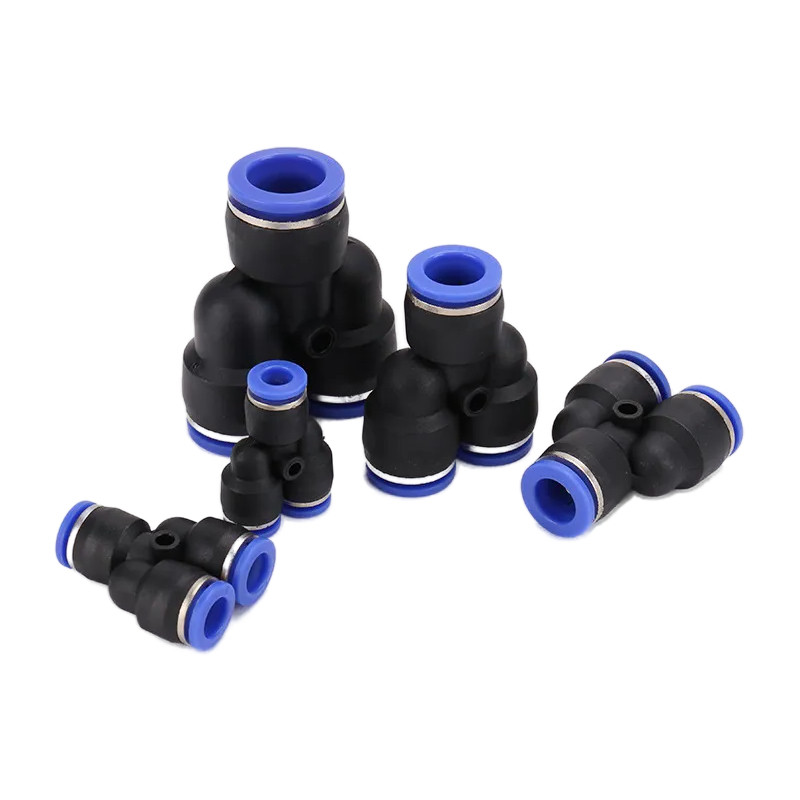
System Performance Impact Analysis
Fitting Influence on Key Performance Metrics:
| Performance Factor | Poor Fitting Impact | Optimized Fitting Benefit | Improvement Range |
|---|---|---|---|
| Energy consumption | +25-40% higher | Baseline efficiency | 25-40% reduction |
| Actuator speed | -30-50% slower | Maximum rated speed | 30-50% increase |
| Pressure drop | +10-30 PSI loss | Minimal losses | 15-25 PSI savings |
| System capacity | -20-35% reduced | Full rated capacity | 20-35% increase |
Flow Path Optimization
Critical Design Elements:
- Internal geometry: Smooth transitions minimize turbulence
- Port sizing: Adequate diameter prevents bottlenecks
- Connection angles: Straight-through flow reduces losses
- Surface finish: Smooth walls decrease friction losses
Pressure Drop Fundamentals
Understanding System Losses:
Every fitting creates pressure drop through:
- Friction losses: Air moving through passages
- Turbulence losses: Direction changes and restrictions
- Connection losses: Thread interfaces and seals
- Velocity losses: Acceleration/deceleration effects
Cumulative Effect:
In a typical pneumatic system with 12-15 fittings:
- Each fitting: 0.5-3 PSI pressure drop
- Total system loss: 6-45 PSI depending on selection
- Energy impact: 3-25% of total compressed air consumption
- Performance impact: Directly affects actuator force and speed
Economic Impact Assessment
Cost Analysis Framework:
| System Size | Annual Air Cost | Poor Fitting Penalty | Optimization Savings |
|---|---|---|---|
| Small (5 HP) | $3,500 | +$875-1,400 | $875-1,400 |
| Medium (25 HP) | $17,500 | +$4,375-7,000 | $4,375-7,000 |
| Large (100 HP) | $70,000 | +$17,500-28,000 | $17,500-28,000 |
Bepto Fitting Advantages
Our Performance-Optimized Solutions:
- Flow-optimized geometry: Reduced pressure drop by design
- Precision manufacturing: Consistent internal dimensions
- Quality materials: Corrosion resistance and durability
- Complete sizing range: Proper matching for all applications
- Technical support: Expert system analysis and recommendations
How Do Flow Coefficients and Pressure Drops Affect System Efficiency?
Understanding flow coefficients (Cv) and pressure drop relationships is essential for optimizing pneumatic system performance.
Flow coefficient (Cv) represents fitting flow capacity – higher Cv values indicate better flow with lower pressure drops, while undersized fittings with low Cv create bottlenecks that reduce system efficiency by 20-40% – selecting fittings with Cv values 2-3 times the calculated requirement ensures optimal performance, minimal pressure drop, and maximum energy efficiency.
Flow Rate (Q) Calculator
Q = Cv × √(ΔP × SG)
Pressure Drop (ΔP) Calculator
ΔP = (Q / Cv)² ÷ SG
Sonic Conductance Calculator (Critical Flow)
Q = C × P₁ × √T₁
Flow Coefficient Fundamentals
Cv Definition and Application:
- Cv value: Gallons per minute of water at 1 PSI pressure drop
- Air flow conversion: Cv × 28 = SCFM3 at 100 PSI differential
- Sizing principle: Higher Cv = better flow capacity
- Selection rule: Choose Cv 2-3× calculated requirement
Pressure Drop Calculations
Practical Pressure Drop Formula:
For Air Flow:
ΔP = (Q/Cv)² × (P₁ + P₂)/2 × 0.0014
Where:
- ΔP = Pressure drop (PSI)
- Q = Flow rate (SCFM)
- Cv = Flow coefficient
- P₁, P₂ = Upstream/downstream pressures (PSIA)
Fitting Size vs. Performance:
| Fitting Size | Typical Cv | Max SCFM @ 5 PSI Drop | Application Range |
|---|---|---|---|
| 1/8″ | 0.8-1.2 | 8-12 SCFM | Small actuators |
| 1/4″ | 2.5-4.0 | 25-40 SCFM | General purpose |
| 3/8″ | 5.5-8.5 | 55-85 SCFM | Medium cylinders |
| 1/2″ | 10-15 | 100-150 SCFM | Large actuators |
System Efficiency Optimization
Efficiency Improvement Strategies:
- Minimize fittings: Use fewer, larger fittings when possible
- Optimize routing: Straight runs with minimal direction changes
- Size appropriately: Never undersize for cost savings
- Consider geometry: Full-flow designs over restricted passages
Real-World Performance Impact
Case Study Comparison:
| System Configuration | Pressure Drop | Energy Use | Cycle Time | Annual Cost |
|---|---|---|---|---|
| Undersized fittings | 25 PSI | 140% | 2.8 sec | $52,500 |
| Standard fittings | 15 PSI | 115% | 2.2 sec | $43,125 |
| Optimized fittings | 8 PSI | 100% | 1.8 sec | $37,500 |
Advanced Flow Considerations
Turbulence and Reynolds Number:
- Laminar flow: Smooth, predictable pressure drop
- Turbulent flow: Higher losses, unpredictable performance
- Critical Reynolds number4: ~2300 for pneumatic systems
- Design goal: Maintain laminar flow through proper sizing
Compressible Flow Effects:
- Choked flow: Maximum flow rate limitation
- Critical pressure ratio: 0.528 for air
- Sonic velocity: Flow limitation at high pressure drops
- Design consideration: Avoid choked flow conditions
Which Fitting Characteristics Have the Greatest Impact on Energy Consumption?
Specific fitting design features directly influence pneumatic system energy efficiency and operating costs.
The most impactful fitting characteristics for energy efficiency are internal flow geometry (affecting 40-60% of pressure drop), port sizing relative to flow requirements (25-35% impact), connection type and sealing method (10-20% impact), and material surface finish (5-15% impact) – optimizing these characteristics can reduce compressed air energy consumption by 20-35% while improving system responsiveness.
Critical Design Characteristics
Energy Impact Ranking:
| Characteristic | Energy Impact | Optimization Potential | Implementation Cost |
|---|---|---|---|
| Internal geometry | 40-60% | High | Medium |
| Port sizing | 25-35% | Very high | Low |
| Connection type | 10-20% | Medium | Low |
| Surface finish | 5-15% | Medium | High |
Internal Geometry Optimization
Flow Path Design Elements:
- Smooth transitions: Gradual diameter changes reduce turbulence
- Minimal restrictions: Avoid sharp edges and sudden contractions
- Straight-through flow: Direct paths minimize pressure drop
- Optimized angles: 15-30° transitions for best performance
Geometry Comparison:
| Design Type | Pressure Drop | Flow Capacity | Energy Efficiency |
|---|---|---|---|
| Sharp-edged | 100% (baseline) | 100% (baseline) | 100% (baseline) |
| Rounded edges | 75% | 115% | 125% |
| Streamlined | 50% | 140% | 160% |
| Full-flow | 35% | 180% | 200% |
Port Sizing Impact
Sizing Rules for Maximum Efficiency:
- Undersized ports: Create bottlenecks, exponential pressure drop increase
- Properly sized: Match or exceed connected component ports
- Oversized: Minimal additional benefit, increased cost
- Optimal ratio: Fitting port 1.2-1.5× component port diameter
Connection Type Efficiency
Connection Method Comparison:
| Connection Type | Pressure Drop | Installation Time | Maintenance | Energy Impact |
|---|---|---|---|---|
| Threaded | Medium | High | Medium | Baseline |
| Push-to-connect | Low | Very low | Low | 10-15% better |
| Quick-disconnect | Low | Very low | Very low | 15-20% better |
| Welded/brazed | Very low | Very high | High | 20-25% better |
Sarah, a facilities manager at an automotive parts manufacturer in Kentucky, was facing escalating compressed air costs that had reached $85,000 annually. Her pneumatic system was using outdated fittings with poor internal geometry and undersized ports throughout the rodless cylinder applications on her assembly lines.
After conducting a comprehensive fitting audit and upgrading to Bepto’s flow-optimized fittings:
- Energy consumption: Reduced by 32% ($27,200 annual savings)
- System pressure: Decreased requirement from 110 PSI to 85 PSI
- Cycle times: Improved by 28% increasing production capacity
- Maintenance costs: Reduced by 45% due to lower system stress
- ROI achievement: Complete payback in 11 months
Material and Surface Considerations
Surface Finish Impact:
- Rough surfaces: Increase friction losses by 15-25%
- Smooth finishes: Minimize boundary layer effects
- Coating options: PTFE coatings reduce friction further
- Manufacturing quality: Consistent finishes ensure predictable performance
Material Selection for Efficiency:
- Brass: Good flow characteristics, corrosion resistant
- Stainless steel: Excellent surface finish, high durability
- Engineered plastics: Smooth surfaces, lightweight
- Composite materials: Optimized flow paths, cost-effective
Bepto Efficiency Solutions
Our Energy-Optimized Fitting Line:
- Flow-tested designs: Every fitting Cv verified
- Streamlined geometry: Computational fluid dynamics5 optimized
- Precision manufacturing: Consistent internal dimensions
- Quality materials: Superior surface finishes
- Complete documentation: Flow data for system calculations
- Energy audit services: Comprehensive system analysis and recommendations
What Are the Best Practices for Optimizing Fitting Selection in Different Applications?
Application-specific fitting selection ensures maximum efficiency and performance for diverse pneumatic system requirements.
Optimize fitting selection by matching flow requirements to application demands – high-speed automation needs low-restriction fittings with Cv values 3-4× calculated flow, heavy-duty manufacturing requires robust fittings with 2-3× flow capacity, and precision applications benefit from consistent, repeatable flow characteristics – proper selection improves efficiency by 25-45% while ensuring reliable operation.
Application-Specific Selection Criteria
High-Speed Automation Systems:
| Requirement | Specification | Recommended Features | Performance Target |
|---|---|---|---|
| Response time | <50ms | Low-volume, high-Cv fittings | Minimize dead volume |
| Cycle rate | >60 CPM | Quick-connect, straight-through | Reduce connection losses |
| Precision | ±0.1mm | Consistent flow characteristics | Repeatable performance |
| Energy efficiency | <3 PSI drop | Oversized ports, smooth geometry | Maximum flow capacity |
Heavy Manufacturing Applications:
- Durability focus: Robust materials, reinforced construction
- Flow capacity: High Cv ratings for large actuators
- Maintenance: Easy service access, replaceable components
- Cost optimization: Balance performance with total cost of ownership
System Design Best Practices
Systematic Optimization Approach:
- Calculate flow requirements: Determine actual SCFM needs
- Size fittings appropriately: Select Cv 2-3× calculated flow
- Minimize restrictions: Use largest practical fitting sizes
- Optimize routing: Straight runs, minimal direction changes
- Consider future needs: Allow for system expansion
Selection Decision Matrix
Multi-Criteria Evaluation:
| Application Type | Primary Criteria | Secondary Criteria | Fitting Recommendation |
|---|---|---|---|
| High-speed assembly | Response time, precision | Energy efficiency | Low-volume, high-Cv |
| Heavy manufacturing | Durability, flow capacity | Cost optimization | Robust, high-flow |
| Mobile equipment | Vibration resistance | Compact size | Reinforced, sealed |
| Food processing | Cleanability, materials | Corrosion resistance | Stainless, smooth |
Industry-Specific Considerations
Automotive Manufacturing:
- High cycle rates: Quick-connect fittings for tool changes
- Precision requirements: Consistent flow for quality control
- Cost pressure: Optimize total system efficiency
- Maintenance windows: Easy service during planned downtime
Packaging Industry:
- Format flexibility: Quick changeover capabilities
- Contamination control: Sealed connections, easy cleaning
- Speed requirements: Minimal pressure drop for fast cycles
- Reliability focus: Consistent performance for continuous operation
Aerospace Applications:
- Quality standards: Certified materials and processes
- Weight considerations: Lightweight, high-performance materials
- Reliability requirements: Proven designs with extensive testing
- Documentation needs: Complete traceability and specifications
Bepto Application Solutions
Our Comprehensive Approach:
- Application analysis: Detailed system requirements assessment
- Custom recommendations: Tailored fitting selection for specific needs
- Performance verification: Flow testing and validation
- Implementation support: Installation guidance and training
- Ongoing optimization: Continuous improvement recommendations
Industry Expertise:
- Automotive: 15+ years optimizing assembly line pneumatics
- Packaging: Specialized solutions for high-speed operations
- General manufacturing: Cost-effective efficiency improvements
- Custom applications: Engineered solutions for unique requirements
Proper fitting selection is the foundation of pneumatic system efficiency – invest in optimization to unlock significant energy savings and performance improvements! ⚡
Conclusion
Strategic fitting selection transforms pneumatic system efficiency, delivering substantial energy savings, improved performance, and reduced operating costs through optimized flow characteristics and minimized pressure drops. 🚀
FAQs About Fitting Selection and System Efficiency
Q: How much can proper fitting selection really save on compressed air costs?
Proper fitting selection typically reduces compressed air energy consumption by 20-35%, translating to annual savings of $5,000-25,000 for medium-sized systems, with payback periods of 6-18 months depending on system size and current efficiency.
Q: What’s the most common mistake in pneumatic fitting selection?
The most common mistake is undersizing fittings to save initial costs, which creates bottlenecks that increase pressure drop exponentially, requiring 25-40% more compressed air energy and reducing actuator performance significantly.
Q: How do I calculate the right fitting size for my application?
Calculate required SCFM flow rate, select fittings with Cv values 2-3 times your calculated requirement, ensure fitting ports match or exceed connected component ports, and verify total system pressure drop stays under 10 PSI.
Q: Can I retrofit existing systems with better fittings for efficiency gains?
Yes, retrofitting with optimized fittings is often the most cost-effective efficiency improvement, providing immediate energy savings of 15-30% with minimal system downtime and investment recovery in 8-15 months.
Q: What’s the difference between standard and high-efficiency pneumatic fittings?
High-efficiency fittings feature optimized internal geometry, larger flow passages, smoother surface finishes, and streamlined designs that reduce pressure drop by 30-50% compared to standard fittings while maintaining the same connection size.
-
Explore the engineering definition of the Flow Coefficient (Cv) and how it is used to calculate flow rates for valves and fittings. ↩
-
Learn about the fundamental principles of fluid dynamics that cause pressure drop in pipes, bends, and fittings. ↩
-
Understand the definition of Standard Cubic Feet per Minute (SCFM) and why it’s a critical unit for measuring gas flow. ↩
-
Delve into the concept of the Reynolds Number and how it predicts the transition from smooth laminar flow to chaotic turbulent flow. ↩
-
Discover how Computational Fluid Dynamics (CFD) is used to simulate fluid flow and optimize the design of components like pneumatic fittings. ↩