


Optimal pneumatic valve placement is the location that meets the actuator’s dynamic pressure, response, exhaust, safety, environmental, and maintenance requirements with the least unnecessary line volume. It isn’t a universal distance from the cylinder. Some machines favor a central valve island; others need distributed islands or a valve mounted near one fast actuator.
Choose the architecture from measured requirements. Define peak flow and stroke time, calculate the valve-to-actuator tube volume, check supply and exhaust pressure during motion, then test the fault and maintenance states. Short tubing can improve response, but a hard-to-service valve in a hot, wet, vibrating, or hazardous position is not an efficient design.
Safety note: Use this article as an engineering review framework, not as a substitute for the machine manufacturer’s instructions, a machine-specific risk assessment, applicable regulations, or the site’s hazardous-energy procedure. A qualified designer must approve the final isolation, exhaust, restart, and fault behavior.
Key Takeaways
- CAGI recommends no more than 10% pressure drop from compressor discharge to the point of use in a well-designed system.
- There is no general 3 ft valve-distance rule. Tube ID, length, flow, actuator volume, exhaust path, and required response all matter.
- Central, distributed, and actuator-mounted valves each solve different layout problems.
- Validate placement with dynamic pressure and stroke-time measurements, not static regulator pressure alone.
Valve placement is a volume-allocation decision as much as a distance decision. Moving a valve closer changes the air volume that must be filled and exhausted every cycle, but it may also move diagnostics, electrical connections, silencers, and service work into a less suitable area. The best location balances all of those consequences.
The Pneumatic Valve Placement Design Boundary
ISO 4414:2010 is a 38-page standard covering significant pneumatic-system hazards and considerations including installation, adjustment, maintenance, reliable operation, and energy efficiency (ISO 4414, confirmed 2021). Valve placement must therefore be reviewed as part of the complete machine design, not reduced to tube length alone.
Start with six requirements for each controlled motion:
- Motion: required force, stroke time, speed profile, load direction, and allowable variation
- Flow: peak supply flow, exhaust flow, valve conductance, fitting restrictions, and simultaneous demand
- Volume: actuator chamber volume plus the tube volume between the valve and actuator
- Control: valve response, network timing, electrical zoning, diagnostics, and fault behavior
- Environment: ingress exposure, temperature, contamination, washdown, vibration, and hazardous-area requirements
- Service: isolation, stored-energy release, manual override access, silencer replacement, and connector removal
This boundary prevents a common mistake: optimizing one fast stroke while making the valve island inaccessible or the shared exhaust undersized. The related modular pneumatic circuit guide explains how supply, exhaust, pressure zones, and fault states interact inside a manifold.
Before choosing a location, calculate the flow needed to meet the real stroke target. Valve placement cannot compensate for an undersized valve path or tube.
Should Valves Be Centralized or Distributed?
Festo’s CPX-AP-I architecture supports up to 80 modules or valve terminals per bus interface and cable lengths up to 50 m between modules (Festo CPX-AP-I, 2026). Those figures show that modern control networks can support distributed valve locations, but they don’t determine the correct pneumatic topology by themselves.
Use three architecture patterns:
| Architecture | Best fit | Main advantage | Main risk to verify |
|---|---|---|---|
| Central valve island | compact machine, moderate response needs, clean control enclosure | concentrated wiring, diagnostics, spares, and service | long working lines, extra fill/exhaust volume, shared exhaust interaction |
| Distributed valve islands | large or modular machine with groups of nearby actuators | shorter local tubing with grouped diagnostics | more field enclosures, network and power zones, distributed maintenance |
| Valve near actuator | one high-response motion, local shutoff, or special exhaust requirement | smallest controlled line volume and shortest exhaust path | heat, washdown, vibration, access, cable protection, manual override exposure |
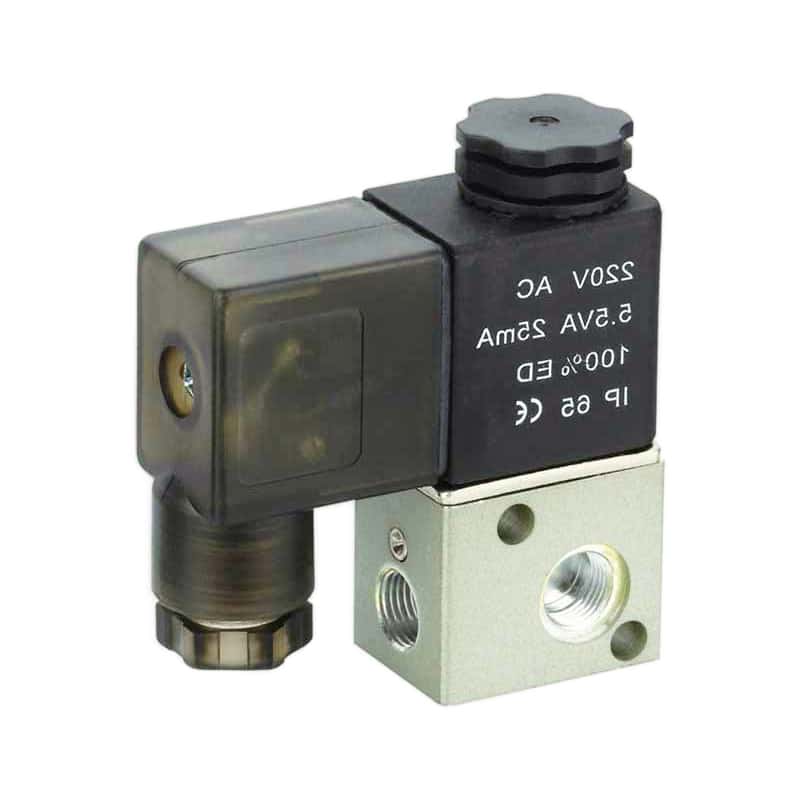
A central island is often sensible when actuators are clustered and line volume doesn’t limit the cycle. Distribution becomes more attractive as machine modules spread apart or motions need different pressure, exhaust, or safety zones. A single local valve may solve one demanding motion without forcing every valve out of the cabinet.
For example, a module with six moderate-speed clamps may suit one local valve island. If a separate indexing cylinder misses its response target because of a long working line, that one motion can receive a nearer valve while the clamps remain grouped. The architecture follows measured need, not an all-central or all-distributed rule.
Keep the control architecture visible in the decision. Festo describes decentralized topology as a way to shorten cables and tubing to electric and pneumatic drives, while also using separate communication and power connections to create voltage zones (Festo CPX-AP product information, 2024). That benefit requires matching network, power, and pneumatic fault behavior.
How Do Tube Volume and Pressure Drop Change the Decision?
ISO 6358-1:2013 defines a 61-page steady-state test method for pneumatic component flow characteristics using compressible fluids (ISO 6358-1, amended 2026). Use manufacturer Cv, Kv, sonic conductance, critical pressure ratio, or tested flow curves instead of assuming that port thread alone predicts valve performance.
The valve-to-actuator tube volume is:
tube volume = pi x inside diameter^2 / 4 x tube lengthFor example, 8 mm inside diameter tubing contains about 0.503 L over 10 m and about 0.151 L over 3 m. Shortening that run by 7 m removes roughly 0.352 L from the volume that must change pressure. This geometry does not predict stroke time by itself, but it reveals why two layouts with the same valve and cylinder can respond differently.
Pressure drop must be evaluated at peak flow. CAGI states that friction and resistance occur in piping, fittings, filters, dryers, and other components, and recommends pressure-monitoring ports before and after flow-restricting components (CAGI system design guide, 2021). Measure when the actuator is moving, not only when the machine is idle.
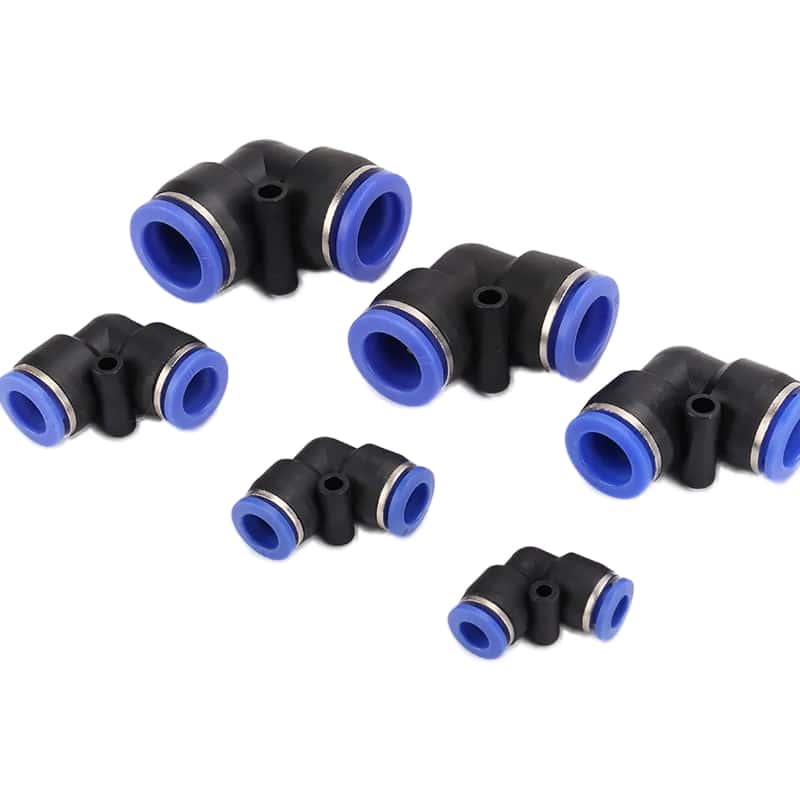
Do not assign a fixed equivalent length to every elbow without identifying its geometry and the calculation method. A compact push-in elbow, a swept bend, and a restrictive tee do not have the same loss. Use manufacturer data or a calculation based on the actual fitting family.
The pneumatic valve pressure-drop guide separates valve loss from the surrounding tube and fittings. For choked paths, compare the sonic-conductance and critical-pressure-ratio data.
Where Should Each Valve Function Be Located?
SMC publishes cylinder drive-system graphs under defined conditions including 0.5 MPa pressure, 3 m piping, meter-out control connected directly to the cylinder, and a stated load factor (SMC drive-system data, 2026). Placement guidance is meaningful only when its operating conditions are equally explicit.
Use the valve’s function to choose its location:
- Directional control valve: place where working-line volume, response, environment, wiring, service, and fault behavior reach the best compromise.
- Speed controller: mount according to the selected meter-in or meter-out circuit and the manufacturer’s permitted orientation, usually near the actuator when direct chamber control is required.
- Point-of-use regulator: locate where it can sense and maintain the required zone pressure, while preserving gauge access, drainage, and service clearance.
- Quick-exhaust valve: place near the actuator only when local exhaust is justified, then recheck cylinder speed, end impact, noise, and safe depressurization.
- Soft-start and dump valve: place at the machine or zone boundary defined by the energy-control and restart strategy.
- Manual isolation valve: make it identifiable, lockable when required, accessible, and capable of supporting verified energy isolation.
The meter-in versus meter-out guide explains why flow-control position depends on load behavior. The quick-exhaust valve guide covers local exhaust placement and its effect on motion.
What about a valve mounted directly on a cylinder? It minimizes one line segment, but it can expose the coil, connector, override, and silencer to vibration or contamination. It may also add unsupported mass to a moving or lightly supported assembly. Check the component’s mounting instructions and the machine’s load path.
How Should Shared Supply, Exhaust, and Pressure Zones Be Arranged?
CAGI recommends no more than 10% pressure drop between compressor discharge and any point of use in a well-designed compressed-air system (CAGI Pressure Drop FAQ, retrieved 2026). This is a system-level budget, so a valve island should not consume the whole allowance during simultaneous actuator demand.
Check both directions through the manifold. A generous supply gallery does not guarantee a low-restriction exhaust. Shared silencers, enclosure vents, small exhaust galleries, and several valves switching together can raise back pressure and change cylinder behavior. Measure supply and exhaust during the worst simultaneous sequence.
Organize zones by a real boundary:
- motions requiring the same regulated pressure
- functions that can be isolated and restarted together
- actuators with compatible fault states
- stations with correlated peak demand
- modules sharing environmental and maintenance conditions
- loads that can be sequenced without harming the process
Do not group unlike functions merely because their valves fit on one manifold. A clamp that must hold during a fault, a vertical axis, and a blow-off nozzle may require different pressure, exhaust, restart, and isolation behavior. Review the complete 4-way directional valve control architecture before selecting 5/2 or 5/3 center conditions.
Zone efficiency comes from making demand and isolation boundaries visible. Moving a valve without redefining the zone may shorten tubing while leaving every station pressurized during idle time. Conversely, a well-placed zone isolation valve can reduce the pressurized boundary even when the individual directional valves remain centralized.
How Do Environment, Access, and Stored Energy Affect Placement?
IEC 60529 applies IP classifications to electrical-equipment enclosures rated up to 72.5 kV and addresses enclosure protection, not every chemical, temperature, vibration, or corrosion hazard (IEC 60529, consolidated edition). An IP code is therefore only one input when locating an electro-pneumatic valve in the machine.
Match the exact valve, coil, connector, manifold, and enclosure ratings to the environment. Check:
- washdown direction, water pooling, dust, welding spatter, and chemical exposure
- ambient and media temperature at the installed position
- vibration, impact, unsupported tubing, and connector strain
- drainage paths and low points where condensate can collect
- access to manual overrides without entering a hazardous motion envelope
- room to remove coils, connectors, valve slices, silencers, and fittings
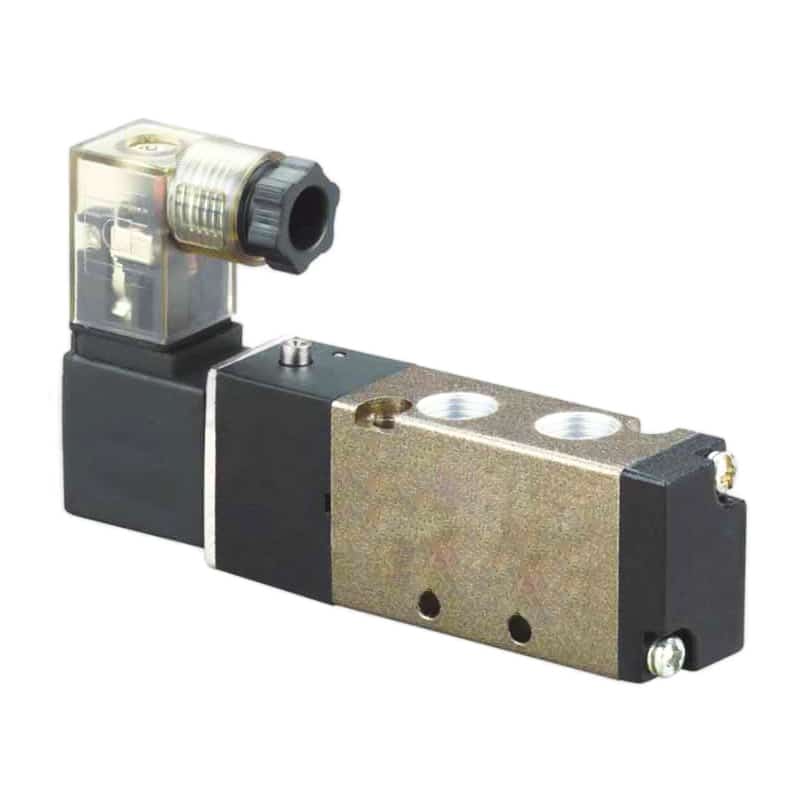
OSHA 1910.147 identifies pneumatic energy as an energy source and requires potentially hazardous stored or residual energy to be relieved, disconnected, restrained, or otherwise made safe after lockout or tagout is applied (OSHA 1910.147). A control command or closed solenoid valve is not an energy-isolating device.
Design service access around the site’s risk assessment and actual removal envelope. There is no universal 18-inch clearance for every pneumatic valve. CAD should show the tool path, connector release, replacement component, technician position, adjacent guards, and any part that can move under gravity or trapped pressure.
A Measurement-Based Commissioning Protocol
CAGI’s pressure-drop guidance states that every 2 psig of excess operating pressure adds approximately 1% compressor power for positive-displacement compressors (CAGI Pressure Drop FAQ, retrieved 2026). Raising compressor pressure to hide one poorly placed or undersized restriction can therefore increase energy use across the system.
Commission each proposed valve location with the real load and production sequence:
- Record supply pressure at the machine boundary and valve inlet during peak demand.
- Record both working-port pressures through the actuator stroke.
- Measure manifold and silencer back pressure during simultaneous exhaust.
- Record valve command, cylinder position, and full stroke time on the same time base.
- Repeat at minimum and maximum expected supply conditions.
- Test restart, emergency stop, loss of electrical power, and loss of pneumatic supply.
- Verify isolation, bleed-down, and possible pressure reaccumulation before maintenance release.
- Record accepted valve models, tubing IDs and lengths, fittings, regulator settings, silencers, and test traces.
Compare alternatives with the same acceptance criteria. A distributed layout is justified when it measurably improves response or pressure behavior without creating unacceptable environmental, network, safety, or service risks. A central island remains valid when it meets the motion requirements and gives the better overall machine architecture.
The pressure-drop troubleshooting guide provides a measurement sequence for separating supply, treatment, distribution, valve, and point-of-use restrictions.
Frequently Asked Questions
How close should a directional valve be to its actuator?
There is no universal maximum distance. Calculate the working-line volume, required flow, expected pressure drop, and target response, then verify them during motion. A longer line may be acceptable for a slow clamp, while a fast indexing axis may justify a distributed island or local valve.
Is a distributed valve island always more efficient?
No. Distribution can shorten tubing and localize pressure or exhaust zones, but it also adds field hardware, power connections, network nodes, environmental exposure, and service locations. Compare it with a central island using the same dynamic-pressure, timing, fault-state, maintenance, and lifecycle criteria.
Does mounting the valve near the cylinder reduce air consumption?
It reduces the valve-to-cylinder tube volume, which can reduce the volume filled and exhausted during switching. The actual system effect depends on circuit type, pressure, stroke frequency, exhaust routing, leakage, and whether the line volume is fully cycled. Calculate the volume and measure consumption before claiming savings.
Where should a pneumatic flow-control valve be installed?
Place it according to the circuit function and manufacturer’s instructions. Meter-out control restricts exhaust and commonly stabilizes cylinder motion; meter-in restricts supply and suits different load conditions. Mounting near the actuator can improve chamber control, but orientation, access, contamination, and restart behavior still require review.
What measurements prove that valve placement is acceptable?
Record valve-inlet pressure, both actuator-port pressures, exhaust back pressure, valve command, cylinder position, and stroke time during the worst production sequence. Also verify restart, emergency-stop behavior, isolation, bleed-down, and maintenance access. Static pressure alone cannot prove that the layout meets dynamic demand.
Sources
- ISO 4414:2010, pneumatic-system safety requirements
- ISO 6358-1:2013, pneumatic component flow-rate testing
- CAGI Compressed Air System Design
- CAGI Pressure Drop FAQ
- Festo CPX-AP-I remote I/O system
- Festo decentralized CPX-AP product information
- SMC cylinder drive-system technical data
- IEC 60529 enclosure protection classification
- OSHA 1910.147 control of hazardous energy