

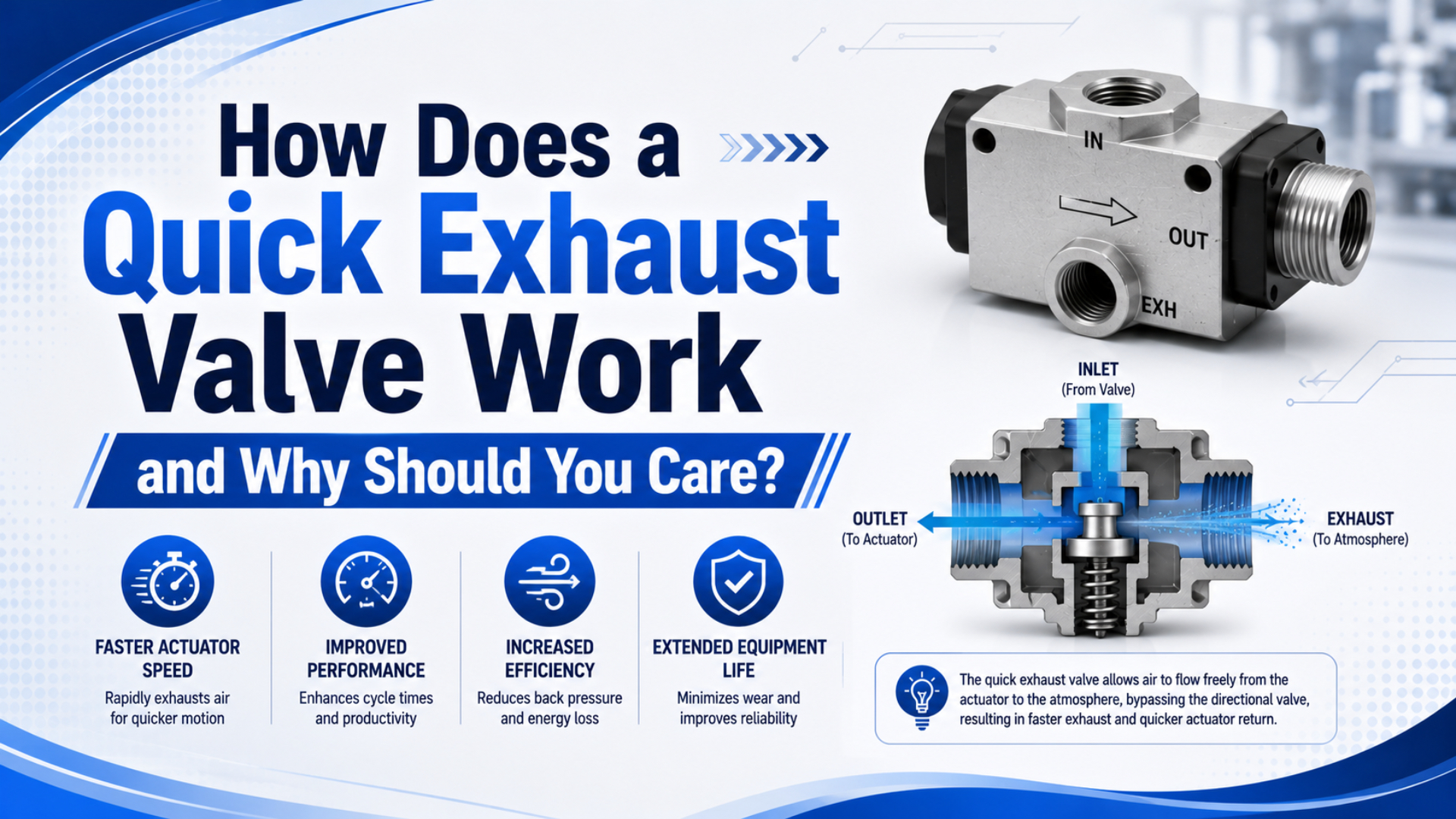
A quick exhaust valve lets air leave a pneumatic cylinder close to the cylinder port instead of forcing that air back through the directional control valve, tubing, mufflers, and manifold. It matters when the exhaust path, not the supply side, is what keeps the actuator from meeting cycle time.
Use one when a cylinder is slow in one direction, the control valve is far from the actuator, the exhaust port is small, or a long tube stores too much air. Do not use one as a guess. First prove that trapped exhaust air or back pressure is the limiting part of the circuit.
Key Takeaways
- A quick exhaust valve is normally a 3-port, 2-position pneumatic valve mounted downstream of the control valve, close to the cylinder.
- Cylinder speed depends on airflow and piston area. SMC expresses the relationship as
s = 28.8q / A, so restricted exhaust flow can slow motion even when supply pressure looks normal.- Size the exhaust path, check Cv or ISO 6358 flow data, and measure dynamic pressure before promising any fixed speed gain.
The useful question is not “Will a quick exhaust valve make every cylinder faster?” It is “Where is the cylinder wasting time?” If the chamber cannot empty quickly enough, local exhaust helps. If the load, cushion, guide friction, or supply pressure is the real limit, a quick exhaust valve will only add noise.
Quick Answer: What a Quick Exhaust Valve Does
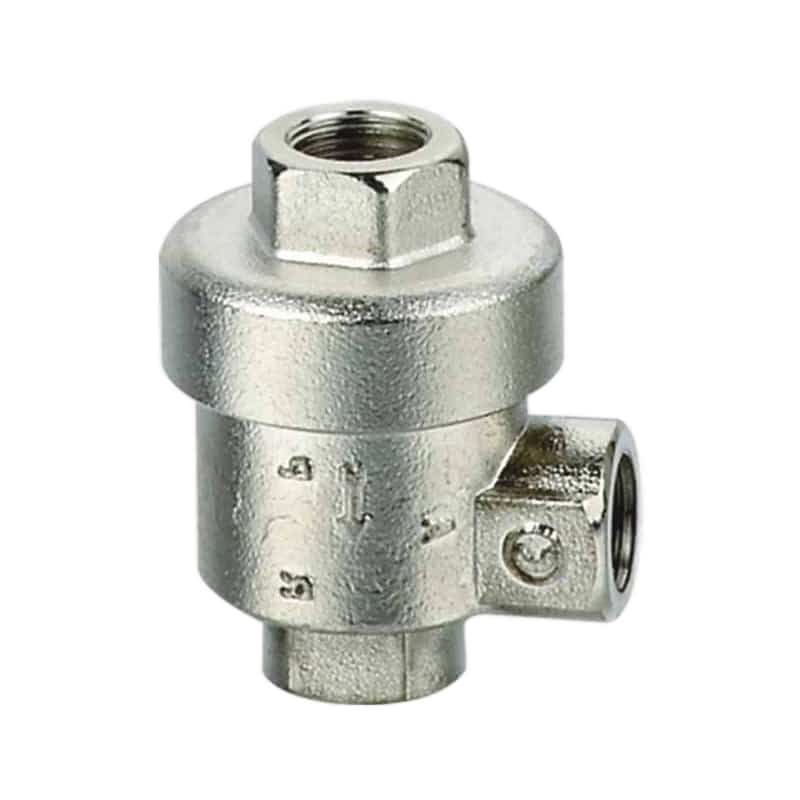
A quick exhaust valve is a 3-port pneumatic component that routes supply air to the cylinder in one state and vents cylinder air directly to atmosphere in the other. ROSS describes 3 ports for inlet, outlet, and exhaust, with the exhaust port providing the rapid vent path (ROSS Controls, 2026).
The valve sits between the directional control valve and the cylinder. During the supply stroke, air flows through it toward the actuator. During exhaust, the pressure difference inside the valve shifts the sealing element so the cylinder chamber vents locally.
That local vent is the whole point. The air no longer needs to travel through a long tube, a small directional valve passage, a shared manifold, or a restrictive silencer before it reaches atmosphere.
For broader valve selection context, compare this with how pneumatic solenoid valves control compressed air and the narrower guide on 4-way 5-port valve control.
| Quick exhaust valve port | Common function | What to check |
|---|---|---|
| Inlet | Receives air from the control valve | thread, tube ID, control-valve flow |
| Outlet | Connects to the cylinder port | mount as close to the cylinder as practical |
| Exhaust | Vents cylinder air to atmosphere | Cv, silencer restriction, noise, contamination risk |
How Does a Quick Exhaust Valve Work?
Clippard explains that a quick exhaust valve works by placing the valve directly on the air cylinder after the control valve; when the control valve exhausts, the internal poppet shifts, blocks the original inlet, and lets air dump out of the exhaust port (Clippard, 2024).
The internal part may be a poppet, diaphragm, or shaped seal. The exact geometry changes by manufacturer, but the pressure logic is similar. Supply pressure pushes the seal so the exhaust port closes and air reaches the cylinder. When the upstream control valve vents, pressure on the cylinder side becomes higher than pressure on the control-valve side. The seal moves and opens the exhaust port.
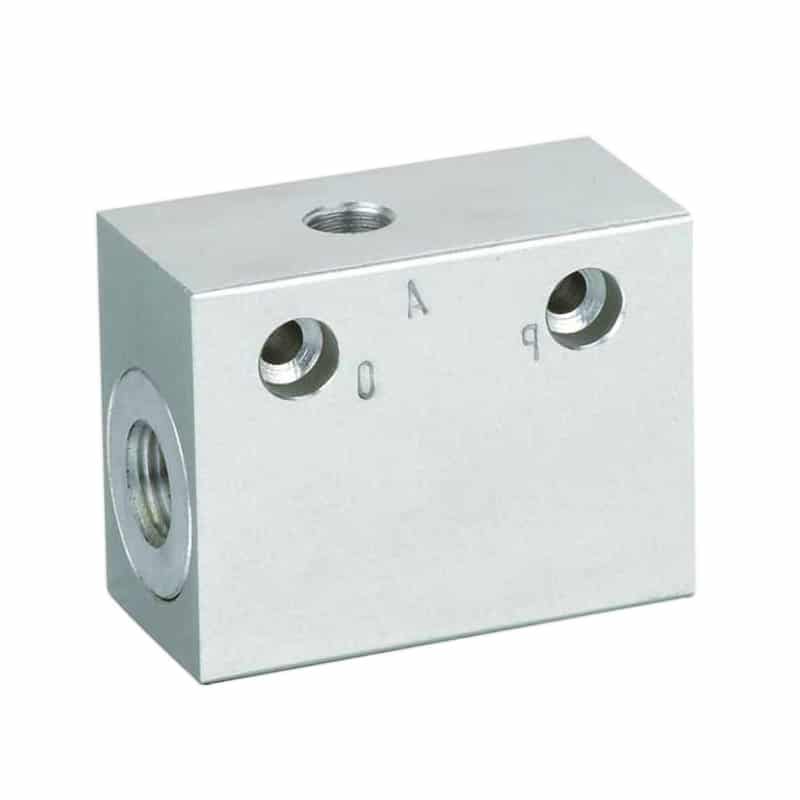
That is why the valve does not need a separate solenoid. It is a pressure-operated device. The same compressed air that fills and empties the actuator provides the switching signal.
In our experience, wrong placement is the most common installation mistake. A quick exhaust valve mounted back at the valve island may still work as a 3-port valve, but it loses the main benefit: shortening the trapped exhaust route next to the actuator.
Why Does Direct Exhaust Make a Cylinder Faster?
SMC states that pneumatic cylinder speed is a function of airflow and piston area, using s = 28.8q / A, and notes that port and tubing sizes also affect speed. SMC also says common practice is controlling actuator speed at the exhaust port (SMC, 2026).
When the cylinder chamber is full, the piston cannot move freely until air leaves the opposite side. If that air must pass through a small control valve, a long tube, a clogged silencer, or an undersized fitting, pressure remains on the exhaust side. That trapped pressure resists the piston.
This is where a quick exhaust valve differs from a normal speed controller. A meter-out speed controller deliberately creates exhaust resistance to stabilize motion. A quick exhaust valve removes accidental exhaust resistance to speed the stroke. Which one belongs in the circuit depends on the load.
For the exhaust-side diagnostic path, read the companion guide on back pressure in a pneumatic system. If the broader supply route is weak, use the article on pressure drop in pneumatic systems first.
When Should You Install One?
Pneumadyne says quick exhaust valves are designed to increase cylinder cycle speed, and that installation at the blind end or rod end can produce rapid retraction or rapid extension depending on the actuator requirement (Pneumadyne, 2026). That does not mean every actuator needs one.
Install a quick exhaust valve when the symptom and measurement point to exhaust restriction. Good candidates usually have one or more of these conditions:
- The control valve is mounted far from the cylinder.
- One stroke direction is much slower than expected.
- The cylinder has a large bore, long stroke, or high cycle rate.
- The exhaust side shows pressure during motion.
- Removing or upsizing a muffler temporarily improves speed.
- The valve exhaust Cv is much lower than the cylinder demand.
The best use case is a repetitive motion that needs faster cylinder reversal but does not need delicate deceleration from trapped exhaust air. Pusher cylinders, ejectors, clamps, carton handling, and transfer stops are common examples.
Do not frame the gain as a fixed percent. Pneumadyne publishes a product example that can relieve 100 cubic inches of air in as little as 1 second depending on configuration, but the final machine result depends on cylinder volume, supply pressure, tube ID, valve capacity, load, and cushioning (Pneumadyne, 2026).
Sizing: Exhaust Flow, Cv, and Port Location
Parker notes that each flow path through a pneumatic valve has its own Cv value, while ISO 6358-1:2013 specifies steady-state flow-rate test methods for pneumatic components using compressible fluids (Parker, 2026; ISO 6358-1, 2013). For quick exhaust work, the exhaust path is the rating that matters first.
Do not choose only by thread size. A 1/4 inch port label tells you the connection, not the internal flow path, poppet travel, silencer loss, or fitting bore. If the datasheet gives separate supply and exhaust flow numbers, compare the exhaust value against the actuator’s required emptying flow.
Here is a practical order:
| Step | Question | Why it matters |
|---|---|---|
| 1 | What target stroke time must the machine meet? | speed sets required airflow |
| 2 | What cylinder bore, rod side, and stroke volume are involved? | volume sets how much air must leave |
| 3 | What is the measured pressure during motion? | static pressure can hide a moving restriction |
| 4 | What are the valve exhaust Cv and silencer data? | the exhaust side may be smaller than the supply side |
| 5 | How close can the valve mount to the cylinder? | distance decides how much tube volume remains trapped |
For related flow math, the detailed article on flow coefficient Cv and valve sizing explains why port size and flow rating are not the same thing.
Installation Checks Before You Fit a Quick Exhaust Valve
Clippard’s cylinder-application description places the exhaust valve in the inlet of a spring-return or double-acting pneumatic cylinder, while ROSS describes direct mounting onto the air cylinder downstream of the control valve (Clippard, 2024; ROSS Controls, 2026). The closer it is to the cylinder port, the less exhaust volume remains in the tube.
Before installing one, verify the circuit direction. A quick exhaust valve affects the chamber connected to that port. On a double-acting cylinder, you may need one valve on the rod side, one on the cap side, or only one side depending on which stroke is slow.
Check these points before ordering hardware:
- Cylinder port thread and available clearance
- Flow direction markings on the quick exhaust valve
- Whether a silencer is needed on the exhaust port
- Noise limits at the machine location
- Air quality and contamination near the local vent
- Motion stability after removing exhaust-side damping
- Cushion and shock absorber settings at end of stroke
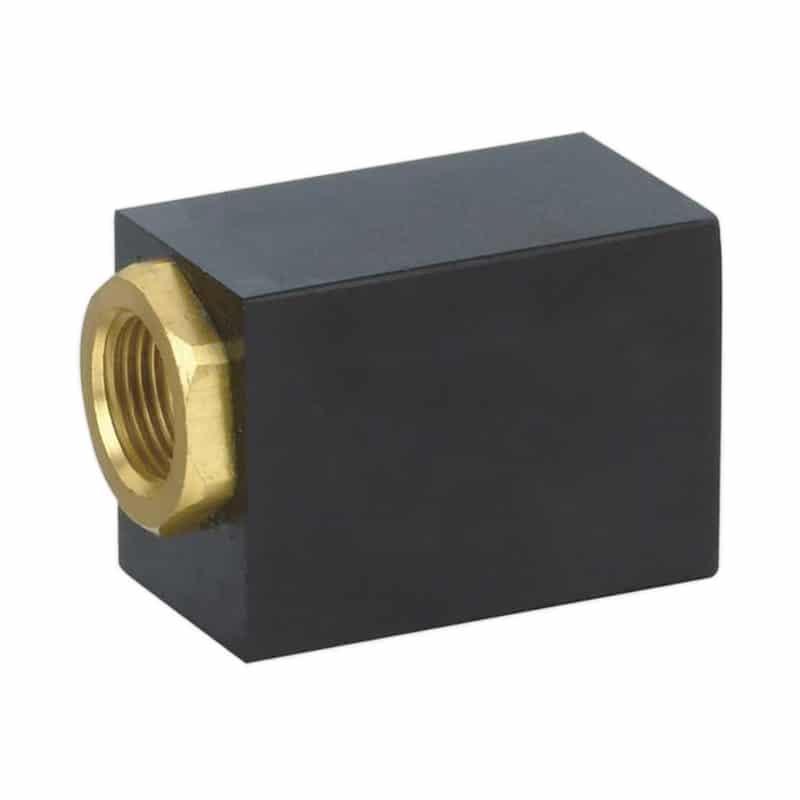
For product-family routing, review the XQ Series pneumatic quick exhaust valve, XKP Series pneumatic quick exhaust valve, and QE Series pneumatic quick exhaust valve pages.
Where Can Quick Exhaust Valves Cause Problems?
CAGI says well-designed compressed-air systems normally keep pressure drop from compressor discharge to point of use at no more than 10 percent, and recommends air velocity through piping of 20 ft/s or lower to minimize turbulence and pressure drop (CAGI, 2026). A quick exhaust valve solves only the local exhaust side, not every pressure problem.
Avoid or recheck the valve when the application needs a slow, controlled, quiet, or filtered exhaust. Local venting can create noise. It can also release mist or contaminants near the actuator if air preparation is poor.
Be careful with vertical loads and rodless slides. A fast exhaust path can remove the pneumatic braking effect that a meter-out valve was providing. If the load can overrun, tune the speed controller first and use quick exhaust only after checking the stopping method.
The comparison article on meter-in vs meter-out flow control is the right next read when the problem is unstable motion instead of slow motion.
Troubleshooting: Is the Valve Really the Bottleneck?
CAGI warns that increasing compressor pressure or regulator settings is a costly response to insufficient point-of-use pressure and should not be the first step when pressure drop is excessive (CAGI, 2026). The same logic applies at the cylinder. Measure before adding a quick exhaust valve.
Use this field sequence:
- Record the actual stroke time with the normal payload.
- Measure supply pressure at the valve inlet during motion.
- Measure pressure on the cylinder exhaust side during the slow stroke.
- Inspect the muffler, speed controller, fitting bore, and tube ID.
- Compare valve exhaust flow data against the required cylinder flow.
- Test with a known clean silencer or temporary open exhaust when safe.
- Recheck cushion, shock absorber, and mechanical guide drag.
The fastest split is pressure on both sides of the piston during motion. If supply collapses, fix the upstream route. If supply holds but exhaust pressure remains high, the quick exhaust valve is a candidate. If both pressures look right, stop blaming the valve and inspect load, friction, and end-of-stroke settings.
For replacement or sizing support, include valve model, port thread, tube OD and ID, tube length, cylinder bore, stroke, load, working pressure, measured stroke time, target stroke time, and photos of the actuator port area when you contact Bepto Pneumatic.
FAQs About Quick Exhaust Valves
Does a quick exhaust valve increase cylinder force?
No. The supply-side force still comes from pressure acting on piston area. A quick exhaust valve can improve usable motion when trapped exhaust pressure is resisting the piston, but it does not increase the supply pressure or cylinder bore. If force is low, check pressure, bore, friction, load, and leakage first.
Should the valve go near the control valve or the cylinder?
Mount it as close to the cylinder port as practical. The reason for using a quick exhaust valve is to shorten the exhaust path. If it stays near a remote valve island, much of the tube volume remains between the actuator and the local vent, so the cycle-time benefit can shrink.
Can one quick exhaust valve handle both directions?
Usually no. One quick exhaust valve vents the cylinder chamber connected to that port. A double-acting cylinder has two chambers, so the extend and retract strokes may need separate review. Install one only on the direction where exhaust restriction is proven, or use two if both directions need local exhaust.
Is a quick exhaust valve better than meter-out speed control?
It solves a different problem. Meter-out flow control deliberately restricts exhaust to stabilize speed, especially when the load can overrun. A quick exhaust valve removes exhaust restriction to speed motion. If the cylinder is too fast or unstable, meter-out control is usually the better first tool.
How much faster will the cylinder become?
There is no universal percentage. The result depends on cylinder volume, exhaust Cv, tube length, silencer restriction, load, cushion setting, and supply pressure. Treat manufacturer flow data and measured stroke time as the decision basis, then verify the installed machine with the real payload.
Sources and Retrieval Notes
- ROSS Controls: Quick Exhaust Valves 18 Series, port functions, 3/2 valve operation, direct exhaust path, pressure range, filtration note, and exhaust Cv examples. Retrieved 2026-07-08.
- Clippard: How Does a Quick Exhaust Valve Work?, cylinder-mounted quick exhaust operation, internal seal shift, and direct-to-atmosphere exhaust explanation. Retrieved 2026-07-08.
- Pneumadyne: Pneumatic Quick Exhaust Valves, quick exhaust valve use for cylinder cycle speed, blind-end or rod-end placement, and 100 cubic inch product-capacity example. Retrieved 2026-07-08.
- SMC: Control Air Flow of Cylinders, cylinder speed equation
s = 28.8q / A, port and tubing influence, and exhaust-port speed-control context. Retrieved 2026-07-08. - CAGI: Pressure Drop Technical Brief, 10 percent pressure-drop target, costly pressure-increase warning, and 20 ft/s air-velocity guidance. Retrieved 2026-07-08.
- Parker: Pneumatic Valve Catalog Introduction, valve Cv selection workflow and note that each valve flow path has its own Cv value. Retrieved 2026-07-08.
- ISO 6358-1:2013, test installation, procedure, and result-presentation rules for steady-state flow-rate characteristics of pneumatic components using compressible fluids. Retrieved 2026-07-08.
- AutomationDirect: Understanding Pneumatic Valve Ports and Ways, background video for valve-port and flow-path naming. Retrieved 2026-07-08.