
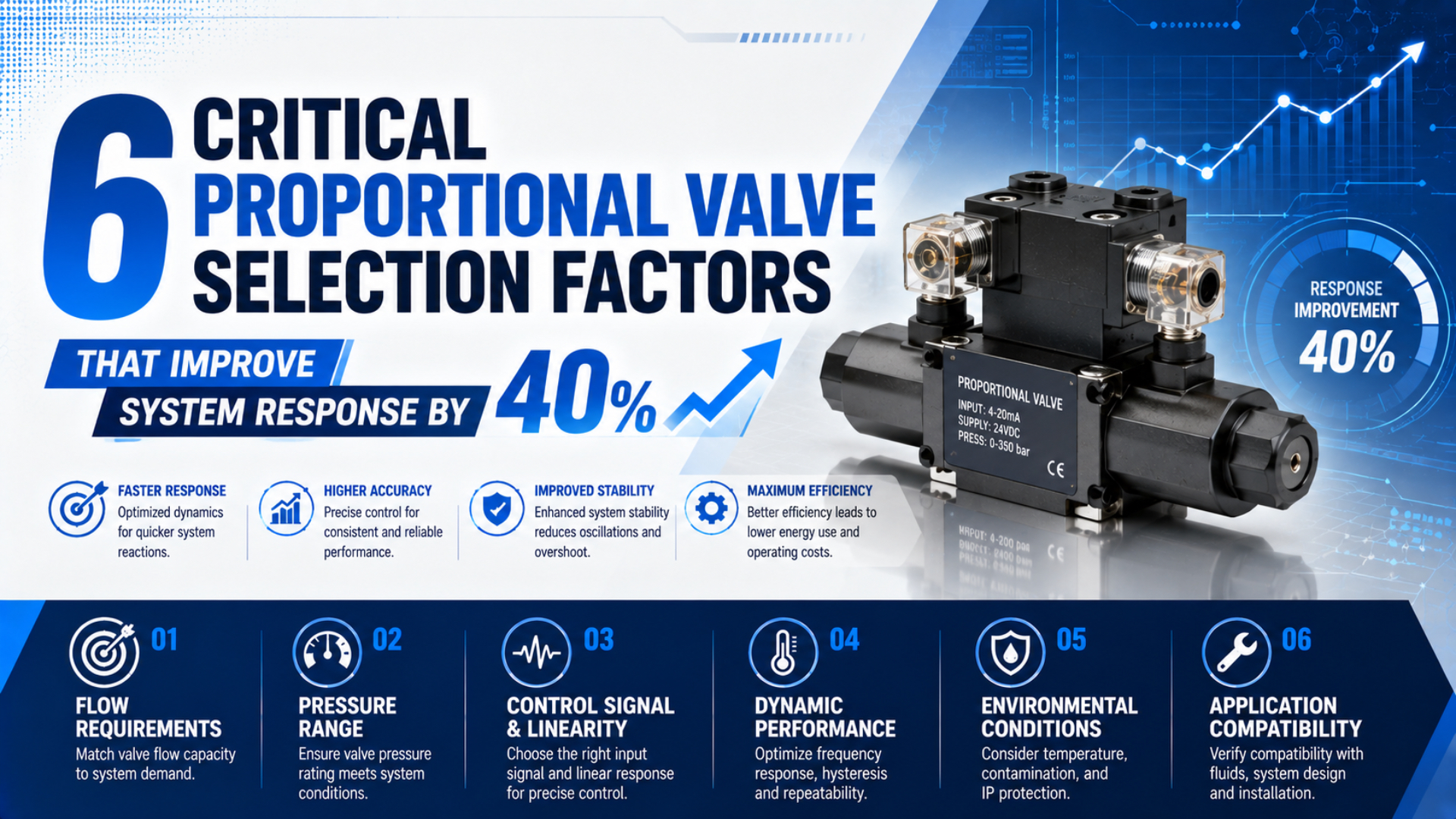
6 Critical Proportional Valve Selection Factors That Improve System Response by 40%Compare 6 proportional valve selection factors using Festo's 70-115 Hz data, then verify flow, deadband, signals, EMC, and measured response gains reliably.Blog Tag
cylinder speed and flow articles
Review every Bepto Pneumatic article connected to cylinder speed and flow, grouped as one focused reading list for engineers, maintenance staff, and sourcing specialists.
Tagged Reading Path
All articles tagged cylinder speed and flow
Use this archive to scan related selection notes, RFQ checks, replacement guidance, and pneumatic component references.
Showing 93 articles
6 Critical Proportional Valve Selection Factors That Improve System Response by 40%Compare 6 proportional valve selection factors using Festo's 70-115 Hz data, then verify flow, deadband, signals, EMC, and measured response gains reliably.
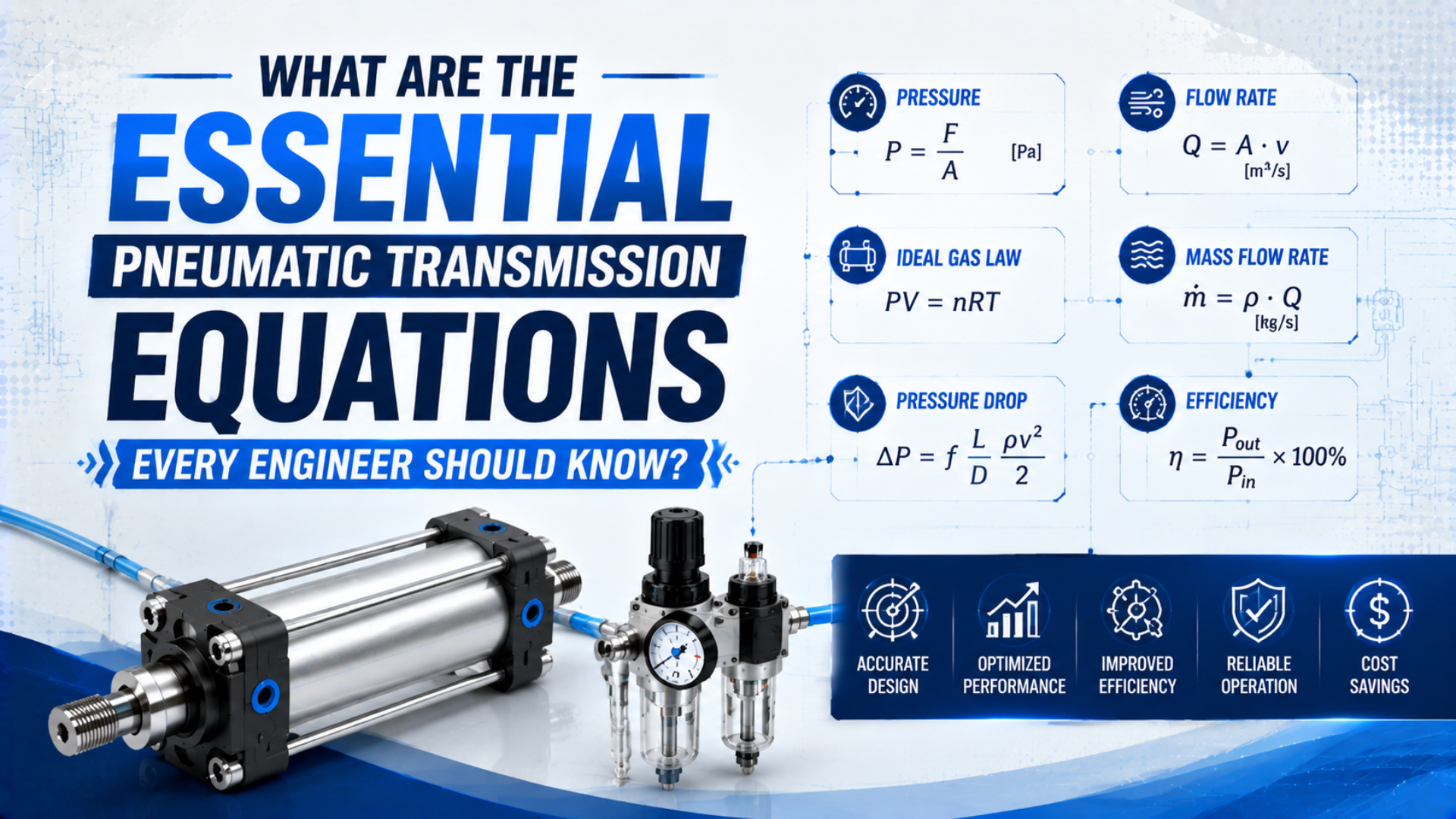
What Are The Essential Pneumatic Transmission Equations Every Engineer Should Know?A system-level reference for pneumatic equations, units, pressure and temperature states, cylinder force, air consumption, flow, speed, valve capacity, and pressure drop.
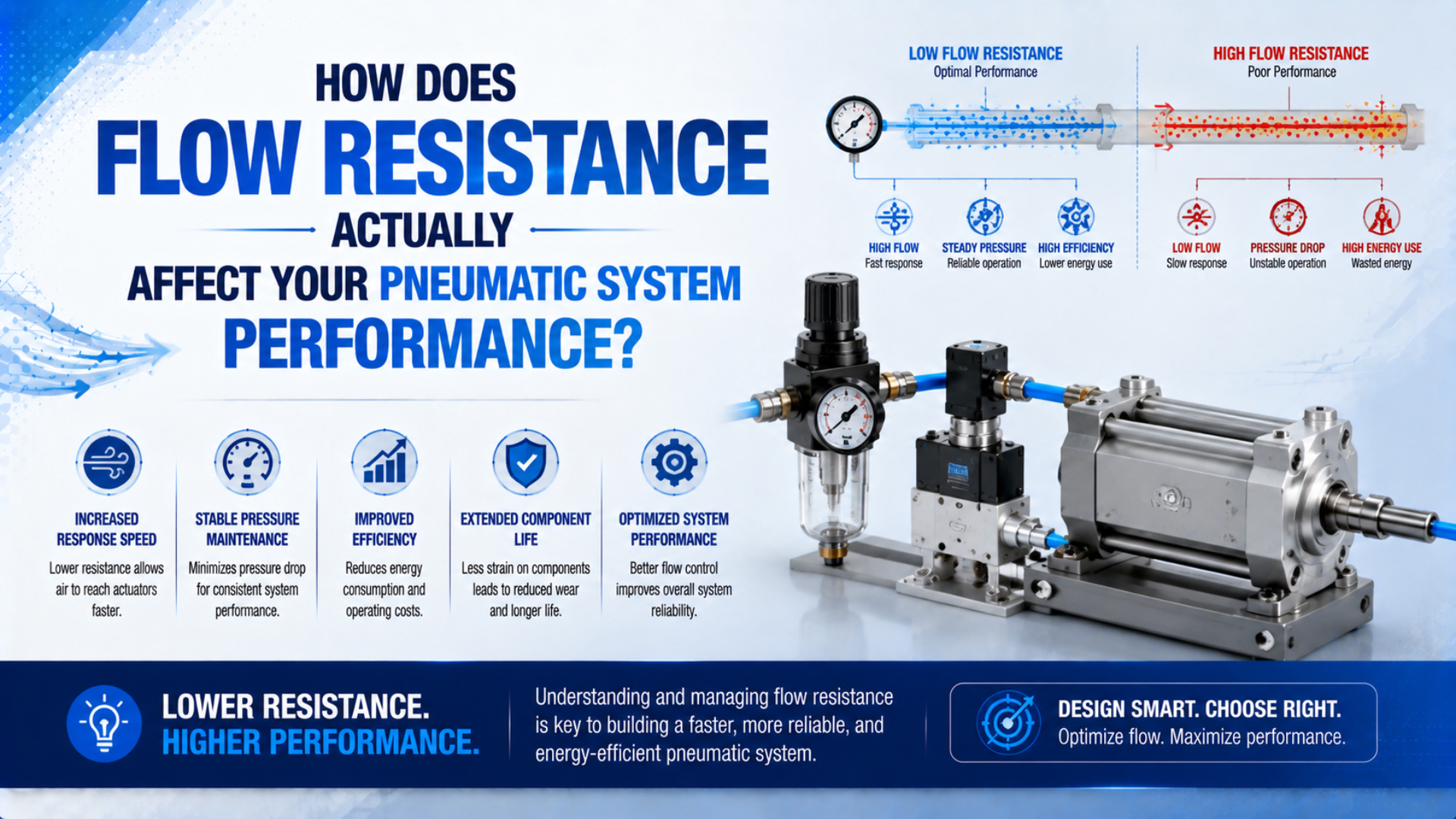
How Does Flow Resistance Actually Affect Your Pneumatic System Performance?Learn how pneumatic flow resistance reduces force, speed, and repeatability, then diagnose the real bottleneck with synchronized pressure measurements.
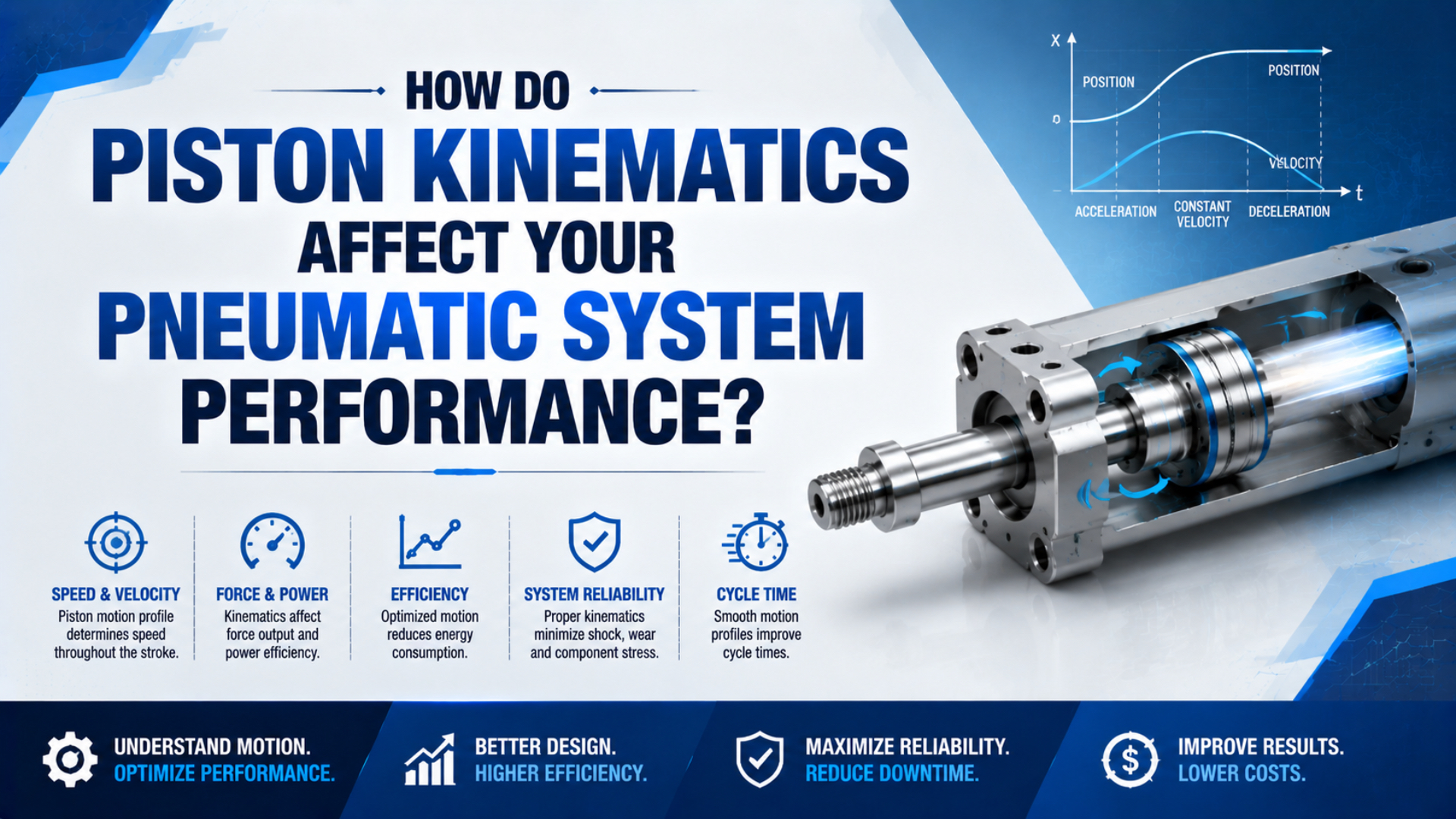
How Do Piston Kinematics Affect Your Pneumatic System Performance?Connect piston position, velocity, acceleration, pressure, flow, and cushion energy with a 10 kg worked example and machine validation steps for sizing.
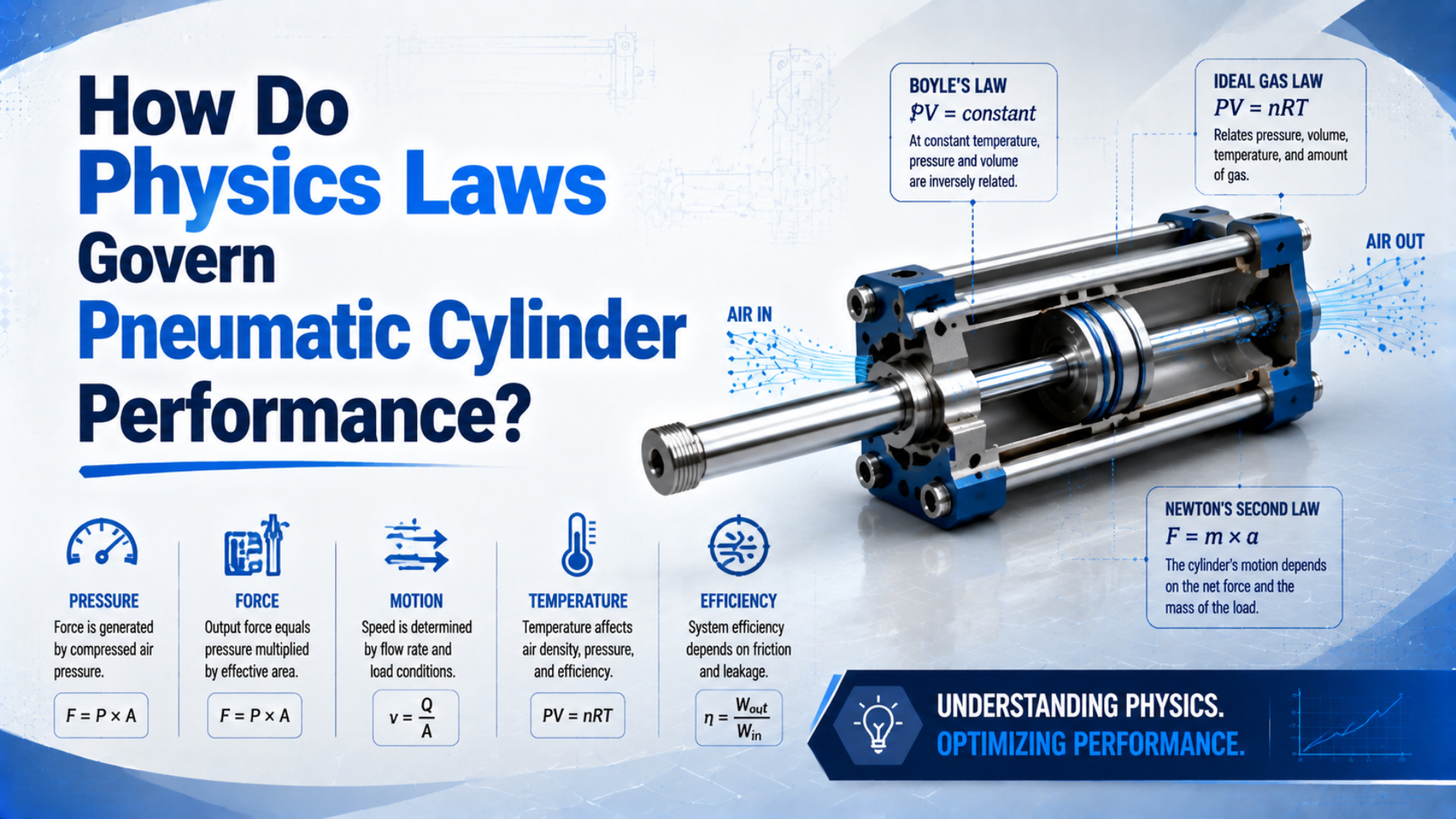
How Do Physics Laws Govern Pneumatic Cylinder Performance?Learn how 5 physics models predict pneumatic cylinder force, acceleration, airflow, choked flow, and pressure response using formulas and worked examples.
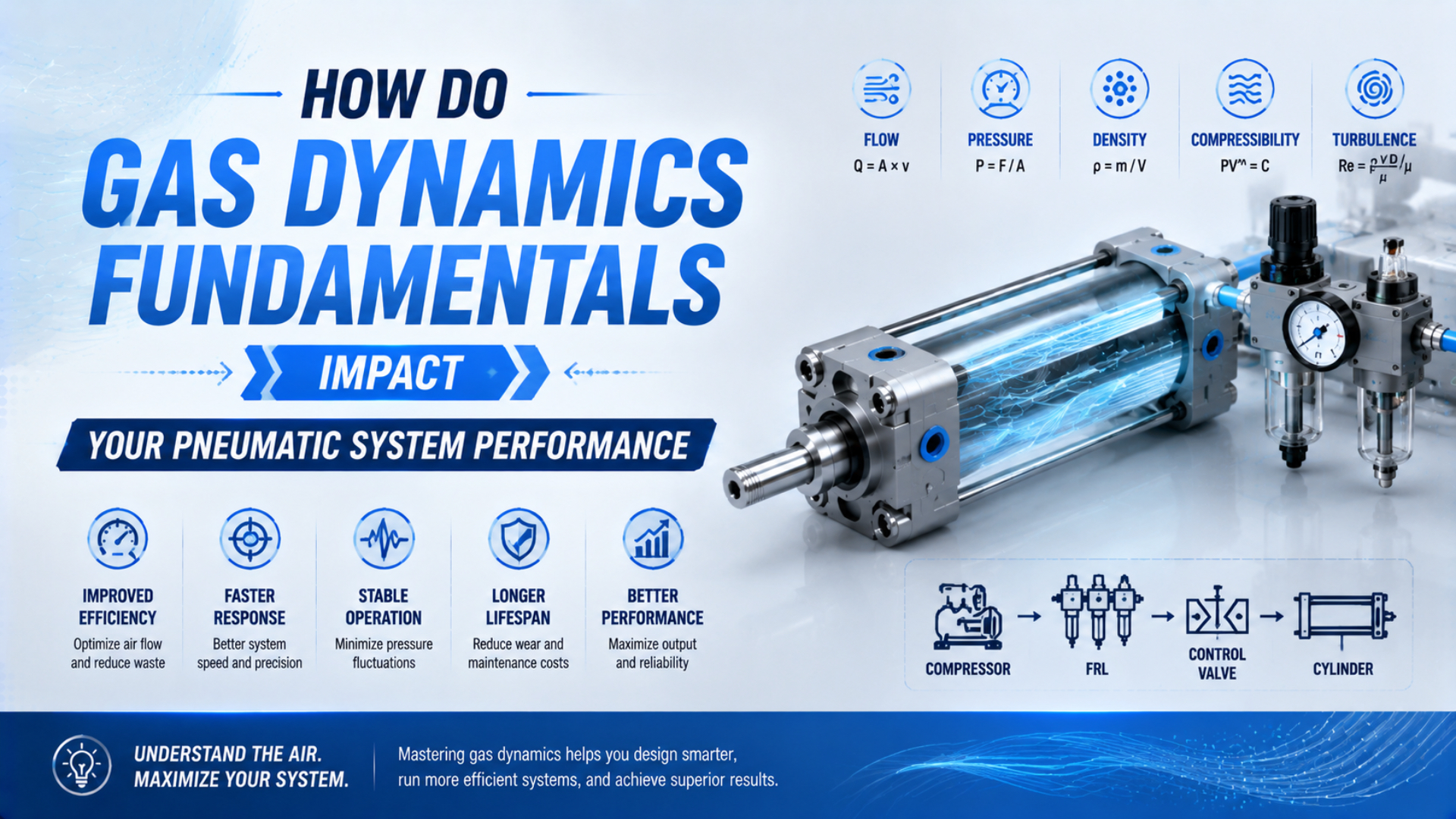
How Do Gas Dynamics Fundamentals Impact Your Pneumatic System Performance?Learn how pressure, temperature, mass flow, line volume, and the 0.528 critical pressure ratio govern pneumatic speed, force, response, and stability.
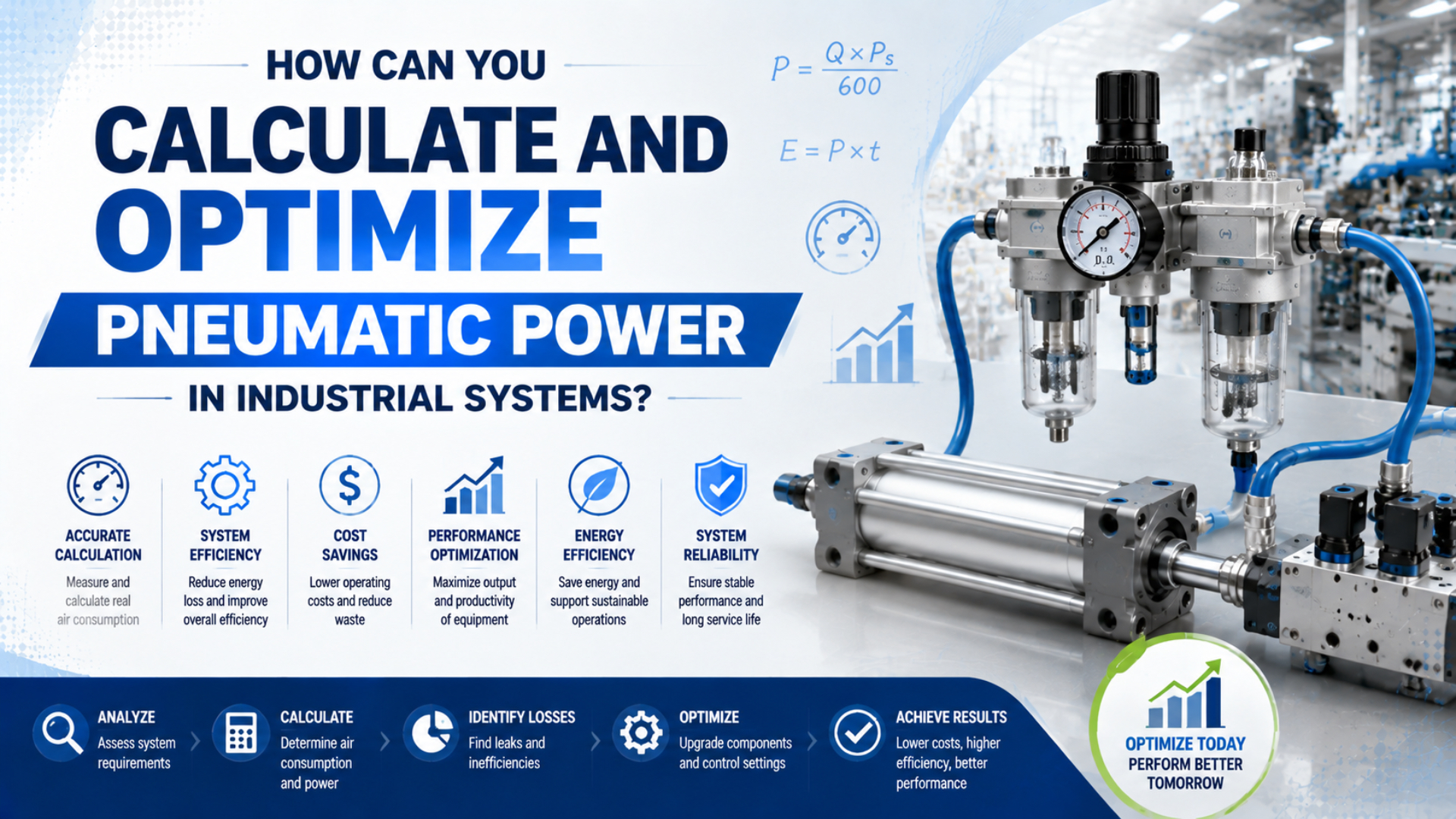
How Can You Calculate and Optimize Pneumatic Power in Industrial Systems?Calculate pneumatic power across 3 boundaries using cylinder force, cycle work, measured flow, and ISO 1217 specific power, then verify real savings in use.
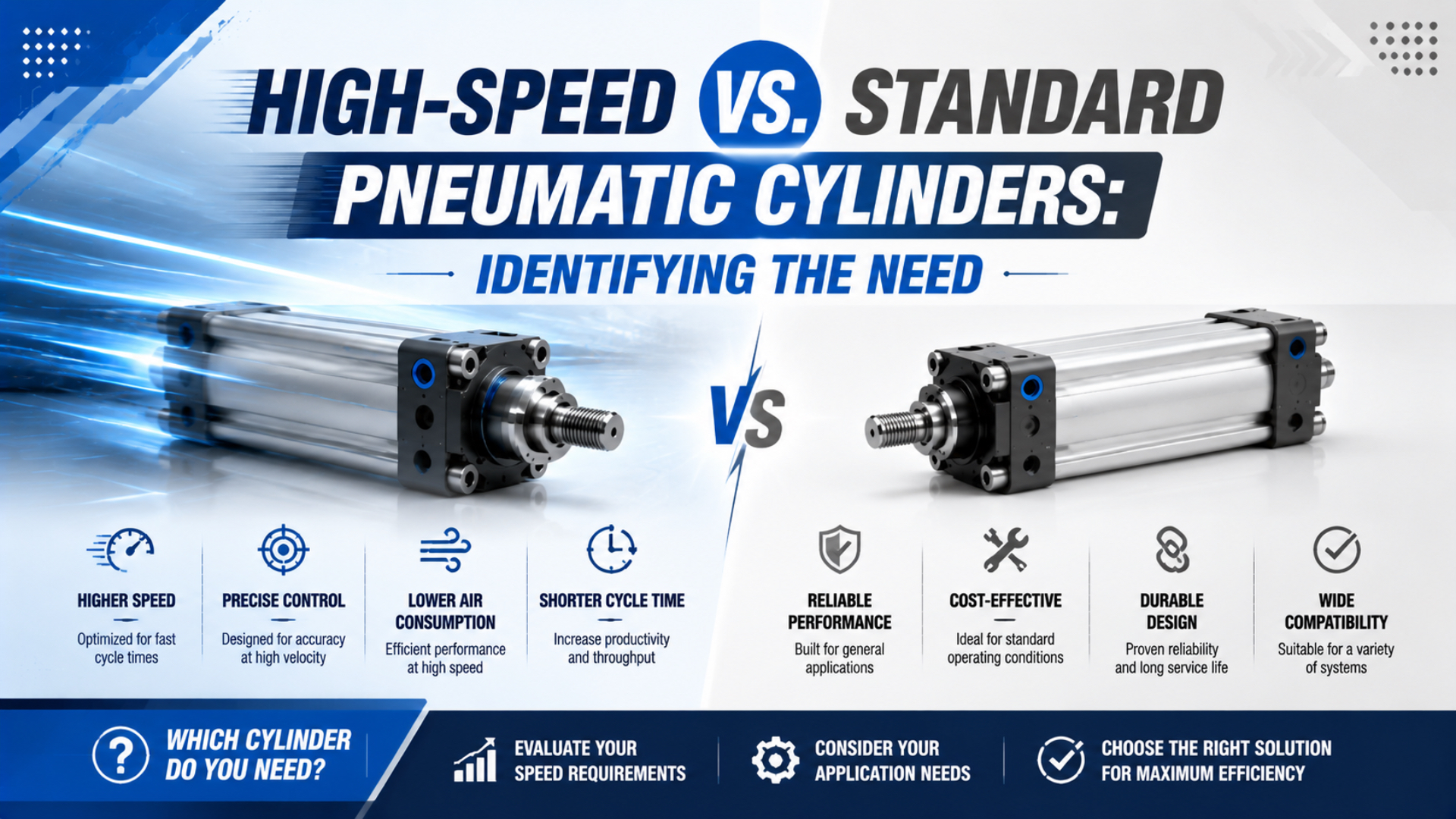
High-Speed vs. Standard Pneumatic Cylinders: Identifying the NeedDecide whether a standard pneumatic cylinder is sufficient or a high-speed version is justified by checking motion time, airflow, stopping energy, duty, and exact product limits.
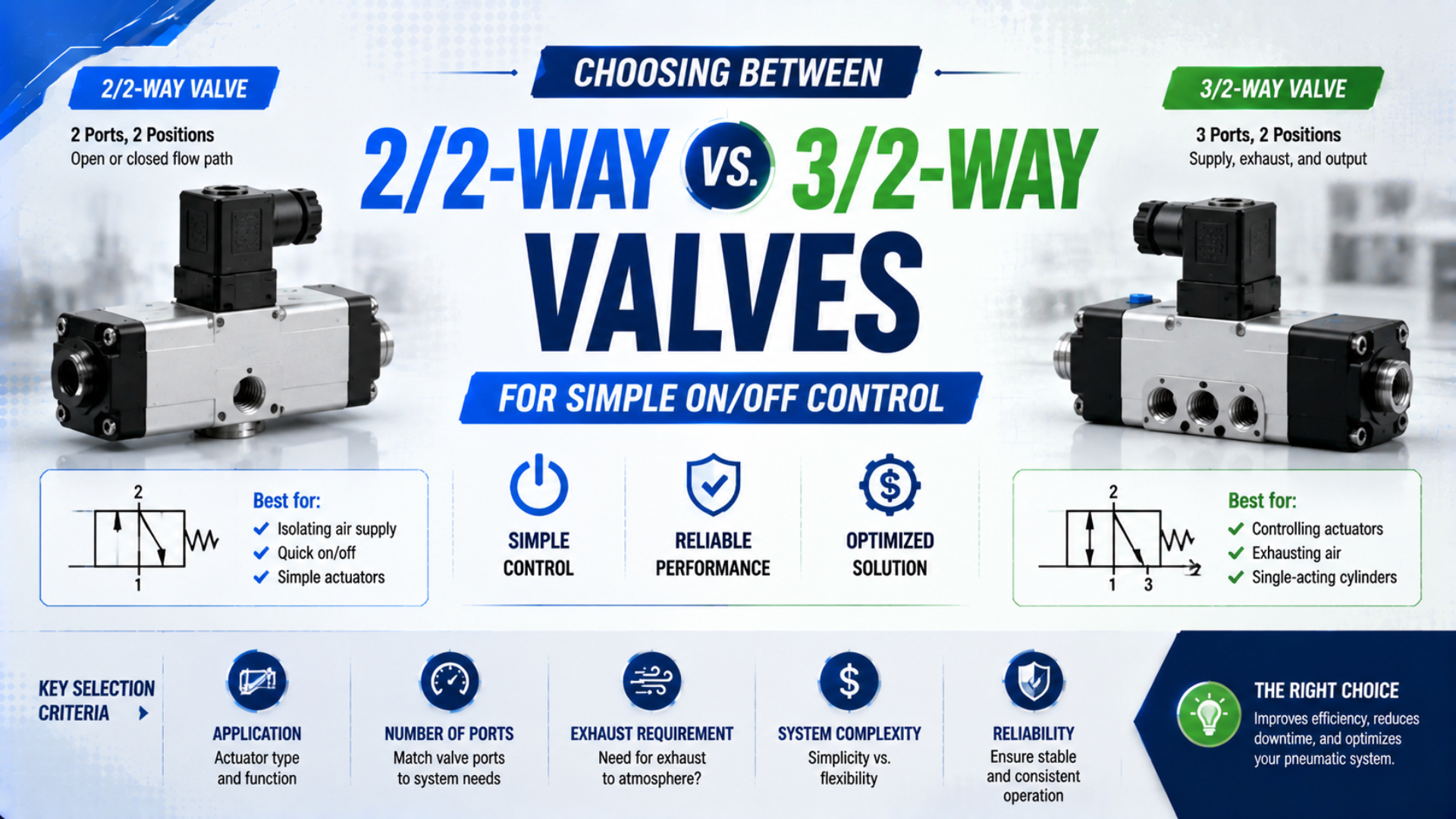
Choosing Between 2/2-Way and 3/2-Way Valves for Simple On/Off ControlChoose 2/2 or 3/2 valves using 7 checks: flow paths, normal state, medium, pressure range, leakage, exhaust capacity, and safe isolation.
Check-Choke Valves vs. Standard Flow Controls for Actuator SpeedIdentify check-choke and bidirectional flow controls by symbol and direction; Parker recommends 2 valves for independent double-acting cylinder speeds.
Comparing 4/2-Way vs. 5/2-Way Valves for Double-Acting CylindersCompare 4/2-way and 5/2-way valves by 4 versus 5 ports, flow paths, speed control, exhaust handling, flow capacity, and fail-state requirements in practice.
Packaging Industry Standards: High-Speed Sorting with Rodless CylindersApply packaging safety standards to rodless-cylinder sorting, including Parker's 50% cushion-entry speed allowance, guide loads, and FAT/SAT tests.
Compatibility Check: Mixing Pneumatic Valves and Cylinders from Different BrandsVerify mixed-brand pneumatic valves and cylinders with eight checks covering function, pressure, flow, ports, tubing, controls, safety, and machine trials.
Re-greasing Intervals: Calculating Lubricant Film Breakdown in Rodless SlidesCalculate rodless-slide exposure from cycles and travel, then validate it: Festo DGC-8 specifies 3,000 km or 3 years, not one universal interval for service.
Vacuum Cylinder Physics: Forces Retraction DynamicsStandard atmosphere is 101.325 kPa. Calculate vacuum-cylinder force from chamber pressures, piston geometry, friction, load, and evacuation flow accurately.
High-Frequency Oscillation: Thermal Buildup in Short-Stroke CylindersLearn why 2 Hz cannot define short-stroke cylinder heat risk; calculate sliding distance and reversal energy, then test against model-specific limits.
Transient Pressure Response: Measuring Lag Time in Long-Stroke CylindersMeasure long-stroke cylinder pressure lag with 2 synchronized sensors, defined thresholds, and position data that separate wave travel from chamber filling.
How to Calculate Pneumatic Cylinder Impact Force to Protect Your Equipment?Calculate cylinder stopping energy and average force, apply Parker's 50% cushion-entry speed warning, and verify peak loads before equipment damage occurs.
Calculating the Flow Coefficient (Cv) Required for Critical Cylinder SpeedsCalculate pneumatic valve Cv from bore, stroke, target time, pressure, and allowed drop, with a verified 63 mm cylinder example and clear validation steps.
Inertia Matching: Sizing Cylinders for High-Mass Load DecelerationParker notes cushion-entry speed may be 50% above average. Size high-mass pneumatic deceleration using event energy, duty, and exact catalog limits.
Dynamic Seal Hysteresis: How Friction Lags Affect Precision PositioningDiagnose dynamic seal hysteresis with dual-chamber pressure, position and velocity data; a 2026 study tested three pneumatic cylinders under stick-slip.
SCFM vs ACFM Definition Compressed AirCompare SCFM and ACFM using stated reference conditions, absolute pressure and temperature, with a worked 50 SCFM to 7.3 ACFM point-of-use line-flow example.
Pneumatic Cushioning Physics: Modeling the Ideal Gas Law in Compression ChambersLearn when pV^n can model a pneumatic cushion, why needle exhaust requires an open-system model, and how to validate pressure and stopping force.
Calculating Kinetic Energy Absorption Limits for Internal Air CushionsCalculate internal cushion demand and compare it with model-specific limits: SMC CA2 air-cushion ratings range from 2.8 to 29 J across five bore sizes.
The “Bounce” Effect: Over-Cushioning Dynamics in Pneumatic CylindersSMC RLQ cylinders list 0.15 to 0.77 J allowable kinetic energy. Learn to diagnose pneumatic over-cushioning, tune the needle, and verify each stop safely.
Shock Absorber Damping Coefficients: Tuning for Variable Cylinder LoadsLearn why shock absorber tuning needs 5 application inputs, not a guessed damping coefficient, and how to test variable cylinder loads without hard impact.
Orifice Flow Dynamics in Adjustable Cushion NeedlesLearn why a cushion needle can choke below a 0.528 pressure ratio, calculate compressible airflow, and tune cylinder deceleration from measured pressure data.
Designing Deceleration Profiles to Minimize Cycle TimeDesign pneumatic deceleration profiles using Parker's 50% cushion-entry speed warning, stopping-distance math, energy limits, traces, and acceptance tests.
Load Mass vs. Velocity: Plotting the Cushioning Capacity ChartPlot a cushioning capacity chart correctly using total moving mass and speed at cushion entry, then screen the exact cylinder model and operating case.
Cavitation Risks in Hydraulic Shock Absorbers Used with PneumaticsDiagnose suspected cavitation in hydraulic shock absorbers, separate it from aeration, and verify 8 model-specific limits before safely replacing the unit.
Servo-Pneumatics: Modeling the Compressibility Factor in Control LoopsModel a servo-pneumatic axis with four core states, ISO 6358 valve data, absolute chamber pressure, local linearization, identification, and validation.
The Effect of Tubing Compliance on Cylinder Positioning StiffnessCalculate how 10 m of 8 mm OD, 5 mm ID tubing adds 196 cm³ to a pneumatic cylinder circuit, then improve positioning stiffness without restricting airflow.
Pulse Width Modulation (PWM) Control for Digital Pneumatic Valves and CylindersLearn how to distinguish solenoid current PWM from mechanical valve PWM, verify switching limits, map duty cycle to flow, and commission a pneumatic cylinder circuit.
Analyzing Overshoot and Settling Time in High-Speed Pneumatic SlidesAnalyze pneumatic slide overshoot and settling time using Parker's 50% cushion-entry warning, synchronized traces, energy checks, and acceptance tests.
Dual-Loop Control Strategies for Pneumatic Cylinder SynchronizationDesign dual-loop pneumatic cylinder synchronization with 2 error signals, cross-coupling, timing budgets, commissioning traces, and safe fault handling.
Understanding Polytropic Processes in Pneumatic Cylinder Air ExpansionCompare 4 pneumatic process boundaries, fit the polytropic index from pressure-volume data, and avoid applying pV^n to valve-connected cylinder strokes.
The Impact of Dead Volume on Pneumatic Cylinder Energy EfficiencyCalculate the additional standard-air demand caused by cylinder clearance and switched piping, then verify dead-volume savings with measured air per accepted cycle.
Fluid Viscosity at Low Temperatures: Impact on Cylinder Response TimeLearn why air viscosity falls about 11% from +20°C to -20°C, what really delays cold cylinders, and how to test seals, air, valves, pressure, and motion.
Quantifying Stick-Slip: The Science Behind “Stuttering” Motion in CylindersA 2026 three-cylinder study synchronized position, velocity, and chamber pressure. Learn to quantify stick-slip without a universal SSI threshold.
Friction Force Calculation: Static vs. Dynamic Coefficients in Large BoresMeasure static breakaway and dynamic running friction in large-bore pneumatic cylinders using synchronized port pressures, effective piston areas, dwell time, and a defined running window.
The Physics of Air Compressibility: Why Pneumatic Cylinders Experience “Bounce”Learn why cylinder speed, trapped air, cushioning, friction, and control tuning cause pneumatic cylinder bounce, plus how to diagnose and stop it.
Analyzing Choked Flow Phenomena in High-Speed Cylinder PortsIdeal dry air chokes near p2/p1 = 0.528. Learn to measure cylinder-port pressure, locate restrictions, and verify flow for high-speed strokes.
How Spool Underlap, Overlap, and Zero-Lap Affect Cylinder ControlCompare 3 spool-lap conditions, separate lap from valve center function, and learn how neutral leakage, dead zone, feedback, and load affect cylinder control.
Calculating Valve Shift Time: A Pneumatic and Electrical AnalysisCalculate valve shift time with ISO 12238:2023, an electrical-mechanical-pneumatic budget, RL coil math, chamber-fill estimates, and validation steps.
A Technical Analysis of Exhaust Flow Control in 5-Way ValvesAnalyze 5-way valve exhaust flow through ports 3 and 5, calculate back-pressure force loss, diagnose restrictions, and select meter-out or quick exhaust safely.
The Impact of Back Pressure on Pilot-Operated Valve PerformanceLearn why SMC specifies 0.15-0.7 MPa pilot pressure for one valve family, how back pressure reduces shift force, and how to test every control port safely.
Flow vs. Pressure: Sizing a Valve for Speed vs. ForceParker lists 754 N outward and 633 N return at 6 bar for one 40/16 mm cylinder. Separate force from flow, size the air path, and verify loaded stroke time.
The Engineering Behind Voice Coil Actuators in Servo-Pneumatic ValvesLearn how voice-coil force, spool feedback, gas-flow disturbance, and a documented 30 Hz valve example shape servo-pneumatic response, testing, and accuracy.
Proportional Flow Control vs. Proportional Pressure Control ValvesCompare proportional flow and pressure control valves using an SMC 85-to-40 L/min example, feedback architecture, load behavior, and acceptance tests.
How to Tune a PID Loop for a Proportional Valve and Cylinder SystemTune a pneumatic PID loop with 10–90% rise-time traces, anti-windup, derivative filtering, valve-neutral checks, and load-range validation for cylinder motion.
The Function of Sandwich Plates: Pressure Regulators and Flow ControlsLearn how 5-port pneumatic sandwich plates regulate common or individual ports, meter exhaust flow, preserve manifold compatibility, and verify stack order.
The Physics of Quick Exhaust Valves and Their Impact on Cylinder SpeedUnderstand how a 3-port quick exhaust valve changes cylinder speed through choked flow, falling back pressure, and measured 55-cycle pressure tests for sizing.
Pneumatic Cylinder Pressure vs Load Analysis: Are You Wasting 40% of Your Compressed Air Budget?Test whether a pneumatic cylinder can cut air use by 40% using real load, port pressure, force balance, cycle demand, and manufacturer limits before selection.
Meter-In vs. Meter-Out: A Technical Analysis of Speed Control MethodsValidate a meter-in-to-meter-out retrofit with two port-pressure traces, four fault-injection tests, first-stroke checks, and documented acceptance limits.
The Design Differences: Needle Valves vs. Flow Control ValvesCompare needle valves with one-way pneumatic flow controls using Festo's 95 versus 76-95 L/min example, flow symbols, direction, and selection checks.
Meter-In vs Meter-Out Pneumatic Control: Which Flow Control Method Delivers Better Performance?Compare meter-in and meter-out pneumatic control using SMC's s=28.8q/A relation, load direction, exhaust back pressure, startup behavior, and tuning steps.
The Technical Impact of Silencer Clogging on Valve and Cylinder PerformanceFesto rates G1/8 silencers from 1,340 to 2,050 L/min. Learn how clogging creates back pressure, slows cylinders, and how to verify the fault safely in service.
How Valve Response Time Consistency Affects Machine SynchronizationLearn how valve response-time jitter creates axis skew, how to set a machine-specific timing budget, and why a 2 ms valve is not automatically synchronized.
How to Read and Interpret a Valve Flow (Cv) ChartRead valve Cv charts with 5 checks for axes, flow path, test conditions, curve type, and pressure limits before comparing pneumatic valve capacity data.
Sizing a Solenoid Valve for a Specific Cylinder Stroke TimeSize a solenoid valve for a 0.5-second cylinder stroke using correct extend/retract flow, ISO 6358 data, path checks, and dynamic validation on the machine.
A Technical Guide to Pressure-Compensated Flow Control ValvesLearn how pneumatic pressure-compensated flow valves work, where compensation ends, and how to select, install, and test one without confusing it with Cv.
A Technical Guide to Pneumatic Shuttle Valves (OR Logic)Select pneumatic shuttle valves using verified OR logic, pressure differential, ISO 6358 flow data, safety limits, installation checks, and RFQ criteria.
How to Use a Quick Exhaust Valve to Create a Differential Speed CircuitLearn how a 3-port quick exhaust valve creates one fast cylinder stroke, where to install it, how to size exhaust flow, and how to verify safe operation.
A Technical Analysis of Cylinder Response Time and Dead VolumeCalculate cylinder response time from valve delay, breakaway pressure, and dead volume; a 6 mm ID tube contains 28.3 cm³ per metre before motion begins.
The Impact of Hose and Fitting Size on Cylinder Speed and PerformanceCalculate pneumatic cylinder flow demand, compare actual hose ID and fitting capacity, and diagnose restrictions that limit speed and force.
How to Calculate the Kinetic Energy of a Moving Cylinder LoadCalculate moving cylinder load energy with KE = 1/2mv2, a 50 kg at 2 m/s example, cushion-entry speed checks, and model-specific catalog comparison steps.
The Physics of Pressure Drop Within the Cylinder Barrel During High FlowLearn why ISO 6358 excludes cylinders from steady-state flow tests, model 2 moving chambers, measure dynamic pressure, and diagnose high-flow losses safely.
How to Use Flow Amplifiers to Increase Cylinder SpeedLearn why a 25:1 air amplifier cannot feed a pressurized cylinder, when volume boosters or quick exhaust valves help, and how to verify cylinder speed.
The Engineering of Non-Return and Pilot-Operated Check ValvesCompare non-return and pilot-operated check valves using Festo's 0.1 bar example, pilot-release force balance, flow data, leakage limits, and safety checks.
A Technical Guide to Using Proportional Valves for Cylinder Position ControlBuild a closed-loop pneumatic cylinder position system using a 5/3 proportional valve, feedback, safe commissioning, trace-based tuning, and acceptance tests.
The Impact of Port Geometry on Cylinder Fill and Exhaust TimesLearn why 2x port area cannot promise 2x flow, and how ISO 6358 conductance, chamber demand, and dynamic pressure tests set cylinder timing.
How Does Air Compressibility Affect Pneumatic Cylinder Control Performance?Learn how air compressibility changes cylinder stiffness, how 10% pressure drop affects response, and when closed-loop pneumatic control is required for motion.
How Do You Calculate Pneumatic Cylinder Air Consumption to Reduce Compressed Air Costs by 30%?Calculate cylinder air use from 6 inputs, separate average SCFM from peak flow, and model a conditional 30% compressed-air cost reduction safely.
How Do Pneumatic Cushion Needles Eliminate Shock and Extend Cylinder Life by 400%?Learn how to tune pneumatic cushion needles using mass, speed and load data; Parker warns cushion-entry speed can be 50% above the stroke average during sizing.
Why Does Cylinder Acceleration Change Dramatically with Different Load Weights?Learn why cylinder acceleration changes with load using the net-force equation, SMC's 50% dynamic load-factor guide, and practical pressure and flow checks.
How Does Choked Flow Physics Limit Your Pneumatic Cylinder’s Maximum Speed and Performance?Learn how choked flow limits pneumatic cylinder speed, use the 0.528 pressure ratio, calculate stroke demand, and diagnose supply or exhaust restrictions.
How Can You Accurately Calculate and Control Dangerous End-of-Stroke Forces in Your Pneumatic Cylinders?Calculate pneumatic cylinder end-of-stroke energy, separate average from peak force, and apply Parker's 50% cushion-entry speed warning in machine design.
Why Are Hydro-Pneumatic Cylinders the Ultimate Solution for Precision Control Applications?Learn how hydro-pneumatic cylinders control feed speed or create a short high-force stroke, plus the sizing, safety, and RFQ checks that matter.
How Do You Properly Derate Pneumatic Cylinders for Reliable High-Altitude Performance?Learn why altitude does not automatically reduce cylinder force, how 6 bar gauge preserves thrust, and which high-altitude air-system checks matter most.
Why Do 73% of Low-Speed Cylinder Applications Suffer from Stick-Slip Motion Problems?Diagnose pneumatic cylinder stick-slip using chamber pressure, load, dwell, and friction checks, with model-specific low-speed data down to 0.5 mm/s reliably.
How Do Meter-Out Circuits Deliver Precise Speed Control for Pneumatic Cylinders?Learn how meter-out circuits control pneumatic cylinder speed through exhaust restriction, correct sizing, installation, tuning, and fault diagnosis.
Why Are Hydrodynamic Models Essential for Optimizing Your Pneumatic System Efficiency?Choose pneumatic flow models using ISO 6358, pipe loss, transient mass balance, and CFD boundaries, then verify CAGI's 10% pressure-drop target in operation.
How Can Flow Controls Transform Your Actuator Speed Performance and Eliminate Costly Production Bottlenecks?Diagnose actuator speed with SMC's 28.8 flow relation, correct free-air calculations, dynamic-pressure checks, and a repeatable tuning procedure in plants.
What Is Pressure Regulator Drift in Pneumatics and How It’s Sabotaging Your System Performance?Learn to separate pneumatic regulator drift from droop, creep, and gauge error with a 5-step pressure test, manufacturer limits, and safe corrective actions.
How Does Pneumatic Cylinder Bore Size Affect Air Consumption and Operating Costs?A 50-to-63 mm bore step raises cap-end volume 58.8% at the same stroke and pressure. Calculate cycle air, annual kWh, and operating cost before sizing up.
High-Flow Solenoid Valves for Rapid Cycle Automotive Assembly LinesSize high-flow solenoid valves for automotive stations using Parker's Cv 1.06 example, ISO 6358 data, dynamic pressure tests, and full-cycle verification.
Understanding Proportional Pressure Regulators in Pneumatic SystemsSpecify proportional pressure regulators by pressure range, flow, exhaust capacity, signal, feedback, downstream volume, force, and response testing.
Optimizing Pneumatic Valve Placement for System EfficiencyOptimize pneumatic valve placement using CAGI's 10% pressure-drop limit, tube-volume checks, exhaust analysis, zoning, maintenance access, and measured tests.
The Importance of Valve Flow (Cv) in System PerformanceDiagnose valve Cv bottlenecks with Parker’s Cv 1.06 example, ISO 6358 flow data, dynamic pressure checks, and a cycle-time acceptance worksheet.
A Guide to Proportional Valves for Precision Motion ControlSelect proportional pressure, flow, or directional valves for pneumatic motion control using load, flow, feedback, response, signal, and acceptance data.
The Impact of Cylinder Bore Size on Force and Speed: A Practical GuideSee how cylinder bore size changes force, flow demand, speed, and air use, with worked 32-80 mm comparisons and a practical sizing sequence.
Optimizing Air Consumption in Double-Acting Pneumatic CylindersUse SMC's 13 L/cycle example to calculate double-acting cylinder air consumption, then reduce pressure, bore, stroke, tubing volume, leaks, and idle demand.
The Engineer’s Checklist for Specifying High-Speed Pneumatic CylindersSpecify high-speed pneumatic cylinders using Parker's 50% cushion-entry warning, verified load, airflow, pressure drop, RFQ data, and acceptance tests.