
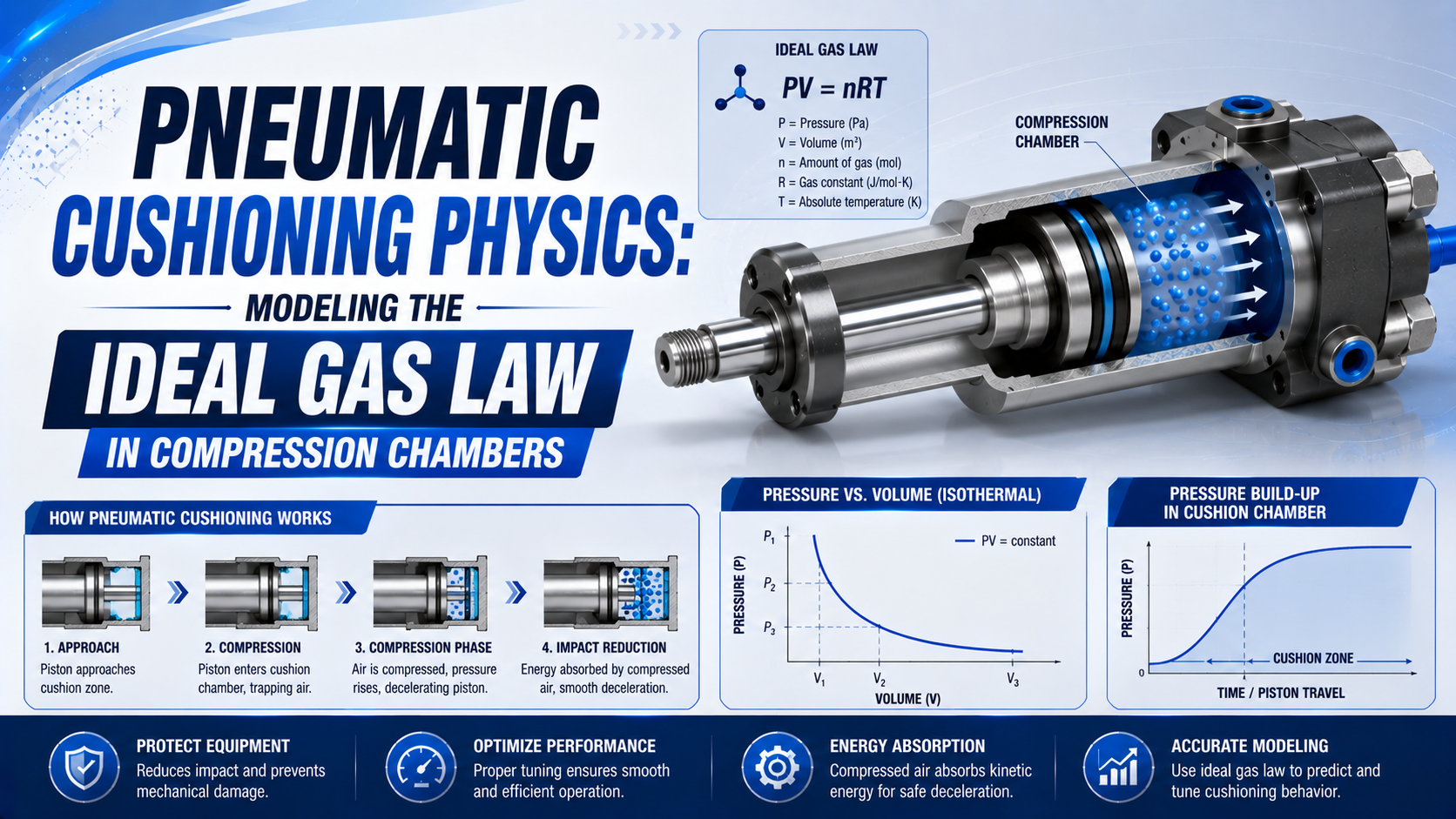
 Pneumatic Cushioning Physics: Modeling the Ideal Gas Law in Compression ChambersLearn when pV^n can model a pneumatic cushion, why needle exhaust requires an open-system model, and how to validate pressure and stopping force.
Blog Tag
cylinder speed and flow articles
Review every Bepto Pneumatic article connected to cylinder speed and flow, grouped as one focused reading list for engineers, maintenance staff, and sourcing specialists.
Tagged Reading Path
All articles tagged cylinder speed and flow
Use this archive to scan related selection notes, RFQ checks, replacement guidance, and pneumatic component references.
Pneumatic Cushioning Physics: Modeling the Ideal Gas Law in Compression ChambersLearn when pV^n can model a pneumatic cushion, why needle exhaust requires an open-system model, and how to validate pressure and stopping force.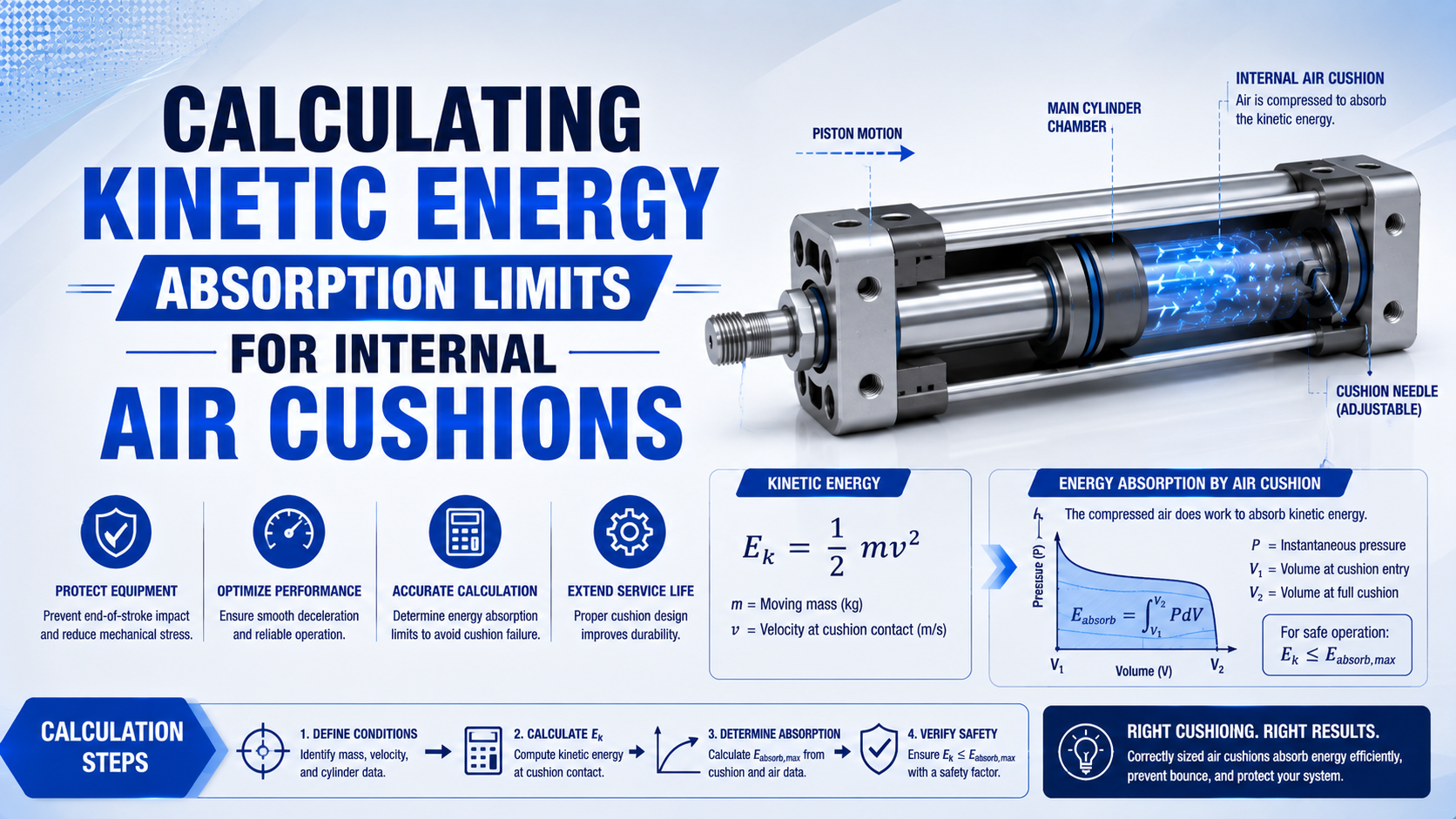 Calculating Kinetic Energy Absorption Limits for Internal Air CushionsCalculate internal cushion demand and compare it with model-specific limits: SMC CA2 air-cushion ratings range from 2.8 to 29 J across five bore sizes.
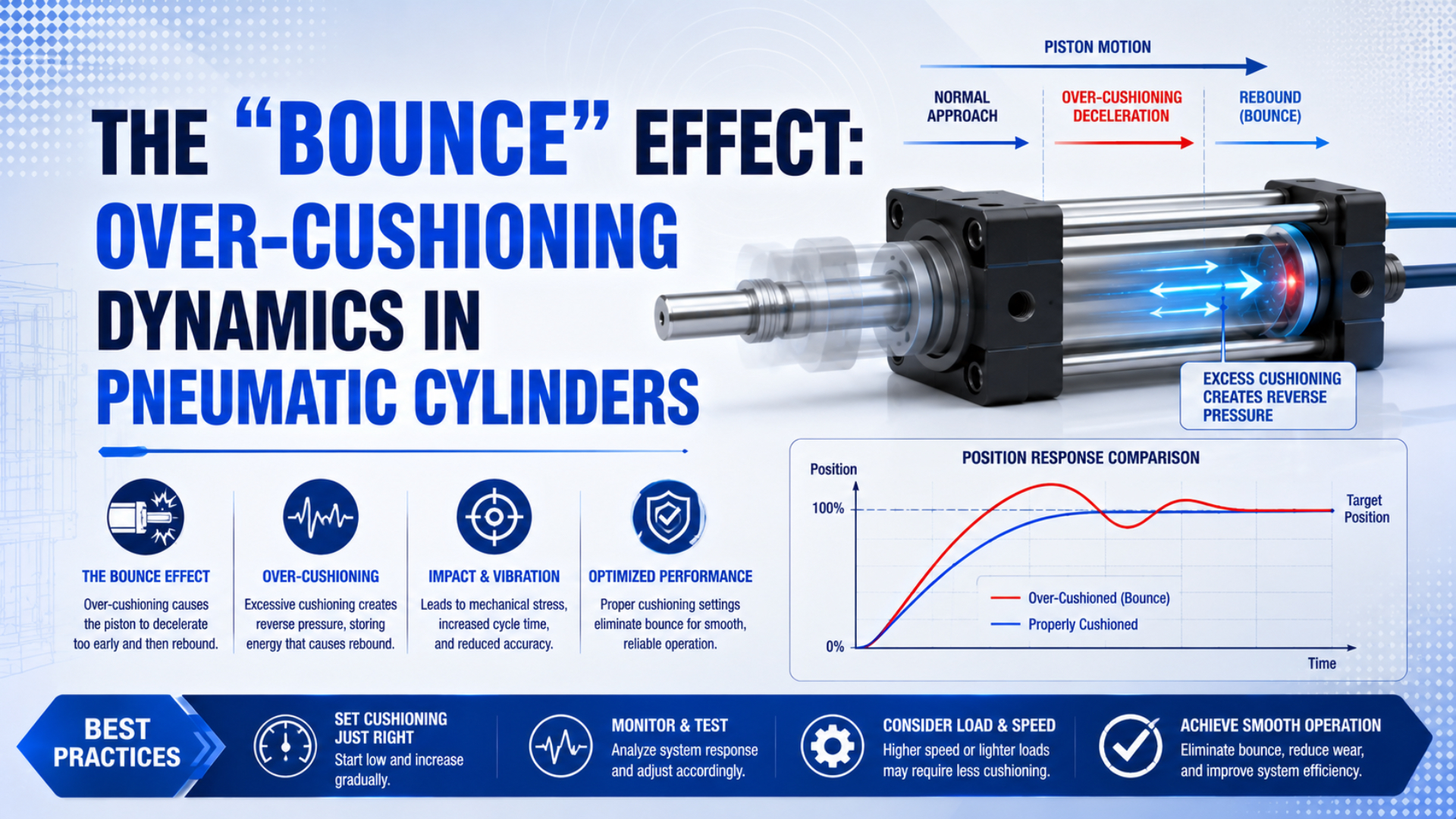 The “Bounce” Effect: Over-Cushioning Dynamics in Pneumatic CylindersSMC RLQ cylinders list 0.15 to 0.77 J allowable kinetic energy. Learn to diagnose pneumatic over-cushioning, tune the needle, and verify each stop safely.
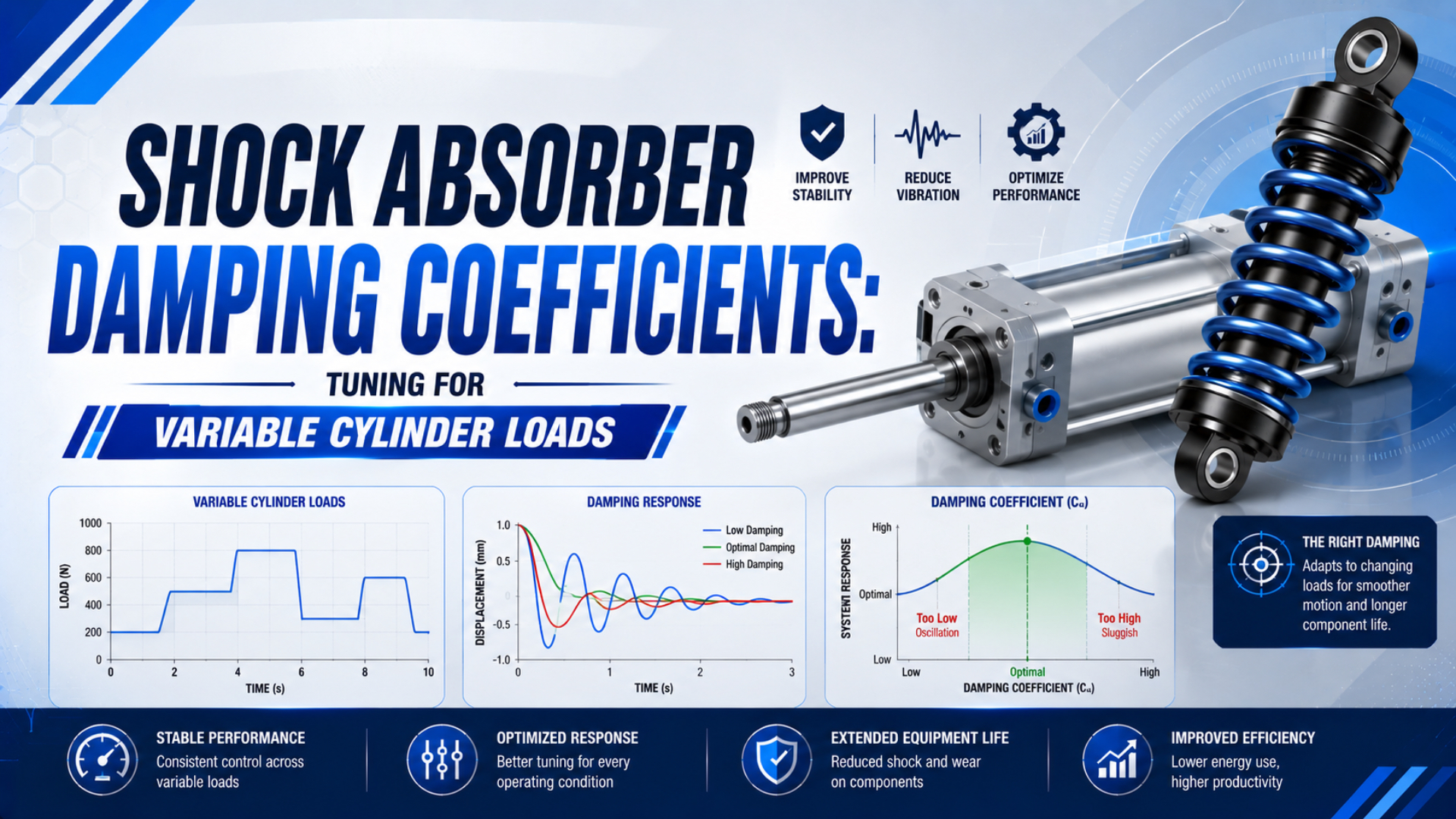 Shock Absorber Damping Coefficients: Tuning for Variable Cylinder LoadsLearn why shock absorber tuning needs 5 application inputs, not a guessed damping coefficient, and how to test variable cylinder loads without hard impact.
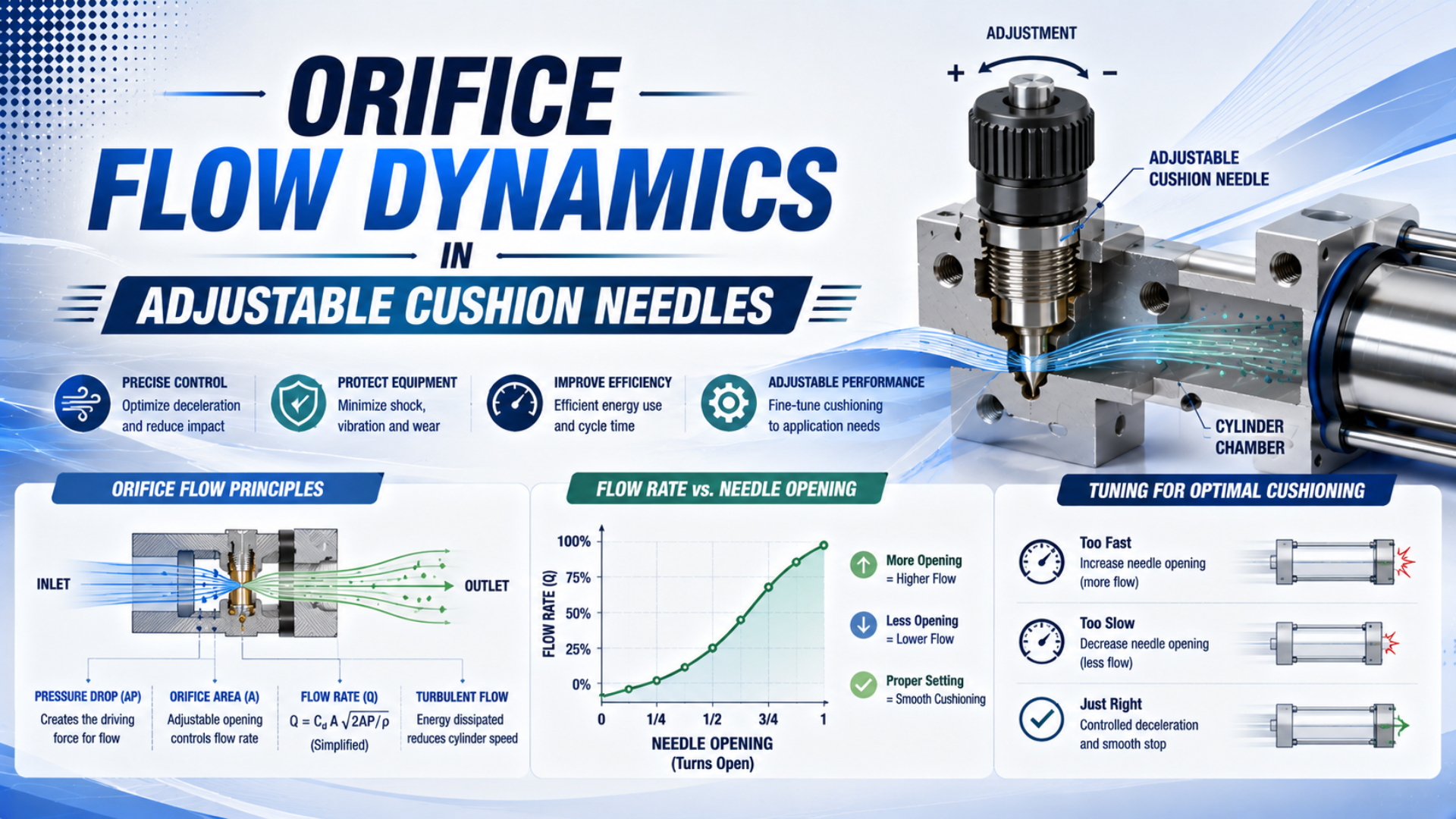 Orifice Flow Dynamics in Adjustable Cushion NeedlesLearn why a cushion needle can choke below a 0.528 pressure ratio, calculate compressible airflow, and tune cylinder deceleration from measured pressure data.
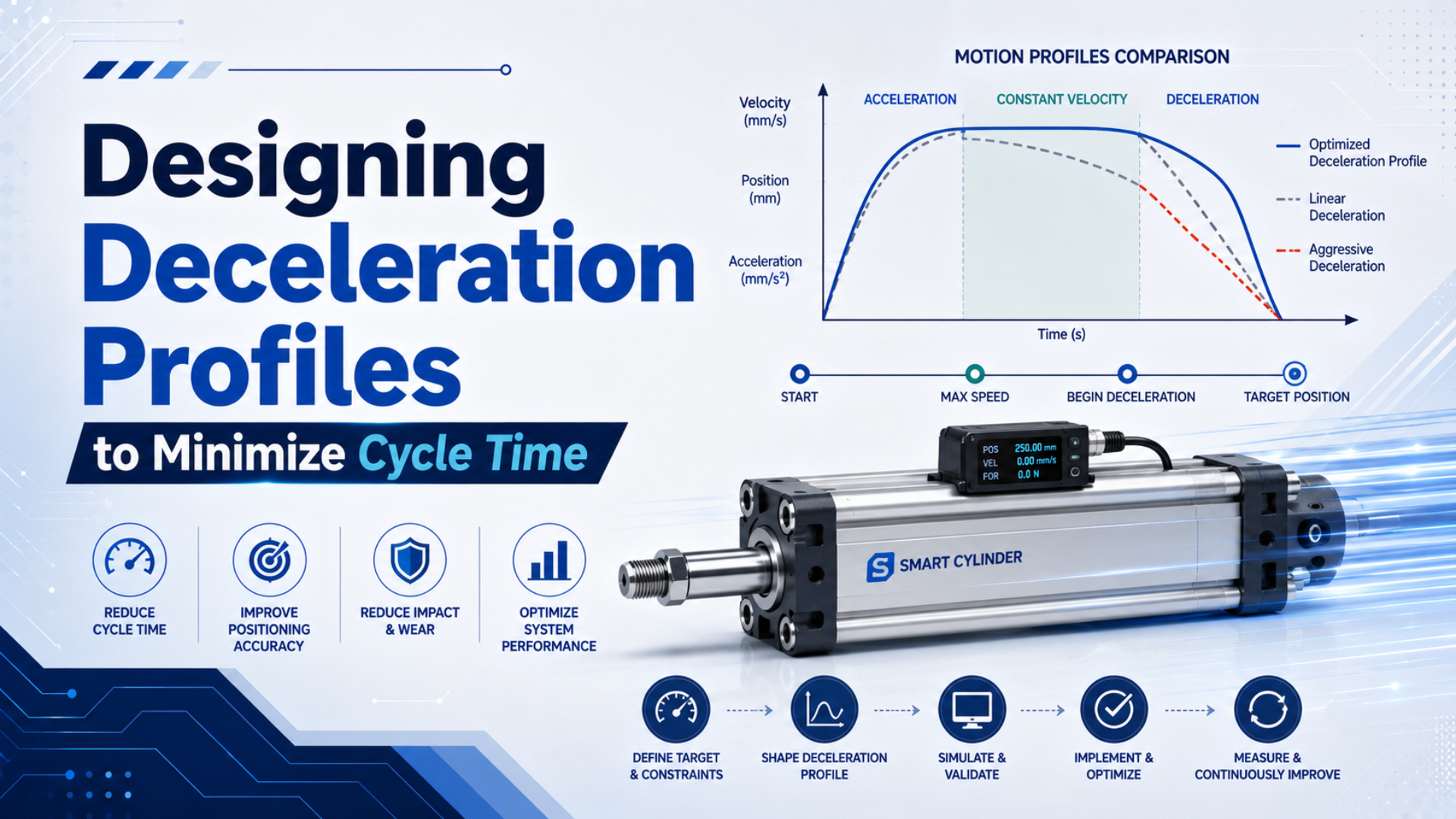 Designing Deceleration Profiles to Minimize Cycle TimeDesign pneumatic deceleration profiles using Parker's 50% cushion-entry speed warning, stopping-distance math, energy limits, traces, and acceptance tests.
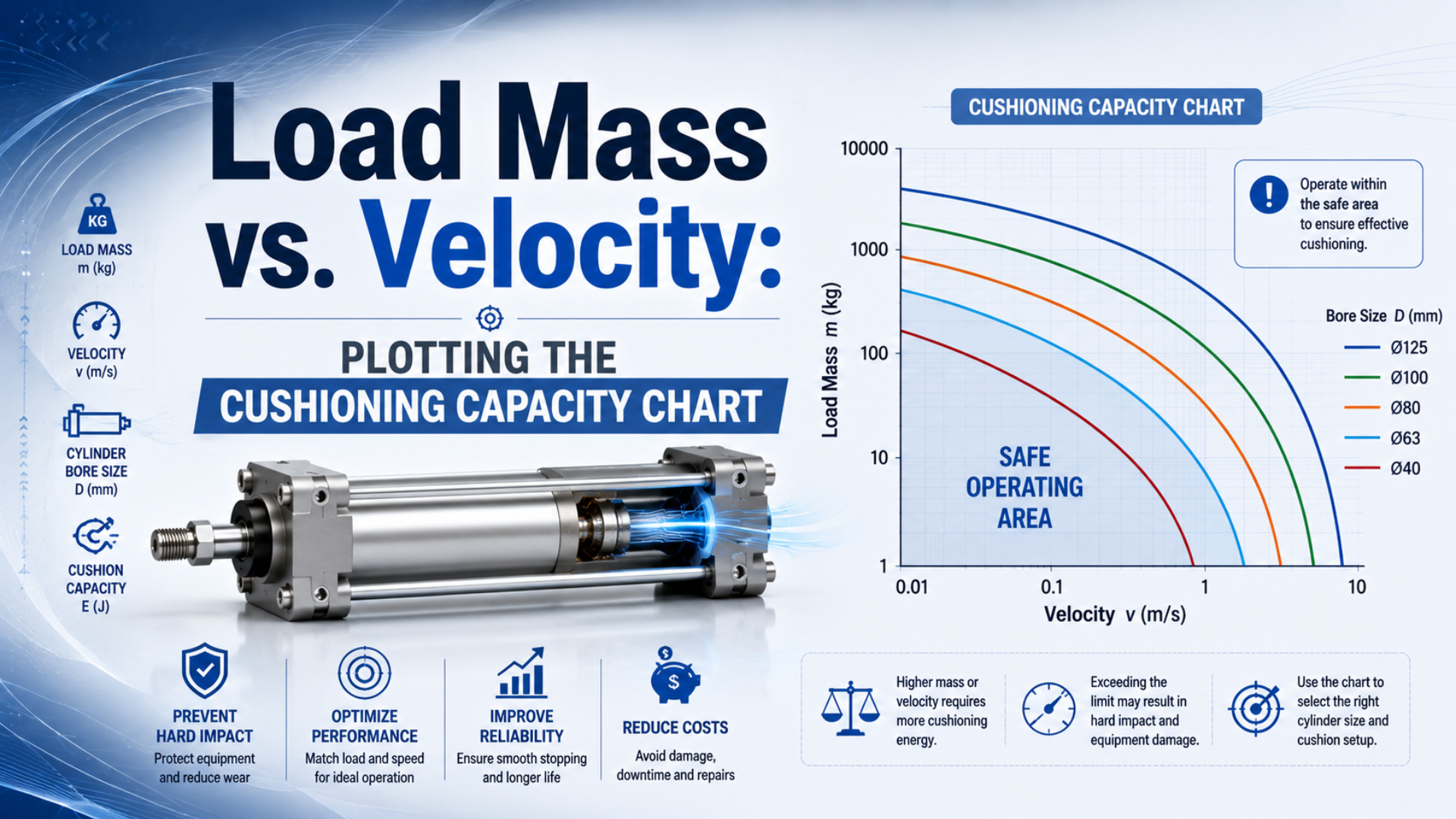 Load Mass vs. Velocity: Plotting the Cushioning Capacity ChartPlot a cushioning capacity chart correctly using total moving mass and speed at cushion entry, then screen the exact cylinder model and operating case.
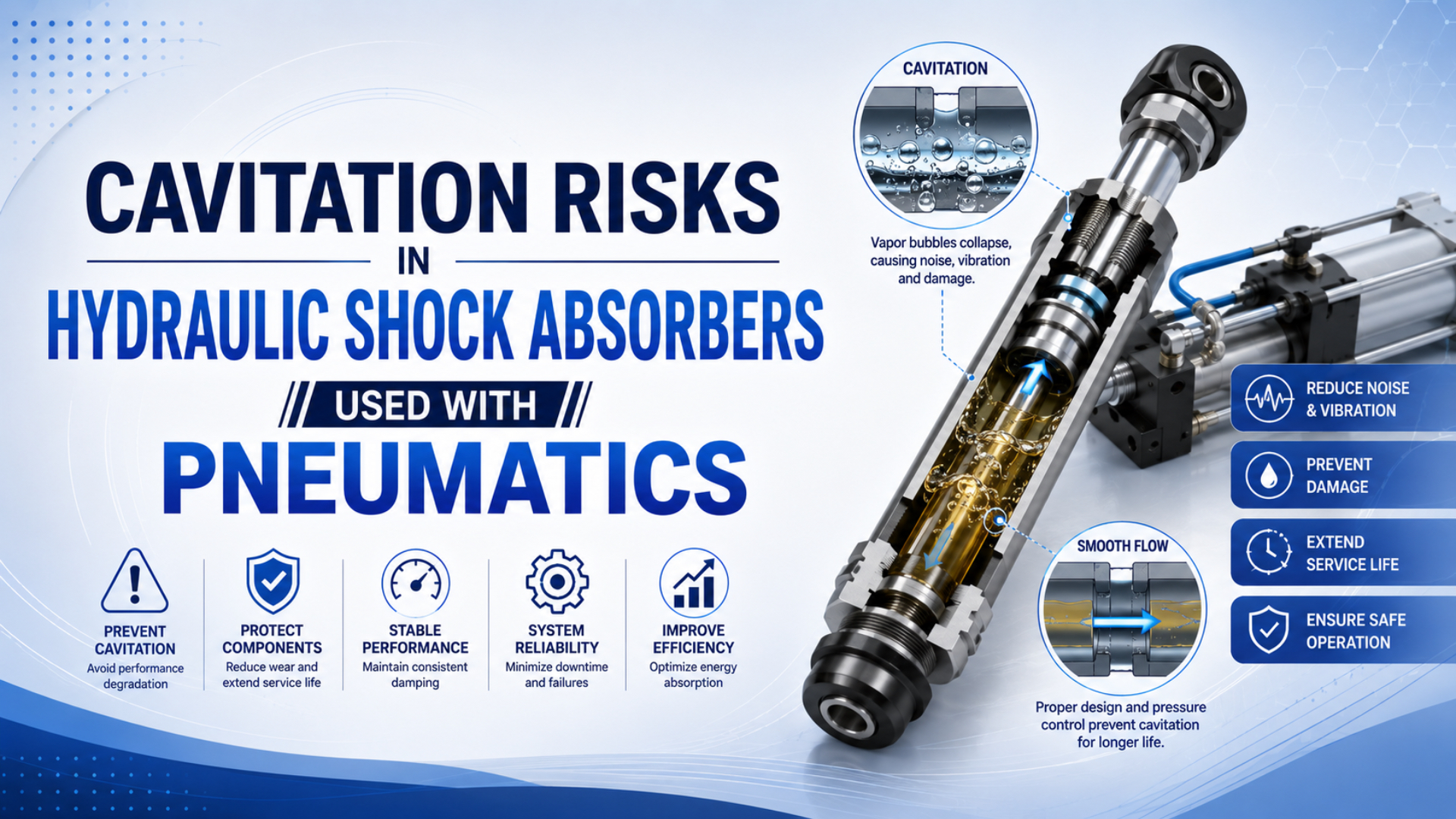 Cavitation Risks in Hydraulic Shock Absorbers Used with PneumaticsDiagnose suspected cavitation in hydraulic shock absorbers, separate it from aeration, and verify 8 model-specific limits before safely replacing the unit.
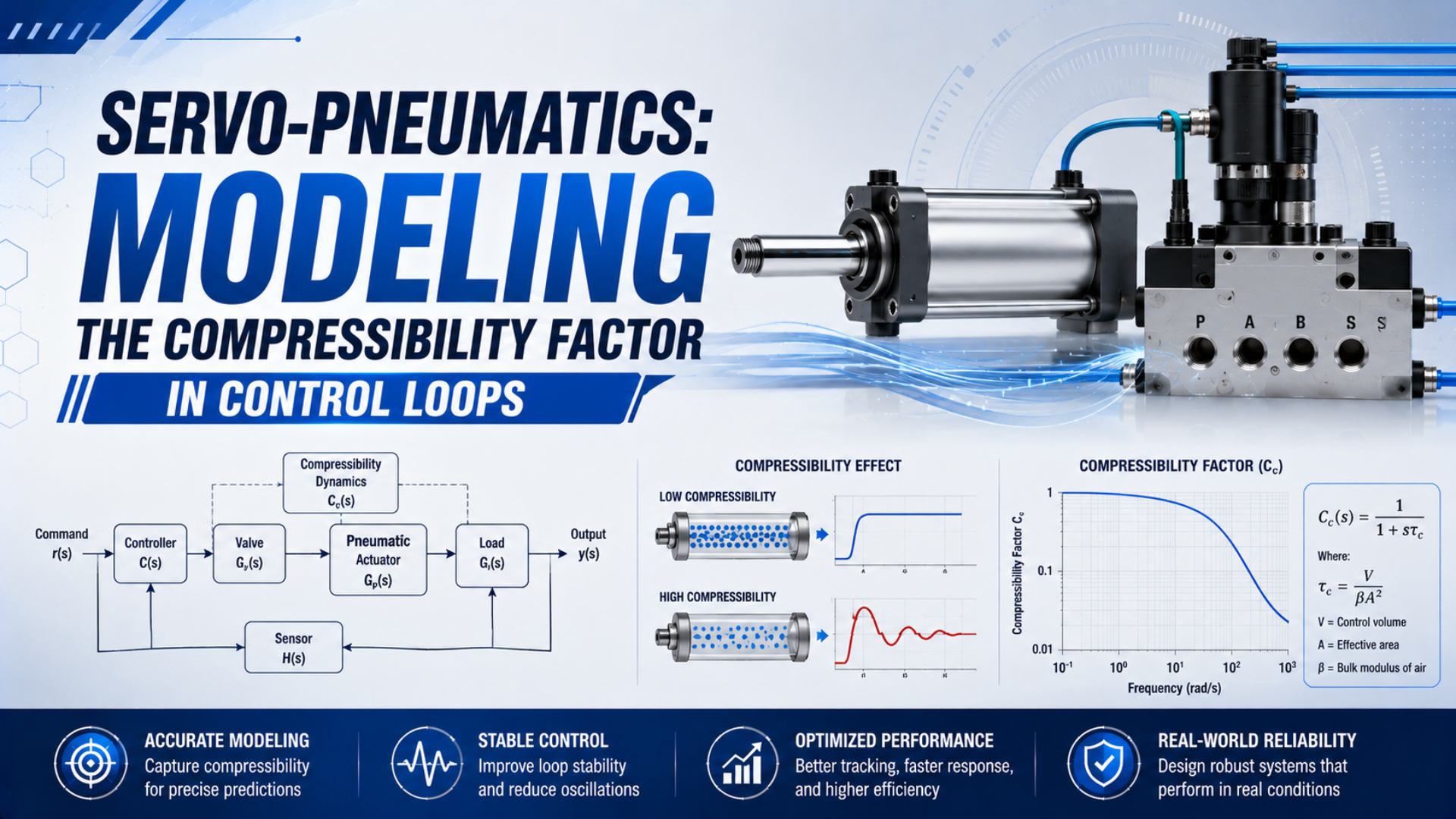 Servo-Pneumatics: Modeling the Compressibility Factor in Control LoopsModel a servo-pneumatic axis with four core states, ISO 6358 valve data, absolute chamber pressure, local linearization, identification, and validation.