
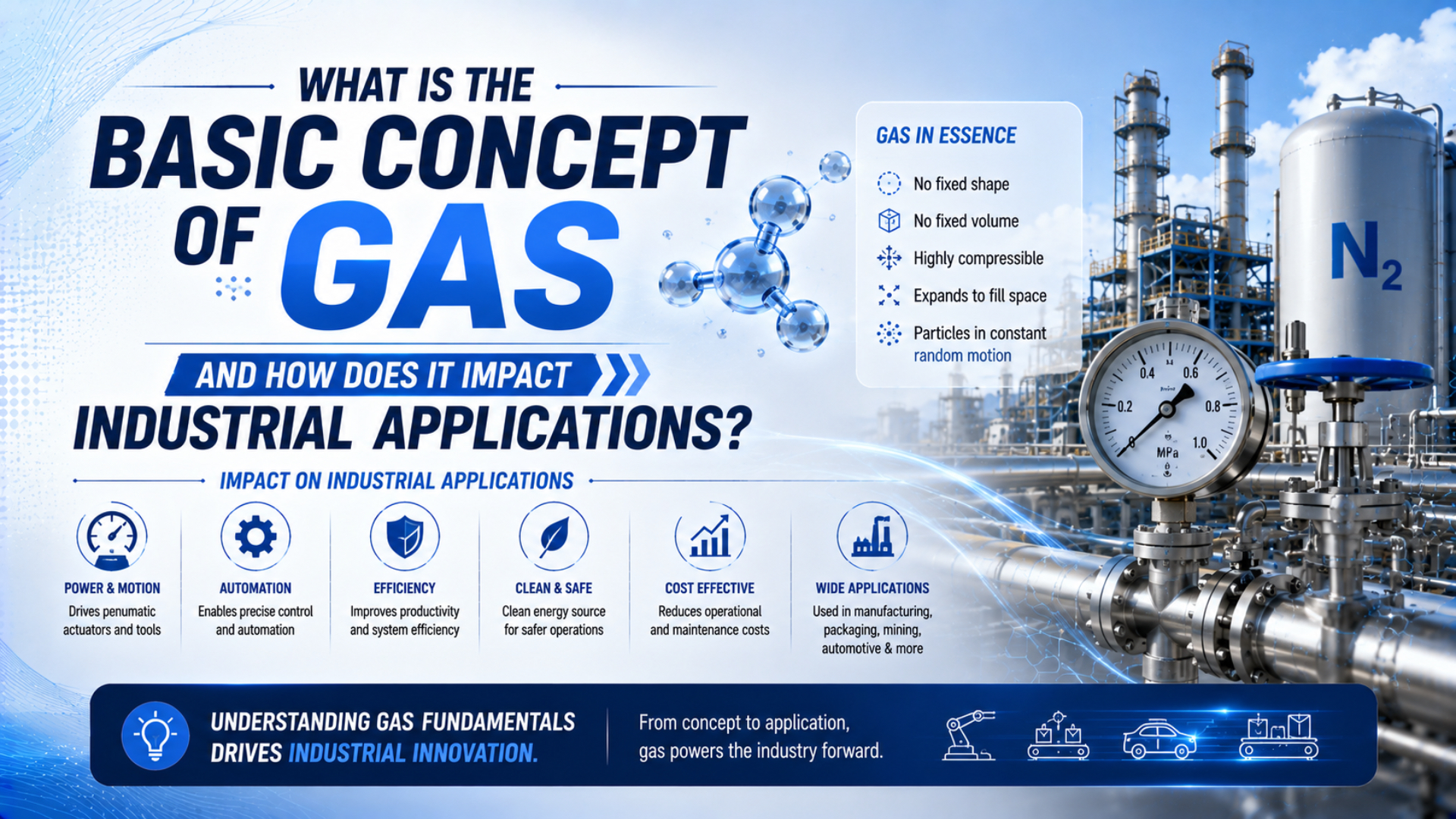
 What is the Basic Concept of Gas and How Does It Impact Industrial Applications?Learn how pressure, volume, temperature, gas mass, and ISO 8573’s 3 contaminant groups affect pneumatic force, flow, safety, and reliable component selection.
Blog Tag
compressed air quality articles
Review every Bepto Pneumatic article connected to compressed air quality, grouped as one focused reading list for engineers, maintenance staff, and sourcing specialists.
Tagged Reading Path
All articles tagged compressed air quality
Use this archive to scan related selection notes, RFQ checks, replacement guidance, and pneumatic component references.
What is the Basic Concept of Gas and How Does It Impact Industrial Applications?Learn how pressure, volume, temperature, gas mass, and ISO 8573’s 3 contaminant groups affect pneumatic force, flow, safety, and reliable component selection.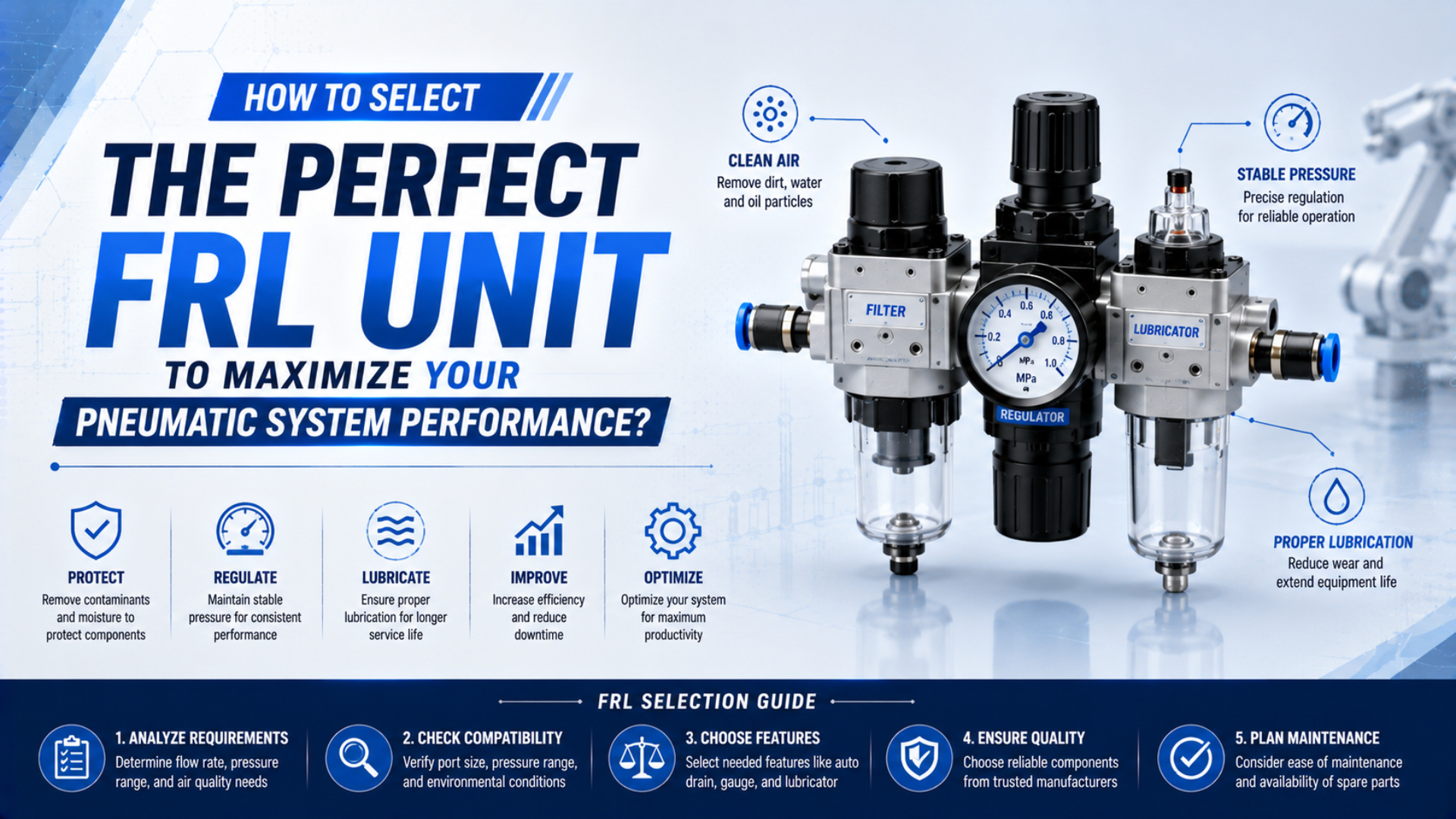 How to Select the Perfect FRL Unit to Maximize Your Pneumatic System Performance?ISO 6953-2:2024 standardizes regulator tests across 39 pages. Learn to select FRL flow, filtration, pressure, drains, materials, and lubrication correctly.
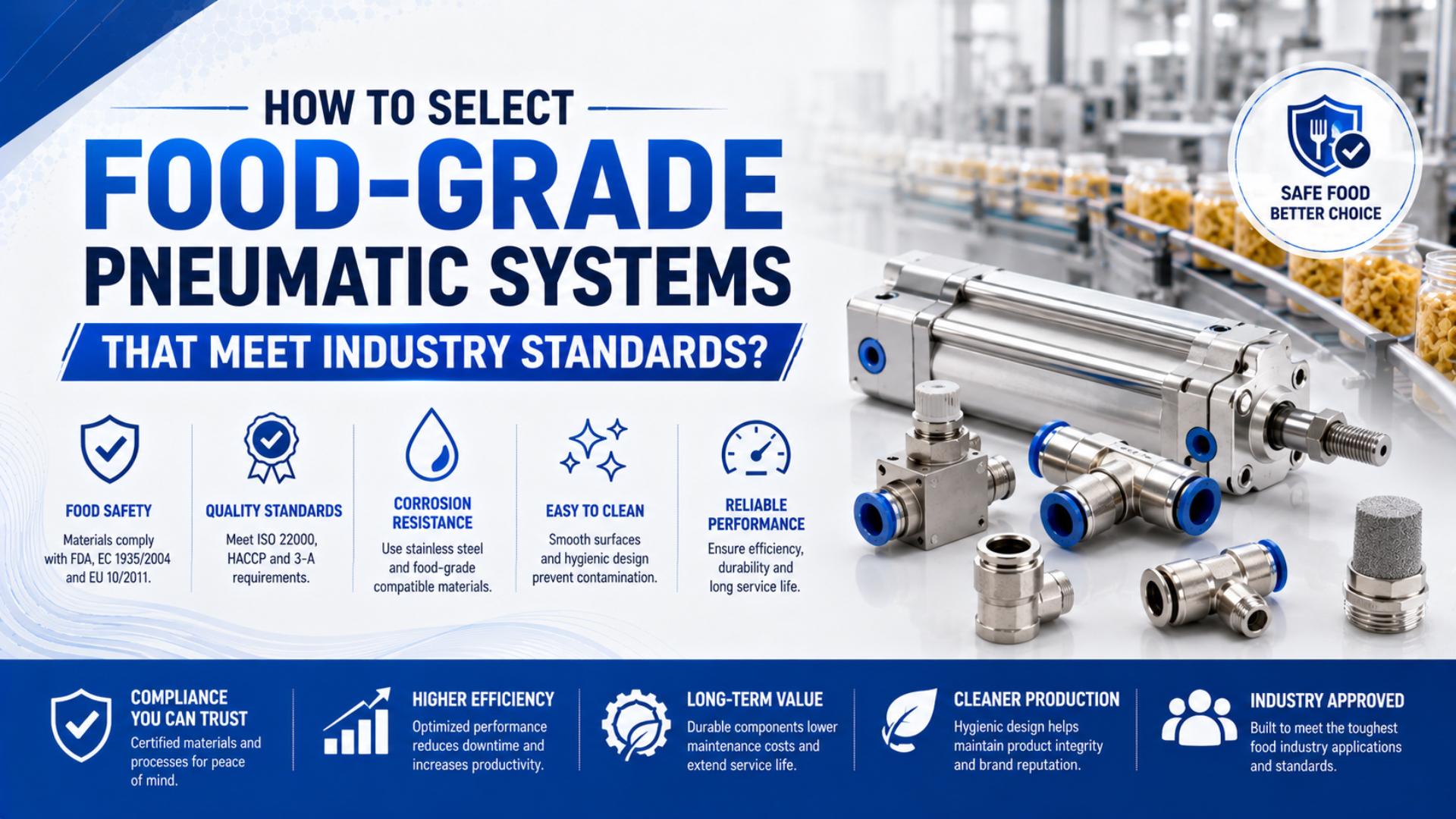 How to Select Food-Grade Pneumatic Systems That Meet Industry Standards?Select food-grade pneumatic systems by mapping 4 hygiene zones, applying 21 CFR 117.40, and verifying air quality, materials, cleanability, and evidence.
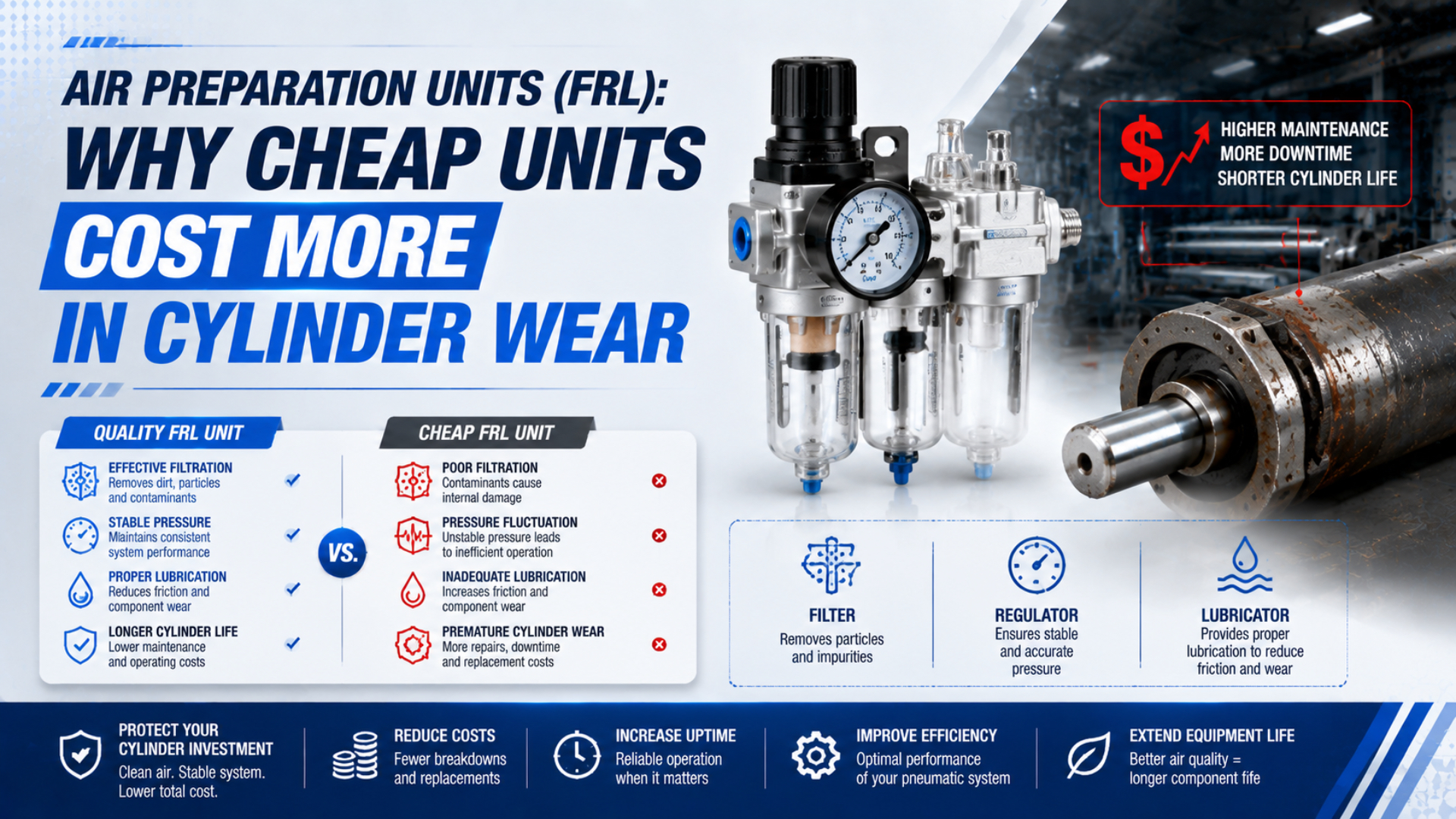 Air Preparation Units (FRL): Why Cheap Units Cost More in Cylinder WearLearn why low-cost FRL units can increase cylinder wear using ISO 8573 targets, CAGI's 10% pressure-drop limit, and a site-specific TCO model for procurement.
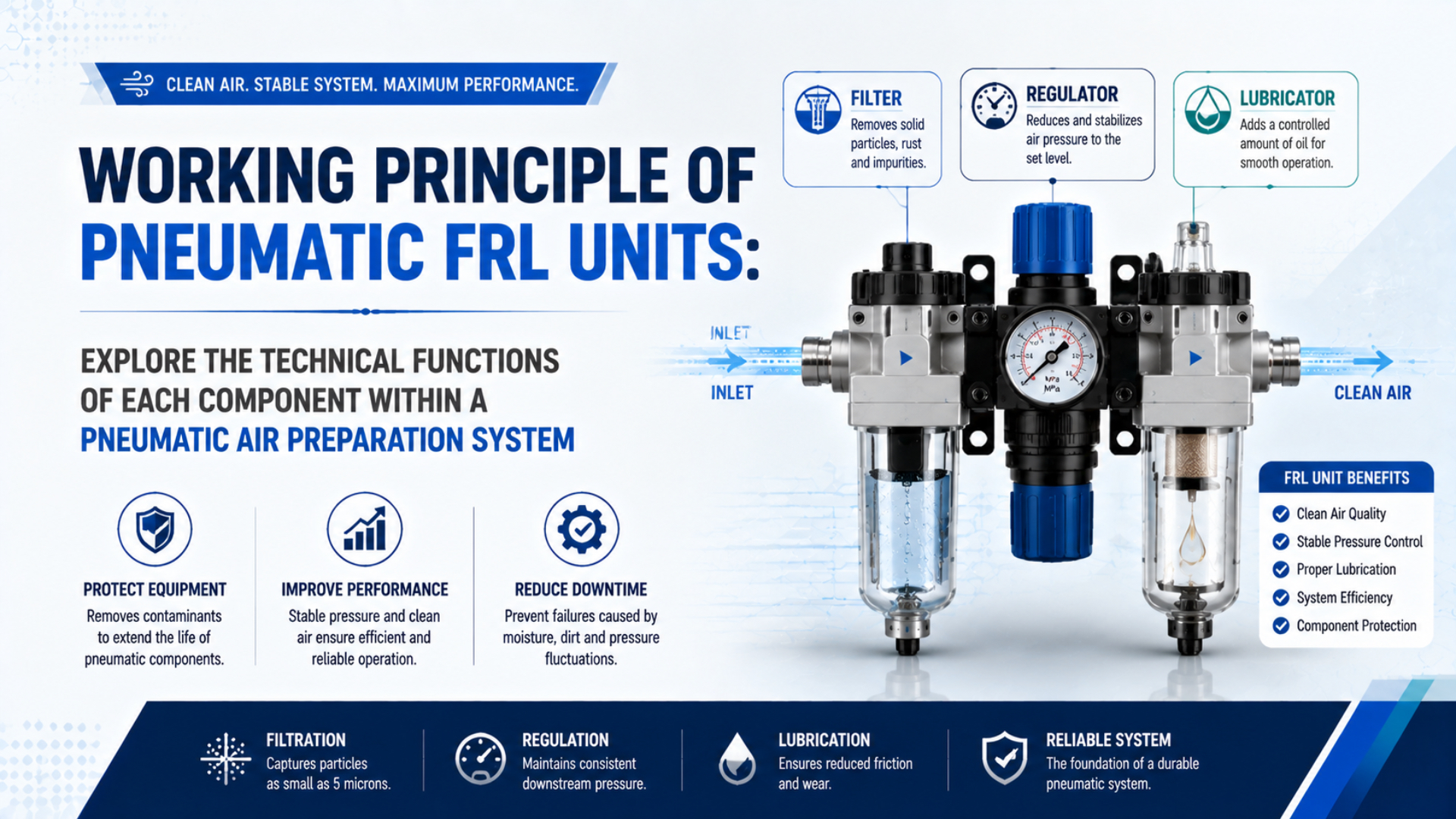 Working Principle of Pneumatic FRL Units: Explore the Technical Functions of Each Component Within a Pneumatic Air Preparation SystemLearn how pneumatic FRL filters, regulators, and lubricators work, using ISO 8573-1 purity classes and CAGI's 5-7 psig filter service trigger.
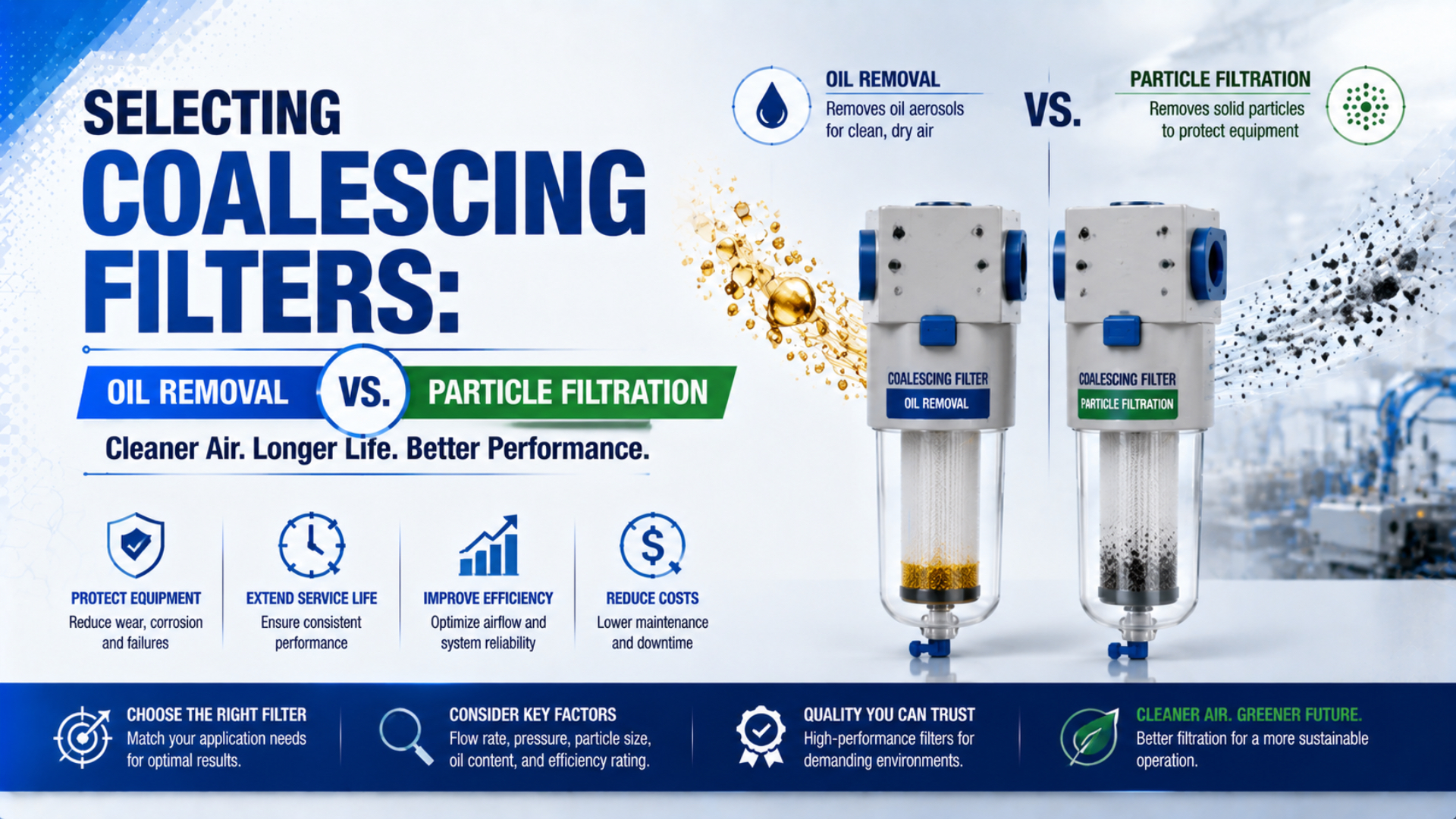 Selecting Coalescing Filters: Oil Removal vs. Particle FiltrationCompare particle and coalescing filters by contaminant phase, ISO 8573-1 classes, rated flow, pressure drop, and the 0.01 mg/m3 Class 1 oil limit in practice.
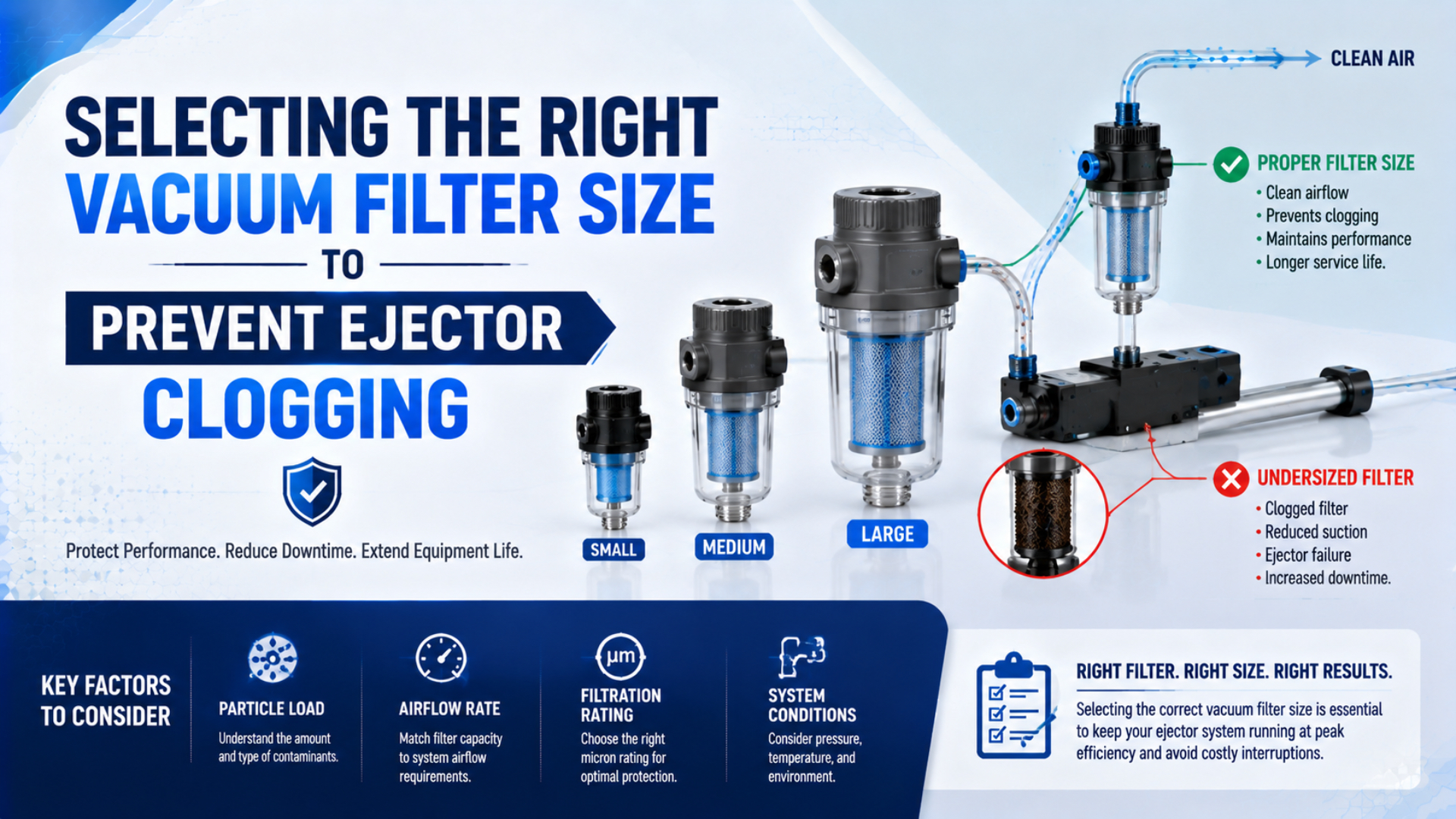 Selecting the Right Vacuum Filter Size to Prevent Ejector CloggingSize a vacuum filter from suction flow and pressure drop at the target vacuum, then verify 5-80 µm grades, element area, dust loading, and service limits.
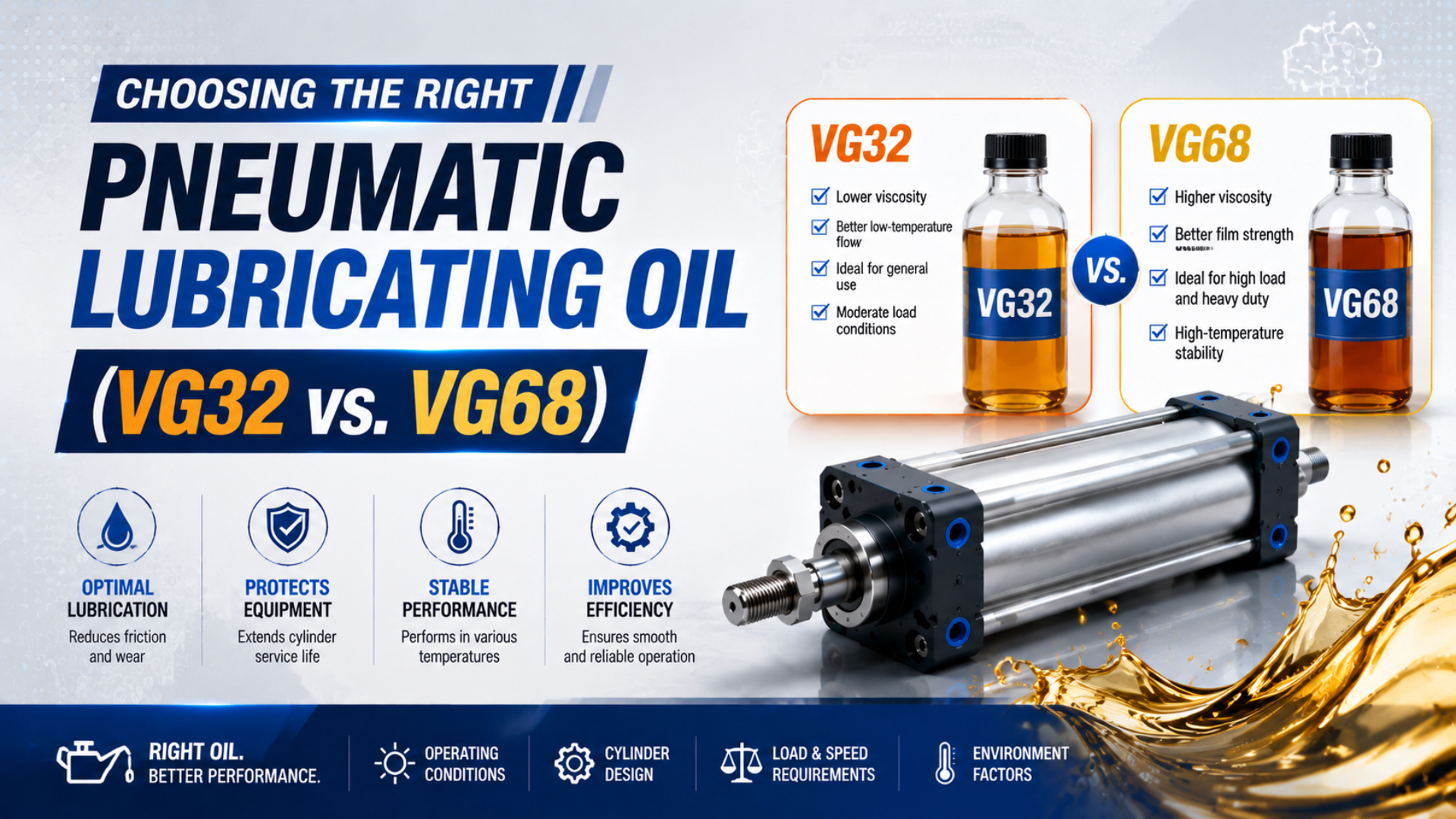 Choosing the Right Pneumatic Lubricating Oil (VG32 vs. VG68)Choose VG32 or VG68 pneumatic oil using 6 checks for OEM requirements, 40°C viscosity, lubricant chemistry, seal compatibility, FRL delivery, and H1 service.
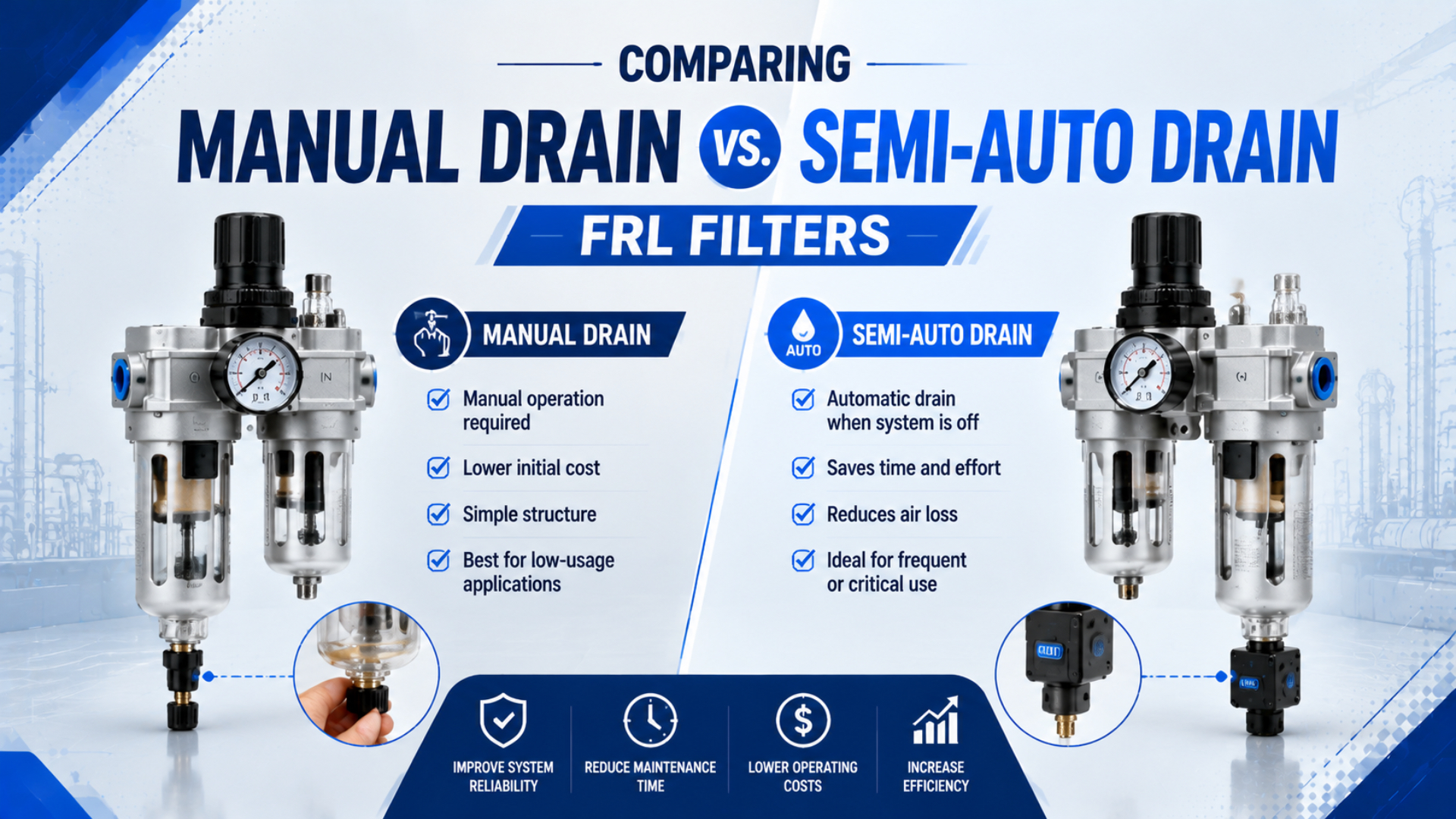 Comparing Manual Drain vs. Semi-Auto Drain FRL FiltersCompare manual and semi-automatic FRL filter drains by mechanism, pressure cycle, measured condensate rate, bowl capacity, maintenance access, and failure response.