
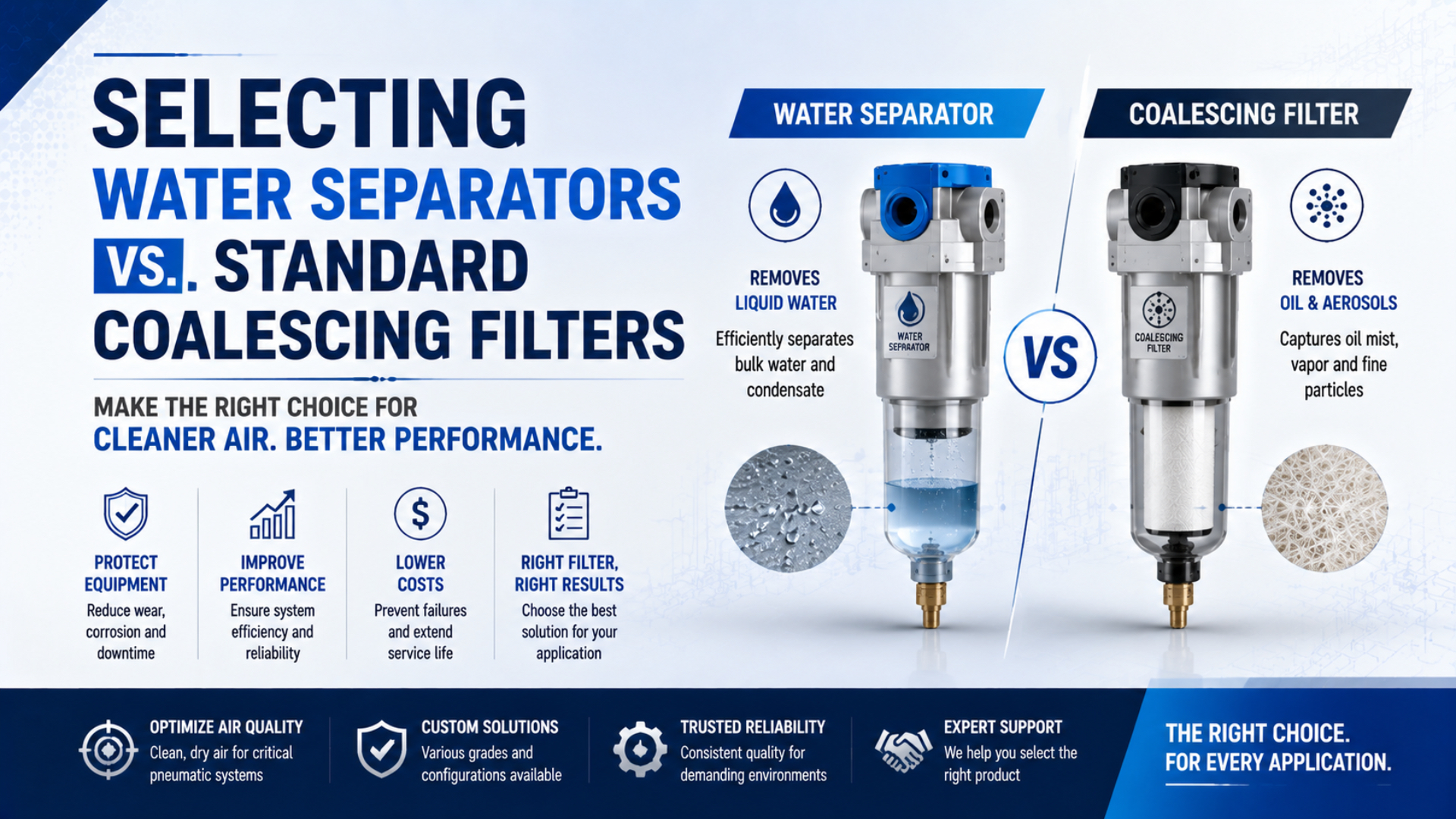
 Selecting Water Separators vs. Standard Coalescing FiltersCompare water separators and coalescing filters using ISO 8573's 3 contaminant groups, model-specific flow, pressure drop, drain, and dryer requirements.
Blog Tag
compressed air quality articles
Review every Bepto Pneumatic article connected to compressed air quality, grouped as one focused reading list for engineers, maintenance staff, and sourcing specialists.
Tagged Reading Path
All articles tagged compressed air quality
Use this archive to scan related selection notes, RFQ checks, replacement guidance, and pneumatic component references.
Selecting Water Separators vs. Standard Coalescing FiltersCompare water separators and coalescing filters using ISO 8573's 3 contaminant groups, model-specific flow, pressure drop, drain, and dryer requirements.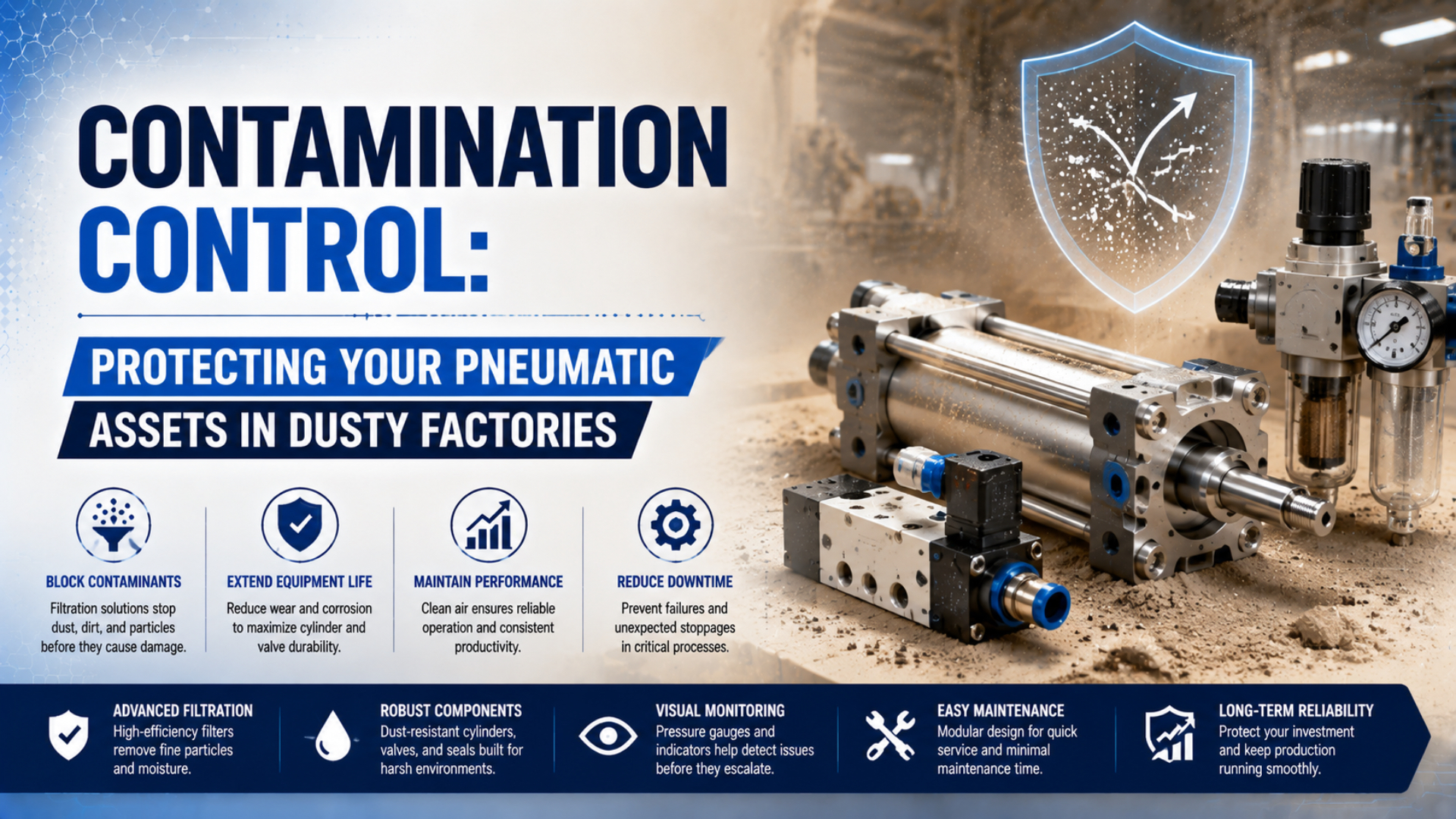 Contamination Control: Protecting Your Pneumatic Assets in Dusty FactoriesProtect pneumatic assets in dusty factories by controlling 3 contamination paths: external dust, dirty compressed air, and maintenance ingress at point of use.
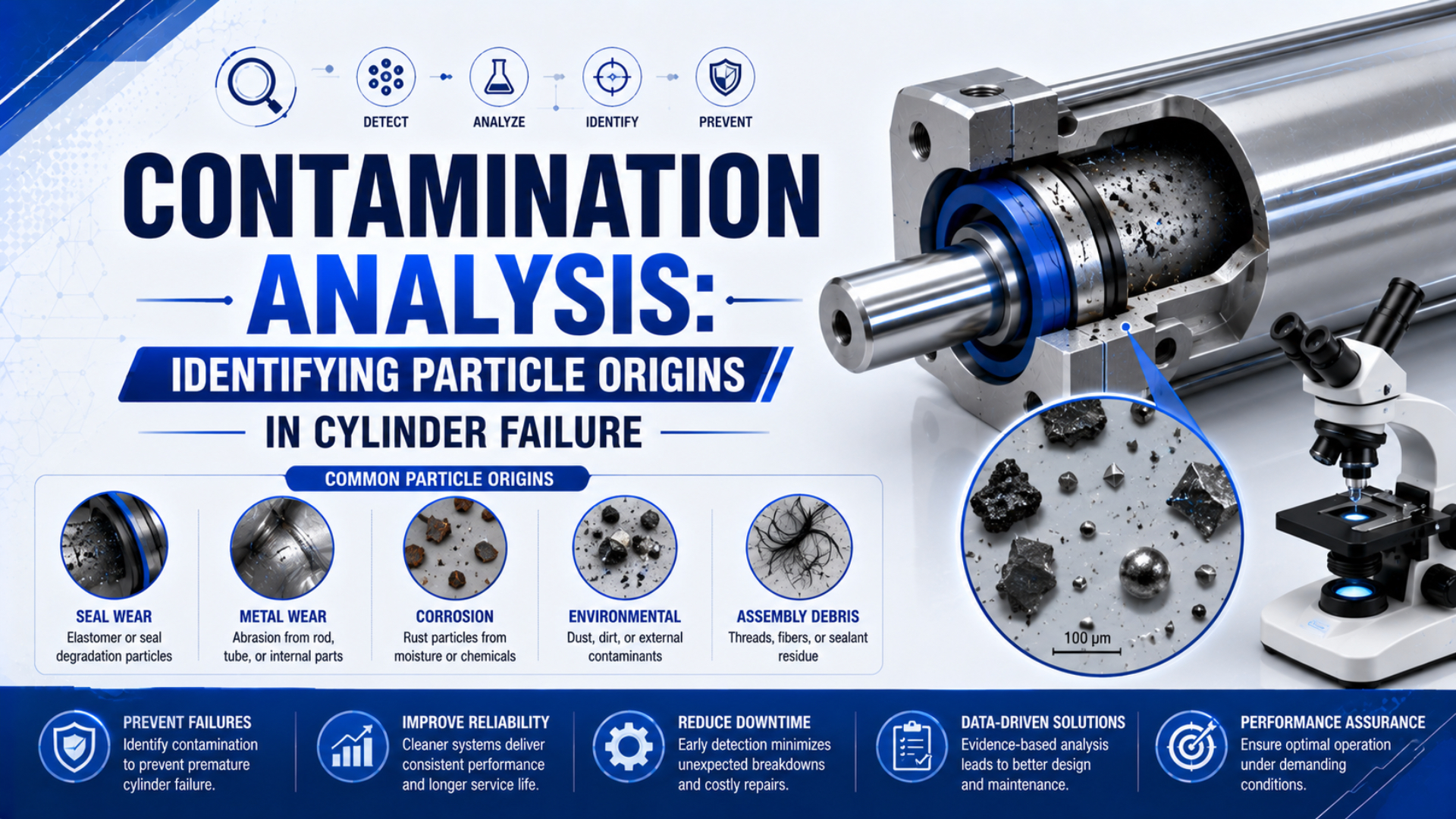 Contamination Analysis: Identifying Particle Origins in Cylinder FailureTrace pneumatic-cylinder particle origins through 4 evidence groups: sampling location, morphology, composition and timing, with ISO-based air checks.
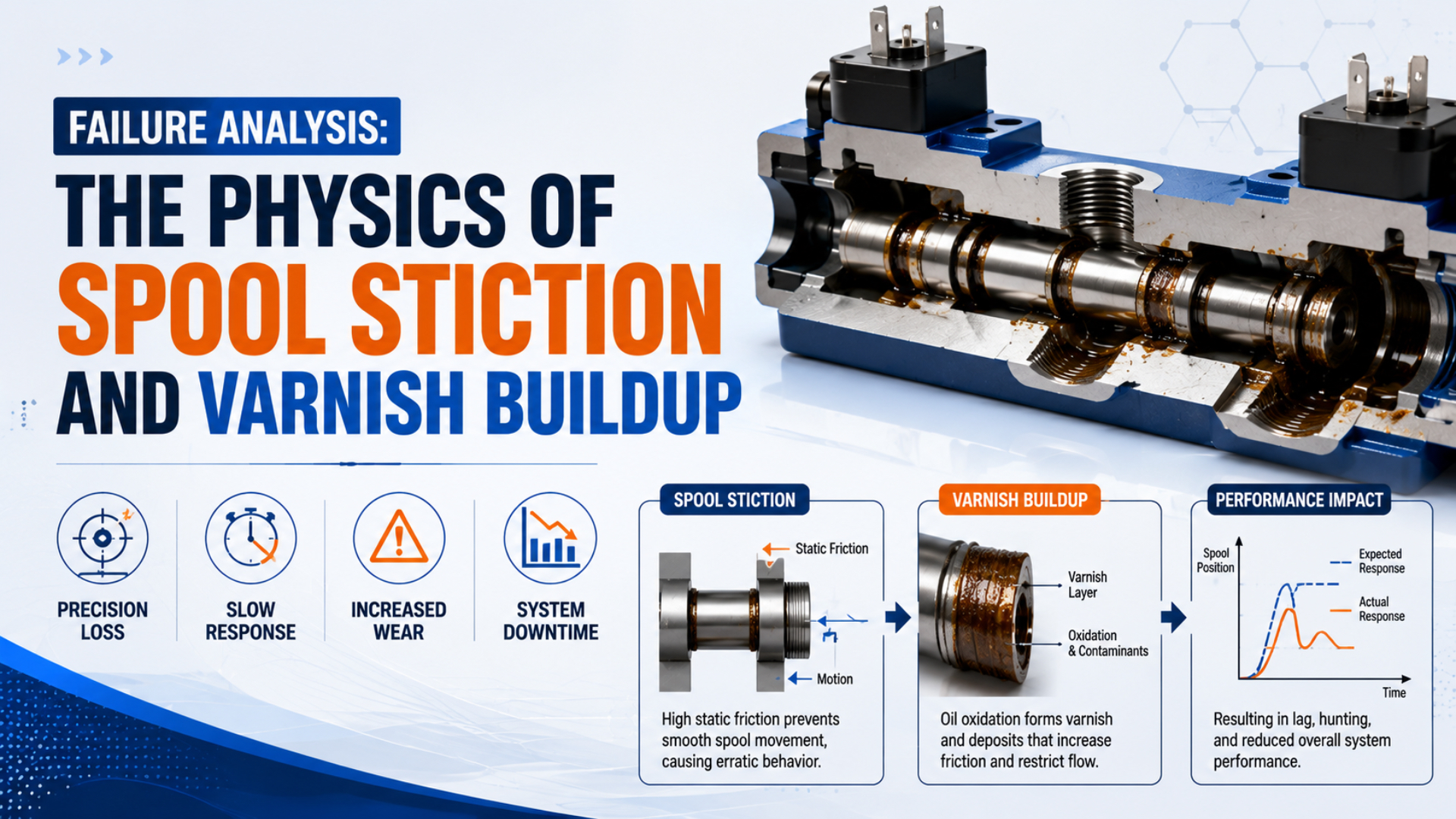 Failure Analysis: The Physics of Spool Stiction and Varnish BuildupDiagnose spool valve stiction by separating electrical, pilot, exhaust, mechanical, water, particle, lubricant, and varnish-like deposit causes.
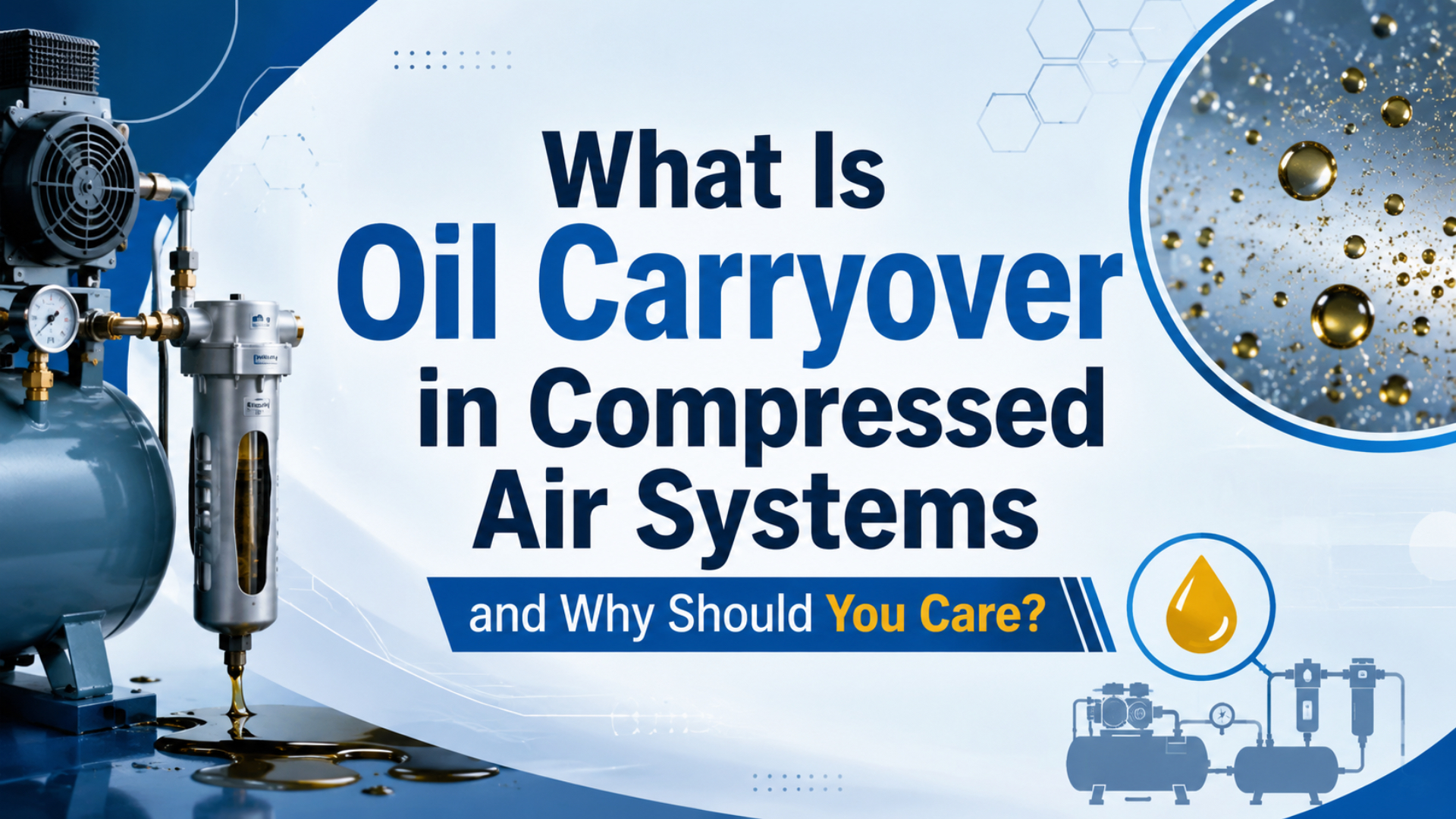 What Is Oil Carryover in Compressed Air Systems and Why Should You Care?Learn how to trace oil carryover, separate aerosol from vapor, apply ISO 8573 testing, and interpret Class 1's 0.01 mg/m³ total-oil limit at the point of use.
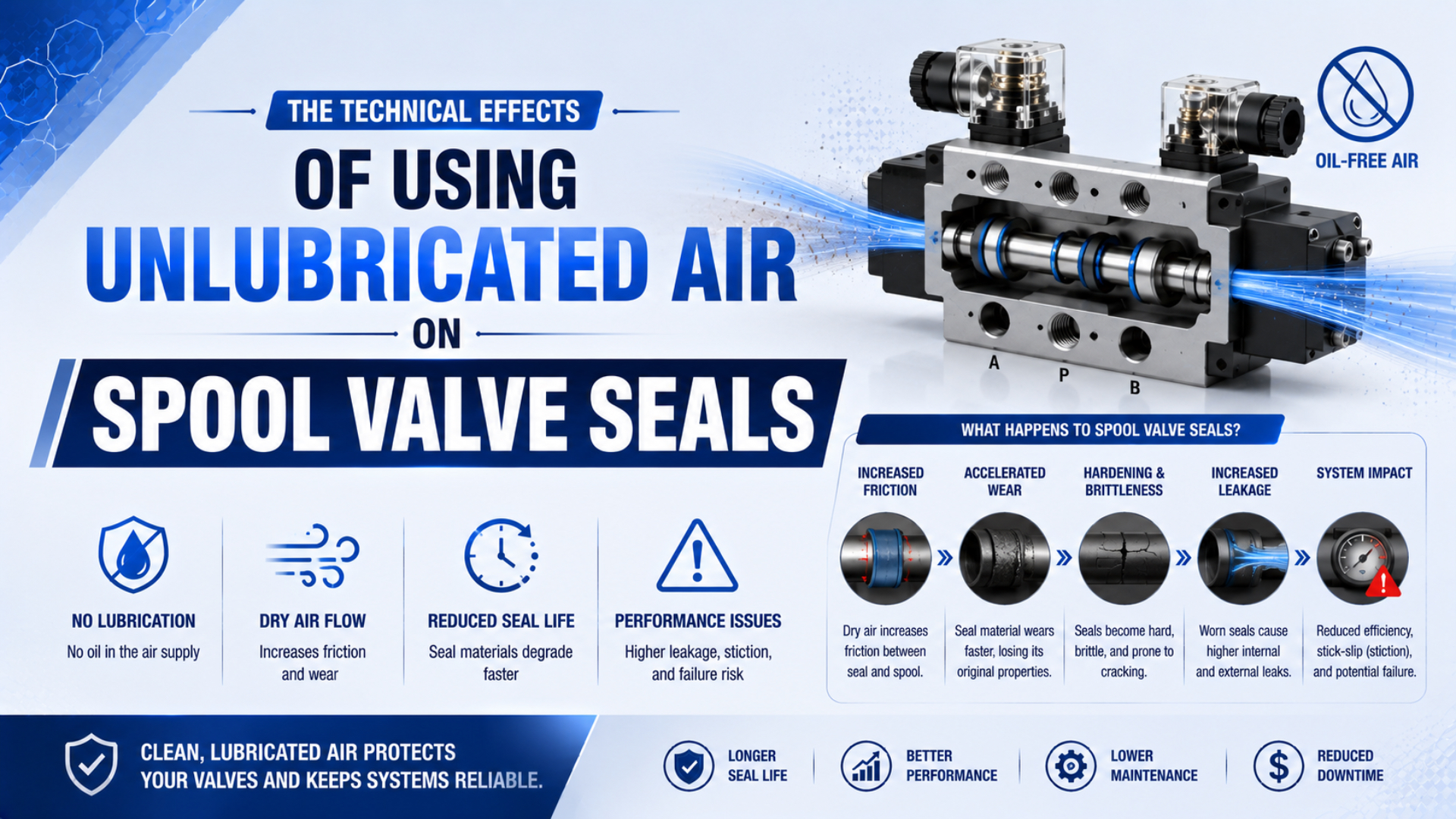 The Technical Effects of Using Unlubricated Air on Spool Valve SealsLearn how unlubricated air affects spool valve seals, why ISO 8573-1 separates 3 contaminant classes, and how to qualify lubrication changes safely.
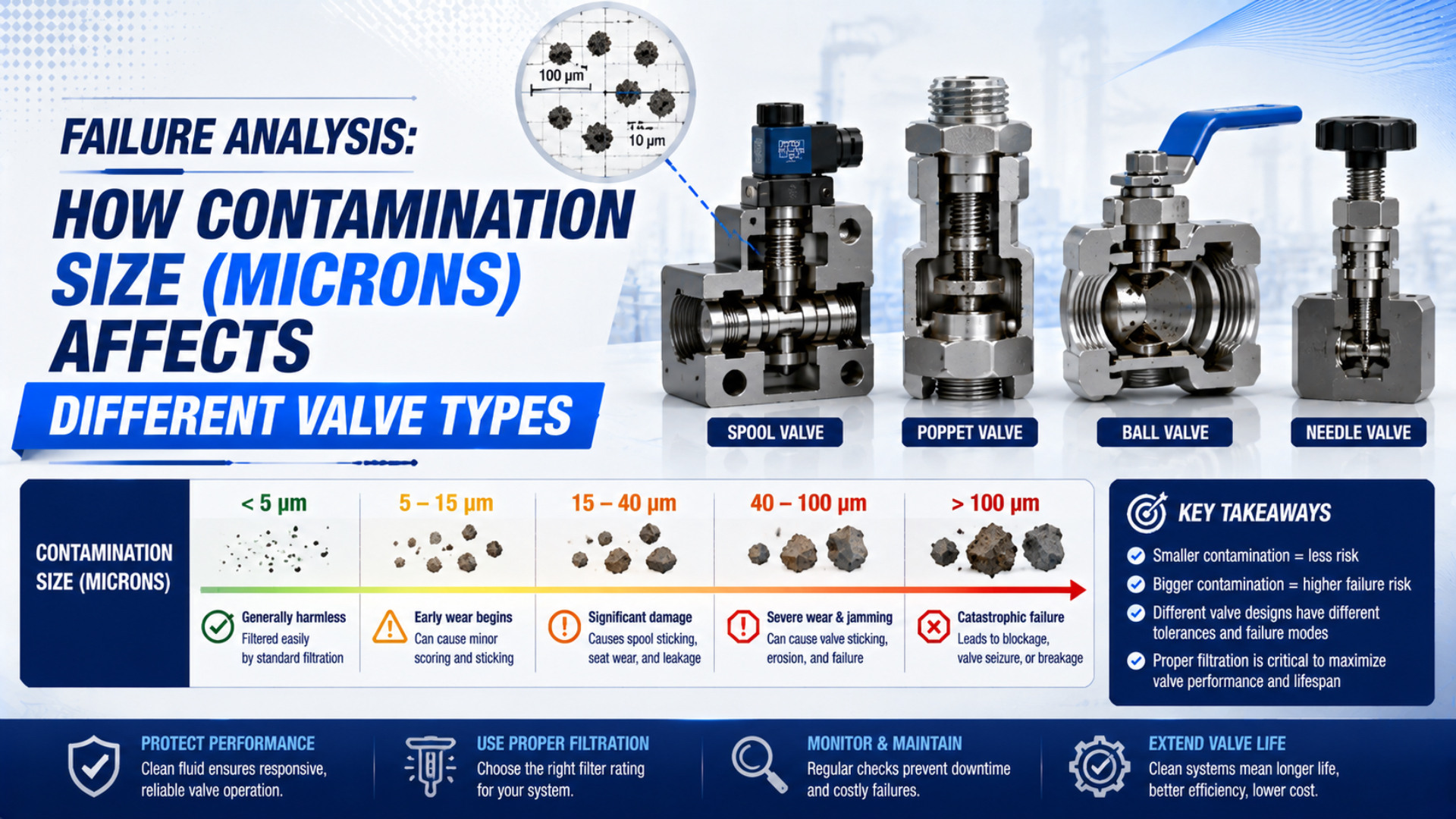 Failure Analysis: How Contamination Size (Microns) Affects Different Valve TypesAnalyze pneumatic valve contamination with 6 evidence checks covering particle size, valve clearance, residue, air quality, filter data, and failure timing.
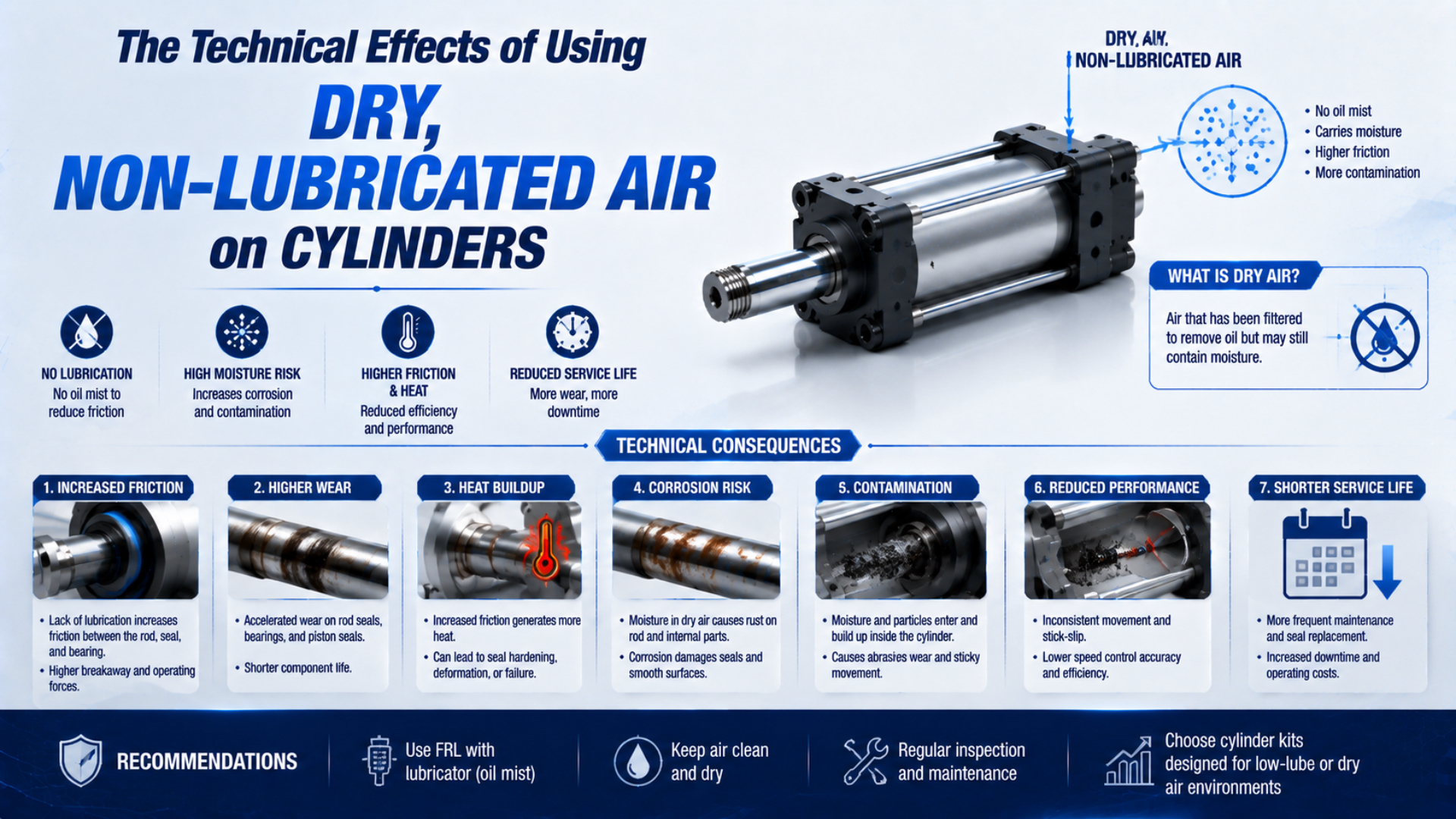 The Technical Effects of Using Dry, Non-Lubricated Air on CylindersSeparate 4 air-quality and lubrication states before specifying cylinder seals, pressure dew point, commissioning tests, or oil-free maintenance plans.
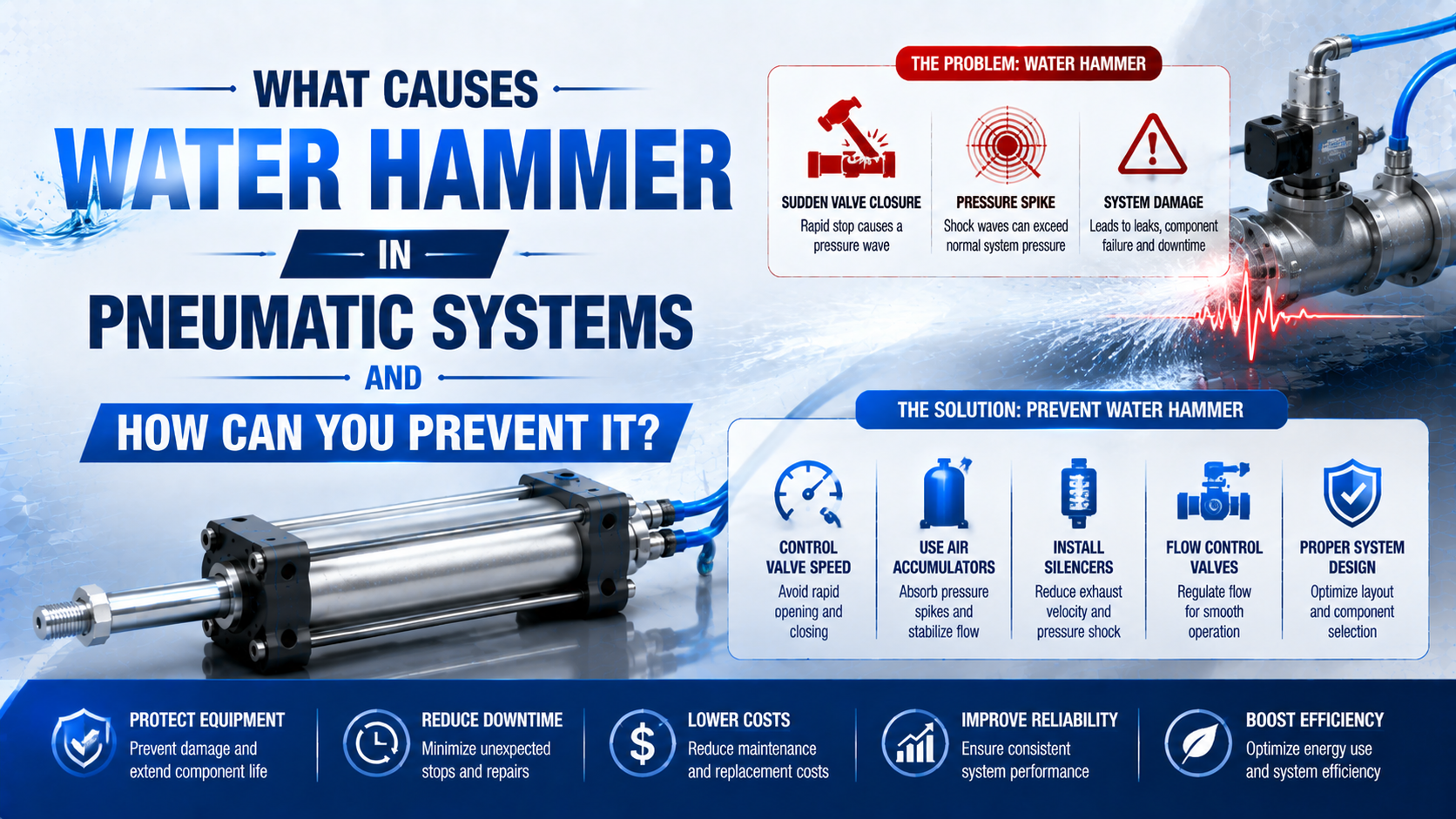 What Causes Water Hammer in Pneumatic Systems and How Can You Prevent It?Separate four causes of pneumatic water hammer, identify the first pressure event, and prevent dry-air surges, liquid slugs, and unsafe repressurization.