
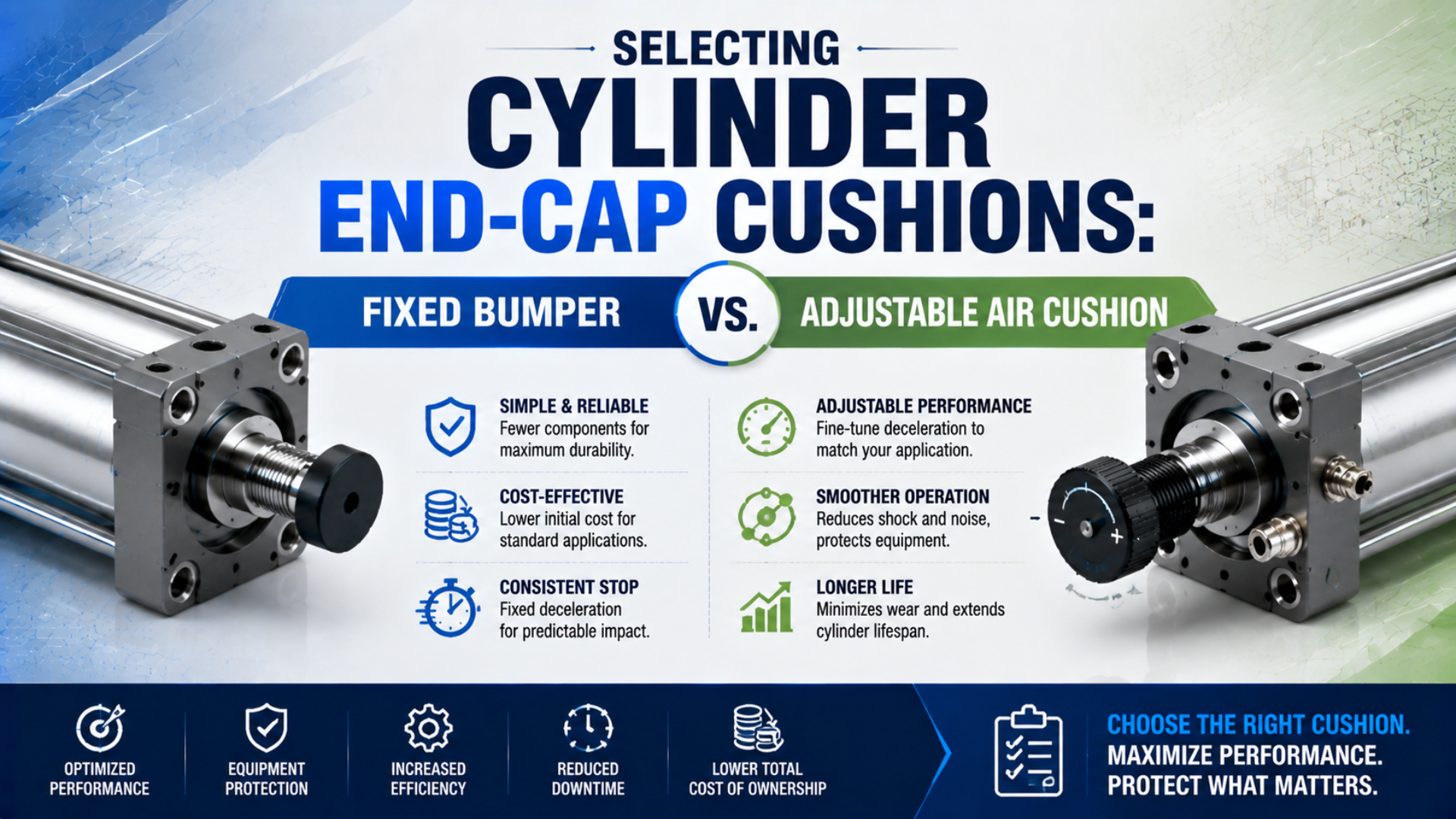
 Selecting Cylinder End-Cap Cushions: Fixed Bumper vs. Adjustable Air CushionChoose fixed bumpers or adjustable air cushions using Parker's 50% entry-speed warning, moving mass, model-specific energy limits, and commissioning evidence.
Blog Tag
cylinder cushioning articles
Review every Bepto Pneumatic article connected to cylinder cushioning, grouped as one focused reading list for engineers, maintenance staff, and sourcing specialists.
Tagged Reading Path
All articles tagged cylinder cushioning
Use this archive to scan related selection notes, RFQ checks, replacement guidance, and pneumatic component references.
Selecting Cylinder End-Cap Cushions: Fixed Bumper vs. Adjustable Air CushionChoose fixed bumpers or adjustable air cushions using Parker's 50% entry-speed warning, moving mass, model-specific energy limits, and commissioning evidence.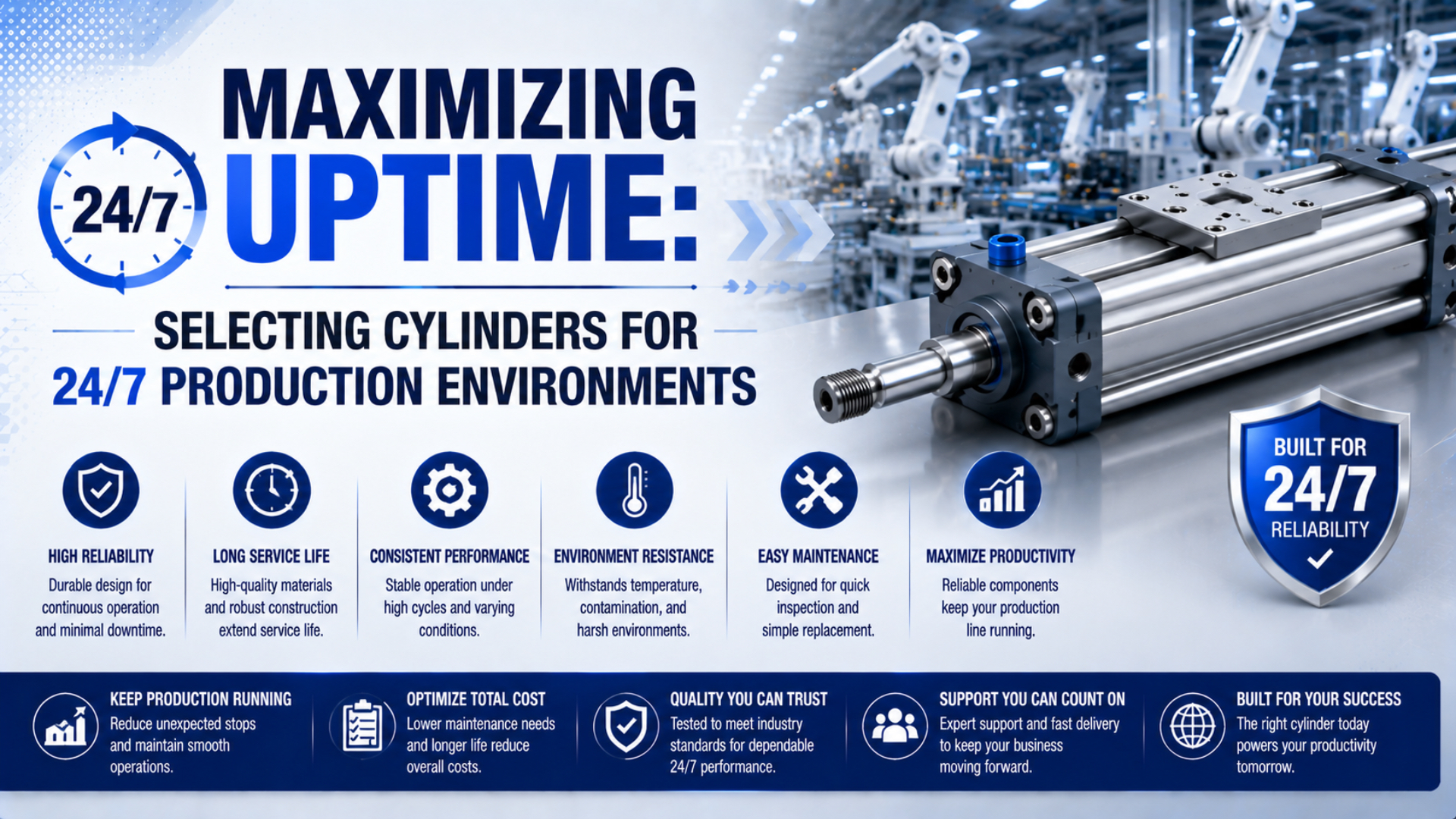 Maximizing Uptime: Selecting Cylinders for 24/7 Production EnvironmentsSelect pneumatic cylinders for 24/7 production by converting duty into cycles and travel, then check 15 Hz limits, cushioning, guides, air quality, and spares.
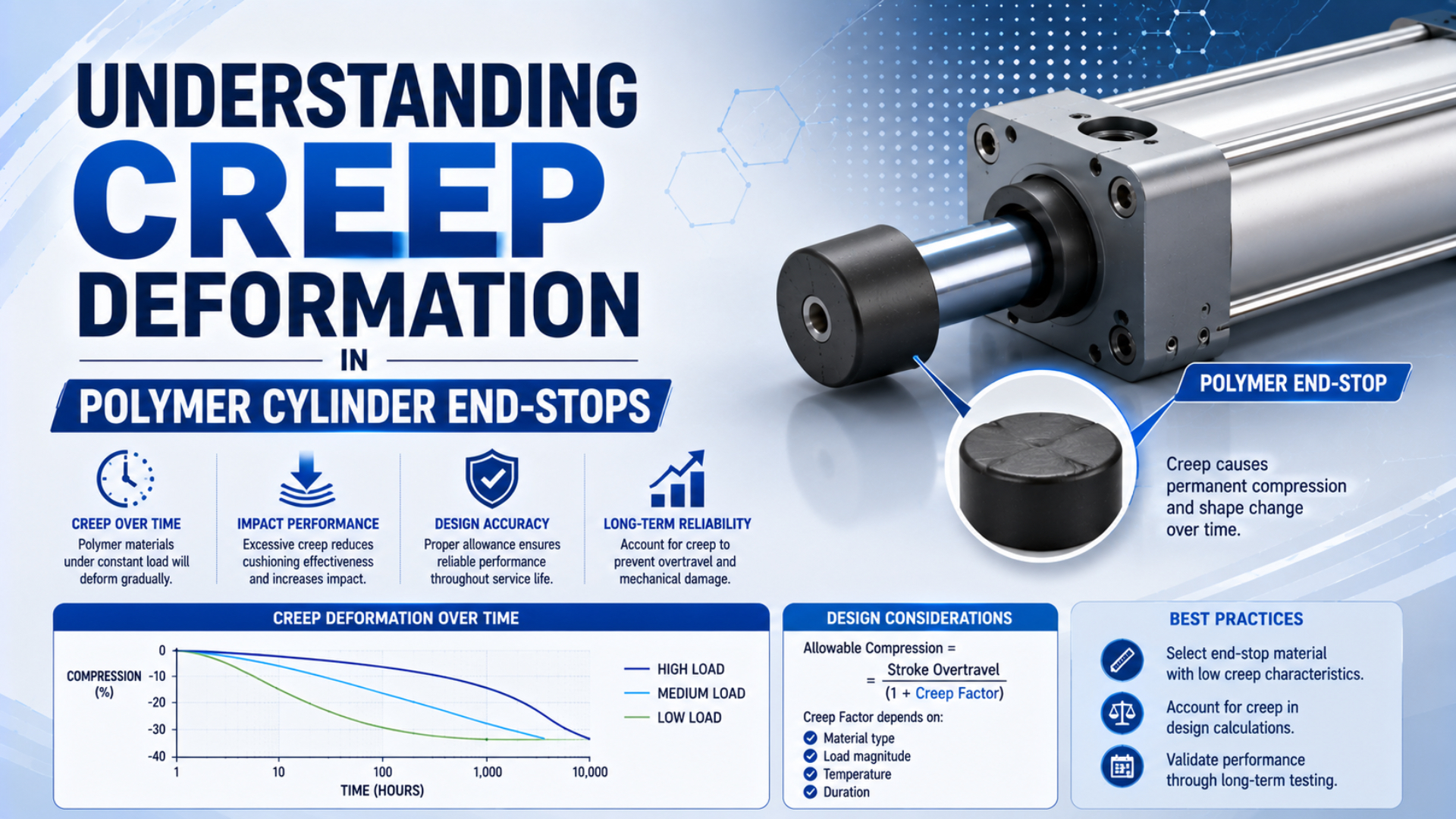 Understanding Creep Deformation in Polymer Cylinder End-StopsLearn how sustained load, temperature, moisture, impact, and test method change polymer cylinder end-stop creep, using ISO 899 and 1,000-hour grade data.
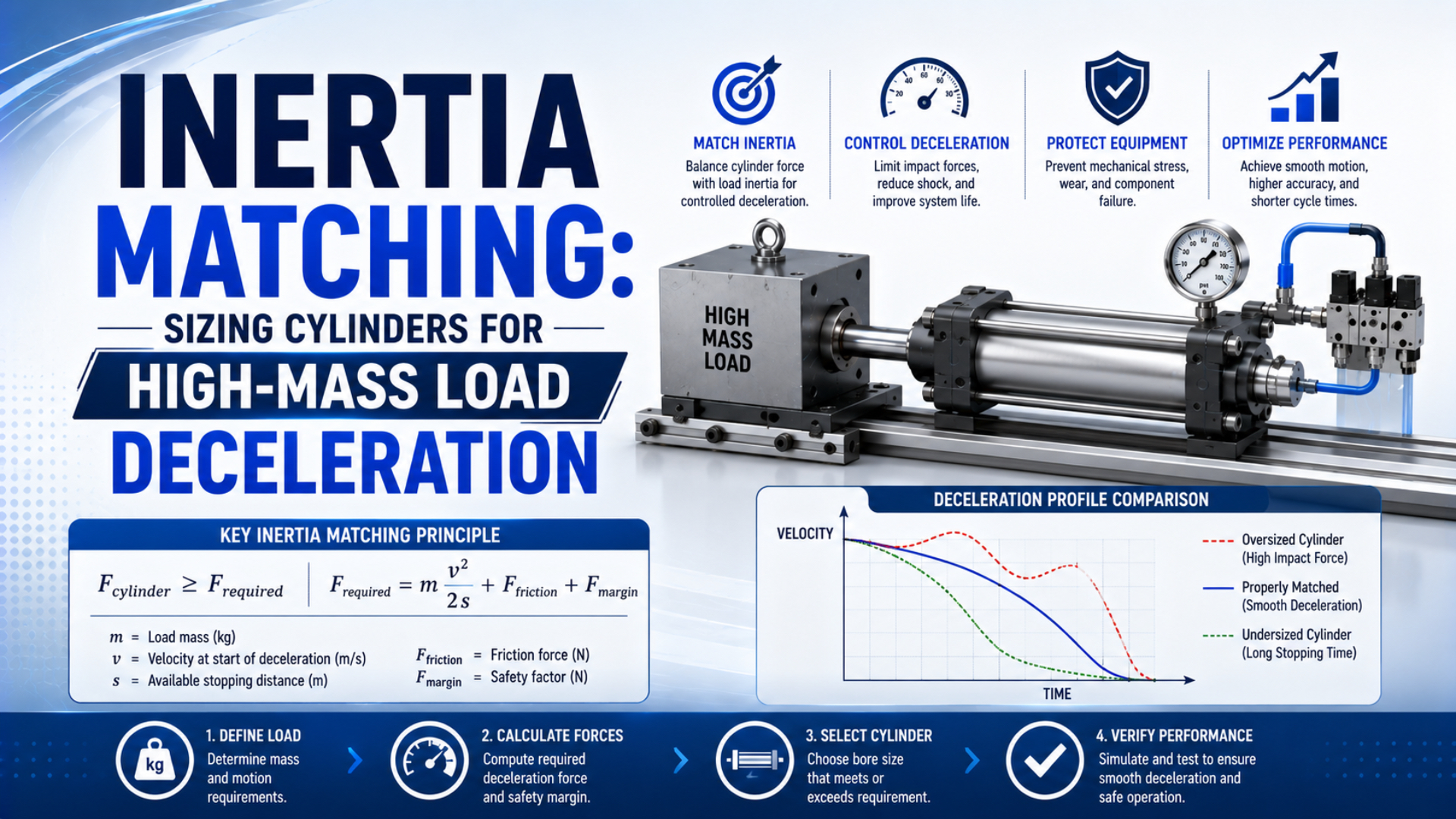 Inertia Matching: Sizing Cylinders for High-Mass Load DecelerationParker notes cushion-entry speed may be 50% above average. Size high-mass pneumatic deceleration using event energy, duty, and exact catalog limits.
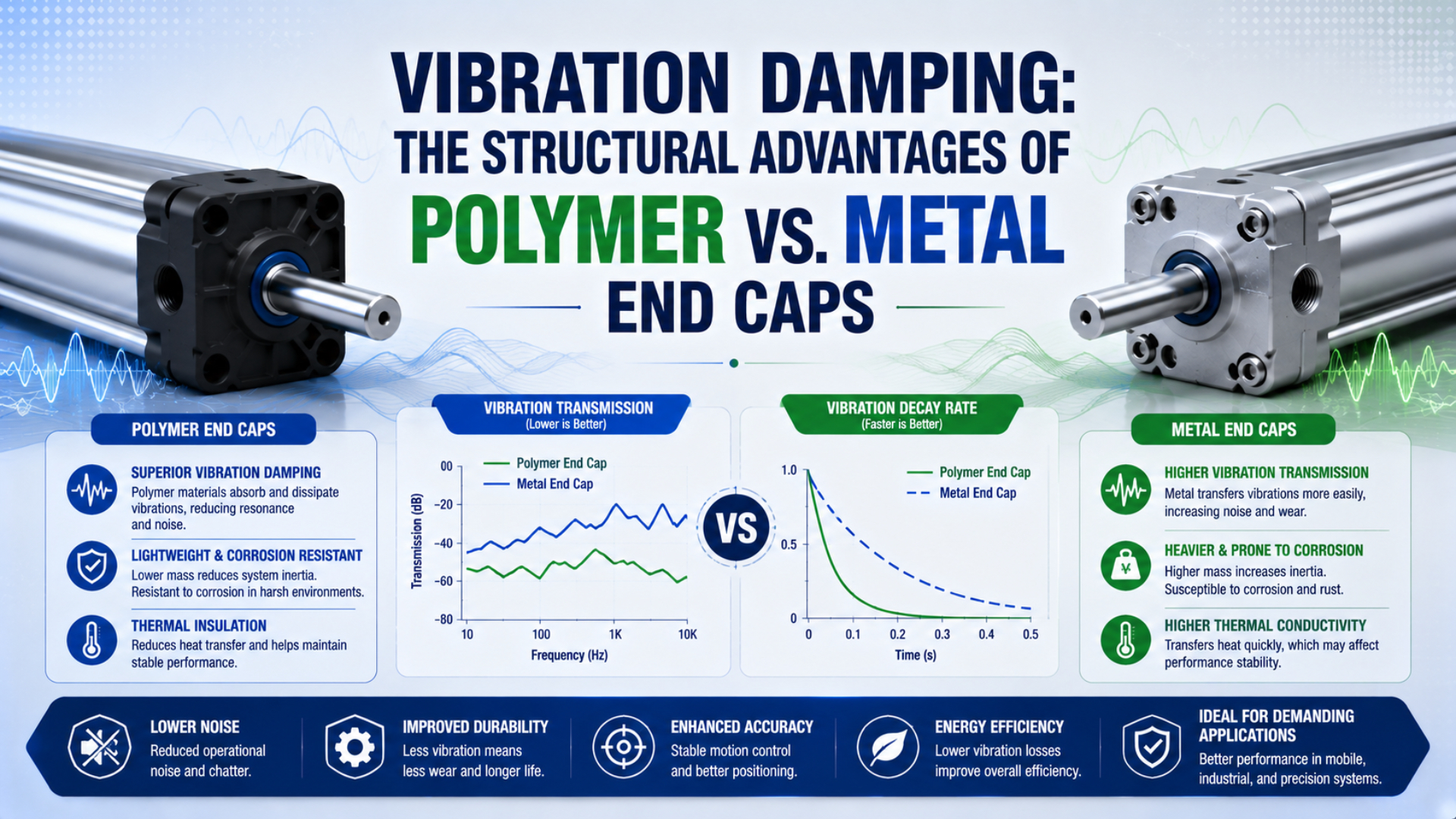 Vibration Damping: The Structural Advantages of Polymer vs. Metal End CapsCompare polymer and metal cylinder end caps through damping, stiffness, creep, temperature, noise testing, and a published 10 bar polymer-cover example.
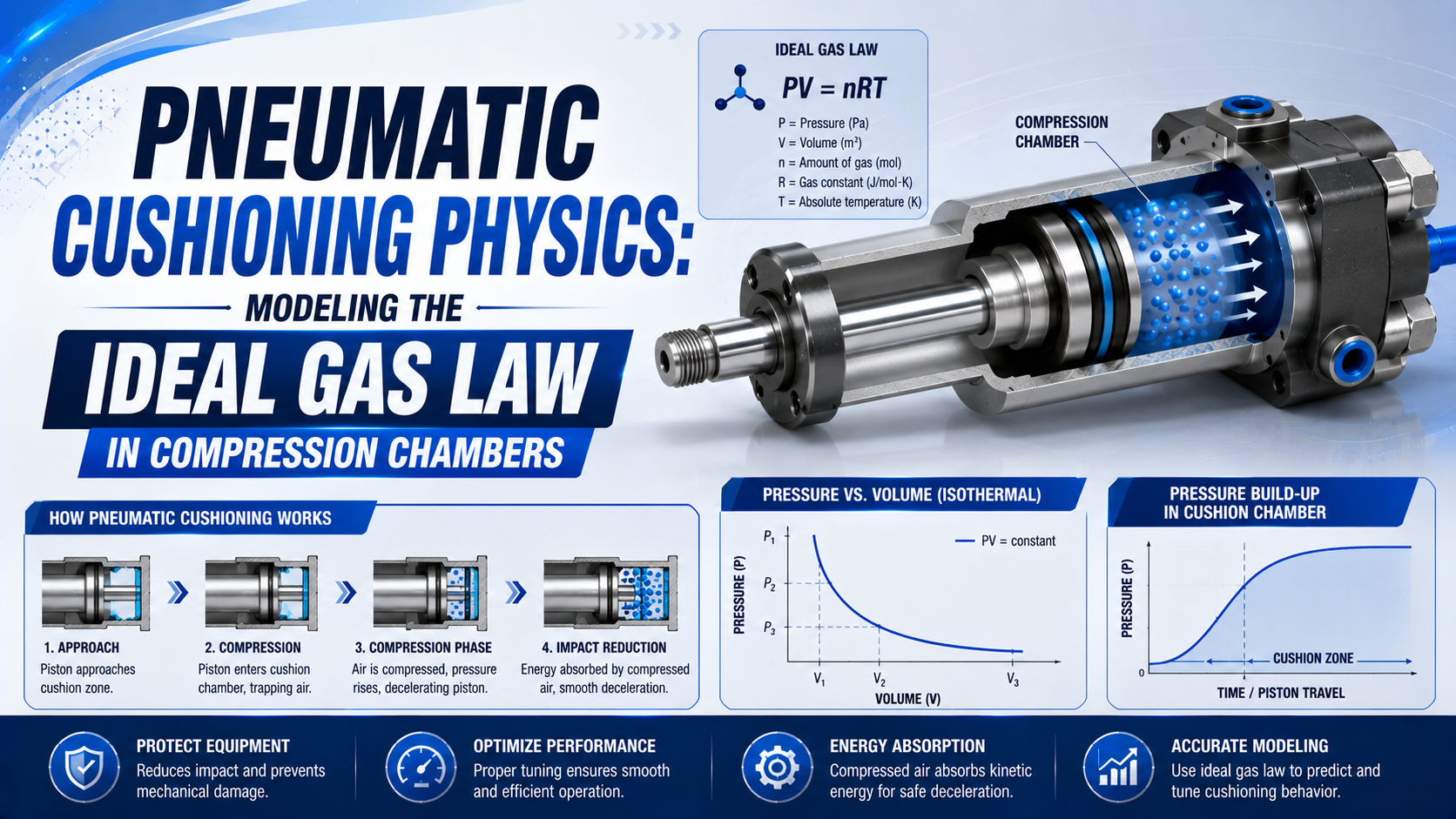 Pneumatic Cushioning Physics: Modeling the Ideal Gas Law in Compression ChambersLearn when pV^n can model a pneumatic cushion, why needle exhaust requires an open-system model, and how to validate pressure and stopping force.
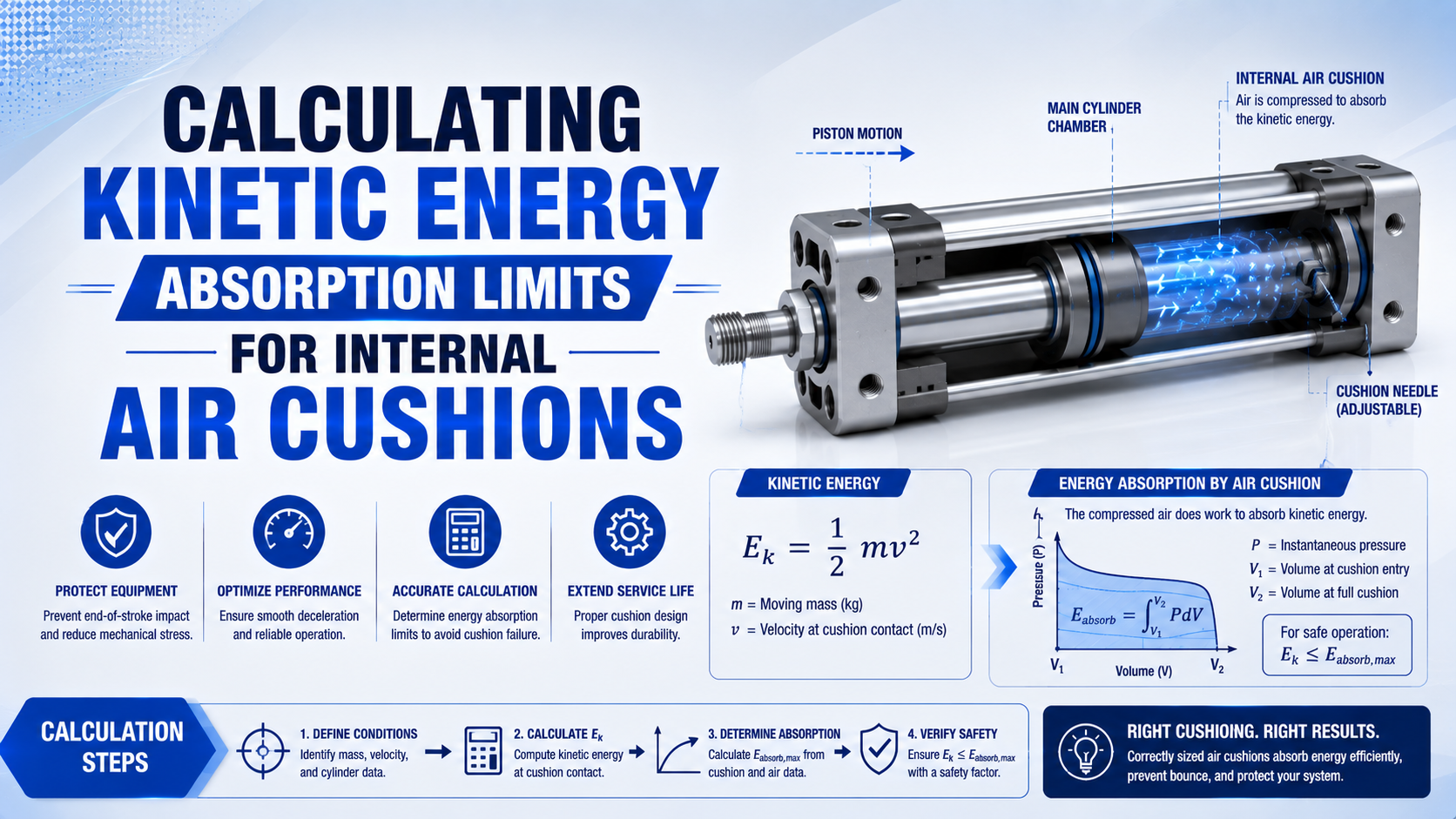 Calculating Kinetic Energy Absorption Limits for Internal Air CushionsCalculate internal cushion demand and compare it with model-specific limits: SMC CA2 air-cushion ratings range from 2.8 to 29 J across five bore sizes.
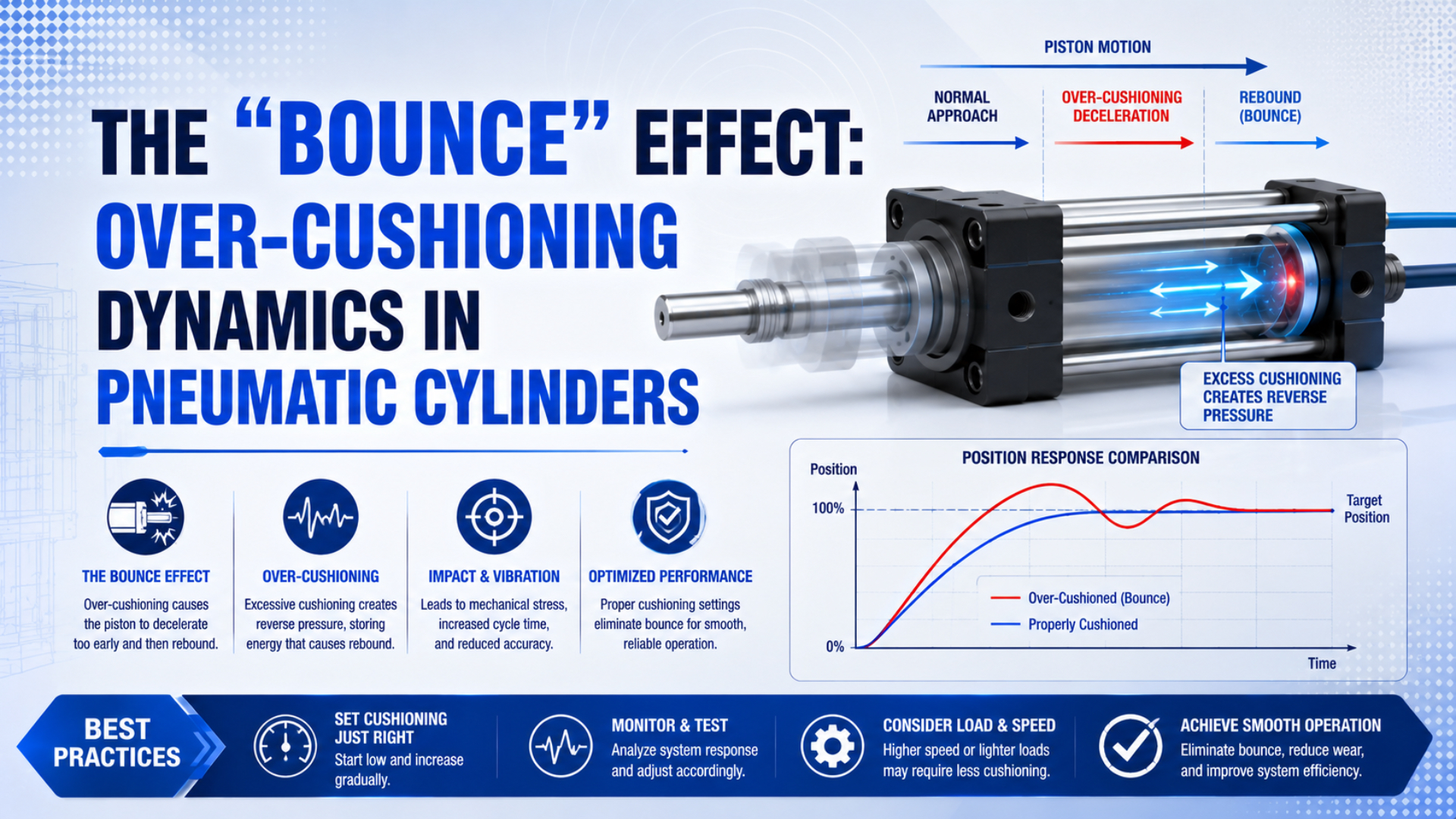 The “Bounce” Effect: Over-Cushioning Dynamics in Pneumatic CylindersSMC RLQ cylinders list 0.15 to 0.77 J allowable kinetic energy. Learn to diagnose pneumatic over-cushioning, tune the needle, and verify each stop safely.
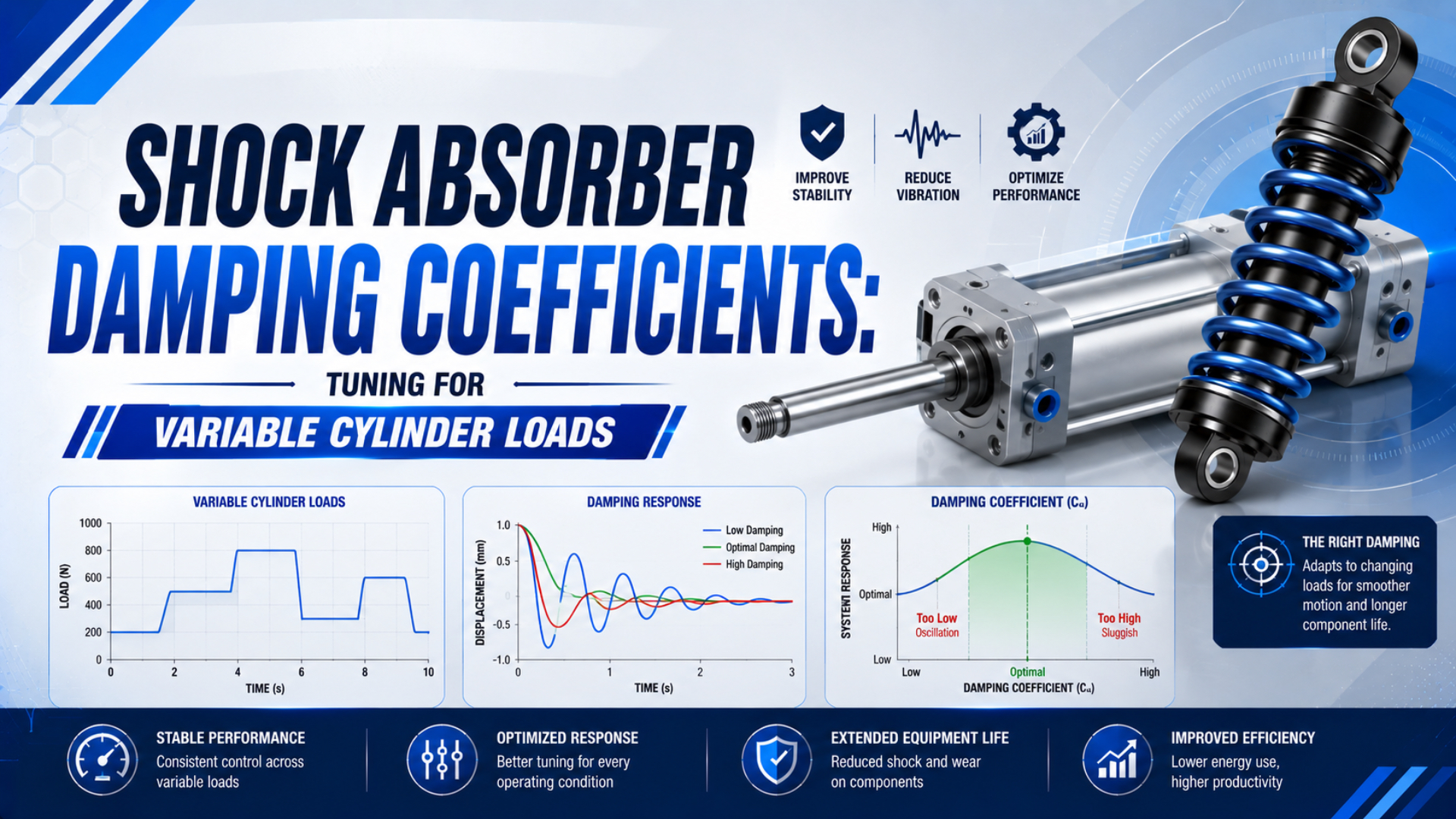 Shock Absorber Damping Coefficients: Tuning for Variable Cylinder LoadsLearn why shock absorber tuning needs 5 application inputs, not a guessed damping coefficient, and how to test variable cylinder loads without hard impact.