
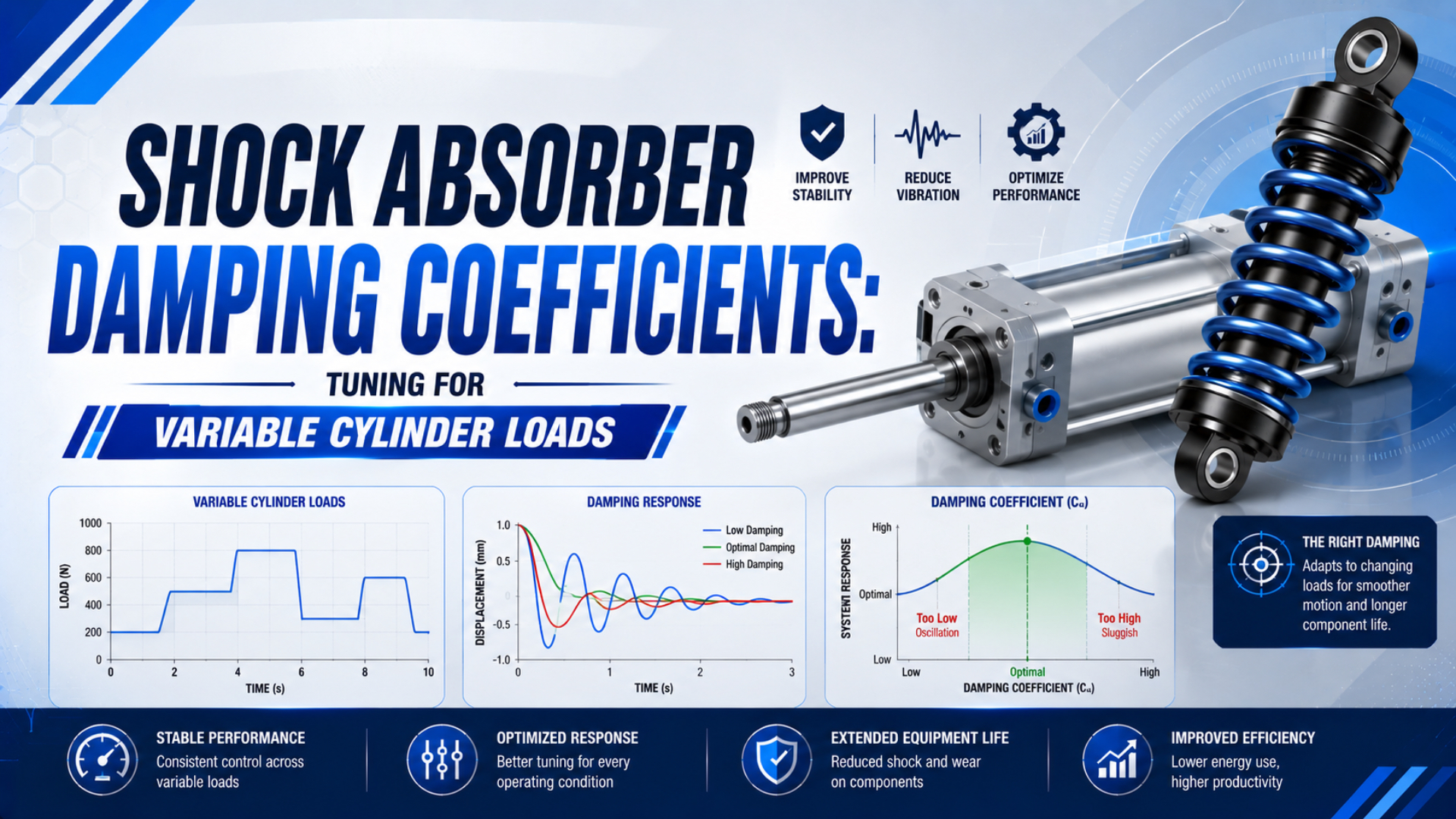
 Shock Absorber Damping Coefficients: Tuning for Variable Cylinder LoadsLearn why shock absorber tuning needs 5 application inputs, not a guessed damping coefficient, and how to test variable cylinder loads without hard impact.
Blog Tag
cylinder cushioning articles
Review every Bepto Pneumatic article connected to cylinder cushioning, grouped as one focused reading list for engineers, maintenance staff, and sourcing specialists.
Tagged Reading Path
All articles tagged cylinder cushioning
Use this archive to scan related selection notes, RFQ checks, replacement guidance, and pneumatic component references.
Shock Absorber Damping Coefficients: Tuning for Variable Cylinder LoadsLearn why shock absorber tuning needs 5 application inputs, not a guessed damping coefficient, and how to test variable cylinder loads without hard impact.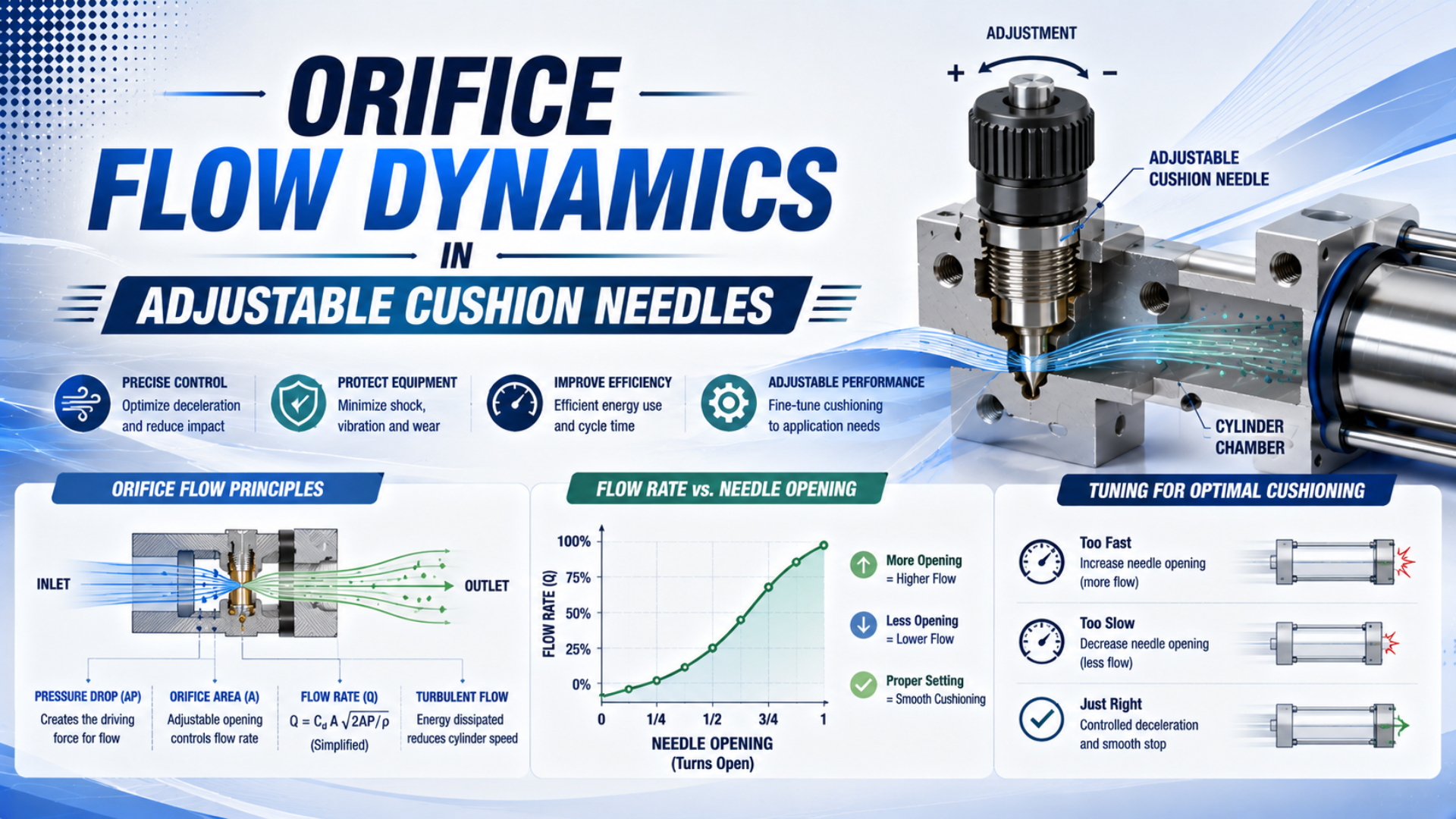 Orifice Flow Dynamics in Adjustable Cushion NeedlesLearn why a cushion needle can choke below a 0.528 pressure ratio, calculate compressible airflow, and tune cylinder deceleration from measured pressure data.
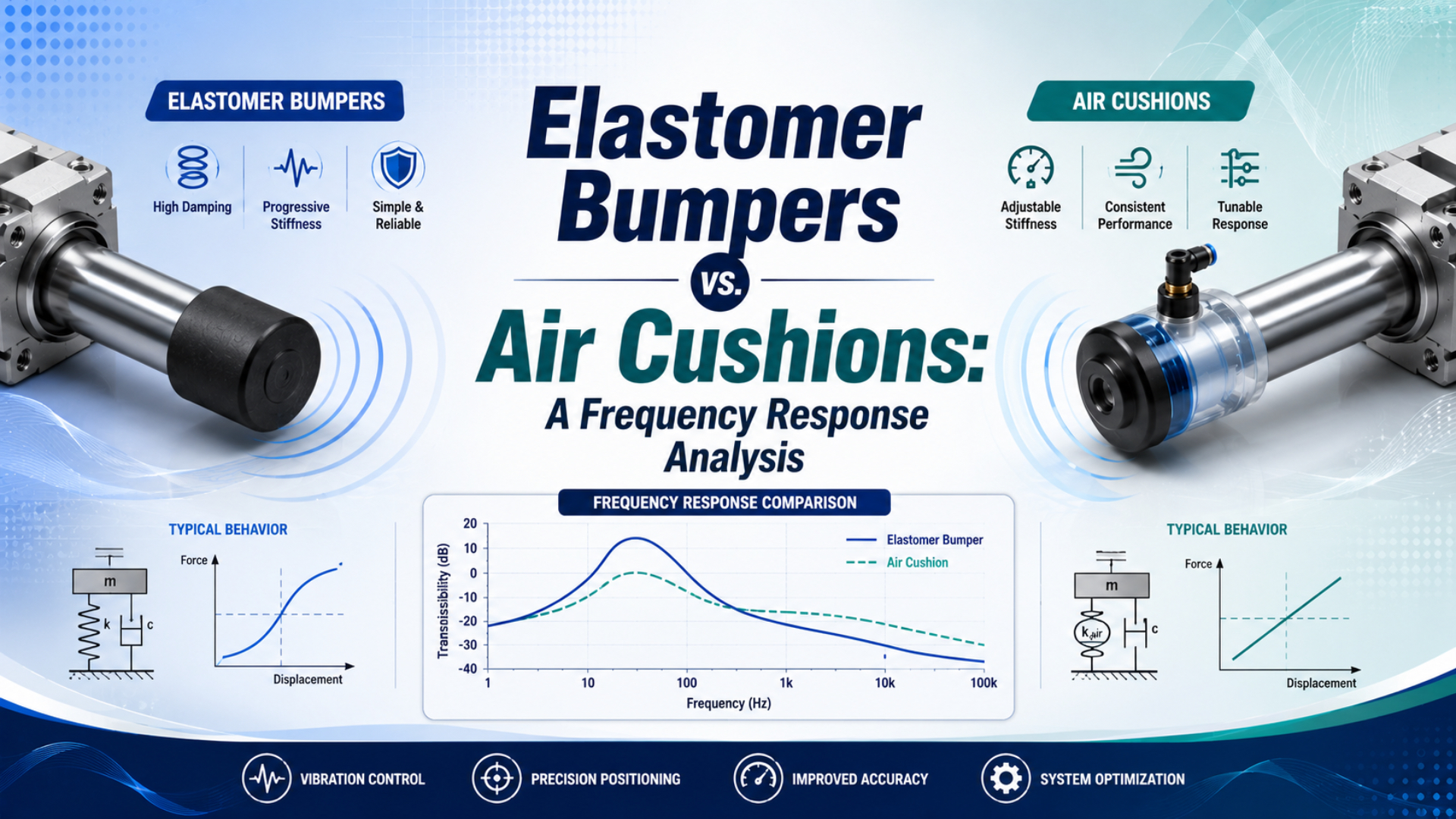 Elastomer Bumpers vs. Air Cushions: A Frequency Response AnalysisCompare elastomer bumpers and air cushions using 5 measured response signals: impact energy, peak force, rebound, settling time, and temperature in service.
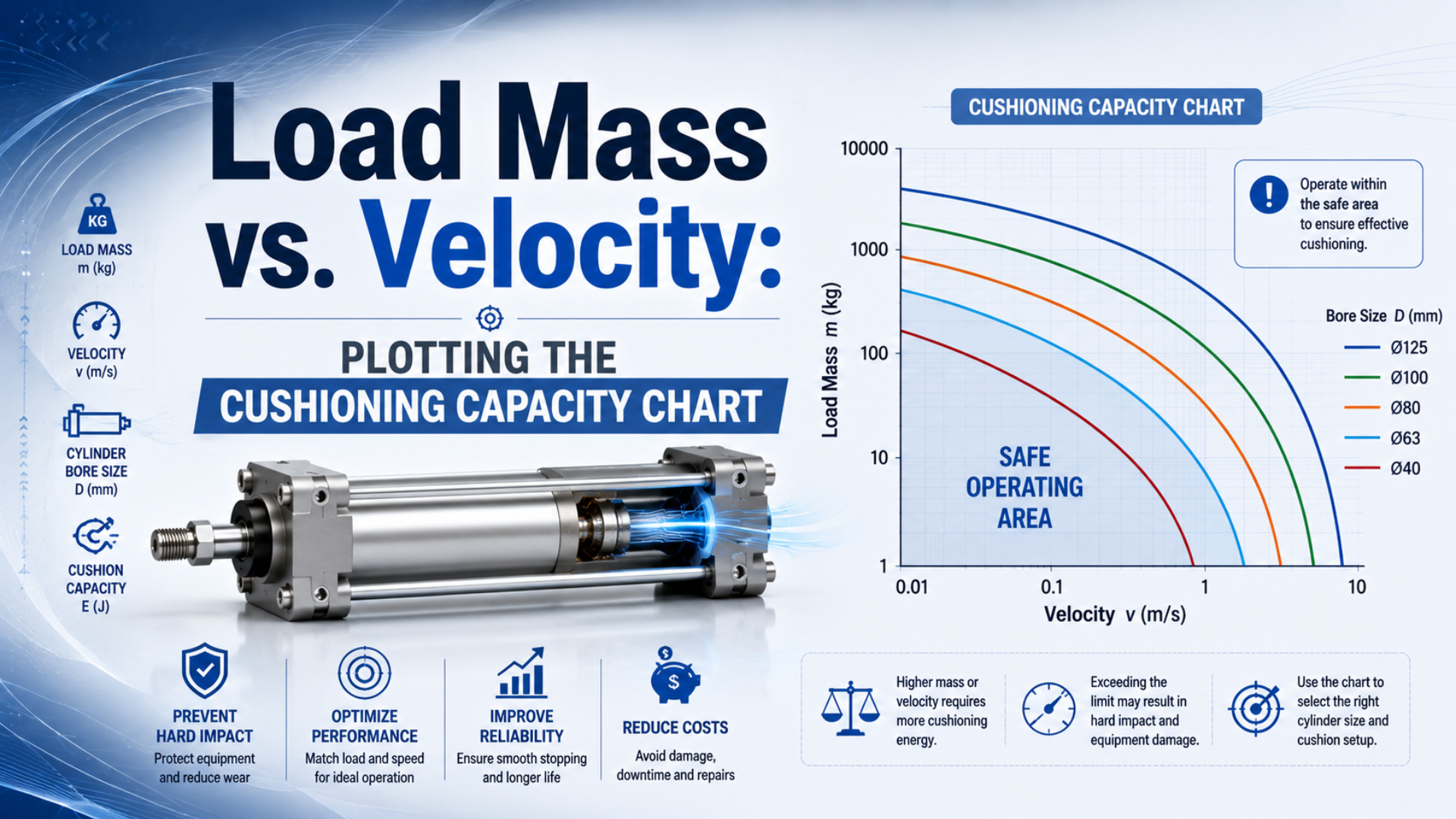 Load Mass vs. Velocity: Plotting the Cushioning Capacity ChartPlot a cushioning capacity chart correctly using total moving mass and speed at cushion entry, then screen the exact cylinder model and operating case.
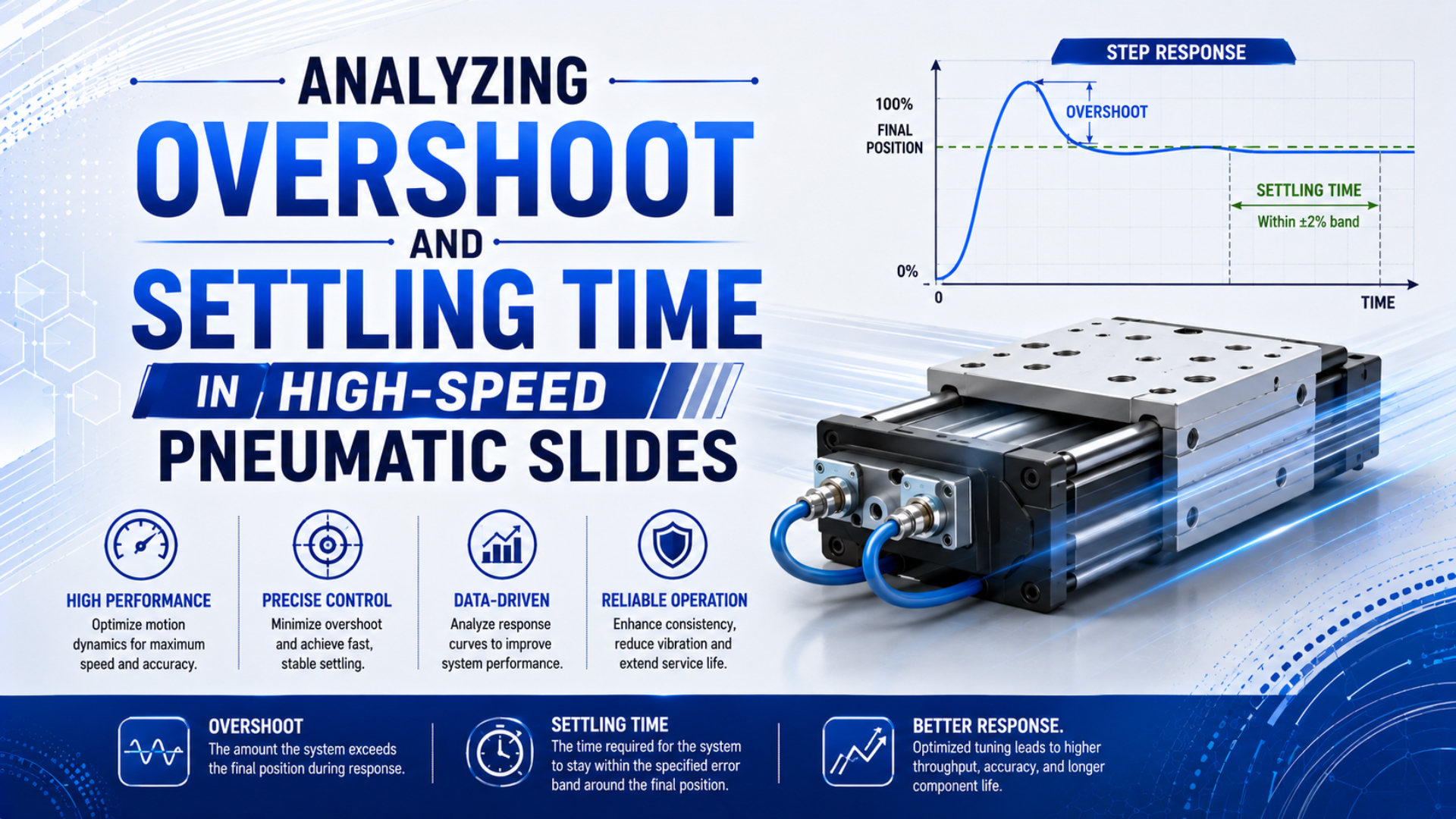 Analyzing Overshoot and Settling Time in High-Speed Pneumatic SlidesAnalyze pneumatic slide overshoot and settling time using Parker's 50% cushion-entry warning, synchronized traces, energy checks, and acceptance tests.
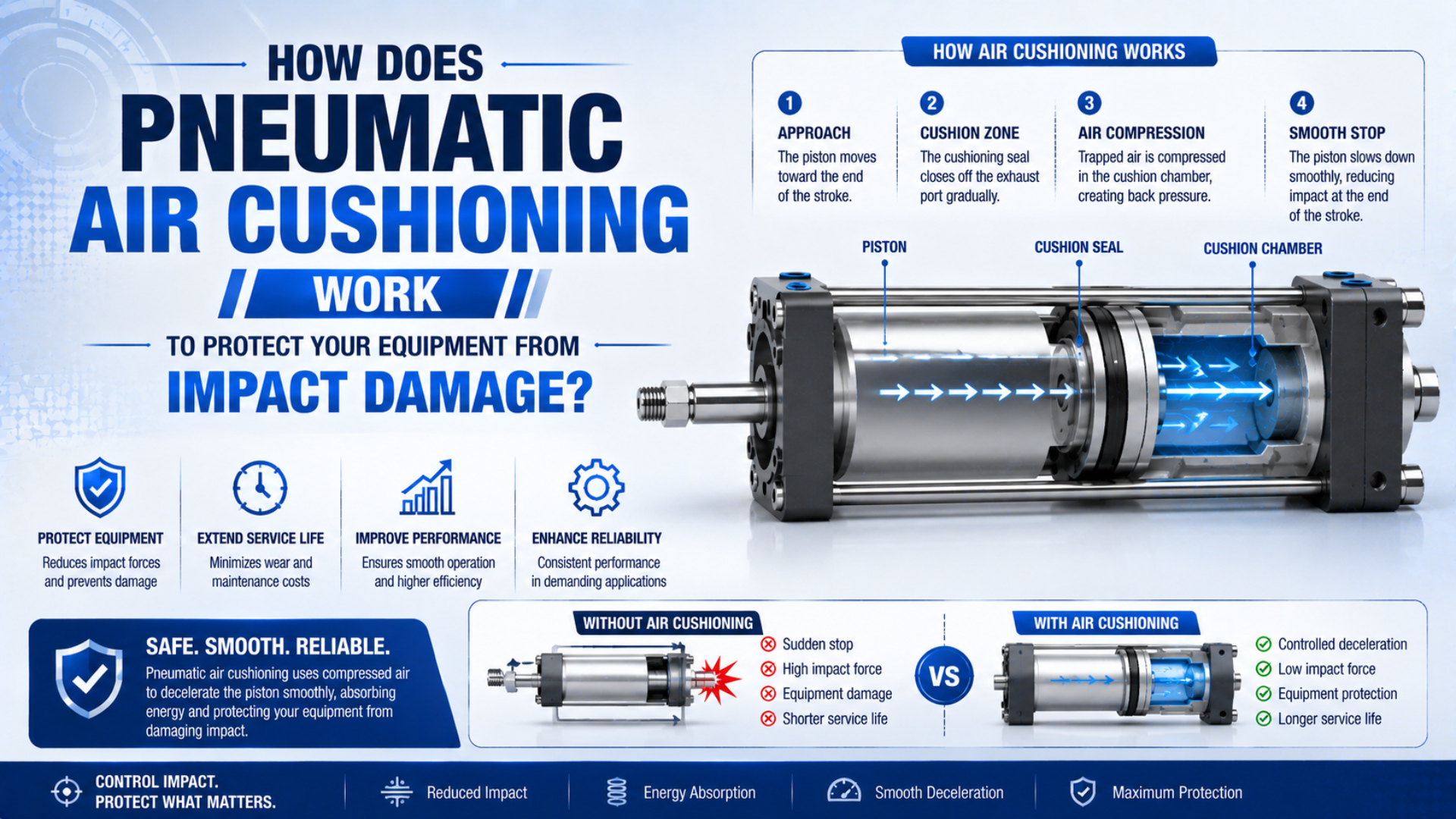 How Does Pneumatic Air Cushioning Work to Protect Your Equipment from Impact Damage?Learn how air cushioning traps exhaust air, why cushion-entry speed may be 50% above average, and how to prevent end-of-stroke impact damage in machinery.
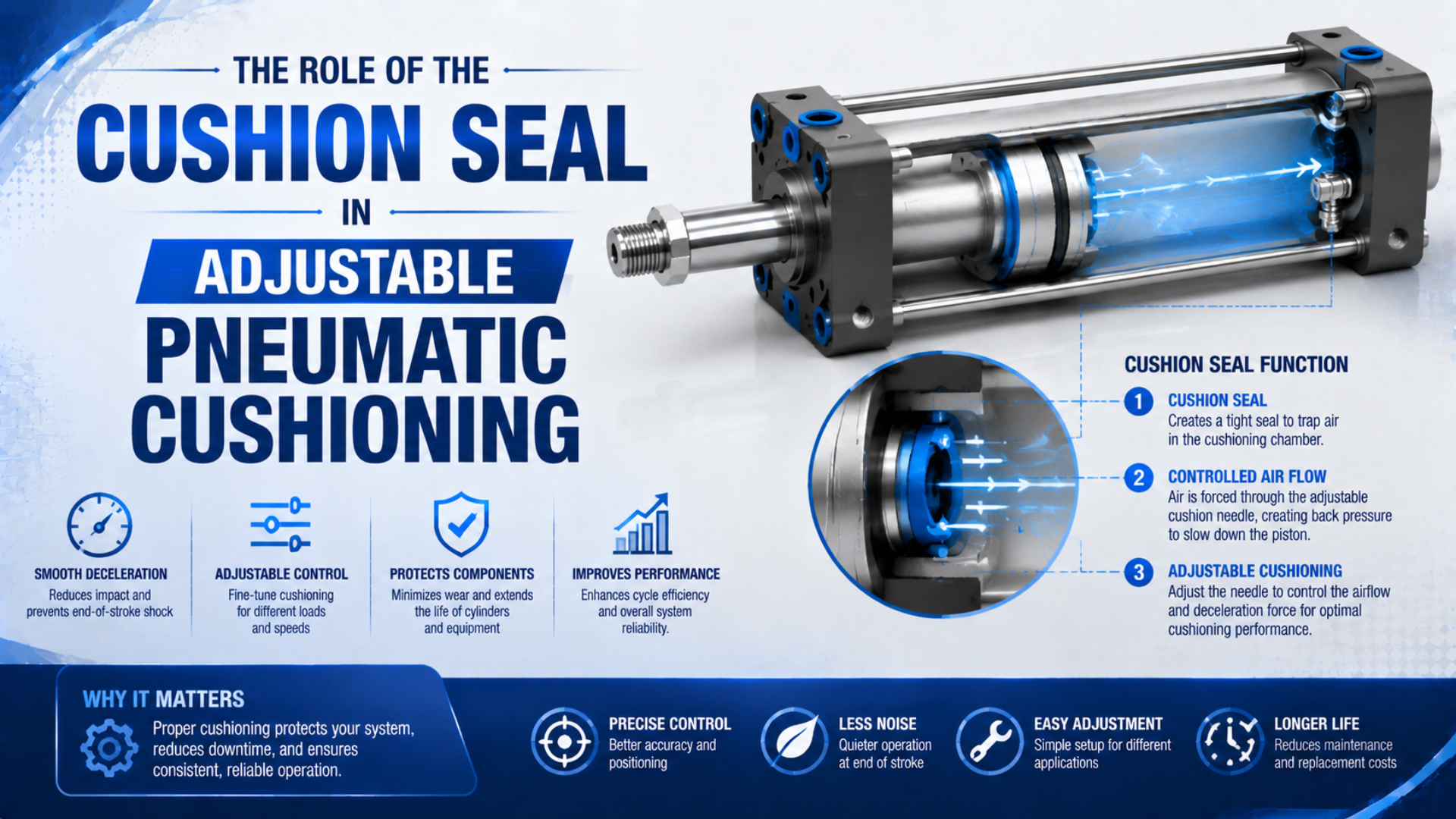 The Role of the Cushion Seal in Adjustable Pneumatic CushioningLearn how a cushion seal traps exhaust air, acts as a return-stroke check valve, and why Parker rates one profile to 16 bar and 1 m/s before selection.
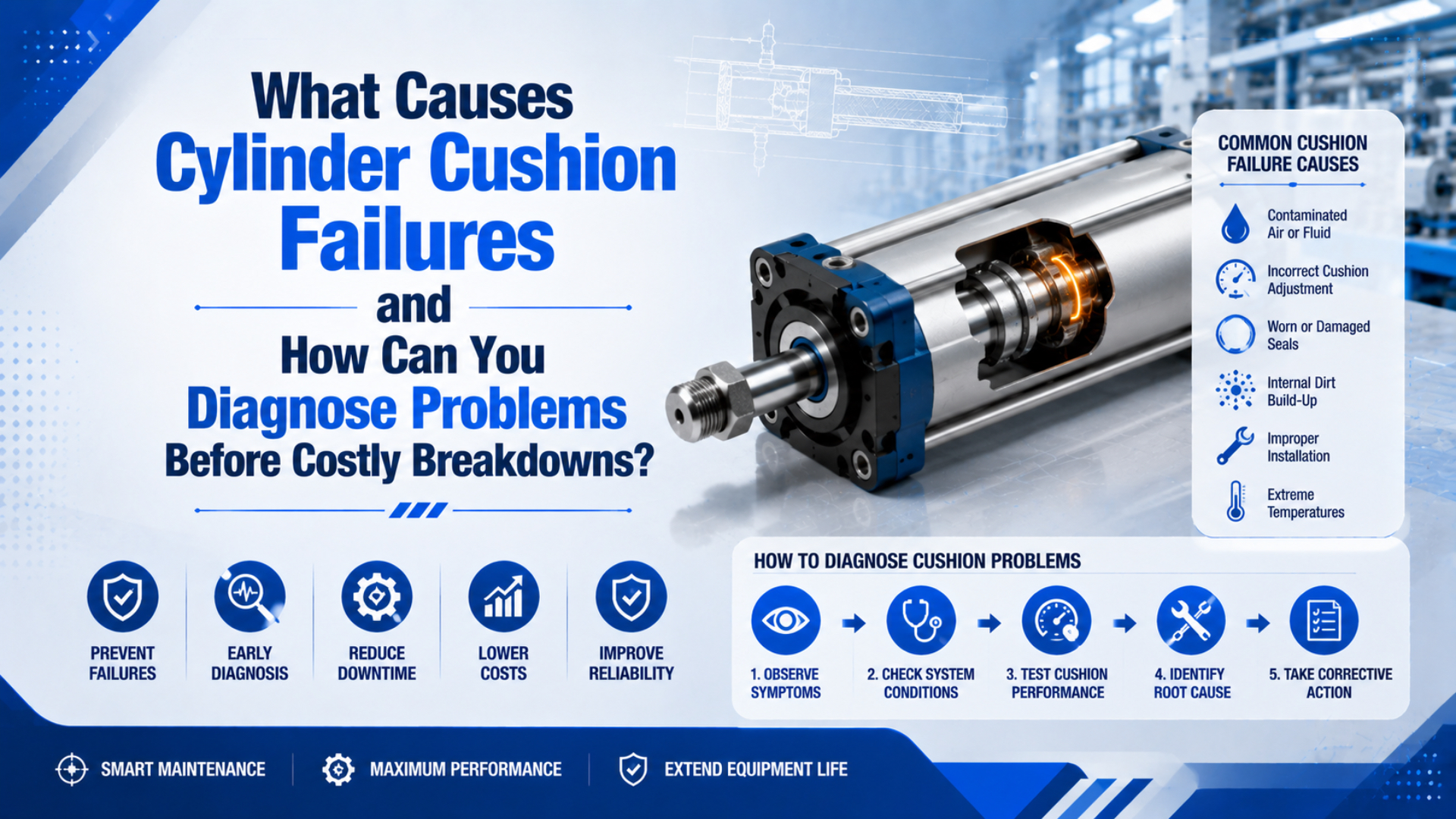 What Causes Cylinder Cushion Failures and How Can You Diagnose Problems Before Costly Breakdowns?Diagnose cylinder cushion failures safely by separating adjustment, excess energy, exhaust restriction, seal leakage, contamination, and mechanical damage.