

What is the Principle of Gas Flow and How Does It Drive Industrial Systems?Learn how pressure, temperature, density, Mach number, and the 0.528 critical ratio govern industrial gas flow, pressure loss, and component sizing.Blog Tag
pressure drop articles
Review every Bepto Pneumatic article connected to pressure drop, grouped as one focused reading list for engineers, maintenance staff, and sourcing specialists.
Tagged Reading Path
All articles tagged pressure drop
Use this archive to scan related selection notes, RFQ checks, replacement guidance, and pneumatic component references.
Showing 58 articles
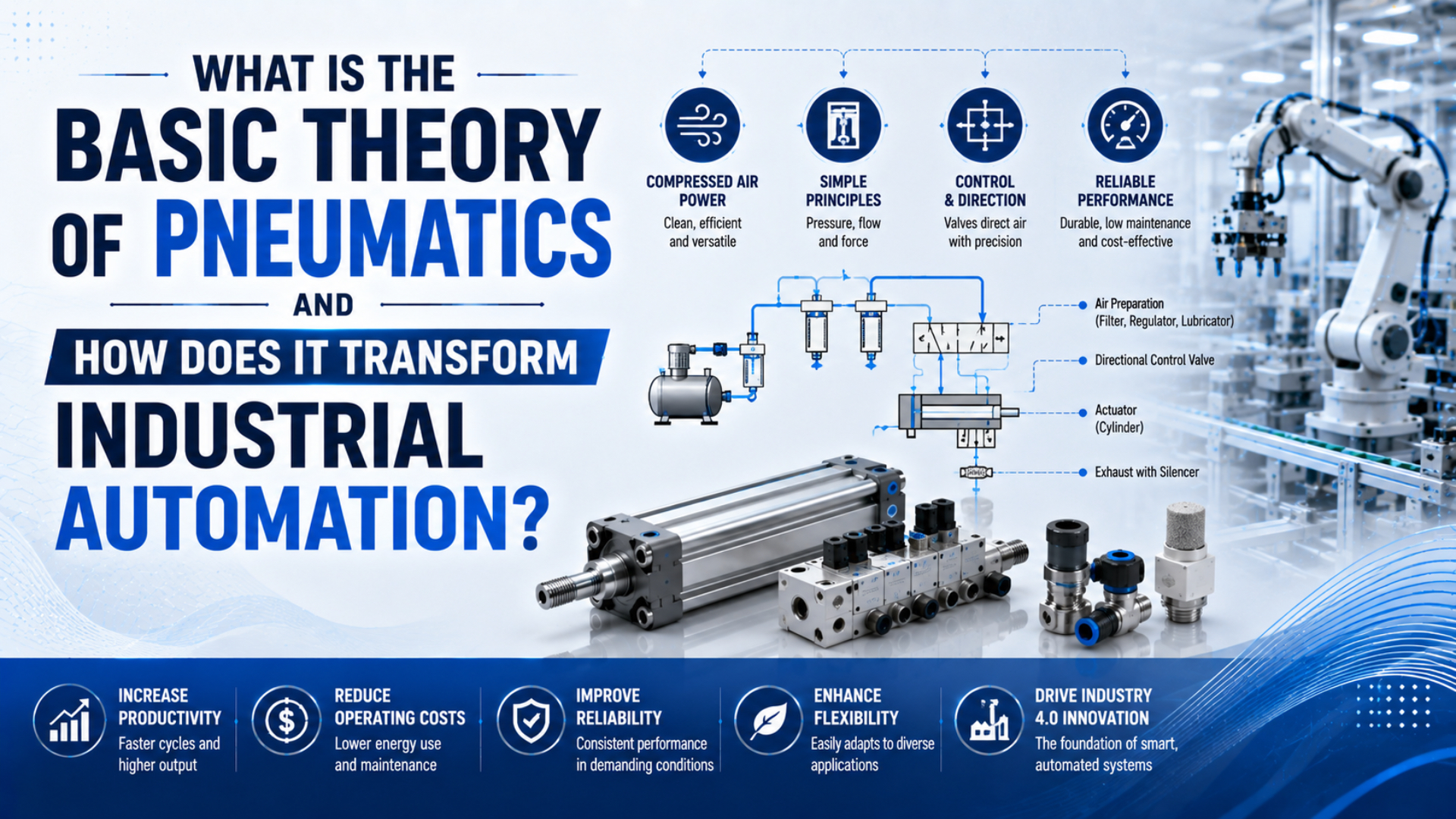
What is the Principle of Gas Flow and How Does It Drive Industrial Systems?Learn how pressure, temperature, density, Mach number, and the 0.528 critical ratio govern industrial gas flow, pressure loss, and component sizing.
What is the Basic Theory of Pneumatics and How Does It Transform Industrial Automation?Learn pneumatic theory through a six-layer automation model covering air state, valves, actuators, sensors, safe states, flow limits, and commissioning.
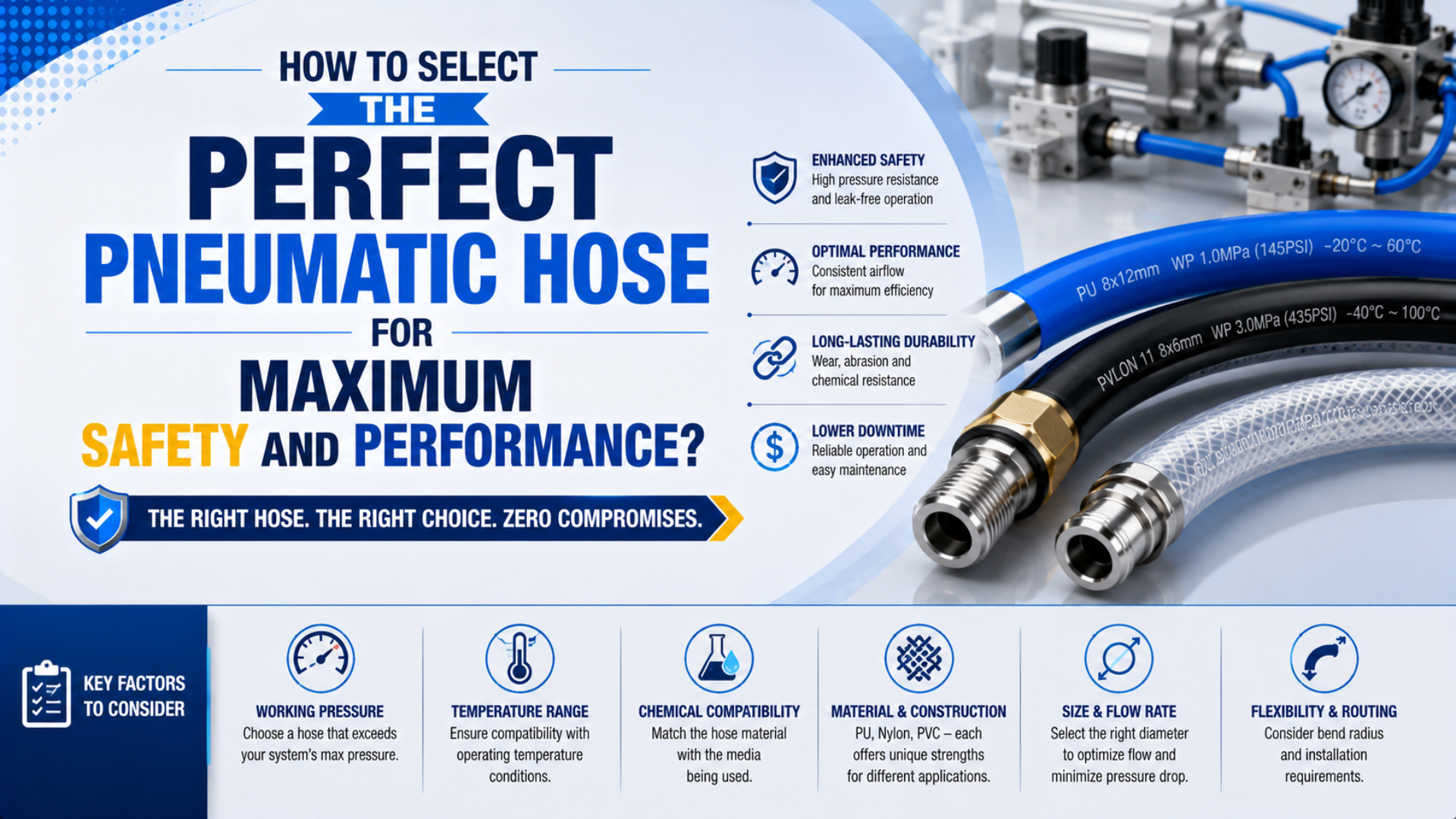
How to Select the Perfect Pneumatic Hose for Maximum Safety and Performance?Select pneumatic hose by pressure, temperature, media, flow, motion, and ends. ISO 2398:2024 covers textile-reinforced rubber hose up to 25 bar in service.
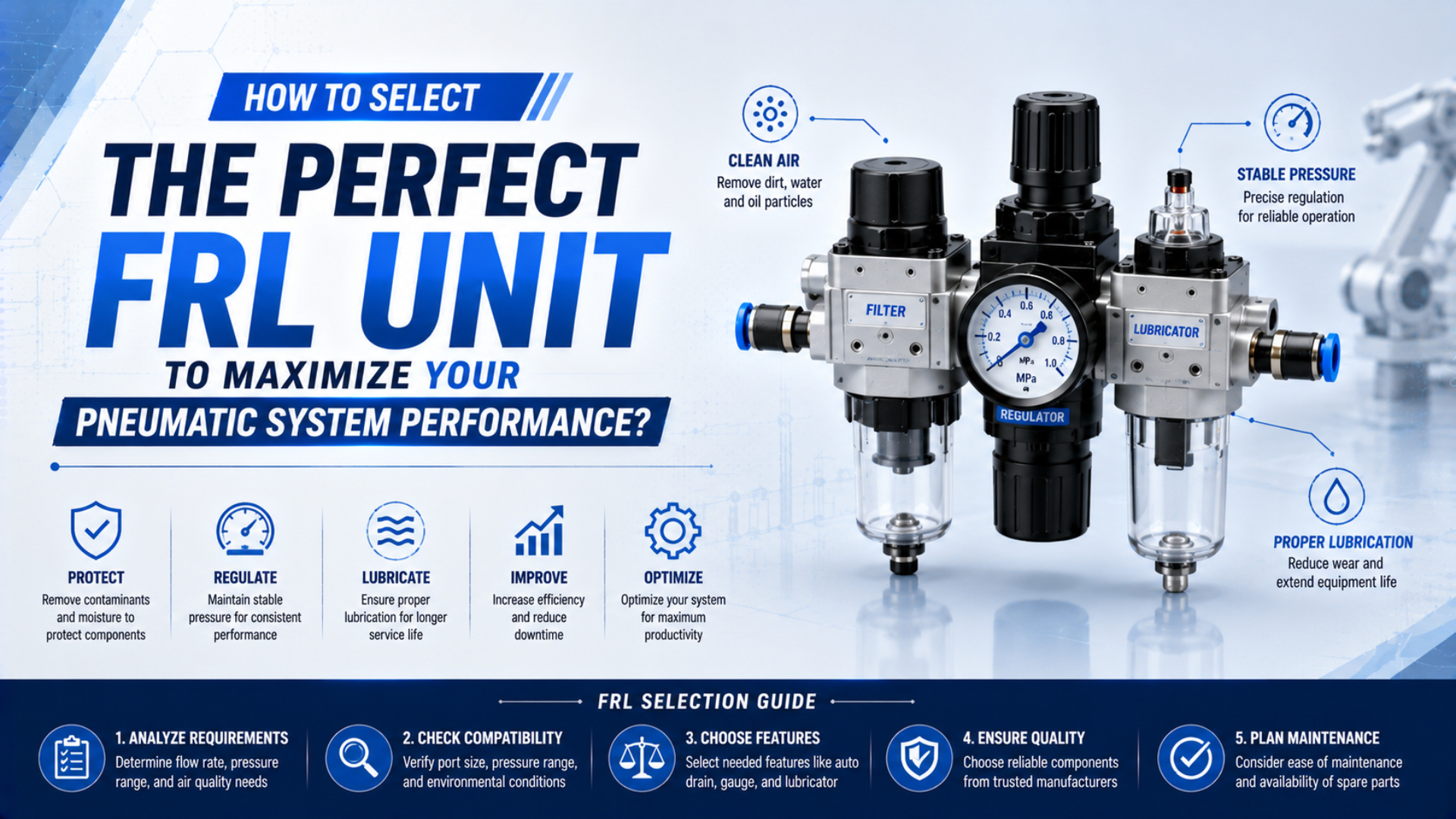
How to Select the Perfect FRL Unit to Maximize Your Pneumatic System Performance?ISO 6953-2:2024 standardizes regulator tests across 39 pages. Learn to select FRL flow, filtration, pressure, drains, materials, and lubrication correctly.

How Can You Optimize Your Pipeline System for Maximum Efficiency?Optimize compressed-air pipelines using CAGI's 10% pressure-drop limit, synchronized measurements, branch analysis, storage checks, and field A/B tests.
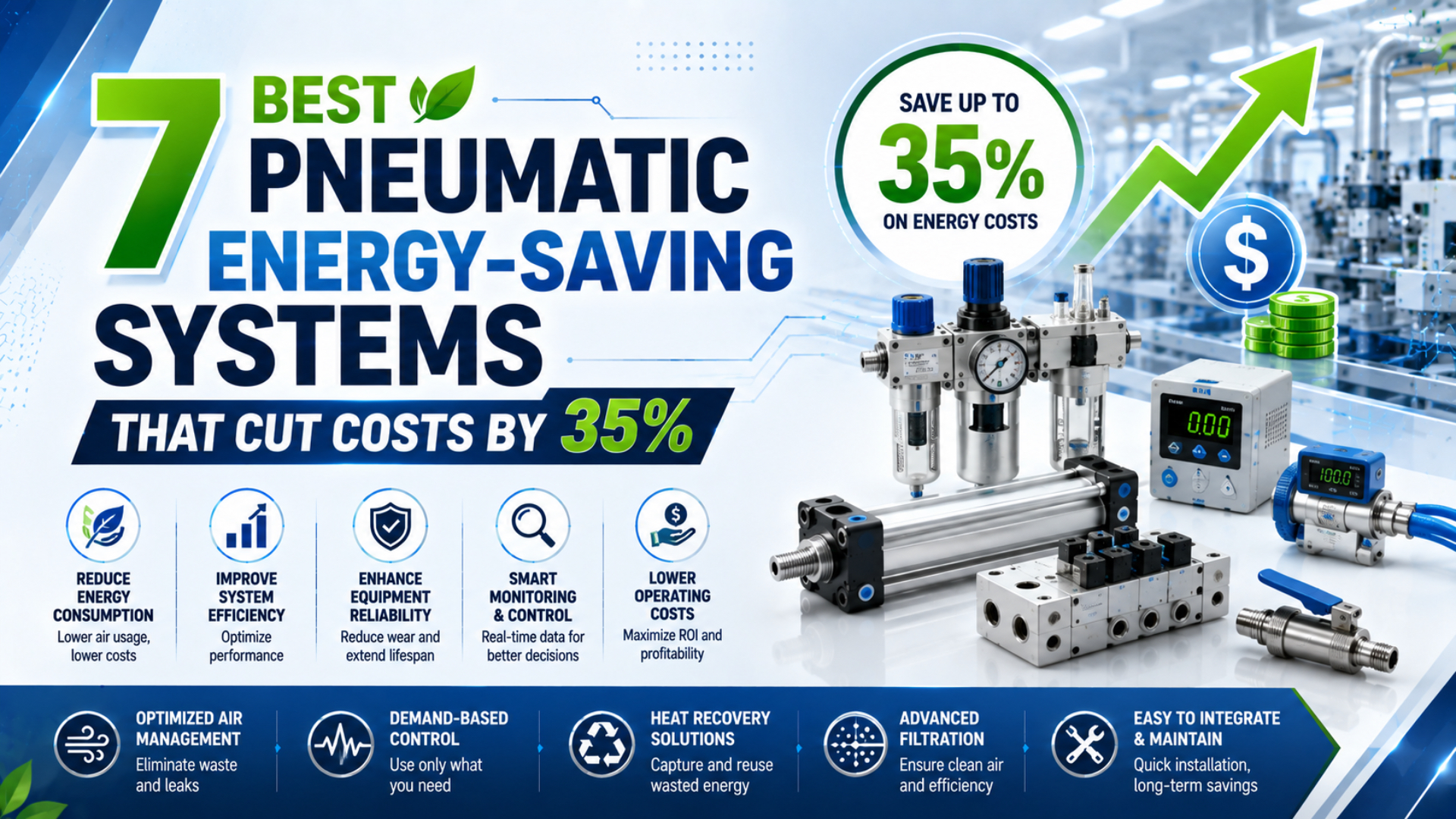
7 Best Pneumatic Energy-Saving Systems That Cut Costs by 35%Compare 7 pneumatic energy-saving systems using ISO 11011 boundaries, DOE leak and heat data, and cost baselines before claiming a verified 35% reduction.
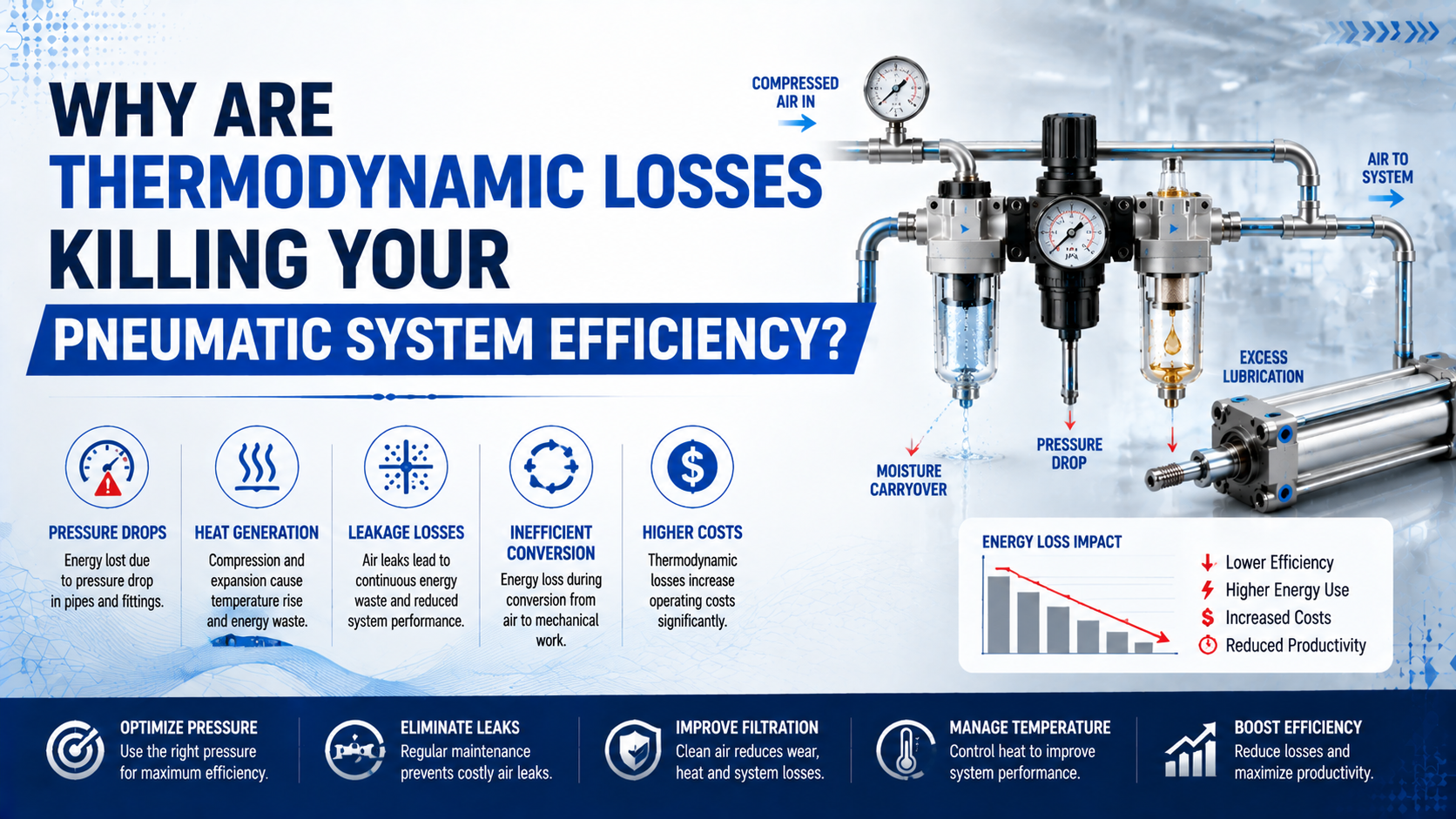
Why Are Thermodynamic Losses Killing Your Pneumatic System Efficiency?Trace pneumatic thermodynamic losses from compressor heat to exhaust using DOE's 80-93% figure, synchronized flow, pressure, work, and dew-point data.
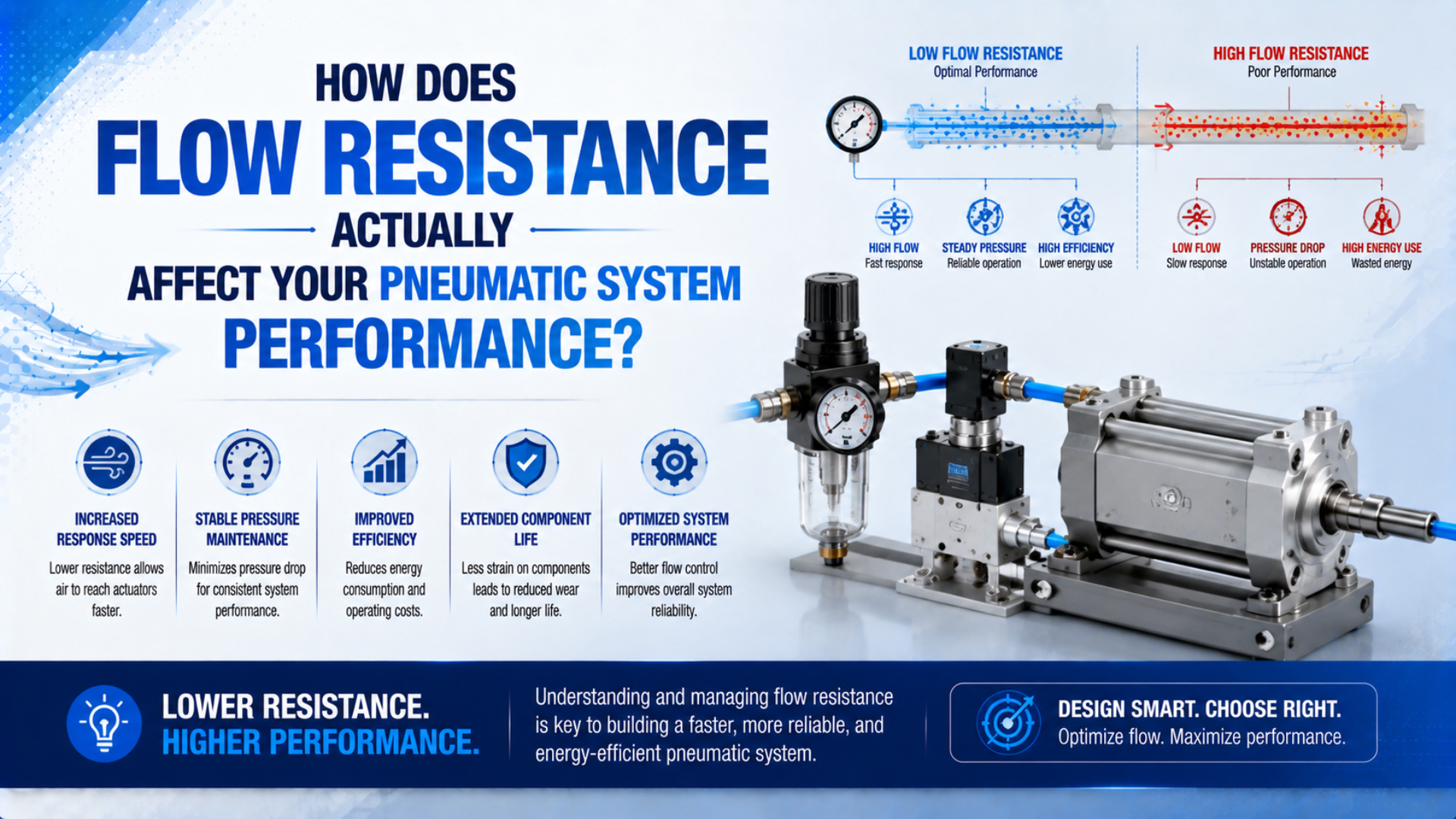
How Does Flow Resistance Actually Affect Your Pneumatic System Performance?Learn how pneumatic flow resistance reduces force, speed, and repeatability, then diagnose the real bottleneck with synchronized pressure measurements.
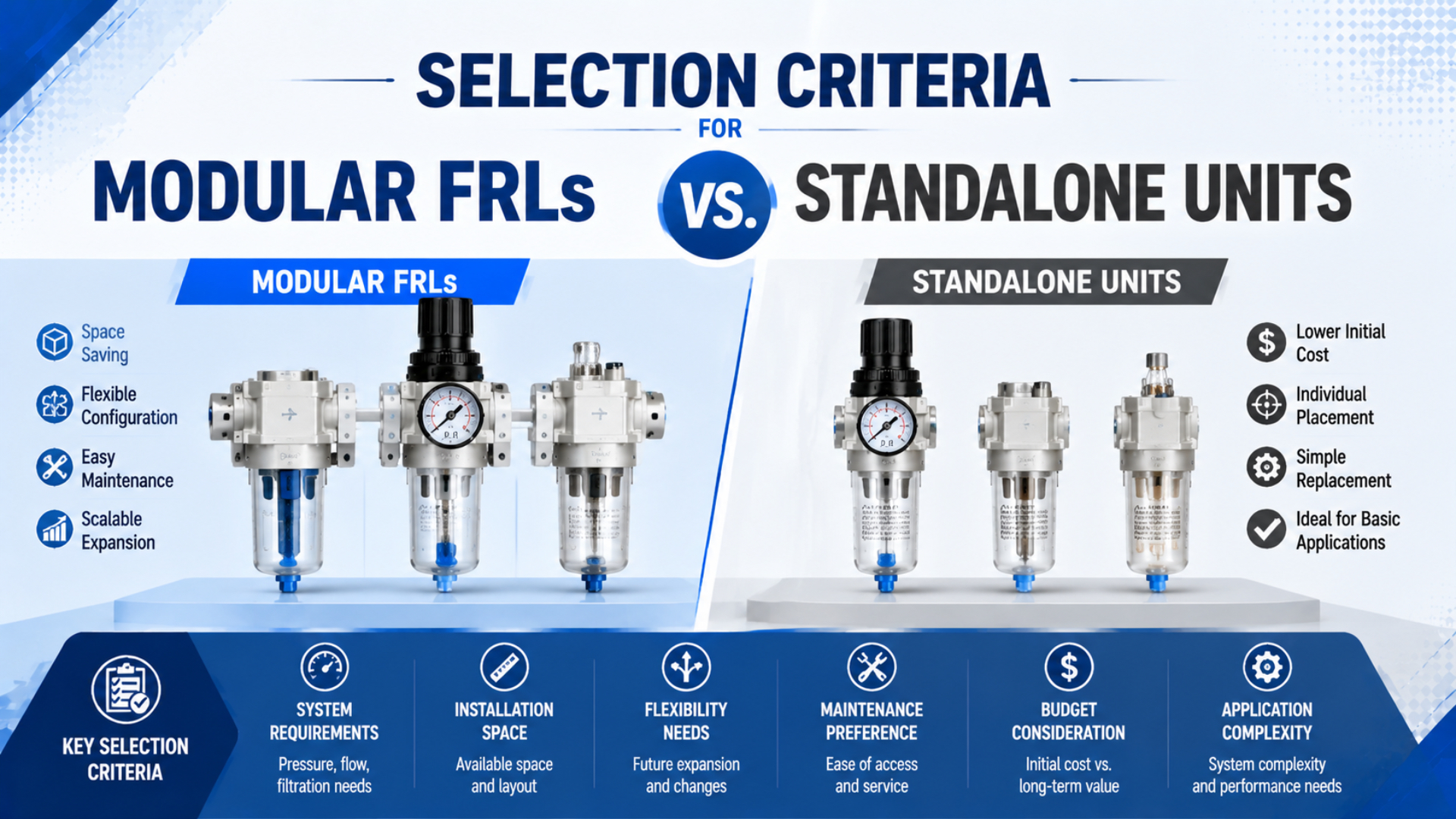
Selection Criteria for Modular FRLs vs. Standalone UnitsChoose modular FRLs or standalone units by flow curves, service isolation, interfaces, fit, and spares. SMC AC-D combinations cover 1/8- to 1-inch ports.
Selecting Coalescing Filters: Oil Removal vs. Particle FiltrationCompare particle and coalescing filters by contaminant phase, ISO 8573-1 classes, rated flow, pressure drop, and the 0.01 mg/m3 Class 1 oil limit in practice.
Selecting the Right Vacuum Filter Size to Prevent Ejector CloggingSize a vacuum filter from suction flow and pressure drop at the target vacuum, then verify 5-80 µm grades, element area, dust loading, and service limits.
Selecting Water Separators vs. Standard Coalescing FiltersCompare water separators and coalescing filters using ISO 8573's 3 contaminant groups, model-specific flow, pressure drop, drain, and dryer requirements.
Selection Criteria for Centralized FRL vs. Point-of-Use RegulatorsChoose centralized FRL or point-of-use regulators using CAGI's 10% pressure-drop target, regulator flow curves, air-quality needs, and live-cycle tests.
Calculating the Flow Coefficient (Cv) Required for Critical Cylinder SpeedsCalculate pneumatic valve Cv from bore, stroke, target time, pressure, and allowed drop, with a verified 63 mm cylinder example and clear validation steps.
SCFM vs ACFM Definition Compressed AirCompare SCFM and ACFM using stated reference conditions, absolute pressure and temperature, with a worked 50 SCFM to 7.3 ACFM point-of-use line-flow example.
Pressure Drop Dynamics Across Cylinder Ports and FittingsMeasure pressure drop across cylinder ports and fittings with dynamic gauges, ISO 6358 flow data, and a 0.4 bar example to prevent weak, slow strokes.
Analyzing Choked Flow Phenomena in High-Speed Cylinder PortsIdeal dry air chokes near p2/p1 = 0.528. Learn to measure cylinder-port pressure, locate restrictions, and verify flow for high-speed strokes.
Understanding Pressure Drop in Valve Manifold Common PassagesUnderstand valve-manifold passage pressure drop using SMC's two-end supply rule above 4 stations, ISO 6358 data, dynamic tests, and pressure-zone design.
What Is Flow Starvation in Pneumatic Systems and How Can You Prevent It?Diagnose pneumatic flow starvation with dynamic pressure tests, CAGI's 10 percent pressure-drop benchmark, practical valve checks, and peak-demand prevention.
Pneumatic Valve Sizing Calculations: How Do You Ensure Optimal Flow Performance in Your System?Size pneumatic valves from cylinder volume, absolute pressure, stroke time, and Parker’s Cv 1.06 example, then verify supply and exhaust flow under load.
How to Calculate Flow Coefficient (Cv) from Valve Test DataAn engineering workflow for reducing valve test data into a defensible Cv, including liquid and gas equations, uncertainty, and reporting requirements.
How to Read and Interpret a Valve Flow (Cv) ChartRead valve Cv charts with 5 checks for axes, flow path, test conditions, curve type, and pressure limits before comparing pneumatic valve capacity data.
The Physics of Air Hammer in Pneumatic Valve and Piping SystemsLearn what pneumatic air hammer is, how pressure waves travel, why liquid Joukowsky math can mislead, and how to measure valve transients safely.
Sizing a Solenoid Valve for a Specific Cylinder Stroke TimeSize a solenoid valve for a 0.5-second cylinder stroke using correct extend/retract flow, ISO 6358 data, path checks, and dynamic validation on the machine.
The Impact of Port Size vs. Internal Orifice Size on Valve PerformanceSMC lists two 1/4-inch valves at Cv 0.9 and 1.7. Compare port size, internal paths, ISO 6358 data, and pressure drop before valve selection.
The Impact of Hose and Fitting Size on Cylinder Speed and PerformanceCalculate pneumatic cylinder flow demand, compare actual hose ID and fitting capacity, and diagnose restrictions that limit speed and force.
The Physics of Pressure Drop Within the Cylinder Barrel During High FlowLearn why ISO 6358 excludes cylinders from steady-state flow tests, model 2 moving chambers, measure dynamic pressure, and diagnose high-flow losses safely.
How to Use Flow Amplifiers to Increase Cylinder SpeedLearn why a 25:1 air amplifier cannot feed a pressurized cylinder, when volume boosters or quick exhaust valves help, and how to verify cylinder speed.
How Do You Calculate Pneumatic Cylinder Piston Velocity for Optimal Performance?Calculate pneumatic cylinder piston velocity from flow and effective area with a 50 mm bore example, required-flow checks, and practical machine test steps.
How Does Choked Flow Physics Limit Your Pneumatic Cylinder’s Maximum Speed and Performance?Learn how choked flow limits pneumatic cylinder speed, use the 0.528 pressure ratio, calculate stroke demand, and diagnose supply or exhaust restrictions.
How Do Air Pressure Fluctuations Destroy Actuator Performance Consistency and Production Quality?See how a 1 bar shift changes a 63 mm cylinder's catalog force by 280 N, then link dynamic pressure traces to actuator faults and production quality escapes.
How Can You Optimize Tubing and Fitting Configurations to Maximize Pneumatic Flow and Eliminate Performance Bottlenecks?Optimize pneumatic tubing and fittings with ISO 14743's 3-16 mm scope, dynamic pressure mapping, tube ID checks, and measured branch validation at peak flow.
How Can Pneumatic Leak Detection Save Your Facility $50,000 Annually?See how DOE's compressed-air leak example exceeds $50,000, then learn to locate, quantify, prioritize, repair, and verify your facility's leaks.
How Does Proper Pipe Sizing Dramatically Improve Your Compressed Air System Performance?Size compressed air pipe with CAGI's 20 ft/s velocity guide, peak flow, actual ID, equivalent length, pressure-drop checks, and field validation on site.
How Do Pneumatic Pressure Boosters Work and Why Are They Essential for Industrial Applications?Learn how pneumatic pressure boosters work, when local boosting makes sense, and how to size pressure, flow, air storage, consumption, and safety.
How Does Proper Fitting Selection Impact Pneumatic System Efficiency and Transform Your Operational Performance?Select pneumatic fittings using ISO 6358 flow data, SMC's 21.6 vs 26.1 mm2 example, dynamic pressure checks, tube ID, and safe installation.
How Can You Eliminate Costly Pneumatic Leaks Through Proper Push-in Fitting Installation?Stop push-in fitting leaks on 3-16 mm tube with ISO 14743-aligned selection, square cuts, full insertion, pull checks, support, safe testing, and diagnosis.
How Can Coalescing Filters Deliver the Oil-Free Compressed Air Your Critical Applications Demand?Learn how coalescing filters use ISO 8573-1 targets, 0.01 mg/m3 oil-aerosol ratings, staged treatment, and point-of-use testing to protect critical processes.
Absolute vs Nominal Micron Filter Rating: The Critical Difference That Could Be Destroying Your EquipmentCompare absolute vs nominal micron filter ratings using efficiency, test standards, flow, pressure drop, and ISO 8573 air-quality verification.
What Is Internal Leakage in Pneumatic Cylinders and How Much Is Costing You?Learn why pneumatic cylinder internal leakage has no universal limit, how a 10 cm3/min model threshold is tested, and how measured flow becomes annual cost.
How to Choose the Perfect FRL Unit Size for Your Pneumatic System?Choose an FRL unit by peak flow and regulator droop using ISO 6953-2 data, CAGI's 10% pressure-drop limit, dynamic tests, and clean-element curves first.
How Can ISO 8573-1 Standards Transform Your Plant’s Compressed Air Quality Management?Build an ISO 8573-1 plant air-quality program using 3 contaminant classes, named sampling points, ISO test methods, risk-based monitoring, and records.
The Engineer’s Guide to Pneumatic Flow Control Valve SizingSize pneumatic flow control valves with Parker's Cv 1.06 example, cylinder stroke-time demand, pressure drop, tubing, exhaust paths, and commissioning checks.
A Guide to Pneumatic Check Valves and Their Critical FunctionsSelect pneumatic check valves using cracking pressure, forward flow, reverse leakage, pilot ratio, installation, testing, and machine safety requirements.
The Importance of Valve Flow (Cv) in System PerformanceDiagnose valve Cv bottlenecks with Parker’s Cv 1.06 example, ISO 6358 flow data, dynamic pressure checks, and a cycle-time acceptance worksheet.
What Causes Choked Flow in Pneumatic Systems and How Does It Impact Performance?Diagnose pneumatic choked flow at the 0.528 pressure-ratio limit with NASA sonic-flow rules, Parker valve checks, calculators, and fixes for slow cylinders.
How Does Proper Compressed Air System Design Maximize Industrial Application Efficiency?Design compressed air systems around CAGI's 10% pressure-drop limit, measured CFM demand, ISO 8573-1 air quality, storage, and controls.
What Is a Coalescing Filter and How Does It Improve Compressed Air Quality?Use coalescing filters to control oil aerosol and liquid droplets, set ISO 8573-1 air quality targets, and avoid CAGI's 10% pressure-drop limit.
What Is Back Pressure in a Pneumatic System and How Does It Impact Your Equipment Performance?Diagnose pneumatic back pressure with CAGI's 10% pressure-drop target, exhaust-port gauge checks, muffler tests, and valve/tube fixes for fast cylinders.
What Causes Pressure Drop in Pneumatic Systems and How to Fix It?Find pneumatic pressure drop causes with CAGI's 10% target, DOE leak data, dynamic gauge checks, calculator tools, and a fix-first troubleshooting order.
Calculating Force from Pressure and Area in Pneumatic SystemsCalculate pneumatic cylinder force with 4 in bore at 100 psi = 1,257 lbf, rod-side area, pressure loss, and practical bore sizing checks.
How to Size a Pneumatic Accumulator for Optimal System Performance and Energy Efficiency?Size pneumatic accumulators from peak flow, pressure band, DOE receiver math, CAGI's 10% pressure-drop target, and OSHA receiver safety checks, not guesswork.
What is Pascal’s Law and How Does It Power Modern Pneumatic Systems?Explain Pascal's Law for pneumatic systems with F=P x A, SMC 0.1-0.8 MPa rodless data, Parker 3010 N force, CAGI 10% pressure-drop checks, and sizing mistakes.
How to Calculate Pneumatic Flow Rate for Optimal System Performance?Calculate pneumatic flow rate from cylinder volume, cycle rate, pressure ratio, CAGI's 10% pressure-drop rule, Parker Cv checks, and 20-30% leak risk.
How Do You Convert Air Flow to Pressure in Pneumatic Systems?Convert air flow to pressure by measuring resistance, not using a direct formula. Includes CAGI 10% pressure-drop rule, Cv checks, and 1 psi=6894.757 Pa.
How to Calculate Pipe Surface Area for Pneumatic System Applications?Calculate pipe surface area for pneumatic tubing with piDL/pi dL formulas, CAGI 10% pressure-drop guidance, coating checks, and sizing examples for engineers.
How Do Pressure Fluctuations Impact Pneumatic Systems?Learn how pressure fluctuations affect pneumatic systems with DOE pressure-drop data, 343 m/s wave-speed math, resonance checks, and damping fixes for uptime.
How Can You Maximize Energy Conversion Efficiency in Pneumatic Systems?Improve pneumatic energy efficiency with DOE-backed leak, pressure, heat-recovery, and actuator checks. Compressed air often delivers only 15% useful work.