
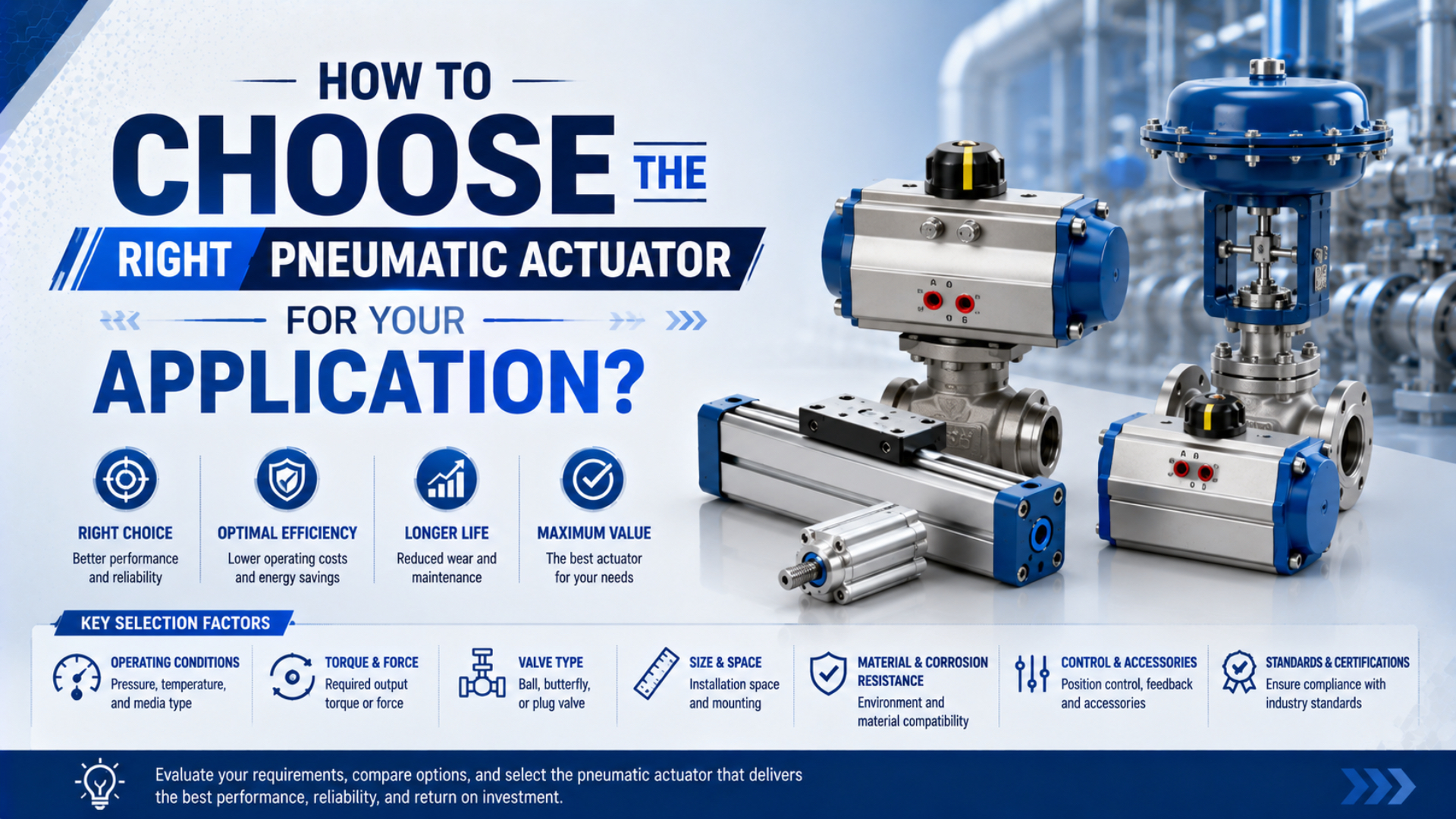
How to Choose the Right Pneumatic Actuator for Your Application?Choose a pneumatic actuator by matching motion, force or torque, guide loads, speed, stopping energy, environment, safety, and catalog limits.Blog Tag
cylinder force articles
Review every Bepto Pneumatic article connected to cylinder force, grouped as one focused reading list for engineers, maintenance staff, and sourcing specialists.
Tagged Reading Path
All articles tagged cylinder force
Use this archive to scan related selection notes, RFQ checks, replacement guidance, and pneumatic component references.
Showing 77 articles
How to Choose the Right Pneumatic Actuator for Your Application?Choose a pneumatic actuator by matching motion, force or torque, guide loads, speed, stopping energy, environment, safety, and catalog limits.
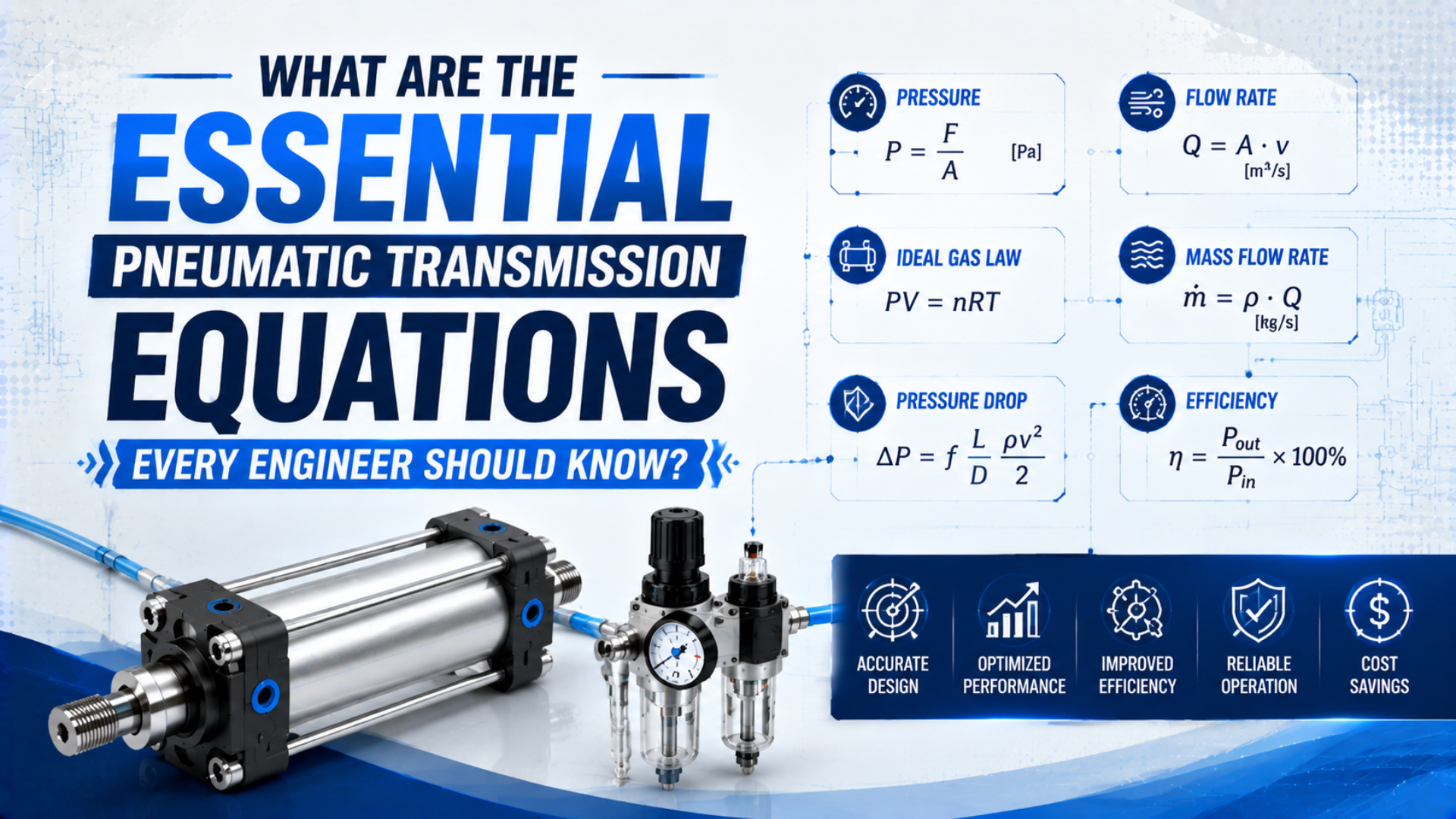
What Are The Essential Pneumatic Transmission Equations Every Engineer Should Know?A system-level reference for pneumatic equations, units, pressure and temperature states, cylinder force, air consumption, flow, speed, valve capacity, and pressure drop.
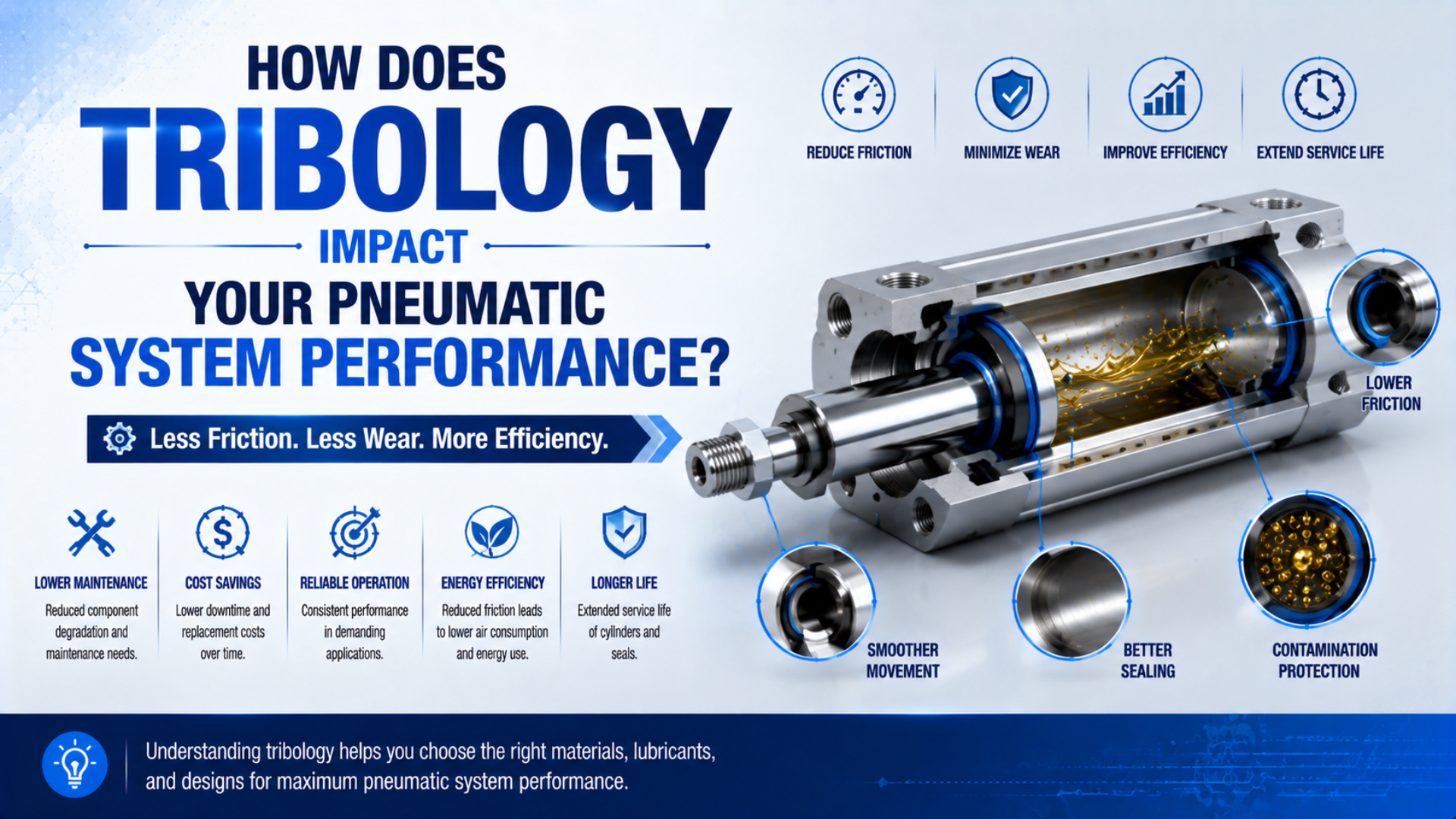
How Does Tribology Impact Your Pneumatic System Performance?A practical tribology guide for diagnosing pneumatic cylinder friction, wear, lubrication, surface texture, contamination, and low-speed motion problems.
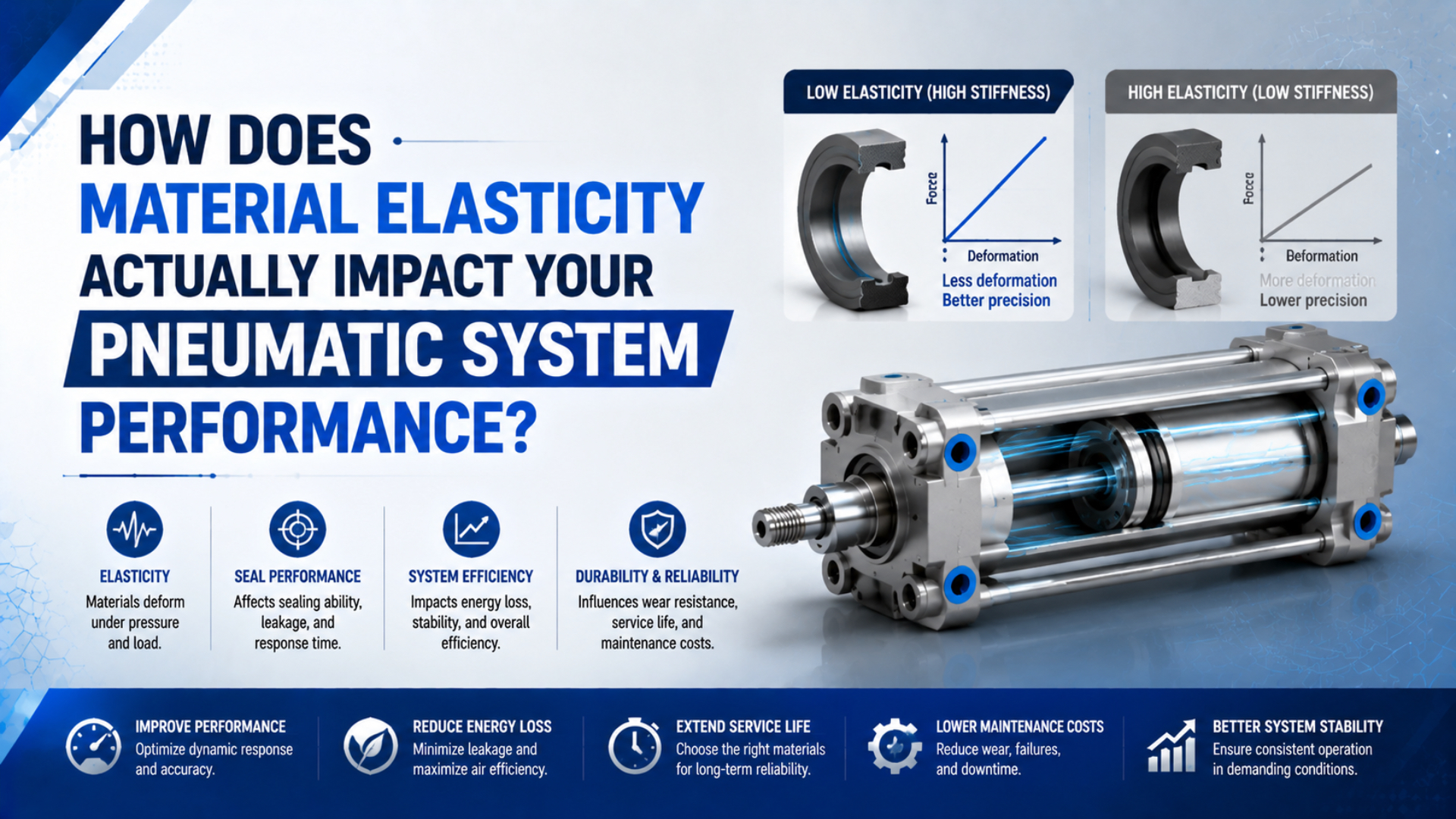
How Does Material Elasticity Actually Impact Your Pneumatic System Performance?Build a pneumatic system stiffness budget from material modulus, geometry, gas volume, seals, and joints; a 16 mm steel rod elongates 0.012 mm under 1 kN.
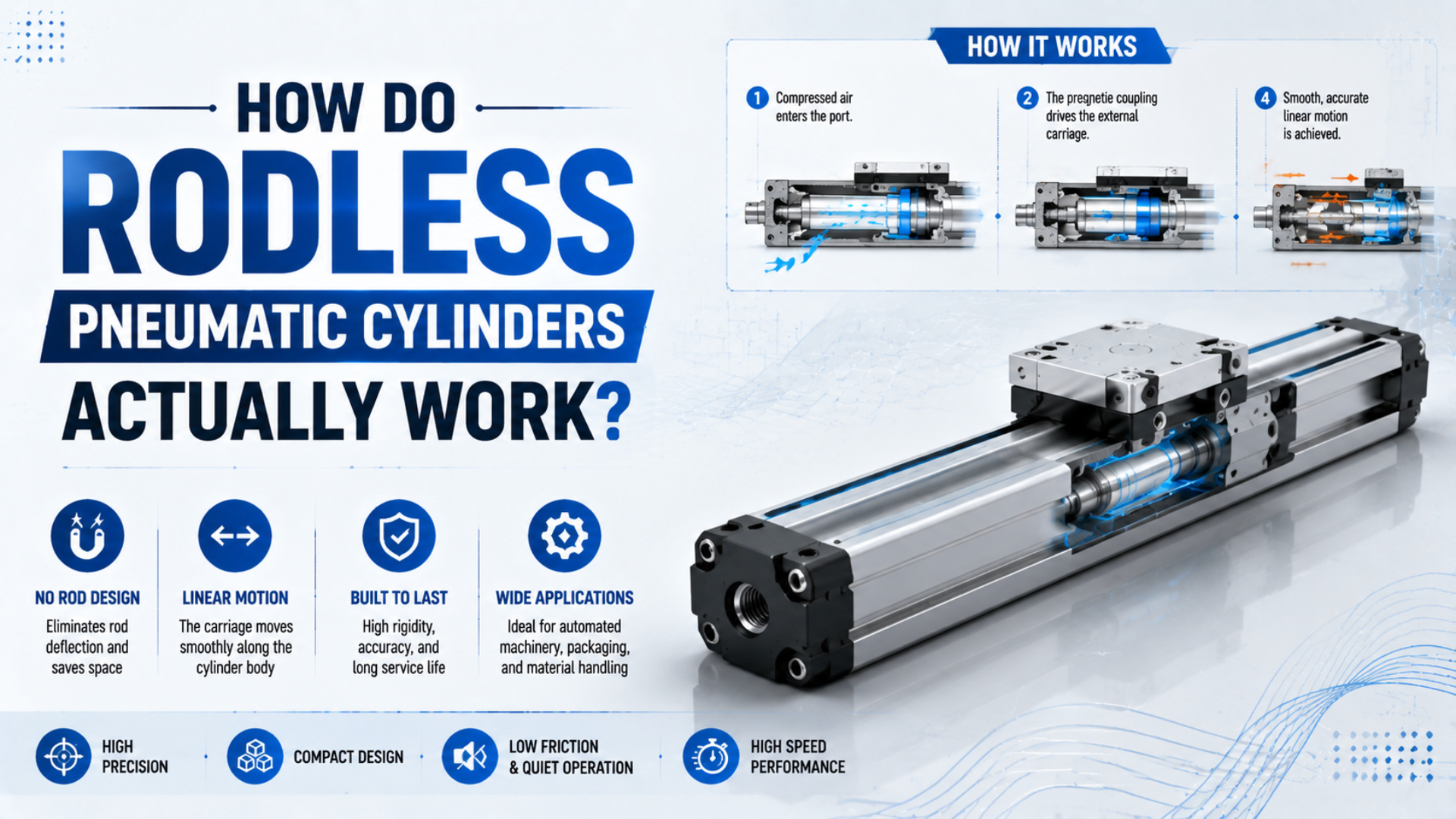
How Do Rodless Pneumatic Cylinders Actually Work?Trace 6 stages of a rodless pneumatic cylinder stroke, from valve switching and piston force to coupling, guidance, cushioning, and position sensing.
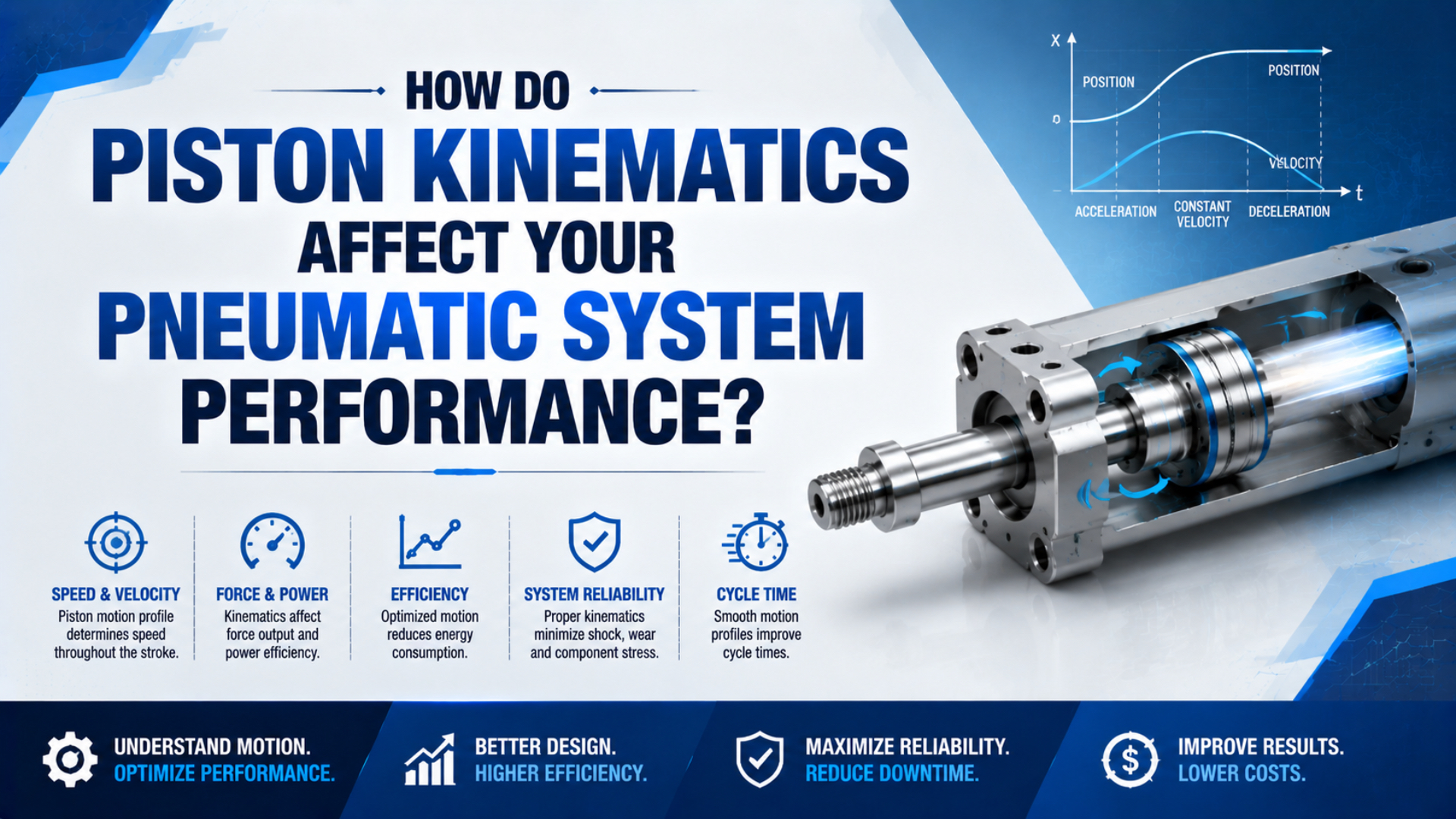
How Do Piston Kinematics Affect Your Pneumatic System Performance?Connect piston position, velocity, acceleration, pressure, flow, and cushion energy with a 10 kg worked example and machine validation steps for sizing.
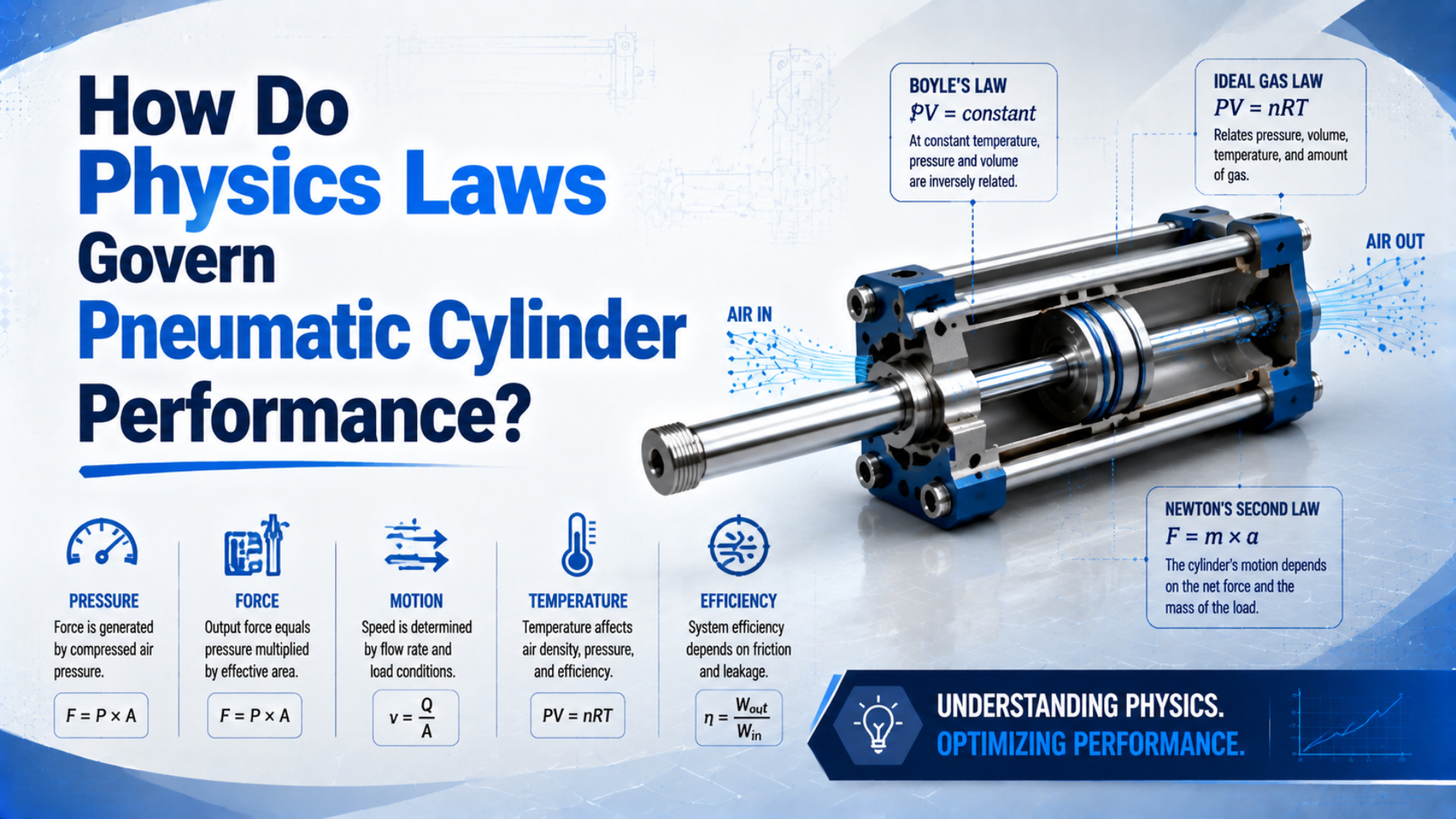
How Do Physics Laws Govern Pneumatic Cylinder Performance?Learn how 5 physics models predict pneumatic cylinder force, acceleration, airflow, choked flow, and pressure response using formulas and worked examples.
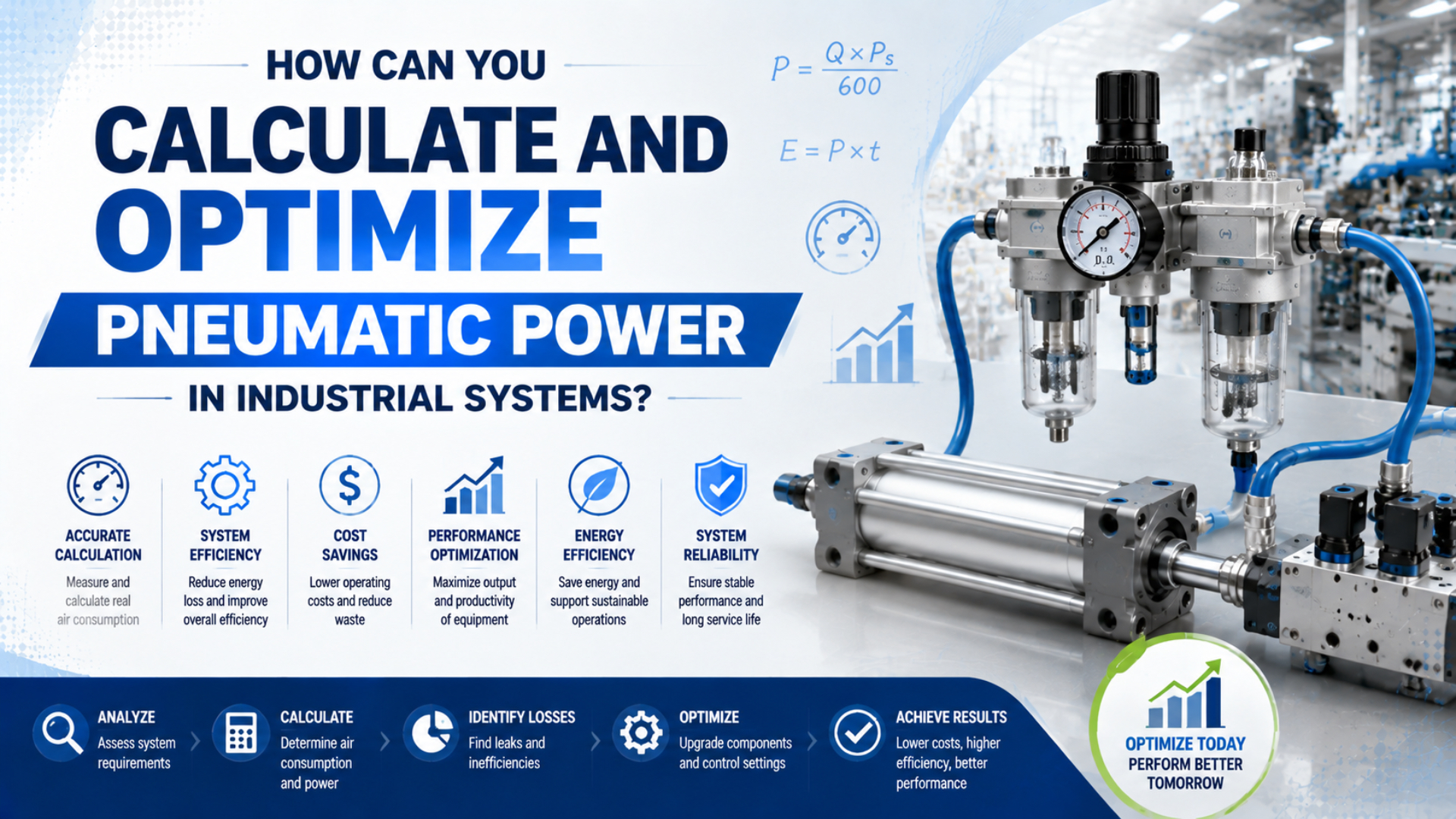
How Can You Calculate and Optimize Pneumatic Power in Industrial Systems?Calculate pneumatic power across 3 boundaries using cylinder force, cycle work, measured flow, and ISO 1217 specific power, then verify real savings in use.
Material Handling: Sourcing Heavy-Duty Actuators for Conveyor SystemsSpecify conveyor actuators with 8 application inputs covering force, guidance, speed, cushioning, environment, interfaces, safety, and supplier evidence.
Procurement Checklist: Essential Specs When Ordering ISO 15552 CylindersUse this ISO 15552 cylinder procurement checklist to control RFQ data across the standard’s 32-320 mm bore scope, compare quotes, and verify orders correctly.
Magnetic De-coupling Forces: The Physics of “Breaking” the ConnectionDiagnose magnetic de-coupling in rodless cylinders using 19.6-2,256 N holding-force data, transient force reconstruction, and safe recoupling checks.
Root Cause Analysis of Piston Rod Fracture: Bending vs. Tensile FailureDiagnose piston rod fracture by separating bending, axial load, fatigue, and final overload with a 3-stage evidence-preserving root cause analysis workflow.
Vacuum Cylinder Physics: Forces Retraction DynamicsStandard atmosphere is 101.325 kPa. Calculate vacuum-cylinder force from chamber pressures, piston geometry, friction, load, and evacuation flow accurately.
Non-Rotating Cylinder Mechanics: Hexagonal Rod vs. Twin Rod Torque ResistanceCompare hexagonal-rod and twin-rod mechanics using SMC's ±1.5° to ±0.1° examples, torque equations, wear limits, and validation steps.
Telescopic Cylinder Stage Sequencing: Hydraulic vs. Pneumatic LogicCompare 3-stage hydraulic and pneumatic sequencing logic, calculate stage force and speed, then validate valves, sensors, timeouts, and fault response.
How to Calculate Pneumatic Cylinder Impact Force to Protect Your Equipment?Calculate cylinder stopping energy and average force, apply Parker's 50% cushion-entry speed warning, and verify peak loads before equipment damage occurs.
Radial Load Tolerance: Analyzing Guide Bushing Stress DistributionsCalculate how a 100 N offset load can create a 400 N guide-bushing reaction, then screen projected pressure, edge loading, PV limits, and guide options.
Finite Element Analysis (FEA) of Cylinder End Caps Under Shock LoadsLearn how to model pneumatic cylinder end caps under shock loads using transient FEA, convergence checks, fatigue assessment, and physical validation.
Euler Buckling Formula: How to Calculate the Critical Buckling Load of a ColumnCalculate Euler critical buckling load with 4 inputs, correct effective length factors, solid or hollow rod inertia, unit checks, and a worked cylinder example.
Inertia Matching: Sizing Cylinders for High-Mass Load DecelerationParker notes cushion-entry speed may be 50% above average. Size high-mass pneumatic deceleration using event energy, duty, and exact catalog limits.
Deflection Calculations for Piston Rods in Horizontal ExtensionCalculate horizontal piston-rod deflection by separating tip load and rod self-weight, with a corrected 25 mm rod example, bending stress, and guide checks.
The Mechanics of Magnetic Coupling Break-Away Force in Rodless CylindersCalculate magnetic rodless cylinder break-away force with SMC 19.6-2,256 N data, axial-load equations, dynamic checks, and recovery steps.
Fatigue Life Prediction Models for Aluminum Cylinder BodiesBuild aluminum cylinder-body fatigue estimates from stress range, R-ratio and cycle counts; ISO 19973-3 reports cylinder life in cycles or kilometres.
Dynamic Seal Hysteresis: How Friction Lags Affect Precision PositioningDiagnose dynamic seal hysteresis with dual-chamber pressure, position and velocity data; a 2026 study tested three pneumatic cylinders under stick-slip.
PSIA vs PSIG Difference Compressed AirLearn the PSIA vs PSIG difference, convert with local atmospheric pressure, and choose the correct reference for six common compressed-air calculations.
Pneumatic Cushioning Physics: Modeling the Ideal Gas Law in Compression ChambersLearn when pV^n can model a pneumatic cushion, why needle exhaust requires an open-system model, and how to validate pressure and stopping force.
Emergency Stop Dynamics: Calculating Impact Forces During Power LossCalculate power-loss stopping energy, distinguish average from peak force, and verify pneumatic emergency-stop behavior with a 30 kg worked example.
Hysteresis Loops in Proportional Pressure Control of CylindersMeasure cylinder pressure-control hysteresis with matched rising and falling steps, a full-scale formula, synchronized traces, and model-specific limits.
Deadband Analysis in Pneumatic Cylinder Friction CompensationUse 2 chamber-pressure traces and position data to separate cylinder friction deadband from valve dead zone, then validate compensation without hunting.
Force Control Mode vs. Position Control Mode in Smart CylindersCompare force and position control in smart pneumatic cylinders through 3 feedback architectures, dual-chamber force math, safe switching, and acceptance tests.
Understanding Polytropic Processes in Pneumatic Cylinder Air ExpansionCompare 4 pneumatic process boundaries, fit the polytropic index from pressure-volume data, and avoid applying pV^n to valve-connected cylinder strokes.
Stribeck Curves in Pneumatics: Analyzing Friction Regimes in Cylinder SealsLearn how to measure and interpret Stribeck-type friction maps for pneumatic cylinder seals without relying on universal friction coefficients or regime thresholds.
Quantifying Stick-Slip: The Science Behind “Stuttering” Motion in CylindersA 2026 three-cylinder study synchronized position, velocity, and chamber pressure. Learn to quantify stick-slip without a universal SSI threshold.
Friction Force Calculation: Static vs. Dynamic Coefficients in Large BoresMeasure static breakaway and dynamic running friction in large-bore pneumatic cylinders using synchronized port pressures, effective piston areas, dwell time, and a defined running window.
Adiabatic vs. Isothermal Expansion: The Thermodynamics of Cylinder ActuationCompare cylinder models using measured 23 K heating and 17 K cooling data to separate ideal expansion laws from real pneumatic actuation and sizing errors.
Pneumatic Cylinder Pressure vs Load Analysis: Are You Wasting 40% of Your Compressed Air Budget?Test whether a pneumatic cylinder can cut air use by 40% using real load, port pressure, force balance, cycle demand, and manufacturer limits before selection.
What Are Opposing Loads in Pneumatic Systems: The Hidden Force That’s Costing You Money?Identify opposing loads in pneumatic systems, build a directional force budget, and size cylinder thrust without relying on fixed pressure percentages.
Assisting Loads vs. Opposing Loads in Pneumatics: Which Configuration Maximizes Your System Efficiency?Compare assisting and opposing pneumatic loads using two-chamber force balance, vertical-axis examples, pressure checks, and safe motion-control rules.
How to Use Back-to-Back Cylinders for 3-Position ApplicationsLearn how equal-stroke back-to-back cylinders create 3 fixed positions from 4 command states, with correct mounting, valve logic, force sizing, and tests.
A Guide to Sizing External Shock Absorbers for Cylinder ApplicationsSize external cylinder shock absorbers with 6 checks: impact energy, drive work, hourly capacity, effective mass, impact speed, and usable absorber stroke.
How to Calculate Cylinder Force Loss Due to Friction and Back PressureCalculate actual pneumatic cylinder force from both chamber pressures, effective areas, and measured breakaway or running friction without relying on universal loss percentages.
Failure Analysis: Fatigue Failure in Cylinder Tie Rods and MountsDiagnose cylinder tie-rod and mount fatigue with NASA's 3-stage fracture model, pressure-cycle stress reconstruction, NDT limits, and corrective actions.
How to Select Cylinders for High-G Shock and Vibration EnvironmentsSelect high-G pneumatic cylinders by converting 1 g = 9.80665 m/s² into force and moment, then verify mounts, guides, cushioning, and vibration tests.
The Effect of Cylinder Stroke Position on Available Force (Cantilever Loads)Learn why cylinder stroke position does not directly change pressure-generated thrust, yet can sharply change cantilever moment, deflection, and buckling margin.
A Technical Guide to Sizing a Cylinder for a Vertical-Up ApplicationSize a vertical-up pneumatic cylinder with m(g+a), minimum port pressure, backpressure, effective piston area, and a worked 120 kg bore-selection example.
A Guide to Dual Piston Cylinders for Non-Rotation and Increased ForceLearn how dual piston cylinders combine two pressure areas for higher thrust and non-rotation, with a 25 mm worked example and SMC ±0.1° model limits.
The Engineering of Clamp Cylinders: Swing vs. Linear MechanismsCompare swing and linear clamp cylinders using a 90° swing sequence, 6 bar force data, arm-moment limits, fixture reactions, and safe-state checks in fixtures.
How to Calculate the Minimum Operating Pressure for a CylinderCalculate minimum cylinder operating pressure from area, load, acceleration, friction, and back pressure, with a 0.05 MPa catalog example and field test.
How Can You Prevent Piston Rod Buckling in Long-Stroke Cylinder Applications?Prevent piston rod buckling with Euler checks, 4 mounting cases, a 25 mm rod example, manufacturer charts, side-load controls, and redesign options in plants.
Which Cylinder Mounting Type Maximizes Load Capacity for Your Critical Applications?Select a cylinder mounting type by load path, not a force ranking. Compare fixed, flange, foot, clevis, and trunnion mounts in ISO 15552's 10 bar series.
How Does Piston Seal Design Reduce Breakaway Friction by Up to 70% in Modern Cylinders?Learn how piston seal geometry, pressure, dwell, and lubrication affect breakaway friction, and how to validate a claimed 70% reduction with matched tests.
How to Calculate Pneumatic Cylinder Theoretical Force: A Complete Engineering GuideCalculate pneumatic cylinder theoretical force for single-rod, double-rod, rodless, and tandem designs, including an ideal 2 in, 80 psi result of 251 lbf.
How Do Pneumatic Cushion Needles Eliminate Shock and Extend Cylinder Life by 400%?Learn how to tune pneumatic cushion needles using mass, speed and load data; Parker warns cushion-entry speed can be 50% above the stroke average during sizing.
How Do Tandem Cylinders Multiply Force Output for Heavy-Duty Applications?Calculate tandem cylinder force with a 63 mm, 6 bar example, then check flow, air consumption, mounting, rod buckling, and safety limits.
How Do Oval-Piston Cylinders Deliver 40% More Force in 60% Less Space?See when oval-piston cylinders can yield 40% more theoretical force or 60% less piston height, with formulas, design limits, and a clear RFQ checklist.
How Do You Calculate Effective Piston Area for Maximum Double-Acting Cylinder Performance?Calculate double-acting cylinder effective area, then verify a 63/20 mm example at 6 bar for extension force, retraction force, speed, and air-use checks.
How Do Tie Rod Design and Torque Specifications Determine Cylinder Longevity?Learn how tie-rod preload, friction, and model-specific torque affect pneumatic cylinder life, using a 7-step rebuild and acceptance workflow for repairs.
Why Does Cylinder Acceleration Change Dramatically with Different Load Weights?Learn why cylinder acceleration changes with load using the net-force equation, SMC's 50% dynamic load-factor guide, and practical pressure and flow checks.
How Can You Calculate the Perfect Cylinder Bore Size to Maximize Energy Efficiency?Calculate cylinder bore from load and dynamic pressure, then compare 50 mm and 63 mm choices for force, cycle air demand, and annual energy cost.
How Can You Accurately Calculate and Control Dangerous End-of-Stroke Forces in Your Pneumatic Cylinders?Calculate pneumatic cylinder end-of-stroke energy, separate average from peak force, and apply Parker's 50% cushion-entry speed warning in machine design.
Why Are Hydro-Pneumatic Cylinders the Ultimate Solution for Precision Control Applications?Learn how hydro-pneumatic cylinders control feed speed or create a short high-force stroke, plus the sizing, safety, and RFQ checks that matter.
How to Calculate and Control Cylinder Deflection in Cantilevered MountsCalculate cantilevered cylinder-rod deflection with FL³/3EI, see why halving unsupported length cuts ideal deflection 87.5%, and select guides or supports.
How Do You Properly Derate Pneumatic Cylinders for Reliable High-Altitude Performance?Learn why altitude does not automatically reduce cylinder force, how 6 bar gauge preserves thrust, and which high-altitude air-system checks matter most.
How Can Custom Gripper Finger Design Transform Your Complex Parts Handling Challenges?Design custom gripper fingers using SMC's 10-to-20-times load guidance, contact geometry, jaw moments, materials, tolerances, and validation tests.
Which Gripper Type Delivers Better Performance: Parallel or Angular Grippers for Your Automation Needs?Compare parallel and angular grippers by jaw path, clearance, finger length, grip force, and failure mode using SMC's 10-to-20-times load sizing guideline.
Which System Reigns Supreme: Hydraulic vs Pneumatic for Your Industrial Applications?Compare hydraulic and pneumatic systems using ISO's 10 bar pneumatic series, a 207 bar hydraulic example, force, safety, energy, and lifecycle cost.
What Is Pressure Regulator Drift in Pneumatics and How It’s Sabotaging Your System Performance?Learn to separate pneumatic regulator drift from droop, creep, and gauge error with a 5-step pressure test, manufacturer limits, and safe corrective actions.
How Does Pneumatic Cylinder Bore Size Affect Air Consumption and Operating Costs?A 50-to-63 mm bore step raises cap-end volume 58.8% at the same stroke and pressure. Calculate cycle air, annual kWh, and operating cost before sizing up.
The Impact of Cylinder Bore Size on Force and Speed: A Practical GuideSee how cylinder bore size changes force, flow demand, speed, and air use, with worked 32-80 mm comparisons and a practical sizing sequence.
A Guide to Selecting Cylinders for Vertical Lifting ApplicationsSelect a vertical lifting cylinder using m(g+a), minimum pressure, mounting and load-holding checks; SMC limits one lock family to 50% holding force in use.
Optimizing Air Consumption in Double-Acting Pneumatic CylindersUse SMC's 13 L/cycle example to calculate double-acting cylinder air consumption, then reduce pressure, bore, stroke, tubing volume, leaks, and idle demand.
Understanding the Force Factor in Pneumatic Cylinder SelectionLearn how piston area becomes a cylinder force factor, why SMC limits dynamic load ratio to 0.5, and how to size bore from real port pressure and load.
What is Breakaway Force in Pneumatic Cylinders?Calculate pneumatic cylinder breakaway force with a 63 mm example, port-pressure testing, stick-slip diagnosis, sizing checks, and sourced limits in practice.
The Engineer’s Checklist for Specifying High-Speed Pneumatic CylindersSpecify high-speed pneumatic cylinders using Parker's 50% cushion-entry warning, verified load, airflow, pressure drop, RFQ data, and acceptance tests.
Compact Cylinders in End-of-Arm Tooling: A Design GuideDesign compact cylinders for EOAT using robot payload, center-of-gravity moment, grip-force math, ISO 9409-1 mounting, pneumatic timing, and air-loss tests.
What is the Basic Concept of a Pneumatic Cylinder?Learn the basic concept of a pneumatic cylinder with NASA F=P*A force math, Parker 32-125 mm ISO data, components, types, speed control, and RFQ checks.
What is the Basic Law of Pneumatic and How Does It Drive Industrial Automation?Learn the basic law of pneumatic systems with Pascal, Boyle, 100 psi force math, DOE 20 psi pressure-drop data, flow limits, and automation selection rules.