
Which Pneumatic Safety System Design Prevents 98% of Serious Injuries When Standard Solutions Fail?OSHA says lockout/tagout prevents an estimated 120 deaths and 50,000 injuries yearly. Learn how to design and validate pneumatic safety functions correctly.Blog Tag
directional control valve articles
Review every Bepto Pneumatic article connected to directional control valve, grouped as one focused reading list for engineers, maintenance staff, and sourcing specialists.
Tagged Reading Path
All articles tagged directional control valve
Use this archive to scan related selection notes, RFQ checks, replacement guidance, and pneumatic component references.
Showing 89 articles
Which Pneumatic Safety System Design Prevents 98% of Serious Injuries When Standard Solutions Fail?OSHA says lockout/tagout prevents an estimated 120 deaths and 50,000 injuries yearly. Learn how to design and validate pneumatic safety functions correctly.
How to Select the Perfect Pneumatic Control Valve for Your Industrial Application?Select a pneumatic control valve by matching valve function, safe state, usable flow, pilot pressure, response, interfaces, environment, and reliability evidence.
5 Expert Pneumatic Logic Component Selection Strategies That Eliminate 90% of Control FailuresUse 5 evidence-based selection strategies to specify pneumatic logic by state, pressure, timing, reset behavior, and machine functional-safety requirements.
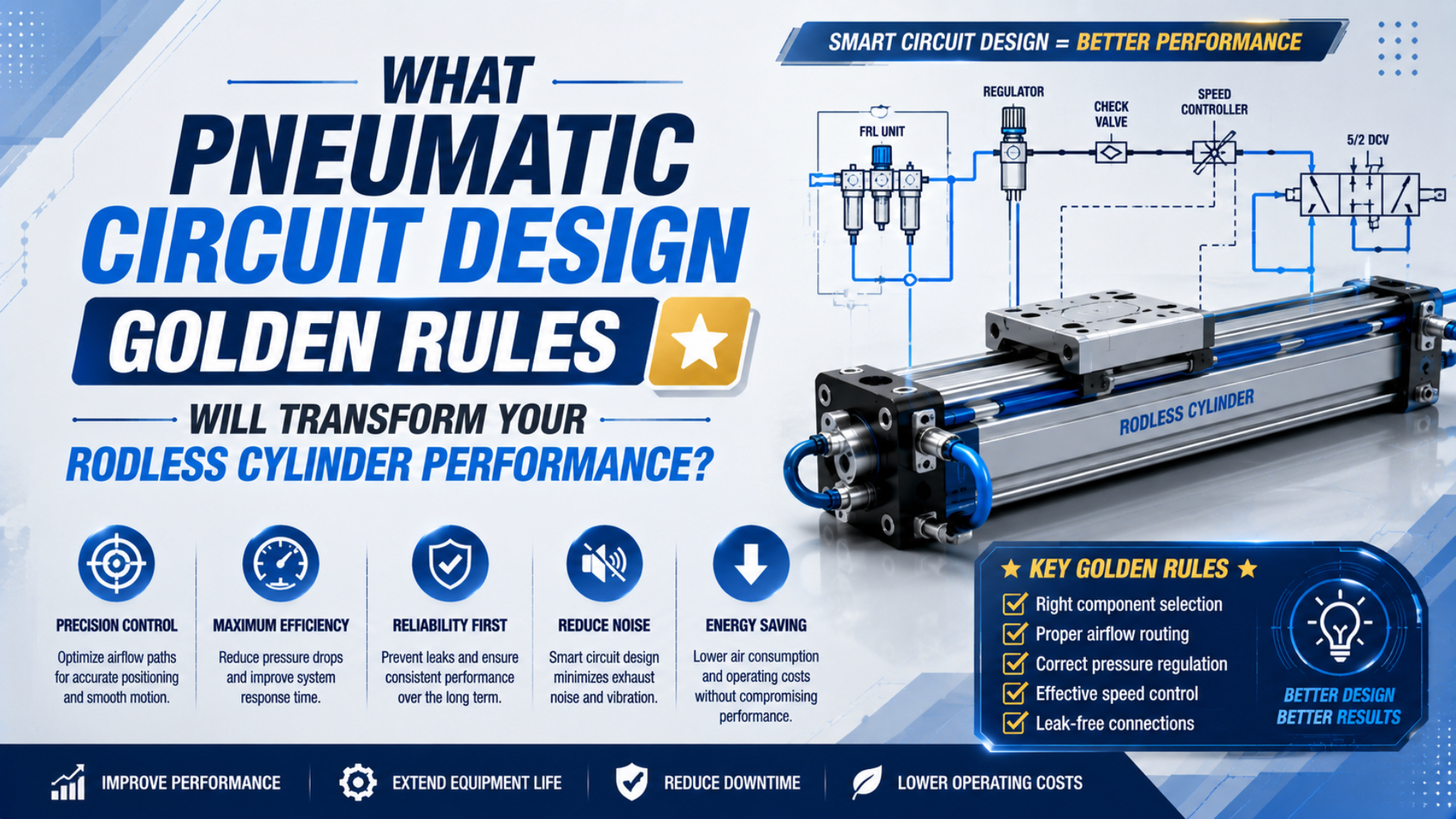
What Pneumatic Circuit Design Golden Rules Will Transform Your Rodless Cylinder Performance?Apply 7 rodless-cylinder circuit rules for safe states, peak flow, meter-out control, FRL sizing, exhaust, couplings, and measurable commissioning results.
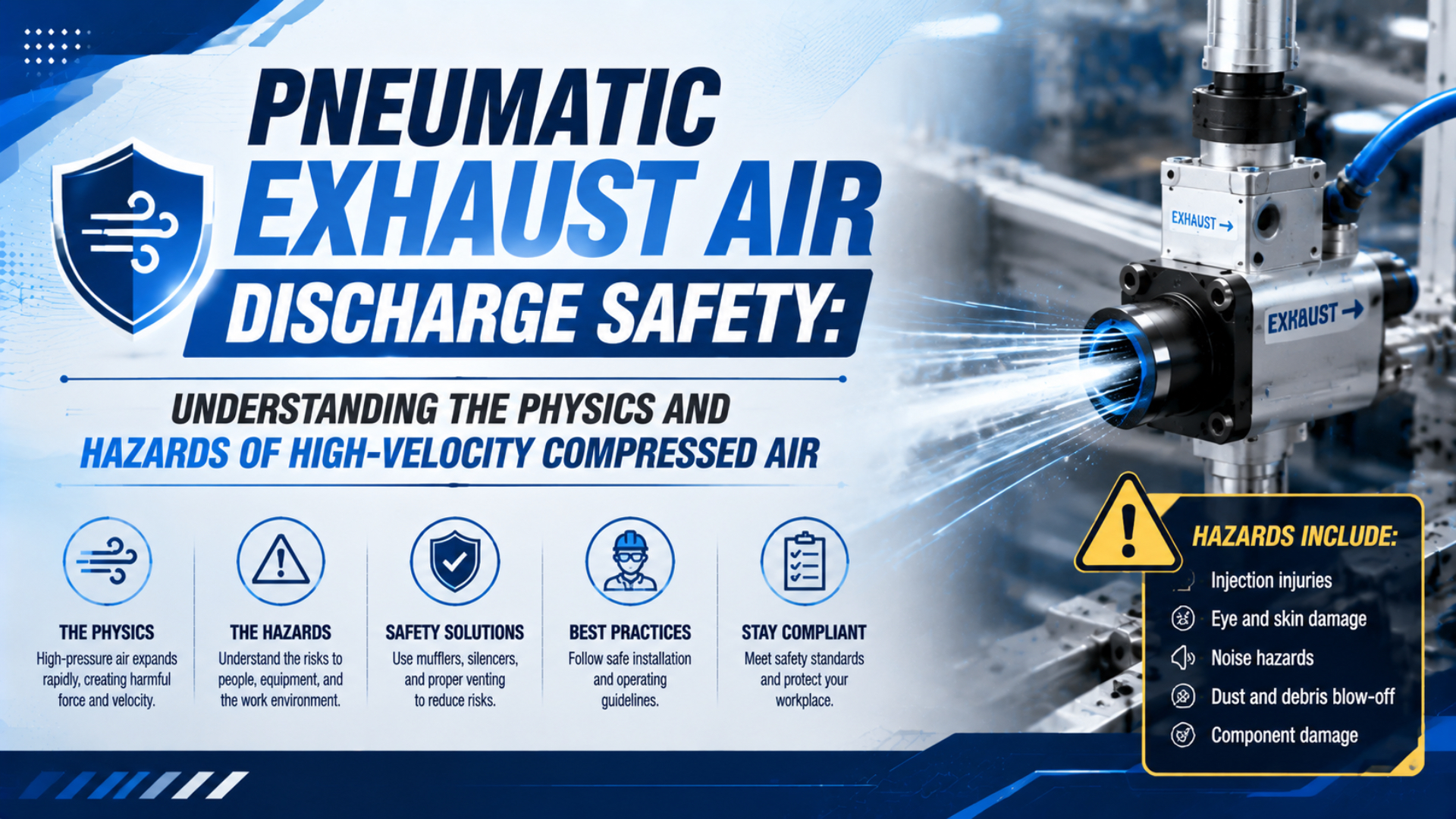
Pneumatic Exhaust Air Discharge Safety: Understanding the Physics and Hazards of High-Velocity Compressed AirSeparate fixed exhaust, blow-off cleaning, quick exhaust, and safety dump circuits using ISO 4414, OSHA's 30 psi rule, and verified pressure-decay testing.
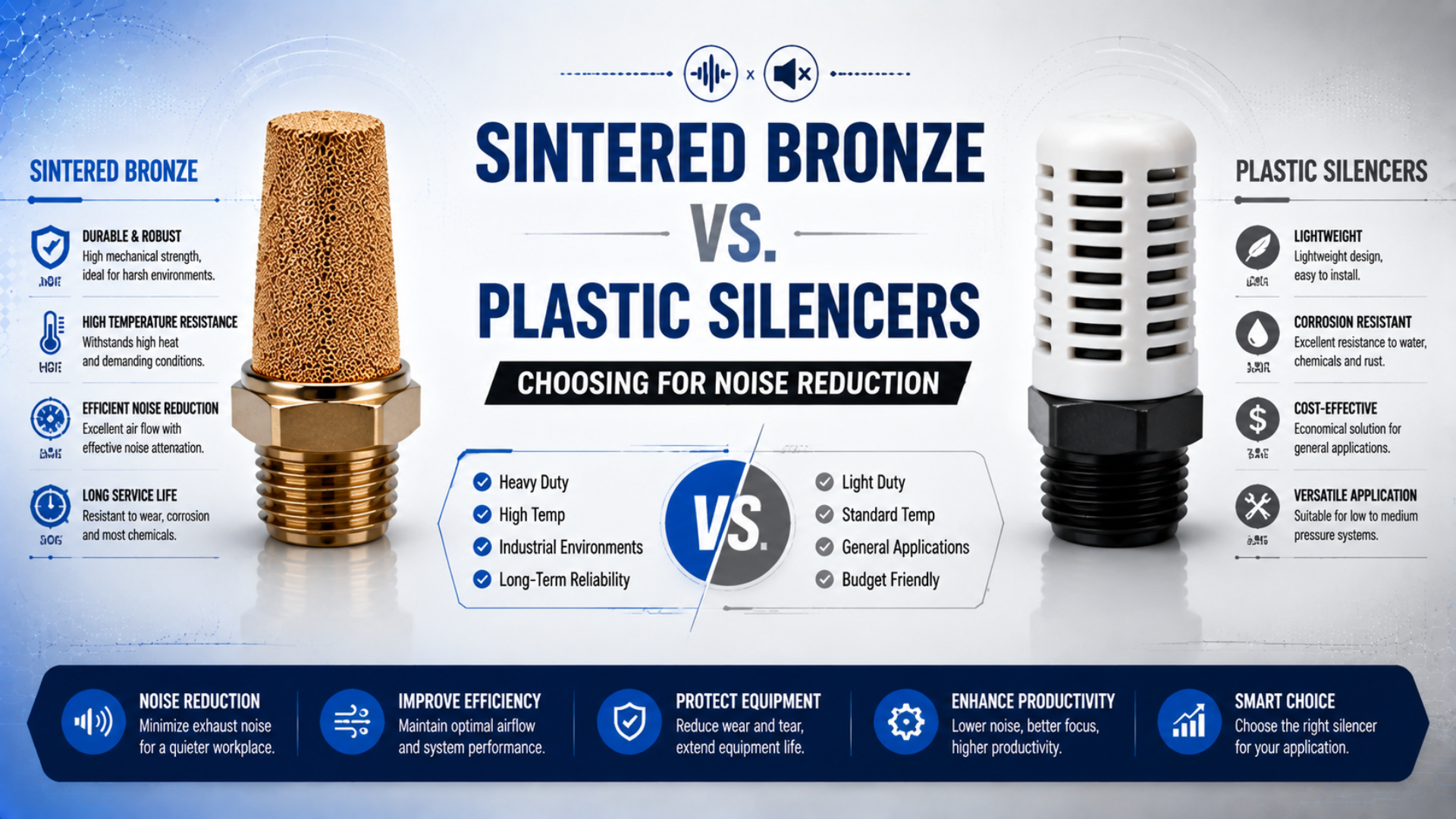
Sintered Bronze vs. Plastic Silencers: Choosing for Noise ReductionCompare bronze and plastic pneumatic silencers using 6 bar noise data, conductance, pressure, temperature, contamination, and acceptance tests.
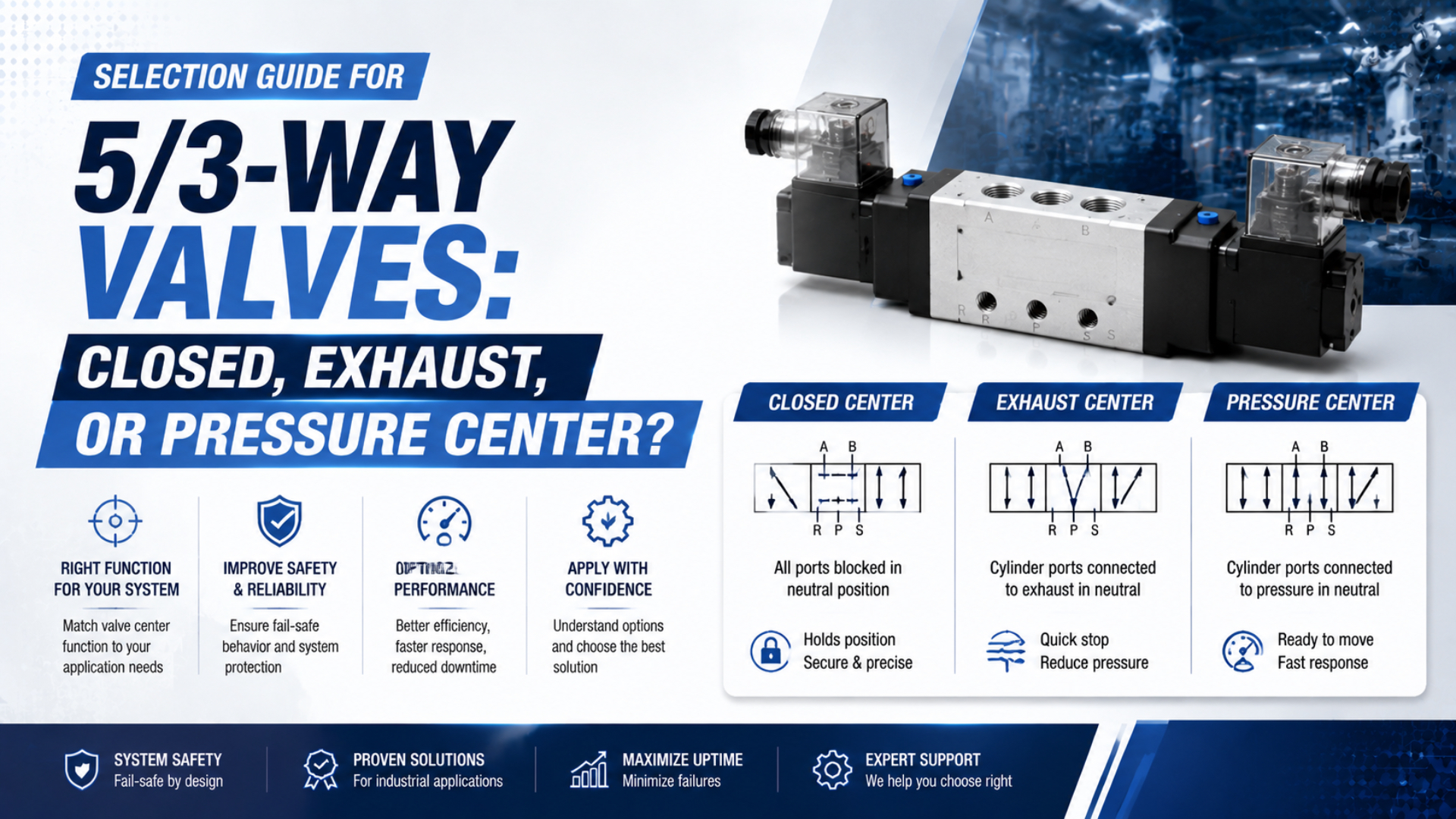
Selection Guide for 5/3-Way Valves: Closed, Exhaust, or Pressure Center?Compare 3 center states of 5/3-way valves and validate 5 fault conditions covering drift, residual pressure, load motion, power loss, and safe restart.
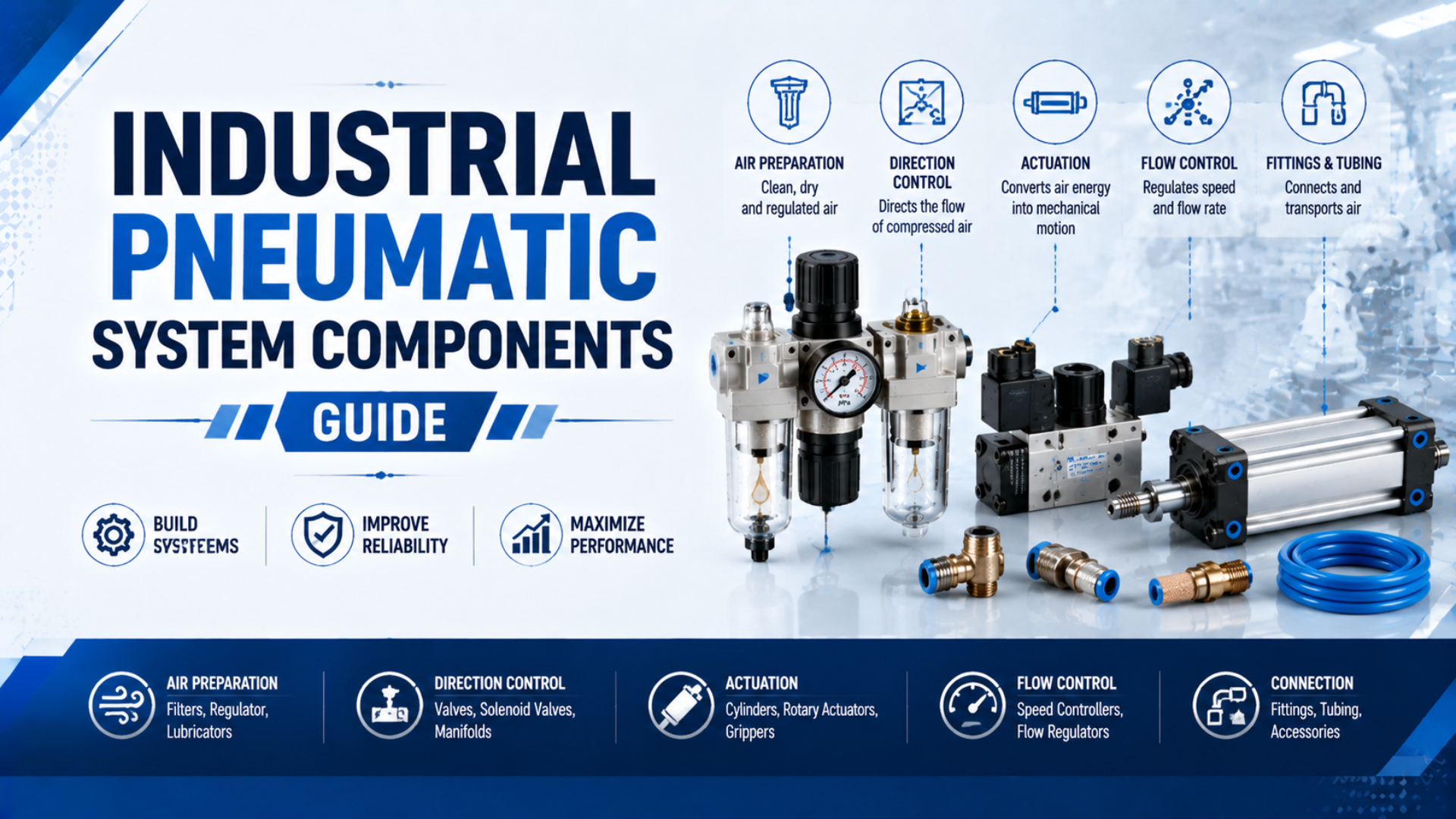
Industrial Pneumatic System Components GuideMap an industrial pneumatic system from air preparation to control and motion, using ISO 4414 boundaries, 3 ISO 8573 purity classes, and a verified RFQ.
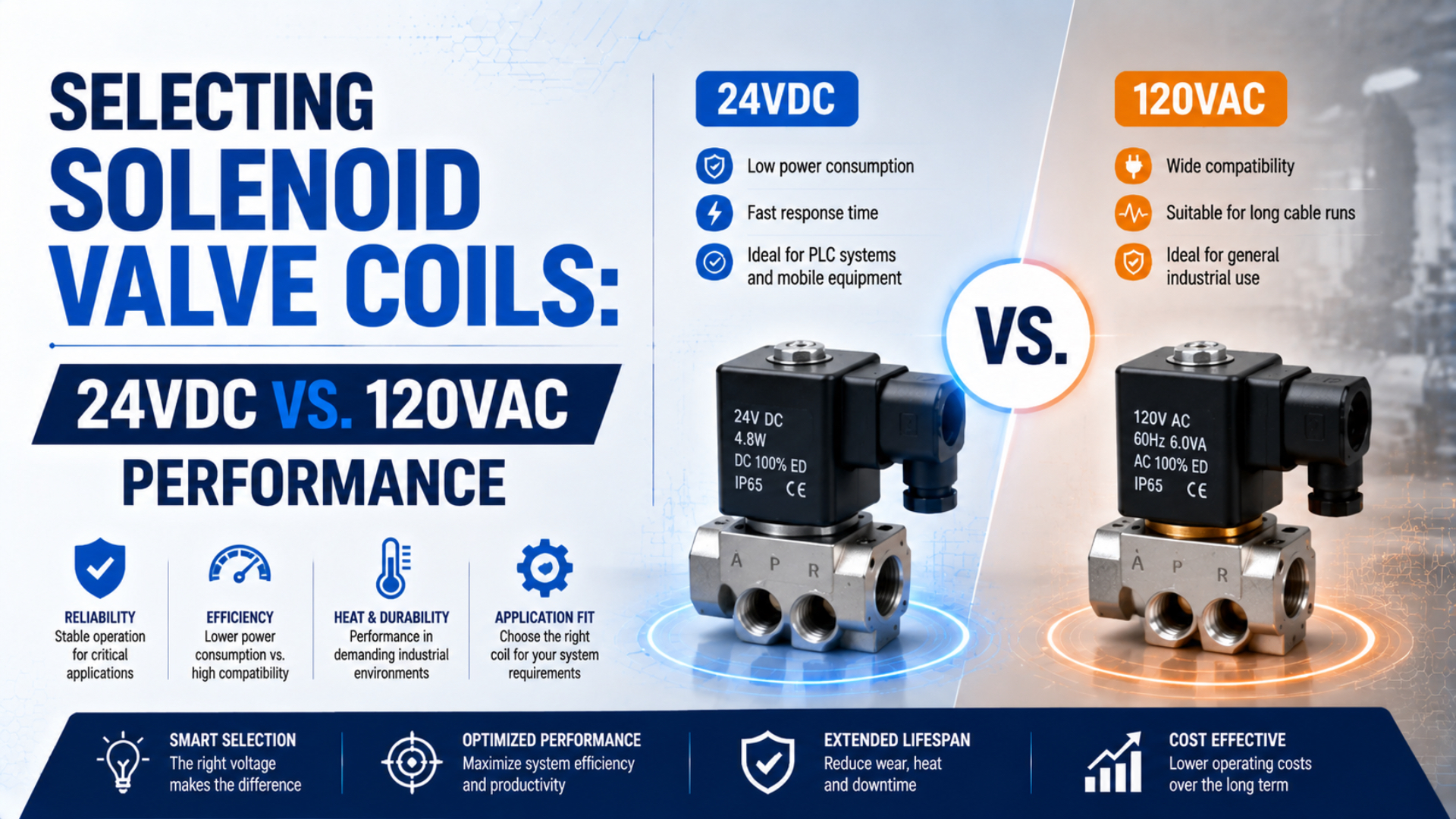
Selecting Solenoid Valve Coils: 24VDC vs. 120VAC PerformanceCompare 24VDC and 120VAC solenoid coils across 8 electrical checks: supply, output, current, frequency, suppression, duty, heat, and safe field validation.
Pilot-Operated Check Valves vs. Standard Check Valves for Load HoldingCompare standard and pilot-operated check valves for pneumatic load holding, including leakage, pilot release, trapped energy, safety limits, and commissioning.
Selecting Solenoid Enclosures: NEMA 4 vs. NEMA 4XSelect NEMA 4 or 4X solenoid enclosures using NEMA’s 600-hour plus 200-hour corrosion tests, IP limits, material checks, assembly ratings, and RFQ evidence.
Choosing Between 2/2-Way and 3/2-Way Valves for Simple On/Off ControlChoose 2/2 or 3/2 valves using 7 checks: flow paths, normal state, medium, pressure range, leakage, exhaust capacity, and safe isolation.
Comparing 4/2-Way vs. 5/2-Way Valves for Double-Acting CylindersCompare 4/2-way and 5/2-way valves by 4 versus 5 ports, flow paths, speed control, exhaust handling, flow capacity, and fail-state requirements in practice.
Choosing the Proper Wattage for Energy-Saving Solenoid CoilsChoose solenoid coil wattage using verified 1 W-to-0.35 W data, correct voltage-drop math, peak-current checks, thermal limits, and installed testing.
How Solenoid Valves Work in Pneumatic Control SystemsTrace a pneumatic solenoid valve through 7 control stages, from PLC output and coil current to pilot pressure, spool position, air paths, and actuator motion.
Telescopic Cylinder Stage Sequencing: Hydraulic vs. Pneumatic LogicCompare 3-stage hydraulic and pneumatic sequencing logic, calculate stage force and speed, then validate valves, sensors, timeouts, and fault response.
Pneumatic Valve ISO 1219 Symbols: 3/2 vs 5/2Read ISO 1219 pneumatic valve symbols correctly: decode 3/2 and 5/2 ports, positions, flow paths, actuation methods, rest states, and state-table checks.
Emergency Stop Dynamics: Calculating Impact Forces During Power LossCalculate power-loss stopping energy, distinguish average from peak force, and verify pneumatic emergency-stop behavior with a 30 kg worked example.
Pulse Width Modulation (PWM) Control for Digital Pneumatic Valves and CylindersLearn how to distinguish solenoid current PWM from mechanical valve PWM, verify switching limits, map duty cycle to flow, and commission a pneumatic cylinder circuit.
The Physics of Solenoid Actuation: Force, Stroke, and Response TimeLearn how solenoid force changes with stroke, why a 12 ms valve rating needs test conditions, and how current, load, and air gaps set real response time.
The Impact of Voltage Tolerance on Solenoid Valve PerformanceSMC permits -15% to +10% voltage on one valve series, while other coils specify ±10%. Learn to verify hot, loaded coil voltage before commissioning approval.
Failure Analysis: The Technical Root Causes of Solenoid Coil BurnoutDiagnose solenoid coil burnout by separating 4 coil architectures and checking voltage, current, duty rating, heat, moisture, connectors, and core movement.
Spool vs. Poppet: A Deeper Dive into Sealing and Flow Path DynamicsCompare spool and poppet valves through 5 engineering checks: seal interface, metering area, pressure balance, crossover, and ISO 6358 flow data for selection.
How Do Electromagnetic Drives Work in Pneumatic Valve Applications?Learn how electromagnetic drives switch pneumatic valves, from coil current and pull-in force to peak-and-hold control, flyback, heat, and diagnostics.
The Engineering Behind Glandless Spool Valve TechnologyUnderstand glandless spool-and-sleeve valves using Norgren 900 vs 1,200 L/min data, air-quality limits, leakage tradeoffs, and selection checks for engineers.
How Spool Underlap, Overlap, and Zero-Lap Affect Cylinder ControlCompare 3 spool-lap conditions, separate lap from valve center function, and learn how neutral leakage, dead zone, feedback, and load affect cylinder control.
A Technical Guide to Pneumatic Valve Seal Materials (NBR, FKM, HNBR) and Chemical CompatibilityCompare NBR, HNBR, and FKM valve seals using 8 operating inputs, official test methods, and model-level validation before approving a compound.
The Impact of Anodizing and Surface Treatments on Valve Spool LifeLearn how anodizing changes valve spool clearance, why ISO 10074:2021 limits universal life claims, and which inspections prevent wear, leakage, and sticking.
Failure Analysis: The Physics of Spool Stiction and Varnish BuildupDiagnose spool valve stiction by separating electrical, pilot, exhaust, mechanical, water, particle, lubricant, and varnish-like deposit causes.
What Is a Pneumatic Valve Armature and How Does It Control Your Airflow?Learn how three basic solenoid-valve components turn coil current into armature motion, pilot action, port switching, airflow, and practical fault diagnosis.
Calculating Valve Shift Time: A Pneumatic and Electrical AnalysisCalculate valve shift time with ISO 12238:2023, an electrical-mechanical-pneumatic budget, RL coil math, chamber-fill estimates, and validation steps.
How Internal Pilot Pressure Affects Valve Actuation SpeedLearn how internal pilot pressure affects valve speed, why 0.15 MPa can be a model-specific minimum, and how to diagnose pressure, voltage, flow, and exhaust.
A Technical Analysis of Exhaust Flow Control in 5-Way ValvesAnalyze 5-way valve exhaust flow through ports 3 and 5, calculate back-pressure force loss, diagnose restrictions, and select meter-out or quick exhaust safely.
How to Calculate Minimum Pilot Pressure for Pilot-Operated ValvesCalculate minimum pilot pressure from valve architecture, datasheet limits, pilot-line losses, and dynamic tests using verified 0.1 to 0.2 MPa examples.
Understanding Hysteresis and Linearity in Proportional Valve SpecificationsCompare proportional-valve hysteresis and linearity using SMC's 0.5% and ±1% FS example, test curves, reference methods, conditions, and clear RFQ checks.
A Technical Guide to Spool Position Feedback in Proportional ValvesUnderstand spool position feedback in proportional valves, including LVDT and Hall sensing, inner-loop limits, data-sheet checks, commissioning, and fault diagnosis.
A Comparison of Piezoelectric vs. Solenoid Actuation in Proportional ValvesOne solenoid example responds in under 10 ms. Compare piezoelectric and solenoid proportional valves by flow, power, pressure, hysteresis, and duty cycle.
Redundant Valve Systems: A Guide to ISO 13849-1 Safety CircuitsDesign redundant pneumatic valve systems for ISO 13849-1 using 3/2 and 5/2 architectures, monitored feedback, fault response, SISTEMA, and validation.
How Monitored Pneumatic Safety Valves (Category 3/4) OperateA component-level explanation of redundant pneumatic safety valves, feedback monitoring, fault response, reset logic, and Category 3/4 system boundaries.
How to Specify Valves for ATEX / HazLoc EnvironmentsOSHA recognizes 9 hazardous-location designations. Specify ATEX and HazLoc valves by marking, certificate scope, temperature, cable entry, and evidence.
The Technical Impact of Silencer Clogging on Valve and Cylinder PerformanceFesto rates G1/8 silencers from 1,340 to 2,050 L/min. Learn how clogging creates back pressure, slows cylinders, and how to verify the fault safely in service.
The Engineering of Pneumatic Silencers: Diffusion vs. AbsorptionCompare diffusion, reactive, and absorptive pneumatic silencers using a 59 dB(A), 1,700 L/min example, insertion loss, and exhaust-flow tests for sizing.
Failure Analysis: Identifying the Root Cause of Internal Valve LeakageDiagnose internal valve leakage with port isolation, pressure checks, and teardown evidence; one SMC metal-seal valve permits 200 Ncc per port at 0.5 MPa.
The Technical Effects of Using Unlubricated Air on Spool Valve SealsLearn how unlubricated air affects spool valve seals, why ISO 8573-1 separates 3 contaminant classes, and how to qualify lubrication changes safely.
How Valve Response Time Consistency Affects Machine SynchronizationLearn how valve response-time jitter creates axis skew, how to set a machine-specific timing budget, and why a 2 ms valve is not automatically synchronized.
The Impact of Media Temperature on Solenoid Valve OperationLearn how media temperature affects solenoid valves using 4 temperature checks, a copper-coil resistance formula, model-specific ratings, and field tests.
How to Calculate the Force Generated by a Valve’s Solenoid PlungerCalculate solenoid plunger force with magnetic pressure, virtual work, and valve-load checks, including a worked 0.8 T, 10 mm pole-face example in practice.
Failure Analysis: How Contamination Size (Microns) Affects Different Valve TypesAnalyze pneumatic valve contamination with 6 evidence checks covering particle size, valve clearance, residue, air quality, filter data, and failure timing.
A Guide to 3-Position Valve Center Conditions (Closed, Exhaust, Pressure)Compare 5/3 valve center conditions: closed, exhaust, and pressure. Learn each 5-port flow path, actuator behavior, restart risk, and selection checks.
How to Select a Valve for High-Frequency Cycling ApplicationsSelect a high-frequency pneumatic valve by separating response, duty cycle, flow, and B10 life, using ISO tests, 500 Hz model data, and machine validation.
The Impact of Port Size vs. Internal Orifice Size on Valve PerformanceSMC lists two 1/4-inch valves at Cv 0.9 and 1.7. Compare port size, internal paths, ISO 6358 data, and pressure drop before valve selection.
The Function of Two-Pressure Valves (AND Logic) in Pneumatic CircuitsLearn how a two-pressure valve performs pneumatic AND logic across 4 input states, handles unequal pressures, and differs from a safety-rated two-hand control.
How to Build a Pneumatic Latching Circuit Using Logic ValvesBuild a pneumatic latching circuit with a double-piloted 5/2 valve, SET/RESET signals, conflict handling, startup checks, and clear safety limits.
A Technical Guide to Pneumatic Shuttle Valves (OR Logic)Select pneumatic shuttle valves using verified OR logic, pressure differential, ISO 6358 flow data, safety limits, installation checks, and RFQ criteria.
The Technical Design of a Pneumatic Oscillator CircuitDesign a pneumatic oscillator circuit with 7 checks covering state logic, valve memory, timing, flow, safe stopping, air loss, and predictable restart.
A Guide to Cascade Circuit Design Using Pneumatic ValvesDesign a pure-pneumatic cascade circuit with a six-motion, three-group example, valve logic, conflict checks, commissioning steps, and safe reset rules.
The Engineering of a Two-Hand Safety Control CircuitCommission a two-hand safety circuit with 2-channel timing, anti-tie-down, output feedback, and fault-injection tests before accepting pneumatic machinery.
How to Prevent Opposing Signals in a Pneumatic Logic CircuitPrevent opposing pneumatic signals with mutual-exclusion logic, cascade groups, pilot-pressure checks, and a 4-state test for directional valve control.
A Technical Guide to Pneumatic Memory Valves and Their FunctionLearn how 5/2 pneumatic memory valves retain spool state, why pressure and cylinder position may still change, and how to select and test them safely.
The Role of Check Valves in Preventing Backflow in Complex CircuitsPrevent pneumatic backflow with 7 circuit checks covering valve direction, cracking pressure, flow loss, reverse leakage, pilot release, and stored energy.
The Impact of Turbulent vs. Laminar Flow on Valve SizingLearn how Reynolds number affects pneumatic valve sizing, why ISO 6358 data governs compressed-air flow, and when the 2300-4000 pipe range actually applies.
How to Design a Pneumatic Circuit for Sequential Cylinder OperationDesign a 4-step sequential pneumatic cylinder circuit using state tables, cascade or PLC control, feedback, timeouts, flow checks, and safe restart logic.
How to Use a 5-Way, 3-Position Valve for Cylinder Position HoldingLearn how a 5-way, 3-position valve pauses cylinder motion, why zero-drift holding fails, and when pilot checks or rod locks provide safer machine control.
The Engineering of Non-Return and Pilot-Operated Check ValvesCompare non-return and pilot-operated check valves using Festo's 0.1 bar example, pilot-release force balance, flow data, leakage limits, and safety checks.
How to Mitigate Water Hammer Effect When Stopping a Cylinder Mid-StrokeCompare 5/3 valve centers, trapped-air limits, stopping energy, rod locks, and ISO 13849-1 controls for safer pneumatic cylinder mid-stroke stops in practice.
How Can You Achieve ISO 13849 Compliance When Integrating Rotary Actuators into Safety Circuits?Integrate rotary actuators into ISO 13849 safety functions using 5 PL bands, defined safe states, fault analysis, SISTEMA, and installed-machine validation.
How Do Pneumatic Parallel Grippers Actually Work in Modern Automation Systems?See how a 2-jaw pneumatic parallel gripper converts valve pressure into synchronized motion, then check force, finger length, backlash, and air-loss state.
How Can ISO 13849 Safety Circuits Protect Your Pneumatic Systems from Critical Failures?Apply ISO 13849 to pneumatic safety functions using PLr, Category, MTTFd, DCavg, CCF, SISTEMA, and validation without confusing safety exhaust with LOTO.
How to Troubleshoot a Failing Pneumatic Solenoid ValveTroubleshoot pneumatic solenoid valves with OSHA 1910.147 isolation, voltage and continuity checks, pilot-pressure tests, and symptom-based decisions.
High-Flow Solenoid Valves for Rapid Cycle Automotive Assembly LinesSize high-flow solenoid valves for automotive stations using Parker's Cv 1.06 example, ISO 6358 data, dynamic pressure tests, and full-cycle verification.
3/2 vs. 5/2 Way Solenoid Valves: An Application-Based ComparisonChoose 3/2 or 5/2 solenoid valves using 5 circuit checks: actuator ports, normal state, failure behavior, required flow, exhaust control, and lifecycle cost.
Decoding Solenoid Valve Response Times for Precision ApplicationsBuild a solenoid valve response-time budget with ISO 12238 and SMC 12-64 ms product data, then verify driver, tubing, exhaust, and machine timing reliably.
A Guide to NAMUR Standard Solenoid Valves for Process AutomationSelect NAMUR solenoid valves by VDI/VDE 3845 interface, 3/2 or 5/2 function, flow, fail state, coil, Ex approval, and actuator compatibility during replacement.
Selecting the Right Manual & Mechanical Valves for Your Pneumatic CircuitSelect manual and mechanical pneumatic valves by function, return state, Cv, pressure, and safety needs, using catalog data from 0.17 to 0.83 Cv for safe use.
Low-Power Solenoid Valves: A Guide for Energy-Conscious Plant ManagersEvaluate low-power solenoid valves using verified 1 W-to-0.35 W data, correct energy-cost math, compatibility checks, payback rules, and a measured plant pilot.
How to Prevent Contamination in Pneumatic Control ValvesPrevent pneumatic valve contamination using ISO 8573 classes, 5 µm point-of-use filtration, correct drying, representative sampling, and maintenance checks.
A Guide to ATEX Certified Solenoid Valves for the Chemical IndustrySelect ATEX solenoid valves by Zone, Category, EPL, gas or dust group, temperature marking, protection concept, certificate, and chemical compatibility.
The Role of Pneumatic Logic Valves in Control System DesignDesign pneumatic logic valve circuits with Festo 1-10 bar data, truth tables, ISO 4414 fault states, hazardous-area limits, and safe commissioning checks.
Optimizing Pneumatic Valve Placement for System EfficiencyOptimize pneumatic valve placement using CAGI's 10% pressure-drop limit, tube-volume checks, exhaust analysis, zoning, maintenance access, and measured tests.
A Guide to Pneumatic Check Valves and Their Critical FunctionsSelect pneumatic check valves using cracking pressure, forward flow, reverse leakage, pilot ratio, installation, testing, and machine safety requirements.
Integrating Safety Exhaust Valves into Your Pneumatic Machine GuardingIntegrate safety exhaust valves using ISO 13849 risk assessment, monitored valve architecture, pressure-decay testing, residual-energy control, and LOTO.
How to Mitigate Water Hammer in Pneumatic Valve SystemsMitigate pneumatic water hammer by separating 4 faults, measuring pressure, and controlling valve flow, exhaust back pressure, cushioning, and condensate.
A Comparison of Spool vs. Poppet Valve Designs for Industrial UseCompare spool and poppet valves by leakage, crossover, flow and pressure. Parker recommends a poppet when leakage below 5 drops/min is required in service.
How to Build a Reliable Pneumatic Circuit with Modular ValvesBuild a reliable modular pneumatic circuit using ISO valve interfaces, a 10% pressure-drop limit, defined fault states, and measured commissioning tests.
The Difference Between Direct-Acting and Pilot-Operated Solenoid ValvesCompare direct and pilot-operated solenoid valves. Bürkert lists DN 6 direct and DN 50 servo-assisted ranges; select safely by pressure, flow, and media.
How Is Pneumatic Solenoid Valve Response Time Measured? A Complete GuideMeasure pneumatic solenoid valve response time with ISO 12238 timing points, pressure traces, 90% output checks, RFQ notes, and troubleshooting steps.
How Do 4-Way Directional Valve Pneumatic Control Systems Optimize Industrial Automation Efficiency?Optimize 4-way directional valve pneumatic control systems with 5/2, 5/3, Cv, meter-out exhaust control, and CAGI's 10% pressure-drop rule.
Single Acting vs Double Acting Pneumatic Cylinder: Which Design Delivers Better Performance for Your Application?Compare single vs double acting pneumatic cylinders with CAGI's 10% pressure-drop rule, force math, air use, valve selection, and RFQ checks.
How Does a Pneumatic Cylinder Work in Automation?Learn how pneumatic cylinders work with 100 psi force math, CAGI's 10% pressure-drop rule, ISO 8573 air quality, valve flow, sensors, and RFQ checks now.