
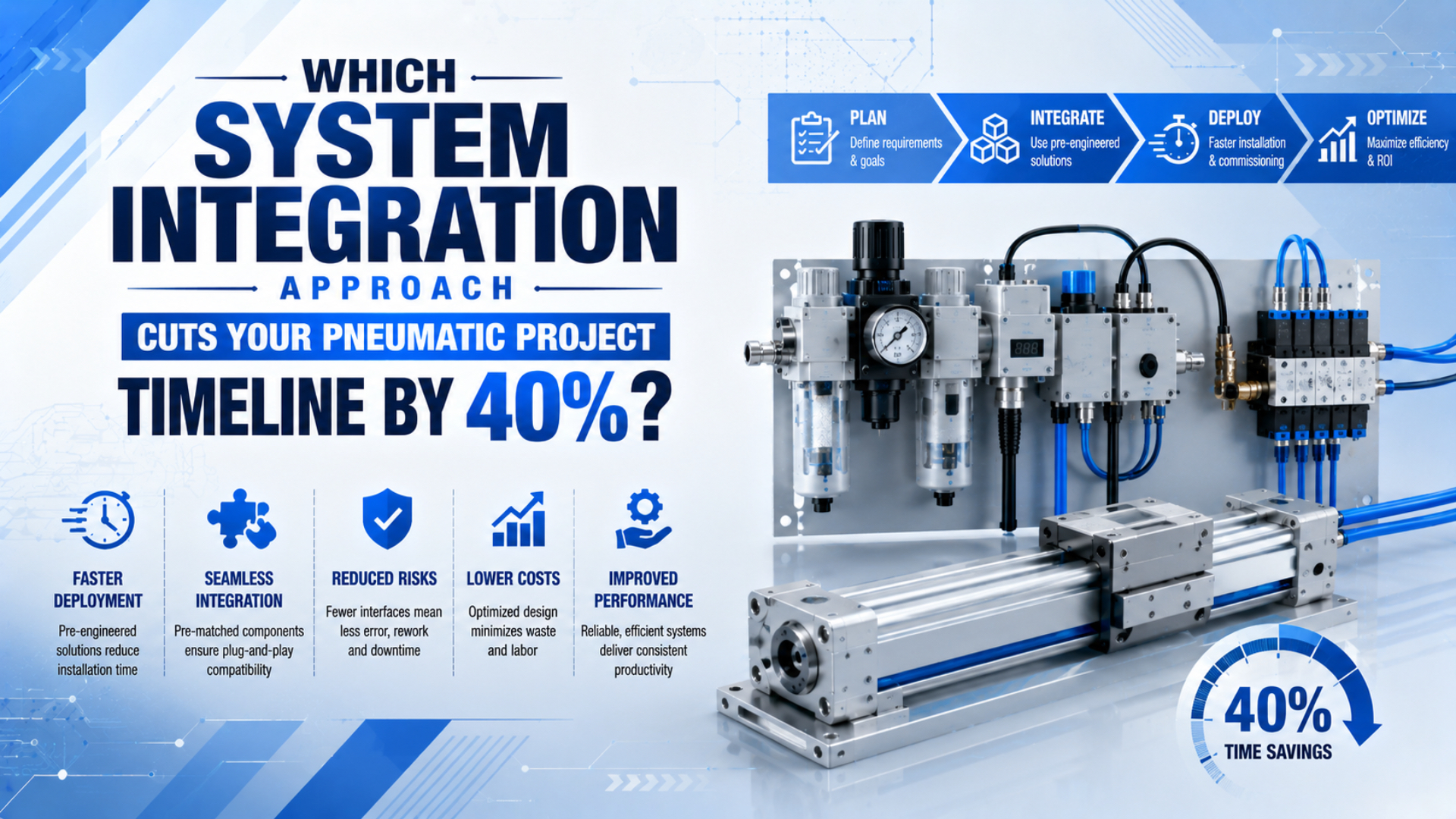
Which System Integration Approach Cuts Your Pneumatic Project Timeline by 40%?Use an interface-first pneumatic integration approach to target a measured 40% schedule reduction with controlled requirements, interfaces, FAT, and SAT.Blog Tag
pneumatic troubleshooting articles
Review every Bepto Pneumatic article connected to pneumatic troubleshooting, grouped as one focused reading list for engineers, maintenance staff, and sourcing specialists.
Tagged Reading Path
All articles tagged pneumatic troubleshooting
Use this archive to scan related selection notes, RFQ checks, replacement guidance, and pneumatic component references.
Showing 84 articles
Which System Integration Approach Cuts Your Pneumatic Project Timeline by 40%?Use an interface-first pneumatic integration approach to target a measured 40% schedule reduction with controlled requirements, interfaces, FAT, and SAT.
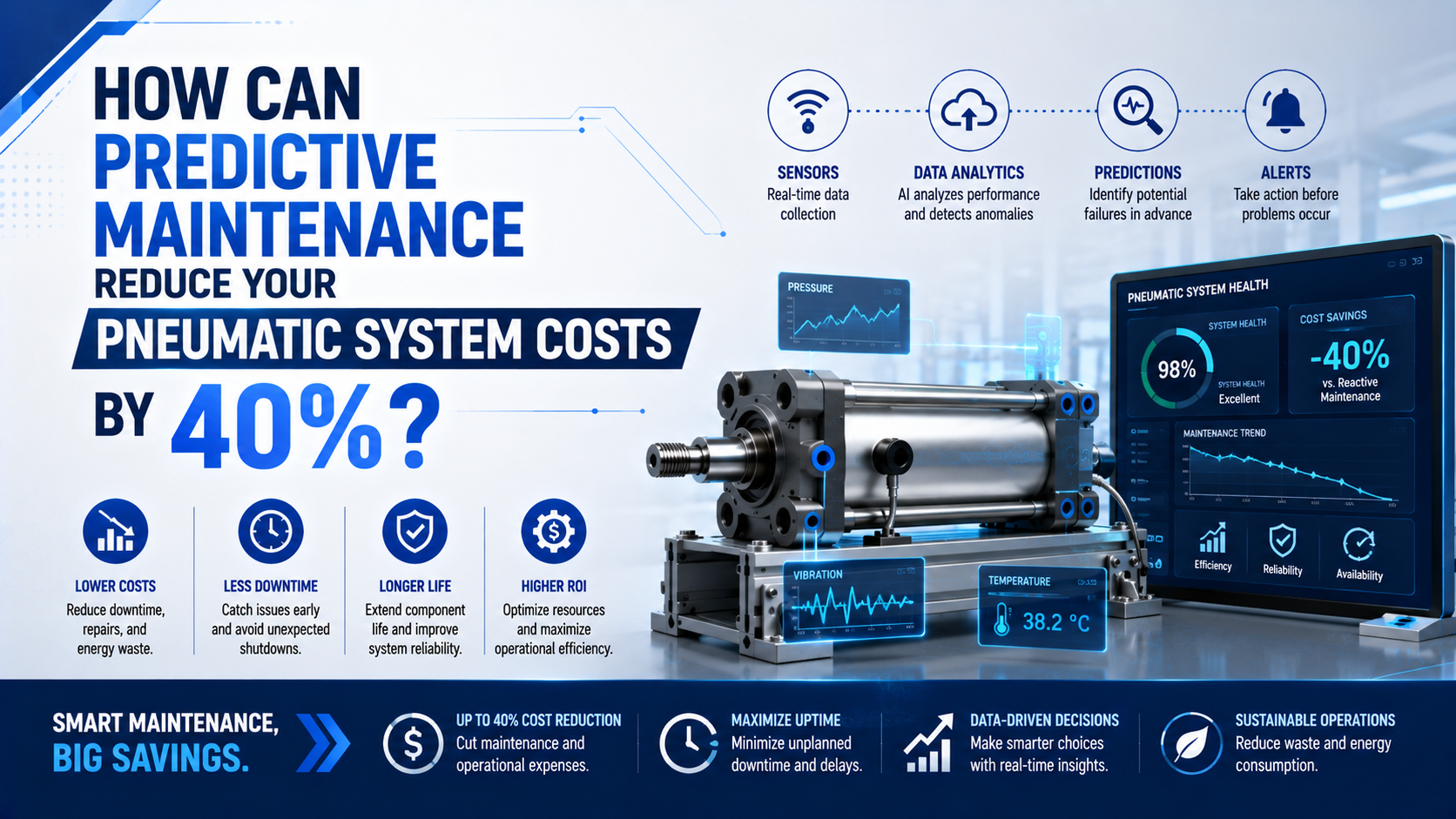
How Can Predictive Maintenance Reduce Your Pneumatic System Costs by 40%?Learn when pneumatic predictive maintenance can approach 40% cost savings by measuring downtime, leaks, repairs, quality losses, and program cost.
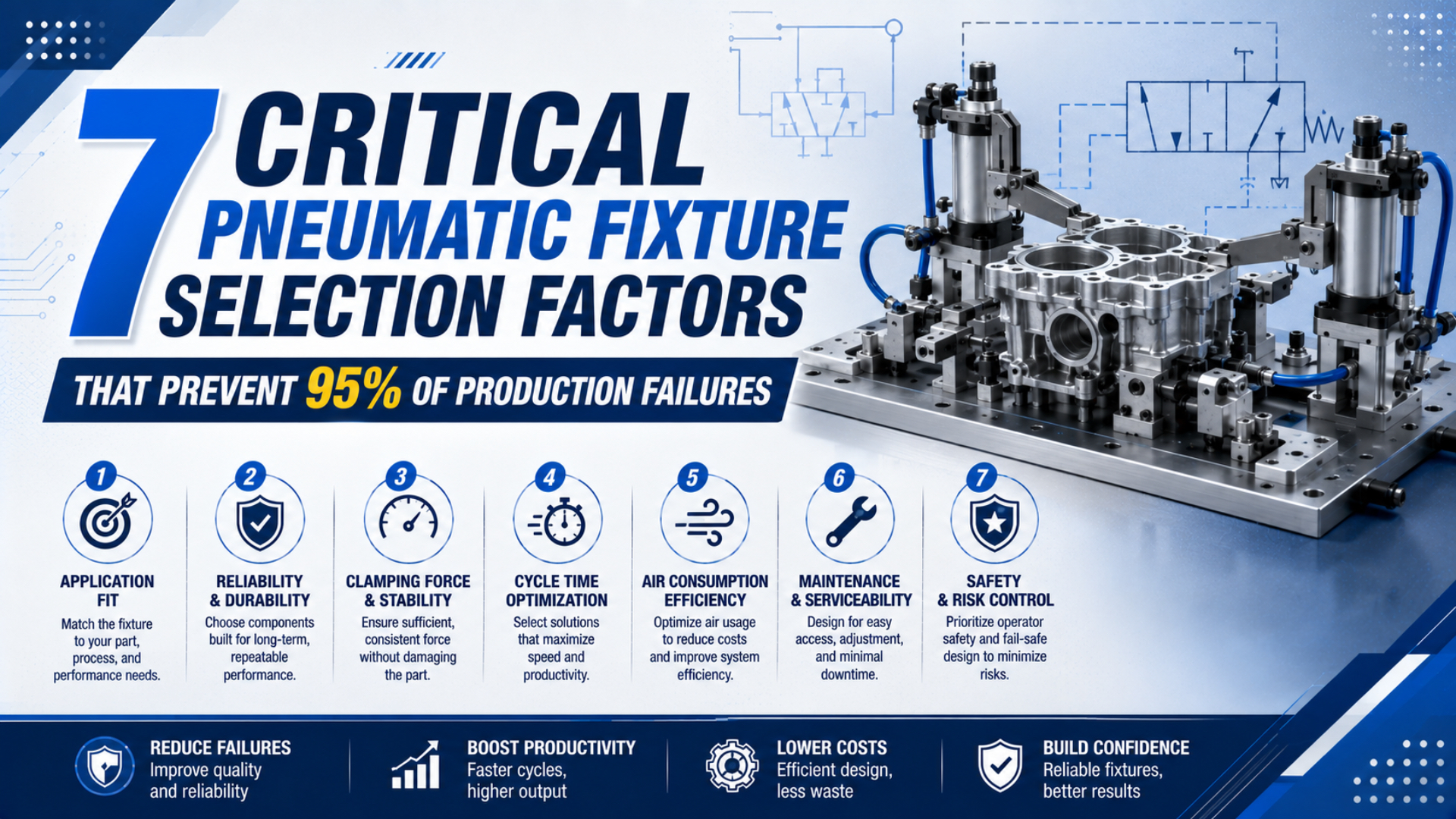
7 Critical Pneumatic Fixture Selection Factors That Prevent 95% of Production FailuresSelect pneumatic fixtures with seven checks for force, pressure, stroke, load path, fail-safe behavior, sensing, and quick-change interfaces.
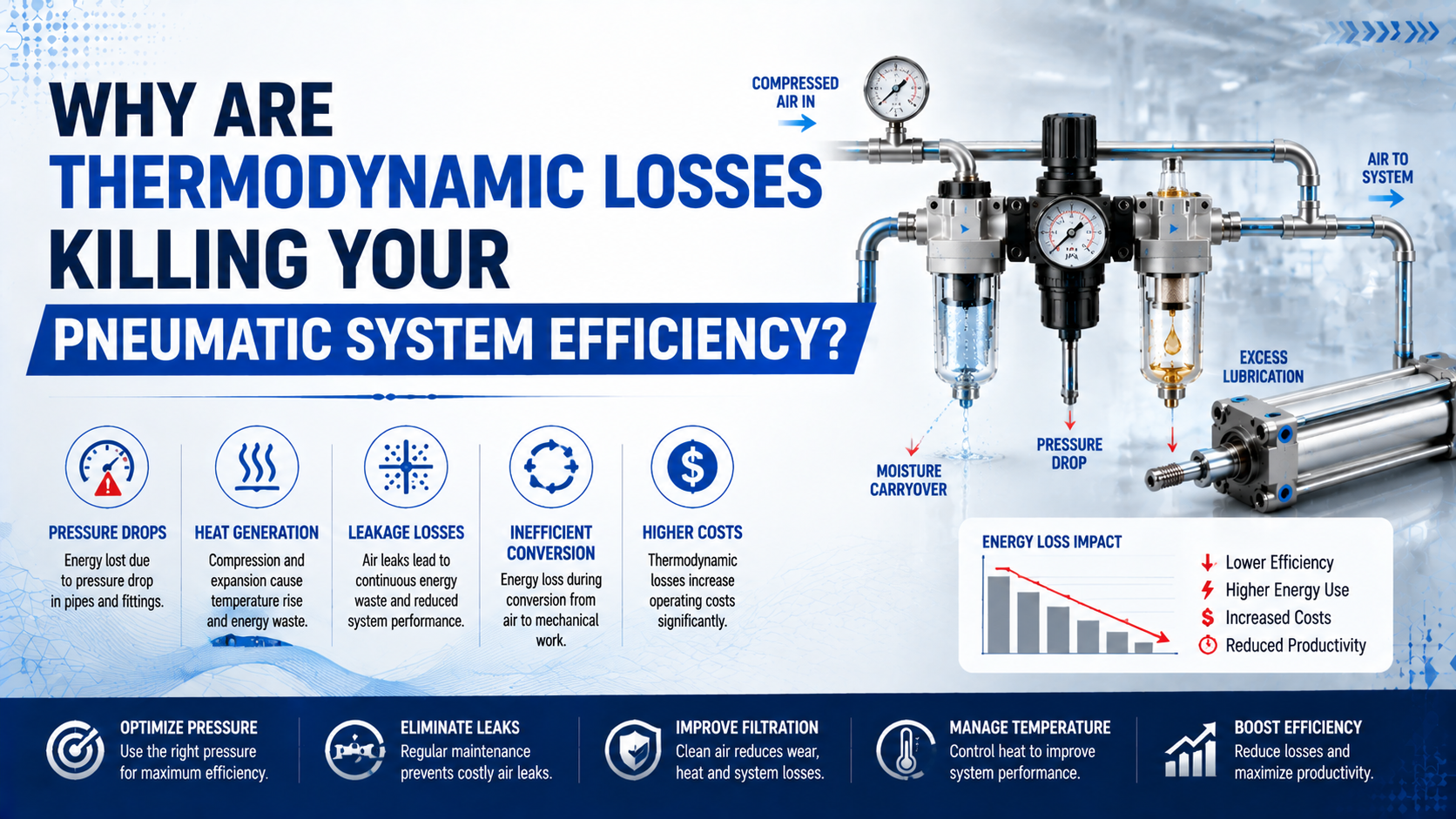
Why Are Thermodynamic Losses Killing Your Pneumatic System Efficiency?Trace pneumatic thermodynamic losses from compressor heat to exhaust using DOE's 80-93% figure, synchronized flow, pressure, work, and dew-point data.
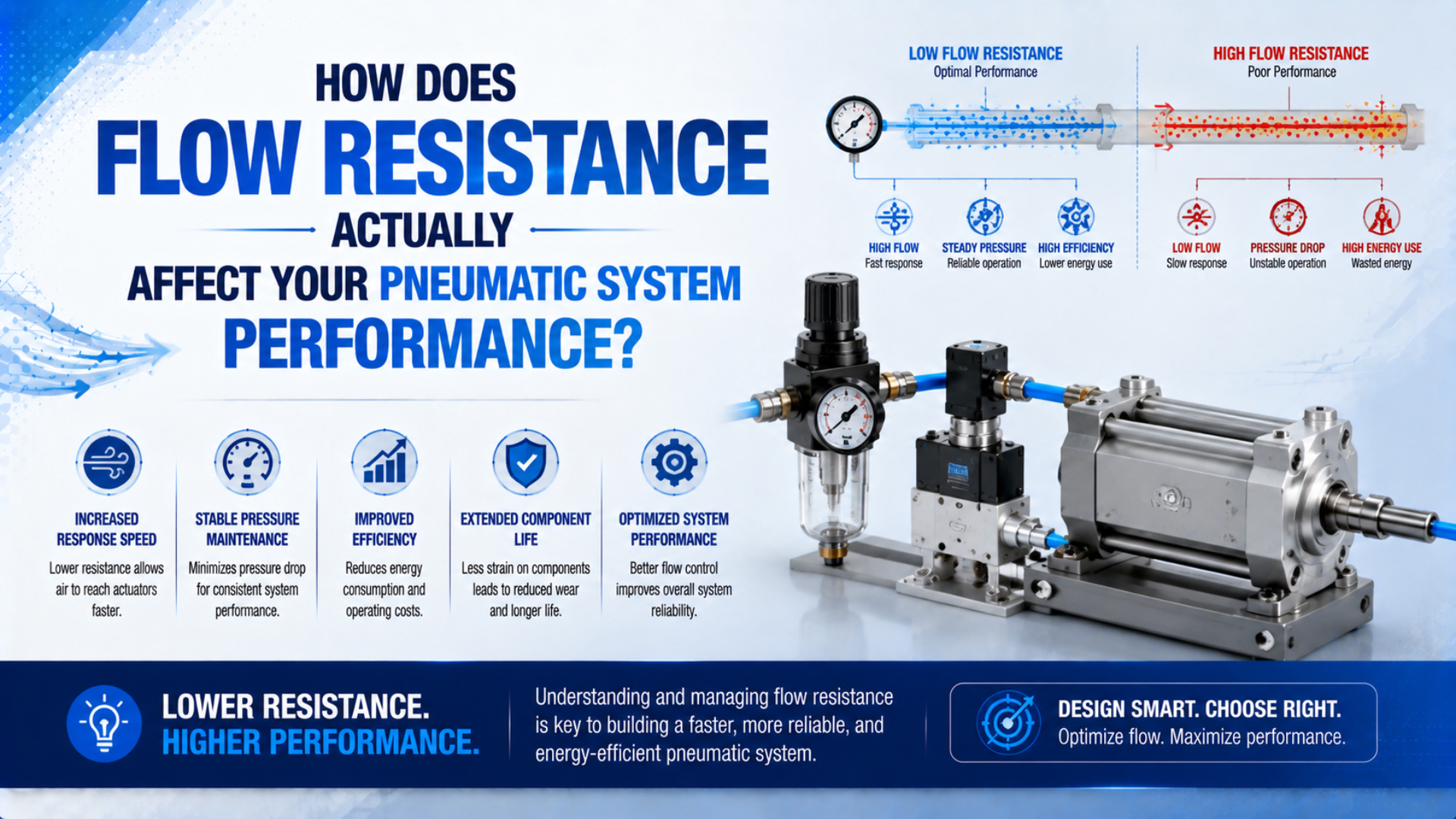
How Does Flow Resistance Actually Affect Your Pneumatic System Performance?Learn how pneumatic flow resistance reduces force, speed, and repeatability, then diagnose the real bottleneck with synchronized pressure measurements.
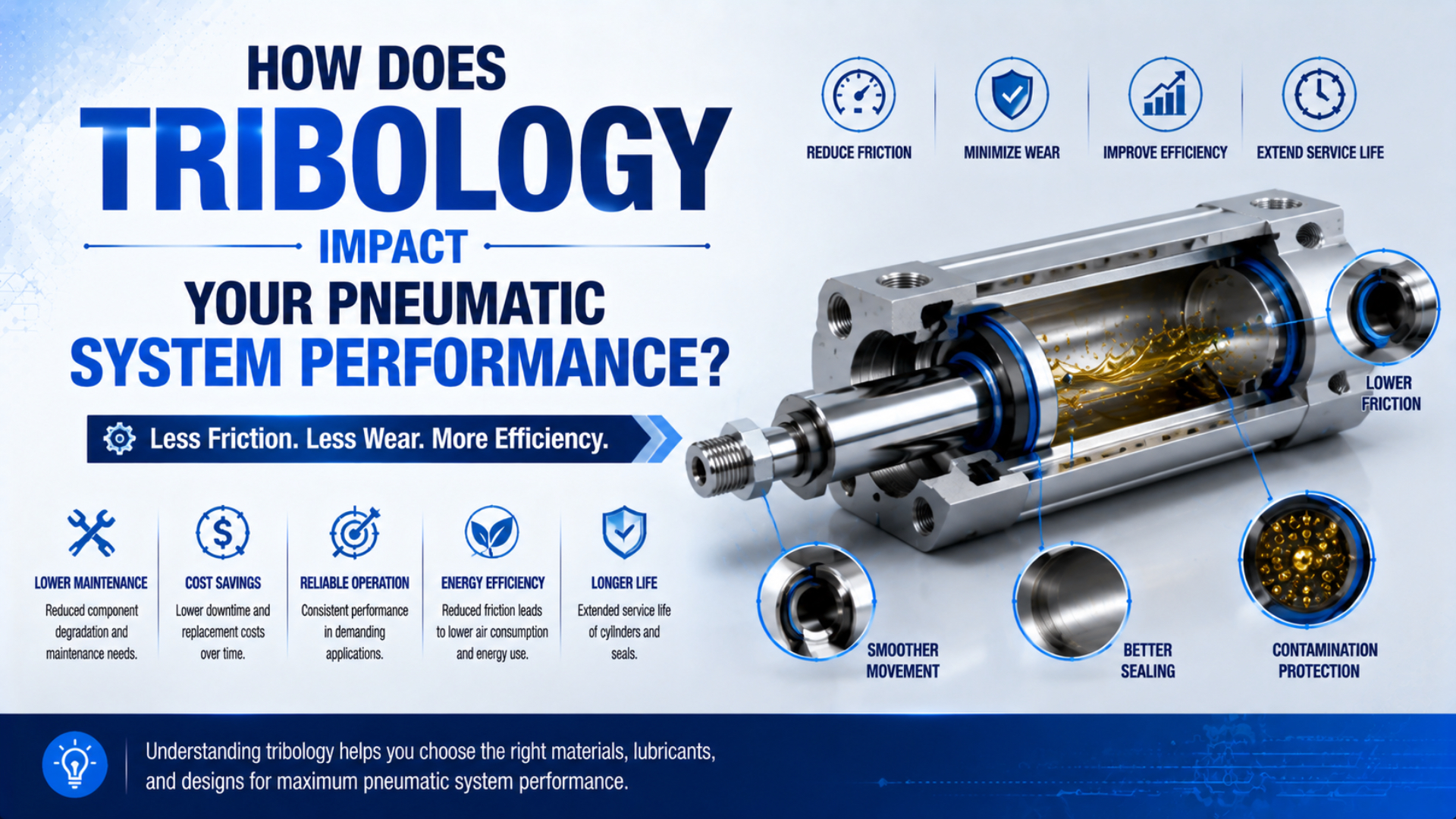
How Does Acoustic Noise Impact Your Pneumatic System Performance?Learn how pneumatic noise affects worker exposure and machine performance using NIOSH's 85 dBA limit, synchronized pressure tests, and safe exhaust fixes.
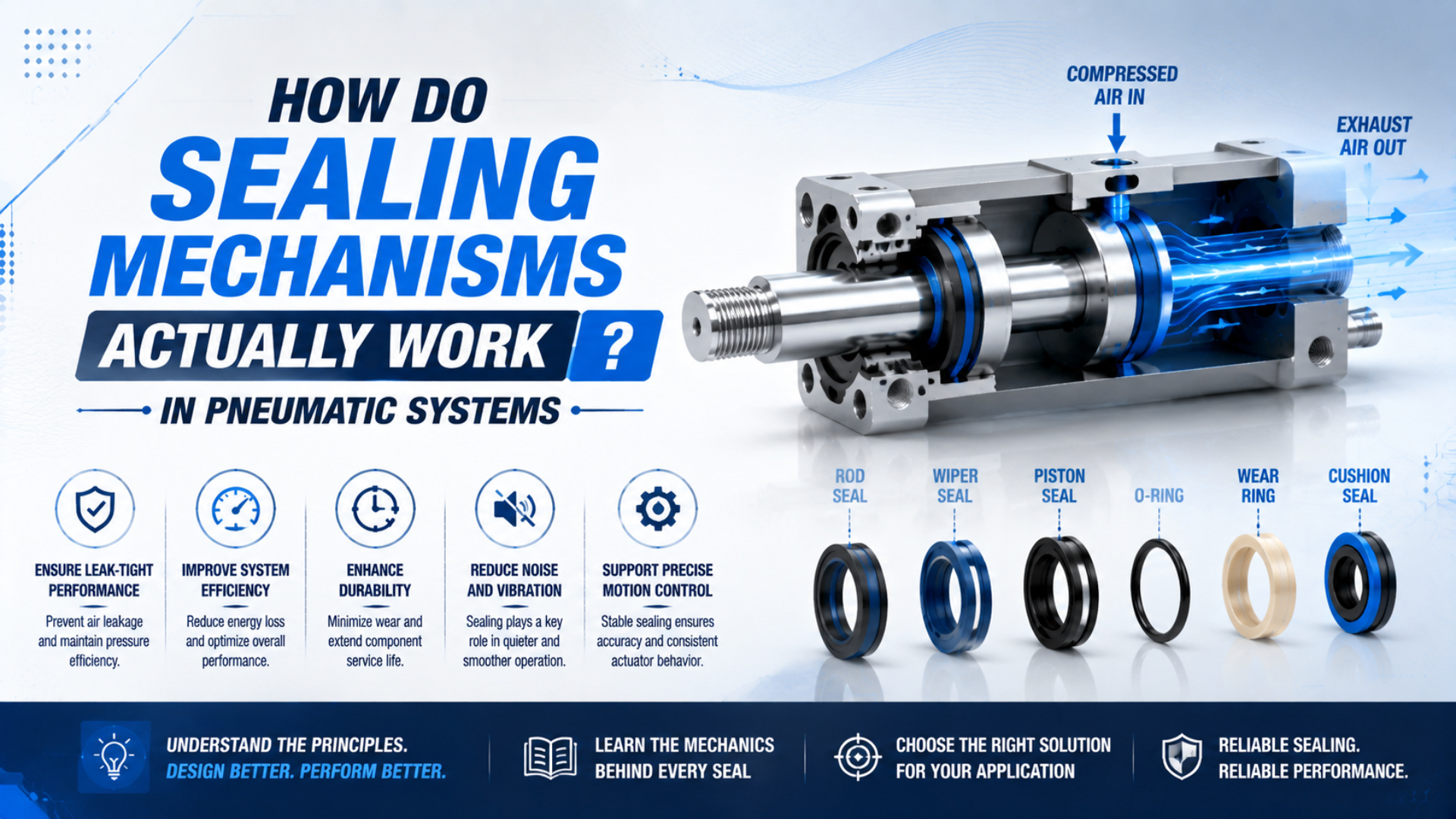
How Do Sealing Mechanisms Actually Work in Pneumatic Systems?Learn how pneumatic seals use squeeze, pressure energization, glands and lubrication; a 2019 study attributed 90% of cylinder friction to piston seals.
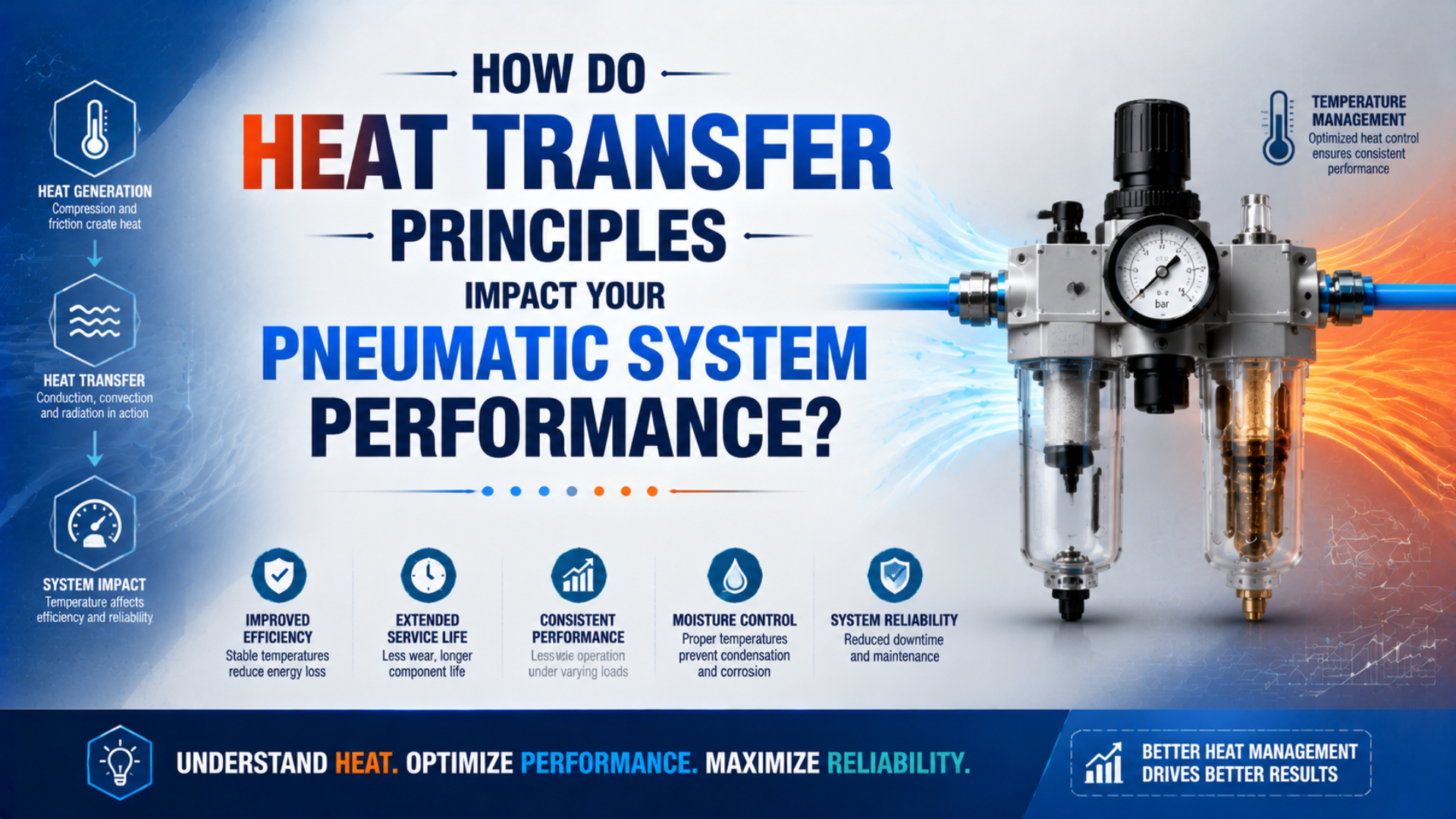
How Do Heat Transfer Principles Impact Your Pneumatic System Performance?Learn how conduction, convection, radiation, and gas transients affect pneumatic performance, using a 5-60°C rating example and a practical heat-balance method.
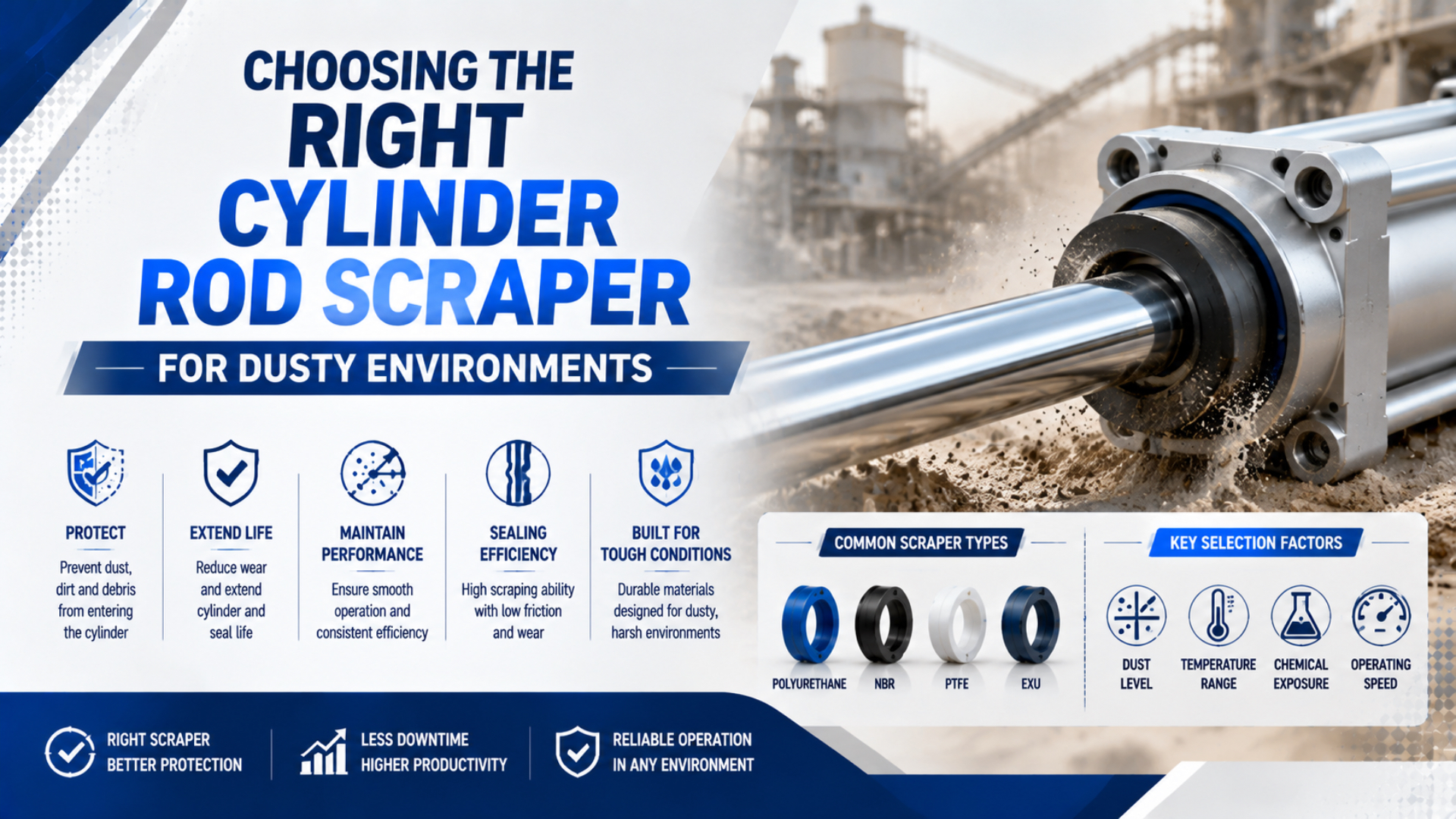
Choosing the Right Cylinder Rod Scraper for Dusty EnvironmentsSelect a pneumatic cylinder rod scraper by matching the contaminant, wiper profile, compound, housing, rod condition, lubrication, and maintenance evidence.
Choosing the Proper Wattage for Energy-Saving Solenoid CoilsChoose solenoid coil wattage using verified 1 W-to-0.35 W data, correct voltage-drop math, peak-current checks, thermal limits, and installed testing.
Clevis Mount Pneumatic Cylinder Definition: The Key to Pivoting Action in Automation SystemsDefine a clevis mount pneumatic cylinder using ISO 8140 and Parker guidance, then verify its pivot geometry, pin alignment, loads, clearances, and RFQ data.
How to Protect Pneumatic Cylinders from Corrosion in Harsh Washdown EnvironmentsProtect washdown cylinders using 21 CFR 117.40, 304L/316L PRE data, drainage, compatible seals, ingress evidence, and corrosion inspections for field use.
Contamination Control: Protecting Your Pneumatic Assets in Dusty FactoriesProtect pneumatic assets in dusty factories by controlling 3 contamination paths: external dust, dirty compressed air, and maintenance ingress at point of use.
The Risks of Gray Market Pneumatic Components: Protecting Your EquipmentSeparate gray-market, counterfeit, and alternative pneumatic parts, then use 3 evidence gates to verify provenance, inspect arrivals, and control release.
Inner Band Fatigue: Analysis of Steel Strip Failure in Rodless CylindersDiagnose rodless cylinder inner band fatigue using Parker's 5-size RC inspection criteria, bending-strain screening, damage morphology, and repair decisions.
Slit-Type Cylinder Sealing: The Mechanics of Opening and Closing BandsLearn how slit-type cylinder bands open and reseat using Parker parts 11 and 17, Festo band-reverser guidance, and SMC MY1 service and inspection rules.
Root Cause Analysis of Piston Rod Fracture: Bending vs. Tensile FailureDiagnose piston rod fracture by separating bending, axial load, fatigue, and final overload with a 3-stage evidence-preserving root cause analysis workflow.
Analyzing Seal Nibbling: The Interaction Between Pressure and Gap ClearanceIdentify seal nibbling in pneumatic cylinders using 5 damage signatures, pressure-gap checks, teardown evidence, backup-ring rules, and corrective-action verification.
Pneumatic Hammering: Causes and Structural Damage AssessmentDiagnose pneumatic hammering after cylinder end-of-stroke impact, trace structural damage, apply OSHA 1910.147 isolation, and set evidence-based repair gates.
Contamination Analysis: Identifying Particle Origins in Cylinder FailureTrace pneumatic-cylinder particle origins through 4 evidence groups: sampling location, morphology, composition and timing, with ISO-based air checks.
The Physics of “Diesel Effect” in Pneumatic Cylinders (Micro-Dieseling)Calculate why an 8:1 ideal adiabatic compression reaches about 258°C, then use ISO 4414 and ISO 8573 evidence to investigate suspected micro-dieseling.
Analyzing Sensor Failure: Magnetic Field Decay or Reed Switch Burnout?Use a 5-stage test to separate cylinder sensor wiring, Reed contact, mounting, piston-motion, and magnet faults without relying on universal gauss limits.
Vacuum Cylinder Physics: Forces Retraction DynamicsStandard atmosphere is 101.325 kPa. Calculate vacuum-cylinder force from chamber pressures, piston geometry, friction, load, and evacuation flow accurately.
High-Frequency Oscillation: Thermal Buildup in Short-Stroke CylindersLearn why 2 Hz cannot define short-stroke cylinder heat risk; calculate sliding distance and reversal energy, then test against model-specific limits.
Transient Pressure Response: Measuring Lag Time in Long-Stroke CylindersMeasure long-stroke cylinder pressure lag with 2 synchronized sensors, defined thresholds, and position data that separate wave travel from chamber filling.
Finite Element Analysis (FEA) of Cylinder End Caps Under Shock LoadsLearn how to model pneumatic cylinder end caps under shock loads using transient FEA, convergence checks, fatigue assessment, and physical validation.
Hard Anodizing Depth: How Oxide Layers Protect Aluminum CylindersLearn why 50 µm is a common Type III reference, how coating growth changes cylinder dimensions, and which ISO and ASTM checks validate hard anodizing.
Stress Corrosion Cracking in Stainless Steel Cylinders in Chloride EnvironmentsStress corrosion cracking needs 3 conditions: susceptible stainless steel, tensile stress, and chloride exposure. Learn inspection and prevention steps.
Polyurethane Hydrolysis: Why Seals Crumble in Humid EnvironmentsDiagnose polyurethane seal hydrolysis using 5 evidence groups, material chemistry, ISO test methods, and retained-property data that separates it from wear.
Lip Profile Optimization: Balancing Sealing Force and FrictionUse a 2019 pneumatic-seal study and matched friction, leakage, wear, surface, and duty tests to validate lip profiles without universal geometry rules.
Energized Seals: Using Spring Loaders for Low-Pressure Cylinder SealingParker’s FBC-V seal is rated to 3,000 psi at up to 0.5 m/s in specified glands. Learn when spring energizers fit low-pressure cylinders and how to validate.
Leakage Pathways: Micro-Analysis of Scratched Cylinder BoresLearn when cylinder-bore scratches become leak paths, how to isolate competing faults, inspect damage, quantify leakage, and choose repair or replacement.
The Physics of Extrusion Gaps: Preventing Seal Failure at High PressuresCalculate radial extrusion gap, use 2 backup rings for reversing-pressure O-rings, account for heat and wear, and diagnose pneumatic seal nibbling correctly.
Failure Analysis: Understanding Galvanic Corrosion Between Cylinder ComponentsFour conditions create a galvanic cell: dissimilar materials, electrical contact, a shared electrolyte, and potential difference. Diagnose cylinder failures.
Differential Pressure Sensing: Detecting End-of-Stroke Without SwitchesA 1997 patent detects pneumatic end-of-stroke from a preset pressure crossover, not direct piston position; learn calibration, logic, and failure limits.
Pressure Drop Dynamics Across Cylinder Ports and FittingsMeasure pressure drop across cylinder ports and fittings with dynamic gauges, ISO 6358 flow data, and a 0.4 bar example to prevent weak, slow strokes.
Fluid Viscosity at Low Temperatures: Impact on Cylinder Response TimeLearn why air viscosity falls about 11% from +20°C to -20°C, what really delays cold cylinders, and how to test seals, air, valves, pressure, and motion.
Hydrodynamic Lubrication: When Do Cylinder Seals “Hydroplane”?One pneumatic-cylinder study found piston seals produced about 90% of measured friction; learn why speed alone cannot predict seal hydroplaning reliably.
Quantifying Stick-Slip: The Science Behind “Stuttering” Motion in CylindersA 2026 three-cylinder study synchronized position, velocity, and chamber pressure. Learn to quantify stick-slip without a universal SSI threshold.
The Physics of Seal Lip Geometry: Radiused vs. Sharp Edge DesignsCompare 3 pneumatic sealing functions and learn how lip radius, preload, rod finish, lubrication, and wiper pairing control friction, leakage, and wear.
Boundary Lubrication Failure: The Root Cause of Scoring in Cylinder RodsDiagnose 5 cylinder rod scoring patterns, separate boundary lubrication from root causes, and verify alignment, debris, lubricant, surfaces, and repair limits.
The Physics of Solenoid Actuation: Force, Stroke, and Response TimeLearn how solenoid force changes with stroke, why a 12 ms valve rating needs test conditions, and how current, load, and air gaps set real response time.
Failure Analysis: The Technical Root Causes of Solenoid Coil BurnoutDiagnose solenoid coil burnout by separating 4 coil architectures and checking voltage, current, duty rating, heat, moisture, connectors, and core movement.
Failure Analysis: The Physics of Spool Stiction and Varnish BuildupDiagnose spool valve stiction by separating electrical, pilot, exhaust, mechanical, water, particle, lubricant, and varnish-like deposit causes.
What Is a Pneumatic Valve Armature and How Does It Control Your Airflow?Learn how three basic solenoid-valve components turn coil current into armature motion, pilot action, port switching, airflow, and practical fault diagnosis.
The Physics of Airflow Through Different Valve Orifice GeometriesLearn how 4 orifice geometries change separation, discharge coefficient, choking, and valve flow, with ISO 6358 data, equations, and inspection rules.
Understanding Pressure Drop in Valve Manifold Common PassagesUnderstand valve-manifold passage pressure drop using SMC's two-end supply rule above 4 stations, ISO 6358 data, dynamic tests, and pressure-zone design.
What Is Flow Starvation in Pneumatic Systems and How Can You Prevent It?Diagnose pneumatic flow starvation with dynamic pressure tests, CAGI's 10 percent pressure-drop benchmark, practical valve checks, and peak-demand prevention.
The Design Differences: Needle Valves vs. Flow Control ValvesCompare needle valves with one-way pneumatic flow controls using Festo's 95 versus 76-95 L/min example, flow symbols, direction, and selection checks.
Failure Analysis: Identifying the Root Cause of Internal Valve LeakageDiagnose internal valve leakage with port isolation, pressure checks, and teardown evidence; one SMC metal-seal valve permits 200 Ncc per port at 0.5 MPa.
The Technical Effects of Using Unlubricated Air on Spool Valve SealsLearn how unlubricated air affects spool valve seals, why ISO 8573-1 separates 3 contaminant classes, and how to qualify lubrication changes safely.
How Valve Response Time Consistency Affects Machine SynchronizationLearn how valve response-time jitter creates axis skew, how to set a machine-specific timing budget, and why a 2 ms valve is not automatically synchronized.
Failure Analysis: How Contamination Size (Microns) Affects Different Valve TypesAnalyze pneumatic valve contamination with 6 evidence checks covering particle size, valve clearance, residue, air quality, filter data, and failure timing.
How to Specify pneumatic Valves for Low-Temperature (Sub-Zero) EnvironmentsSpecify sub-zero pneumatic valves by 4 temperature limits, pressure dew point, actuation type, seals, pilot pressure, flow, cold-start tests, and supplier data.
How to Analyze Cylinder Drift Caused by Internal Seal BypassDiagnose cylinder drift with dual-port pressure, position data, and isolation tests; one SMC actuator permits 10 cm³/min internal leakage, not a universal limit
The Engineering Principles of Rodless Cylinder Dust BandsLearn how rodless cylinder dust bands protect the slot, differ from inner sealing bands, reseat around the carriage, and signal inspection or replacement needs.
A Technical Guide to Cylinder Reed Switch and Hall Effect Sensor OperationCompare reed, Hall, and MR cylinder switches using a 0.8 mA two-wire leakage example, PNP/NPN wiring, PLC checks, and commissioning tests for automation.
A Technical Analysis of Cylinder Response Time and Dead VolumeCalculate cylinder response time from valve delay, breakaway pressure, and dead volume; a 6 mm ID tube contains 28.3 cm³ per metre before motion begins.
Failure Analysis: Fatigue Failure in Cylinder Tie Rods and MountsDiagnose cylinder tie-rod and mount fatigue with NASA's 3-stage fracture model, pressure-cycle stress reconstruction, NDT limits, and corrective actions.
The Physics of Pressure Drop Within the Cylinder Barrel During High FlowLearn why ISO 6358 excludes cylinders from steady-state flow tests, model 2 moving chambers, measure dynamic pressure, and diagnose high-flow losses safely.
The Physics of Venturi Ejectors and Vacuum Control ValvesLearn how Venturi ejectors create vacuum, why nozzle flow chokes, and how to read 80-90 kPa vacuum curves, size response time, and control air use.
What Causes Water Hammer in Pneumatic Systems and How Can You Prevent It?Separate four causes of pneumatic water hammer, identify the first pressure event, and prevent dry-air surges, liquid slugs, and unsafe repressurization.
The Physics of Adiabatic Expansion and its Cooling Effect in CylindersCalculate the ideal cooling limit for air expanding from 100 psig at 70°F, then diagnose dew point, exhaust icing, seals, and real cylinder temperatures.
Why Do 73% of Pneumatic Cylinder Failures Start with Piston Rod Seal Leaks?Diagnose pneumatic cylinder piston rod seal leaks with a 4-path fault tree covering rod damage, side load, contamination, material limits, and repair checks.
Which Cylinders Can Handle Millions of Cycles Without Failure in High-Speed Applications?Learn which pneumatic cylinders have documented 10-million-cycle evidence and how to verify load, speed, travel, test conditions, and failure limits.
What Causes Cylinder Cushion Failures and How Can You Diagnose Problems Before Costly Breakdowns?Diagnose cylinder cushion failures safely by separating adjustment, excess energy, exhaust restriction, seal leakage, contamination, and mechanical damage.
Why Do 73% of Low-Speed Cylinder Applications Suffer from Stick-Slip Motion Problems?Diagnose pneumatic cylinder stick-slip using chamber pressure, load, dwell, and friction checks, with model-specific low-speed data down to 0.5 mm/s reliably.
What Are the Critical Failure Modes and Wear Points That Cause Rotary Actuator Breakdowns in Industrial Applications?Diagnose rotary actuator breakdowns using SMC's 0.2-to-1 s/90° range plus seal, shaft-load, backlash, cushion, air-quality, and repair checks.
How Can Proper Mounting and Alignment Extend Your Actuator’s Service Life by 300%?Use Parker's 2-position alignment check, correct mounting geometry, and measured commissioning records to reduce avoidable actuator wear and early failure.
How Do Air Pressure Fluctuations Destroy Actuator Performance Consistency and Production Quality?See how a 1 bar shift changes a 63 mm cylinder's catalog force by 280 N, then link dynamic pressure traces to actuator faults and production quality escapes.
How Can You Protect Foundry Actuators from Contamination and Catastrophic Failure in Extreme Industrial Environments?Protect foundry actuators with shielding, scrapers, clean air, and verification; NIOSH found local exhaust cut silica exposure by 59-77%.
How Can You Optimize Tubing and Fitting Configurations to Maximize Pneumatic Flow and Eliminate Performance Bottlenecks?Optimize pneumatic tubing and fittings with ISO 14743's 3-16 mm scope, dynamic pressure mapping, tube ID checks, and measured branch validation at peak flow.
How Can You Prevent Pneumatic System Failures in Cold Weather Operations?Prevent cold-weather pneumatic failures by controlling pressure dew point, verifying component temperature ratings, and commissioning the system for winter.
How Do Pneumatic Pressure Boosters Work and Why Are They Essential for Industrial Applications?Learn how pneumatic pressure boosters work, when local boosting makes sense, and how to size pressure, flow, air storage, consumption, and safety.
How Can Quick-Connect Fittings Revolutionize Your Tool Changeover Speed and Boost Production Efficiency?Select quick-connect fittings using ISO 6150 profiles at 10, 16 or 25 bar, measured changeover time, flow data, venting, locking, and pneumatic tool safety.
How Can You Eliminate Costly Pneumatic Leaks Through Proper Push-in Fitting Installation?Stop push-in fitting leaks on 3-16 mm tube with ISO 14743-aligned selection, square cuts, full insertion, pull checks, support, safe testing, and diagnosis.
What Is Internal Leakage in Pneumatic Cylinders and How Much Is Costing You?Learn why pneumatic cylinder internal leakage has no universal limit, how a 10 cm3/min model threshold is tested, and how measured flow becomes annual cost.
How to Troubleshoot a Failing Pneumatic Solenoid ValveTroubleshoot pneumatic solenoid valves with OSHA 1910.147 isolation, voltage and continuity checks, pilot-pressure tests, and symptom-based decisions.
Case Study: Solving a Pneumatic Cylinder Contamination Problem in a Woodworking PlantA woodworking plant traced pneumatic cylinder contamination, improved dust extraction and rod protection, then verified repairs against OSHA’s 15 mg/m³ limit.
What Causes Internal Leakage in Pneumatic Cylinders and How Can You Fix It?Diagnose pneumatic cylinder internal leakage using Parker seal limits, SMC's 10 cm3/min example, safe isolation tests, and repair criteria.
What is Breakaway Force in Pneumatic Cylinders?Calculate pneumatic cylinder breakaway force with a 63 mm example, port-pressure testing, stick-slip diagnosis, sizing checks, and sourced limits in practice.
How Is Pneumatic Solenoid Valve Response Time Measured? A Complete GuideMeasure pneumatic solenoid valve response time with ISO 12238 timing points, pressure traces, 90% output checks, RFQ notes, and troubleshooting steps.
How Do You Calculate Pressure Drop Across a Pneumatic Valve?Calculate pneumatic valve pressure drop with Cv, P1/P2 gauge readings, ISO 6358 flow tests, CAGI 10% system limit, and field checks before resizing valves.
How Do Pressure Fluctuations Impact Pneumatic Systems?Learn how pressure fluctuations affect pneumatic systems with DOE pressure-drop data, 343 m/s wave-speed math, resonance checks, and damping fixes for uptime.