
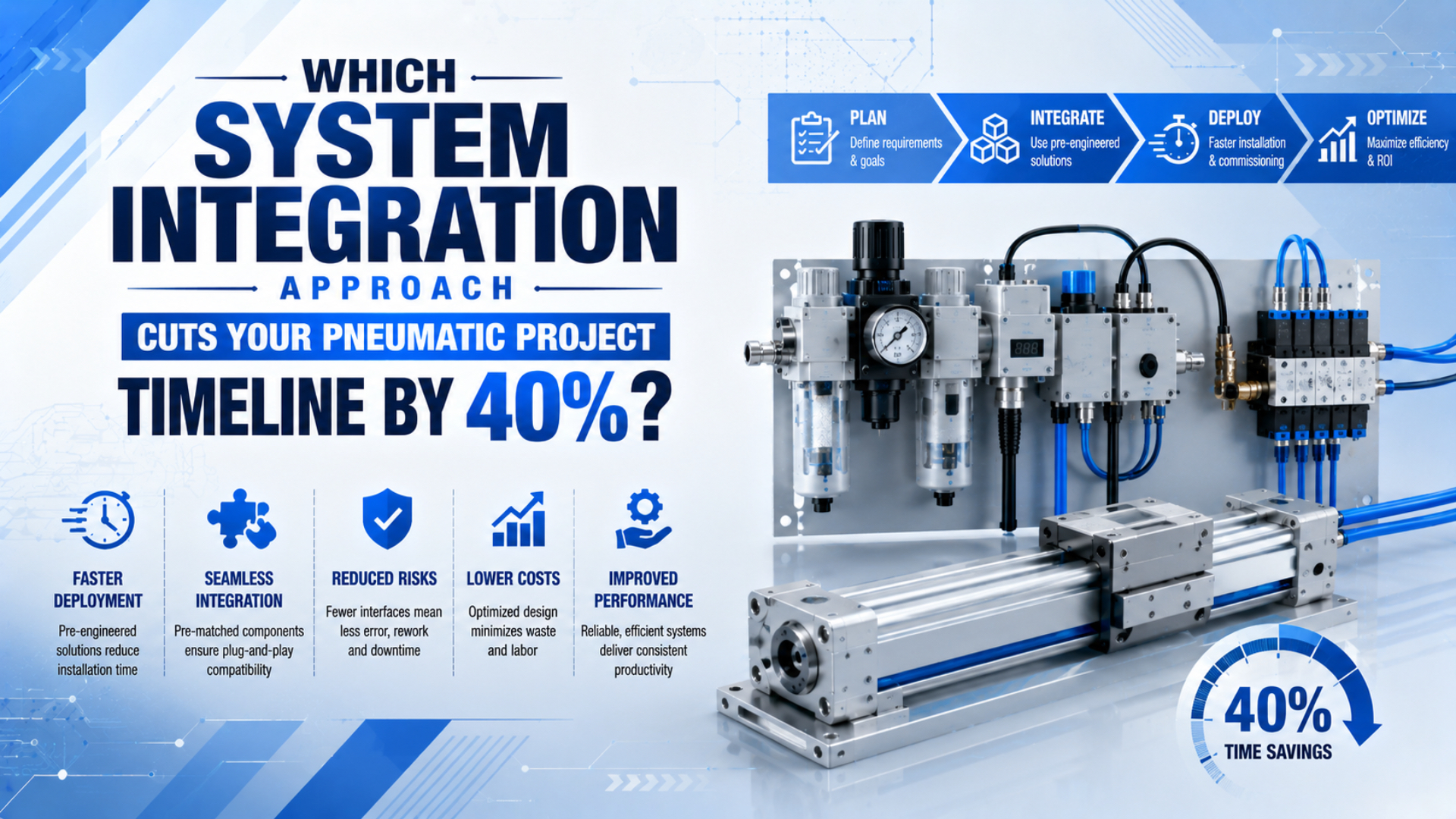
Which System Integration Approach Cuts Your Pneumatic Project Timeline by 40%?Use an interface-first pneumatic integration approach to target a measured 40% schedule reduction with controlled requirements, interfaces, FAT, and SAT.Blog Tag
pneumatic maintenance articles
Review every Bepto Pneumatic article connected to pneumatic maintenance, grouped as one focused reading list for engineers, maintenance staff, and sourcing specialists.
Tagged Reading Path
All articles tagged pneumatic maintenance
Use this archive to scan related selection notes, RFQ checks, replacement guidance, and pneumatic component references.
Showing 228 articles
Which System Integration Approach Cuts Your Pneumatic Project Timeline by 40%?Use an interface-first pneumatic integration approach to target a measured 40% schedule reduction with controlled requirements, interfaces, FAT, and SAT.
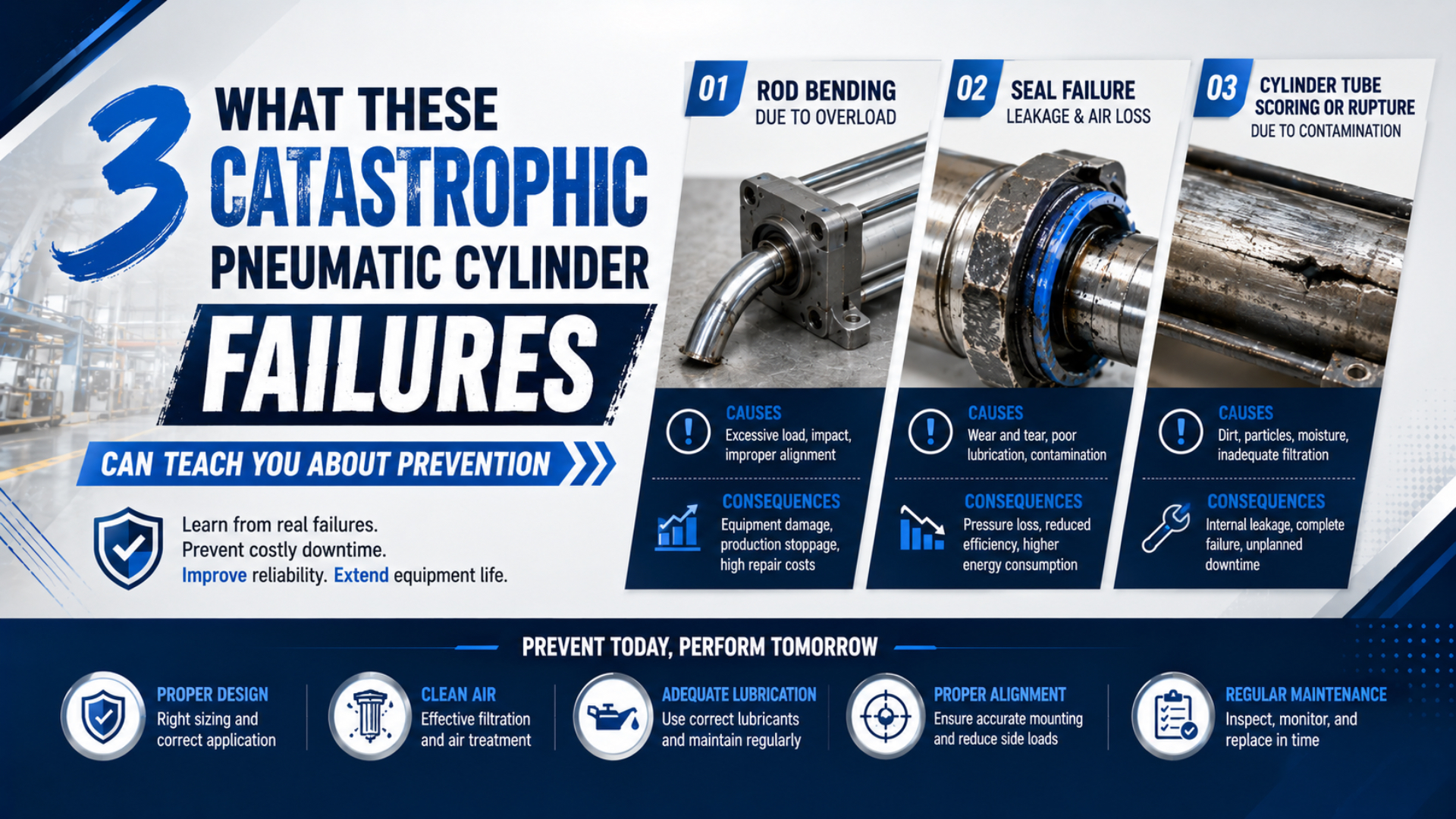
What These 3 Catastrophic Pneumatic Cylinder Failures Can Teach You About PreventionLearn 3 evidence-based pneumatic cylinder failure chains involving magnetic force margin, cold seals, and loose mounts, plus prevention and restart checks.
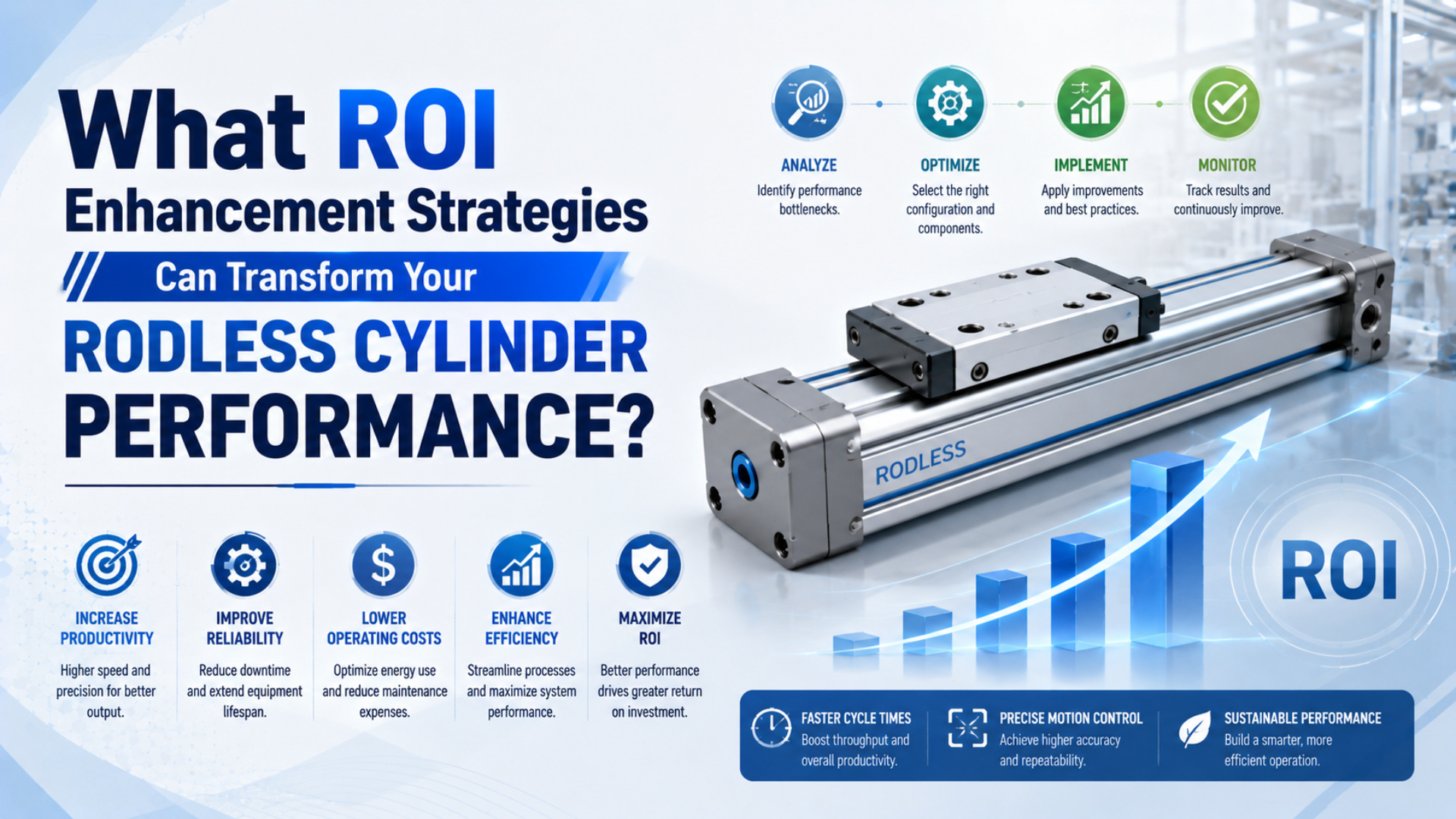
What ROI Enhancement Strategies Can Transform Your Rodless Cylinder Performance?Build a defensible rodless cylinder ROI case from measured air, downtime, maintenance and inventory costs, using 3 formulas and sensitivity checks today.
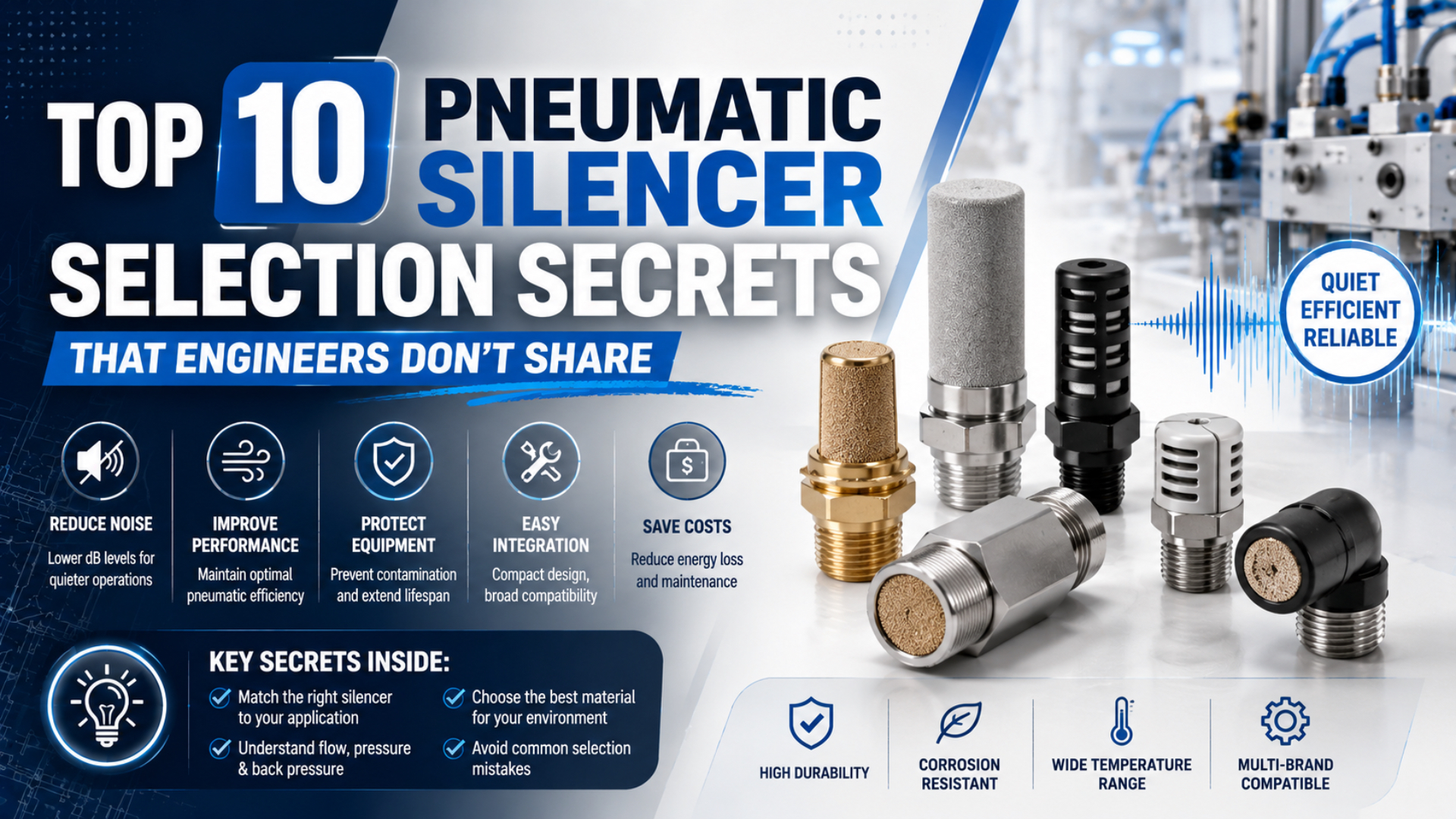
Top 10 Pneumatic Silencer Selection Secrets That Engineers Don’t ShareSelect pneumatic silencers by ISO 20145 test mode, peak exhaust flow, back pressure, and air quality. G1/8 Festo models span 1,340 to 2,050 L/min at 6 bar.
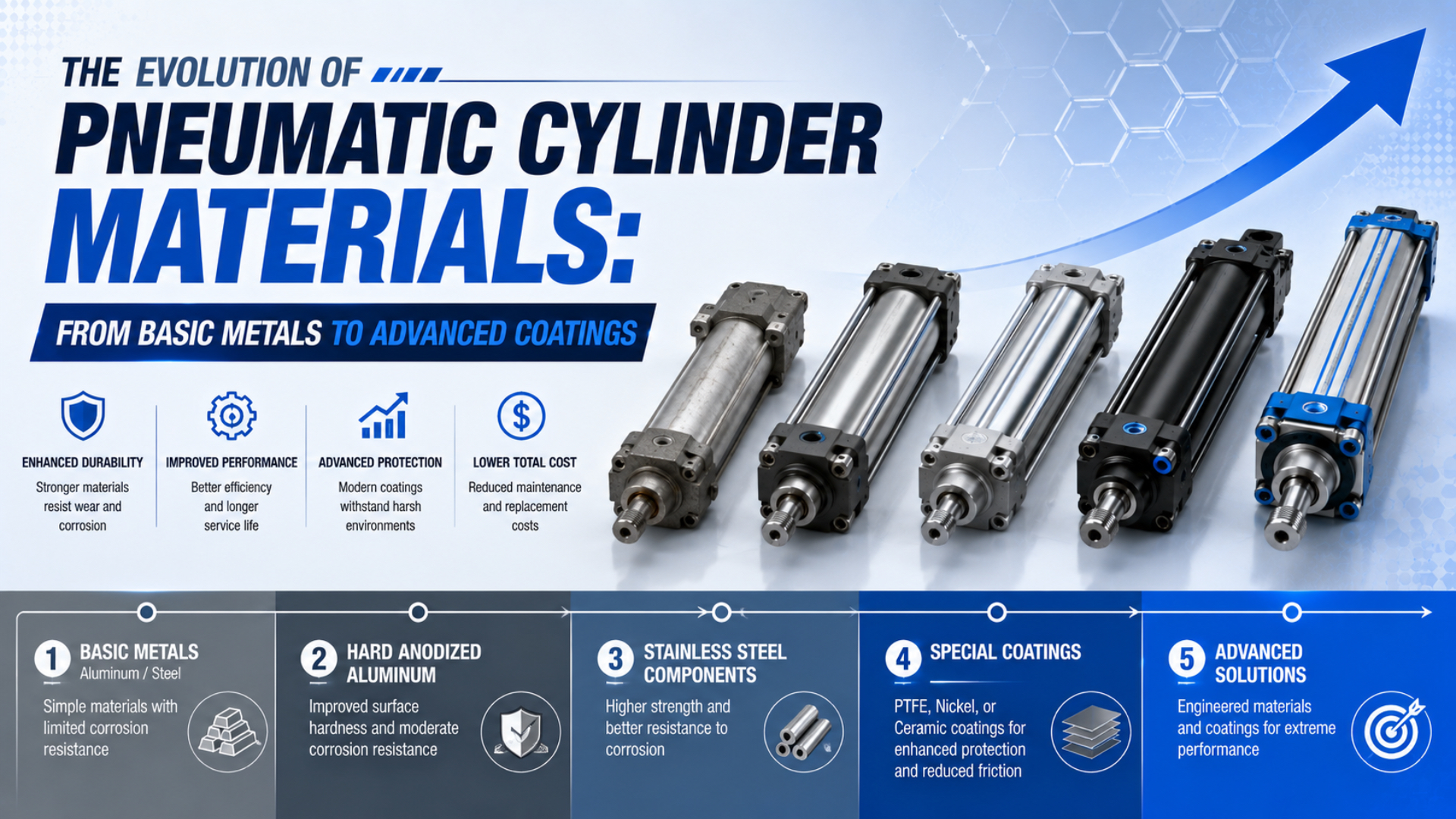
The Evolution of Pneumatic Cylinder Materials: From Basic Metals to Advanced CoatingsTrace pneumatic cylinder materials across the ISO 15552 32-320 mm range, from steel and anodized aluminum to stainless assemblies and advanced surface films.
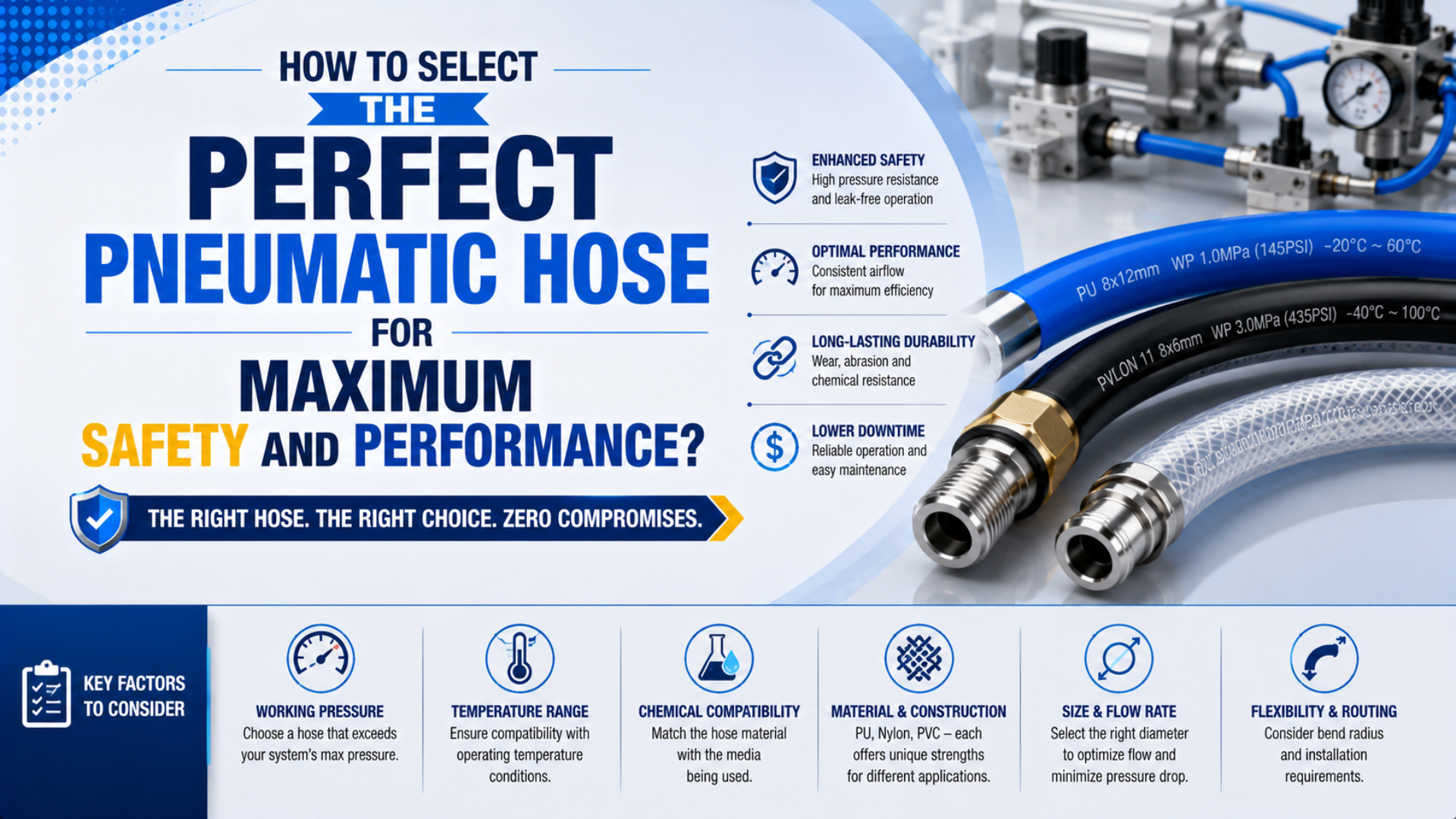
How to Select the Perfect Pneumatic Hose for Maximum Safety and Performance?Select pneumatic hose by pressure, temperature, media, flow, motion, and ends. ISO 2398:2024 covers textile-reinforced rubber hose up to 25 bar in service.
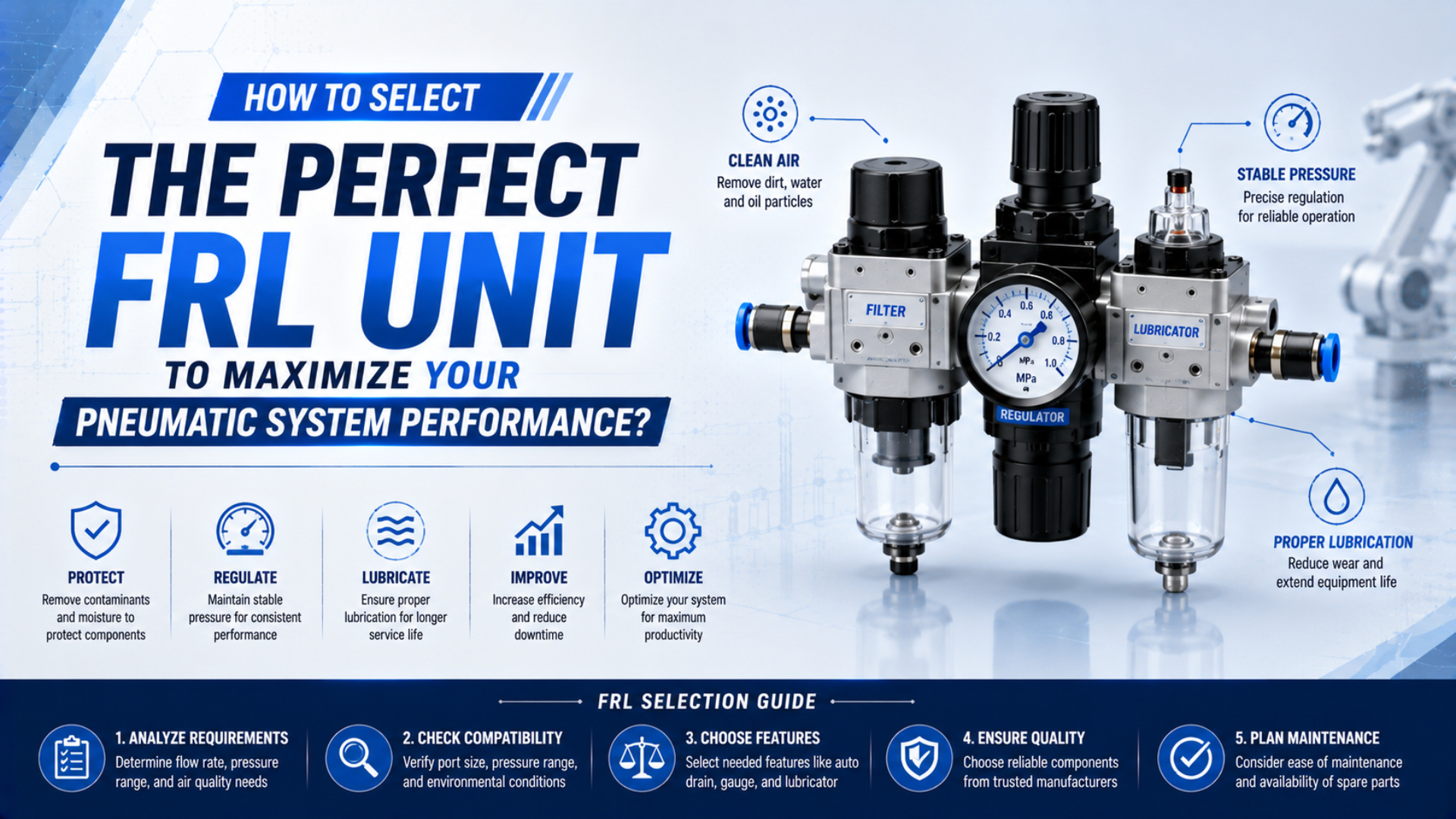
How to Select the Perfect FRL Unit to Maximize Your Pneumatic System Performance?ISO 6953-2:2024 standardizes regulator tests across 39 pages. Learn to select FRL flow, filtration, pressure, drains, materials, and lubrication correctly.
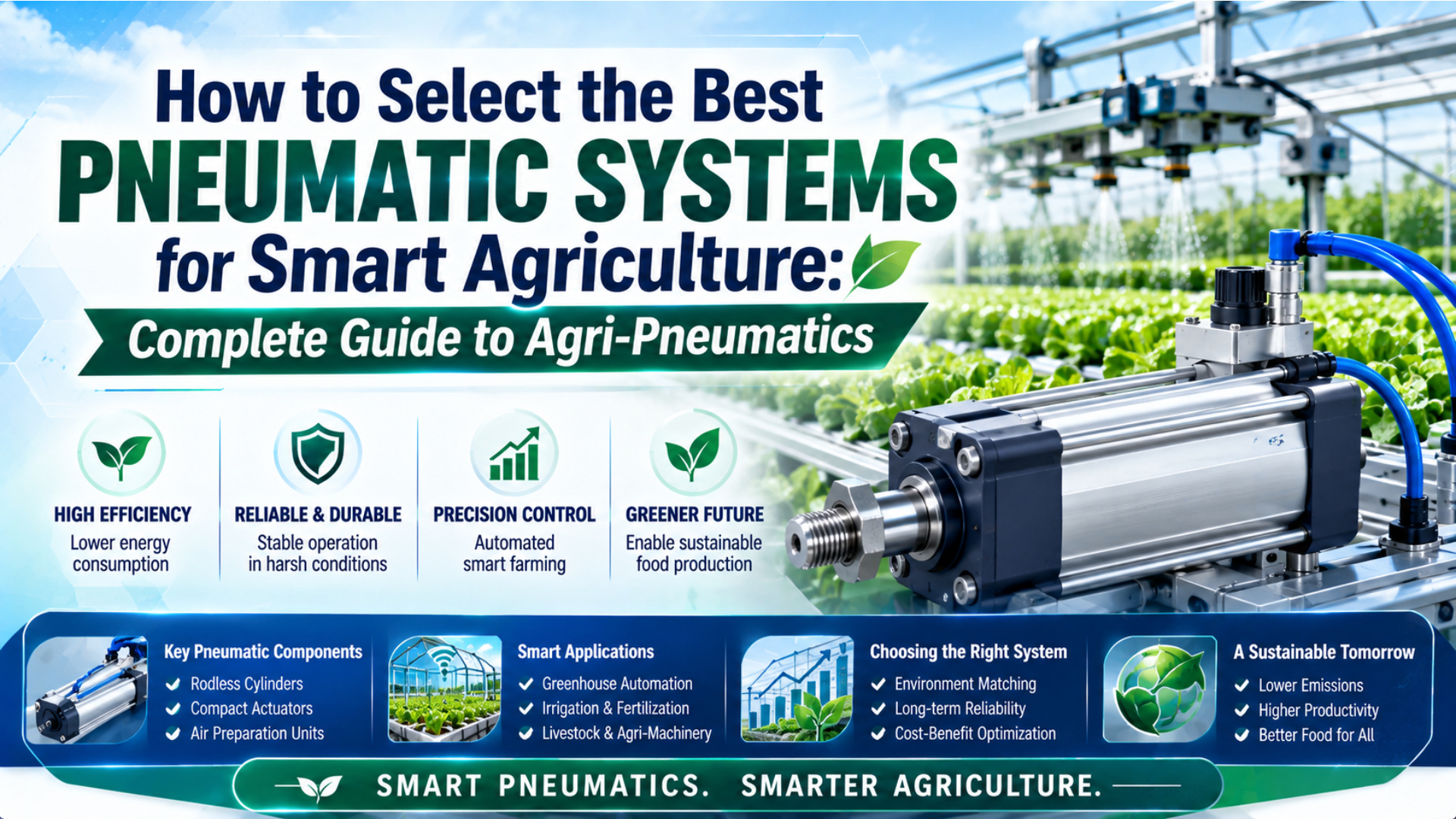
How to Select the Best Pneumatic Systems for Smart Agriculture: Complete Guide to Agri-PneumaticsSelect pneumatic systems for smart agriculture using 8 checks for load, air demand, contamination, controls, spray PWM, fail-safe design, and maintenance.
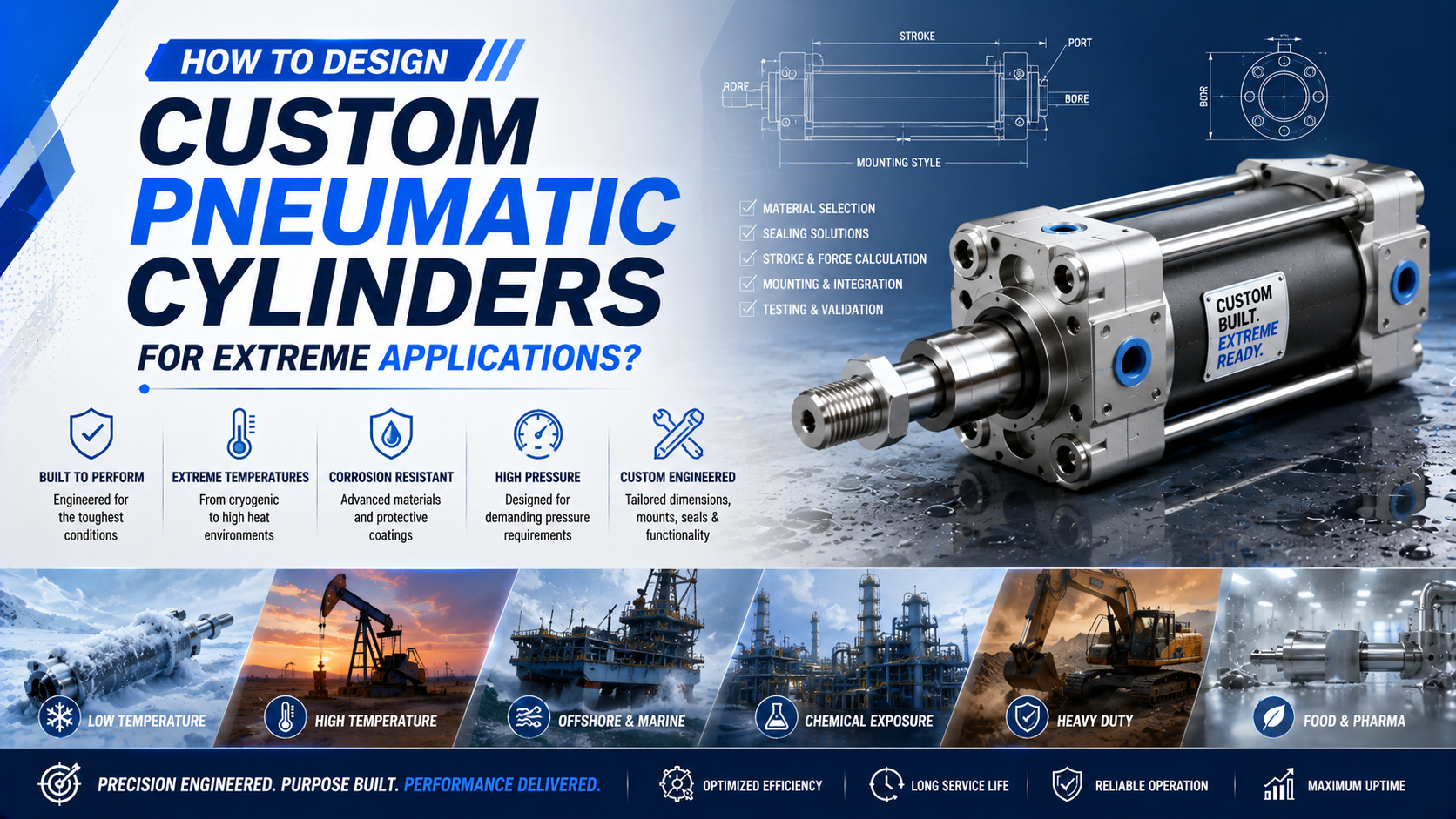
How to Design Custom Pneumatic Cylinders for Extreme Applications?Design custom pneumatic cylinders with 8 engineering checks for load, pressure, heat, seals, long-stroke stability, tolerances, and validation evidence.
How to Cut Pneumatic System Energy Costs by 42% While Achieving Sustainability Goals?Cut pneumatic energy costs toward a measured 42% target with DOE-backed leak, pressure, control, tariff, carbon, and verification checks.
How Much Are Your Rodless Cylinder Systems Really Costing You?Build an auditable rodless cylinder TCO model with ISO 8778 air data, NIST present-value rules, SMC maintenance inputs, and DOE energy methods.
How Do You Verify Pneumatic Cylinder Reliability Without Wasting Months on Testing?Verify pneumatic cylinder reliability with ISO 19973 methods, a 22-run confidence example, failure-mode testing, valid acceleration models, and release gates.
How Can You Optimize Your Pipeline System for Maximum Efficiency?Optimize compressed-air pipelines using CAGI's 10% pressure-drop limit, synchronized measurements, branch analysis, storage checks, and field A/B tests.
How Can Predictive Maintenance Reduce Your Pneumatic System Costs by 40%?Learn when pneumatic predictive maintenance can approach 40% cost savings by measuring downtime, leaks, repairs, quality losses, and program cost.
7 Critical Pneumatic Fixture Selection Factors That Prevent 95% of Production FailuresSelect pneumatic fixtures with seven checks for force, pressure, stroke, load path, fail-safe behavior, sensing, and quick-change interfaces.
7 Best Pneumatic Energy-Saving Systems That Cut Costs by 35%Compare 7 pneumatic energy-saving systems using ISO 11011 boundaries, DOE leak and heat data, and cost baselines before claiming a verified 35% reduction.
Why Are Thermodynamic Losses Killing Your Pneumatic System Efficiency?Trace pneumatic thermodynamic losses from compressor heat to exhaust using DOE's 80-93% figure, synchronized flow, pressure, work, and dew-point data.
What are the advanced principles behind modern lubrication systems?ISO 8573-1 separates 3 compressed-air contaminant groups. Learn how friction regimes, viscosity, additives, delivery, and validation protect pneumatics.
How Does Vibration Resonance Impact Industrial Equipment Performance?Diagnose vibration resonance using ISO 13373 measurement practice, a 600 RPM = 10 Hz order example, frequency-response evidence, and pneumatic actuator checks.
How Does Tribology Impact Your Pneumatic System Performance?A practical tribology guide for diagnosing pneumatic cylinder friction, wear, lubrication, surface texture, contamination, and low-speed motion problems.
How Do Sealing Mechanisms Actually Work in Pneumatic Systems?Learn how pneumatic seals use squeeze, pressure energization, glands and lubrication; a 2019 study attributed 90% of cylinder friction to piston seals.
How Do Rodless Pneumatic Cylinders Actually Work?Trace 6 stages of a rodless pneumatic cylinder stroke, from valve switching and piston force to coupling, guidance, cushioning, and position sensing.
How Do Heat Transfer Principles Impact Your Pneumatic System Performance?Learn how conduction, convection, radiation, and gas transients affect pneumatic performance, using a 5-60°C rating example and a practical heat-balance method.
How Can You Achieve Seamless Multi-brand Compatibility for Rodless Cylinder Systems?Check rodless cylinder replacements across 7 interfaces covering load moments, mounting, ports, cushioning, sensors, controls, and machine acceptance.
High-Temp vs. Low-Temp Grease for Cylinder Lubrication: Selection GuideSelect high- or low-temperature cylinder grease using 4 measured temperatures, exact seal compatibility, ASTM limits, and in-service commissioning checks.
Air Preparation Units (FRL): Why Cheap Units Cost More in Cylinder WearLearn why low-cost FRL units can increase cylinder wear using ISO 8573 targets, CAGI's 10% pressure-drop limit, and a site-specific TCO model for procurement.
Review of Top Pneumatic Cylinder Coatings for Harsh EnvironmentsSelect pneumatic cylinder coatings by exposure, component, ISO 9227 limits, anodizing, ENP, rod finishes, stainless grades, and acceptance evidence.
Selection Guide: Polycarbonate vs. Metal Bowls for FRL UnitsCompare polycarbonate vs. metal bowls for FRL units using model-specific ratings, chemical exposure, guards, sight gauges, and exact replacement data.
Choosing the Right Cylinder Rod Scraper for Dusty EnvironmentsSelect a pneumatic cylinder rod scraper by matching the contaminant, wiper profile, compound, housing, rod condition, lubrication, and maintenance evidence.
Pneumatic Tubing Materials: Polyurethane vs Nylon — Which One Does Your System Really Need?Compare PU and nylon pneumatic tubing using ISO 11619's 3 to 16 mm scope, pressure, temperature, bend radius, chemical, motion, fitting, and safety checks.
Brass vs. Composite Push-in Fittings: Weight and DurabilityCompare brass and composite push-in fittings using ISO 14743 assembly tests, exact catalog weights, and pressure, temperature, chemical, and vibration limits.
Working Principle of Pneumatic FRL Units: Explore the Technical Functions of Each Component Within a Pneumatic Air Preparation SystemLearn how pneumatic FRL filters, regulators, and lubricators work, using ISO 8573-1 purity classes and CAGI's 5-7 psig filter service trigger.
Selection Criteria for Modular FRLs vs. Standalone UnitsChoose modular FRLs or standalone units by flow curves, service isolation, interfaces, fit, and spares. SMC AC-D combinations cover 1/8- to 1-inch ports.
Selecting Coalescing Filters: Oil Removal vs. Particle FiltrationCompare particle and coalescing filters by contaminant phase, ISO 8573-1 classes, rated flow, pressure drop, and the 0.01 mg/m3 Class 1 oil limit in practice.
What Is a SIL Rated Solenoid Valve? (SIL Levels Explained for Industrial Safety Systems)Learn what SIL-rated solenoid valve claims mean, how SIL 1-4 targets apply to a complete SIF, and which certificate and proof-test evidence to verify.
Hard Anodized vs. Standard Aluminum Cylinder Barrels: Wear ComparisonCompare hard and standard anodized cylinder barrels using 3 abrasion methods, controlled life testing, bore inspection, failure evidence, and TCO checks.
Selecting Cylinder End-Cap Cushions: Fixed Bumper vs. Adjustable Air CushionChoose fixed bumpers or adjustable air cushions using Parker's 50% entry-speed warning, moving mass, model-specific energy limits, and commissioning evidence.
Selecting Solenoid Valve Coils: 24VDC vs. 120VAC PerformanceCompare 24VDC and 120VAC solenoid coils across 8 electrical checks: supply, output, current, frequency, suppression, duty, heat, and safe field validation.
Choosing Between Stainless Steel 304 and 316 for Pneumatic ComponentsChoose stainless steel 304 or 316 pneumatic components using 2.1% molybdenum context, chloride exposure, cleaning chemistry, MTRs, and PMI checks in service.
Comparing Pneumatic Silencer Thread Types for Exhaust PortsCompare 4 pneumatic silencer thread groups using ISO and ASME definitions, then verify sealing, flow, back pressure, and mounting before a safe replacement.
Choosing the Right Pneumatic Lubricating Oil (VG32 vs. VG68)Choose VG32 or VG68 pneumatic oil using 6 checks for OEM requirements, 40°C viscosity, lubricant chemistry, seal compatibility, FRL delivery, and H1 service.
Comparing Manual Drain vs. Semi-Auto Drain FRL FiltersCompare manual and semi-automatic FRL filter drains by mechanism, pressure cycle, measured condensate rate, bowl capacity, maintenance access, and failure response.
Choice of Cylinder Seal Material for Extreme Cold (-40°C)Choose a pneumatic cylinder seal system for -40°C service using exact compound data, OEM options, compatibility checks, and cold-soak validation for engineers.
Selecting Water Separators vs. Standard Coalescing FiltersCompare water separators and coalescing filters using ISO 8573's 3 contaminant groups, model-specific flow, pressure drop, drain, and dryer requirements.
Guide to Choosing Cylinder Magnetic Sensors for Welding EnvironmentsChoose cylinder magnetic sensors for welding cells by separating magnetic, EMC, spatter, cable, wiring, and qualification requirements.
Selection Criteria for Centralized FRL vs. Point-of-Use RegulatorsChoose centralized FRL or point-of-use regulators using CAGI's 10% pressure-drop target, regulator flow curves, air-quality needs, and live-cycle tests.
Shipping Heavy Hydraulic/Pneumatic Parts: Packaging and Logistics GuideProtect heavy hydraulic and pneumatic parts using ISTA 3B/3E test paths, ISPM 15 scope, cargo securing, safe handling, export documents, and cargo claims.
Warranty Terms Explained: What Should Your Pneumatic Cylinder Guarantee Cover?Review 12 pneumatic cylinder warranty fields covering duration, exclusions, claim evidence, remedies, freight, liability, and document precedence rules.
Managing Obsolescence: Sourcing Parts for Discontinued Cylinder ModelsManage discontinued pneumatic cylinders with IEC 62402, ISO 15552's 32-320 mm scope, verified cross-references, spare planning, and first-article tests.
Textile Machinery Upgrades: Lint-Resistant Pneumatic SolutionsUse OSHA’s 0.2-0.75 mg/m³ cotton-dust limits correctly while selecting scrapers, rodless cylinders, air quality, and validation tests for textile machines.
Rail and Transport: Sourcing Vibration-Proof Pneumatic Door ActuatorsSource vibration-proof pneumatic door actuators with 5 evidence gates covering EN 14752, IEC 61373, system safety, interfaces, testing, and change control.
Agriculture Automation: Weather-Proof Cylinders for Farming EquipmentSpecify farm pneumatic cylinders using ISO 15552's 32-320 mm range, exposure mapping, seal compatibility, air-quality controls, and field validation tests.
Maximizing Uptime: Selecting Cylinders for 24/7 Production EnvironmentsSelect pneumatic cylinders for 24/7 production by converting duty into cycles and travel, then check 15 Hz limits, cushioning, guides, air quality, and spares.
The Cost of Downtime: Why Reliable Pneumatics Are Critical for Automotive LinesSiemens reports USD 2.3 million per hour of automotive downtime. Learn how pneumatic criticality, spares, diagnostics, and safe recovery reduce exposure.
Heavy-Duty Cylinders: Solutions for Harsh Mining and Construction ApplicationsSpecify mining and construction cylinders with 8 checks covering dust, air quality, mounting, seals, temperature, corrosion, qualification, and maintenance.
How to Protect Pneumatic Cylinders from Corrosion in Harsh Washdown EnvironmentsProtect washdown cylinders using 21 CFR 117.40, 304L/316L PRE data, drainage, compatible seals, ingress evidence, and corrosion inspections for field use.
Temperature Extremes: Sourcing Cylinders for Freezers and FoundriesA practical RFQ and qualification guide for sourcing pneumatic cylinders that must work in freezers, near furnaces, or through repeated temperature cycles.
Contamination Control: Protecting Your Pneumatic Assets in Dusty FactoriesProtect pneumatic assets in dusty factories by controlling 3 contamination paths: external dust, dirty compressed air, and maintenance ingress at point of use.
Vibration Resistance: Ensuring Cylinder Longevity in High-Speed StampingAt 450 strokes/min, a press cycles at 7.5 Hz before harmonics. Learn how to measure vibration, protect mounts, and extend pneumatic cylinder life safely.
Case Study: Increasing Machine Reliability by 40% with Upgraded SealsLearn how to verify a 40% pneumatic machine reliability gain after a seal upgrade using failure-rate, exposure, root-cause, cost, and acceptance data.
Predictive Maintenance: Indicators for Pre-Ordering Cylinder Spare PartsUse 6 cylinder condition signals, diagnostic confirmation, asset criticality, replenishment lead time, and 2 formulas to pre-order the right spare parts.
How to Become a Successful Distributor of Industrial Pneumatic ComponentsBuild a pneumatic distribution business with 5 SBA market checks, the 11 Incoterms 2020 rules, supplier qualification, inventory controls, and KPIs.
Profit Margin Analysis: Selling Pneumatic Fittings and TubingAnalyze selling pneumatic fittings and tubing with 2025 distributor margins, landed cost, contribution margin, inventory turns, GMROI, and pricing control.
Choosing a Manufacturing Partner: Support Needed for Pneumatic DistributorsUse 4 evidence chains to assess pneumatic manufacturing partners: engineering support, commercial controls, quality records, and distributor enablement.
Marketing Pneumatic Parts: Strategies for Local Industrial DistributorsUse 3 local-search factors to build a measurable pneumatic-parts marketing plan with clear technical content, compliant reviews, and channel-level ROI.
SMC Rodless Cylinder Alternatives: Maintaining Quality While Cutting CostsCompare SMC rodless cylinder alternatives using model codes, drawings, load and moment checks, machine trials, and SMC’s documented 30% MY1B rating change.
Finding Drop-In Replacements for Festo DNC Series CylindersFind a Festo DNC replacement using ISO 15552 limits, the correct PPV-A code, DSBC successor data, drawing checks, force review, and first-article tests.
How to Switch from Norgren to Generic ISO Cylinders Without System RedesignReplace a Norgren ISO cylinder without redesign by verifying its series, drawing, ports, rod end, sensors, force, cushioning, and machine test.
Understanding Thread Types: A Complete Guide to BSP, NPT, G, and R ThreadsCompare NPT, G, R, Rc, and Rp pneumatic threads using 55° and 60° profiles, sealing locations, field measurements, pairing rules, and precise RFQ callouts.
Aftermarket Seal Kits: Are They Safe for Premium Brand Cylinders?Evaluate aftermarket seal kits for premium pneumatic cylinders with a 5-gate check covering model identity, seal geometry, compound, hardware, and restart.
Why Major Automotive Plants Are Testing Alternative Cylinder BrandsUse 4 evidence gates to test alternative pneumatic cylinder brands in automotive plants without confusing ISO dimensions with validated field performance.
Unbranded vs. Branded Pneumatics: Where Can You Compromise?Compare branded and unbranded pneumatics through 4 substitution gates: specification, safety, evidence, and validation for controlled replacements.
The Truth About “Compatible” Pneumatic Parts: What Manufacturers Won’t Tell YouVerify compatible pneumatic parts through 4 evidence layers: standardized fit, configured interfaces, functional duty, and controlled machine release.
Overcoming Supply Chain Disruptions: Securing Your Pneumatic Components StockBuild a defensible pneumatic spare-parts policy using asset criticality, measured lead-time demand, reorder points, qualified alternatives, and stock controls.
Lead Time Management: Best Practices for Ordering Custom Pneumatic CylindersManage custom pneumatic cylinder lead time with a 7-gate schedule covering design freeze, materials, production, FAT, logistics, change control, and spares.
Guide to Bulk Purchasing Pneumatic Fittings: Quality Assurance TipsUse ISO 2859-1:2026, product-specific tests, certificate-scope checks, and lot traceability to qualify suppliers and inspect bulk pneumatic fitting lots.
Negotiating with Pneumatic Suppliers: Key Questions to Ask Before BuyingCompare 11 Incoterms 2020 rules, verify ISO 9001 scope, normalize pneumatic supplier quotes, and control samples, warranties, changes, and delivery risks.
Vendor Managed Inventory (VMI) Benefits for High-Volume Pneumatic UsersDesign pneumatic VMI around SKU eligibility, min-max rules, ownership, data, KPIs, and exit terms. A 10-company study cut stockouts 55%.
The Risks of Gray Market Pneumatic Components: Protecting Your EquipmentSeparate gray-market, counterfeit, and alternative pneumatic parts, then use 3 evidence gates to verify provenance, inspect arrivals, and control release.
Inner Band Fatigue: Analysis of Steel Strip Failure in Rodless CylindersDiagnose rodless cylinder inner band fatigue using Parker's 5-size RC inspection criteria, bending-strain screening, damage morphology, and repair decisions.
Slit-Type Cylinder Sealing: The Mechanics of Opening and Closing BandsLearn how slit-type cylinder bands open and reseat using Parker parts 11 and 17, Festo band-reverser guidance, and SMC MY1 service and inspection rules.
Root Cause Analysis of Piston Rod Fracture: Bending vs. Tensile FailureDiagnose piston rod fracture by separating bending, axial load, fatigue, and final overload with a 3-stage evidence-preserving root cause analysis workflow.
Analyzing Seal Nibbling: The Interaction Between Pressure and Gap ClearanceIdentify seal nibbling in pneumatic cylinders using 5 damage signatures, pressure-gap checks, teardown evidence, backup-ring rules, and corrective-action verification.
Pneumatic Hammering: Causes and Structural Damage AssessmentDiagnose pneumatic hammering after cylinder end-of-stroke impact, trace structural damage, apply OSHA 1910.147 isolation, and set evidence-based repair gates.
Contamination Analysis: Identifying Particle Origins in Cylinder FailureTrace pneumatic-cylinder particle origins through 4 evidence groups: sampling location, morphology, composition and timing, with ISO-based air checks.
Thread Stripping Mechanics in Aluminum Cylinder PortsLearn why aluminum cylinder ports strip, why fixed NPT torque tables fail, and how 2-3 turns from finger tight guide safer assembly and repair decisions.
Correlating Cycle Count with Seal Lip Wear RateCorrelate seal lip wear with cycle count using 2sN sliding distance, non-contact profile scans, controlled conditions, interval slopes, and confidence limits.
Analyzing Sensor Failure: Magnetic Field Decay or Reed Switch Burnout?Use a 5-stage test to separate cylinder sensor wiring, Reed contact, mounting, piston-motion, and magnet faults without relying on universal gauss limits.
Understanding Creep Deformation in Polymer Cylinder End-StopsLearn how sustained load, temperature, moisture, impact, and test method change polymer cylinder end-stop creep, using ISO 899 and 1,000-hour grade data.
High-Frequency Oscillation: Thermal Buildup in Short-Stroke CylindersLearn why 2 Hz cannot define short-stroke cylinder heat risk; calculate sliding distance and reversal energy, then test against model-specific limits.
Food Safety Engineering: Surface Topography and Bacterial Retention in CylindersLearn why Ra alone cannot predict bacterial retention, how 0.8 µm guidance fits hygienic design, and how to validate cylinder cleanability in food equipment.
Radial Load Tolerance: Analyzing Guide Bushing Stress DistributionsCalculate how a 100 N offset load can create a 400 N guide-bushing reaction, then screen projected pressure, edge loading, PV limits, and guide options.
Finite Element Analysis (FEA) of Cylinder End Caps Under Shock LoadsLearn how to model pneumatic cylinder end caps under shock loads using transient FEA, convergence checks, fatigue assessment, and physical validation.
Stress Concentration Factors in Cylinder Thread RootsSeparate 3 cylinder thread load paths, calculate nominal and local stress, distinguish Kt from Kf, and learn when fatigue testing or FEA is required in service.
Fatigue Life Prediction Models for Aluminum Cylinder BodiesBuild aluminum cylinder-body fatigue estimates from stress range, R-ratio and cycle counts; ISO 19973-3 reports cylinder life in cycles or kilometres.
Vibration Damping: The Structural Advantages of Polymer vs. Metal End CapsCompare polymer and metal cylinder end caps through damping, stiffness, creep, temperature, noise testing, and a published 10 bar polymer-cover example.
Hard Chrome vs. Nitriding: Piston Rod Surface Treatment ComparisonCompare hard chrome and nitriding for pneumatic piston rods through 6 controls: substrate, layer, finish, corrosion, distortion, and process compliance.
Hard Anodizing Depth: How Oxide Layers Protect Aluminum CylindersLearn why 50 µm is a common Type III reference, how coating growth changes cylinder dimensions, and which ISO and ASTM checks validate hard anodizing.
Stress Corrosion Cracking in Stainless Steel Cylinders in Chloride EnvironmentsStress corrosion cracking needs 3 conditions: susceptible stainless steel, tensile stress, and chloride exposure. Learn inspection and prevention steps.
Galvanic Corrosion Risks: Pairing Stainless Rods with Aluminum HeadsA Norgren cylinder pairs a 303 stainless rod with aluminum end caps and a bronze bushing. Learn when galvanic corrosion can occur and how to isolate the joint.
Elastomer Science: The Glass Transition Temperature (Tg) of Cylinder SealsLearn how 4 low-temperature tests, Tg, TR10, Gehman stiffness, and brittleness, differ and how to qualify pneumatic cylinder seals.
Polyurethane Hydrolysis: Why Seals Crumble in Humid EnvironmentsDiagnose polyurethane seal hydrolysis using 5 evidence groups, material chemistry, ISO test methods, and retained-property data that separates it from wear.
Ceramic Coatings for Cylinder Rods in Abrasive Mining ApplicationsOerlikon’s Metco 5241 HVOF coating is over 98% dense. Learn how to specify carbide-coated cylinder rods for abrasion, corrosion, seals, and mining service.
Dynamic Seal Hysteresis: How Friction Lags Affect Precision PositioningDiagnose dynamic seal hysteresis with dual-chamber pressure, position and velocity data; a 2026 study tested three pneumatic cylinders under stick-slip.
Low-Temperature Brittleness: Impact Charpy Testing for Polar-Grade CylindersLearn what Charpy impact testing proves, why aluminum lacks a sharp DBTT, and how to qualify a complete pneumatic cylinder for documented -40°C service.
Die-Cast vs. Extruded Aluminum: Metallurgical Differences in Cylinder BarrelsCompare die-cast and extruded aluminum cylinder barrels by alloy, temper, defects, bore finish, inspection, and verified pneumatic pressure ratings in service.
Analyzing Permeation Rates of Gases Through Cylinder Seal MaterialsLearn how Parker's five-input O-ring approximation estimates gas permeation, why film data cannot prove cylinder leakage, and how to specify a valid hold test.
Wiper Ring Mechanics: Exclusion Efficiency vs. Rod DragLearn how pneumatic wiper rings balance contamination exclusion and rod drag using 2 friction measurements, product limits, inspection evidence, and ISO 6195.
Lip Profile Optimization: Balancing Sealing Force and FrictionUse a 2019 pneumatic-seal study and matched friction, leakage, wear, surface, and duty tests to validate lip profiles without universal geometry rules.
Quad-Ring vs. O-Ring: Cross-Sectional Dynamics in Reciprocating MotionCompare a four-lip X-ring with a circular O-ring in reciprocating service, covering twist risk, groove compatibility, friction, materials, and validation.
Explosive Decompression in High-Pressure Pneumatic Cylinder SealsParker says explosive decompression damage is rare below 30 bar. Learn how to diagnose RGD, select tested seal compounds, and control pressure release.
Energized Seals: Using Spring Loaders for Low-Pressure Cylinder SealingParker’s FBC-V seal is rated to 3,000 psi at up to 0.5 m/s in specified glands. Learn when spring energizers fit low-pressure cylinders and how to validate.
Leakage Pathways: Micro-Analysis of Scratched Cylinder BoresLearn when cylinder-bore scratches become leak paths, how to isolate competing faults, inspect damage, quantify leakage, and choose repair or replacement.
The Physics of Extrusion Gaps: Preventing Seal Failure at High PressuresCalculate radial extrusion gap, use 2 backup rings for reversing-pressure O-rings, account for heat and wear, and diagnose pneumatic seal nibbling correctly.
Elastomer Bumpers vs. Air Cushions: A Frequency Response AnalysisCompare elastomer bumpers and air cushions using 5 measured response signals: impact energy, peak force, rebound, settling time, and temperature in service.
Repeatability vs. Accuracy: Defining Pneumatic Cylinder Positioning CapabilitiesLearn how to separate repeatability, position error, resolution, linearity, and running accuracy, then build a defensible pneumatic cylinder acceptance test.
Cavitation Risks in Hydraulic Shock Absorbers Used with PneumaticsDiagnose suspected cavitation in hydraulic shock absorbers, separate it from aeration, and verify 8 model-specific limits before safely replacing the unit.
Failure Analysis: Understanding Galvanic Corrosion Between Cylinder ComponentsFour conditions create a galvanic cell: dissimilar materials, electrical contact, a shared electrolyte, and potential difference. Diagnose cylinder failures.
Differential Pressure Sensing: Detecting End-of-Stroke Without SwitchesA 1997 patent detects pneumatic end-of-stroke from a preset pressure crossover, not direct piston position; learn calibration, logic, and failure limits.
Thermal Imaging Analysis: Heat Generation in High-Cycle Cylinder SealsUse a 6-step thermal imaging workflow to diagnose high-cycle seal heat, correct emissivity errors, verify hot spots, and set model-specific action limits.
Stribeck Curves in Pneumatics: Analyzing Friction Regimes in Cylinder SealsLearn how to measure and interpret Stribeck-type friction maps for pneumatic cylinder seals without relying on universal friction coefficients or regime thresholds.
The Role of Surface Finish (Ra vs. Rz) in Cylinder Barrel LongevityCompare Ra and Rz for cylinder barrels using ISO 21920, Parker's 0.2 and 0.4 um seal examples, measurement settings, inspection maps, and practical RFQ checks.
Hydrodynamic Lubrication: When Do Cylinder Seals “Hydroplane”?One pneumatic-cylinder study found piston seals produced about 90% of measured friction; learn why speed alone cannot predict seal hydroplaning reliably.
Grease Aging Mechanisms: Why Cylinder Lubrication Fails Over TimeLearn why ASTM D942 cannot predict cylinder grease life, how four failure paths develop, and what evidence should trigger safe pneumatic cylinder service.
Tribological Comparison: PTFE vs. Polyurethane Seals in Dry Air ApplicationsCompare PTFE-based and polyurethane pneumatic seals in dry air using 6 operating variables, model-specific limits, and a practical validation plan for buyers.
Friction Force Calculation: Static vs. Dynamic Coefficients in Large BoresMeasure static breakaway and dynamic running friction in large-bore pneumatic cylinders using synchronized port pressures, effective piston areas, dwell time, and a defined running window.
The Physics of Seal Lip Geometry: Radiused vs. Sharp Edge DesignsCompare 3 pneumatic sealing functions and learn how lip radius, preload, rod finish, lubrication, and wiper pairing control friction, leakage, and wear.
Solid Lubricants: MoS2 Coatings for Oil-Free Cylinder OperationNASA tests of 6 MoS2 coatings show why humidity, binder, film thickness, seals, and acceptance testing define oil-free pneumatic cylinder performance.
Boundary Lubrication Failure: The Root Cause of Scoring in Cylinder RodsDiagnose 5 cylinder rod scoring patterns, separate boundary lubrication from root causes, and verify alignment, debris, lubricant, surfaces, and repair limits.
The Impact of Voltage Tolerance on Solenoid Valve PerformanceSMC permits -15% to +10% voltage on one valve series, while other coils specify ±10%. Learn to verify hot, loaded coil voltage before commissioning approval.
Failure Analysis: The Technical Root Causes of Solenoid Coil BurnoutDiagnose solenoid coil burnout by separating 4 coil architectures and checking voltage, current, duty rating, heat, moisture, connectors, and core movement.
The Engineering Behind Glandless Spool Valve TechnologyUnderstand glandless spool-and-sleeve valves using Norgren 900 vs 1,200 L/min data, air-quality limits, leakage tradeoffs, and selection checks for engineers.
A Technical Guide to Pneumatic Valve Seal Materials (NBR, FKM, HNBR) and Chemical CompatibilityCompare NBR, HNBR, and FKM valve seals using 8 operating inputs, official test methods, and model-level validation before approving a compound.
A Guide to pneumaitc Valve Port Thread Types (NPT, BSP, G) and Sealing MethodsCompare 3 valve-port thread families: ASME NPT, ISO 7 R/Rc/Rp, and ISO 228 G, with sealing checks for manifolds, adapters, and replacement valves in service.
Understanding Valve Manifold IP Ratings (IP65, IP67, IP69K) for WashdownSpecify valve manifold IP ratings by the 2-digit code, cited test standard, connectors, washdown pressure, temperature, chemicals, installation, and inspection.
How to Specify Valves for ATEX / HazLoc EnvironmentsOSHA recognizes 9 hazardous-location designations. Specify ATEX and HazLoc valves by marking, certificate scope, temperature, cable entry, and evidence.
What Is Oil Carryover in Compressed Air Systems and Why Should You Care?Learn how to trace oil carryover, separate aerosol from vapor, apply ISO 8573 testing, and interpret Class 1's 0.01 mg/m³ total-oil limit at the point of use.
Failure Analysis: Identifying the Root Cause of Internal Valve LeakageDiagnose internal valve leakage with port isolation, pressure checks, and teardown evidence; one SMC metal-seal valve permits 200 Ncc per port at 0.5 MPa.
The Technical Effects of Using Unlubricated Air on Spool Valve SealsLearn how unlubricated air affects spool valve seals, why ISO 8573-1 separates 3 contaminant classes, and how to qualify lubrication changes safely.
The Impact of Media Temperature on Solenoid Valve OperationLearn how media temperature affects solenoid valves using 4 temperature checks, a copper-coil resistance formula, model-specific ratings, and field tests.
How to Select a Valve for High-Frequency Cycling ApplicationsSelect a high-frequency pneumatic valve by separating response, duty cycle, flow, and B10 life, using ISO tests, 500 Hz model data, and machine validation.
How to Specify pneumatic Valves for Low-Temperature (Sub-Zero) EnvironmentsSpecify sub-zero pneumatic valves by 4 temperature limits, pressure dew point, actuation type, seals, pilot pressure, flow, cold-start tests, and supplier data.
The Impact of Piston Mass on High-Cycle Cylinder PerformanceLearn when internal piston and rod mass materially affect high-cycle pneumatic cylinder acceleration, cushion energy, cycle testing, and service life.
How Does Pneumatic Air Cushioning Work to Protect Your Equipment from Impact Damage?Learn how air cushioning traps exhaust air, why cushion-entry speed may be 50% above average, and how to prevent end-of-stroke impact damage in machinery.
How to Analyze Cylinder Drift Caused by Internal Seal BypassDiagnose cylinder drift with dual-port pressure, position data, and isolation tests; one SMC actuator permits 10 cm³/min internal leakage, not a universal limit
The Technical Effects of Using Dry, Non-Lubricated Air on CylindersSeparate 4 air-quality and lubrication states before specifying cylinder seals, pressure dew point, commissioning tests, or oil-free maintenance plans.
The Engineering Principles of Rodless Cylinder Dust BandsLearn how rodless cylinder dust bands protect the slot, differ from inner sealing bands, reseat around the carriage, and signal inspection or replacement needs.
The Design Considerations for Sub-Zero Temperature Pneumatic CylindersSpecify sub-zero pneumatic cylinders by the complete model: SMC's -XB7 option reaches -40°C but changes seals, grease, cushioning, sensing, and lubrication.
The Physics of Pre-Lube Greases and Their Role During Cylinder Break-inLearn how compatible pre-lube grease can cut seal installation friction by up to 60%, prevent dry starts, and guide pneumatic cylinder rebuild checks.
How Cylinder Side-Loading Affects Rod Bearing and Seal WearSee how cylinder side-loading creates bearing edge contact, why Festo rates force and moment separately, and how to diagnose one-sided seal wear in service.
A Deep Dive into NFPA Interchangeable Cylinder StandardsLearn what NFPA/T3.6.7 R3-2009 (R2024) standardizes, decode 13 mounting styles, compare drawings, and validate cylinder replacements safely across suppliers.
The Role of the Cushion Seal in Adjustable Pneumatic CushioningLearn how a cushion seal traps exhaust air, acts as a return-stroke check valve, and why Parker rates one profile to 16 bar and 1 m/s before selection.
A Guide to Specifying Cylinder Piston Rod End Thread TypesSpecify cylinder rod end threads with ASME and ISO classes, supplier drawings, and a drawing-ready checklist that prevents costly interface mismatches.
Failure Analysis: Fatigue Failure in Cylinder Tie Rods and MountsDiagnose cylinder tie-rod and mount fatigue with NASA's 3-stage fracture model, pressure-cycle stress reconstruction, NDT limits, and corrective actions.
A Technical Look at Latching Cylinders for Fail-Safe ApplicationsCompare end-position latching cylinders with any-position rod locks. Festo rates static holding up to 8,000 N; learn safe release, sizing, and validation.
How to Select Cylinders for High-G Shock and Vibration EnvironmentsSelect high-G pneumatic cylinders by converting 1 g = 9.80665 m/s² into force and moment, then verify mounts, guides, cushioning, and vibration tests.
A Technical Breakdown of Non-Contact, Air Bearing Rodless CylindersUnderstand an air-bearing rodless axis through a 4-layer architecture covering drive, guide, encoder, safety, load, stiffness, air quality, and selection.
A Deep Dive into the Material Science of Cylinder Piston SealsLearn how 3 ASTM D395 compression-set methods, compound chemistry, swelling, friction, and groove geometry govern pneumatic piston-seal leakage and wear.
How to Analyze the Thermal Characteristics of a High-Cycle CylinderAnalyze high-cycle cylinder temperature with a 6-step test, thermal time constant, sensor checks, fault patterns, and model-specific operating limits.
Which Seal Material Maximizes Your Pneumatic Cylinder Performance and Longevity?Compare 6 pneumatic cylinder seal material families by temperature, media, motion, wear, and compliance before approving a traceable compound or seal kit.
Which Rodless Cylinder Coupling Technology Delivers Better Performance for Your Application?Compare magnetic and mechanical rodless cylinder coupling using SMC 2,256 N holding-force data, Parker load limits, failure modes, and RFQ checks.
Why Do 73% of Pneumatic Cylinder Failures Start with Piston Rod Seal Leaks?Diagnose pneumatic cylinder piston rod seal leaks with a 4-path fault tree covering rod damage, side load, contamination, material limits, and repair checks.
How Does Piston Seal Design Reduce Breakaway Friction by Up to 70% in Modern Cylinders?Learn how piston seal geometry, pressure, dwell, and lubrication affect breakaway friction, and how to validate a claimed 70% reduction with matched tests.
Does Chrome or Nitride Rod Finish Really Double Your Pneumatic Seal Life?Learn why chrome or nitriding cannot guarantee 2x seal life and how to specify rod Ra, Rz, Rmax, Rmr, hardness, integrity, and cycle tests.
How Does Cylinder Barrel Honing Impact Performance and Seal Life in Modern Pneumatic Systems?Cylinder barrel honing guide using Parker Ra 0.2-0.4 um limits, ISO 21920 measurement rules, inspection steps, seal-life evidence, and repair decisions.
How Does End Cap Design Impact Cylinder Strength and Mounting Integrity?Learn how pneumatic cylinder end cap design contains pressure, transfers mounting loads, and why ISO 15552's 32-320 mm scope does not rate strength alone.
How Does Temperature Affect Cylinder Seal Performance and Material Selection?Learn how low, high, and cycling temperatures change pneumatic cylinder seals and how to select NBR, HNBR, FKM, EPDM, PUR, or PTFE safely.
How Can You Prevent Costly Barrel Scoring and Piston Damage in Pneumatic Cylinders?Prevent barrel scoring and piston damage using ISO 8573-1's 3 contaminant groups, damage-pattern diagnosis, cushion checks, and documented restart testing.
How Do Tie Rod Design and Torque Specifications Determine Cylinder Longevity?Learn how tie-rod preload, friction, and model-specific torque affect pneumatic cylinder life, using a 7-step rebuild and acceptance workflow for repairs.
How Do Dynamic vs. Static Cylinder Seals Impact Performance and Reliability?Compare 4 cylinder sealing interfaces by motion, friction, leakage, wear, groove fit, and failure evidence before specifying a pneumatic seal kit.
Which Cylinder Port Thread Types Deliver the Most Reliable Connections?Compare NPT's 1:16 taper with ISO 7 R threads, ISO 228 G ports, and M5 seals to identify cylinder ports and prevent mismatched fittings.
How Does Air Lubrication Impact the Performance of Different Cylinder Seal Materials?Learn how airline oil affects NBR, polyurethane, FKM, and PTFE cylinder seals, with a 5-step approval process for safe lubrication changes and maintenance.
Which Cylinders Can Handle Millions of Cycles Without Failure in High-Speed Applications?Learn which pneumatic cylinders have documented 10-million-cycle evidence and how to verify load, speed, travel, test conditions, and failure limits.
How Do Proper Rod Bearings Prevent Costly Rod Seal Failures in Pneumatic Cylinders?Learn how rod bearings protect pneumatic cylinder rod seals, why ISO 15552 covers 32-320 mm bores, and when external guidance prevents repeat leakage.
How Can You Prevent Costly Water Damage in Your Pneumatic Air Cylinders?Prevent pneumatic cylinder water damage by tracing internal and external ingress, specifying pressure dew point, checking drains, and inspecting failures.
How to Calculate Natural Frequency to Prevent Costly Resonance Failures in Your Pneumatic System?Calculate pneumatic natural frequency with a 2-chamber stiffness model, absolute pressure, dead volume, effective mass, damping, and stroke checks.
What Materials and Functions Make Piston Wear Rings Critical for Rodless Cylinder Performance?Learn how piston wear rings carry side load, protect seals and bores, compare 4 material families, and define 8 replacement checks for rodless cylinders.
What Causes Cylinder Cushion Failures and How Can You Diagnose Problems Before Costly Breakdowns?Diagnose cylinder cushion failures safely by separating adjustment, excess energy, exhaust restriction, seal leakage, contamination, and mechanical damage.
How Does Internal Magnet Design Affect Position Sensor Accuracy in Modern Pneumatic Cylinders?Learn how piston magnet geometry, field margin, cylinder walls, temperature, and sensor choice affect pneumatic cylinder switch points and position signals.
What Technical Specifications Make Pneumatic Cylinders Suitable for Critical Cleanroom Environments?Cleanroom pneumatic cylinder specifications: compare particle tests, materials, seals, lubrication, motion limits, validation, RFQ evidence, and maintenance.
Why Do 73% of Low-Speed Cylinder Applications Suffer from Stick-Slip Motion Problems?Diagnose pneumatic cylinder stick-slip using chamber pressure, load, dwell, and friction checks, with model-specific low-speed data down to 0.5 mm/s reliably.
How Do Self-Lubricating Seals Revolutionize Pneumatic Cylinder Reliability and Performance?Learn how self-lubricating pneumatic cylinder seals use initial grease, when added oil changes maintenance, and how ISO 19973-3 validates service life.
What Are the Critical Failure Modes and Wear Points That Cause Rotary Actuator Breakdowns in Industrial Applications?Diagnose rotary actuator breakdowns using SMC's 0.2-to-1 s/90° range plus seal, shaft-load, backlash, cushion, air-quality, and repair checks.
How Can Proper Mounting and Alignment Extend Your Actuator’s Service Life by 300%?Use Parker's 2-position alignment check, correct mounting geometry, and measured commissioning records to reduce avoidable actuator wear and early failure.
How Can You Protect Foundry Actuators from Contamination and Catastrophic Failure in Extreme Industrial Environments?Protect foundry actuators with shielding, scrapers, clean air, and verification; NIOSH found local exhaust cut silica exposure by 59-77%.
How Can You Eliminate Excessive Noise and Vibration from Pneumatic Grippers to Meet OSHA Standards and Improve Workplace Safety?Reduce pneumatic gripper noise using OSHA's 85 dBA action level, source testing, quieter exhaust, controlled impact, and verified gripping force.
Should You Choose Internal or External Sensing for Your Pneumatic Grippers?Choose internal or external pneumatic gripper sensing by the datum your PLC must prove. Compare 3-state monitoring, part detection, wiring, and fault tests.
Are Rotary Actuator Drift and Positioning Inaccuracies Killing Your Production Efficiency?Diagnose rotary actuator drift under load by separating backlash, leakage, pressure, sensors, and stop energy; SMC notes CRA1 gear backlash can be within 1°.
How Does the Pneumatic Angular Gripper Mechanism Actually Function in Industrial Applications?Learn how angular grippers convert piston travel into jaw rotation, then read 0.10-1.36 N·m MHC2 data, finger radius, backlash, sensors, and air-loss state.
What’s the Complete Maintenance Checklist for Pneumatic Actuators That Prevents Costly Downtime?Use this pneumatic actuator maintenance checklist to control stored energy, check 3 air contaminants, trend leaks, and verify repairs before costly downtime.
How Can Multi-Mount Actuators Transform Your Machine Design Flexibility and Reduce Manufacturing Costs?Build multi-mount actuator platforms around ISO 15552's 32-320 mm range, correct load paths, compatible brackets, validation, and measured lifecycle cost.
How Can Clean-Room Certified Pneumatic Grippers Revolutionize Your Electronics Manufacturing Quality and Efficiency?Select clean-room pneumatic grippers for electronics using ISO 5's 3,520 particles/m³ limit, force checks, contamination paths, and qualification evidence.
How Can You Prevent Pneumatic System Failures in Cold Weather Operations?Prevent cold-weather pneumatic failures by controlling pressure dew point, verifying component temperature ratings, and commissioning the system for winter.
How Can Pneumatic Leak Detection Save Your Facility $50,000 Annually?See how DOE's compressed-air leak example exceeds $50,000, then learn to locate, quantify, prioritize, repair, and verify your facility's leaks.
How Pneumatic Two-Hand Controls Reduce Workplace Accidents and Boost Machine SafetyLearn how pneumatic two-hand controls use 2 concurrent inputs, safety-distance calculations, anti-tie-down logic, fault response, and validation to reduce risk.
How Can You Organize and Manage Pneumatic Hoses to Ensure Workplace Safety and Operational Efficiency?Organize pneumatic hoses with a 6-zone routing audit covering walkways, reels, bend radius, pressure ratings, couplings, isolation, and replacement criteria.
How Can Quick-Connect Fittings Revolutionize Your Tool Changeover Speed and Boost Production Efficiency?Select quick-connect fittings using ISO 6150 profiles at 10, 16 or 25 bar, measured changeover time, flow data, venting, locking, and pneumatic tool safety.
How Can Chemical Processing Plants Choose Corrosion-Resistant Fittings to Ensure Safe and Reliable Pneumatic System Operations?Select corrosion-resistant pneumatic fittings with a 5-part check covering exposure mode, chemical concentration, temperature, seals, tubing, and test evidence.
How Does Proper Fitting Selection Impact Pneumatic System Efficiency and Transform Your Operational Performance?Select pneumatic fittings using ISO 6358 flow data, SMC's 21.6 vs 26.1 mm2 example, dynamic pressure checks, tube ID, and safe installation.
How Do You Properly Route Pneumatic Tubing in Automated Machinery to Ensure Optimal Performance and Reliability?Route pneumatic tubing with model-specific bend radii, 5-10% carrier clearance, strain relief, motion testing, and measured pressure-drop checks under load.
How Can You Eliminate Costly Pneumatic Leaks Through Proper Push-in Fitting Installation?Stop push-in fitting leaks on 3-16 mm tube with ISO 14743-aligned selection, square cuts, full insertion, pull checks, support, safe testing, and diagnosis.
Why Are Stainless Steel Pneumatic Fittings Essential for Your Critical Industrial Applications?Select stainless steel pneumatic fittings using ISO 14743, 304/316L material checks, tube compatibility, environment limits, and installation evidence.
How Do You Match the Perfect Pneumatic Fitting to Your Specific Hose Type for Maximum System Performance?Match pneumatic fittings to hose and tubing using ISO 14743's 3-16 mm scope, exact OD, material, pressure, temperature, installation checks, and safe use.
How Can Coalescing Filters Deliver the Oil-Free Compressed Air Your Critical Applications Demand?Learn how coalescing filters use ISO 8573-1 targets, 0.01 mg/m3 oil-aerosol ratings, staged treatment, and point-of-use testing to protect critical processes.
What Is Pressure Regulator Drift in Pneumatics and How It’s Sabotaging Your System Performance?Learn to separate pneumatic regulator drift from droop, creep, and gauge error with a 5-step pressure test, manufacturer limits, and safe corrective actions.
How Can You Properly Set and Maintain Your Filter-Regulator-Lubricator to Maximize Pneumatic System Performance?Set and maintain an FRL with dynamic pressure checks, model-specific lubrication, and Parker's 10 psig filter trigger for reliable pneumatic performance.
Absolute vs Nominal Micron Filter Rating: The Critical Difference That Could Be Destroying Your EquipmentCompare absolute vs nominal micron filter ratings using efficiency, test standards, flow, pressure drop, and ISO 8573 air-quality verification.
What Is Internal Leakage in Pneumatic Cylinders and How Much Is Costing You?Learn why pneumatic cylinder internal leakage has no universal limit, how a 10 cm3/min model threshold is tested, and how measured flow becomes annual cost.
Why Is Your FRL Unit the Most Critical Component in Your Pneumatic System?Diagnose FRL failures using ISO 8573-1 air classes, CAGI's 10% pressure-drop target, maintenance triggers, a practical upgrade plan, and safer service.
How Can ISO 8573-1 Standards Transform Your Plant’s Compressed Air Quality Management?Build an ISO 8573-1 plant air-quality program using 3 contaminant classes, named sampling points, ISO test methods, risk-based monitoring, and records.
How to Ensure Solenoid Valve Compatibility as an OEM ReplacementVerify OEM solenoid valve replacements across 4 compatibility gates covering function, electrical data, airflow, interfaces, safety, testing, and records.
Low-Power Solenoid Valves: A Guide for Energy-Conscious Plant ManagersEvaluate low-power solenoid valves using verified 1 W-to-0.35 W data, correct energy-cost math, compatibility checks, payback rules, and a measured plant pilot.
How to Prevent Contamination in Pneumatic Control ValvesPrevent pneumatic valve contamination using ISO 8573 classes, 5 µm point-of-use filtration, correct drying, representative sampling, and maintenance checks.
A Guide to ATEX Certified Solenoid Valves for the Chemical IndustrySelect ATEX solenoid valves by Zone, Category, EPL, gas or dust group, temperature marking, protection concept, certificate, and chemical compatibility.
The Benefits of Aluminum Alloy Cylinders in Modern AutomationAluminum can weigh up to 65% less than steel, but cylinder speed and air use still depend on moving mass, bore, pressure, seals, and duty cycle in automation.
The Non-Lube Cylinder Advantage in Cleanroom EnvironmentsLearn why non-lube cylinders are not automatically cleanroom compliant and how ISO 14644-14:2026 guides particle tests, installation, maintenance, and RFQs.
Ensuring Gasket and Seal Compatibility in Pneumatic CylindersUse a 5-gate method to verify pneumatic cylinder seal compatibility across media, temperature, motion, hardware, and testing before approving a replacement.
Case Study: Solving a Pneumatic Cylinder Contamination Problem in a Woodworking PlantA woodworking plant traced pneumatic cylinder contamination, improved dust extraction and rod protection, then verified repairs against OSHA’s 15 mg/m³ limit.
The Strategic Decision: When to Repair vs. Replace a Pneumatic CylinderDecide when to repair or replace a pneumatic cylinder using inspection evidence, OSHA lockout rules, and DOE’s 20-30% compressed-air leak-loss data for plants.
What Causes Internal Leakage in Pneumatic Cylinders and How Can You Fix It?Diagnose pneumatic cylinder internal leakage using Parker seal limits, SMC's 10 cm3/min example, safe isolation tests, and repair criteria.
The Complete Guide to Trunnion Mount Cylinder ApplicationsEngineering guide to trunnion mount cylinder applications with Parker's 5x bore check, 35 ft/min threshold, force factors, RFQ data, and installation tests.
Evaluating OEM vs. Aftermarket Rodless Cylinders: A Total Cost of Ownership ViewCompare OEM vs aftermarket rodless cylinders using NIST TCO categories, Parker’s 8 bar OSP-P limit, qualification gates, warranty checks, and site costs.
From Spec to Install: The Lifecycle of a Custom Pneumatic CylinderFollow a custom pneumatic cylinder from specification and drawing approval through manufacturing, FAT, installation, commissioning, and documentation.
A Technical Deep Dive into Rodless Cylinder Sealing Band TechnologyLearn how rodless cylinder sealing bands work in slotted designs using SMC 0.1-0.8 MPa data, leak checks, failure signs, and replacement RFQ steps.
How Does Pneumatic Cylinder Cushioning Work to Prevent Damage and Noise?Learn how cylinder cushioning traps exhaust air, why OSHA 85 dBA noise thresholds matter, and how to tune cushion energy before seals or caps fail.
What Are Air Source Treatment Units (FRL) and Why Do They Determine Pneumatic System Reliability?Choose FRL air source treatment units using ISO 8573-1, CAGI 10% pressure-drop target, 5-7 psig filter-change rule, Cv checks, and maintenance.
What Are the Key ISO Air Quality Standards for Pneumatic Systems?Use ISO 8573-1 for pneumatic air quality: 3 contaminant groups, point-of-use classes, filters, dryers, pressure drop, and maintenance checks.
How Does a Magnetic Rodless Cylinder Work? Complete Technical GuideMagnetic rodless cylinder guide with SMC 6-63 mm bore data, NdFeB -0.12%/deg C temperature loss, coupling limits, sealing, sizing, maintenance, and RFQ tips.