
Which Special Cylinder Design Can Survive Your Extreme Application When Standard Models Fail?Select a special pneumatic cylinder by failure mode, verify 10 bar ISO 15552 limits, and match seals, guides, feedback, environment, and safety in service.Blog Tag
cylinder sizing articles
Review every Bepto Pneumatic article connected to cylinder sizing, grouped as one focused reading list for engineers, maintenance staff, and sourcing specialists.
Tagged Reading Path
All articles tagged cylinder sizing
Use this archive to scan related selection notes, RFQ checks, replacement guidance, and pneumatic component references.
Showing 103 articles
Which Special Cylinder Design Can Survive Your Extreme Application When Standard Models Fail?Select a special pneumatic cylinder by failure mode, verify 10 bar ISO 15552 limits, and match seals, guides, feedback, environment, and safety in service.
How to Design Custom Pneumatic Cylinders for Extreme Applications?Design custom pneumatic cylinders with 8 engineering checks for load, pressure, heat, seals, long-stroke stability, tolerances, and validation evidence.
How Can Rodless Cylinders Transform Your Packaging Machinery Performance?Evaluate rodless cylinders for packaging machinery using Parker's 6000 mm stroke range, guide loads, cushioning, sensing, washdown, and retrofit checks.
Twin-Rod Cylinders vs. Single-Rod with External GuidesCompare twin-rod cylinders with externally guided single-rod systems using SMC's ±0.1° example, load moments, alignment, life, and safe selection steps.
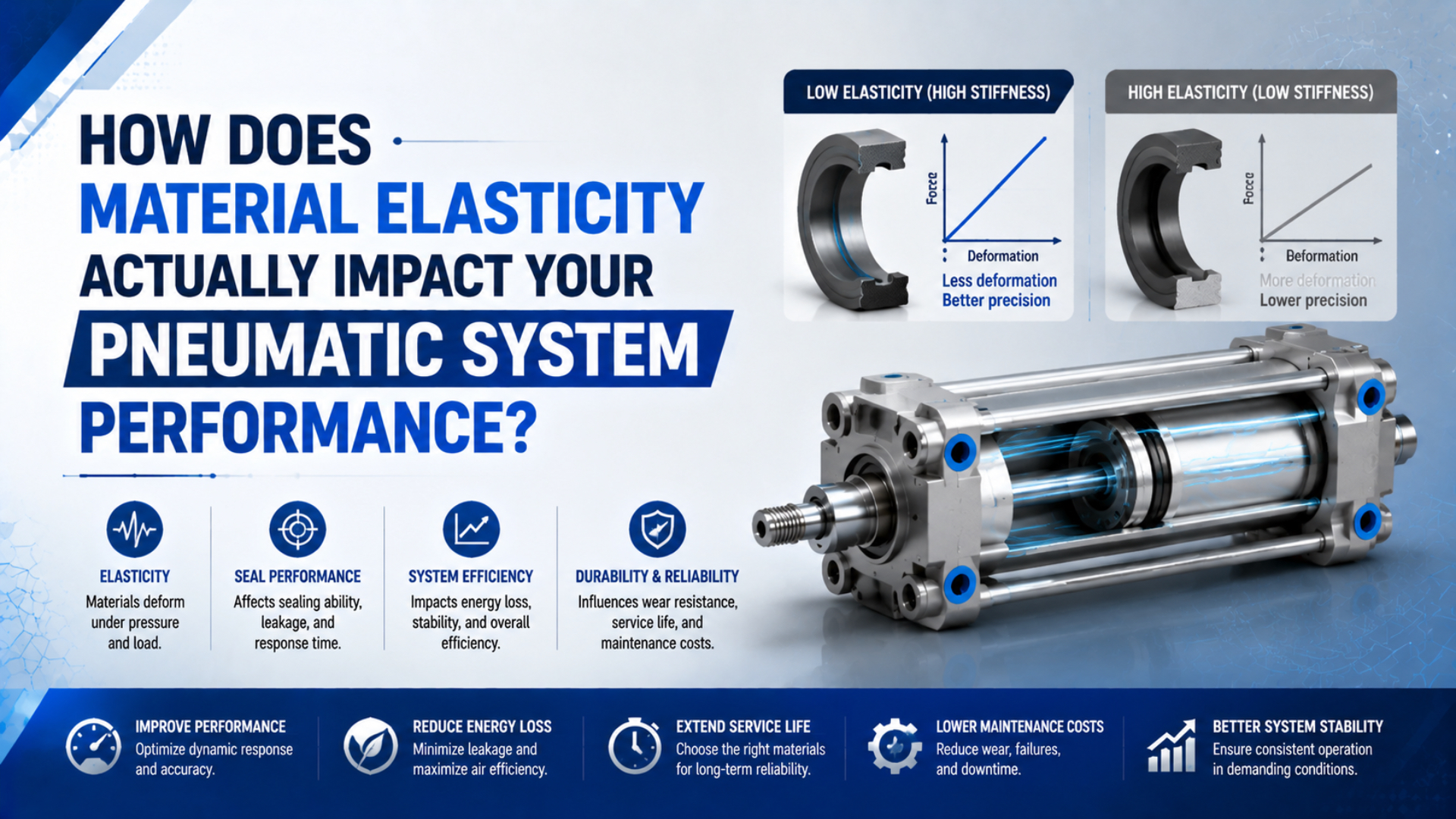
How Does Material Elasticity Actually Impact Your Pneumatic System Performance?Build a pneumatic system stiffness budget from material modulus, geometry, gas volume, seals, and joints; a 16 mm steel rod elongates 0.012 mm under 1 kN.
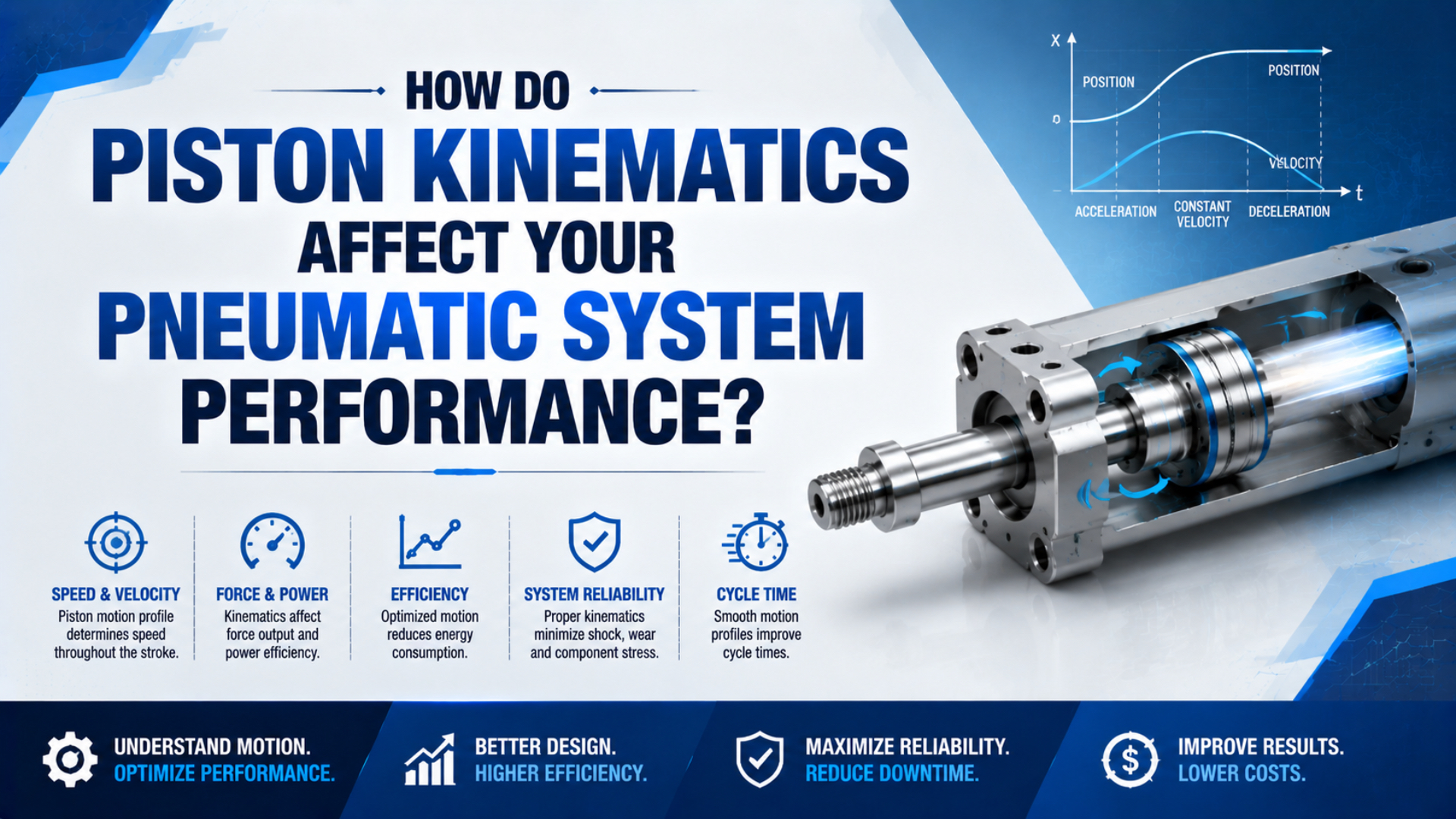
How Do Piston Kinematics Affect Your Pneumatic System Performance?Connect piston position, velocity, acceleration, pressure, flow, and cushion energy with a 10 kg worked example and machine validation steps for sizing.
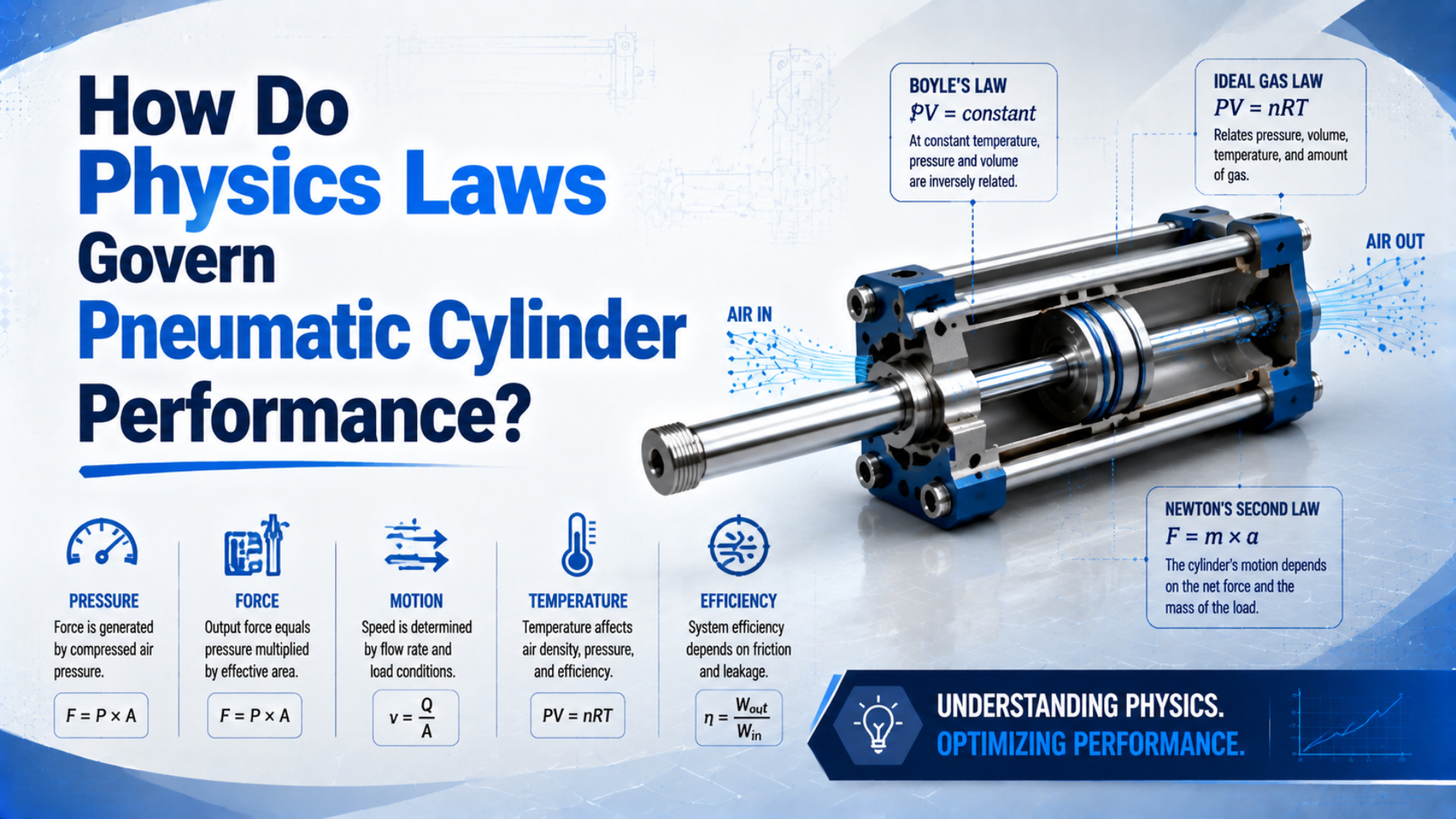
How Do Physics Laws Govern Pneumatic Cylinder Performance?Learn how 5 physics models predict pneumatic cylinder force, acceleration, airflow, choked flow, and pressure response using formulas and worked examples.
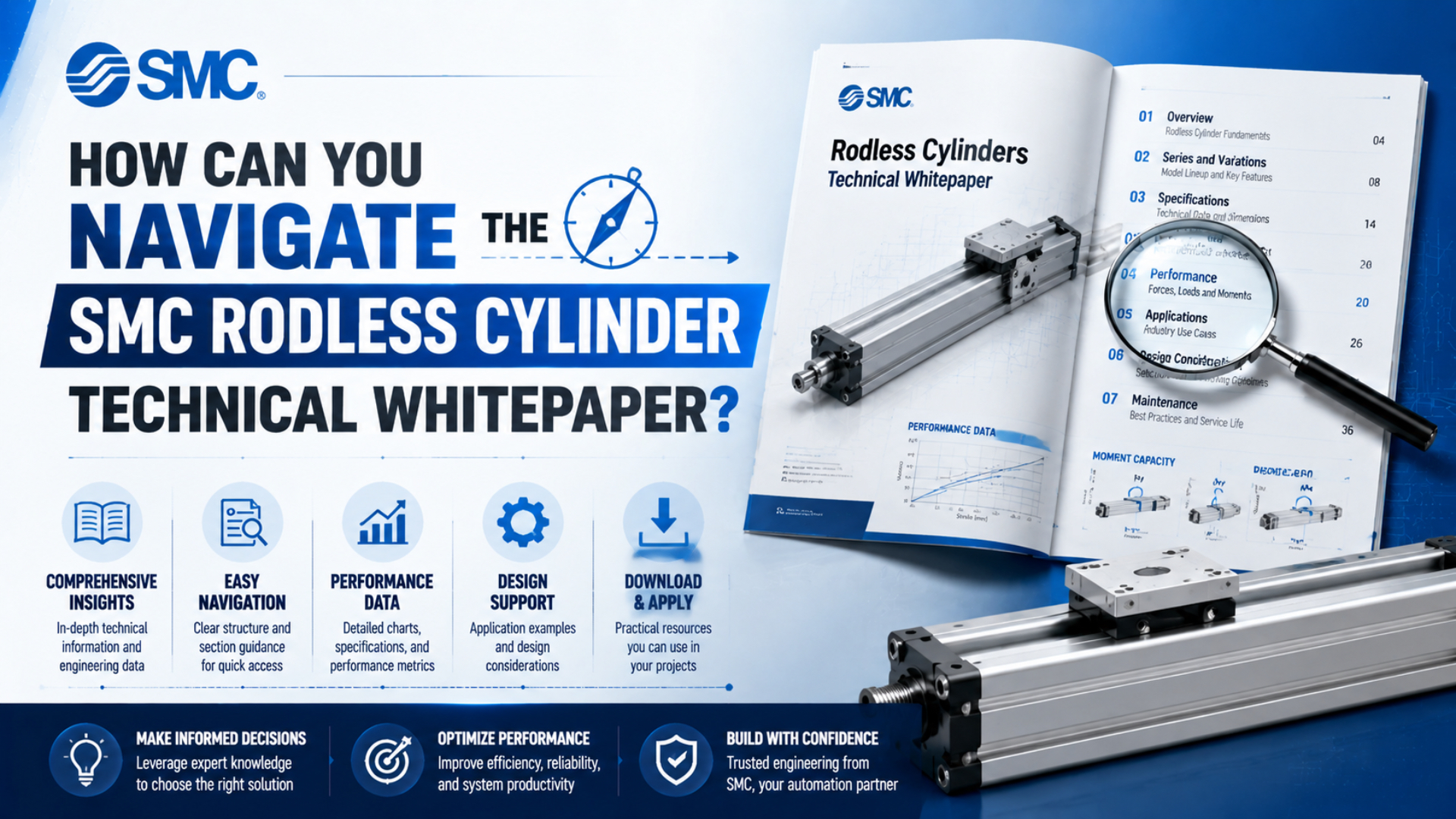
How Can You Navigate the SMC Rodless Cylinder Technical Whitepaper?Navigate SMC MY1B rodless-cylinder catalogs by model code, revision, CAD, dimensions, and limits. Current MY1B covers 25, 32, and 40 mm bores for selection.
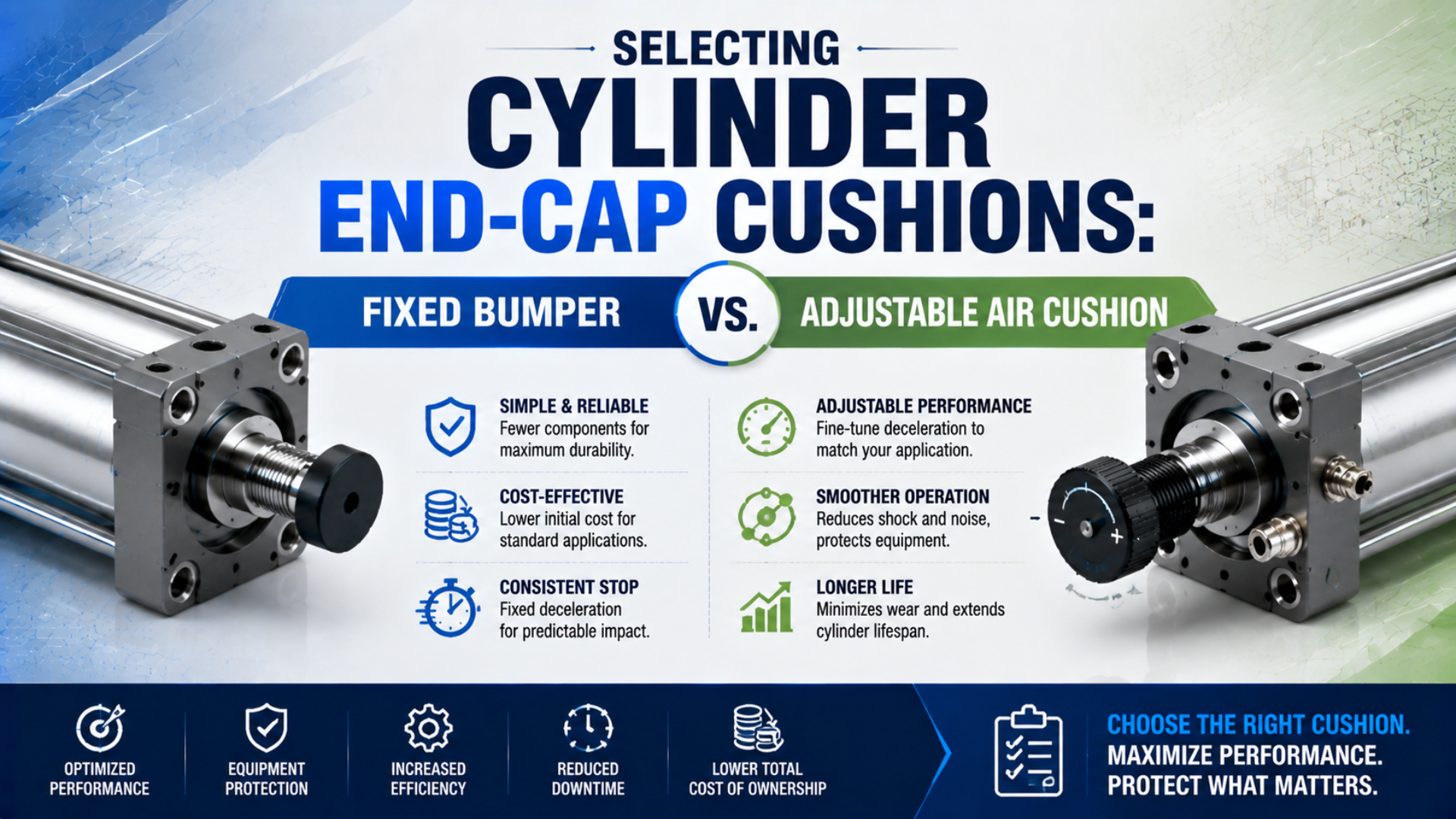
Selecting Cylinder End-Cap Cushions: Fixed Bumper vs. Adjustable Air CushionChoose fixed bumpers or adjustable air cushions using Parker's 50% entry-speed warning, moving mass, model-specific energy limits, and commissioning evidence.
High-Speed vs. Standard Pneumatic Cylinders: Identifying the NeedDecide whether a standard pneumatic cylinder is sufficient or a high-speed version is justified by checking motion time, airflow, stopping energy, duty, and exact product limits.
Guide to Choosing Anti-Rotation Cylinders for Precision AssemblyChoose an anti-rotation cylinder by tool-tip error, Mx/My/Mz load, and stroke. Includes SMC ±0.1° data, Festo torque examples, and acceptance test steps.
Choosing the Right Stroke Length: Standard vs. Custom CylindersChoose cylinder stroke from measured travel and installed geometry; ISO 15552 covers 32-320 mm bores, but it does not prescribe one standard stroke list.
How to Create a Precise RFQ for Custom Pneumatic CylindersBuild a precise custom pneumatic cylinder RFQ with 4 controlled data blocks covering duty, interfaces, acceptance evidence, and comparable supplier terms.
Reviewing Pneumatic Cylinder CAD Models: A Critical Checklist for Engineers and BuyersReview pneumatic cylinder CAD models using STEP validation, three clearance envelopes, controlled drawings, and ISO 15552's 32-320 mm dimensional scope.
Expanding Your Catalog: Why Add Rodless Cylinders to Your Product Line?Use six evidence gates to decide whether rodless cylinders belong in your catalog, then qualify product families, suppliers, inventory, and pilot results.
Top 5 Alternatives to Parker Origa Rodless Cylinders for Budget-Conscious BuyersCompare five Parker Origa alternatives using official bore, stroke, guide, and 8 bar data, then verify retrofit compatibility before requesting quotes.
Lead Time Management: Best Practices for Ordering Custom Pneumatic CylindersManage custom pneumatic cylinder lead time with a 7-gate schedule covering design freeze, materials, production, FAT, logistics, change control, and spares.
Procurement Checklist: Essential Specs When Ordering ISO 15552 CylindersUse this ISO 15552 cylinder procurement checklist to control RFQ data across the standard’s 32-320 mm bore scope, compare quotes, and verify orders correctly.
Magnetic De-coupling Forces: The Physics of “Breaking” the ConnectionDiagnose magnetic de-coupling in rodless cylinders using 19.6-2,256 N holding-force data, transient force reconstruction, and safe recoupling checks.
Guide Rail Parallelism: Tolerance Stack-Up in Rodless Cylinder MountingBuild a datum-based rodless cylinder alignment budget using model limits, worst-case and RSS methods, angular error, torque checks, and 3-position verification.
Vacuum Cylinder Physics: Forces Retraction DynamicsStandard atmosphere is 101.325 kPa. Calculate vacuum-cylinder force from chamber pressures, piston geometry, friction, load, and evacuation flow accurately.
Underwater Depth Ratings: External Pressure Effects on Cylinder SealsLearn how external pressure changes underwater cylinder seals, structure, and force, with a verified 30 m example and a qualification checklist for buyers.
Non-Rotating Cylinder Mechanics: Hexagonal Rod vs. Twin Rod Torque ResistanceCompare hexagonal-rod and twin-rod mechanics using SMC's ±1.5° to ±0.1° examples, torque equations, wear limits, and validation steps.
Eccentric Load Handling: Moment of Inertia Calculations for Side-Mounted MassesCalculate eccentric loads with signed force moments, linear inertia, and true rotational inertia, then verify Mx, My, and Mz limits for rodless cylinders.
Bellows Protection: Calculating Compression Ratios for Rod BootsCalculate rod boot compression ratio from rated extended and retracted lengths, then verify travel, clearance, venting, materials, and both end positions.
Transient Pressure Response: Measuring Lag Time in Long-Stroke CylindersMeasure long-stroke cylinder pressure lag with 2 synchronized sensors, defined thresholds, and position data that separate wave travel from chamber filling.
How to Calculate Pneumatic Cylinder Impact Force to Protect Your Equipment?Calculate cylinder stopping energy and average force, apply Parker's 50% cushion-entry speed warning, and verify peak loads before equipment damage occurs.
Radial Load Tolerance: Analyzing Guide Bushing Stress DistributionsCalculate how a 100 N offset load can create a 400 N guide-bushing reaction, then screen projected pressure, edge loading, PV limits, and guide options.
Finite Element Analysis (FEA) of Cylinder End Caps Under Shock LoadsLearn how to model pneumatic cylinder end caps under shock loads using transient FEA, convergence checks, fatigue assessment, and physical validation.
Euler Buckling Formula: How to Calculate the Critical Buckling Load of a ColumnCalculate Euler critical buckling load with 4 inputs, correct effective length factors, solid or hollow rod inertia, unit checks, and a worked cylinder example.
Torsional Stress in Rodless Cylinders: Determining Maximum Roll MomentsParker rates OSP-P25 roll moment from 1.5 N·m standard to 260 N·m with HD guidance. Calculate Mx, dynamic loads, and combined utilization before selection.
Inertia Matching: Sizing Cylinders for High-Mass Load DecelerationParker notes cushion-entry speed may be 50% above average. Size high-mass pneumatic deceleration using event energy, duty, and exact catalog limits.
Deflection Calculations for Piston Rods in Horizontal ExtensionCalculate horizontal piston-rod deflection by separating tip load and rod self-weight, with a corrected 25 mm rod example, bending stress, and guide checks.
The Mechanics of Magnetic Coupling Break-Away Force in Rodless CylindersCalculate magnetic rodless cylinder break-away force with SMC 19.6-2,256 N data, axial-load equations, dynamic checks, and recovery steps.
Fatigue Life Prediction Models for Aluminum Cylinder BodiesBuild aluminum cylinder-body fatigue estimates from stress range, R-ratio and cycle counts; ISO 19973-3 reports cylinder life in cycles or kilometres.
Pneumatic Cushioning Physics: Modeling the Ideal Gas Law in Compression ChambersLearn when pV^n can model a pneumatic cushion, why needle exhaust requires an open-system model, and how to validate pressure and stopping force.
Calculating Kinetic Energy Absorption Limits for Internal Air CushionsCalculate internal cushion demand and compare it with model-specific limits: SMC CA2 air-cushion ratings range from 2.8 to 29 J across five bore sizes.
Shock Absorber Damping Coefficients: Tuning for Variable Cylinder LoadsLearn why shock absorber tuning needs 5 application inputs, not a guessed damping coefficient, and how to test variable cylinder loads without hard impact.
Elastomer Bumpers vs. Air Cushions: A Frequency Response AnalysisCompare elastomer bumpers and air cushions using 5 measured response signals: impact energy, peak force, rebound, settling time, and temperature in service.
Load Mass vs. Velocity: Plotting the Cushioning Capacity ChartPlot a cushioning capacity chart correctly using total moving mass and speed at cushion entry, then screen the exact cylinder model and operating case.
Cavitation Risks in Hydraulic Shock Absorbers Used with PneumaticsDiagnose suspected cavitation in hydraulic shock absorbers, separate it from aeration, and verify 8 model-specific limits before safely replacing the unit.
The Impact of Dead Volume on Pneumatic Cylinder Energy EfficiencyCalculate the additional standard-air demand caused by cylinder clearance and switched piping, then verify dead-volume savings with measured air per accepted cycle.
What Are Opposing Loads in Pneumatic Systems: The Hidden Force That’s Costing You Money?Identify opposing loads in pneumatic systems, build a directional force budget, and size cylinder thrust without relying on fixed pressure percentages.
The Impact of Piston Mass on High-Cycle Cylinder PerformanceLearn when internal piston and rod mass materially affect high-cycle pneumatic cylinder acceleration, cushion energy, cycle testing, and service life.
How to Use Back-to-Back Cylinders for 3-Position ApplicationsLearn how equal-stroke back-to-back cylinders create 3 fixed positions from 4 command states, with correct mounting, valve logic, force sizing, and tests.
What Are Long-Stroke Pneumatic Cylinders and Why Do They Matter for Your Application?Learn when pneumatic stroke becomes a system-level design issue, compare rodded and rodless layouts, and apply Parker's 6000 mm example safely in real machines.
The Role of Stop Tubes in Preventing Piston Damage in Long-Stroke CylindersLearn how stop tubes reduce cylinder bearing load, how 6 application inputs determine length, and why cushioning and rod buckling need separate checks.
A Guide to Sizing External Shock Absorbers for Cylinder ApplicationsSize external cylinder shock absorbers with 6 checks: impact energy, drive work, hourly capacity, effective mass, impact speed, and usable absorber stroke.
How to Calculate Cylinder Force Loss Due to Friction and Back PressureCalculate actual pneumatic cylinder force from both chamber pressures, effective areas, and measured breakaway or running friction without relying on universal loss percentages.
How Cylinder Side-Loading Affects Rod Bearing and Seal WearSee how cylinder side-loading creates bearing edge contact, why Festo rates force and moment separately, and how to diagnose one-sided seal wear in service.
A Technical Analysis of Cylinder Response Time and Dead VolumeCalculate cylinder response time from valve delay, breakaway pressure, and dead volume; a 6 mm ID tube contains 28.3 cm³ per metre before motion begins.
The Impact of Hose and Fitting Size on Cylinder Speed and PerformanceCalculate pneumatic cylinder flow demand, compare actual hose ID and fitting capacity, and diagnose restrictions that limit speed and force.
How to Calculate the Kinetic Energy of a Moving Cylinder LoadCalculate moving cylinder load energy with KE = 1/2mv2, a 50 kg at 2 m/s example, cushion-entry speed checks, and model-specific catalog comparison steps.
The Physics of Pressure Drop Within the Cylinder Barrel During High FlowLearn why ISO 6358 excludes cylinders from steady-state flow tests, model 2 moving chambers, measure dynamic pressure, and diagnose high-flow losses safely.
The Effect of Cylinder Stroke Position on Available Force (Cantilever Loads)Learn why cylinder stroke position does not directly change pressure-generated thrust, yet can sharply change cantilever moment, deflection, and buckling margin.
A Technical Guide to Sizing a Cylinder for a Vertical-Up ApplicationSize a vertical-up pneumatic cylinder with m(g+a), minimum port pressure, backpressure, effective piston area, and a worked 120 kg bore-selection example.
A Guide to Dual Piston Cylinders for Non-Rotation and Increased ForceLearn how dual piston cylinders combine two pressure areas for higher thrust and non-rotation, with a 25 mm worked example and SMC ±0.1° model limits.
How to Calculate the Minimum Operating Pressure for a CylinderCalculate minimum cylinder operating pressure from area, load, acceleration, friction, and back pressure, with a 0.05 MPa catalog example and field test.
A Guide to Compact Guide Cylinders for Anti-Rotation and PrecisionSelect compact guide cylinders by bearing, 3-axis moment, stroke, speed, and impact. See why one Festo DFM falls from 6.14 to 3.81 N·m as stroke increases.
Which Rodless Cylinder Coupling Technology Delivers Better Performance for Your Application?Compare magnetic and mechanical rodless cylinder coupling using SMC 2,256 N holding-force data, Parker load limits, failure modes, and RFQ checks.
How Can You Prevent Piston Rod Buckling in Long-Stroke Cylinder Applications?Prevent piston rod buckling with Euler checks, 4 mounting cases, a 25 mm rod example, manufacturer charts, side-load controls, and redesign options in plants.
Which Cylinder Mounting Type Maximizes Load Capacity for Your Critical Applications?Select a cylinder mounting type by load path, not a force ranking. Compare fixed, flange, foot, clevis, and trunnion mounts in ISO 15552's 10 bar series.
How Do You Calculate Pneumatic Cylinder Piston Velocity for Optimal Performance?Calculate pneumatic cylinder piston velocity from flow and effective area with a 50 mm bore example, required-flow checks, and practical machine test steps.
Which ISO Standard Delivers 40% Space Savings: ISO 15552 or ISO 21287 Compact Cylinders?ISO 21287 covers 20-100 mm compact cylinders; ISO 15552 spans 32-320 mm. Compare space, force, cushioning, strokes, mounts, and retrofit risks before selection.
How to Calculate Pneumatic Cylinder Theoretical Force: A Complete Engineering GuideCalculate pneumatic cylinder theoretical force for single-rod, double-rod, rodless, and tandem designs, including an ideal 2 in, 80 psi result of 251 lbf.
Which Non-Rotating Rod Options Can Eliminate Your Pneumatic Cylinder Positioning Problems?Compare anti-twist pins, dual-rod cylinders, and guided slides using SMC's ±0.1° CXS2 rating plus moment, stroke, speed, and side-load checks for selection.
How Do You Calculate Pneumatic Cylinder Air Consumption to Reduce Compressed Air Costs by 30%?Calculate cylinder air use from 6 inputs, separate average SCFM from peak flow, and model a conditional 30% compressed-air cost reduction safely.
How Does End Cap Design Impact Cylinder Strength and Mounting Integrity?Learn how pneumatic cylinder end cap design contains pressure, transfers mounting loads, and why ISO 15552's 32-320 mm scope does not rate strength alone.
How Do Oval-Piston Cylinders Deliver 40% More Force in 60% Less Space?See when oval-piston cylinders can yield 40% more theoretical force or 60% less piston height, with formulas, design limits, and a clear RFQ checklist.
Why Are Rod Lock Units Essential for Pneumatic Cylinder Safety and Positioning?Learn why pneumatic rod lock units need separate static-holding and dynamic-braking checks, with product forces from 600 to 8,425 N and validation steps.
How Do You Calculate Effective Piston Area for Maximum Double-Acting Cylinder Performance?Calculate double-acting cylinder effective area, then verify a 63/20 mm example at 6 bar for extension force, retraction force, speed, and air-use checks.
Why Does Cylinder Acceleration Change Dramatically with Different Load Weights?Learn why cylinder acceleration changes with load using the net-force equation, SMC's 50% dynamic load-factor guide, and practical pressure and flow checks.
How Do Multi-Position Cylinders Achieve Precise Intermediate Stops?Learn how 3- and 4-position pneumatic cylinders combine fixed strokes and hard stops, and when sensors, rod locks, or servo feedback are required.
How Do Advanced Load-Carrying Mechanisms Maximize Rodless Cylinder Performance?Learn how guide types, moment loads, combined-load ratios, magnetic coupling limits, and cushioning determine safe rodless cylinder performance.
How Can You Calculate the Perfect Cylinder Bore Size to Maximize Energy Efficiency?Calculate cylinder bore from load and dynamic pressure, then compare 50 mm and 63 mm choices for force, cycle air demand, and annual energy cost.
How Do Proper Rod Bearings Prevent Costly Rod Seal Failures in Pneumatic Cylinders?Learn how rod bearings protect pneumatic cylinder rod seals, why ISO 15552 covers 32-320 mm bores, and when external guidance prevents repeat leakage.
Which Cylinder Construction Method Delivers Better Performance for Your Application?Compare profile and tie-rod cylinders using ISO 15552's 10 bar scope, matched 63 mm force data, service access, envelope, sensors, and retrofit checks.
How to Calculate Natural Frequency to Prevent Costly Resonance Failures in Your Pneumatic System?Calculate pneumatic natural frequency with a 2-chamber stiffness model, absolute pressure, dead volume, effective mass, damping, and stroke checks.
How Can You Accurately Calculate and Control Dangerous End-of-Stroke Forces in Your Pneumatic Cylinders?Calculate pneumatic cylinder end-of-stroke energy, separate average from peak force, and apply Parker's 50% cushion-entry speed warning in machine design.
How to Calculate and Control Cylinder Deflection in Cantilevered MountsCalculate cantilevered cylinder-rod deflection with FL³/3EI, see why halving unsupported length cuts ideal deflection 87.5%, and select guides or supports.
How Do You Properly Derate Pneumatic Cylinders for Reliable High-Altitude Performance?Learn why altitude does not automatically reduce cylinder force, how 6 bar gauge preserves thrust, and which high-altitude air-system checks matter most.
Which Rotary Actuator Internal Mechanism Delivers the Best Performance for Your Application?Compare rotary actuator mechanisms by torque curve, inertia, stopping energy, shaft load, backlash, duty, and fail action before selecting a model.
How Does Bore Size Impact Rotary Actuator Torque Performance?See why doubling bore can mean 4x theoretical torque, when that shortcut fails, and how to select rotary actuators from catalog data at real pressure.
How Can Pneumatic Pressure Boosters Transform Your Industrial Operations and Slash Equipment Costs?Learn when a pneumatic pressure booster can cut local equipment cost, how booster ratios differ, and how to size pressure, flow, storage, and safety safely.
What’s the Duty Cycle of Linear Actuators?Calculate linear actuator duty cycle using motor on-time, then check pneumatic frequency, speed, load, cushioning, travel, and verified 15 Hz product limits.
What Is Side Loading on Linear Actuators and How Can It Destroy Your Equipment?Learn how linear actuator side loading damages rods, seals, and guides, then diagnose it safely in service with 2-position checks and model-specific load data.
How Does Pneumatic Cylinder Bore Size Affect Air Consumption and Operating Costs?A 50-to-63 mm bore step raises cap-end volume 58.8% at the same stroke and pressure. Calculate cycle air, annual kWh, and operating cost before sizing up.
The Impact of Cylinder Bore Size on Force and Speed: A Practical GuideSee how cylinder bore size changes force, flow demand, speed, and air use, with worked 32-80 mm comparisons and a practical sizing sequence.
A Guide to Selecting Cylinders for Vertical Lifting ApplicationsSelect a vertical lifting cylinder using m(g+a), minimum pressure, mounting and load-holding checks; SMC limits one lock family to 50% holding force in use.
Optimizing Air Consumption in Double-Acting Pneumatic CylindersUse SMC's 13 L/cycle example to calculate double-acting cylinder air consumption, then reduce pressure, bore, stroke, tubing volume, leaks, and idle demand.
A Guide to Cylinder Stroke Length Tolerances and Their ImpactRead cylinder stroke length tolerances correctly. Parker lists +0.3/+2.0 mm up to 500 mm; learn how to specify, measure, and verify actual cylinder travel.
Rodless Cylinder Solutions for Long-Stroke Conveyor SystemsSize rodless cylinders for long-stroke conveyors using Parker 6000 mm stroke data, guide moments, cycle flow, cushion energy, mounting, and RFQ checks.
How to Mitigate Side Load Issues in Linear Cylinder ApplicationsLearn how to mitigate pneumatic cylinder side loads with Festo's 9.5 N example, guide-moment checks, alignment tests, mounting choices, and retrofit steps.
Understanding the Force Factor in Pneumatic Cylinder SelectionLearn how piston area becomes a cylinder force factor, why SMC limits dynamic load ratio to 0.5, and how to size bore from real port pressure and load.
The Complete Guide to Trunnion Mount Cylinder ApplicationsEngineering guide to trunnion mount cylinder applications with Parker's 5x bore check, 35 ft/min threshold, force factors, RFQ data, and installation tests.
What is Breakaway Force in Pneumatic Cylinders?Calculate pneumatic cylinder breakaway force with a 63 mm example, port-pressure testing, stick-slip diagnosis, sizing checks, and sourced limits in practice.
Rodless Cylinder Mounting Guide: Avoiding Common Installation ErrorsPrevent rodless cylinder mounting errors with SMC's 5 mm MY1B end-support contact, model-specific torque, support charts, alignment checks, and trial runs.
Calculating Force from Pressure and Area in Pneumatic SystemsCalculate pneumatic cylinder force with 4 in bore at 100 psi = 1,257 lbf, rod-side area, pressure loss, and practical bore sizing checks.
What is Pascal’s Law and How Does It Power Modern Pneumatic Systems?Explain Pascal's Law for pneumatic systems with F=P x A, SMC 0.1-0.8 MPa rodless data, Parker 3010 N force, CAGI 10% pressure-drop checks, and sizing mistakes.
How to Calculate Circumference for Rodless Cylinder Applications?Calculate rodless cylinder circumference with C=pi d, Parker 10-80 mm bores, Pi Tape measurement checks, seal-band RFQ tips, and sizing tables for quotes.
What is the Area of a Rod in Pneumatic Cylinder Applications?Calculate pneumatic cylinder rod area with pi(d/2)^2, convert 6 bar to 0.6 N/mm^2, and avoid 10x retract-force errors.
What is a Rodless Cylinder and How Does It Transform Industrial Automation?Learn what a rodless cylinder is with SMC carriage data, Parker 8 bar specs, NASA force math, failure checks, video, FAQ schema, and RFQ tips for engineers.
How Does a Magnetic Rodless Cylinder Work? Complete Technical GuideMagnetic rodless cylinder guide with SMC 6-63 mm bore data, NdFeB -0.12%/deg C temperature loss, coupling limits, sealing, sizing, maintenance, and RFQ tips.