
 What is the Principle of Gas Flow and How Does It Drive Industrial Systems?Learn how pressure, temperature, density, Mach number, and the 0.528 critical ratio govern industrial gas flow, pressure loss, and component sizing.
Blog Tag
pneumatic calculations articles
Review every Bepto Pneumatic article connected to pneumatic calculations, grouped as one focused reading list for engineers, maintenance staff, and sourcing specialists.
Tagged Reading Path
All articles tagged pneumatic calculations
Use this archive to scan related selection notes, RFQ checks, replacement guidance, and pneumatic component references.
What is the Principle of Gas Flow and How Does It Drive Industrial Systems?Learn how pressure, temperature, density, Mach number, and the 0.528 critical ratio govern industrial gas flow, pressure loss, and component sizing.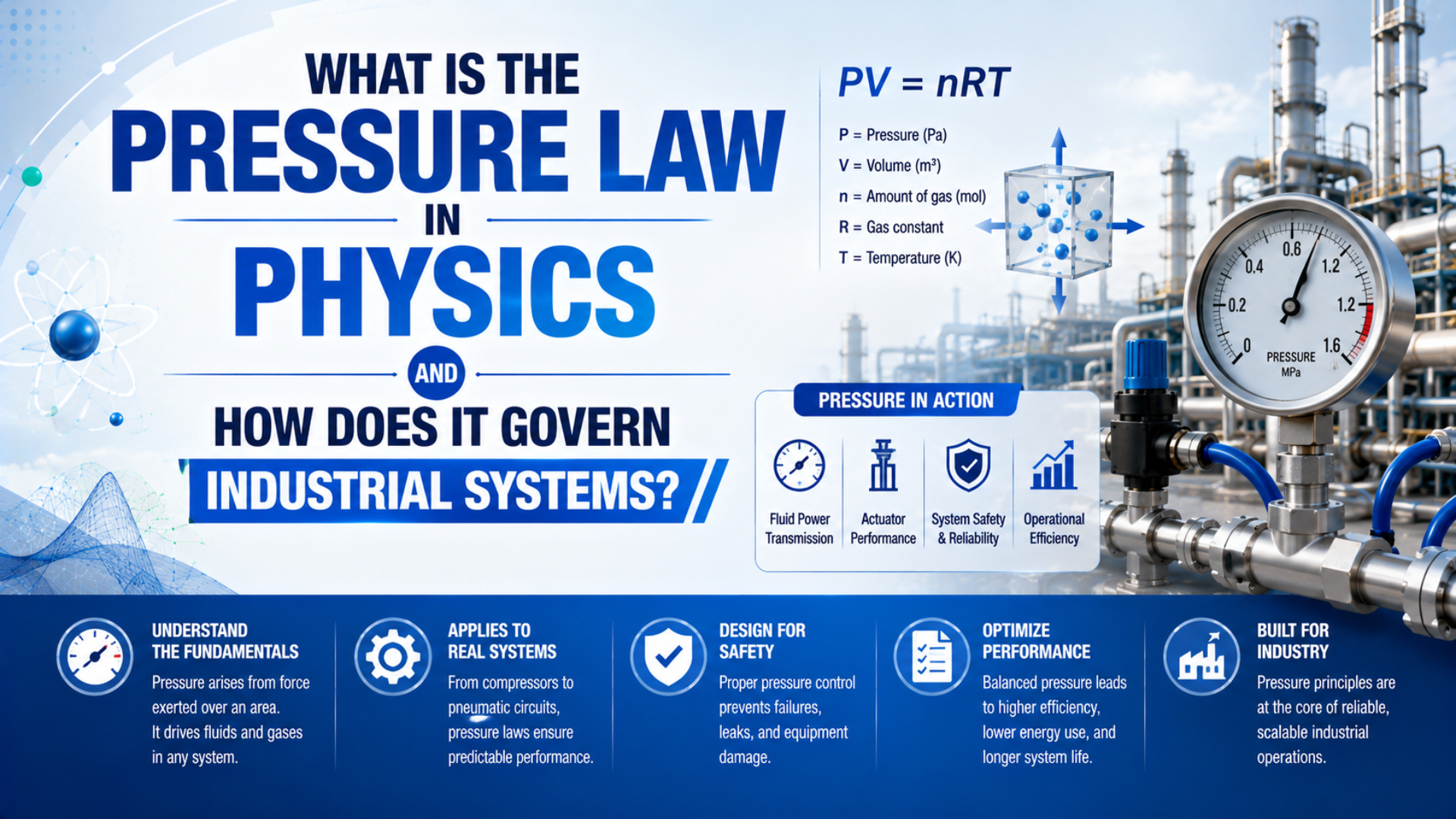 What is the Pressure Law in Physics and How Does It Govern Industrial Systems?A practical guide to the pressure-temperature gas law, absolute pressure, fixed-volume calculations, pneumatic applications, and safety limits.
 How to Cut Pneumatic System Energy Costs by 42% While Achieving Sustainability Goals?Cut pneumatic energy costs toward a measured 42% target with DOE-backed leak, pressure, control, tariff, carbon, and verification checks.
 How Do Heat Transfer Principles Impact Your Pneumatic System Performance?Learn how conduction, convection, radiation, and gas transients affect pneumatic performance, using a 5-60°C rating example and a practical heat-balance method.
 The Cost of Downtime: Why Reliable Pneumatics Are Critical for Automotive LinesSiemens reports USD 2.3 million per hour of automotive downtime. Learn how pneumatic criticality, spares, diagnostics, and safe recovery reduce exposure.
 Overcoming Supply Chain Disruptions: Securing Your Pneumatic Components StockBuild a defensible pneumatic spare-parts policy using asset criticality, measured lead-time demand, reorder points, qualified alternatives, and stock controls.
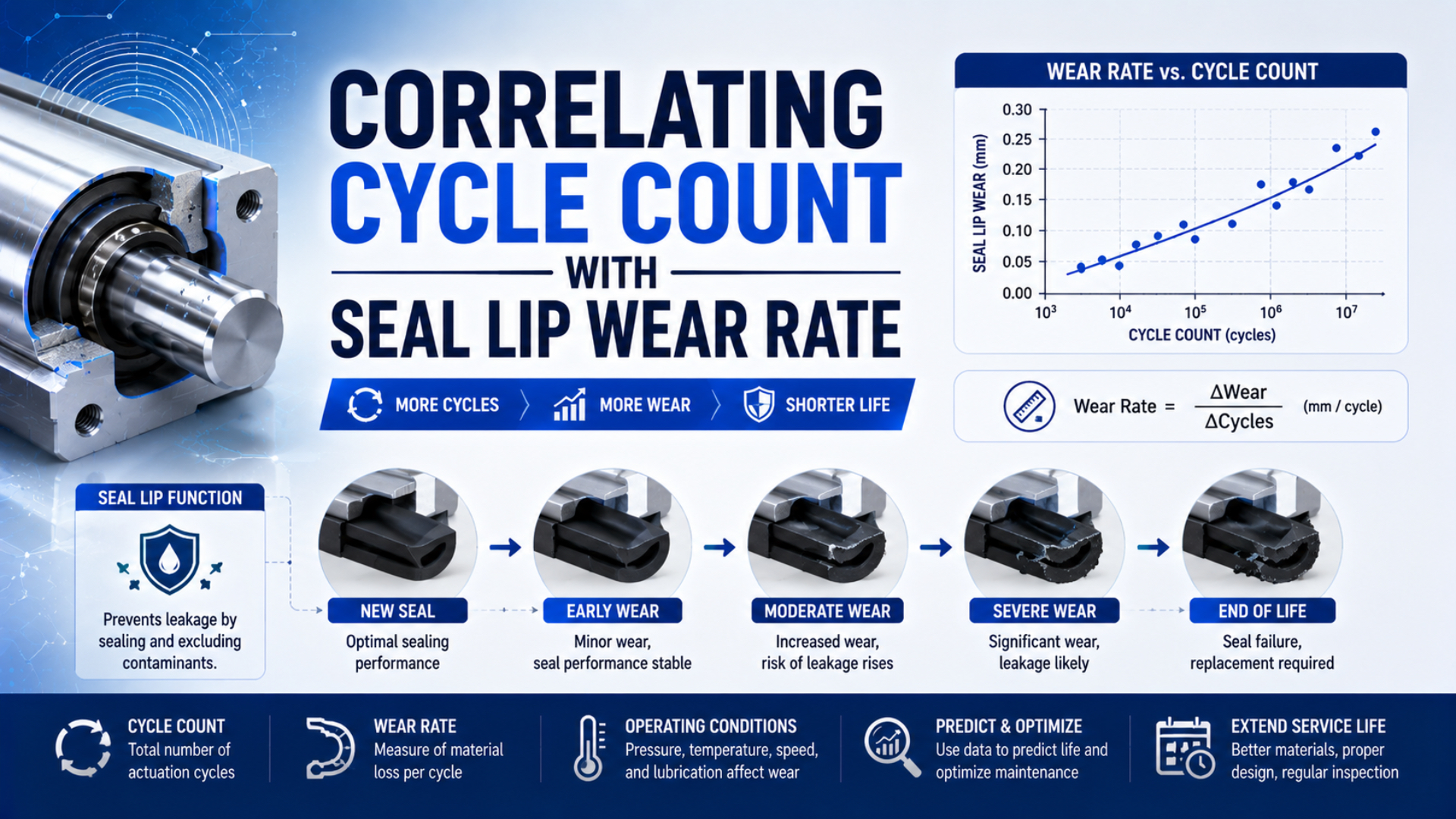 Correlating Cycle Count with Seal Lip Wear RateCorrelate seal lip wear with cycle count using 2sN sliding distance, non-contact profile scans, controlled conditions, interval slopes, and confidence limits.
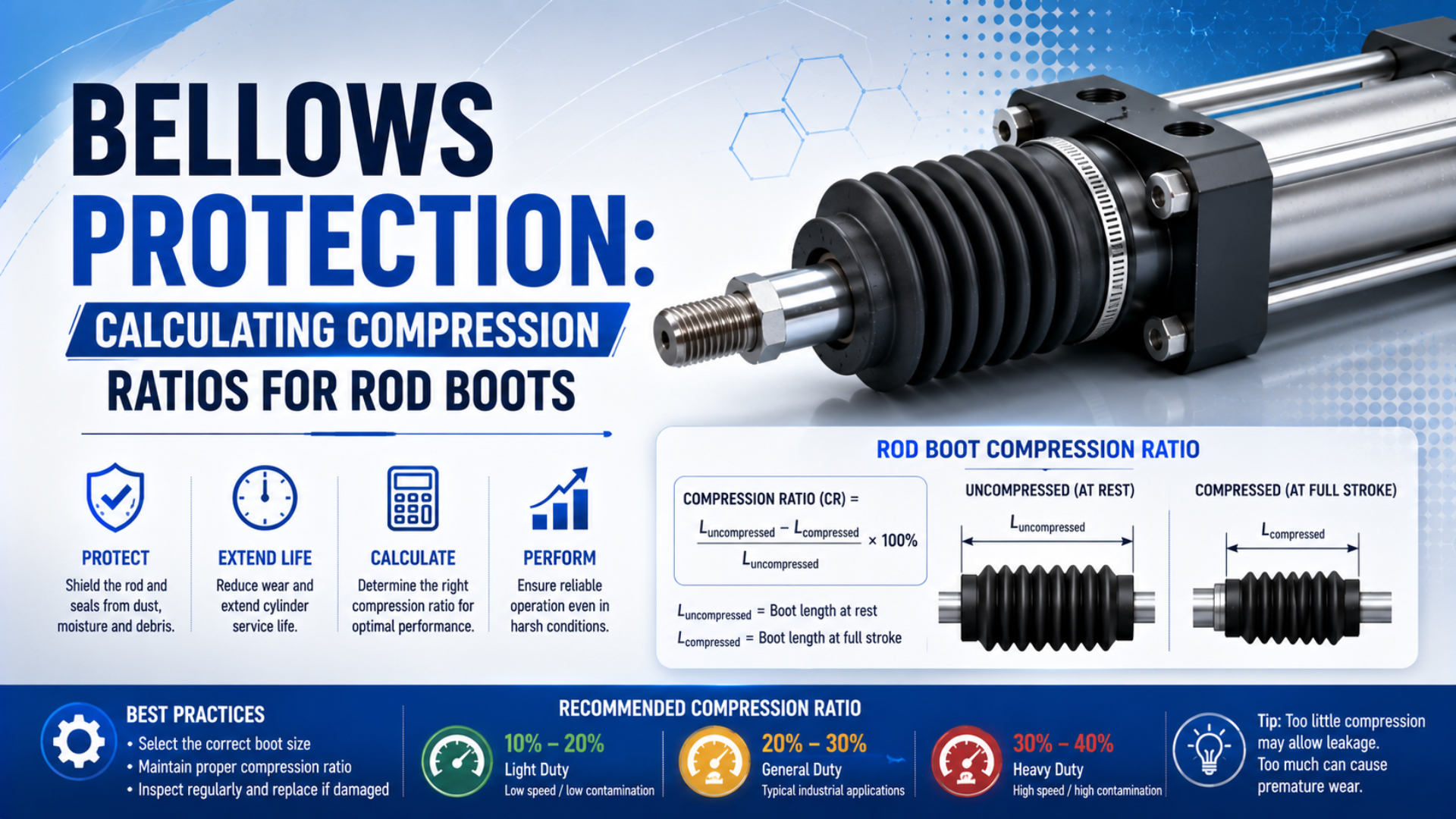 Bellows Protection: Calculating Compression Ratios for Rod BootsCalculate rod boot compression ratio from rated extended and retracted lengths, then verify travel, clearance, venting, materials, and both end positions.
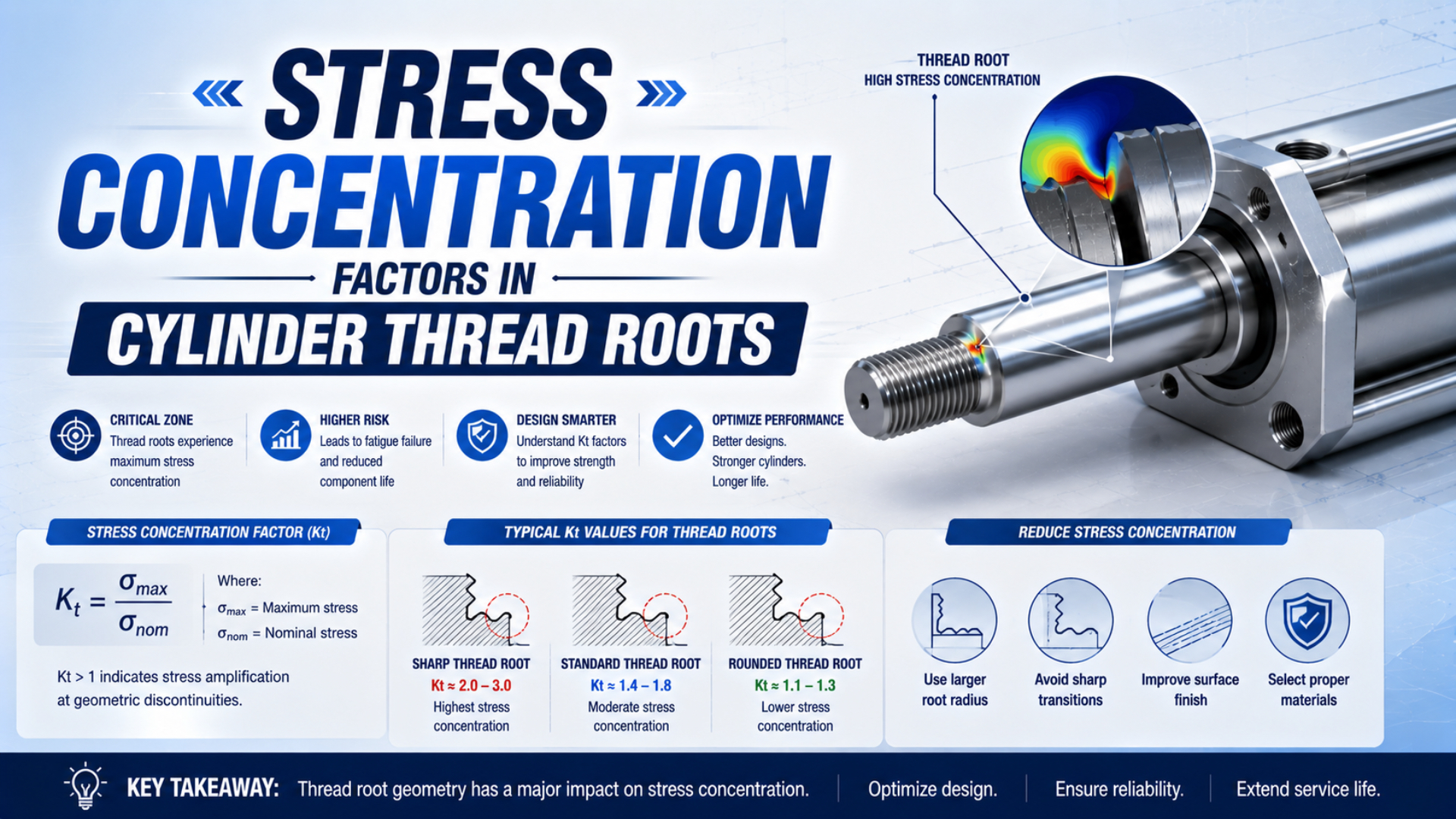 Stress Concentration Factors in Cylinder Thread RootsSeparate 3 cylinder thread load paths, calculate nominal and local stress, distinguish Kt from Kf, and learn when fatigue testing or FEA is required in service.