

Heavy steel cylinders are becoming automation’s biggest bottleneck, slowing down high-speed operations and limiting design flexibility while consuming excessive energy. Modern automation demands lighter, faster, and more efficient solutions that traditional materials simply cannot deliver.
Aluminum alloy cylinders offer superior strength-to-weight ratios1, excellent corrosion resistance, faster cycle times, reduced energy consumption, and enhanced design flexibility compared to traditional steel cylinders, making them essential for modern high-performance automation systems. ⚡
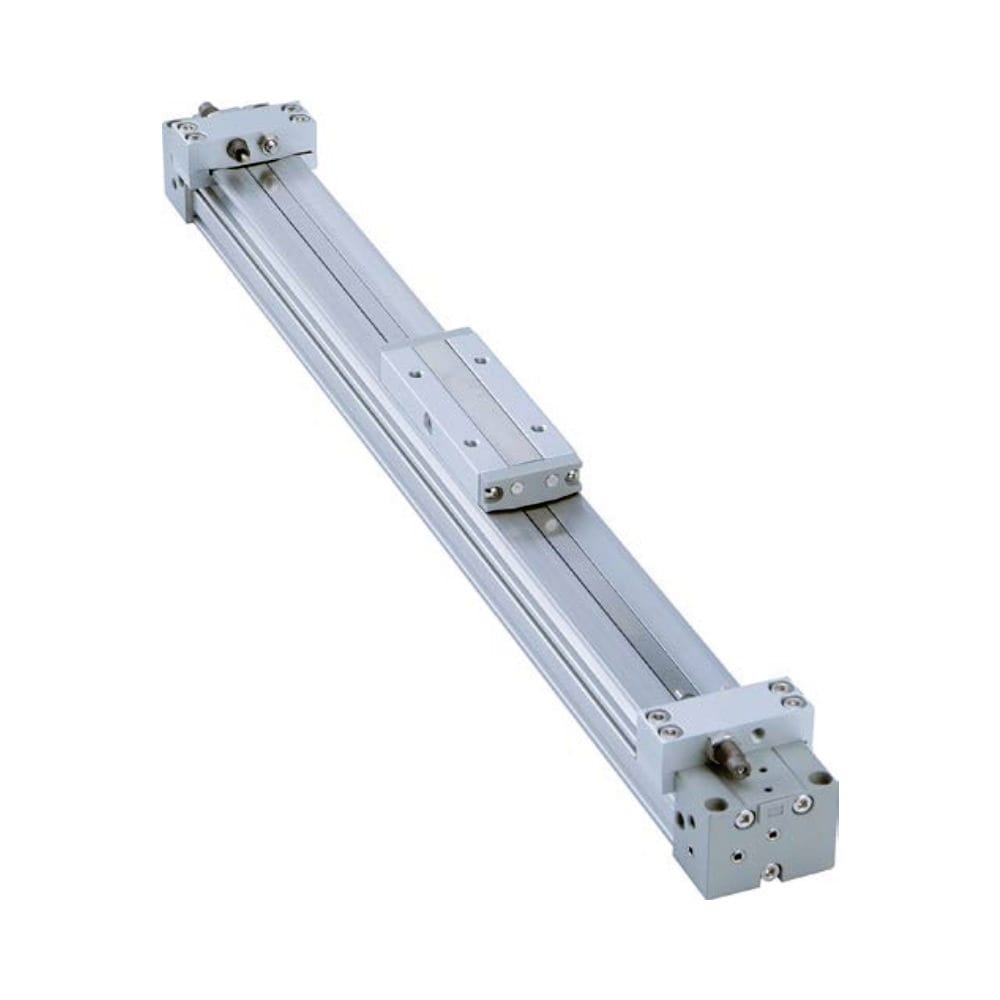
Yesterday, I spoke with Jennifer, an automation engineer at a pharmaceutical packaging facility in Boston, who achieved a 35% speed increase and 20% energy reduction simply by switching from steel to our aluminum alloy rodless cylinders2.
Table of Contents
- Why Do Aluminum Alloy Cylinders Outperform Steel in High-Speed Applications?
- How Do Weight Savings Impact Overall System Performance and Energy Costs?
- What Corrosion Resistance Advantages Do Aluminum Cylinders Provide?
- Which Modern Automation Applications Benefit Most from Aluminum Construction?
Why Do Aluminum Alloy Cylinders Outperform Steel in High-Speed Applications?
Understanding the physics behind aluminum’s performance advantages reveals why modern automation systems increasingly rely on aluminum alloy cylinders for demanding applications.
Aluminum alloy cylinders achieve higher speeds due to reduced inertial mass, faster acceleration and deceleration rates, lower vibration transmission, and superior heat dissipation properties that maintain consistent performance during high-frequency operations.

Inertial Mass Reduction Benefits
Our Bepto aluminum alloy rodless cylinders weigh 60% less than equivalent steel cylinders, dramatically reducing the moving Inertial Mass3 that pneumatic systems must accelerate and decelerate. This translates directly into faster cycle times and improved productivity.
Dynamic Response Characteristics
Lower mass enables quicker direction changes and more precise positioning control. Jennifer’s Boston packaging line increased throughput from 120 to 162 packages per minute simply by reducing the inertial load on their servo-controlled positioning system.
Vibration and Resonance Control
| Performance Factor | Aluminum Advantage | Steel Limitation | Impact on Automation |
|---|---|---|---|
| Natural Frequency4 | Higher resonance point | Lower frequency limits | Reduced vibration issues |
| Damping Properties | Better vibration absorption | Poor damping | Smoother operation |
| Structural Stiffness | Optimized strength/weight | Excessive mass | Improved precision |
| Heat Dissipation | Excellent thermal conductivity | Poor heat transfer | Consistent performance |
Thermal Management Advantages
Aluminum’s superior thermal conductivity5 prevents heat buildup during high-speed operations, maintaining consistent seal performance and preventing thermal expansion issues that plague steel cylinders in demanding applications.
How Do Weight Savings Impact Overall System Performance and Energy Costs?
Quantifying the system-wide benefits of aluminum cylinder weight reduction reveals significant performance improvements and cost savings across multiple operational areas.
Weight savings from aluminum cylinders reduce structural support requirements, lower energy consumption, enable faster machine dynamics, decrease wear on mechanical components, and allow more compact machine designs with improved accessibility.

Structural Load Reduction
Lighter cylinders require less robust mounting structures and support frameworks. This cascading weight reduction often enables significant cost savings in machine base construction and foundation requirements for large automation systems.
Energy Consumption Analysis
Reduced moving mass directly translates to lower compressed air consumption. Jennifer’s facility documented 20% energy savings after switching to aluminum cylinders, resulting in $15,000 annual utility cost reduction across their packaging lines.
Machine Dynamics Improvement
Lower inertial loads enable higher acceleration rates without exceeding pneumatic system capabilities. This allows existing air compressors and valve systems to achieve better performance without costly upgrades or oversizing.
Maintenance Cost Reduction
| Benefit Category | Aluminum Impact | Annual Savings | Source |
|---|---|---|---|
| Bearing Life | 40% longer service | $8,000 | Reduced loads |
| Structural Wear | 50% less fatigue | $12,000 | Lower vibration |
| Energy Costs | 20% consumption reduction | $15,000 | Mass reduction |
| Handling Safety | Easier installation | $5,000 | Weight reduction |
What Corrosion Resistance Advantages Do Aluminum Cylinders Provide?
Aluminum’s natural corrosion resistance properties offer significant advantages in challenging industrial environments where traditional steel cylinders fail prematurely.
Aluminum cylinders form protective oxide layers that resist corrosion in humid, chemical, and outdoor environments, eliminating the need for expensive protective coatings while providing superior longevity compared to painted or plated steel alternatives.
Natural Oxide Protection
Aluminum naturally forms a thin, dense oxide layer that protects the underlying metal from corrosion. This self-healing protective layer regenerates when damaged, providing long-term protection without maintenance or recoating requirements.
Chemical Environment Performance
Our aluminum alloy cylinders excel in food processing, pharmaceutical, and chemical applications where steel cylinders suffer from corrosion-induced failures. The natural corrosion resistance eliminates contamination risks from rust particles or coating degradation.
Environmental Durability Testing
We subject all Bepto aluminum cylinders to accelerated corrosion testing including salt spray, humidity cycling, and chemical exposure protocols. Results consistently show superior performance compared to coated steel alternatives over extended service periods.
Maintenance Cost Elimination
Unlike steel cylinders requiring periodic repainting or coating renewal, aluminum cylinders maintain their appearance and performance throughout their service life without protective maintenance, reducing total cost of ownership significantly.
Which Modern Automation Applications Benefit Most from Aluminum Construction?
Identifying applications where aluminum cylinders provide maximum benefit helps engineers optimize system design and performance while justifying the investment in premium materials.
High-speed packaging, precision assembly, food processing, pharmaceutical manufacturing, and mobile automation equipment benefit most from aluminum cylinders due to speed requirements, cleanliness standards, weight constraints, and corrosion resistance needs.
High-Speed Packaging Applications
Packaging machinery demands rapid cycle times and consistent performance. Jennifer’s pharmaceutical packaging line exemplifies how aluminum cylinders enable speed increases that directly impact production capacity and profitability.
Precision Assembly Systems
Electronics manufacturing and precision assembly require vibration-free operation and excellent repeatability. Aluminum’s superior damping characteristics and thermal stability provide the precision needed for demanding assembly operations.
Food and Pharmaceutical Industries
These industries require corrosion-resistant equipment that won’t contaminate products. Aluminum’s natural properties eliminate the risk of coating particles or rust contamination while meeting strict cleanliness standards.
Mobile and Portable Equipment
Weight-sensitive applications like mobile machinery, robotic systems, and portable equipment benefit significantly from aluminum’s strength-to-weight advantages, enabling better performance with lower power requirements.
Aluminum alloy cylinders represent the future of automation technology, delivering performance advantages that enable next-generation manufacturing capabilities. 🚀
FAQs About Aluminum Alloy Cylinders
Q: Are aluminum cylinders strong enough for heavy-duty industrial applications?
Modern aluminum alloys used in Bepto cylinders provide strength comparable to steel while weighing 60% less. Our 6061-T6 aluminum construction handles pressures up to 10 bar with safety factors exceeding industry standards for demanding applications.
Q: How do aluminum cylinders compare in cost to steel alternatives?
Aluminum cylinders typically cost 20-30% more initially but provide superior total cost of ownership through energy savings, reduced maintenance, longer service life, and elimination of corrosion protection requirements over their operational lifetime.
Q: Can aluminum cylinders operate in extreme temperature environments?
Aluminum cylinders operate effectively from -40°C to +150°C, with superior thermal conductivity providing better temperature stability than steel. Special seal compounds extend this range for extreme temperature applications requiring enhanced performance.
Q: Do aluminum cylinders require special mounting or installation considerations?
Aluminum cylinders use standard mounting interfaces and installation procedures. However, their lighter weight often allows simplified mounting structures and may require torque adjustments to prevent over-tightening of fasteners.
Q: How does aluminum recycling impact the environmental footprint of cylinder manufacturing?
Aluminum is infinitely recyclable with 95% energy savings compared to primary production. This sustainability advantage, combined with longer service life and energy efficiency benefits, makes aluminum cylinders an environmentally responsible choice for modern automation.
-
Understand how this critical material property is calculated and why it’s important in engineering design. ↩
-
Explore the design and operational advantages of rodless cylinders compared to traditional rodded cylinders. ↩
-
Learn about the concept of inertia and how an object’s mass resists changes in its state of motion. ↩
-
Discover how an object’s natural frequency affects its response to vibration and the risk of resonance. ↩
-
See how different materials, including aluminum and steel, compare in their ability to conduct heat. ↩