

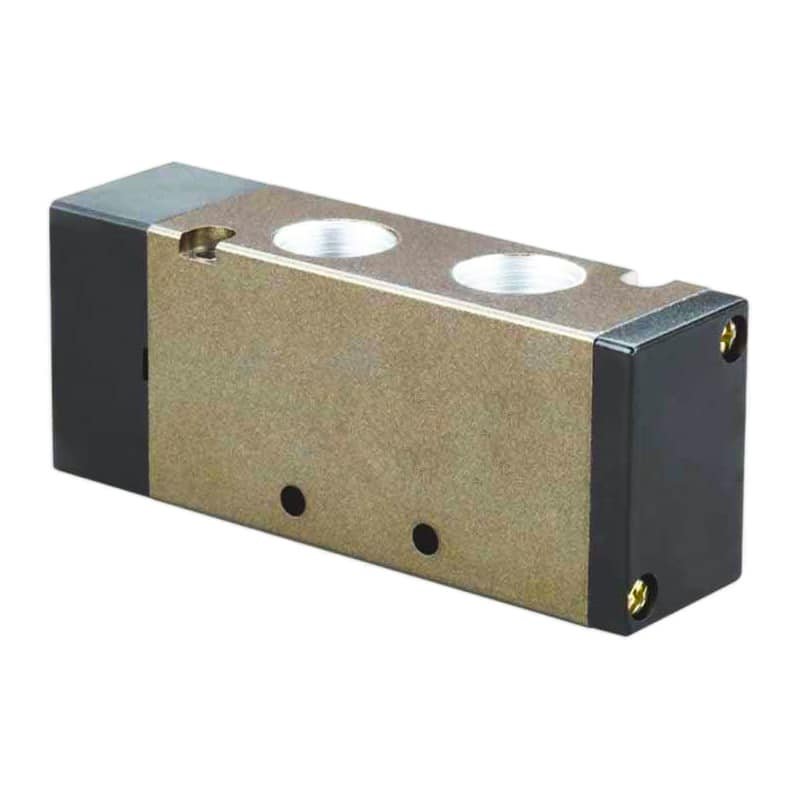
Struggling with pilot-operated valve1 failures and inconsistent switching? 🔧 Many engineers face costly downtime when their pneumatic systems fail due to inadequate pilot pressure calculations, leading to unreliable valve operation and production delays.
The minimum pilot pressure for pilot-operated valves is calculated using the formula: P_pilot = (P_main × A_main × SF) / A_pilot, where SF is the safety factor (typically 1.2-1.5), ensuring reliable valve actuation under all operating conditions.
Just last month, I worked with Robert, a maintenance engineer from a Wisconsin packaging facility, who was experiencing intermittent valve failures that cost his company $25,000 per day in lost production. The root cause? Insufficient pilot pressure calculations that left his pneumatic system vulnerable to pressure fluctuations. 📊
Table of Contents
- What Factors Determine Minimum Pilot Pressure Requirements?
- How Do You Calculate Pilot Pressure for Different Valve Types?
- Why Do Pilot Pressure Calculations Fail in Real Applications?
- What Safety Margins Should Be Applied to Pilot Pressure Calculations?
What Factors Determine Minimum Pilot Pressure Requirements?
Understanding the key variables that influence pilot pressure requirements is essential for reliable valve operation.
Minimum pilot pressure depends on main valve pressure, piston area ratios, spring forces, friction coefficients, and environmental conditions, with each factor contributing to the total force balance required for valve actuation.
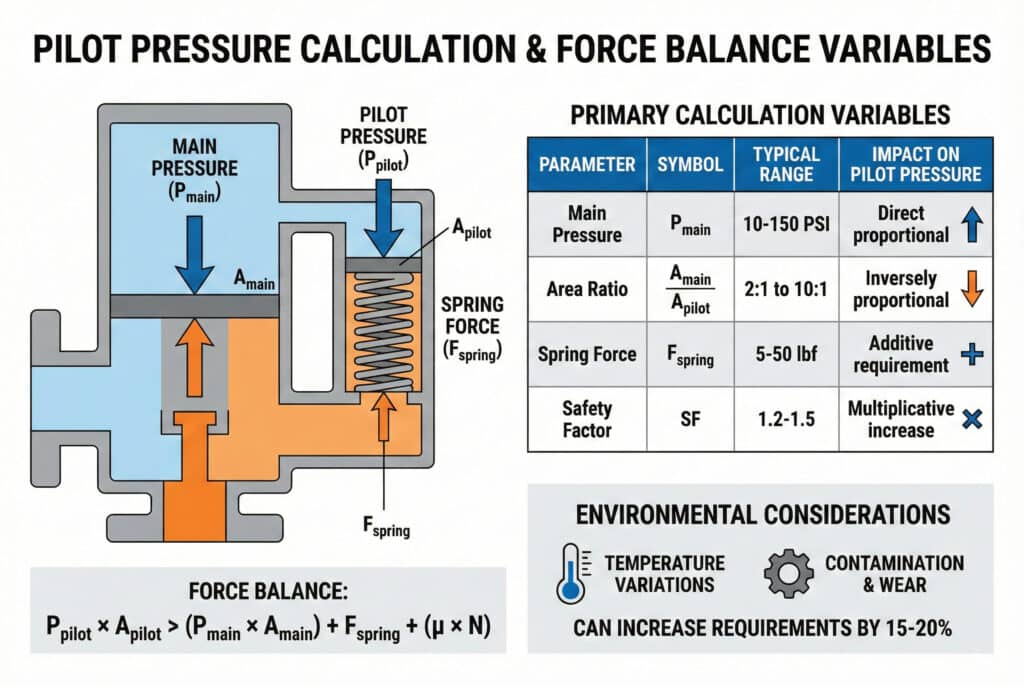
Primary Calculation Variables
The fundamental equation for pilot pressure calculation involves several critical parameters:
| Parameter | Symbol | Typical Range | Impact on Pilot Pressure |
|---|---|---|---|
| Main Pressure | P_main | 10-150 PSI | Direct proportional |
| Area Ratio | A_main / A_pilot | 2:1 to 10:1 | Inversely proportional |
| Spring Force | F_spring | 5-50 lbf | Additive requirement |
| Safety Factor | SF | 1.2-1.5 | Multiplicative increase |
Force Balance Analysis
The pilot valve must overcome several opposing forces:
- Main pressure force: P_main × A_main
- Spring return force: F_spring (constant)
- Friction forces: μ × N (variable with wear)
- Dynamic forces: Flow-induced pressure drops
Environmental Considerations
Temperature variations affect seal friction and spring constants, while contamination can increase operating forces. At Bepto Pneumatics, we’ve seen pilot pressure requirements increase by 15-20% in harsh industrial environments. 🌡️
How Do You Calculate Pilot Pressure for Different Valve Types?
Different pilot-operated valve configurations require specific calculation approaches for accurate pressure determination.
Calculation methods vary by valve type: direct-acting valves2 use simple area ratios, while internally piloted valves require additional considerations for differential pressure effects and flow coefficients.

Direct-Acting Pilot Valves
For direct-acting configurations:
P_pilot = [(P_main × A_main) + F_spring + F_friction] / A_pilot × SF
Internally Piloted Valves
Internal pilot systems require differential pressure analysis:
P_pilot = P_main + ΔP_flow + (F_spring / A_pilot) × SF
Where ΔP_flow accounts for pressure drop across internal passages.
Rodless Cylinder Applications
When calculating pilot pressure for rodless cylinder applications3 control valves, consider the unique load characteristics. Our Bepto rodless cylinders typically require 20-30% less pilot pressure than traditional rod cylinders due to optimized internal geometry. 💡
Why Do Pilot Pressure Calculations Fail in Real Applications?
Theoretical calculations often fall short of real-world performance requirements due to overlooked factors and changing conditions.
Common calculation failures result from ignoring dynamic effects, seal wear, temperature variations, contamination buildup, and inadequate safety margins, leading to intermittent valve operation and system unreliability.
Dynamic Effects
Static calculations miss important dynamic phenomena:
- Flow acceleration forces
- Pressure wave reflections
- Valve switching transients
Aging and Wear Factors
System degradation increases pilot pressure requirements over time:
| Wear Factor | Pressure Increase | Typical Timeline |
|---|---|---|
| Seal friction | 10-25% | 2-3 years |
| Spring fatigue | 5-15% | 3-5 years |
| Contamination | 15-30% | 6-12 months |
I remember working with Lisa, a plant manager from a Texas automotive facility, whose pilot valves worked perfectly during commissioning but failed within six months. After investigation, we discovered that inadequate filtration had increased friction forces by 40%, exceeding the original pilot pressure calculations. 🔍
What Safety Margins Should Be Applied to Pilot Pressure Calculations?
Proper safety factors ensure reliable valve operation throughout the system’s service life under varying conditions.
Safety factors of 1.2-1.5 are typically applied to calculated minimum pilot pressure, with higher factors (1.5-2.0) recommended for critical applications, harsh environments, or systems with poor maintenance schedules.
Application-Specific Safety Factors
Different applications require varying safety margins:
- Standard industrial: SF = 1.2-1.3
- Critical processes: SF = 1.4-1.6
- Harsh environments: SF = 1.5-2.0
- Poor maintenance: SF = 1.6-2.0
Economic Optimization
While higher safety factors improve reliability, they also increase energy consumption and component costs. Our Bepto engineering team helps customers find the optimal balance between reliability and efficiency. 📈
Conclusion
Accurate pilot pressure calculations require comprehensive analysis of all system variables, appropriate safety factors, and consideration of real-world operating conditions to ensure reliable pneumatic valve performance.
FAQs About Pilot Pressure Calculations
Q: What’s the most common mistake in pilot pressure calculations?
Ignoring dynamic effects and using only static force balance equations typically results in 20-30% underestimation of required pilot pressure. Always include safety factors and consider system aging.
Q: How often should pilot pressure calculations be verified?
Annual verification is recommended for critical systems, with immediate recalculation after any system modifications, component replacements, or performance issues.
Q: Can pilot pressure be too high?
Yes, excessive pilot pressure can cause rapid valve wear, increased energy consumption, and potential seal damage. Optimal pressure is 10-20% above calculated minimum requirements.
Q: Do Bepto replacement valves use the same pilot pressure calculations?
Our Bepto valves are designed for direct OEM replacement with identical or improved pilot pressure characteristics, often requiring 10-15% less pilot pressure due to optimized internal design.
Q: What tools help verify pilot pressure calculations?
Pressure transducers, flow meters, and oscilloscopes can validate calculated values against actual system performance, ensuring reliable operation under all conditions.
-
Learn the fundamental working principles and common applications of two-stage fluid control valves. ↩
-
Compare the design, benefits, and limitations of direct-acting valves versus two-stage pilot-operated valves. ↩
-
Explore the unique structure and common industrial uses of cylinders without external piston rods. ↩