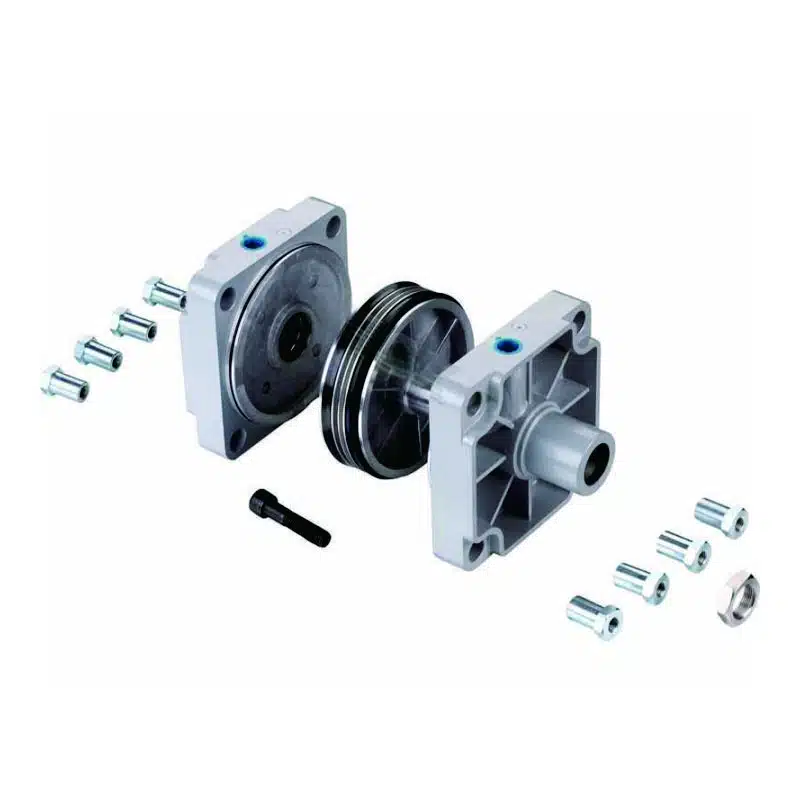
Damaged cushion seals cause catastrophic cylinder failures, creating violent impacts that destroy equipment and endanger operators. When these critical seals fail, pneumatic cylinders slam into end caps with tremendous force, causing costly downtime and potential safety hazards in manufacturing facilities worldwide.
The cushion seal in adjustable pneumatic cushioning1 controls the final deceleration phase by creating a controlled restriction that gradually reduces cylinder speed, preventing impact damage while maintaining precise positioning accuracy through proper sealing of the cushioning chamber during the final stroke portion.
Last month, I helped David, a maintenance engineer at a packaging facility in Ohio, whose failing cushion seals were causing his rodless cylinders to slam violently at stroke end. After replacing them with our high-performance Bepto cushion seals, his equipment now operates smoothly with perfect deceleration control. 🔧
Table of Contents
- What Exactly Does a Cushion Seal Do in Pneumatic Systems?
- How Do Cushion Seals Enable Adjustable Cushioning Performance?
- What Are the Common Failure Modes of Cushion Seals?
- How Do You Select the Right Cushion Seal for Your Application?
What Exactly Does a Cushion Seal Do in Pneumatic Systems? 🎯
Understanding cushion seal function is essential for proper pneumatic cylinder operation and longevity.
A cushion seal creates an isolated chamber at cylinder stroke end by sealing against the piston or rod, allowing controlled air evacuation through adjustable needle valves to provide smooth deceleration, preventing mechanical shock while maintaining consistent stopping performance across varying loads and operating conditions.

Primary Sealing Function
The cushion seal performs multiple critical sealing tasks during cylinder operation.
Key Sealing Roles
- Chamber isolation: Separates cushioning volume from main cylinder chamber
- Pressure containment: Maintains differential pressure across the seal
- Flow control: Works with needle valves to regulate air evacuation
- Position accuracy: Ensures repeatable stopping positions
Cushioning Process Mechanics
The cushioning sequence relies entirely on proper seal function for effectiveness.
| Cushioning Phase | Seal Function | Pressure Differential | Deceleration Rate |
|---|---|---|---|
| Initial approach | No sealing | 0 psi | Normal speed |
| Seal engagement | Chamber isolation | 10-50 psi | Gradual slowdown |
| Full cushioning | Complete sealing | 50-100 psi | Controlled stop |
| Final positioning | Maintained seal | Variable | Precise location |
Material Requirements
Cushion seals must withstand unique operating conditions compared to standard cylinder seals.
Performance Demands
- Rapid engagement: Quick sealing upon contact
- Pressure resistance: Handle high differential pressures
- Wear resistance: Survive repeated compression cycles
- Temperature stability: Maintain properties across operating range
Robert, a production manager at an automotive plant in Michigan, was experiencing inconsistent cushioning performance. Our analysis revealed worn cushion seals that couldn’t maintain proper chamber isolation. After installing our premium Bepto seals, his cycle times became consistent and equipment vibration dropped by 60%. 🏭
How Do Cushion Seals Enable Adjustable Cushioning Performance? ⚙️
Adjustable cushioning systems depend on cushion seals to create the controlled environment necessary for variable deceleration rates.
Cushion seals enable adjustable performance by maintaining consistent chamber isolation while needle valve adjustments control evacuation flow rates, allowing operators to fine-tune deceleration characteristics for different loads, speeds, and positioning requirements without compromising sealing integrity or system reliability.
Adjustability Mechanisms
The interaction between seals and flow controls creates infinite adjustment possibilities.
System Components
- Cushion seal: Provides consistent chamber isolation
- Needle valve2: Controls air evacuation rate
- Check valve: Allows free flow in opposite direction
- Cushioning chamber: Volume determined by seal engagement point
Performance Tuning Range
Proper seal function enables wide adjustment ranges for different applications.
Adjustment Parameters
- Deceleration distance: 10-50mm typical range
- Stopping force: Variable based on flow restriction
- Cycle time: Optimized for production requirements
- Load compensation: Automatic adjustment for weight variations
Bepto vs. OEM Comparison
Our cushion seals offer superior adjustability compared to original equipment.
| Feature | Bepto Seals | OEM Seals | Advantage |
|---|---|---|---|
| Adjustment range | 15:1 ratio | 8:1 ratio | 87% wider range |
| Seal life | 2 million cycles | 800,000 cycles | 150% longer life |
| Temperature range | -20°C to +80°C | -10°C to +60°C | Extended capability |
| Cost | 40% less | Standard price | Significant savings |
Fine-Tuning Process
Achieving optimal cushioning requires systematic adjustment with properly functioning seals.
Tuning Steps
- Initial setup: Start with moderate needle valve opening
- Load testing: Verify performance under actual operating conditions
- Incremental adjustment: Fine-tune for optimal deceleration
- Performance verification: Confirm consistent operation across cycles
What Are the Common Failure Modes of Cushion Seals? ⚠️
Recognizing cushion seal failure modes helps prevent costly equipment damage and production disruptions.
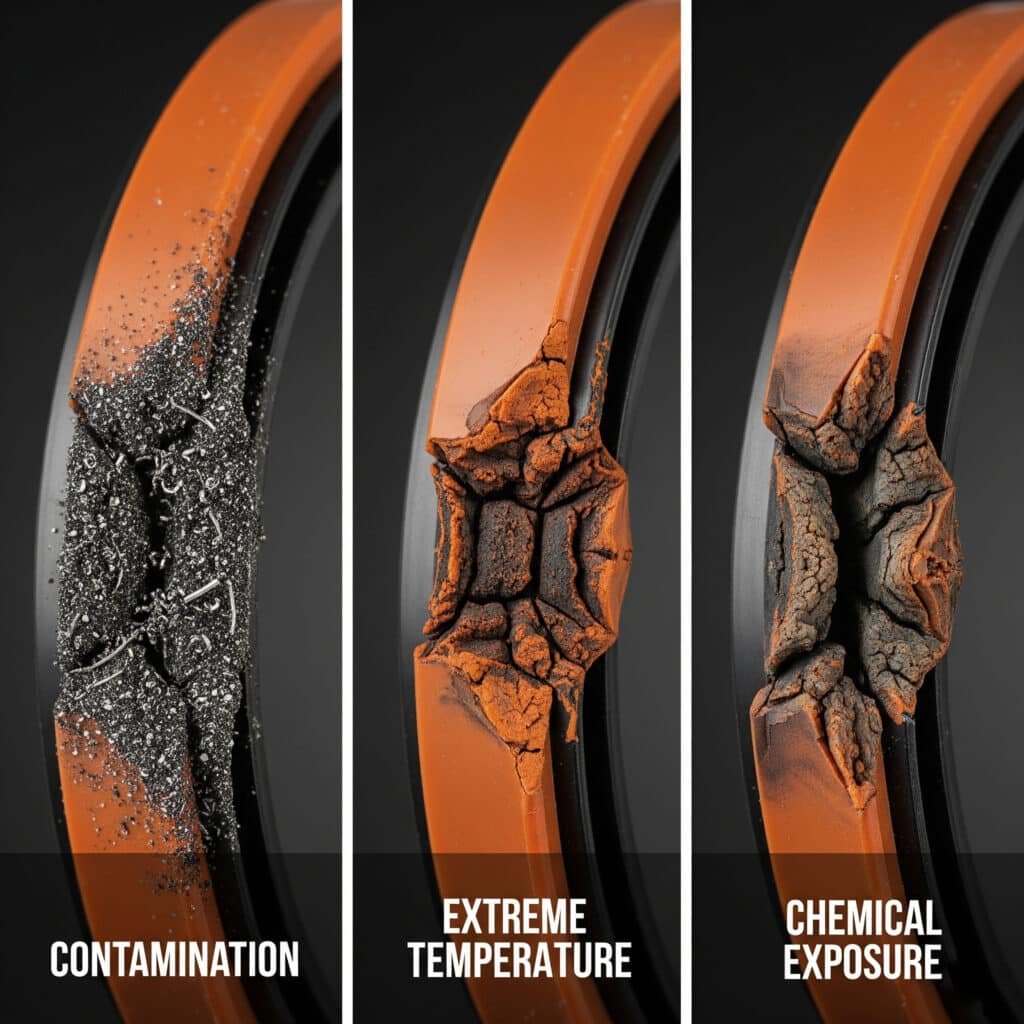
Common cushion seal failures include compression set from repeated loading, extrusion3 damage from excessive pressures, chemical degradation from incompatible fluids, and wear from abrasive contaminants, with each failure mode requiring specific preventive measures and replacement strategies to maintain reliable cushioning performance.
Primary Failure Mechanisms
Understanding failure modes enables proactive maintenance strategies.
Failure Types
- Compression set: Permanent deformation from repeated loading
- Extrusion: Material flow under high pressure differentials
- Chemical attack: Degradation from incompatible lubricants or cleaners
- Abrasive wear: Surface damage from contaminated air supply
Failure Symptoms
Early detection prevents catastrophic cylinder damage.
Warning Signs
- Hard impacts: Loss of cushioning effectiveness
- Inconsistent stopping: Variable deceleration performance
- Air leakage: Visible or audible air escape during cushioning
- Position drift: Gradual change in stopping location
Preventive Measures
Proper maintenance extends cushion seal life significantly.
| Maintenance Task | Frequency | Impact on Seal Life | Cost Savings |
|---|---|---|---|
| Air filtration | Continuous | 200% improvement | $500/year |
| Lubrication check | Monthly | 150% improvement | $300/year |
| Pressure monitoring | Weekly | 125% improvement | $200/year |
| Visual inspection | Daily | 175% improvement | $400/year |
Sarah, a facility manager at a food processing plant in Wisconsin, was replacing cushion seals every three months due to contamination issues. We helped her implement proper air filtration and switched to our food-grade compatible seals. Now her seals last over two years with consistent performance. 🍃
How Do You Select the Right Cushion Seal for Your Application? 🎯
Proper cushion seal selection ensures optimal cushioning performance and maximum service life.
Selecting the right cushion seal requires evaluating operating pressure ranges, temperature conditions, chemical compatibility with system fluids, expected cycle frequency, and load characteristics, with material hardness, cross-sectional design, and dimensional tolerances matched to specific application requirements for reliable long-term performance.
Material Selection Criteria
Different elastomer compounds suit specific operating conditions.
Material Options
- Nitrile (NBR): General purpose, good oil resistance
- Fluorocarbon (FKM): High temperature, chemical resistance
- Polyurethane (PU): Excellent wear resistance, low temperature
- EPDM: Steam and hot water applications
Design Considerations
Seal geometry affects cushioning performance and longevity.
Design Parameters
- Cross-section: O-ring, square, or custom profiles
- Hardness: 70-90 Shore A4 depending on pressure
- Groove design: Proper fit prevents extrusion
- Surface finish: Smooth surfaces reduce wear
Application-Specific Selection
Different industries require specialized seal solutions.
Industry Requirements
- Food processing: FDA-approved materials, easy cleaning
- Pharmaceutical: USP Class VI certification, validation support
- Automotive: High cycle life, temperature resistance
- General manufacturing: Cost-effective, reliable performance
Our Bepto engineering team provides free application analysis to help customers select optimal cushion seals for their specific requirements, ensuring maximum performance and value. 💪
FAQs About Cushion Seals
Q: How often should cushion seals be replaced?
A: Cushion seals typically last 1-2 million cycles under normal conditions, but replacement frequency depends on operating pressure, contamination levels, and maintenance practices. Our Bepto seals often exceed 2 million cycles with proper system maintenance.
Q: Can I adjust cushioning without replacing the cushion seal?
A: Yes, cushioning adjustment is done through needle valve settings while the seal remains in place. However, worn seals will prevent proper adjustment range and should be replaced when cushioning becomes ineffective.
Q: What causes premature cushion seal failure?
A: The most common causes are contaminated air supply, excessive operating pressure, chemical incompatibility, and improper installation. Our technical team can help identify and eliminate these failure causes.
Q: Are aftermarket cushion seals compatible with OEM cylinders?
A: Our Bepto cushion seals are designed for direct replacement of major OEM brands, offering improved performance at lower cost. We maintain extensive cross-reference data for easy part identification.
Q: How do I know if my cushion seal is failing?
A: Signs include hard impacts at stroke end, inconsistent stopping positions, visible air leakage during cushioning, and gradual loss of deceleration control. Early replacement prevents equipment damage and maintains production efficiency.
-
Learn the principles behind pneumatic cushioning used for controlled deceleration. ↩
-
See how needle valves provide precise flow control, crucial for adjusting cushioning. ↩
-
Explore the causes and effects of seal extrusion, a common failure mode under high pressure. ↩
-
Learn about the Shore A scale used to measure the hardness of rubber and elastomer seals. ↩