

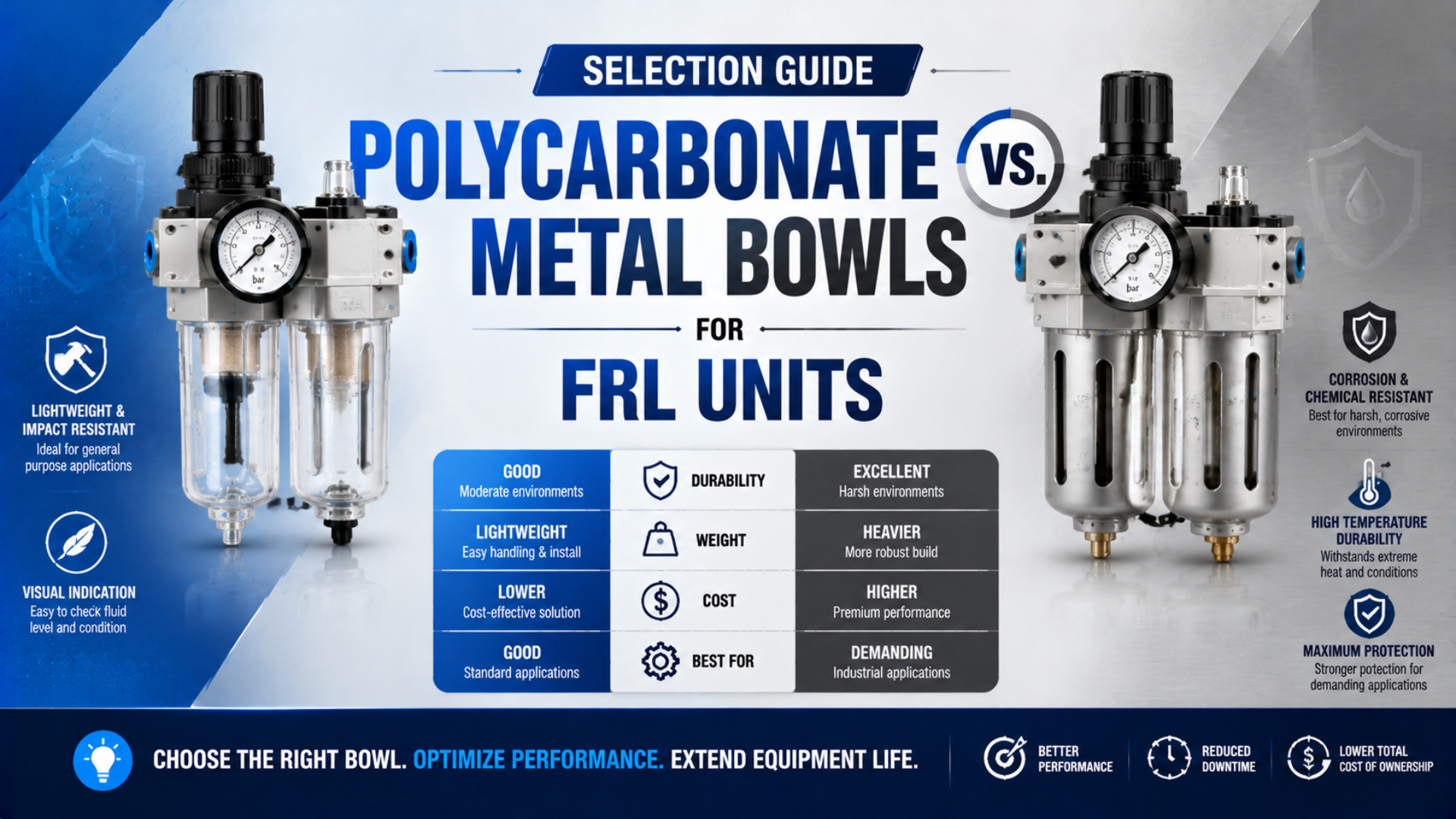
A escolha entre copos de policarbonato e copos metálicos para unidades FRL começa pelos dados da série exata, pelo envelope de pressão e temperatura, pela exposição química interna e externa, pelos riscos de impacto e UV, pelas condições de lavagem e pela necessidade de visualizar o nível do líquido. O nome do material, sozinho, não é uma especificação segura, porque a proteção, o visor de nível, as vedações, o dreno e o mecanismo de retenção também definem os limites do conjunto.
Um copo transparente pode acelerar a inspeção. Um copo metálico pode melhorar a resistência ao impacto e a alguns ambientes de operação. Nenhuma das opções é universalmente superior, e nenhum dos rótulos comprova compatibilidade com todos os solventes, lubrificantes, ácidos, produtos de limpeza ou condições externas.
Principais pontos
- Os limites de pressão e temperatura pertencem a uma série FRL e a uma configuração de copo exatas, não a uma categoria de material.
- Um corpo metálico ainda pode conter um visor de nível de polímero, vedações de elastômero ou um dreno plástico.
- A compatibilidade química deve abranger o condensado e o lubrificante do compressor dentro do copo, além de produtos de limpeza, vapores e UV no exterior.
- A conversão do copo só é válida quando o fabricante identifica o kit completo de reposição para o modelo exato.
Este guia se concentra na seleção do material do copo. Use o guia de dimensionamento de FRL para cálculos de vazão de pico e perda de pressão, e o guia de FRL modular versus independente para a arquitetura do sistema.
Selecione o conjunto completo do copo, não apenas o material do corpo
O conjunto do copo de um FRL é o grupo completo que contém a pressão e pode receber manutenção: corpo do copo, proteção, visor, vedações, dreno, interface de retenção e qualquer revestimento. A orientação de engenharia da Parker separa as precauções para copos de policarbonato das precauções para copos metálicos, enquanto seus dados de produto mostram que um copo metálico ainda pode usar visor de nível de náilon, vedações de nitrila e dreno de polímero (Dados de engenharia da Parker, 2026; Dados Parker 05E, 2026).
Isso significa que um corpo de copo de alumínio ou zinco não torna metálicas todas as peças molhadas ou expostas. A pequena janela de nível pode continuar sendo o componente mais sensível quimicamente. A vedação do dreno pode definir o limite de compatibilidade do fluido. As roscas de retenção ou a fixação tipo baioneta podem determinar se uma reposição aparentemente semelhante pode ser instalada com segurança.
Nas análises de aplicação, considero um visor de nível, uma vedação ou um dreno não identificados um risco de compatibilidade não resolvido. Não é um detalhe menor a ser preenchido depois da seleção do corpo do copo.
Ao solicitar uma cotação, informe o fabricante e a série exatos do FRL, o tamanho da porta, o número do kit do copo, se conhecido, o tipo de dreno e a proteção atual. “Copo metálico para um filtro de 1/2 polegada” não fornece informação suficiente para estabelecer encaixe ou capacidade nominal.
Quando um copo de policarbonato é a melhor escolha?
Um copo de policarbonato costuma ser a escolha prática quando a inspeção visual é importante e os limites exatos de pressão, temperatura, química, impacto e ambiente do fabricante são atendidos. Os operadores podem ver o condensado, o nível de lubrificante, a descoloração e alguns contaminantes sem depender de uma pequena janela de inspeção ou abrir um conjunto despressurizado.
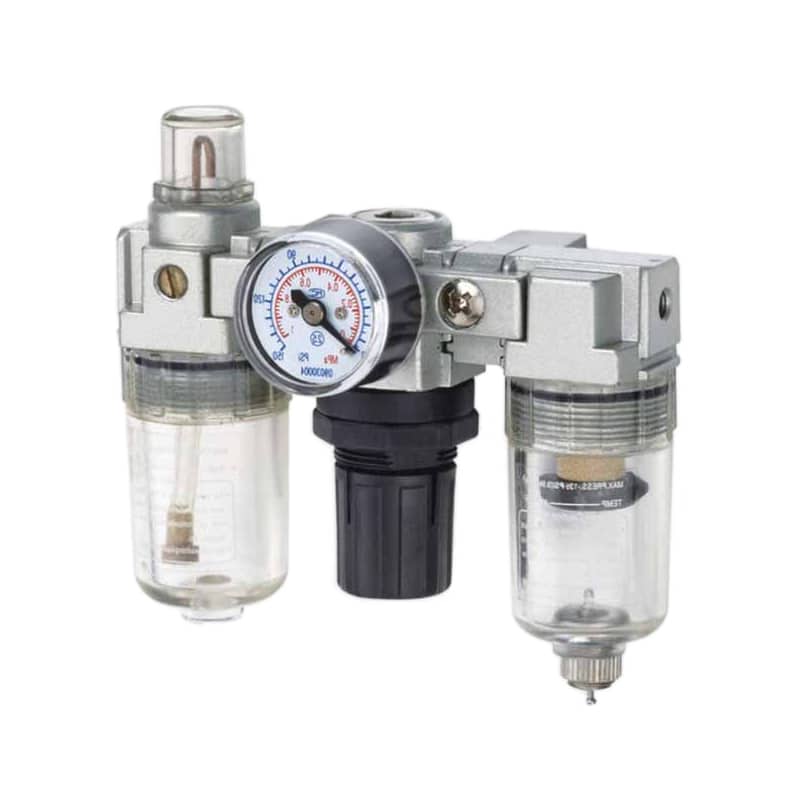
A visibilidade pode tornar a rotina de manutenção mais rápida, mas não substitui um padrão de inspeção. A equipe ainda precisa definir o nível máximo de líquido, verificar o funcionamento do dreno e estabelecer uma resposta para quando o copo ficar turvo, apresentar fissuras, riscos, deformação ou dificultar a inspeção.
Policarbonato não é sinônimo de “baixa pressão”. Por exemplo, um produto de unidade de serviço da Festo lista um copo Makrolon com proteção metálica para 1 a 16 bar e -10 a 60 °C. Esses valores pertencem a esse produto específico, não a todos os copos de policarbonato (Festo LFR-1/4-D-MINI-KC, 2026).
Um copo transparente protegido pode ser adequado quando:
- os dados aprovados do produto cobrem a pressão real de entrada e as temperaturas reais do ambiente e do fluido;
- o condensado interno e o lubrificante do compressor são compatíveis com o copo, as vedações e o dreno;
- produtos de limpeza, vapores, óleos e produtos químicos do processo no exterior foram avaliados;
- a proteção especificada está instalada e sem danos;
- luz solar, impacto, detritos abrasivos e lavagem não excedem os limites ambientais do produto;
- a visibilidade direta do nível do líquido tem um valor de manutenção definido.
Não remova uma proteção instalada de fábrica para melhorar a visibilidade. Selecione uma configuração projetada para fornecer acesso à inspeção e proteção ao mesmo tempo.
Quais produtos químicos e ambientes ameaçam o policarbonato?
A Parker alerta que copos e domos de inspeção de policarbonato não devem ser usados com hidrocarbonetos clorados, cetonas, ésteres, certos álcoois ou fluidos de compressor resistentes ao fogo incompatíveis, e devem ser protegidos contra luz solar direta, impacto e temperaturas fora da especificação. Ela também recomenda limpá-los somente com água e sabão neutro (Dados de engenharia da Parker, 2026).
Essa orientação é mais útil do que uma distância fixa de exclusão de solvente. A exposição depende da identidade química, concentração, temperatura, tempo de contato, tensões na peça moldada, ventilação, padrão de respingos e do fato de a substância atingir o copo como líquido ou vapor. Uma regra universal de dois metros não consegue considerar essas variáveis.
Avalie dois caminhos de exposição:
| Caminho de exposição | Exemplos a identificar | Peças que podem ser afetadas |
|---|---|---|
| Interno | condensado, lubrificante do compressor, resíduos de tratamento da tubulação, arraste de produto de limpeza | copo, domo de inspeção, vedações, dreno, tampas do elemento |
| Externo | desengraxantes, solventes de tinta, produtos de lavagem, fluidos de corte, UV, vapores do processo | copo, proteção, janela de inspeção, interface de retenção, etiquetas |
As fissuras por tensão podem não aparecer imediatamente após o primeiro contato. Registre o nome exato do produto da ficha de dados de segurança e sua concentração, em vez de escrever “solvente presente” no formulário da aplicação. Envie essas informações ao fabricante do FRL para obter uma decisão de compatibilidade por escrito.
Se o produto químico mudar, repita a análise. Um copo aprovado para um limpador à base de água não é automaticamente compatível com um novo desengraxante usado na higienização do fim de semana.
O que um copo metálico melhora e quais limites permanecem?
Um copo metálico pode melhorar a resistência ao impacto, reduzir a exposição direta do corpo do copo aos raios UV e ampliar o envelope de pressão ou temperatura em algumas séries de produtos. No entanto, a Parker também afirma que seus copos metálicos não são recomendados para ácidos ou bases fortes nem para atmosferas carregadas de sal; portanto, “metálico” não é uma classificação universal de resistência química (Dados de engenharia da Parker, 2026).
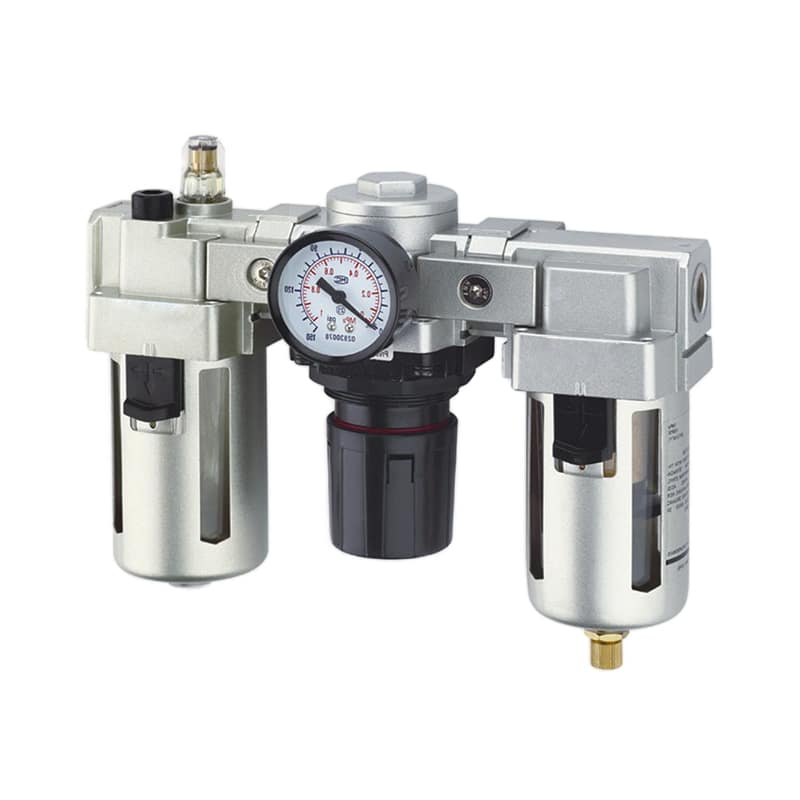
A liga e o acabamento exatos são importantes. Zinco fundido sob pressão, alumínio fundido sob pressão, aço inoxidável e metal revestido não têm o mesmo envelope de corrosão. Se for necessário aço inoxidável, especifique o grau e verifique os demais materiais. O guia sobre aço inoxidável 304 versus 316 explica por que a designação da liga deve corresponder às condições reais de cloretos e produtos químicos.
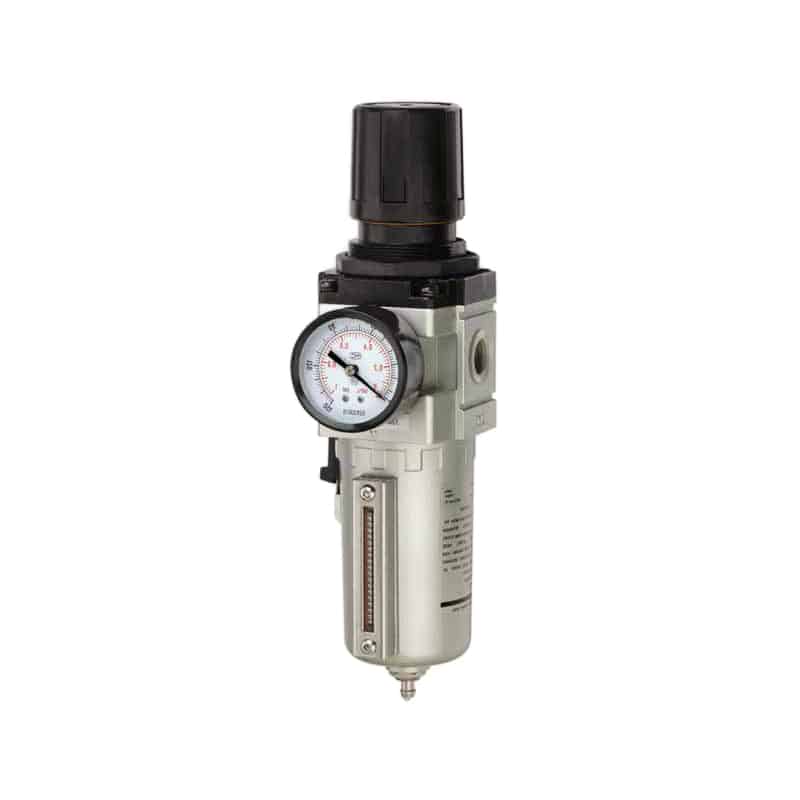
Um copo metálico com visor também é um conjunto de materiais mistos. O exemplo Parker 05E lista um copo de zinco, visor de nível de náilon, vedações de nitrila e drenos plásticos. Nessa configuração, o visor ou o dreno pode continuar sendo a peça limitante, mesmo que o invólucro principal seja metálico (Dados Parker 05E, 2026).
A construção metálica, sozinha, não comprova conformidade para alimentos, produtos farmacêuticos, salas limpas ou lavagem. Essas alegações exigem evidências específicas da aplicação sobre acabamento superficial, revestimentos, lubrificantes, vedações, drenos, capacidade de limpeza, geração de partículas e normas regulamentares ou do cliente aplicáveis.
Por que os limites de pressão e temperatura são específicos do modelo?
As classificações de pressão e temperatura são específicas do modelo porque a geometria do copo, o projeto de retenção, a proteção, o visor, o dreno, as vedações e a configuração testada variam conforme a série. O próprio catálogo da Parker apresenta limites diferentes para diferentes famílias, demonstrando por que um limite universal para todos os copos FRL de policarbonato ou metálicos não é tecnicamente válido (Catálogo completo de FRL da Parker, 2026).
Os números a seguir são exemplos, não limites gerais de projeto:
| Exemplo de série do fabricante | Configuração de policarbonato | Configuração metálica | Lição para a seleção |
|---|---|---|---|
| Filtro de partículas Parker P31 | máximo de 10 bar; -10 a 52 °C | máximo de 17 bar; -10 a 65,5 °C | em uma série, o envelope do copo metálico é maior |
| Filtro Parker 05E | máximo de 10,3 bar; 0 a 52 °C | máximo de 17,2 bar; 0 a 80 °C | outra série tem limites de temperatura diferentes |
| Filtro-regulador SMC AW10 | policarbonato padrão; metal opcional | mesmo máximo publicado de 1,0 MPa e -5 a 60 °C | uma opção de material nem sempre altera a classificação da unidade |
Os dados do SMC AW10 vêm da documentação de produto da SMC e se aplicam somente a essa configuração (Dados da série AC da SMC, 2026).
Verifique a pressão máxima e a faixa de pressão de operação. Verifique também separadamente a temperatura ambiente e a temperatura do fluido quando a ficha técnica fornecer ambas. Considere a maior pressão de entrada plausível do regulador, a pressão bloqueada, a faixa de controle do compressor, a partida a frio, o calor radiante e a temperatura de limpeza.
Não transfira a classificação de um filtro para um lubrificador visualmente semelhante. Confirme o número completo da peça e todos os sufixos, porque drenos, copos e opções podem alterar o envelope aprovado.
Como proteção, UV, impacto e lavagem mudam a escolha?
A exposição mecânica e ambiental pode tornar a proteção e o local de instalação tão importantes quanto o corpo do copo. A Parker recomenda proteções metálicas de copo para todas as aplicações, enquanto a linha de unidades de serviço MS da Festo oferece copos de policarbonato com proteções e opções de copo metálico, mostrando que proteção e material do copo são decisões de configuração separadas (Dados de engenharia da Parker, 2026; Filtros MS da Festo, 2026).
Verifique onde o FRL será realmente instalado:
- Uma ferramenta caída, uma peça, uma carga de empilhadeira ou uma correia rompida podem atingi-lo?
- Ele fica exposto ao sol direto ou a equipamentos que produzem UV?
- Detritos de esmerilhamento ou respingos de solda podem alcançar o copo ou o visor?
- A área é lavada? Com qual pressão, temperatura e composição química?
- A vibração pode soltar o copo, o dreno ou o elemento de retenção?
- O conjunto fica atrás de um painel que impede a inspeção rotineira do nível?
Um gabinete de máquina pode reduzir o risco de impacto, mas reter calor ou vapores químicos. Uma cobertura externa pode reduzir a exposição a UV e chuva, mas dificultar as verificações do dreno. Avalie a instalação montada, não um copo isolado em uma página de catálogo.
Quando for necessária lavagem, solicite os dados ambientais e de materiais da unidade completa. Um corpo de copo resistente à corrosão não comprova que o dreno, o visor, o botão de ajuste, os fixadores, o kit de montagem ou as vedações de interface suportam o mesmo processo.
É possível substituir um copo de policarbonato por um copo metálico?
Só substitua um material de copo por outro quando o fabricante identificar um kit completo compatível com o modelo FRL exato e o conjunto convertido mantiver as classificações e certificações necessárias. Diâmetro, tamanho de rosca ou aparência semelhantes não comprovam intercambiabilidade entre marcas, séries, gerações de produção ou opções de dreno.
Verifique todos os itens a seguir antes de fazer o pedido:
- Fabricante e número completo da peça FRL, incluindo os sufixos.
- Número da peça do kit de copo aprovado e revisão da unidade compatível.
- Material da vedação do copo e se uma vedação nova está incluída.
- Tipo, rosca, orientação e comportamento operacional mínimo do dreno.
- Proteção, visor de nível e mecanismo de retenção fornecidos com o kit.
- Classificação de pressão e temperatura após a conversão.
- Compatibilidade química e ambiental de cada peça de reposição.
- Torque de instalação, posição da trava, teste de vazamento e instruções de comissionamento.
- Efeito sobre aprovações de órgãos, garantia e validação da instalação.
Nunca adapte um copo não listado usinando-o, adicionando vedante de rosca a uma interface de retenção ou combinando um corpo de uma série com um dreno de outra. Um copo que contém pressão fica sobre energia pneumática armazenada.
Antes da manutenção, isole a unidade e siga o procedimento de controle de energias perigosas do local. A ISO 4414 abrange requisitos de projeto, instalação, operação, manutenção e segurança de sistemas pneumáticos, enquanto a OSHA 29 CFR 1910.147 inclui energia pneumática no controle de energias perigosas para trabalhos de manutenção abrangidos (ISO 4414, 2010; OSHA 1910.147, 2026).
Como construir uma decisão defensável sobre o material do copo?
Uma decisão defensável começa com os dados exatos do componente e depois examina a química interna, o ambiente externo, o envelope operacional, os riscos físicos, as necessidades de inspeção e as evidências de reposição. Se uma informação for desconhecida, marque-a como item em aberto em vez de preenchê-la com uma regra prática.
Use um registro simples de decisão:
| Entrada da decisão | Evidência necessária | Declaração de aceitação |
|---|---|---|
| Identidade exata | foto da placa de identificação e número completo da peça | o kit selecionado está listado para esta unidade |
| Pressão e temperatura | ficha técnica do fabricante para a opção exata | todas as condições plausíveis permanecem dentro da classificação |
| Química interna | dados do fluido do compressor, análise do condensado se necessário | cada peça molhada é compatível |
| Química externa | FDS do produto de limpeza, concentração, método e tempo de contato | o conjunto exposto está aprovado |
| Ambiente físico | fotos da instalação e avaliação de riscos | a proteção e o local controlam o risco de impacto e UV |
| Inspeção | método de manutenção e limite de alarme ou ação | o nível do líquido e a condição do copo podem ser verificados |
| Comissionamento | instruções de instalação e registro de teste | os testes de vazamento, dreno, regulagem e visibilidade são aprovados |
A Festo descreve seus filtros-reguladores MS como utilizando corpos de alumínio fundido sob pressão com copos metálicos ou de policarbonato opcionais e vários sistemas de dreno. Isso é um lembrete útil para registrar todo o conjunto de opções, e não apenas o copo visível (Filtros-reguladores MS da Festo, 2026).
O que a RFQ e a lista de aceitação devem incluir?
Uma RFQ útil permite que o fornecedor identifique o conjunto exato do copo e declare seus limites por escrito. Ela deve separar fatos de preferências: “deve resistir ao produto de limpeza X a 3% e 45 °C” é um requisito da aplicação, enquanto “preferir copo transparente” é uma preferência de visibilidade que pode ser alterada se entrar em conflito com segurança ou compatibilidade.
Informe:
- número completo da peça FRL, tipo de módulo, tamanho da porta e revisão;
- pressão máxima e mínima de entrada, não apenas o setpoint do regulador;
- faixa de temperatura do fluido e do ambiente, incluindo limpeza e parada;
- lubrificante do compressor e qualquer fluido resistente ao fogo usado a montante;
- contaminantes esperados no condensado;
- nomes dos produtos químicos externos, concentrações e métodos de exposição;
- condições de UV, impacto, vibração, lavagem e corrosão;
- função de dreno e conexão de descarga necessárias;
- inspeção visual ou indicação eletrônica de nível necessária;
- requisitos regulamentares, do cliente, de sala limpa ou de área de alimentos;
- kit do copo, vedações, proteção, dreno e quantidade de peças sobressalentes solicitados.
Na chegada, compare a lista de embalagem e as marcações das peças com a cotação aprovada. Inspecione o visor, a vedação, o dreno, a proteção e a interface de retenção. Instale conforme as instruções do fabricante e registre a restauração do isolamento, o teste de vazamento, o funcionamento do dreno, a resposta do regulador e o acesso para inspeção.
A escolha do dreno pode alterar tanto o comportamento da manutenção quanto o kit do copo. O guia sobre dreno manual versus semiautomático trata dessa decisão. Se o processo exigir a remoção de aerossol de óleo, e não apenas a separação de líquido em volume, use o guia de filtros coalescentes para definir o conjunto completo de tratamento.
Perguntas frequentes sobre materiais de copos FRL: o que os compradores devem perguntar?
A resposta recorrente é usar os dados do produto exato, em vez de uma regra universal sobre materiais. Corpos de copo com o mesmo nome amplo de material podem ter geometrias, sistemas de retenção, proteções, componentes de inspeção, drenos, vedações, revestimentos e limites testados diferentes.
50 °C é um limite superior universal para copos FRL de policarbonato?
Não. A Parker publica 52 °C para as configurações de policarbonato dos exemplos P31 e 05E, enquanto um produto Festo com copo Makrolon é especificado para 60 °C. Esses são valores específicos de cada produto. Use a ficha técnica do fabricante, da série, do copo, da proteção, do dreno e das condições de operação exatos.
Copos FRL metálicos são seguros com qualquer solvente, ácido ou produto de limpeza alcalino?
Não. A Parker alerta especificamente contra o uso de seus copos metálicos com ácidos ou bases fortes e em atmosferas carregadas de sal. A compatibilidade depende da liga, do revestimento, do visor, das vedações, do dreno, da concentração, da temperatura e do tempo de exposição informados. Obtenha orientação escrita para o produto químico real.
Um copo metálico elimina a necessidade de proteção?
Não automaticamente. Os requisitos de proteção pertencem ao projeto do produto e à avaliação de risco da instalação. Uma proteção pode proteger o visor, o dreno, a área de retenção ou componentes próximos tanto quanto o corpo do copo. Siga a configuração exata do fabricante e não remova a proteção fornecida.
Um copo metálico de reposição pode reutilizar o dreno e as vedações existentes?
Somente se o kit aprovado pelo fabricante e as instruções permitirem. Uma opção de copo metálico pode usar vedações, peças de dreno, componentes de inspeção ou ferragens de retenção diferentes. Faça o pedido pelo número do kit completo e confirme se as vedações consumíveis são fornecidas ou precisam ser pedidas separadamente.
Como os operadores podem inspecionar o condensado quando o copo é opaco?
Use o visor de nível, o indicador de nível, o sensor, a verificação do funcionamento do dreno ou o método de inspeção segura programada aprovado para a unidade. Defina um limite de resposta antes do comissionamento. Uma pequena janela deve permanecer limpa, visível e quimicamente compatível; um copo opaco não deve se tornar uma justificativa para interromper a verificação do condensado.
Fontes e notas de consulta
- Parker, dados de engenharia sobre preparação de ar comprimido. Precauções para copos de policarbonato e metálicos. Consultado em 27/07/2026.
- Parker, catálogo completo de preparação de ar comprimido. Exemplos de configuração P31. Consultado em 27/07/2026.
- Parker, dados do filtro 05E. Exemplos de copo, visor, vedação, dreno, pressão e temperatura. Consultado em 27/07/2026.
- Festo, filtros da série MS. Opções de copo e proteção. Consultado em 27/07/2026.
- Festo, filtros-reguladores da série MS. Opções de corpo, copo e dreno. Consultado em 27/07/2026.
- Festo, LFR-1/4-D-MINI-KC. Exemplo de copo Makrolon específico de um produto. Consultado em 27/07/2026.
- SMC, dados de produto da série AC. Opções de copo e limites de operação do filtro AW10. Consultado em 27/07/2026.
- ISO 4414:2010, sistemas e componentes de potência fluida pneumática. Consultado em 27/07/2026.
- OSHA 29 CFR 1910.147, controle de energias perigosas. Consultado em 27/07/2026.