
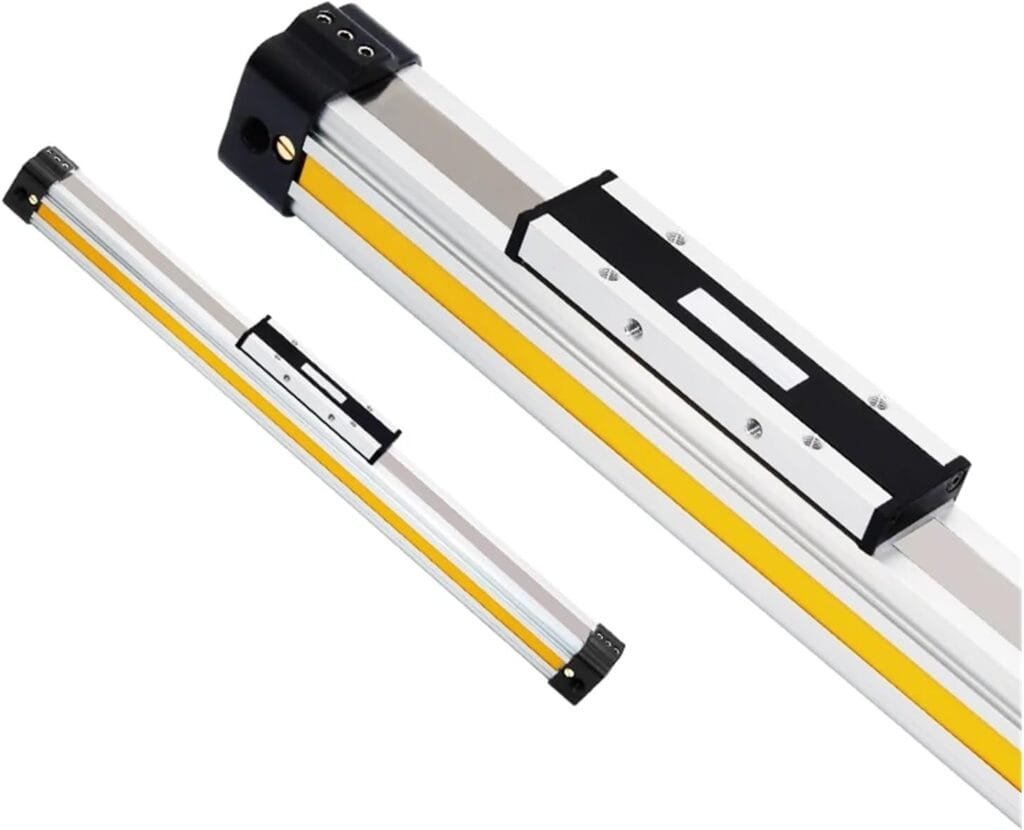
There is nothing more frustrating than hearing the hiss of escaping air on a busy production line. It starts as a small leak, causing pressure drops, and eventually leads to erratic machine movement or a complete standstill. You check the seals, the fittings, and the valves, but the culprit is often hidden deep inside: the inner sealing band1. 🛑
Inner band fatigue occurs when the stainless steel sealing strip2 inside a rodless cylinder cracks, deforms, or wears out due to repetitive cycling, debris accumulation, or improper tensioning, resulting in significant air bypass3 and system failure.
I’ve seen this happen countless times. Just last month, John, a senior maintenance engineer at a large automotive plant in Ohio, called me in a panic. His main transfer line was down because a competitor’s cylinder had blown its inner strip after only six months. Every hour of downtime was costing his company thousands, and the OEM quoted him a three-week lead time for a replacement. That’s the reality of rodless cylinder inner band failure—it hits hard and fast. 📉
Table of Contents
- What Causes the Inner Steel Strip to Fail?
- How Can You Identify Early Signs of Band Fatigue?
- Is It Better to Repair the Strip or Replace the Cylinder?
- Conclusion
- FAQs About Rodless Cylinder Inner Band Failure
What Causes the Inner Steel Strip to Fail?
Understanding the root cause is the first step to preventing future breakdowns. It is rarely just “bad luck.”
The primary causes of failure are excessive cycle speeds, insufficient lubrication, misalignment of the load, and environmental debris that grinds against the thin stainless steel band, creating stress cracks.
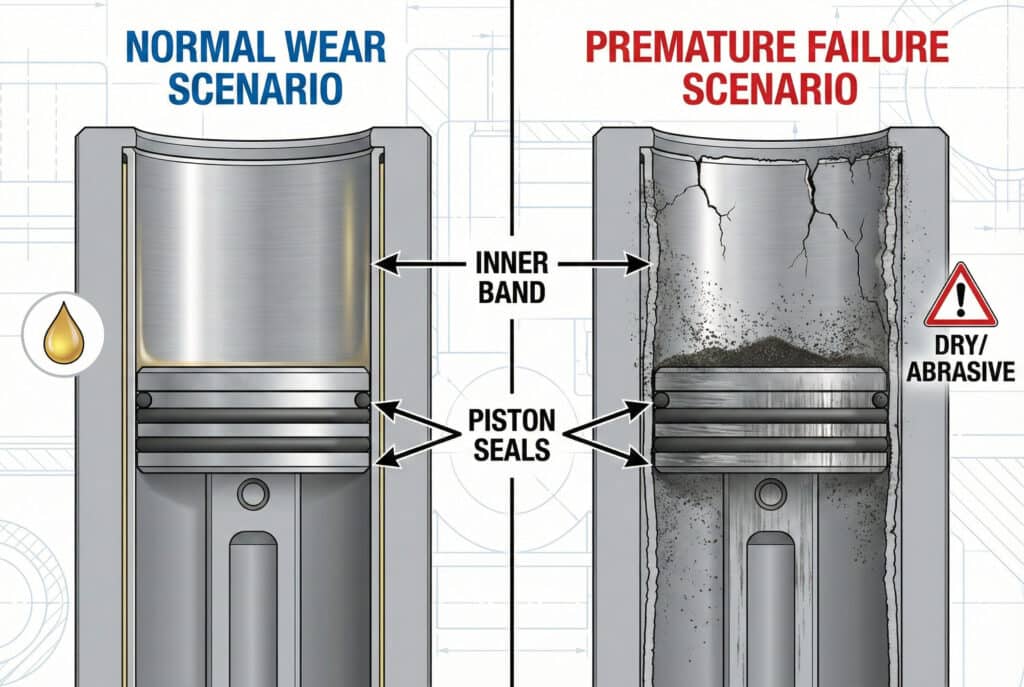
Mechanical Stress and Environment
The inner band is a thin strip of stainless steel that seals the slot in the cylinder barrel. It undergoes bending stress4 every time the piston passes. While designed for millions of cycles, external factors accelerate fatigue.
In John’s case in Ohio, we found that fine metal dust from a nearby grinding station was settling into the cylinder slot. This abrasive dust acted like sandpaper between the piston seals and the inner band.
Comparison: Normal Wear vs. Premature Failure
| Factor | Normal Wear Scenario | Premature Failure Scenario |
|---|---|---|
| Lubrication | Clean, filtered air with proper mist | Dry, unlubricated air causing friction |
| Alignment | Load is guided externally | Side-loading the piston carriage |
| Environment | Clean room or standard factory | Dusty, gritty, or corrosive atmosphere |
| Result | Lasts 5,000+ km of travel | Fails under 1,000 km |
At Bepto Pneumatics, we often recommend specific band materials or protective covers for harsh environments to mitigate these risks. 🛡️
How Can You Identify Early Signs of Band Fatigue?
You don’t have to wait for the cylinder to stop working completely to know there is a problem.
Key indicators include audible air leaking near the piston carriage, “stick-slip” or jerky motion during low-speed operation, and visible rippling or kinking on the outer dust band, which often mirrors internal damage.
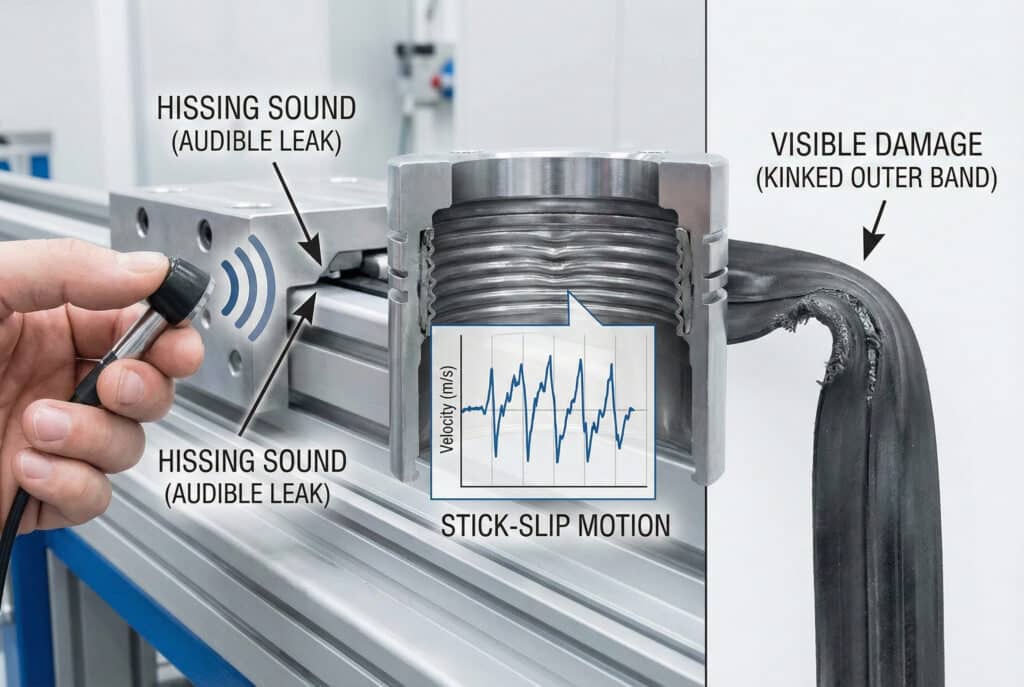
The “Hiss” Test
The most obvious sign is sound. If you hear air escaping specifically from the area where the piston connects to the carriage, your inner band likely has a crack or has lost its tension.
Visual Inspection
Inspect the outer dust band. While the inner band does the sealing, the outer band protects it. If the outer band looks kinked or damaged, there is a high probability the inner band is suffering the same fate.
When John described the “stick-slip“5 movement of his conveyor, I knew immediately that the band was no longer sealing correctly, causing pressure fluctuations behind the piston. 🕵️♂️
Is It Better to Repair the Strip or Replace the Cylinder?
This is the question every procurement manager and engineer wrestles with.
Replacing the inner band is a cost-effective solution if the cylinder bore is undamaged; however, if the barrel is scored or the repair labor is too high, replacing the entire unit with a high-quality aftermarket alternative is often more economical.
The Cost-Benefit Analysis
Repairing a rodless cylinder requires skill. You need to disassemble the heads, remove the piston, and carefully thread the new strip. If done incorrectly, it will leak again immediately.
Repair: Good for large, expensive cylinders (e.g., >63mm bore) where the body is in perfect condition.
Replace: Better for smaller cylinders or when downtime is the enemy.
Returning to John’s story: He didn’t have time to rebuild. He contacted us at Bepto, and because we stock compatible replacements for major OEM brands, we shipped a complete unit that same day. He had his line running within 24 hours—saving his company over $20,000 in potential lost production. Plus, our unit cost significantly less than the OEM replacement he was waiting for. 💰
Conclusion
Inner band fatigue is an inevitable part of using rodless cylinders, but it doesn’t have to be a disaster. By monitoring for leaks, ensuring clean air supply, and knowing when to call for a reliable replacement, you can keep your machines running smoothly. Whether you need a high-quality replacement strip or a brand-new cylinder to get back online fast, remember that Bepto Pneumatics is here to support you with cost-effective, rapid solutions. 🚀
FAQs About Rodless Cylinder Inner Band Failure
How long should a rodless cylinder inner band last?
Under ideal conditions with clean air and proper alignment, a quality inner band can last for several thousand kilometers of travel, often translating to years of service.
However, in dirty environments or high-cycle applications, this lifespan can be reduced to months without proper maintenance.
Can I replace just the inner band myself?
Yes, you can replace the inner band if you have the correct repair kit and technical skills, but it requires precision to ensure the tension is set correctly.
We supply repair kits for various models, but we always advise checking the cylinder bore for damage first. If the bore is scratched, a new band won’t seal.
Why is my new inner band leaking immediately after installation?
Immediate leaking usually indicates improper installation, such as the band being installed upside down, insufficient tensioning, or the presence of debris left in the seal area.
Always clean the internal groove thoroughly before installing a new strip to ensure a perfect seal.
Does Bepto offer bands compatible with other major brands?
Absolutely, we specialize in manufacturing high-quality replacement inner and outer bands that are fully compatible with leading OEM rodless cylinder brands.
This allows you to restore your equipment’s performance without paying the premium OEM price tag.
-
Gain a comprehensive technical overview of how inner sealing bands function to maintain pressure within rodless pneumatic systems. ↩
-
Learn about the specific material properties and durability standards of stainless steel alloys used in high-cycle pneumatic sealing applications. ↩
-
Explore the diagnostic methods and industrial impacts of internal air bypass on pneumatic system efficiency and pressure maintenance. ↩
-
Understand the physics of bending stress and how repetitive mechanical cycles lead to fatigue and eventual failure in thin metal components. ↩
-
Deepen your knowledge of the stick-slip effect, a common mechanical friction phenomenon that causes jerky motion in pneumatic actuators. ↩