Blog

Explore the future of pneumatics. Our blog offers expert insights, technical guides, and industry trends to help you innovate and optimize your automation systems.

The Risks of Gray Market Pneumatic Components- Protecting Your Equipment
Pneumatic Cylinders

The Risks of Gray Market Pneumatic Components: Protecting Your Equipment

Gray market pneumatic components are genuine products sold outside authorized distribution channels, creating risks including no manufacturer warranty support, uncertain product history and storage conditions, potential counterfeit mixing, lack of technical support, equipment warranty voidance, and no traceability—while prices may seem attractive (30-50% below authorized dealers), total cost of ownership typically exceeds buying from legitimate sources due to failure rates, support gaps, and compliance issues.

Read More »
Procurement Checklist- Essential Specs When Ordering ISO 15552 Cylinders
Pneumatic Cylinders

Procurement Checklist: Essential Specs When Ordering ISO 15552 Cylinders

Ordering ISO 15552 cylinders requires specifying bore diameter (32-125mm standard), stroke length (actual travel distance needed), mounting configuration (foot, flange, clevis, trunnion, etc.), port size and location (G1/8 to G1/2 threaded), cushioning requirements (fixed, adjustable, or none), piston rod options (diameter, thread, length), sensor compatibility (magnetic piston, T-slot mounting), and operating conditions (pressure range, temperature, environment)—missing any specification risks receiving incompatible components.

Read More »
Evaluating Factory Capabilities- What to Look for in a Cylinder Manufacturer
Pneumatic Cylinders

Evaluating Factory Capabilities: What to Look for in a Cylinder Manufacturer

Evaluating cylinder manufacturers requires assessing production capabilities (machining precision, assembly processes, quality control systems), technical competence (engineering support, testing facilities, R&D investment), quality certifications (ISO 9001, industry-specific standards), supply chain stability (material sourcing, inventory management, delivery performance), and customer support infrastructure (technical assistance, warranty handling, communication responsiveness)—comprehensive factory evaluation prevents 80% of supplier-related failures.

Read More »
Understanding Minimum Order Quantities (MOQ) in Custom Cylinder Manufacturing
Pneumatic Cylinders

Understanding Minimum Order Quantities (MOQ) in Custom Cylinder Manufacturing

Minimum Order Quantities (MOQ) in custom cylinder manufacturing typically range from 10-100 units depending on customization complexity, with factors including tooling costs (special fixtures, custom components), setup time (machine programming, first-article validation), material purchasing minimums (special seals, non-standard materials), and production efficiency (batch processing reduces per-unit costs)—understanding MOQ drivers helps negotiate reasonable quantities or find flexible manufacturers willing to work with smaller volumes.

Read More »
Magnetic De-coupling Forces: The Physics of "Breaking" the Connection
Pneumatic Cylinders

Magnetic De-coupling Forces: The Physics of “Breaking” the Connection

Introduction Your magnetically coupled rodless cylinder1 suddenly stalls mid-stroke, the carriage stops moving while the internal piston continues, and your entire production line grinds to a halt. 😱 This magnetic de-coupling event—when the magnetic connection “breaks”—costs you thousands in downtime, yet most engineers don’t understand the physics behind why it

Read More »
Slit-Type Cylinder Sealing- The Mechanics of Opening and Closing Bands
Pneumatic Cylinders

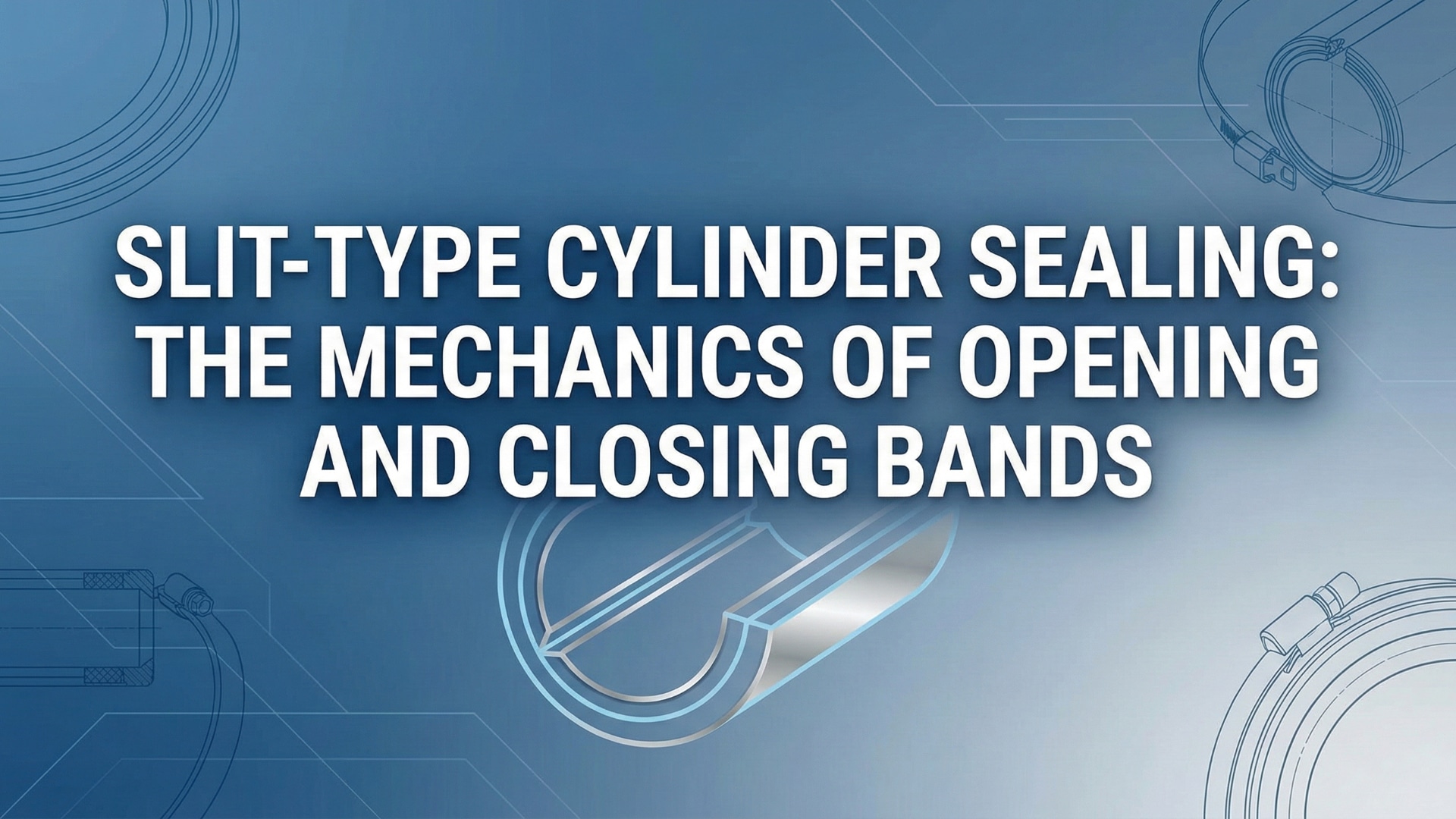
Slit-Type Cylinder Sealing: The Mechanics of Opening and Closing Bands

Slit-type cylinder sealing relies on a precisely engineered steel band mechanism that opens and closes along the cylinder’s longitudinal slot, creating a dynamic seal that maintains pressure while allowing the piston to move freely. The opening band separates ahead of the piston carriage while the closing band reseals behind it, forming a continuous pressure barrier that prevents air leakage throughout the stroke.

Read More »
Guide Rail Parallelism- Tolerance Stack-Up in Rodless Cylinder Mounting
Pneumatic Cylinders

Guide Rail Parallelism: Tolerance Stack-Up in Rodless Cylinder Mounting

Guide rail parallelism refers to the precise alignment of mounting surfaces and guide rails relative to the rodless cylinder’s axis of motion. When tolerances from the cylinder body, mounting brackets, machine frame, and guide rails accumulate (stack up), even minor deviations can cause binding, premature wear, and catastrophic failure.

Read More »
Root Cause Analysis of Piston Rod Fracture- Bending vs. Tensile Failure
Pneumatic Cylinders

Root Cause Analysis of Piston Rod Fracture: Bending vs. Tensile Failure

A piston rod fracture typically results from either bending stress caused by misalignment and side loading, or tensile failure due to overloading and material fatigue. Understanding the fracture surface characteristics—such as crack patterns, texture, and deformation—is essential to identifying the root cause and implementing effective preventive measures.

Read More »
Re-greasing Intervals- Calculating Lubricant Film Breakdown in Rodless Slides
Pneumatic Cylinders

Re-greasing Intervals: Calculating Lubricant Film Breakdown in Rodless Slides

Re-greasing intervals must be calculated based on operating conditions, not arbitrary calendar dates. Lubricant film breakdown occurs when grease degrades from mechanical shearing, oxidation, contamination, or depletion. Proper interval calculation considers stroke length, cycle frequency, load, temperature, and environmental factors. A cylinder running 10 cycles/minute in a clean environment might need re-greasing every 6 months, while one running 60 cycles/minute in dusty conditions may need it monthly.

Read More »
Search
Blog Category
Blog Tag
Bepto Logo

Get More Benefits Since Submit The Info Form

Form Contact

Select Language