
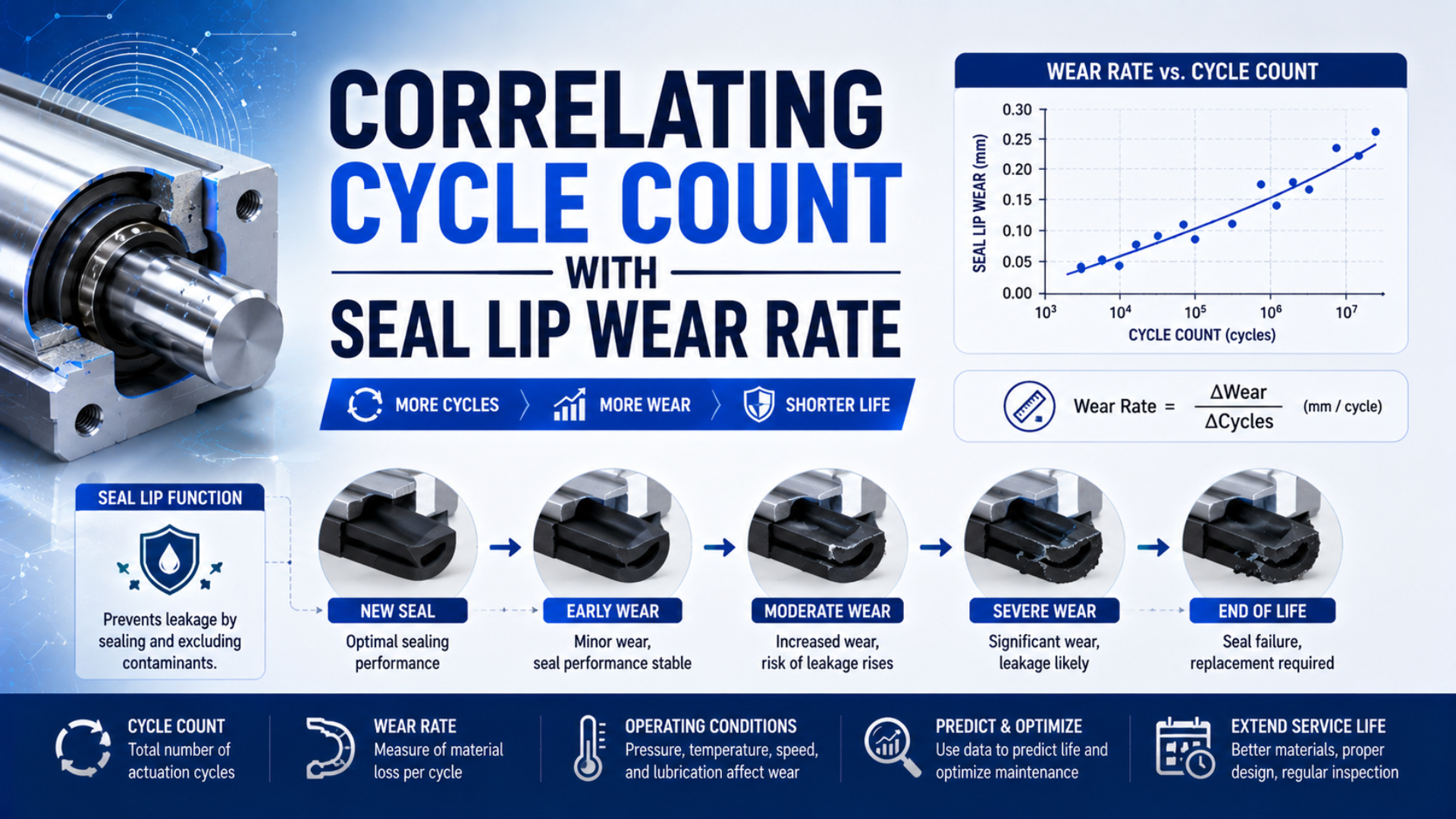
 Correlating Cycle Count with Seal Lip Wear RateCorrelate seal lip wear with cycle count using 2sN sliding distance, non-contact profile scans, controlled conditions, interval slopes, and confidence limits.
Blog Tag
pneumatic cylinder articles
Review every Bepto Pneumatic article connected to pneumatic cylinder, grouped as one focused reading list for engineers, maintenance staff, and sourcing specialists.
Tagged Reading Path
All articles tagged pneumatic cylinder
Use this archive to scan related selection notes, RFQ checks, replacement guidance, and pneumatic component references.
Correlating Cycle Count with Seal Lip Wear RateCorrelate seal lip wear with cycle count using 2sN sliding distance, non-contact profile scans, controlled conditions, interval slopes, and confidence limits.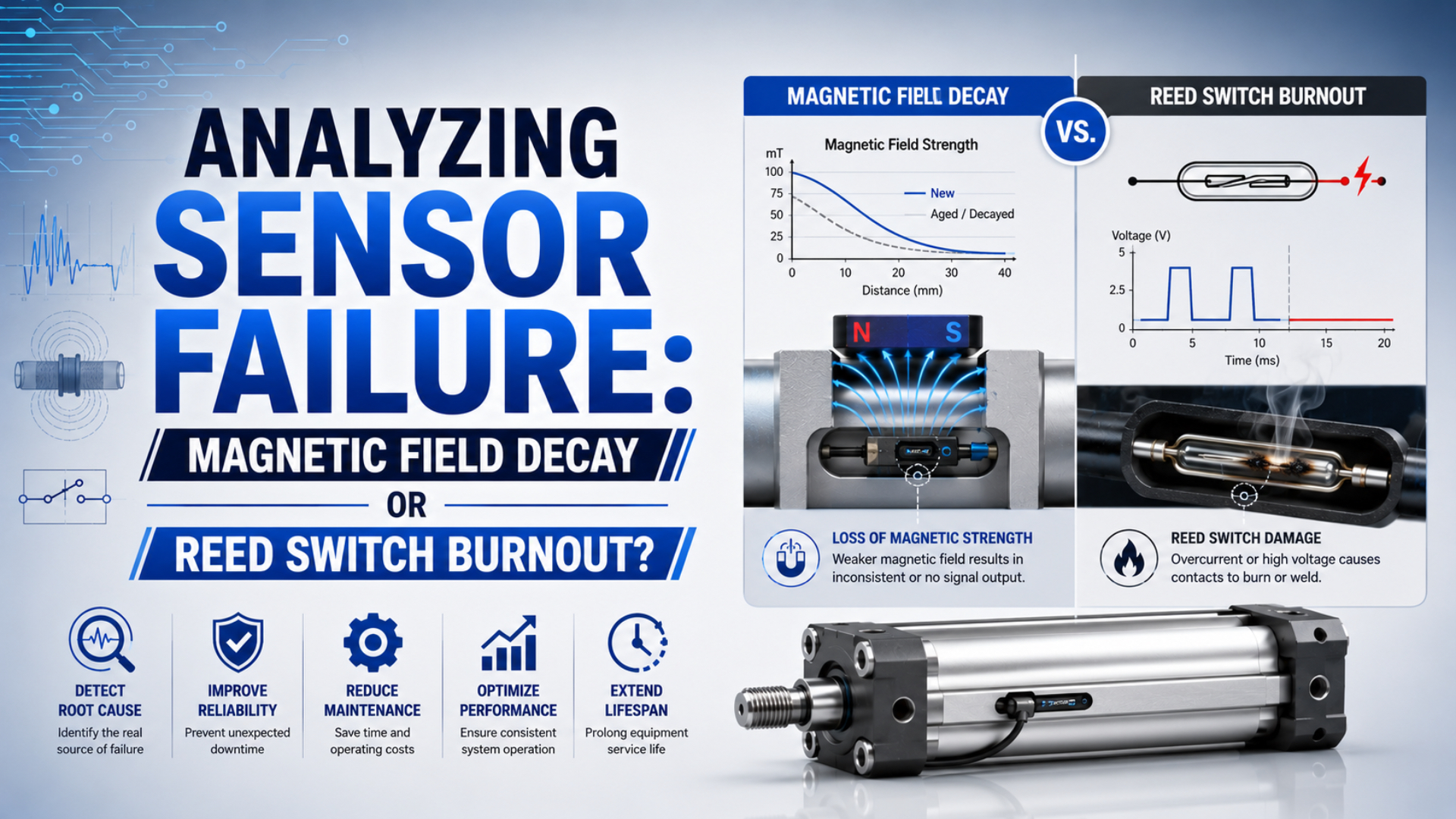 Analyzing Sensor Failure: Magnetic Field Decay or Reed Switch Burnout?Use a 5-stage test to separate cylinder sensor wiring, Reed contact, mounting, piston-motion, and magnet faults without relying on universal gauss limits.
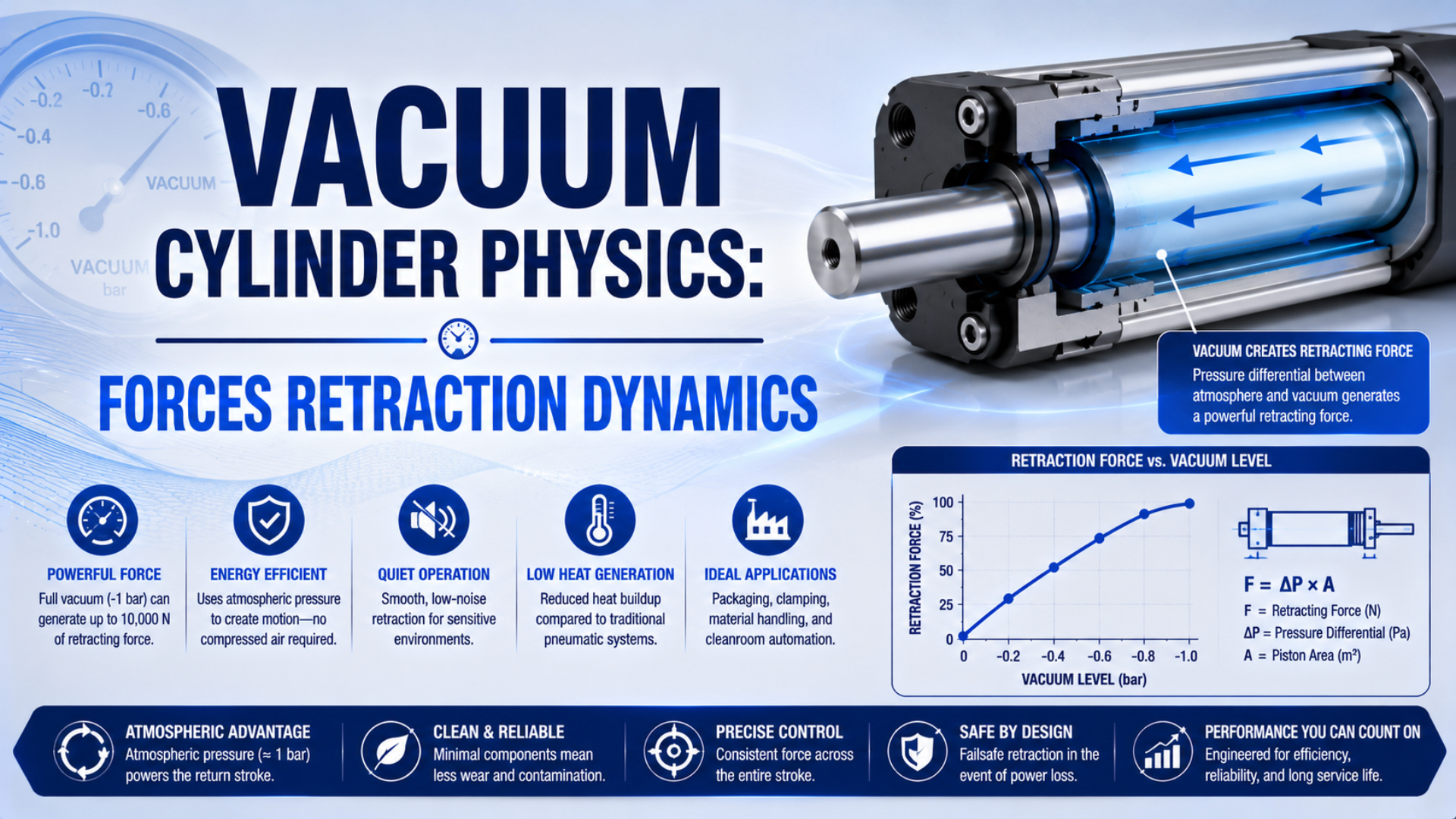 Vacuum Cylinder Physics: Forces Retraction DynamicsStandard atmosphere is 101.325 kPa. Calculate vacuum-cylinder force from chamber pressures, piston geometry, friction, load, and evacuation flow accurately.
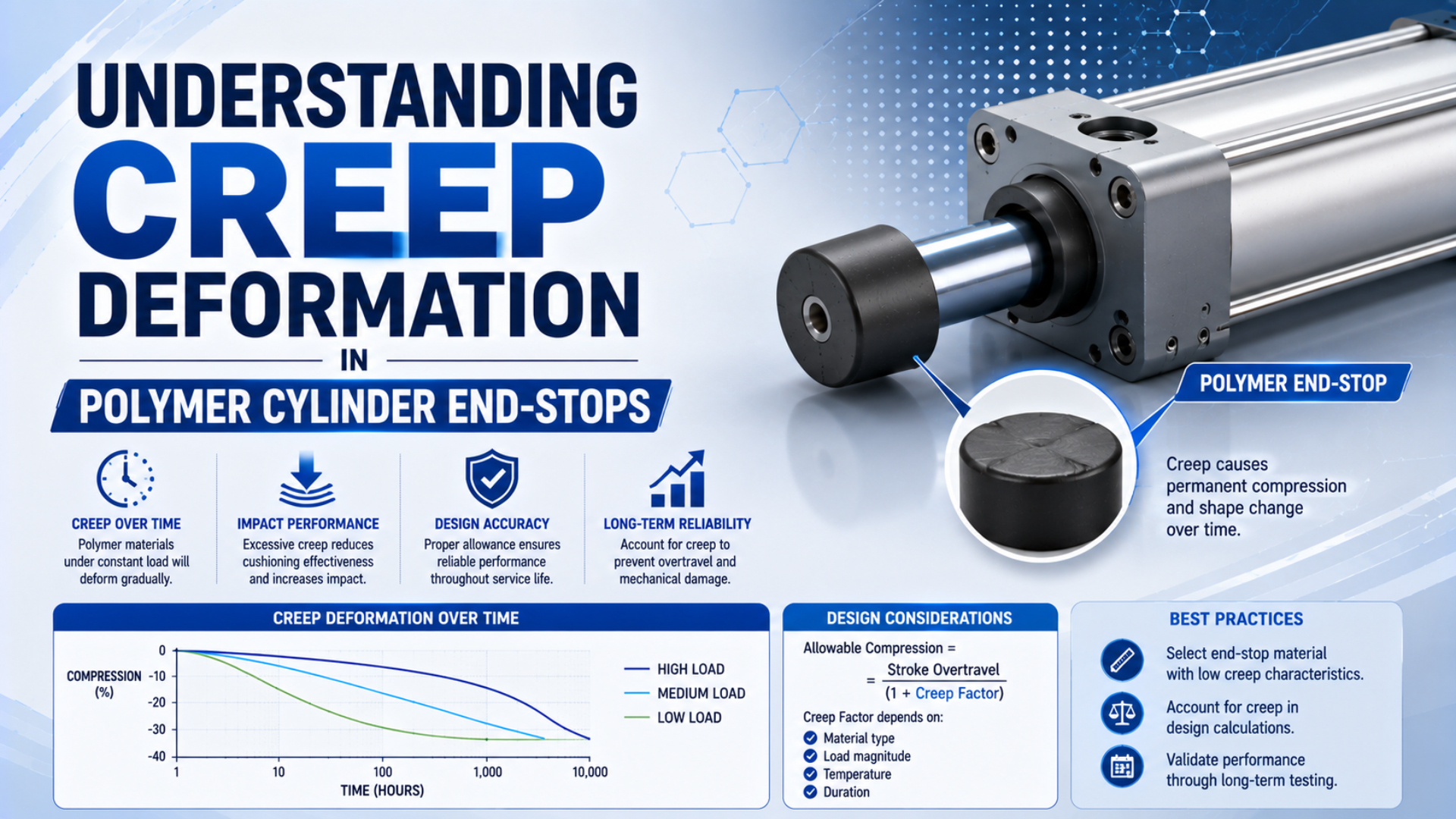 Understanding Creep Deformation in Polymer Cylinder End-StopsLearn how sustained load, temperature, moisture, impact, and test method change polymer cylinder end-stop creep, using ISO 899 and 1,000-hour grade data.
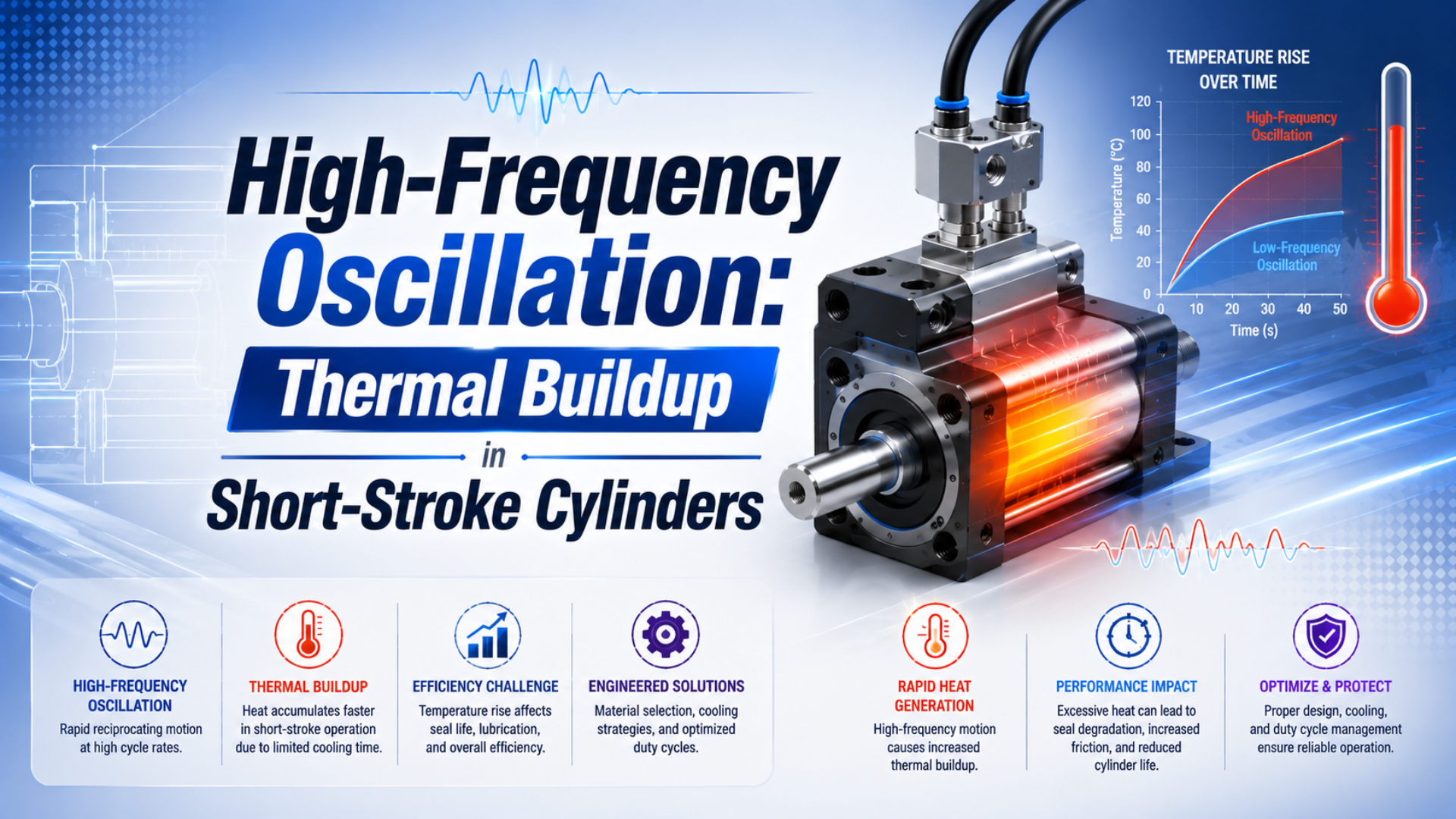 High-Frequency Oscillation: Thermal Buildup in Short-Stroke CylindersLearn why 2 Hz cannot define short-stroke cylinder heat risk; calculate sliding distance and reversal energy, then test against model-specific limits.
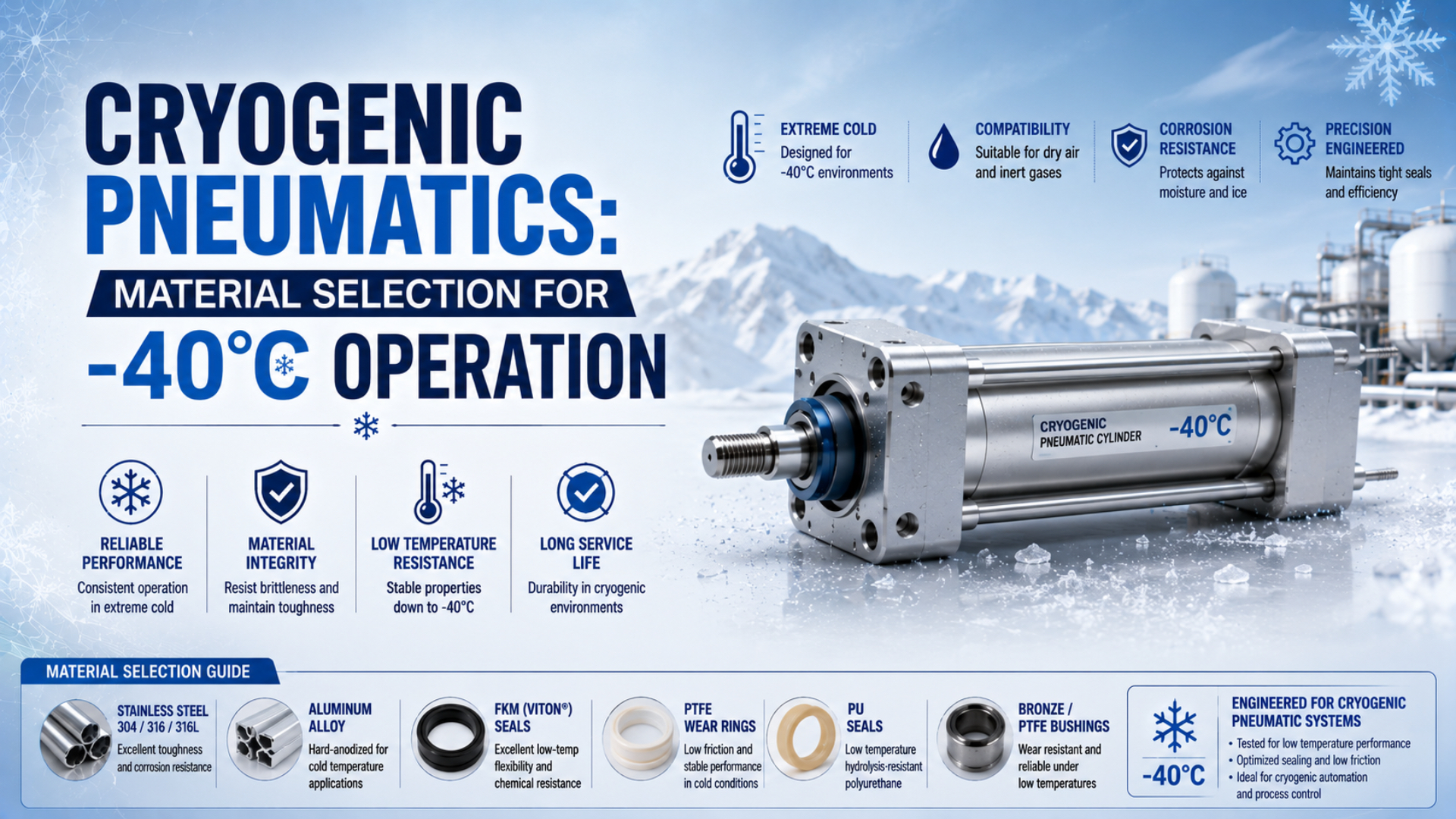 Cryogenic Pneumatics: Material Selection for -40°C OperationAt -40°C, qualify the exact seal, grease, metal, sensor, tubing, and valve package; NIST places true cryogenic service below about -153°C before release.
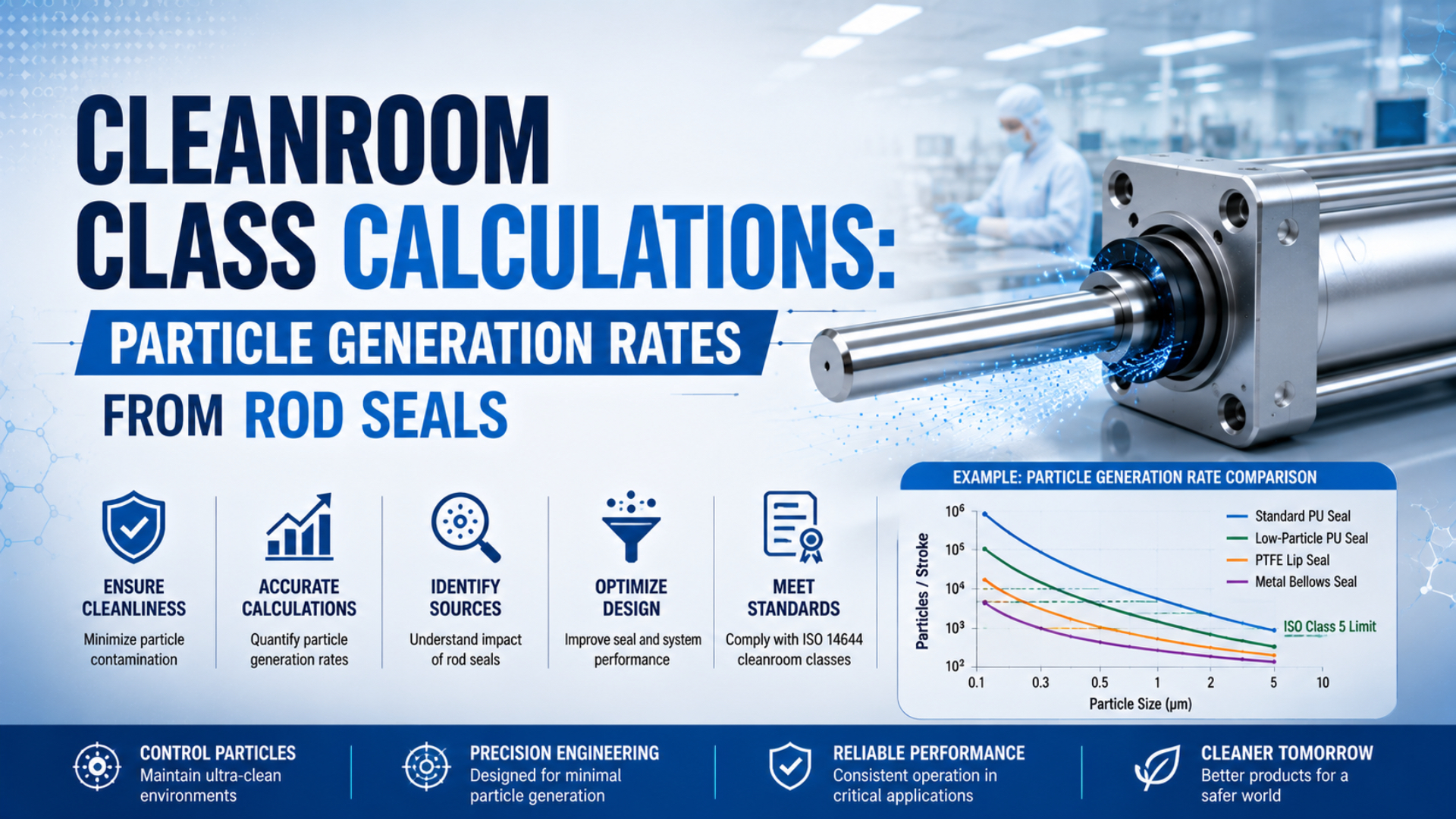 Cleanroom Class Calculations: Particle Generation Rates from Rod SealsMeasure rod-seal particle generation, subtract background counts, calculate particles per cycle, and compare results with the ISO Class 5 limit of 3,520 particles/m³.
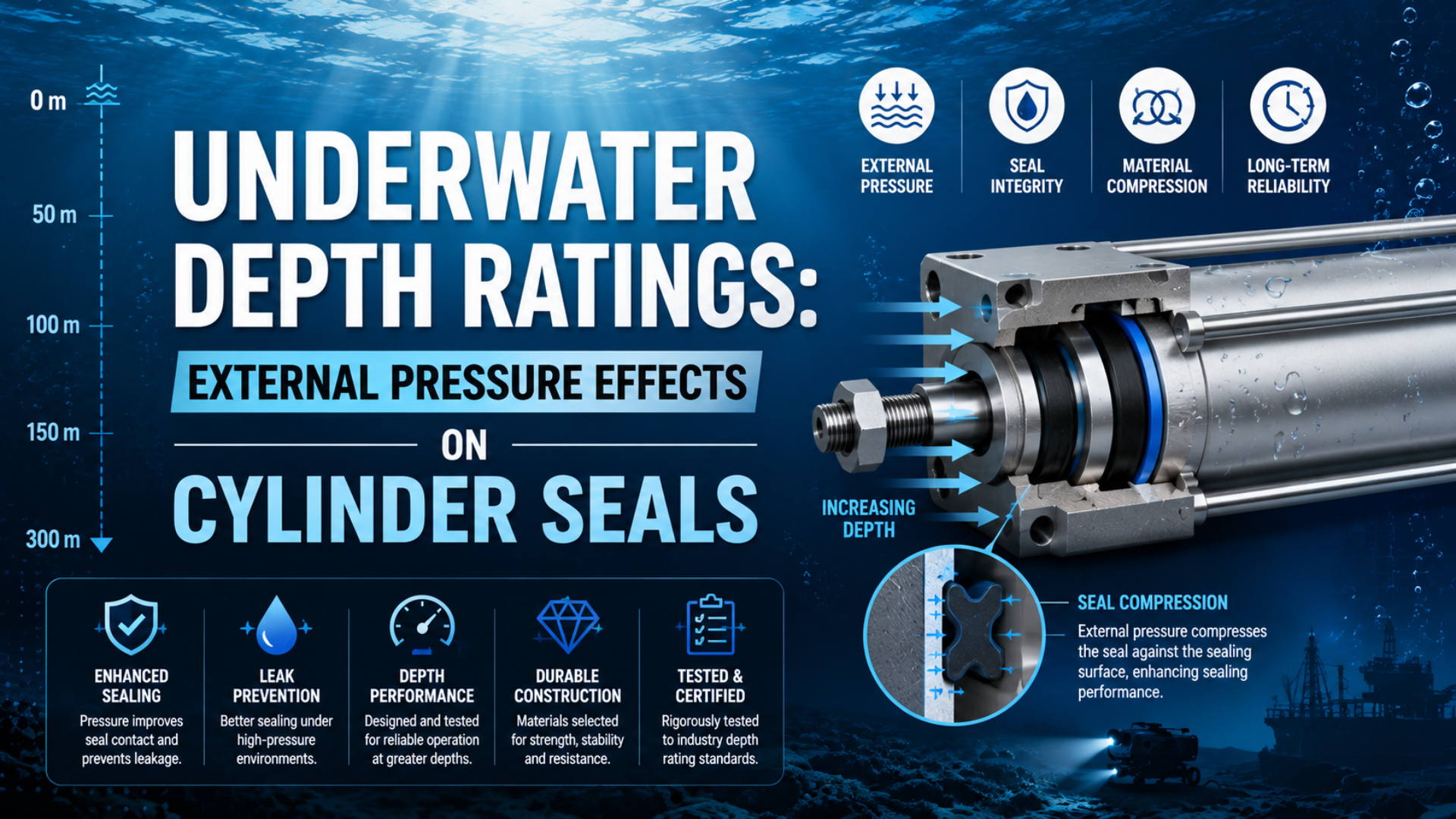 Underwater Depth Ratings: External Pressure Effects on Cylinder SealsLearn how external pressure changes underwater cylinder seals, structure, and force, with a verified 30 m example and a qualification checklist for buyers.
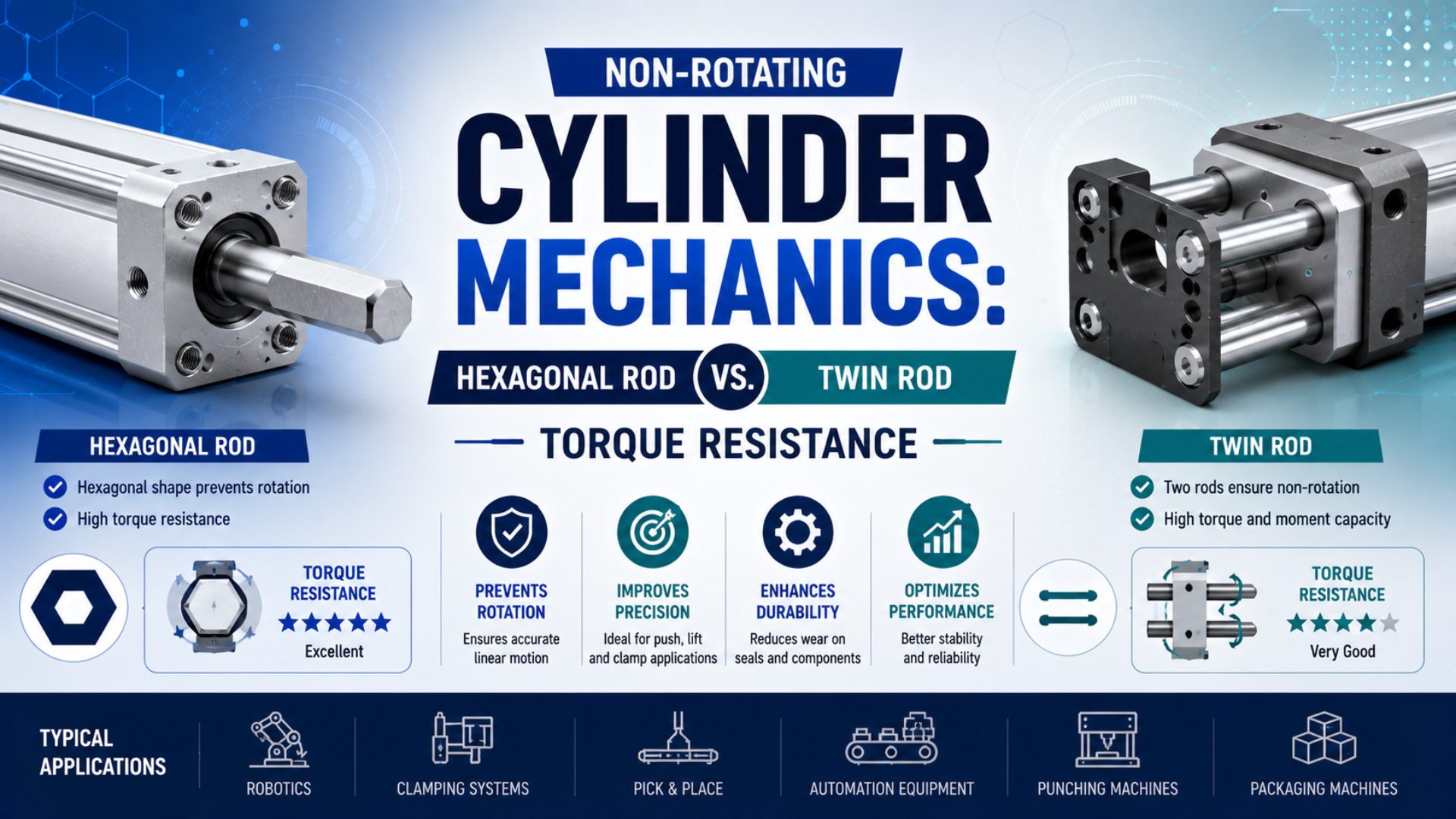 Non-Rotating Cylinder Mechanics: Hexagonal Rod vs. Twin Rod Torque ResistanceCompare hexagonal-rod and twin-rod mechanics using SMC's ±1.5° to ±0.1° examples, torque equations, wear limits, and validation steps.