
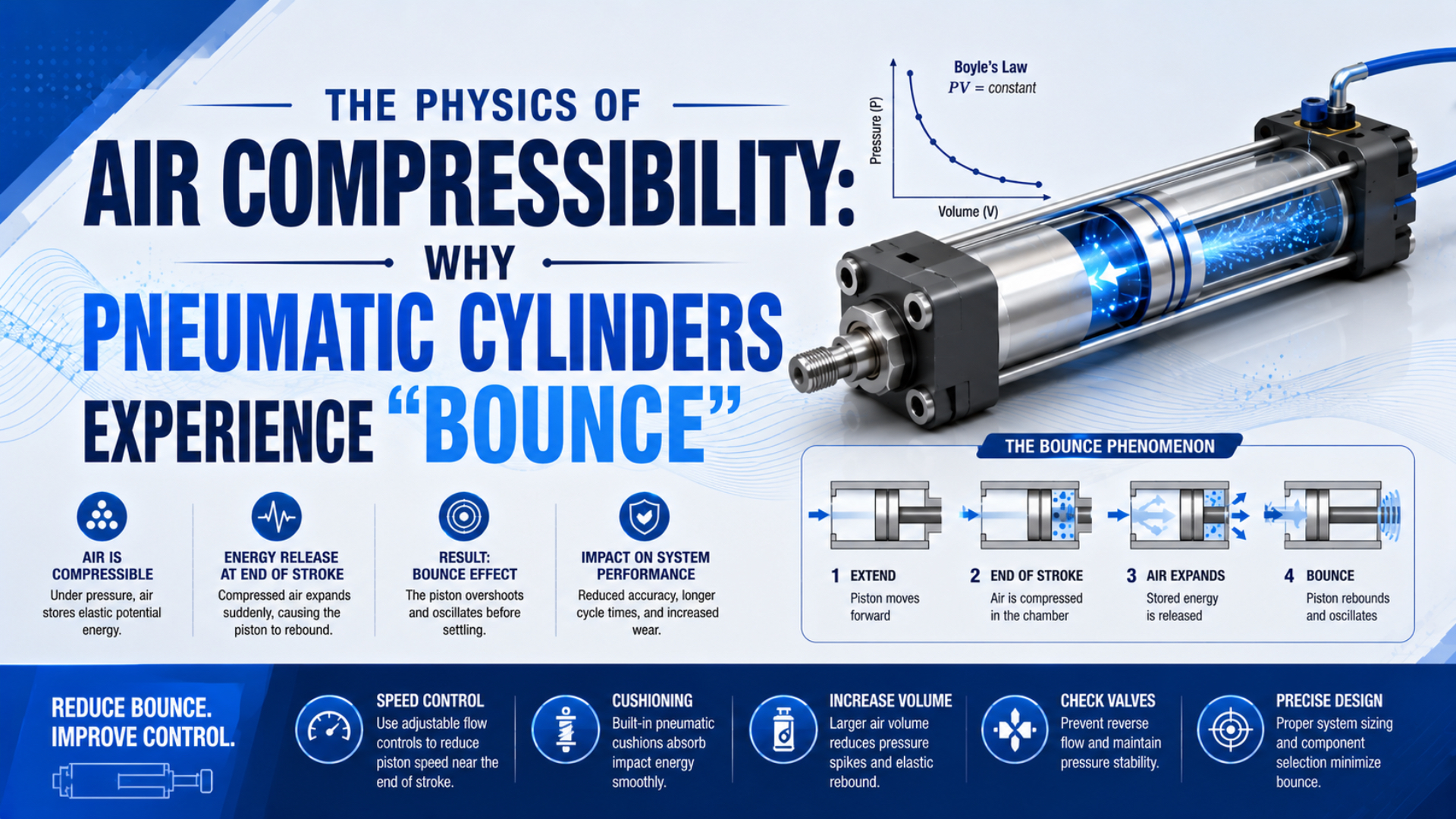
 The Physics of Air Compressibility: Why Pneumatic Cylinders Experience “Bounce”Learn why cylinder speed, trapped air, cushioning, friction, and control tuning cause pneumatic cylinder bounce, plus how to diagnose and stop it.
Blog Tag
pneumatic cylinder articles
Review every Bepto Pneumatic article connected to pneumatic cylinder, grouped as one focused reading list for engineers, maintenance staff, and sourcing specialists.
Tagged Reading Path
All articles tagged pneumatic cylinder
Use this archive to scan related selection notes, RFQ checks, replacement guidance, and pneumatic component references.
The Physics of Air Compressibility: Why Pneumatic Cylinders Experience “Bounce”Learn why cylinder speed, trapped air, cushioning, friction, and control tuning cause pneumatic cylinder bounce, plus how to diagnose and stop it.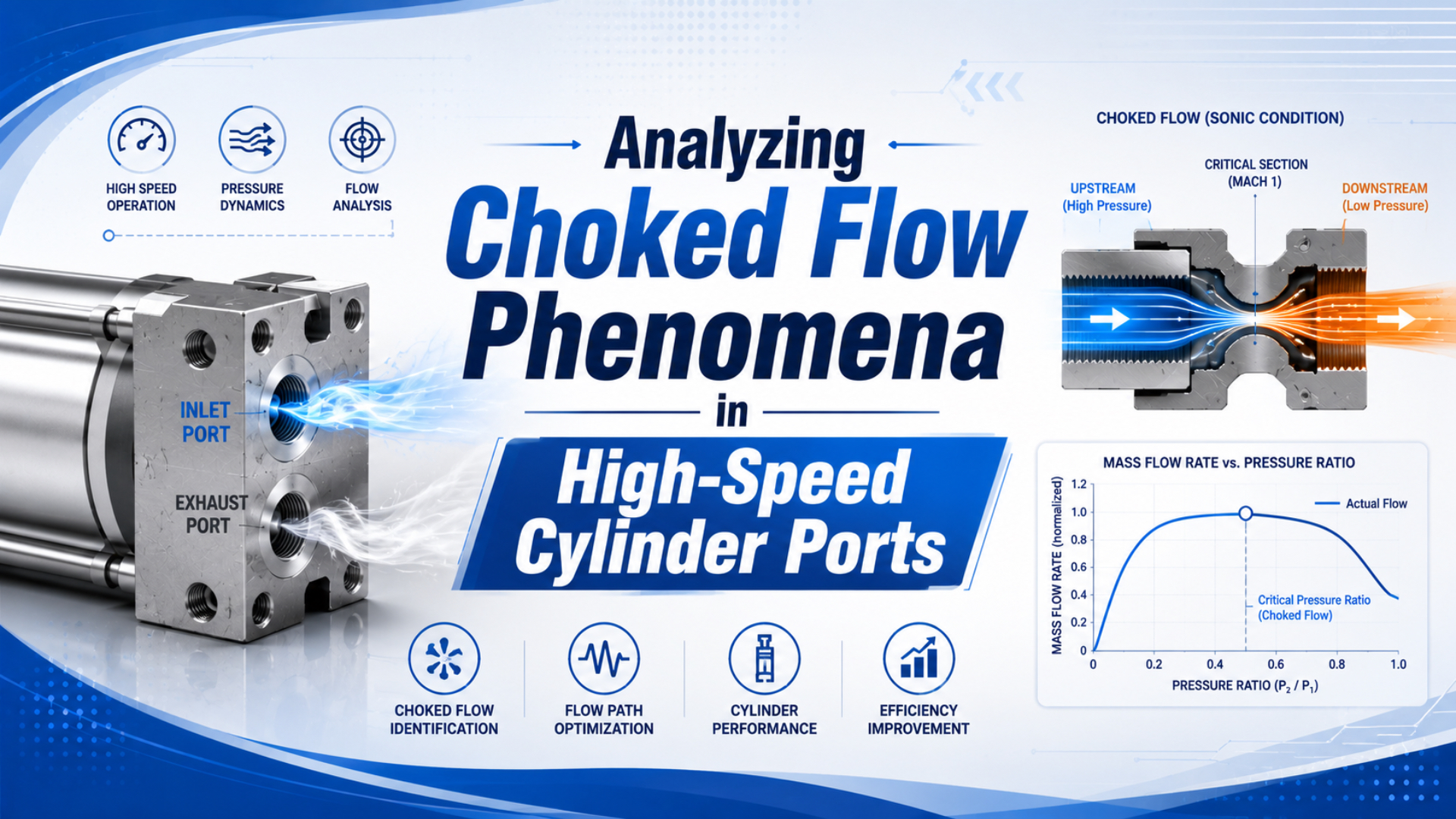 Analyzing Choked Flow Phenomena in High-Speed Cylinder PortsIdeal dry air chokes near p2/p1 = 0.528. Learn to measure cylinder-port pressure, locate restrictions, and verify flow for high-speed strokes.
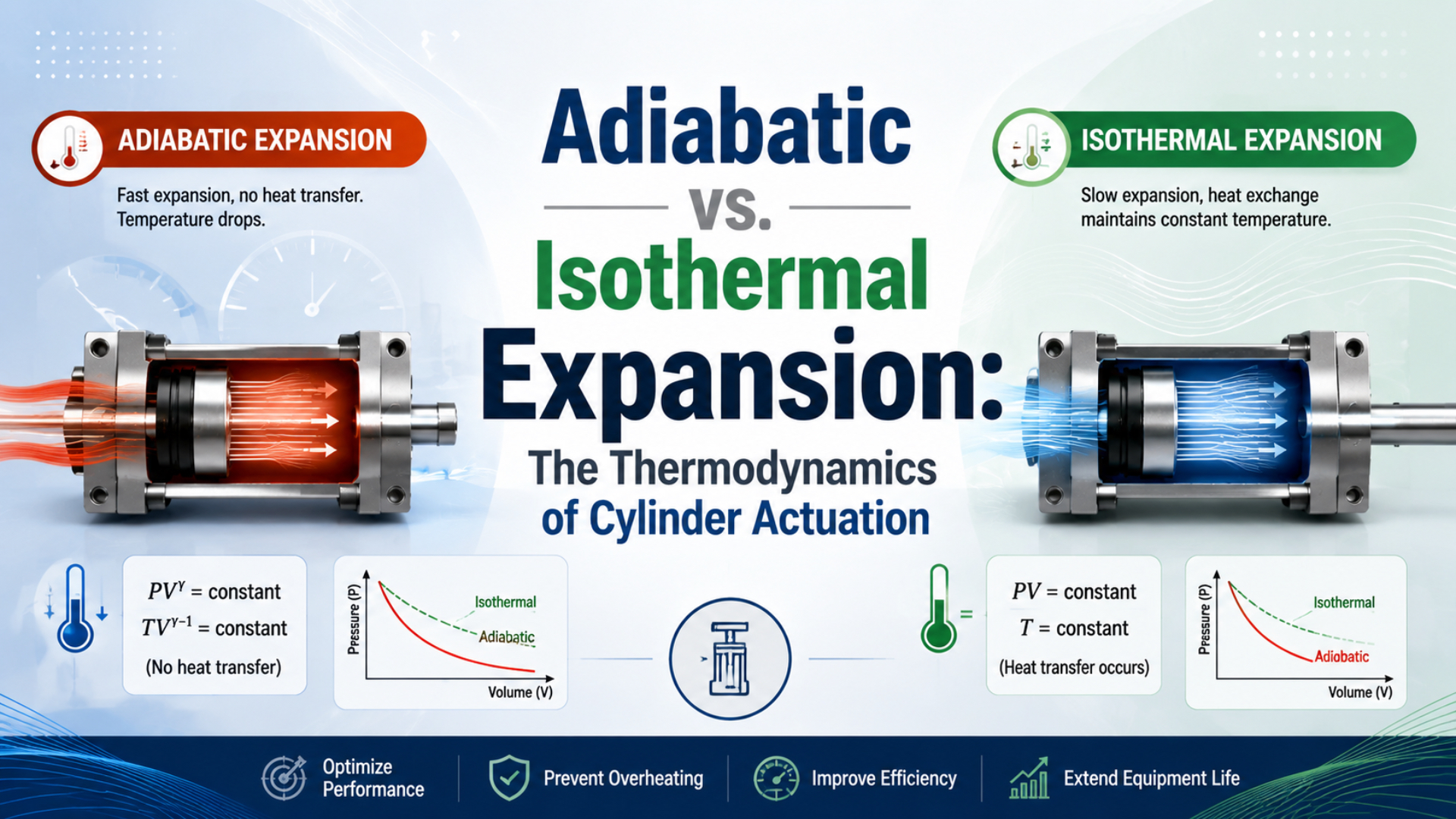 Adiabatic vs. Isothermal Expansion: The Thermodynamics of Cylinder ActuationCompare cylinder models using measured 23 K heating and 17 K cooling data to separate ideal expansion laws from real pneumatic actuation and sizing errors.
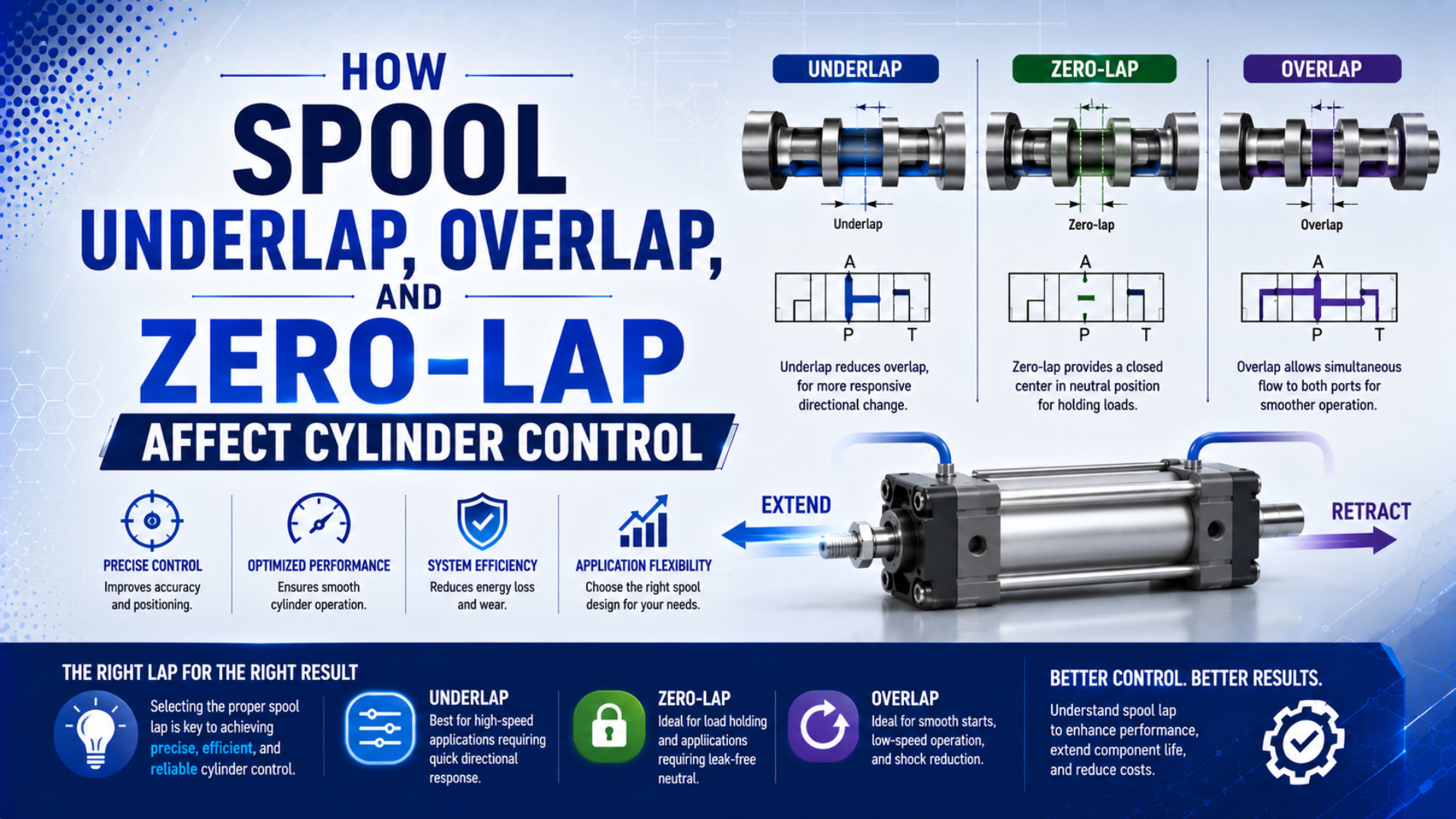 How Spool Underlap, Overlap, and Zero-Lap Affect Cylinder ControlCompare 3 spool-lap conditions, separate lap from valve center function, and learn how neutral leakage, dead zone, feedback, and load affect cylinder control.
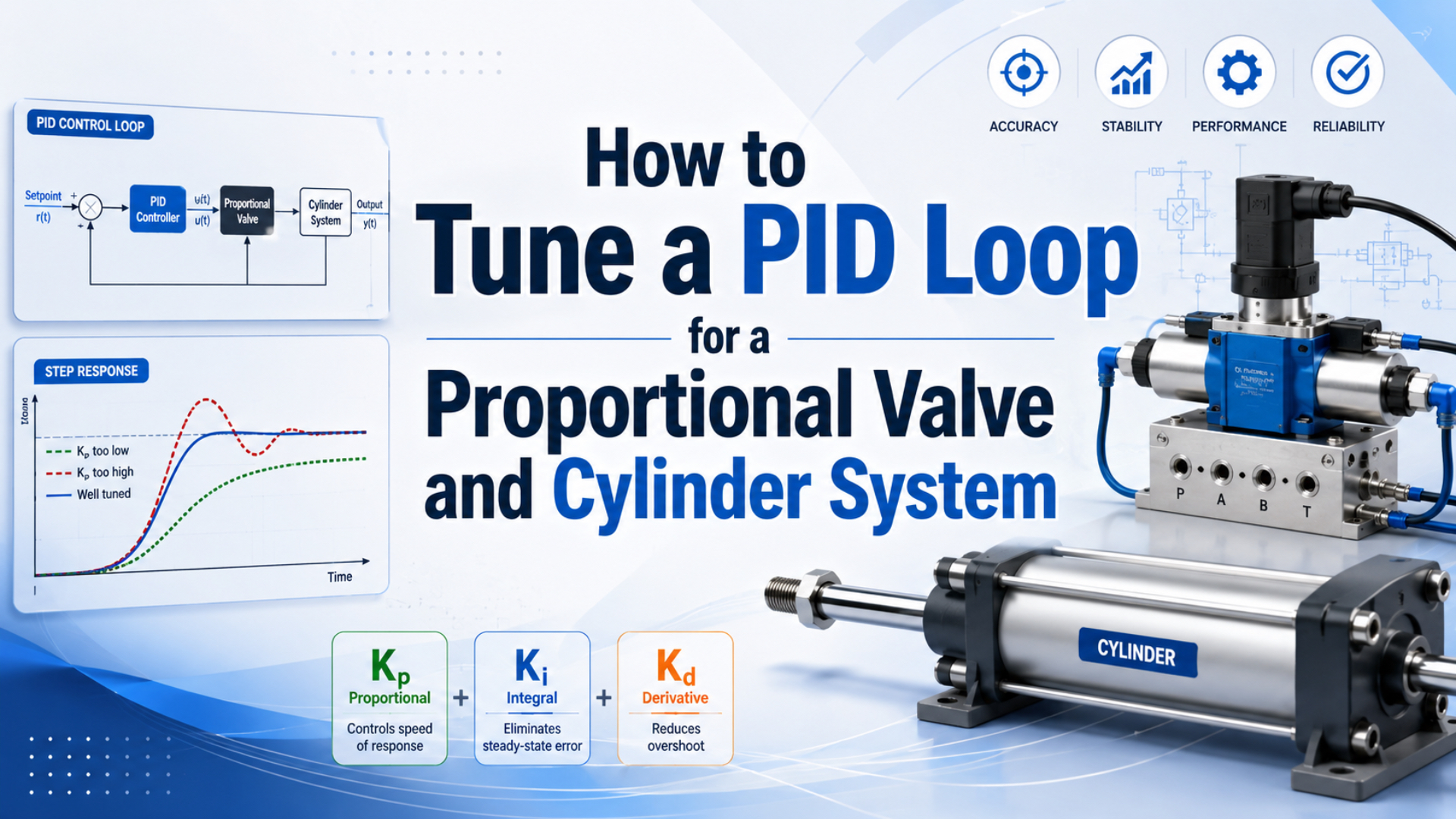 How to Tune a PID Loop for a Proportional Valve and Cylinder SystemTune a pneumatic PID loop with 10–90% rise-time traces, anti-windup, derivative filtering, valve-neutral checks, and load-range validation for cylinder motion.
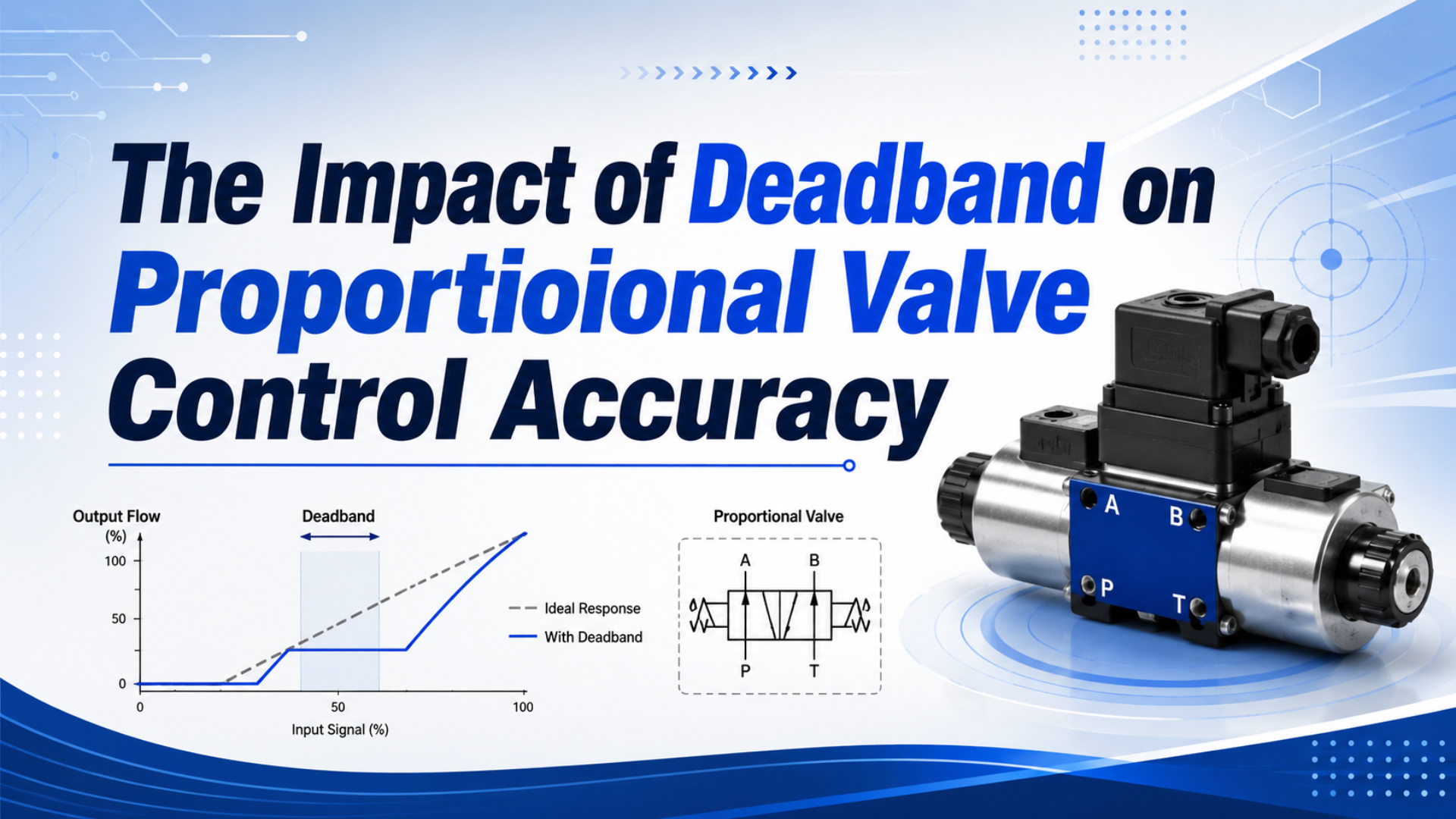 The Impact of Deadband on Proportional Valve Control AccuracyLearn how proportional-valve deadband differs from hysteresis, how a 0.4% model rating affects control, and how to measure and compensate it in practice.
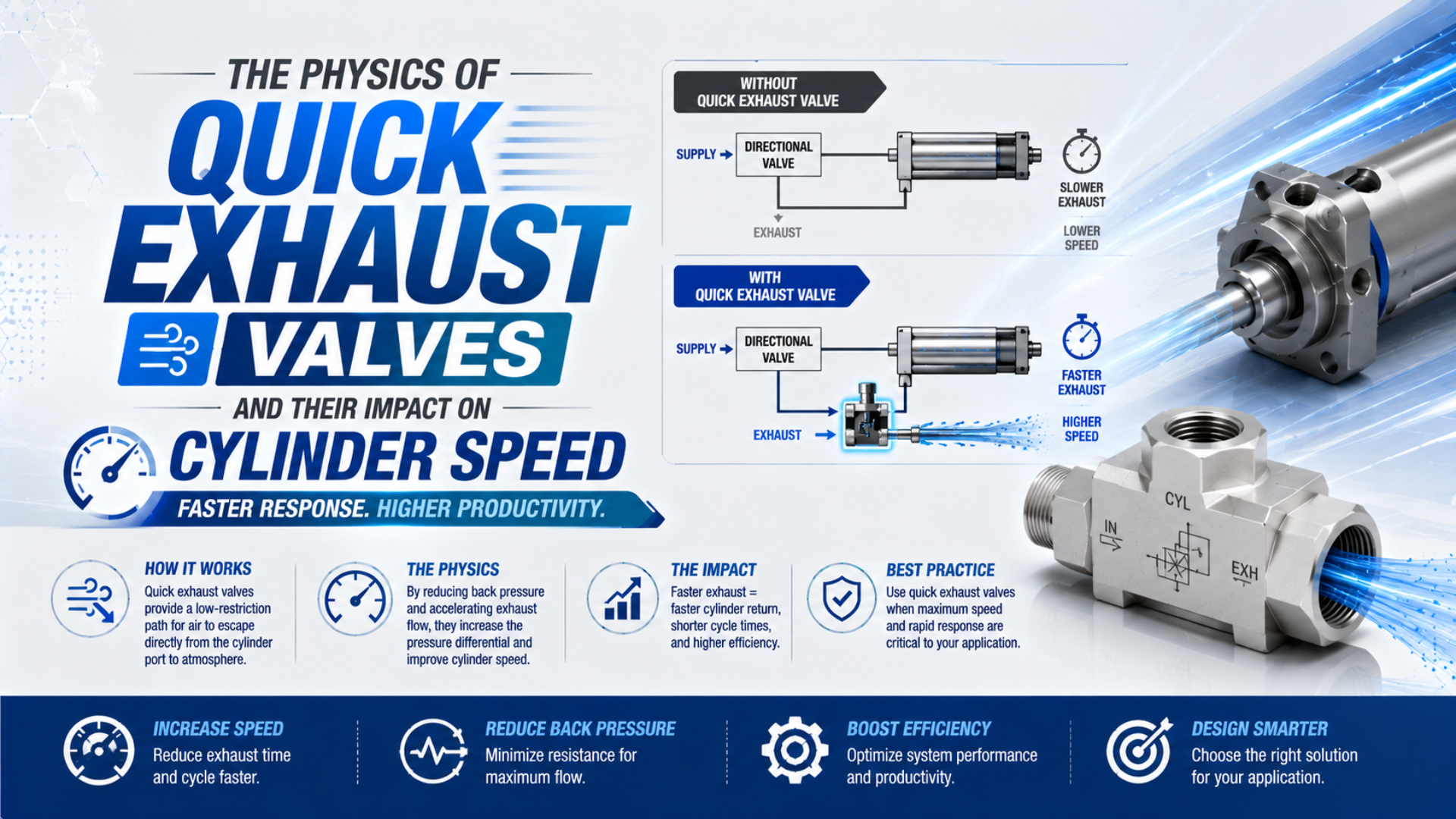 The Physics of Quick Exhaust Valves and Their Impact on Cylinder SpeedUnderstand how a 3-port quick exhaust valve changes cylinder speed through choked flow, falling back pressure, and measured 55-cycle pressure tests for sizing.
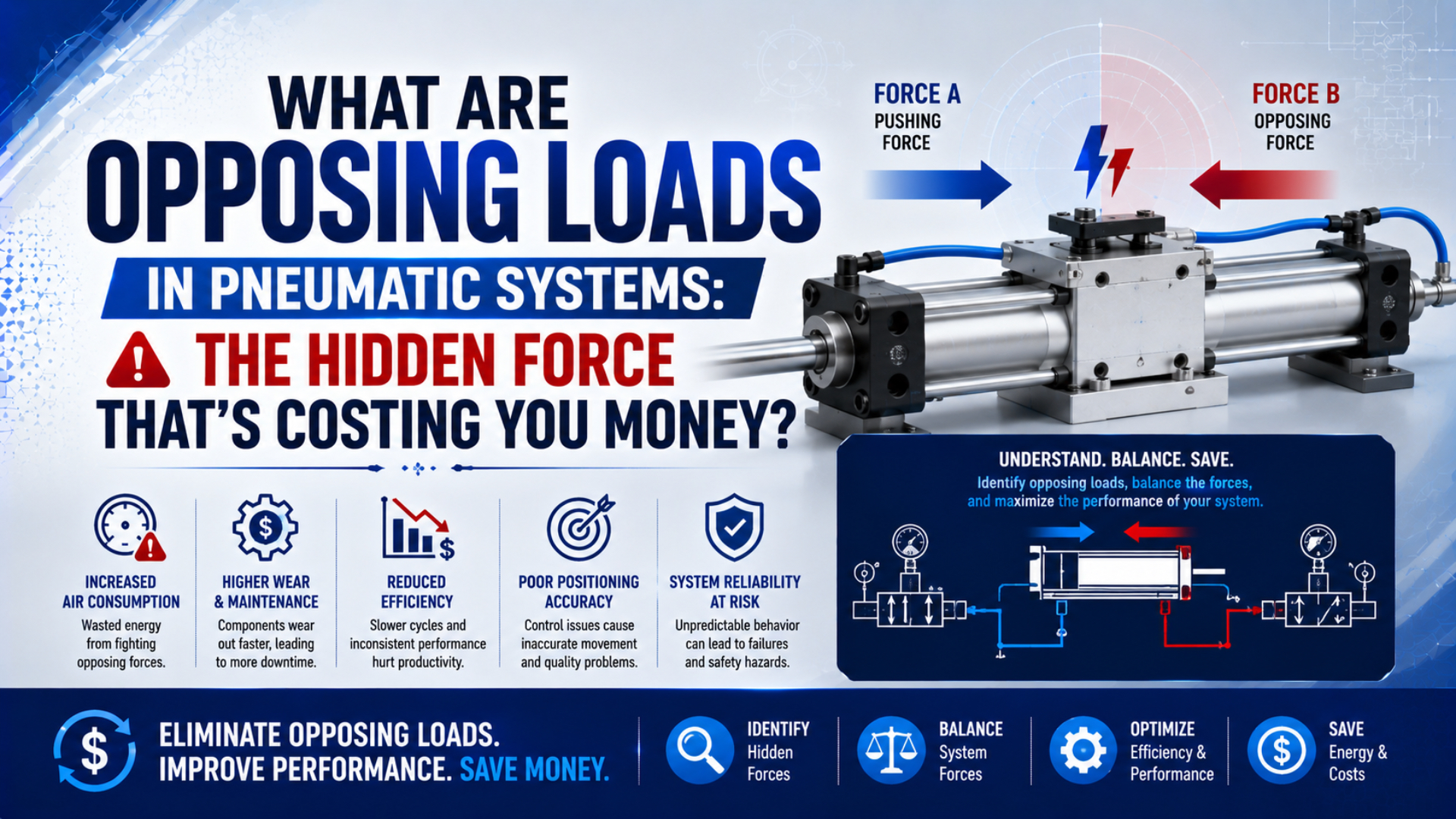 What Are Opposing Loads in Pneumatic Systems: The Hidden Force That’s Costing You Money?Identify opposing loads in pneumatic systems, build a directional force budget, and size cylinder thrust without relying on fixed pressure percentages.
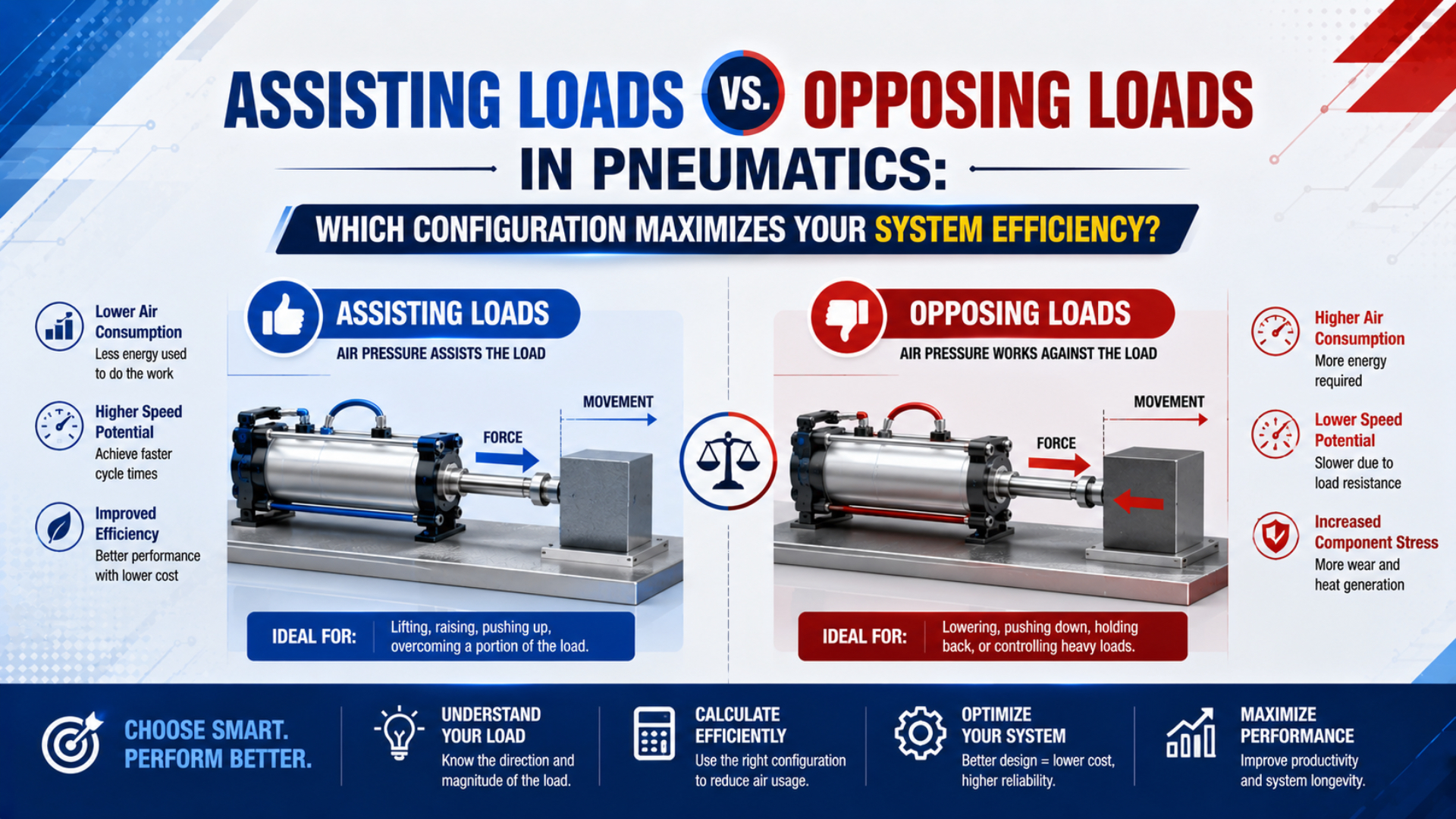 Assisting Loads vs. Opposing Loads in Pneumatics: Which Configuration Maximizes Your System Efficiency?Compare assisting and opposing pneumatic loads using two-chamber force balance, vertical-axis examples, pressure checks, and safe motion-control rules.