
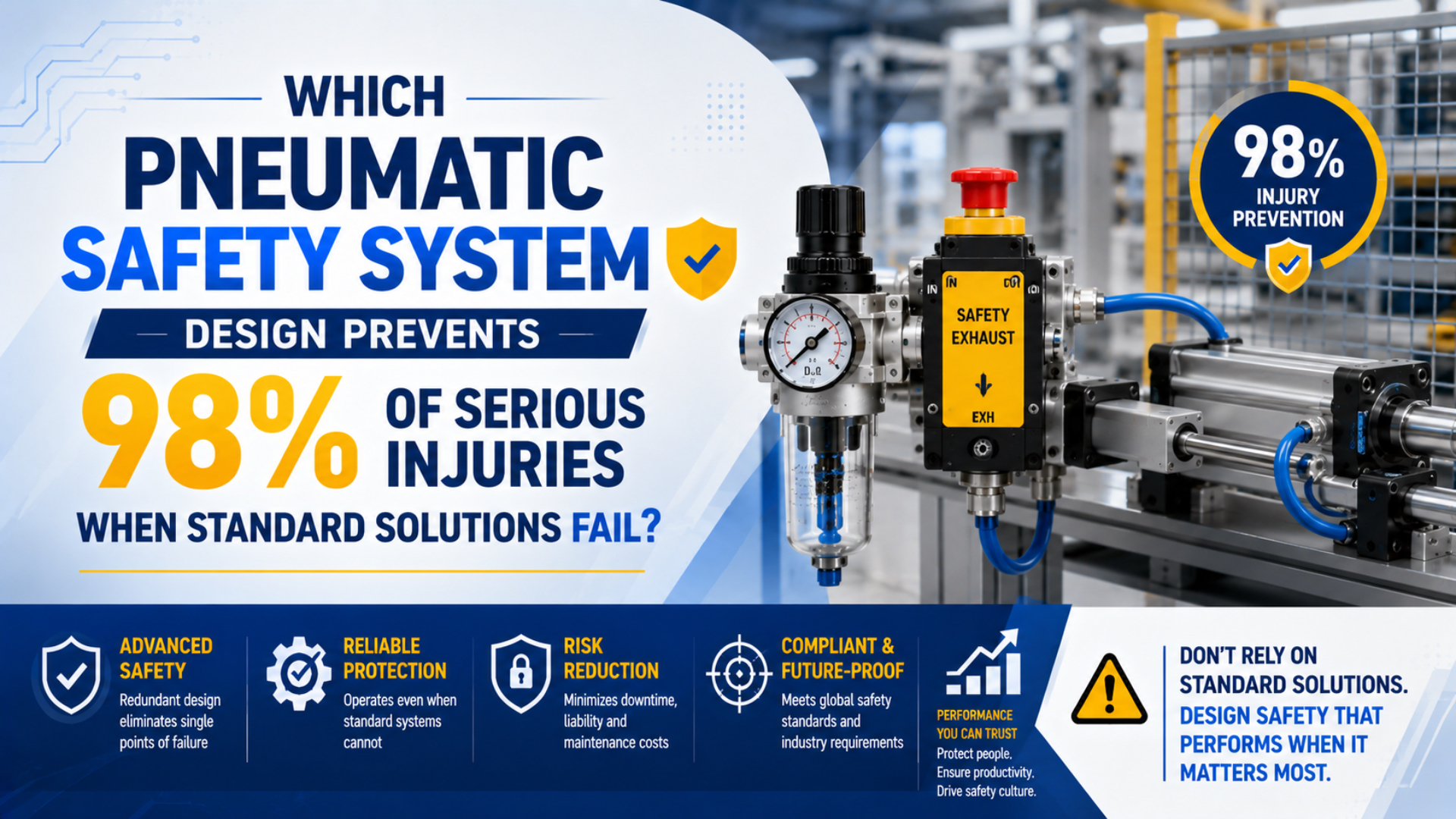
Which Pneumatic Safety System Design Prevents 98% of Serious Injuries When Standard Solutions Fail?OSHA says lockout/tagout prevents an estimated 120 deaths and 50,000 injuries yearly. Learn how to design and validate pneumatic safety functions correctly.→Blog Author
David Li
Hello, I'm David, a Bepto Pneumatic chief advisor. I help teams review compressed-air safety, system reliability, and practical product decisions before quotation.
Author Reading Path
Articles by David Li
112 articles sorted newest first for readers who want one author's pneumatic selection notes in one place.

Showing 112 articles
Which Intelligent Control System Can Cut Your Pneumatic Energy Costs by 35%?Learn which intelligent pneumatic control architecture can verify a 35% energy-cost target through metered baselines, demand control, and OT-safe integration.→
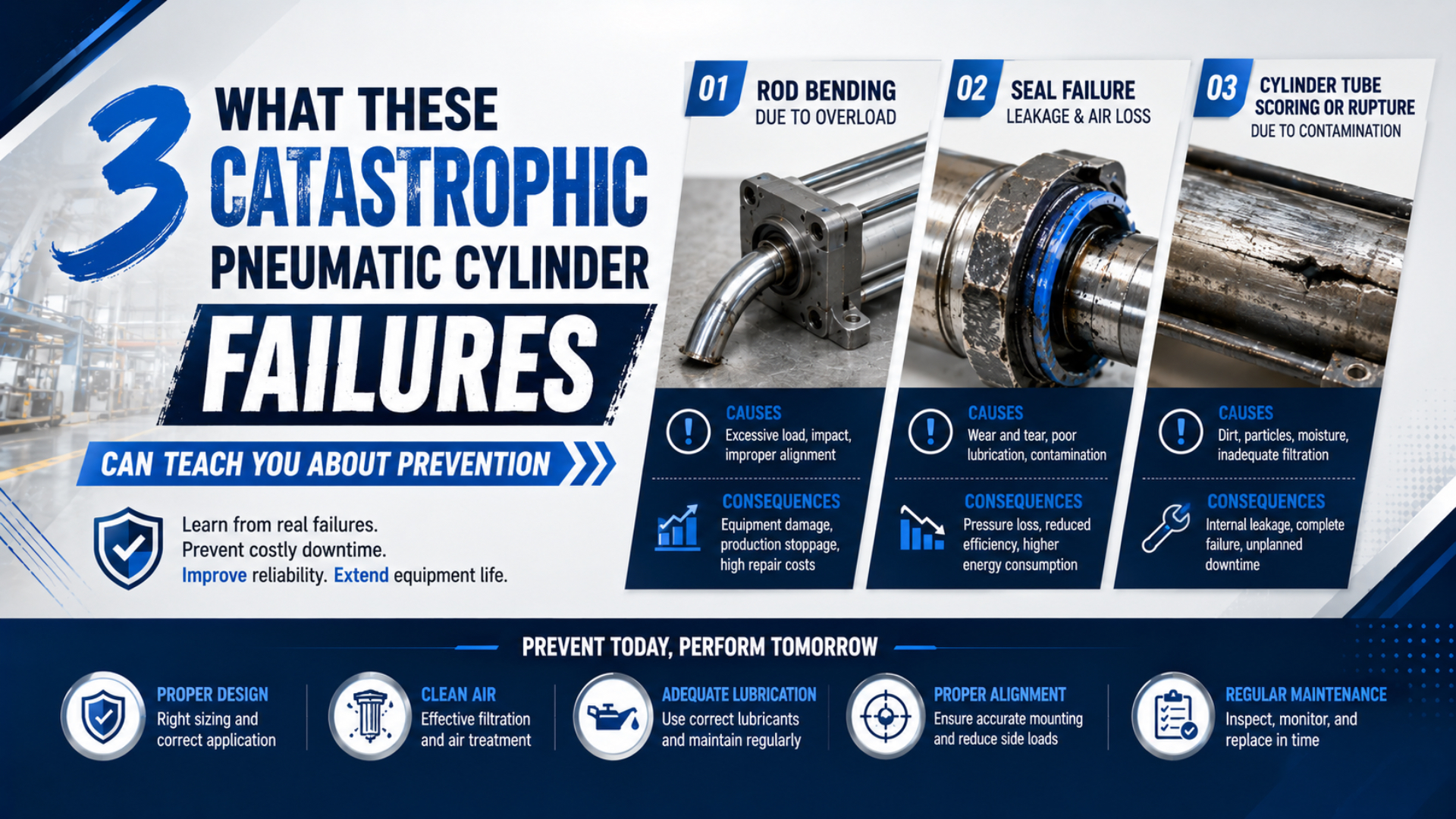
What These 3 Catastrophic Pneumatic Cylinder Failures Can Teach You About PreventionLearn 3 evidence-based pneumatic cylinder failure chains involving magnetic force margin, cold seals, and loose mounts, plus prevention and restart checks.→
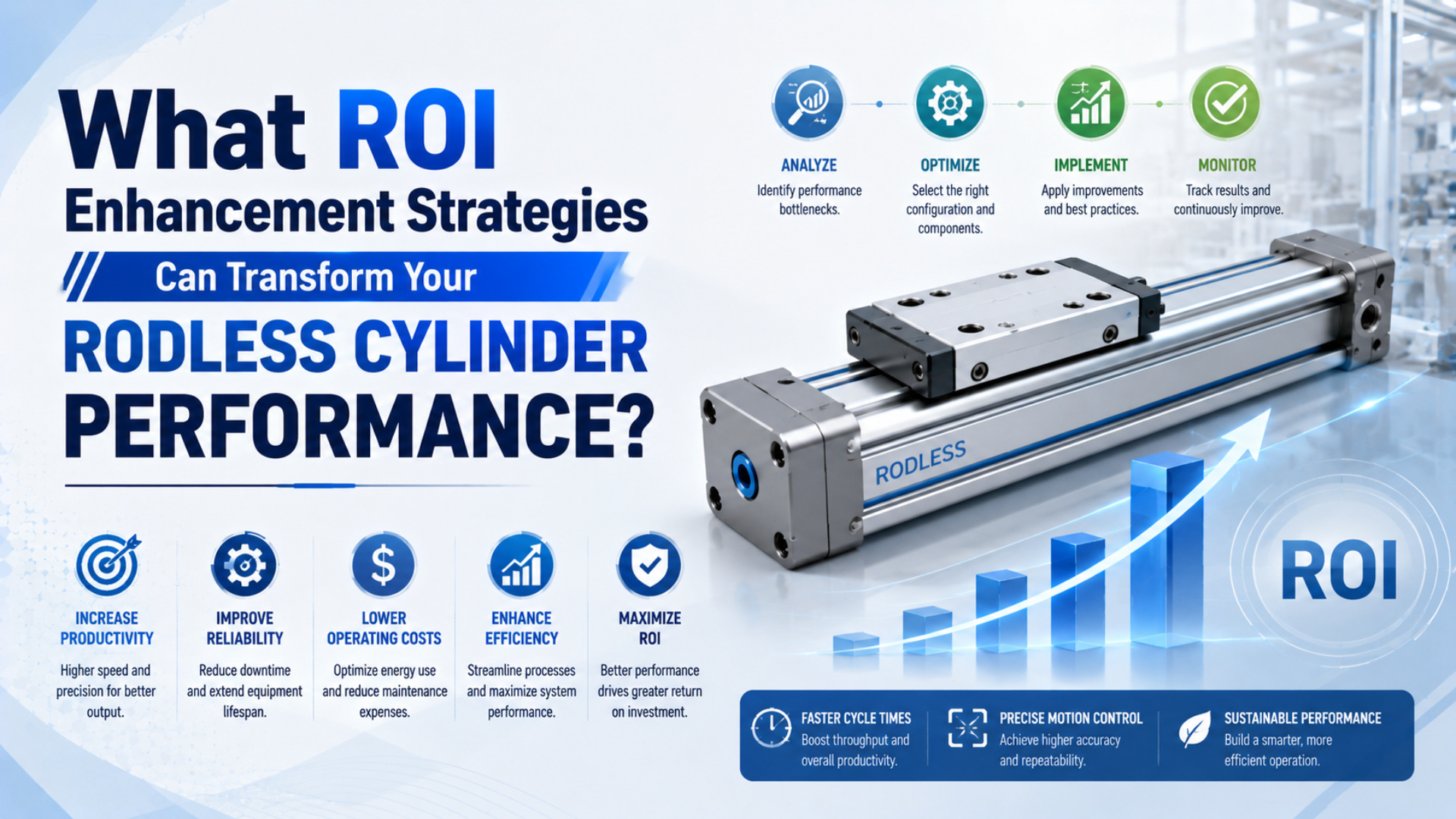
What ROI Enhancement Strategies Can Transform Your Rodless Cylinder Performance?Build a defensible rodless cylinder ROI case from measured air, downtime, maintenance and inventory costs, using 3 formulas and sensitivity checks today.→
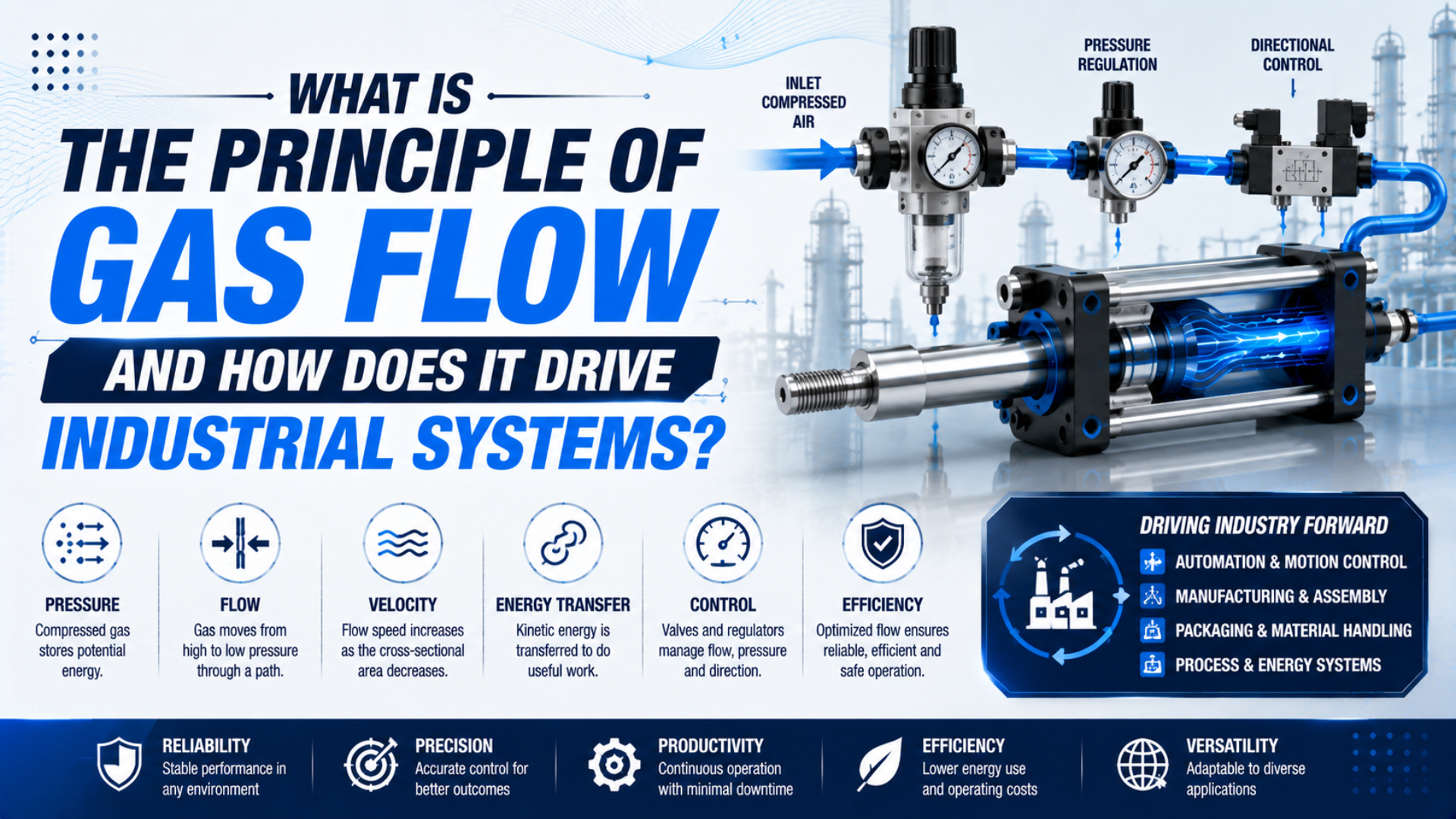
What is the Principle of Gas Flow and How Does It Drive Industrial Systems?Learn how pressure, temperature, density, Mach number, and the 0.528 critical ratio govern industrial gas flow, pressure loss, and component sizing.→
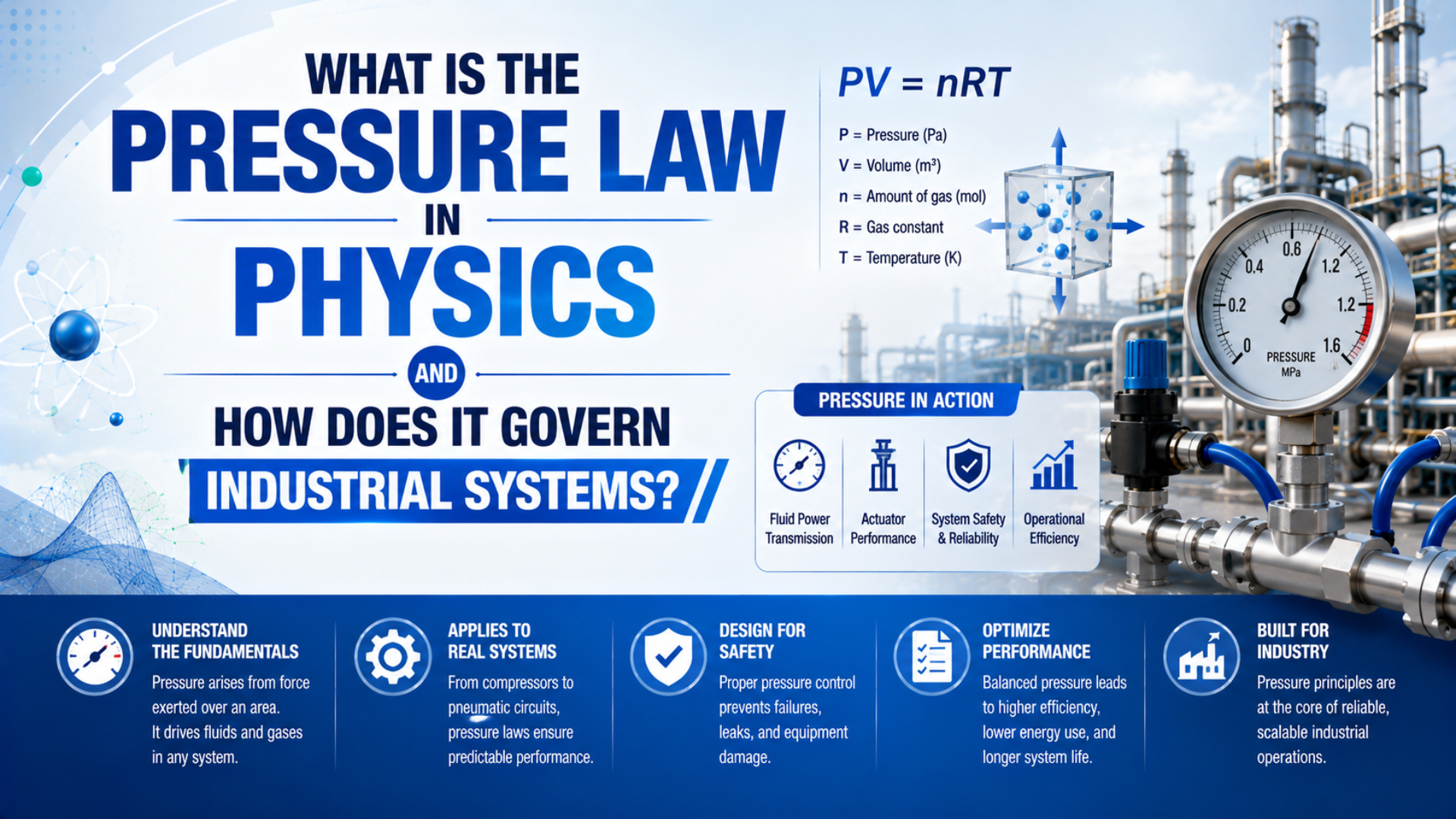
What is the Pressure Law in Physics and How Does It Govern Industrial Systems?A practical guide to the pressure-temperature gas law, absolute pressure, fixed-volume calculations, pneumatic applications, and safety limits.→
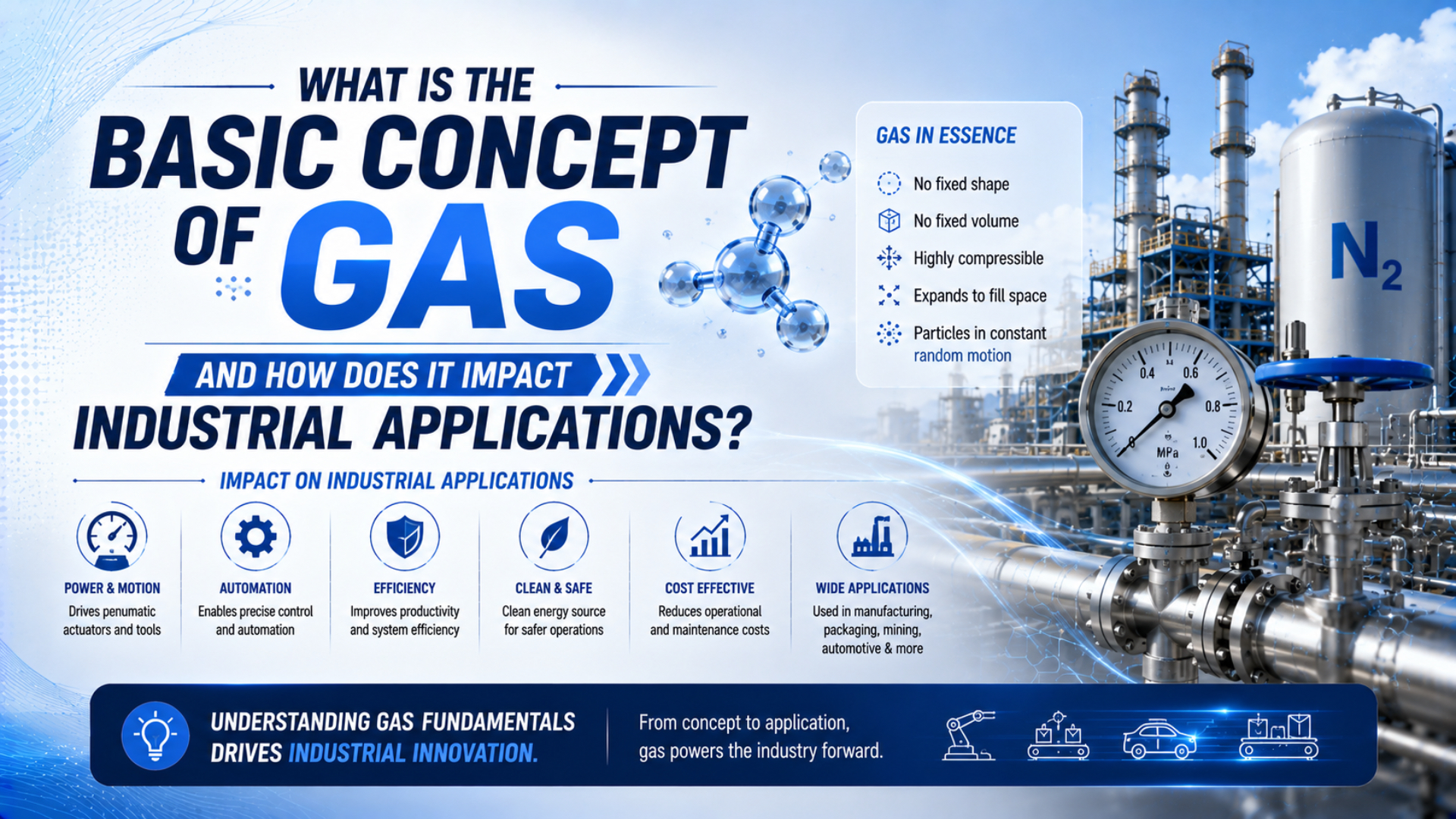
What is the Basic Concept of Gas and How Does It Impact Industrial Applications?Learn how pressure, volume, temperature, gas mass, and ISO 8573’s 3 contaminant groups affect pneumatic force, flow, safety, and reliable component selection.→
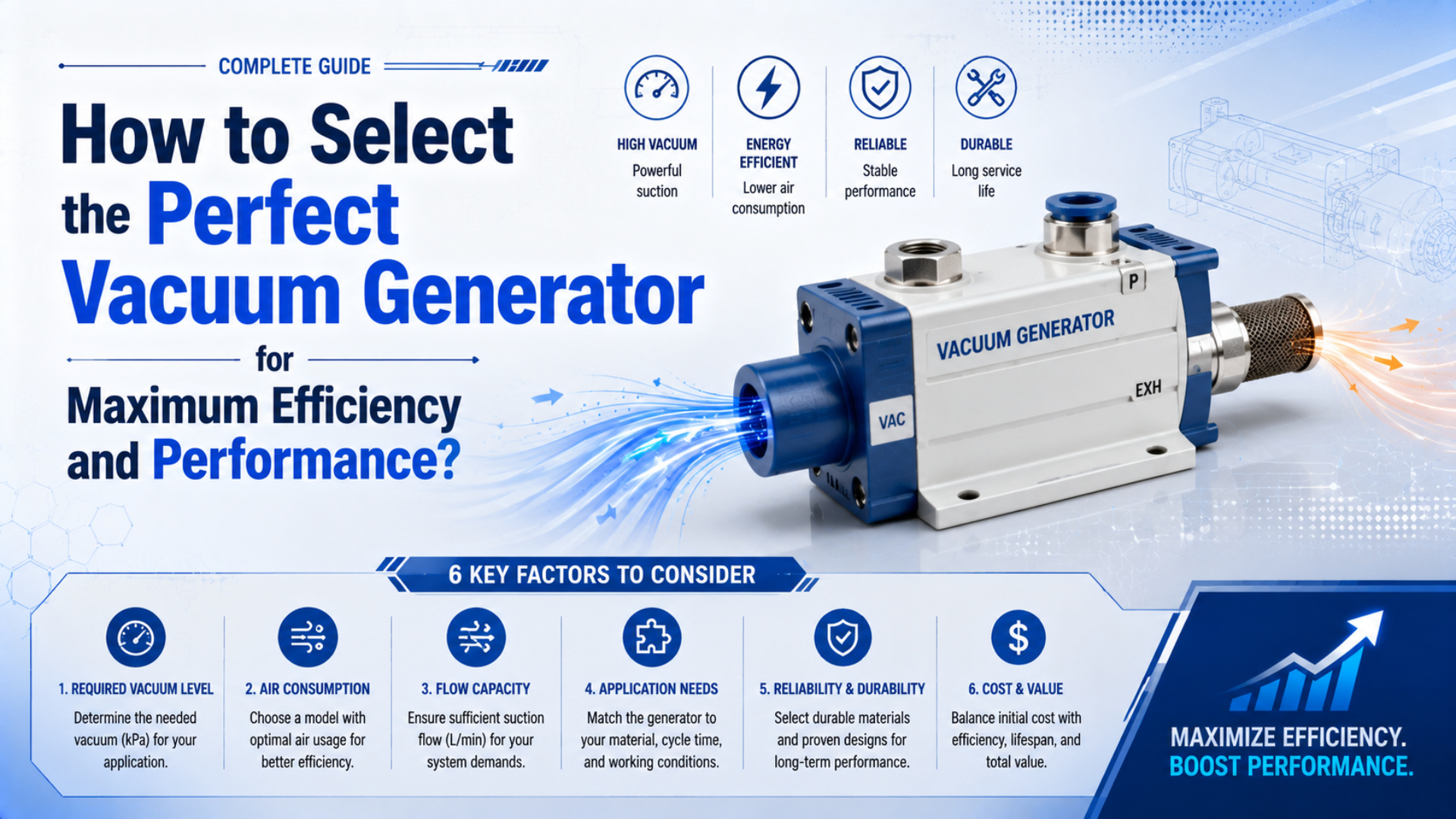
How to Select the Perfect Vacuum Generator for Maximum Efficiency and Performance?Choose a vacuum generator from load, leakage, response time, and air cost. Compare 5-22 L/min catalog data, read curves, and validate the actual workpiece.→
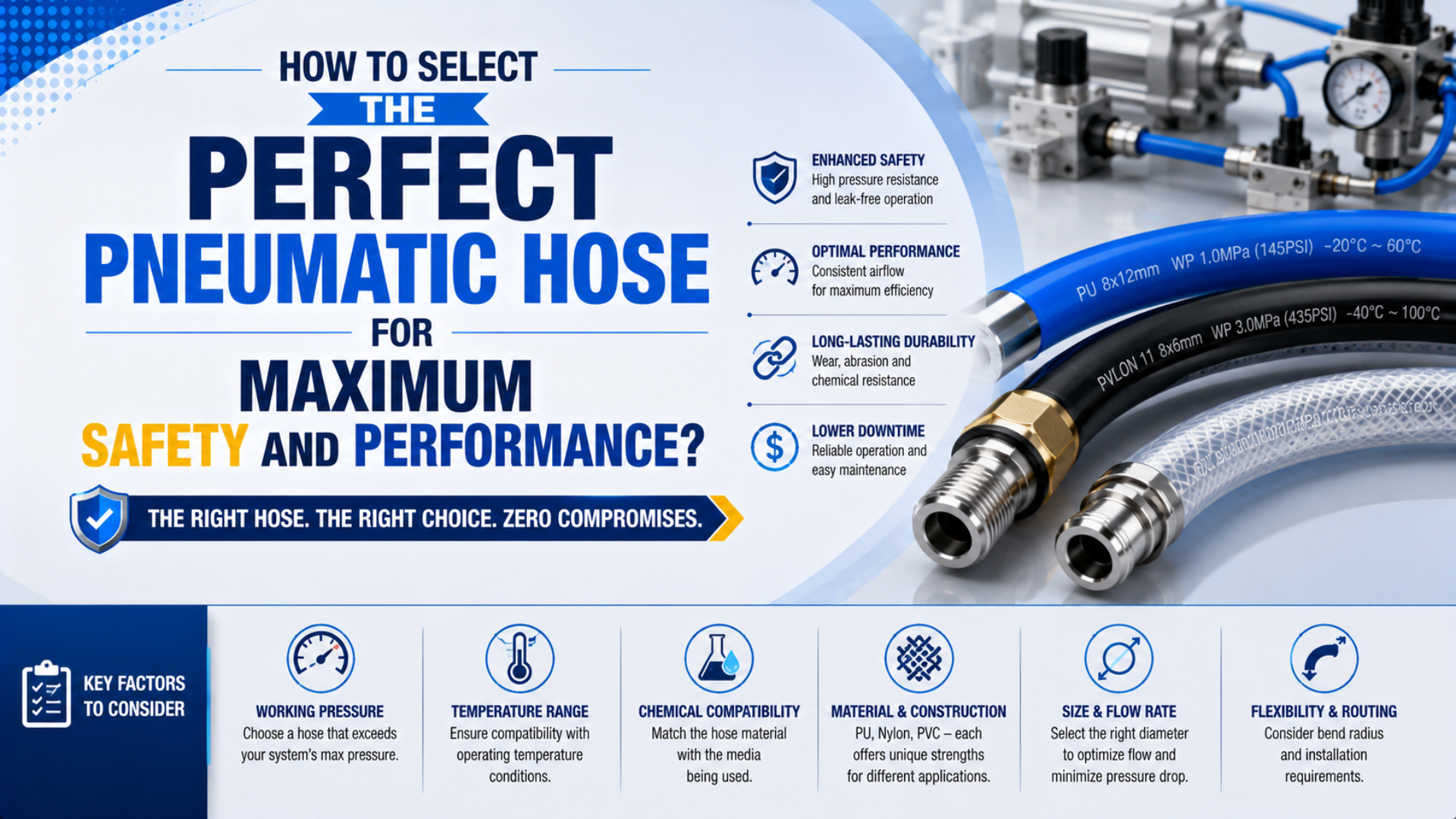
How to Select the Perfect Pneumatic Hose for Maximum Safety and Performance?Select pneumatic hose by pressure, temperature, media, flow, motion, and ends. ISO 2398:2024 covers textile-reinforced rubber hose up to 25 bar in service.→
How to Navigate Legal Disputes in Pneumatic System Manufacturing: A Technical GuideUse a 6-step engineering evidence workflow for pneumatic manufacturing disputes, covering incident response, contracts, patents, testing, and standards.→
How to Cut Pneumatic System Energy Costs by 42% While Achieving Sustainability Goals?Cut pneumatic energy costs toward a measured 42% target with DOE-backed leak, pressure, control, tariff, carbon, and verification checks.→
How Much Are Your Rodless Cylinder Systems Really Costing You?Build an auditable rodless cylinder TCO model with ISO 8778 air data, NIST present-value rules, SMC maintenance inputs, and DOE energy methods.→
How Is Hydrogen Revolutionizing Pneumatic Cylinder Technology?Hydrogen stations can dispense at 70 MPa, but pneumatic cylinders still run on compressed air. Learn the Ex, material, exhaust, valve, and RFQ checks.→
How Do You Verify Pneumatic Cylinder Reliability Without Wasting Months on Testing?Verify pneumatic cylinder reliability with ISO 19973 methods, a 22-run confidence example, failure-mode testing, valid acceleration models, and release gates.→
How Can You Optimize Your Pipeline System for Maximum Efficiency?Optimize compressed-air pipelines using CAGI's 10% pressure-drop limit, synchronized measurements, branch analysis, storage checks, and field A/B tests.→
How Can Predictive Maintenance Reduce Your Pneumatic System Costs by 40%?Learn when pneumatic predictive maintenance can approach 40% cost savings by measuring downtime, leaks, repairs, quality losses, and program cost.→
7 Best Pneumatic Energy-Saving Systems That Cut Costs by 35%Compare 7 pneumatic energy-saving systems using ISO 11011 boundaries, DOE leak and heat data, and cost baselines before claiming a verified 35% reduction.→
Why Are Thermodynamic Losses Killing Your Pneumatic System Efficiency?Trace pneumatic thermodynamic losses from compressor heat to exhaust using DOE's 80-93% figure, synchronized flow, pressure, work, and dew-point data.→
What are the advanced principles behind modern lubrication systems?ISO 8573-1 separates 3 compressed-air contaminant groups. Learn how friction regimes, viscosity, additives, delivery, and validation protect pneumatics.→
How Does Vibration Resonance Impact Industrial Equipment Performance?Diagnose vibration resonance using ISO 13373 measurement practice, a 600 RPM = 10 Hz order example, frequency-response evidence, and pneumatic actuator checks.→
How Does Flow Resistance Actually Affect Your Pneumatic System Performance?Learn how pneumatic flow resistance reduces force, speed, and repeatability, then diagnose the real bottleneck with synchronized pressure measurements.→
How Does Acoustic Noise Impact Your Pneumatic System Performance?Learn how pneumatic noise affects worker exposure and machine performance using NIOSH's 85 dBA limit, synchronized pressure tests, and safe exhaust fixes.→
How Do Heat Transfer Principles Impact Your Pneumatic System Performance?Learn how conduction, convection, radiation, and gas transients affect pneumatic performance, using a 5-60°C rating example and a practical heat-balance method.→
How Do Gas Dynamics Fundamentals Impact Your Pneumatic System Performance?Learn how pressure, temperature, mass flow, line volume, and the 0.528 critical pressure ratio govern pneumatic speed, force, response, and stability.→
How Can You Calculate and Optimize Pneumatic Power in Industrial Systems?Calculate pneumatic power across 3 boundaries using cylinder force, cycle work, measured flow, and ISO 1217 specific power, then verify real savings in use.→
Pneumatic Exhaust Air Discharge Safety: Understanding the Physics and Hazards of High-Velocity Compressed AirSeparate fixed exhaust, blow-off cleaning, quick exhaust, and safety dump circuits using ISO 4414, OSHA's 30 psi rule, and verified pressure-decay testing.→
What Is a SIL Rated Solenoid Valve? (SIL Levels Explained for Industrial Safety Systems)Learn what SIL-rated solenoid valve claims mean, how SIL 1-4 targets apply to a complete SIF, and which certificate and proof-test evidence to verify.→
Selecting Water Separators vs. Standard Coalescing FiltersCompare water separators and coalescing filters using ISO 8573's 3 contaminant groups, model-specific flow, pressure drop, drain, and dryer requirements.→
Rail and Transport: Sourcing Vibration-Proof Pneumatic Door ActuatorsSource vibration-proof pneumatic door actuators with 5 evidence gates covering EN 14752, IEC 61373, system safety, interfaces, testing, and change control.→
The Cost of Downtime: Why Reliable Pneumatics Are Critical for Automotive LinesSiemens reports USD 2.3 million per hour of automotive downtime. Learn how pneumatic criticality, spares, diagnostics, and safe recovery reduce exposure.→
Contamination Control: Protecting Your Pneumatic Assets in Dusty FactoriesProtect pneumatic assets in dusty factories by controlling 3 contamination paths: external dust, dirty compressed air, and maintenance ingress at point of use.→
Case Study: Increasing Machine Reliability by 40% with Upgraded SealsLearn how to verify a 40% pneumatic machine reliability gain after a seal upgrade using failure-rate, exposure, root-cause, cost, and acceptance data.→
Why Major Automotive Plants Are Testing Alternative Cylinder BrandsUse 4 evidence gates to test alternative pneumatic cylinder brands in automotive plants without confusing ISO dimensions with validated field performance.→
The Physics of “Diesel Effect” in Pneumatic Cylinders (Micro-Dieseling)Calculate why an 8:1 ideal adiabatic compression reaches about 258°C, then use ISO 4414 and ISO 8573 evidence to investigate suspected micro-dieseling.→
Low-Temperature Brittleness: Impact Charpy Testing for Polar-Grade CylindersLearn what Charpy impact testing proves, why aluminum lacks a sharp DBTT, and how to qualify a complete pneumatic cylinder for documented -40°C service.→
Explosive Decompression in High-Pressure Pneumatic Cylinder SealsParker says explosive decompression damage is rare below 30 bar. Learn how to diagnose RGD, select tested seal compounds, and control pressure release.→
SCFM vs ACFM Definition Compressed AirCompare SCFM and ACFM using stated reference conditions, absolute pressure and temperature, with a worked 50 SCFM to 7.3 ACFM point-of-use line-flow example.→
PSIA vs PSIG Difference Compressed AirLearn the PSIA vs PSIG difference, convert with local atmospheric pressure, and choose the correct reference for six common compressed-air calculations.→
Emergency Stop Dynamics: Calculating Impact Forces During Power LossCalculate power-loss stopping energy, distinguish average from peak force, and verify pneumatic emergency-stop behavior with a 30 kg worked example.→
Cavitation Risks in Hydraulic Shock Absorbers Used with PneumaticsDiagnose suspected cavitation in hydraulic shock absorbers, separate it from aeration, and verify 8 model-specific limits before safely replacing the unit.→
Understanding Polytropic Processes in Pneumatic Cylinder Air ExpansionCompare 4 pneumatic process boundaries, fit the polytropic index from pressure-volume data, and avoid applying pV^n to valve-connected cylinder strokes.→
The Impact of Dead Volume on Pneumatic Cylinder Energy EfficiencyCalculate the additional standard-air demand caused by cylinder clearance and switched piping, then verify dead-volume savings with measured air per accepted cycle.→
Adiabatic vs. Isothermal Expansion: The Thermodynamics of Cylinder ActuationCompare cylinder models using measured 23 K heating and 17 K cooling data to separate ideal expansion laws from real pneumatic actuation and sizing errors.→
Does Cavitation in Hydraulic and Pneumatic Valves Damage Your System?Learn why ISO 6358 separates subsonic and choked gas flow, how liquid cavitation damages valves, and which pressure and moisture checks prevent failures.→
Redundant Valve Systems: A Guide to ISO 13849-1 Safety CircuitsDesign redundant pneumatic valve systems for ISO 13849-1 using 3/2 and 5/2 architectures, monitored feedback, fault response, SISTEMA, and validation.→
How Monitored Pneumatic Safety Valves (Category 3/4) OperateA component-level explanation of redundant pneumatic safety valves, feedback monitoring, fault response, reset logic, and Category 3/4 system boundaries.→
How to Specify Valves for ATEX / HazLoc EnvironmentsOSHA recognizes 9 hazardous-location designations. Specify ATEX and HazLoc valves by marking, certificate scope, temperature, cable entry, and evidence.→
What Is Oil Carryover in Compressed Air Systems and Why Should You Care?Learn how to trace oil carryover, separate aerosol from vapor, apply ISO 8573 testing, and interpret Class 1's 0.01 mg/m³ total-oil limit at the point of use.→
What Is Flow Starvation in Pneumatic Systems and How Can You Prevent It?Diagnose pneumatic flow starvation with dynamic pressure tests, CAGI's 10 percent pressure-drop benchmark, practical valve checks, and peak-demand prevention.→
Failure Analysis: How Contamination Size (Microns) Affects Different Valve TypesAnalyze pneumatic valve contamination with 6 evidence checks covering particle size, valve clearance, residue, air quality, filter data, and failure timing.→
The Physics of Air Hammer in Pneumatic Valve and Piping SystemsLearn what pneumatic air hammer is, how pressure waves travel, why liquid Joukowsky math can mislead, and how to measure valve transients safely.→
The Engineering of a Two-Hand Safety Control CircuitCommission a two-hand safety circuit with 2-channel timing, anti-tie-down, output feedback, and fault-injection tests before accepting pneumatic machinery.→
The Technical Effects of Using Dry, Non-Lubricated Air on CylindersSeparate 4 air-quality and lubrication states before specifying cylinder seals, pressure dew point, commissioning tests, or oil-free maintenance plans.→
A Technical Look at Latching Cylinders for Fail-Safe ApplicationsCompare end-position latching cylinders with any-position rod locks. Festo rates static holding up to 8,000 N; learn safe release, sizing, and validation.→
What Causes Water Hammer in Pneumatic Systems and How Can You Prevent It?Separate four causes of pneumatic water hammer, identify the first pressure event, and prevent dry-air surges, liquid slugs, and unsafe repressurization.→
The Physics of Adiabatic Expansion and its Cooling Effect in CylindersCalculate the ideal cooling limit for air expanding from 100 psig at 70°F, then diagnose dew point, exhaust icing, seals, and real cylinder temperatures.→
How Do You Calculate Pneumatic Cylinder Air Consumption to Reduce Compressed Air Costs by 30%?Calculate cylinder air use from 6 inputs, separate average SCFM from peak flow, and model a conditional 30% compressed-air cost reduction safely.→
Why Are Rod Lock Units Essential for Pneumatic Cylinder Safety and Positioning?Learn why pneumatic rod lock units need separate static-holding and dynamic-braking checks, with product forces from 600 to 8,425 N and validation steps.→
How Can You Prevent Costly Water Damage in Your Pneumatic Air Cylinders?Prevent pneumatic cylinder water damage by tracing internal and external ingress, specifying pressure dew point, checking drains, and inspecting failures.→
Why Are Hydrodynamic Models Essential for Optimizing Your Pneumatic System Efficiency?Choose pneumatic flow models using ISO 6358, pipe loss, transient mass balance, and CFD boundaries, then verify CAGI's 10% pressure-drop target in operation.→
How Do Air Pressure Fluctuations Destroy Actuator Performance Consistency and Production Quality?See how a 1 bar shift changes a 63 mm cylinder's catalog force by 280 N, then link dynamic pressure traces to actuator faults and production quality escapes.→
How Can You Protect Foundry Actuators from Contamination and Catastrophic Failure in Extreme Industrial Environments?Protect foundry actuators with shielding, scrapers, clean air, and verification; NIOSH found local exhaust cut silica exposure by 59-77%.→
How Can You Eliminate Excessive Noise and Vibration from Pneumatic Grippers to Meet OSHA Standards and Improve Workplace Safety?Reduce pneumatic gripper noise using OSHA's 85 dBA action level, source testing, quieter exhaust, controlled impact, and verified gripping force.→
How Can You Optimize Tubing and Fitting Configurations to Maximize Pneumatic Flow and Eliminate Performance Bottlenecks?Optimize pneumatic tubing and fittings with ISO 14743's 3-16 mm scope, dynamic pressure mapping, tube ID checks, and measured branch validation at peak flow.→
How Can You Achieve ISO 13849 Compliance When Integrating Rotary Actuators into Safety Circuits?Integrate rotary actuators into ISO 13849 safety functions using 5 PL bands, defined safe states, fault analysis, SISTEMA, and installed-machine validation.→
What’s the Complete Maintenance Checklist for Pneumatic Actuators That Prevents Costly Downtime?Use this pneumatic actuator maintenance checklist to control stored energy, check 3 air contaminants, trend leaks, and verify repairs before costly downtime.→
How Can You Prevent Pneumatic System Failures in Cold Weather Operations?Prevent cold-weather pneumatic failures by controlling pressure dew point, verifying component temperature ratings, and commissioning the system for winter.→
How Can Pneumatic Leak Detection Save Your Facility $50,000 Annually?See how DOE's compressed-air leak example exceeds $50,000, then learn to locate, quantify, prioritize, repair, and verify your facility's leaks.→
How Can ISO 13849 Safety Circuits Protect Your Pneumatic Systems from Critical Failures?Apply ISO 13849 to pneumatic safety functions using PLr, Category, MTTFd, DCavg, CCF, SISTEMA, and validation without confusing safety exhaust with LOTO.→
How Pneumatic Two-Hand Controls Reduce Workplace Accidents and Boost Machine SafetyLearn how pneumatic two-hand controls use 2 concurrent inputs, safety-distance calculations, anti-tie-down logic, fault response, and validation to reduce risk.→
How Does Proper Pipe Sizing Dramatically Improve Your Compressed Air System Performance?Size compressed air pipe with CAGI's 20 ft/s velocity guide, peak flow, actual ID, equivalent length, pressure-drop checks, and field validation on site.→
Which System Reigns Supreme: Hydraulic vs Pneumatic for Your Industrial Applications?Compare hydraulic and pneumatic systems using ISO's 10 bar pneumatic series, a 207 bar hydraulic example, force, safety, energy, and lifecycle cost.→
How Do Pneumatic Pressure Boosters Work and Why Are They Essential for Industrial Applications?Learn how pneumatic pressure boosters work, when local boosting makes sense, and how to size pressure, flow, air storage, consumption, and safety.→
How Can Pneumatic Pressure Boosters Transform Your Industrial Operations and Slash Equipment Costs?Learn when a pneumatic pressure booster can cut local equipment cost, how booster ratios differ, and how to size pressure, flow, storage, and safety safely.→
How Can You Organize and Manage Pneumatic Hoses to Ensure Workplace Safety and Operational Efficiency?Organize pneumatic hoses with a 6-zone routing audit covering walkways, reels, bend radius, pressure ratings, couplings, isolation, and replacement criteria.→
How Does Proper Fitting Selection Impact Pneumatic System Efficiency and Transform Your Operational Performance?Select pneumatic fittings using ISO 6358 flow data, SMC's 21.6 vs 26.1 mm2 example, dynamic pressure checks, tube ID, and safe installation.→
How Can Coalescing Filters Deliver the Oil-Free Compressed Air Your Critical Applications Demand?Learn how coalescing filters use ISO 8573-1 targets, 0.01 mg/m3 oil-aerosol ratings, staged treatment, and point-of-use testing to protect critical processes.→
What Is Pressure Regulator Drift in Pneumatics and How It’s Sabotaging Your System Performance?Learn to separate pneumatic regulator drift from droop, creep, and gauge error with a 5-step pressure test, manufacturer limits, and safe corrective actions.→
Absolute vs Nominal Micron Filter Rating: The Critical Difference That Could Be Destroying Your EquipmentCompare absolute vs nominal micron filter ratings using efficiency, test standards, flow, pressure drop, and ISO 8573 air-quality verification.→
What Is Internal Leakage in Pneumatic Cylinders and How Much Is Costing You?Learn why pneumatic cylinder internal leakage has no universal limit, how a 10 cm3/min model threshold is tested, and how measured flow becomes annual cost.→
How Can ISO 8573-1 Standards Transform Your Plant’s Compressed Air Quality Management?Build an ISO 8573-1 plant air-quality program using 3 contaminant classes, named sampling points, ISO test methods, risk-based monitoring, and records.→
Low-Power Solenoid Valves: A Guide for Energy-Conscious Plant ManagersEvaluate low-power solenoid valves using verified 1 W-to-0.35 W data, correct energy-cost math, compatibility checks, payback rules, and a measured plant pilot.→
How to Prevent Contamination in Pneumatic Control ValvesPrevent pneumatic valve contamination using ISO 8573 classes, 5 µm point-of-use filtration, correct drying, representative sampling, and maintenance checks.→
A Guide to ATEX Certified Solenoid Valves for the Chemical IndustrySelect ATEX solenoid valves by Zone, Category, EPL, gas or dust group, temperature marking, protection concept, certificate, and chemical compatibility.→
Integrating Safety Exhaust Valves into Your Pneumatic Machine GuardingIntegrate safety exhaust valves using ISO 13849 risk assessment, monitored valve architecture, pressure-decay testing, residual-energy control, and LOTO.→
How to Mitigate Water Hammer in Pneumatic Valve SystemsMitigate pneumatic water hammer by separating 4 faults, measuring pressure, and controlling valve flow, exhaust back pressure, cushioning, and condensate.→
The Non-Lube Cylinder Advantage in Cleanroom EnvironmentsLearn why non-lube cylinders are not automatically cleanroom compliant and how ISO 14644-14:2026 guides particle tests, installation, maintenance, and RFQs.→
Optimizing Air Consumption in Double-Acting Pneumatic CylindersUse SMC's 13 L/cycle example to calculate double-acting cylinder air consumption, then reduce pressure, bore, stroke, tubing volume, leaks, and idle demand.→
Case Study: Solving a Pneumatic Cylinder Contamination Problem in a Woodworking PlantA woodworking plant traced pneumatic cylinder contamination, improved dust extraction and rod protection, then verified repairs against OSHA’s 15 mg/m³ limit.→
The Strategic Decision: When to Repair vs. Replace a Pneumatic CylinderDecide when to repair or replace a pneumatic cylinder using inspection evidence, OSHA lockout rules, and DOE’s 20-30% compressed-air leak-loss data for plants.→
Troubleshooting Common Faults in Pneumatic Cylinder SystemsTroubleshoot pneumatic cylinder faults with CAGI's 10% pressure-drop target, dynamic gauge tests, leak isolation, flow checks, and safe repair decisions.→
The Strategic Impact of Standardizing Pneumatic Cylinders Across Your FacilityStandardize pneumatic cylinders using ISO 15552's 32-320 mm bore range, an asset register, exception rules, spare strategy, pilot tests, and KPI control.→
What Causes Choked Flow in Pneumatic Systems and How Does It Impact Performance?Diagnose pneumatic choked flow at the 0.528 pressure-ratio limit with NASA sonic-flow rules, Parker valve checks, calculators, and fixes for slow cylinders.→
How Does Proper Compressed Air System Design Maximize Industrial Application Efficiency?Design compressed air systems around CAGI's 10% pressure-drop limit, measured CFM demand, ISO 8573-1 air quality, storage, and controls.→
What Is Pressure Dew Point and Why Does It Matter for Your Pneumatic System Performance?Set pressure dew point with ISO 8573-1, CAGI 10% pressure-drop limits, dryer selection, point-of-use testing, and corrosion prevention for pneumatic systems.→
What Is a Coalescing Filter and How Does It Improve Compressed Air Quality?Use coalescing filters to control oil aerosol and liquid droplets, set ISO 8573-1 air quality targets, and avoid CAGI's 10% pressure-drop limit.→
What Is Back Pressure in a Pneumatic System and How Does It Impact Your Equipment Performance?Diagnose pneumatic back pressure with CAGI's 10% pressure-drop target, exhaust-port gauge checks, muffler tests, and valve/tube fixes for fast cylinders.→
What Causes Pressure Drop in Pneumatic Systems and How to Fix It?Find pneumatic pressure drop causes with CAGI's 10% target, DOE leak data, dynamic gauge checks, calculator tools, and a fix-first troubleshooting order.→
What Are the Key ISO Air Quality Standards for Pneumatic Systems?Use ISO 8573-1 for pneumatic air quality: 3 contaminant groups, point-of-use classes, filters, dryers, pressure drop, and maintenance checks.→
What Are the Cost Differences Between Cylinders and Electric Actuators?Compare cylinder vs electric actuator costs with Tolomatic TCO, DOE 20-30% air-leak loss, CAGI 10% pressure-drop target, RFQ checks, and energy tools.→
What Environmental Factors Affect the Choice Between Cylinders and Actuators?Use a harsh-environment actuator checklist with ISO 15552's 1,000 kPa pneumatic cylinder class, OSHA 1910.307, ATEX, IP ratings, washdown, and RFQ checks.→
How Do Maintenance Requirements Compare Between Cylinders and Actuators?Compare cylinder and actuator maintenance using DOE's 20-30% leak-loss range, OSHA LOTO rules, ISO 8573 air quality, and TCO service checks for downtime risk.→
How to Size a Pneumatic Accumulator for Optimal System Performance and Energy Efficiency?Size pneumatic accumulators from peak flow, pressure band, DOE receiver math, CAGI's 10% pressure-drop target, and OSHA receiver safety checks, not guesswork.→
How to Calculate Compressor Compression Ratio and Why It’s Critical for Your Pneumatic System Efficiency?Calculate compressor compression ratio with absolute pressure, CAGI 10% pressure-drop checks, DOE 1.6-2% energy rule, and altitude corrections for plant air.→
What is Absolute Pressure and How Does It Impact Pneumatic System Performance?Use absolute pressure for pneumatic gas laws, compressor ratios, altitude checks, and vacuum work; 80 PSIG at sea level equals 94.7 PSIA, not 80 PSIA.→
How to Calculate Pneumatic Flow Rate for Optimal System Performance?Calculate pneumatic flow rate from cylinder volume, cycle rate, pressure ratio, CAGI's 10% pressure-drop rule, Parker Cv checks, and 20-30% leak risk.→
How Do You Convert Air Flow to Pressure in Pneumatic Systems?Convert air flow to pressure by measuring resistance, not using a direct formula. Includes CAGI 10% pressure-drop rule, Cv checks, and 1 psi=6894.757 Pa.→
How to Calculate Pipe Surface Area for Pneumatic System Applications?Calculate pipe surface area for pneumatic tubing with piDL/pi dL formulas, CAGI 10% pressure-drop guidance, coating checks, and sizing examples for engineers.→
What is the Working Pressure of an Air Cylinder and How to Optimize Performance?Set air cylinder working pressure with SMC 0.05-1.0 MPa specs, DOE 1.6-2% energy rule per 2 psi, CAGI 10% pressure-drop checks, and safer force math today.→
How Does a Cylinder Rod Lock Work and Why Is It Critical for Industrial Safety?Learn how cylinder rod locks stop load drops after air loss with BLS 2024 data on 756 fatal contact incidents, OSHA LOTO rules, sizing, and RFQs for safety.→
What is the Mechanism of Gas Cylinder and How Does It Power Industrial Applications?Learn gas cylinder mechanisms with OSHA's 29 psi pressure-gas threshold, DADCO 15-150 bar nitrogen data, force math, safety checks, and selection rules.→
How Do Pressure Fluctuations Impact Pneumatic Systems?Learn how pressure fluctuations affect pneumatic systems with DOE pressure-drop data, 343 m/s wave-speed math, resonance checks, and damping fixes for uptime.→