
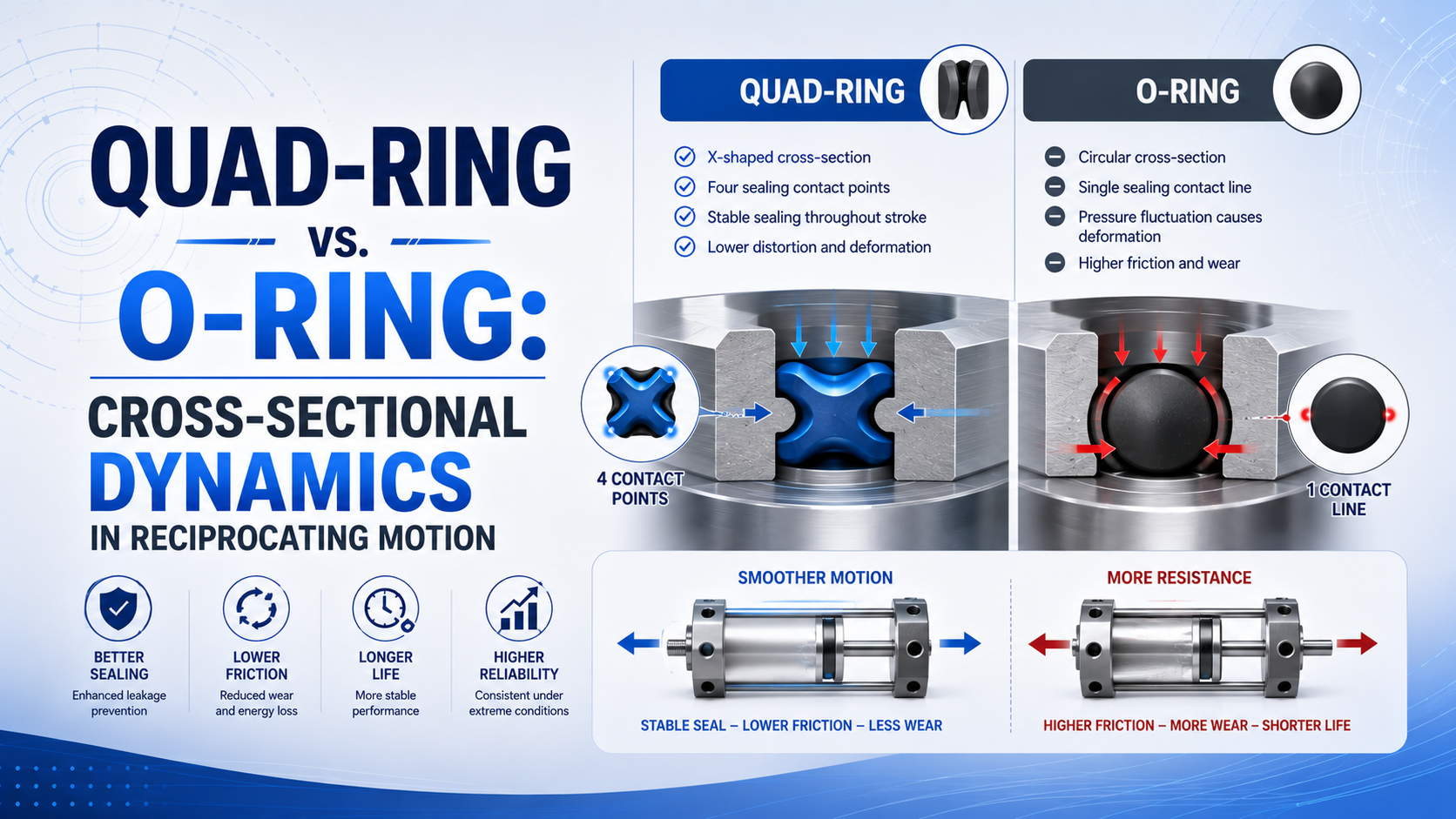
 Quad-Ring vs. O-Ring: Cross-Sectional Dynamics in Reciprocating MotionCompare a four-lip X-ring with a circular O-ring in reciprocating service, covering twist risk, groove compatibility, friction, materials, and validation.
Blog Tag
pneumatic actuator articles
Review every Bepto Pneumatic article connected to pneumatic actuator, grouped as one focused reading list for engineers, maintenance staff, and sourcing specialists.
Tagged Reading Path
All articles tagged pneumatic actuator
Use this archive to scan related selection notes, RFQ checks, replacement guidance, and pneumatic component references.
Quad-Ring vs. O-Ring: Cross-Sectional Dynamics in Reciprocating MotionCompare a four-lip X-ring with a circular O-ring in reciprocating service, covering twist risk, groove compatibility, friction, materials, and validation.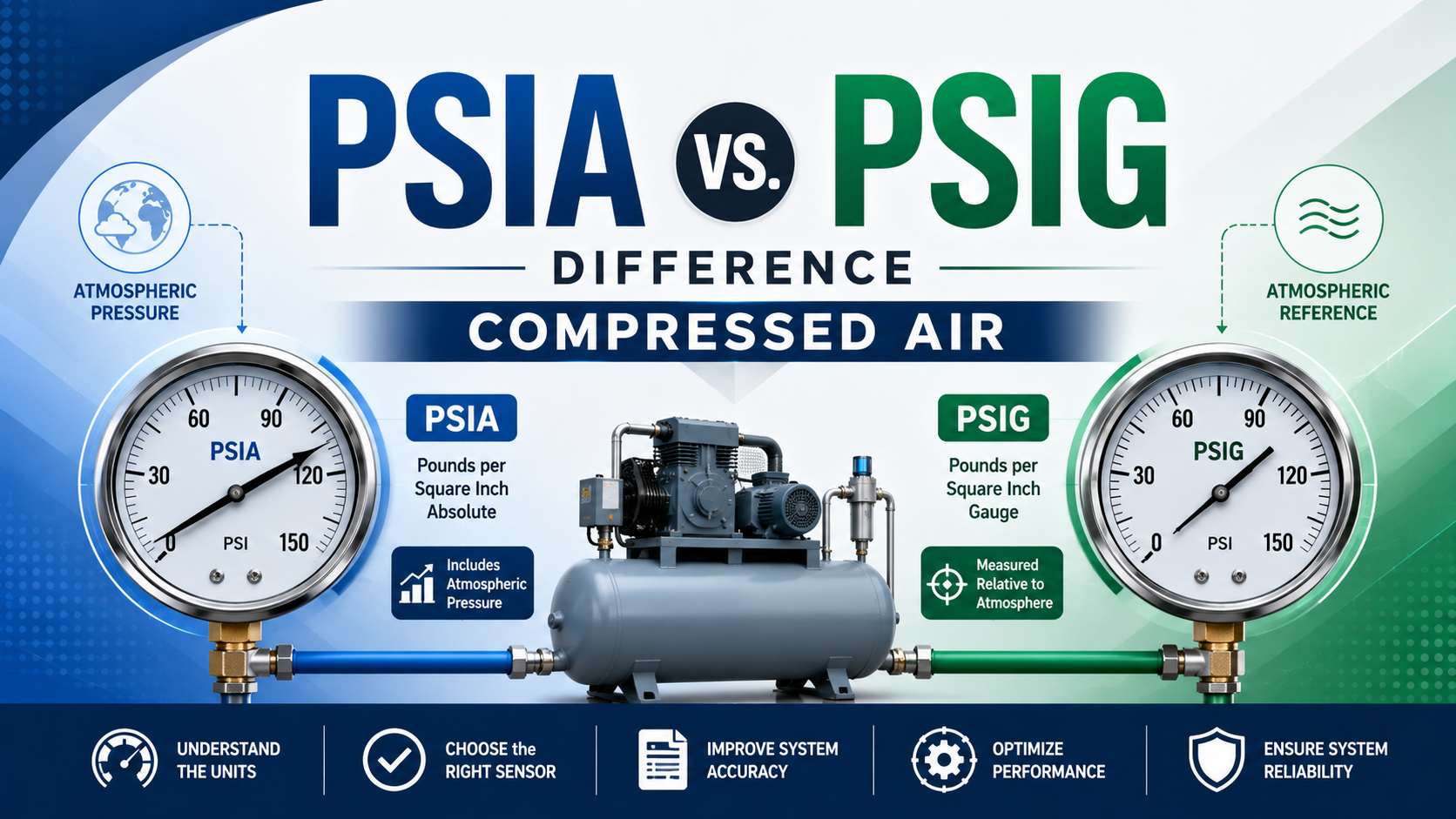 PSIA vs PSIG Difference Compressed AirLearn the PSIA vs PSIG difference, convert with local atmospheric pressure, and choose the correct reference for six common compressed-air calculations.
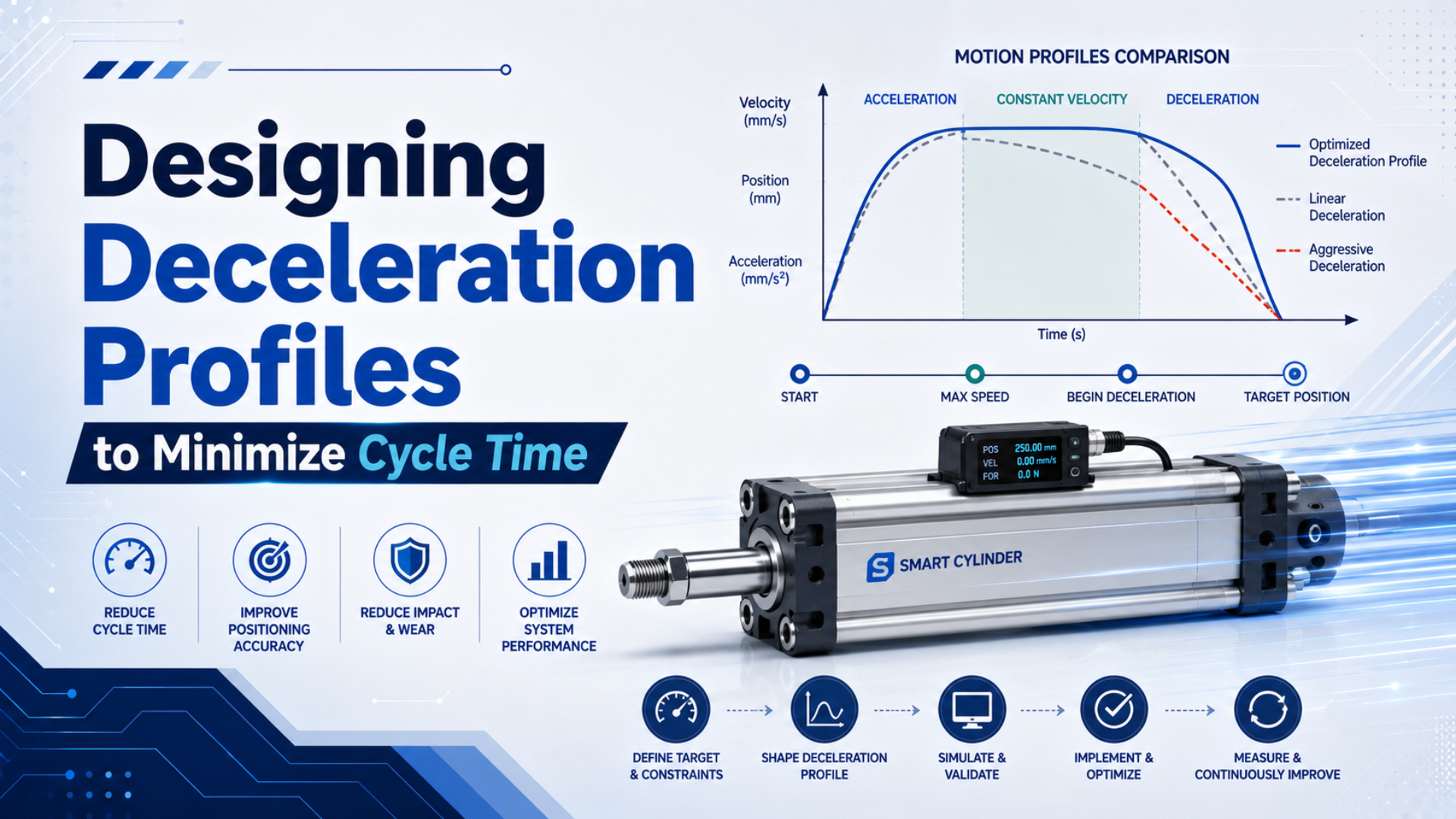 Designing Deceleration Profiles to Minimize Cycle TimeDesign pneumatic deceleration profiles using Parker's 50% cushion-entry speed warning, stopping-distance math, energy limits, traces, and acceptance tests.
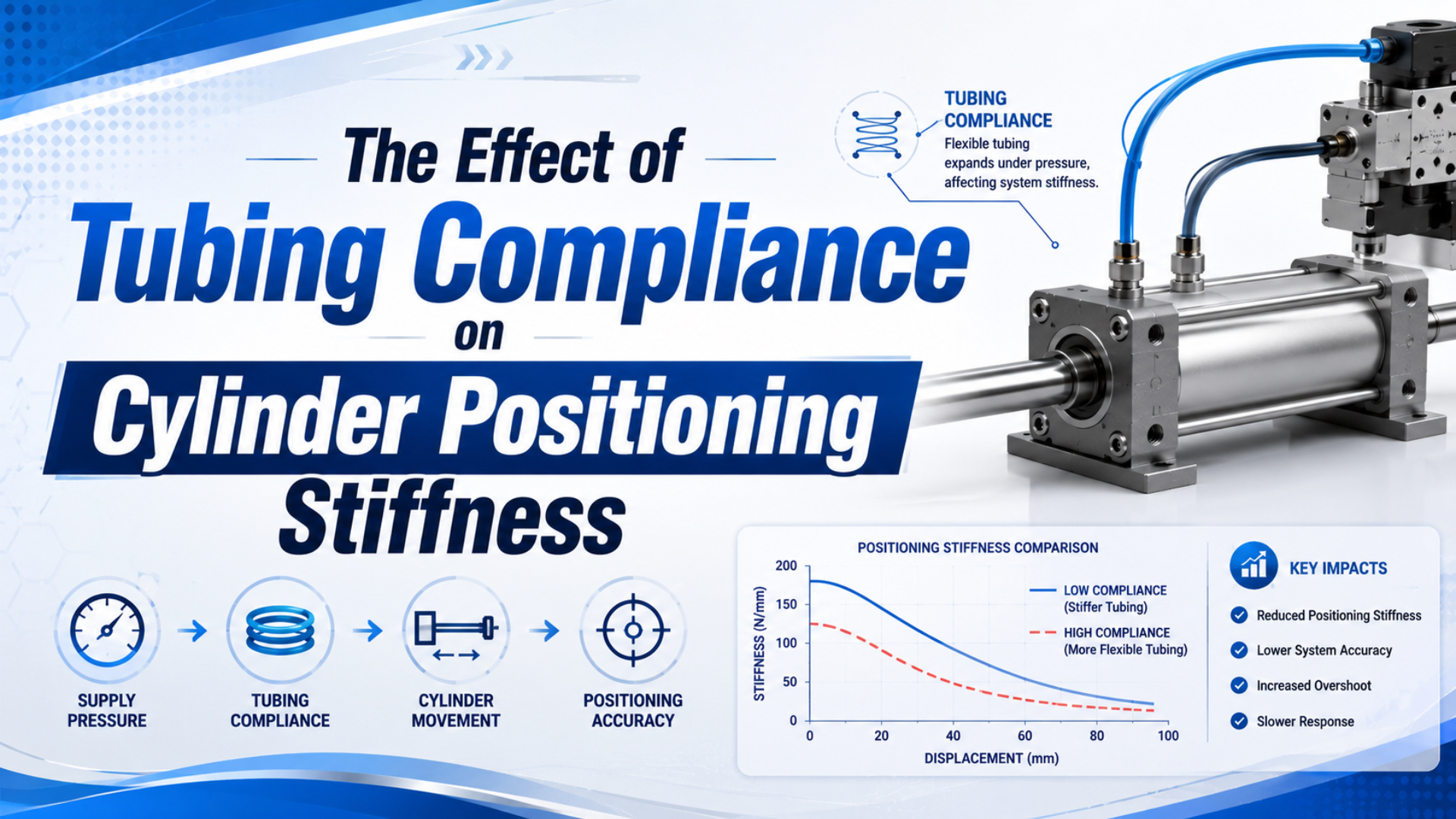 The Effect of Tubing Compliance on Cylinder Positioning StiffnessCalculate how 10 m of 8 mm OD, 5 mm ID tubing adds 196 cm³ to a pneumatic cylinder circuit, then improve positioning stiffness without restricting airflow.
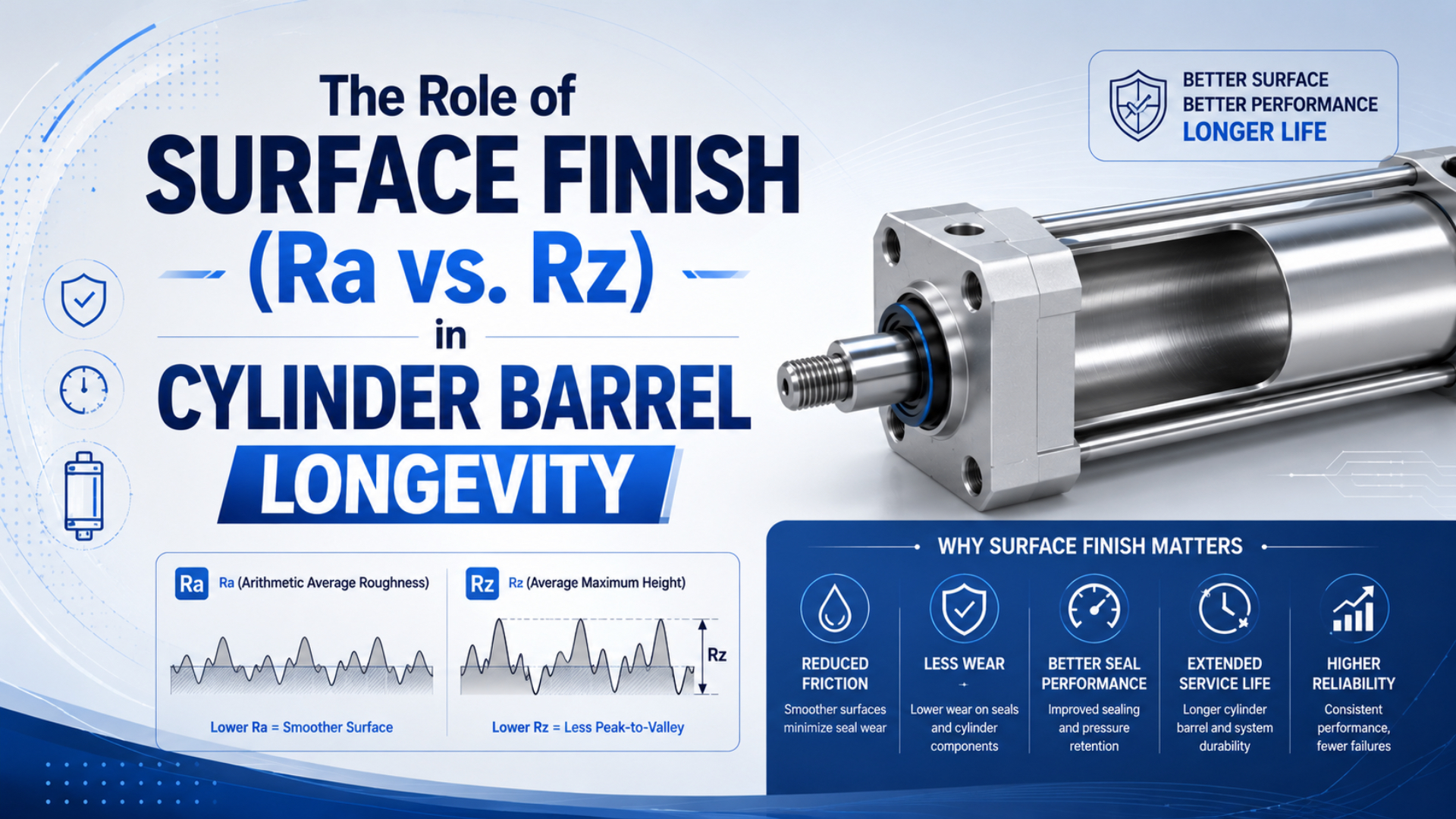 The Role of Surface Finish (Ra vs. Rz) in Cylinder Barrel LongevityCompare Ra and Rz for cylinder barrels using ISO 21920, Parker's 0.2 and 0.4 um seal examples, measurement settings, inspection maps, and practical RFQ checks.
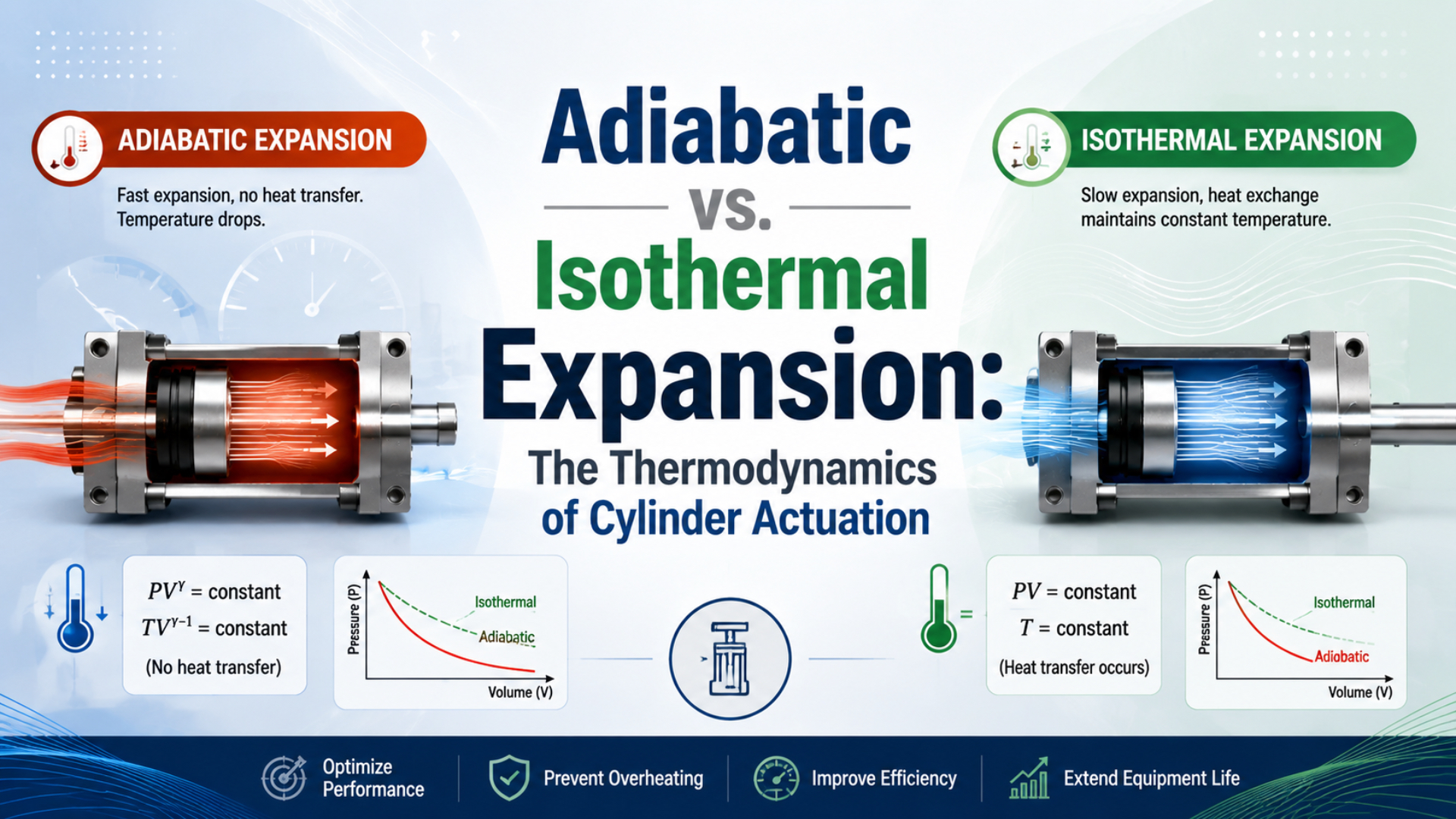 Adiabatic vs. Isothermal Expansion: The Thermodynamics of Cylinder ActuationCompare cylinder models using measured 23 K heating and 17 K cooling data to separate ideal expansion laws from real pneumatic actuation and sizing errors.
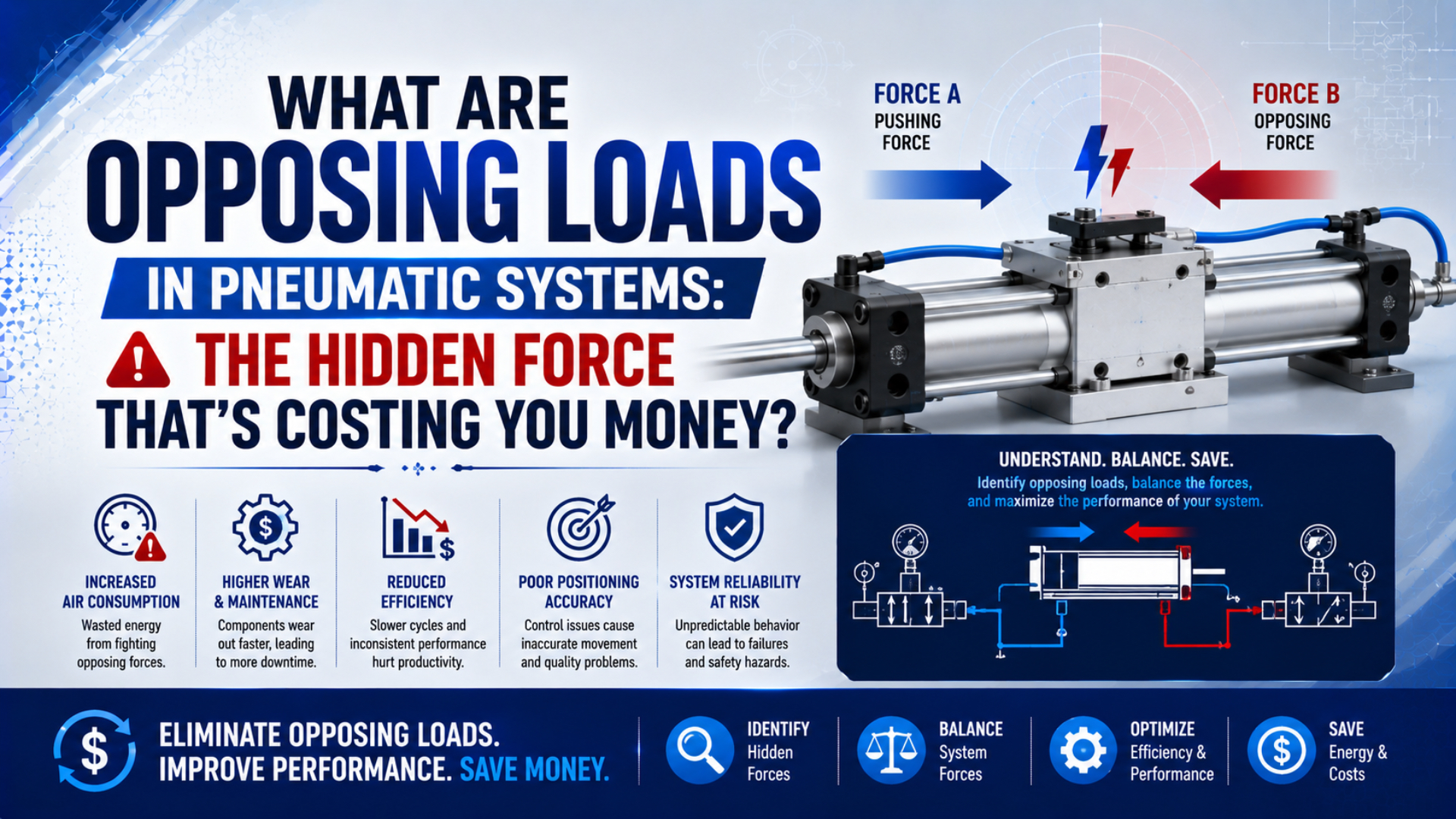 What Are Opposing Loads in Pneumatic Systems: The Hidden Force That’s Costing You Money?Identify opposing loads in pneumatic systems, build a directional force budget, and size cylinder thrust without relying on fixed pressure percentages.
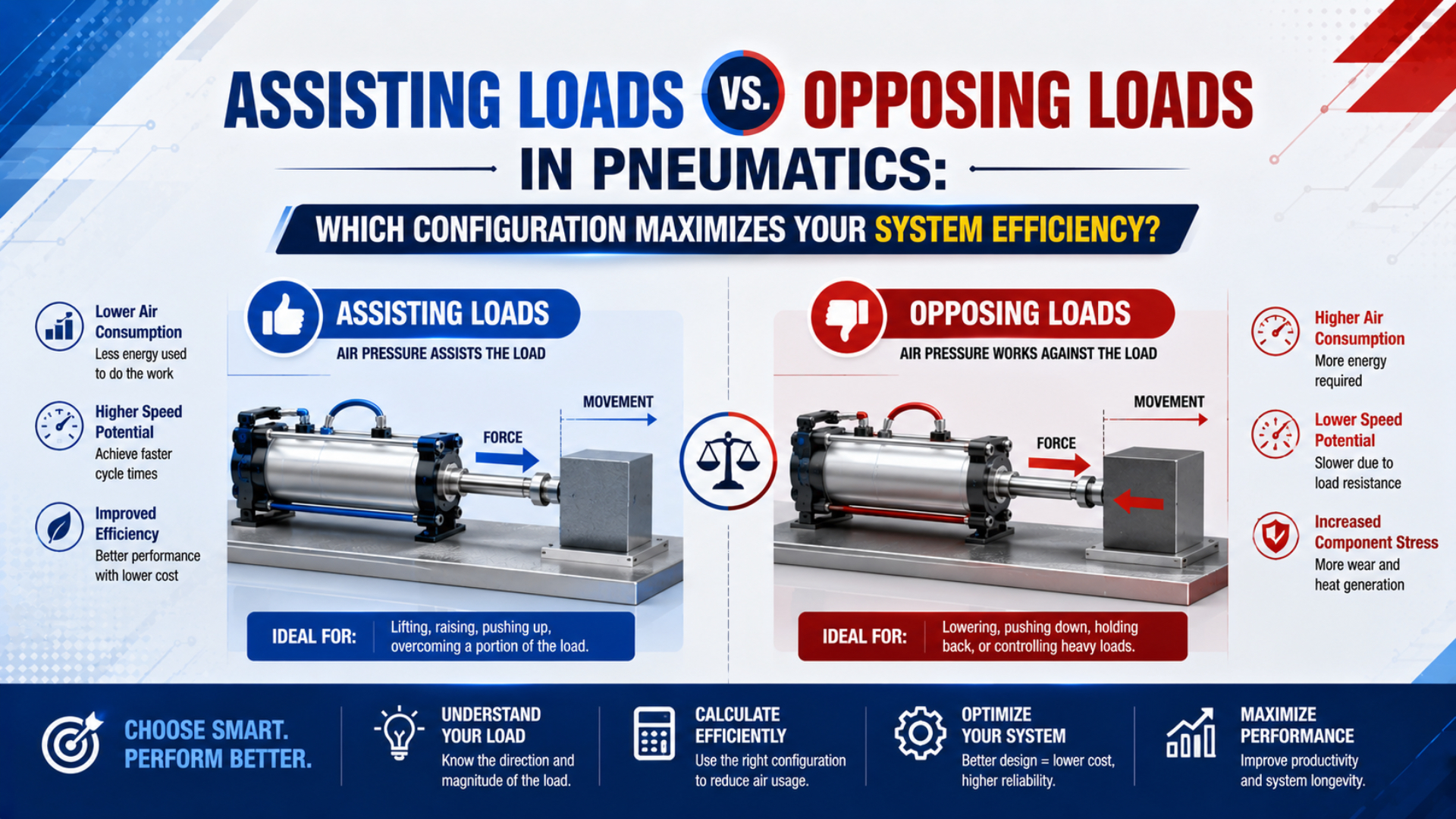 Assisting Loads vs. Opposing Loads in Pneumatics: Which Configuration Maximizes Your System Efficiency?Compare assisting and opposing pneumatic loads using two-chamber force balance, vertical-axis examples, pressure checks, and safe motion-control rules.
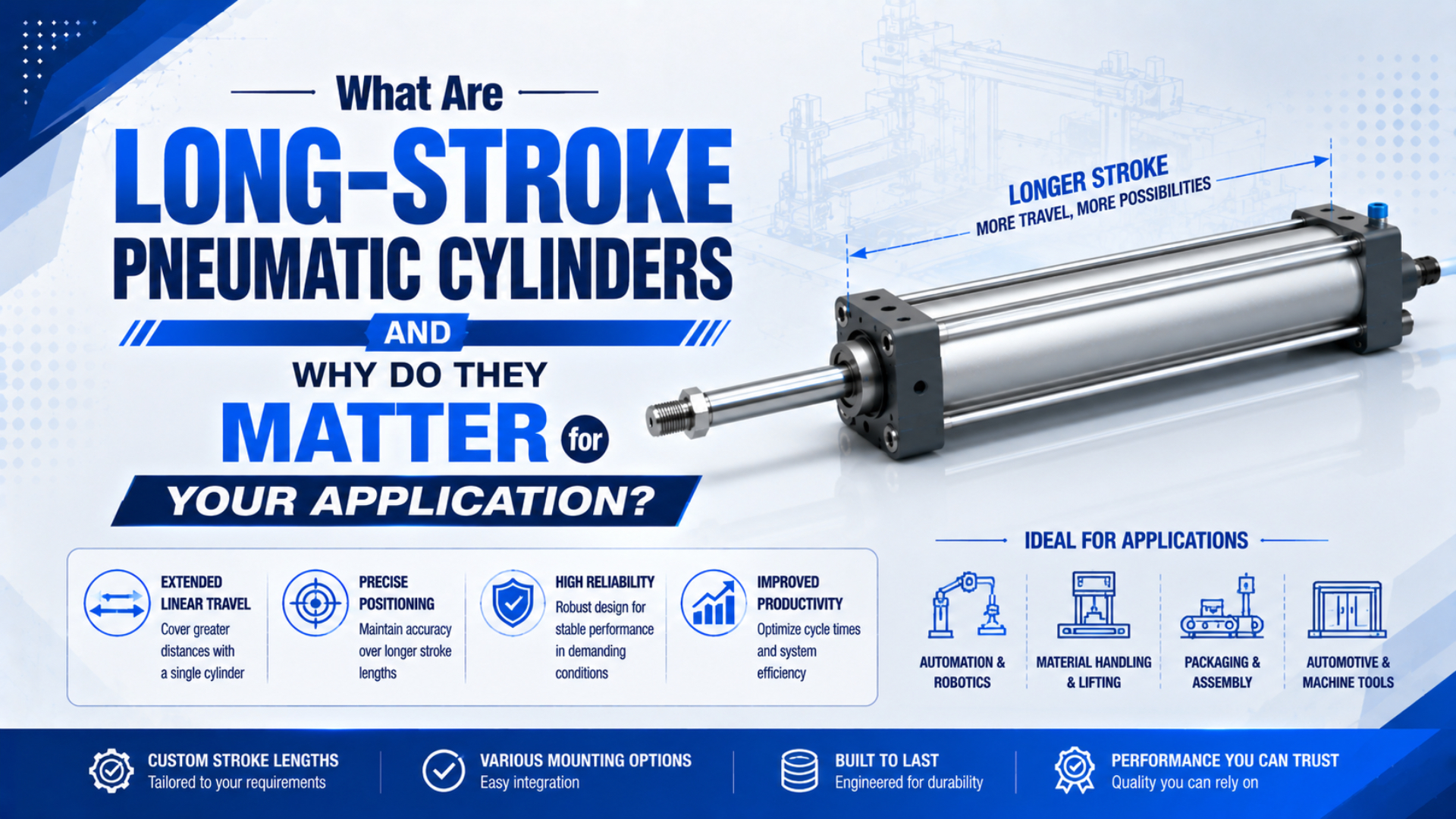 What Are Long-Stroke Pneumatic Cylinders and Why Do They Matter for Your Application?Learn when pneumatic stroke becomes a system-level design issue, compare rodded and rodless layouts, and apply Parker's 6000 mm example safely in real machines.