
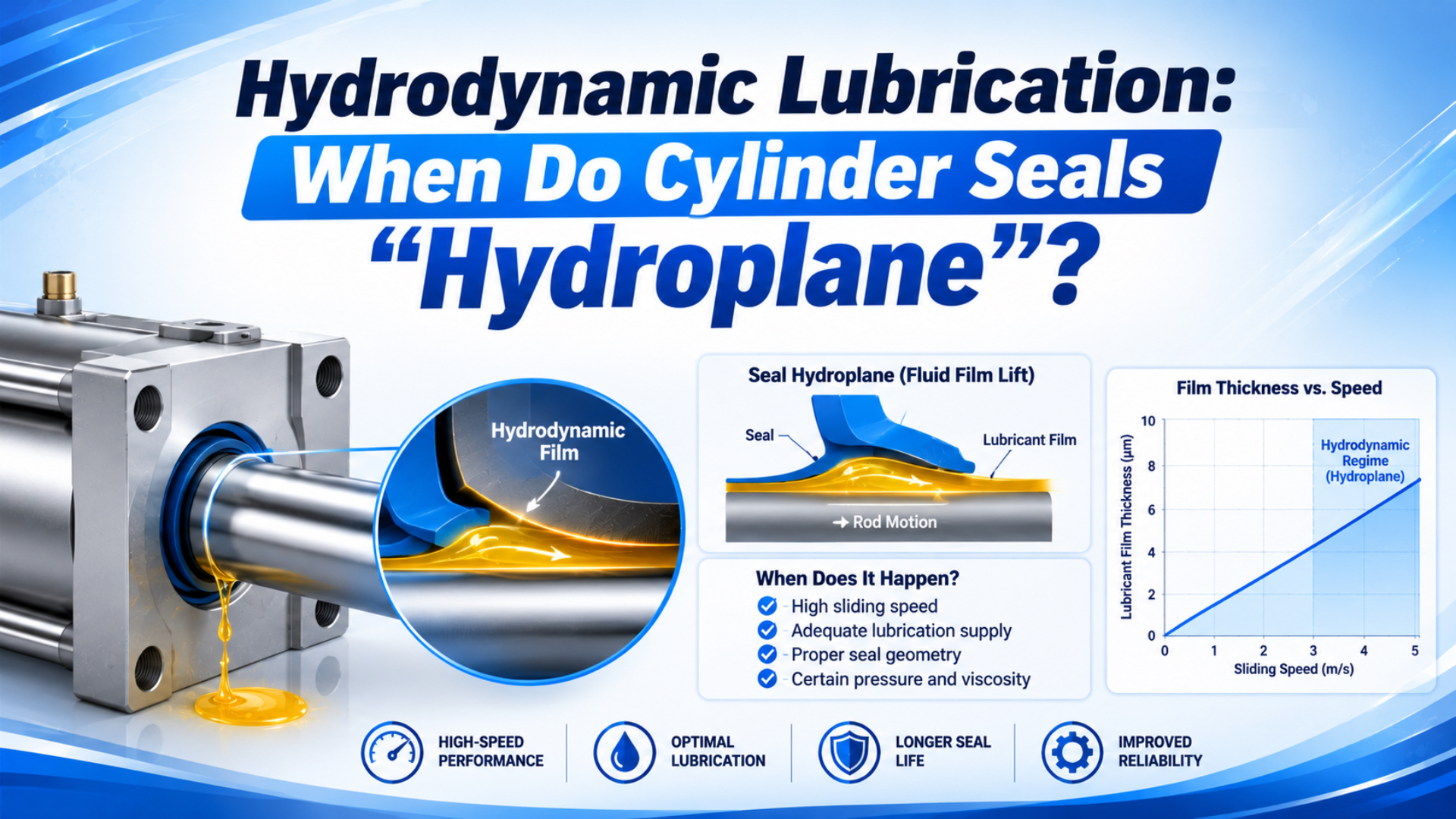
 Hydrodynamic Lubrication: When Do Cylinder Seals “Hydroplane”?One pneumatic-cylinder study found piston seals produced about 90% of measured friction; learn why speed alone cannot predict seal hydroplaning reliably.
Blog Tag
pneumatic maintenance articles
Review every Bepto Pneumatic article connected to pneumatic maintenance, grouped as one focused reading list for engineers, maintenance staff, and sourcing specialists.
Tagged Reading Path
All articles tagged pneumatic maintenance
Use this archive to scan related selection notes, RFQ checks, replacement guidance, and pneumatic component references.
Hydrodynamic Lubrication: When Do Cylinder Seals “Hydroplane”?One pneumatic-cylinder study found piston seals produced about 90% of measured friction; learn why speed alone cannot predict seal hydroplaning reliably.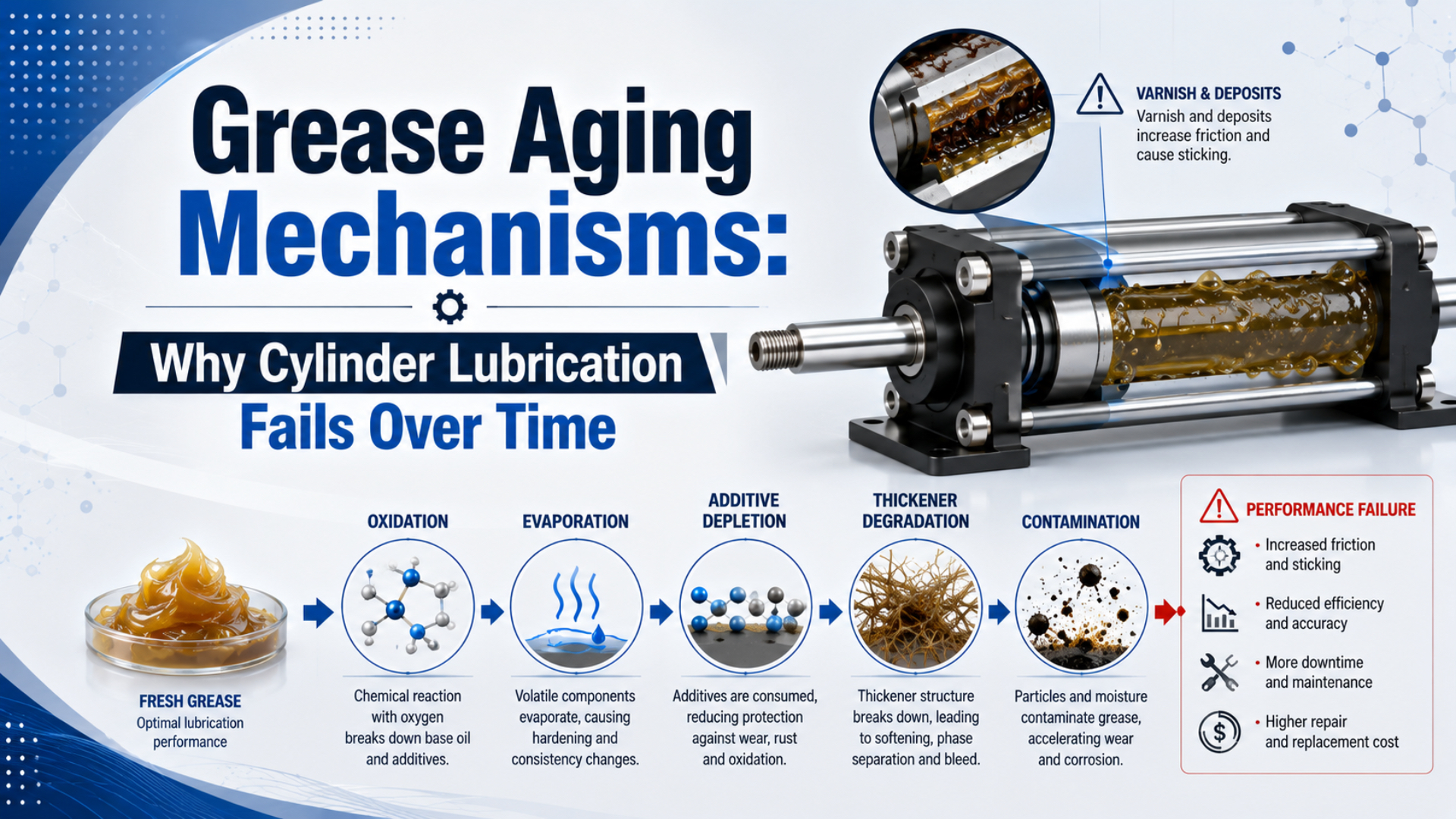 Grease Aging Mechanisms: Why Cylinder Lubrication Fails Over TimeLearn why ASTM D942 cannot predict cylinder grease life, how four failure paths develop, and what evidence should trigger safe pneumatic cylinder service.
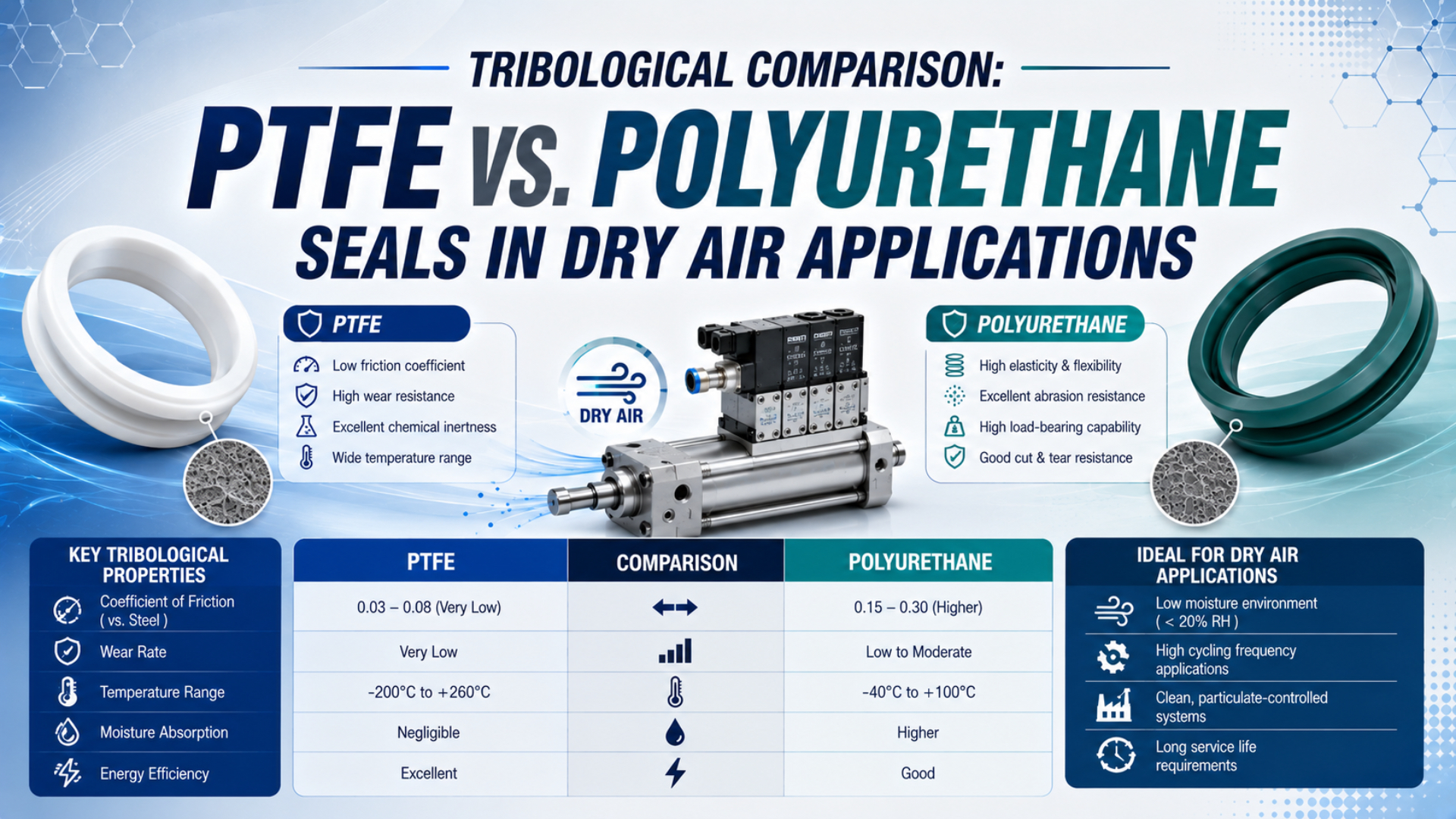 Tribological Comparison: PTFE vs. Polyurethane Seals in Dry Air ApplicationsCompare PTFE-based and polyurethane pneumatic seals in dry air using 6 operating variables, model-specific limits, and a practical validation plan for buyers.
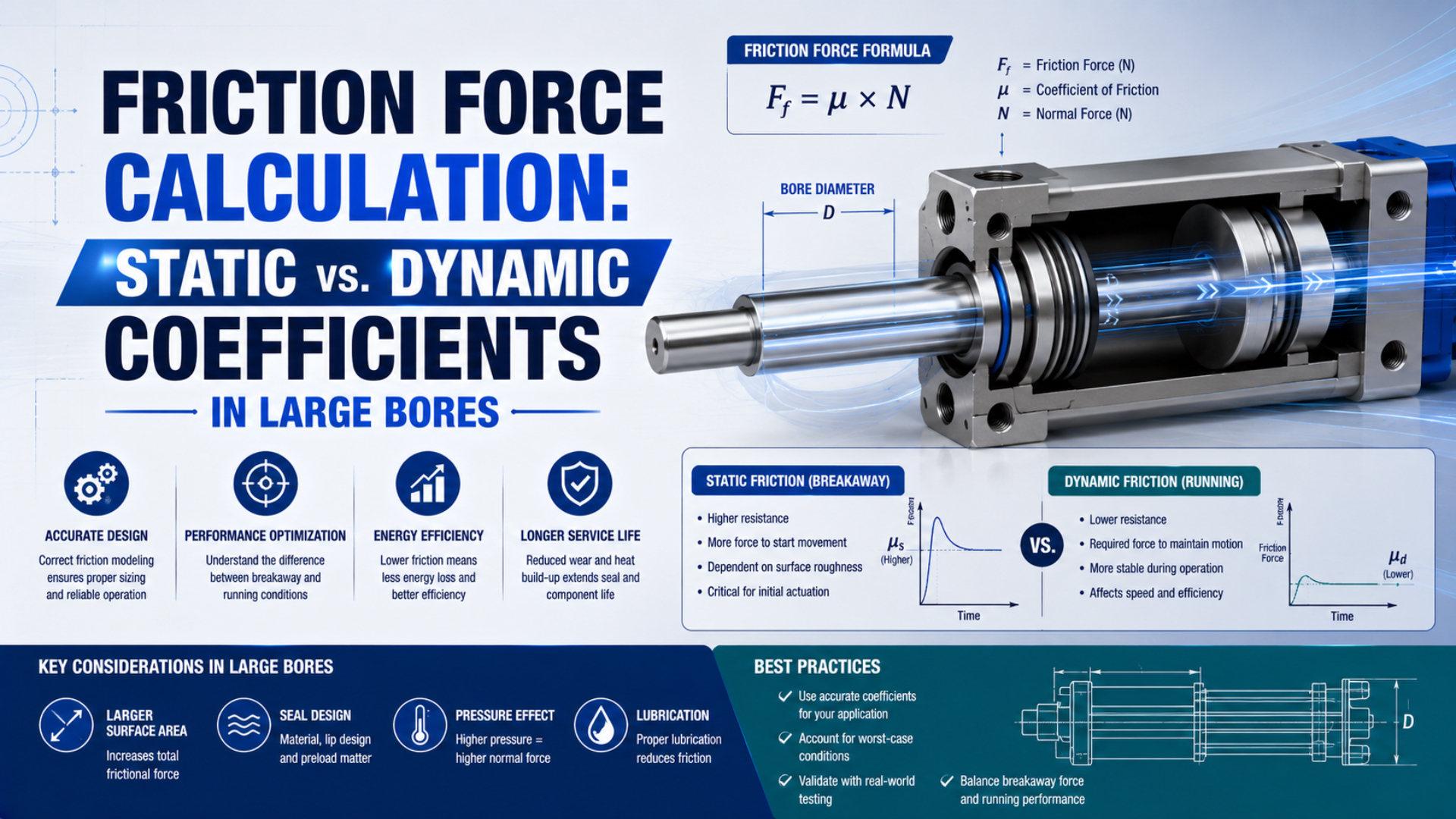 Friction Force Calculation: Static vs. Dynamic Coefficients in Large BoresMeasure static breakaway and dynamic running friction in large-bore pneumatic cylinders using synchronized port pressures, effective piston areas, dwell time, and a defined running window.
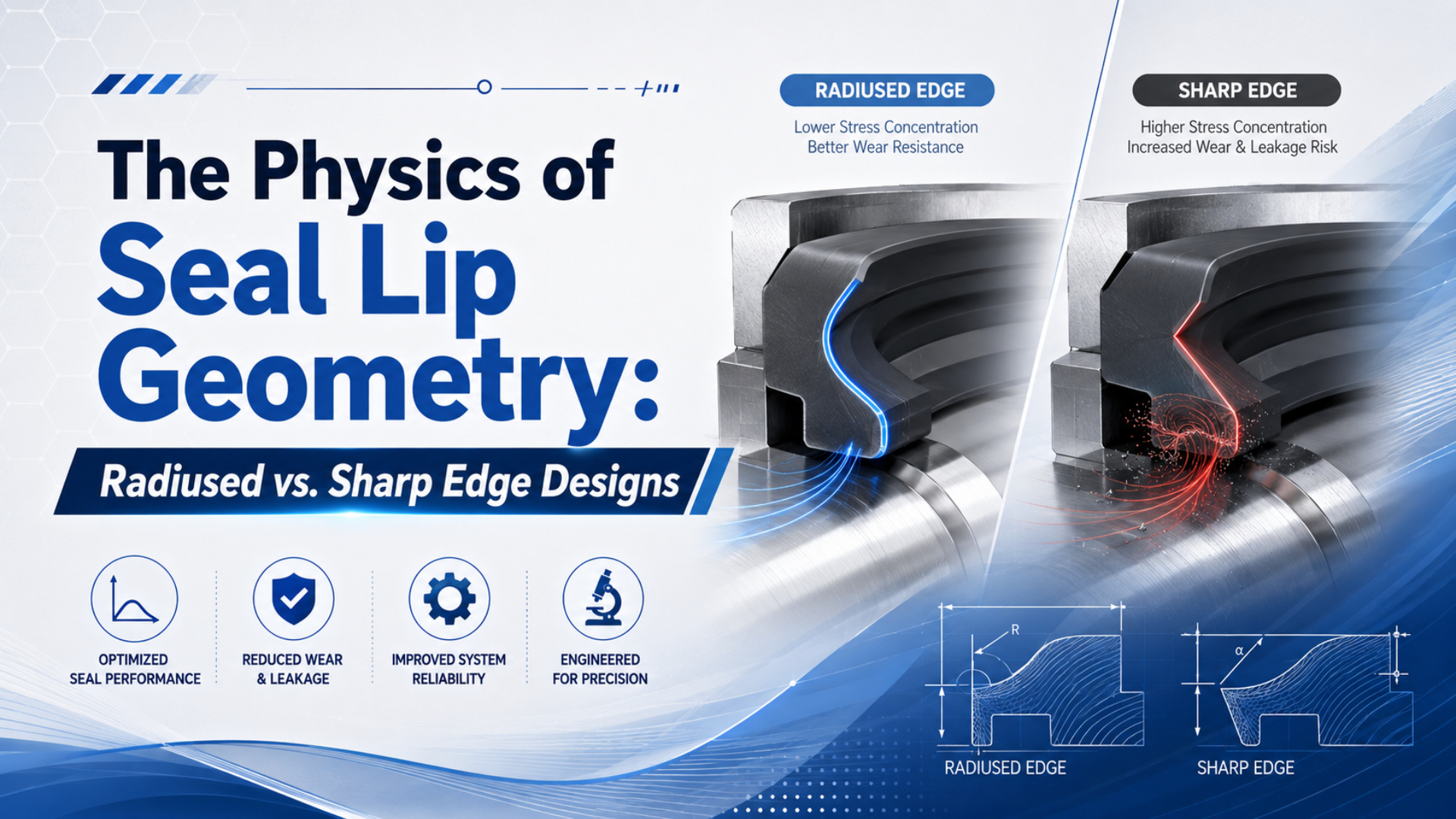 The Physics of Seal Lip Geometry: Radiused vs. Sharp Edge DesignsCompare 3 pneumatic sealing functions and learn how lip radius, preload, rod finish, lubrication, and wiper pairing control friction, leakage, and wear.
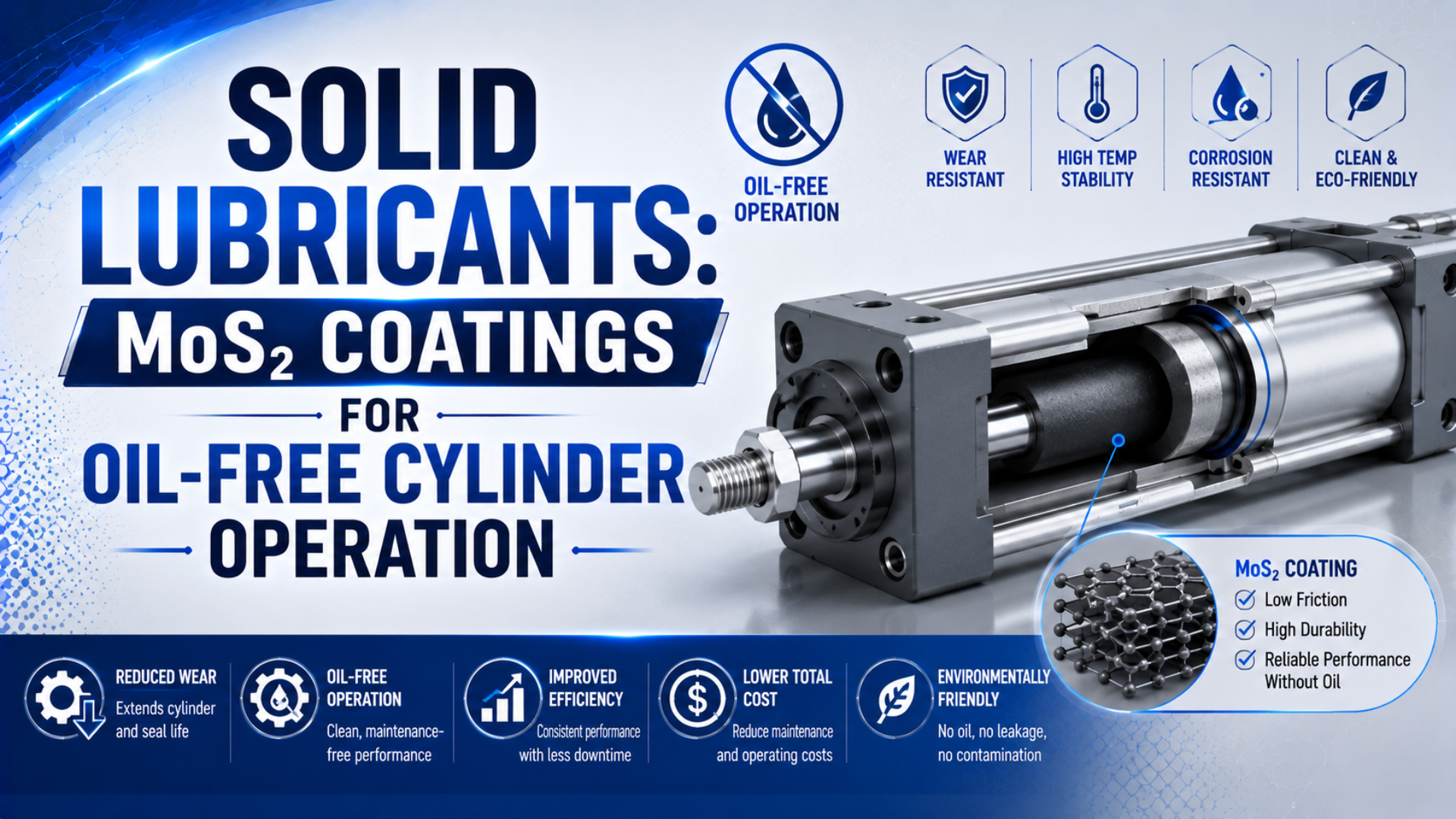 Solid Lubricants: MoS2 Coatings for Oil-Free Cylinder OperationNASA tests of 6 MoS2 coatings show why humidity, binder, film thickness, seals, and acceptance testing define oil-free pneumatic cylinder performance.
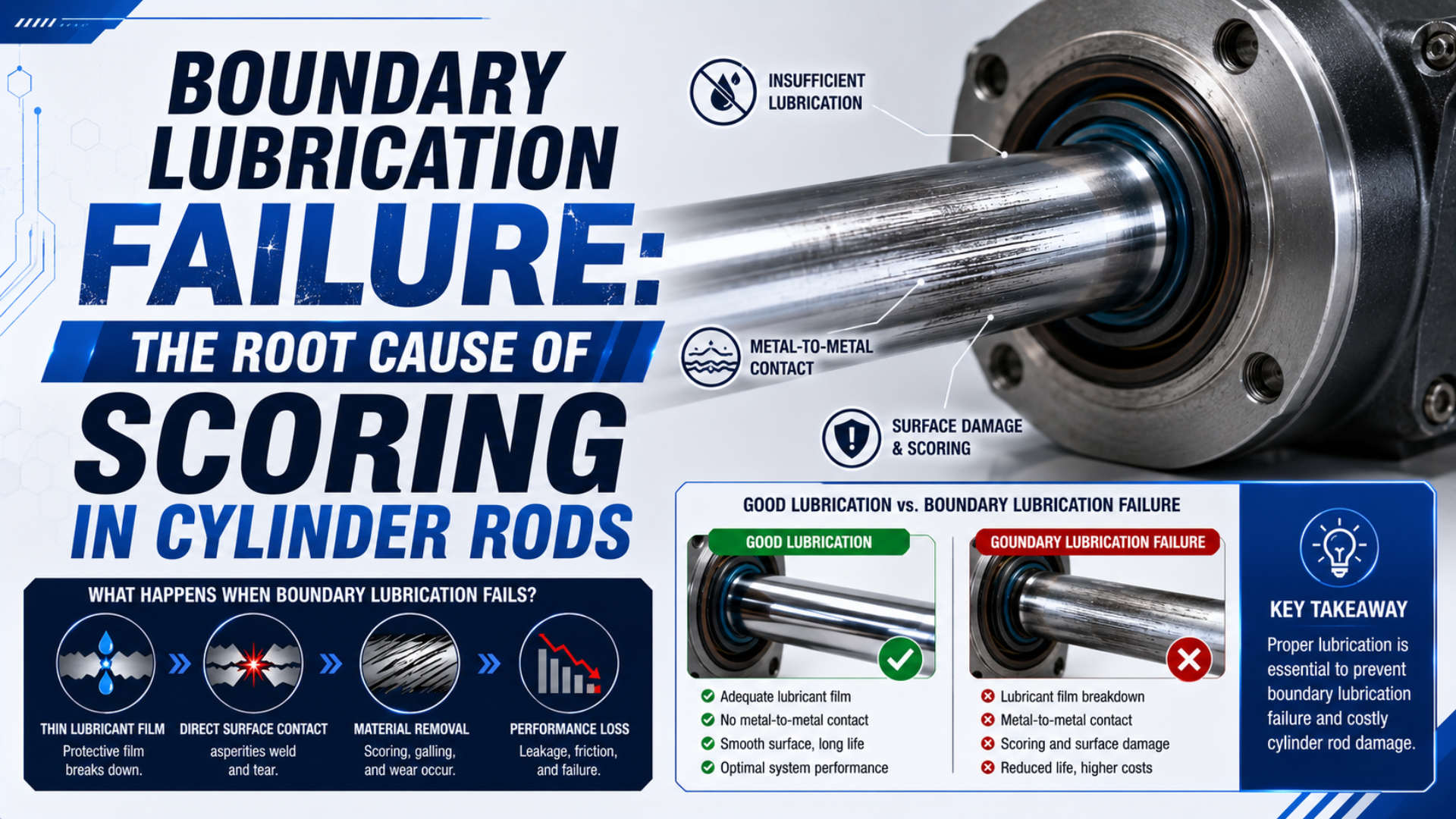 Boundary Lubrication Failure: The Root Cause of Scoring in Cylinder RodsDiagnose 5 cylinder rod scoring patterns, separate boundary lubrication from root causes, and verify alignment, debris, lubricant, surfaces, and repair limits.
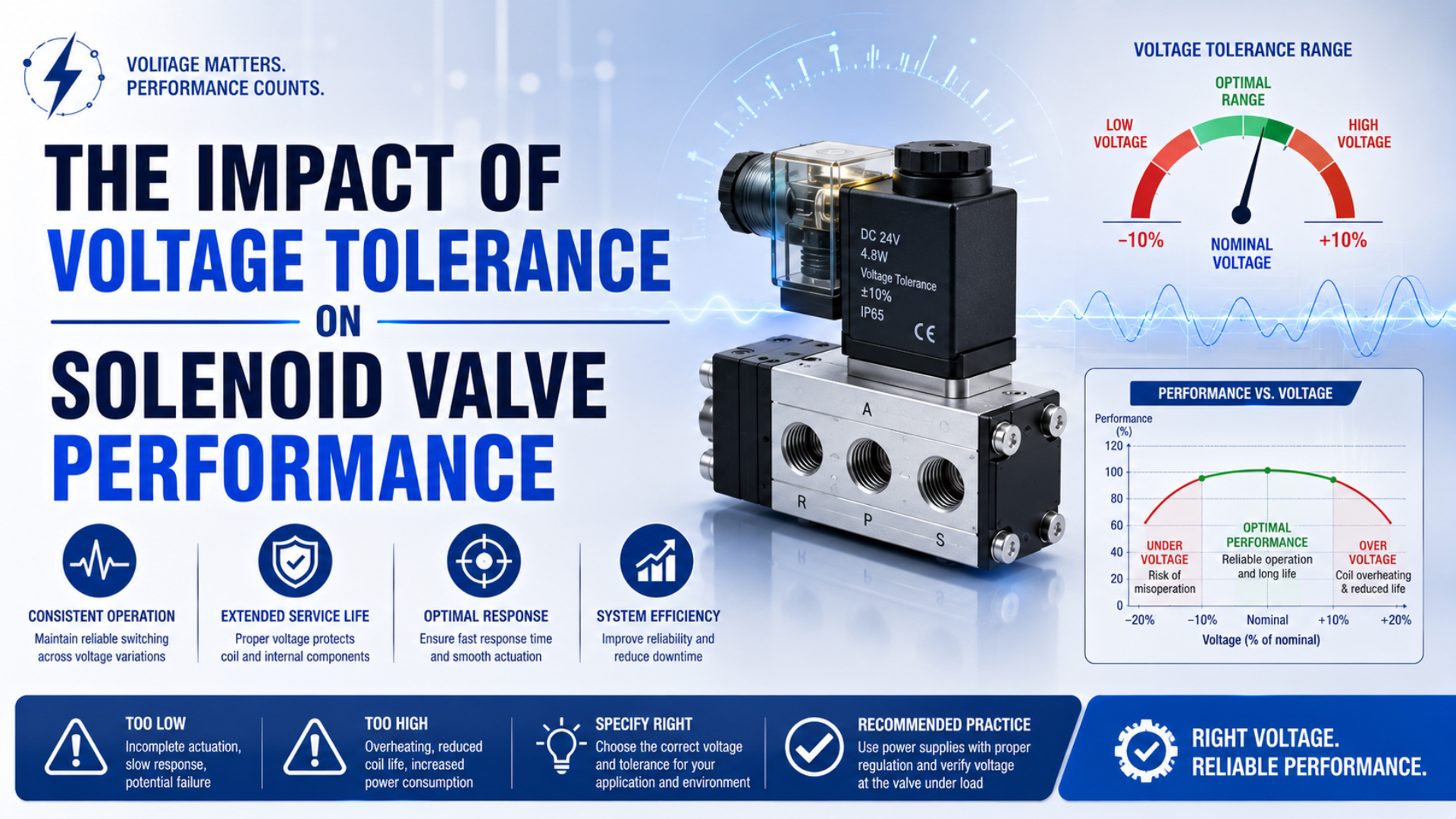 The Impact of Voltage Tolerance on Solenoid Valve PerformanceSMC permits -15% to +10% voltage on one valve series, while other coils specify ±10%. Learn to verify hot, loaded coil voltage before commissioning approval.
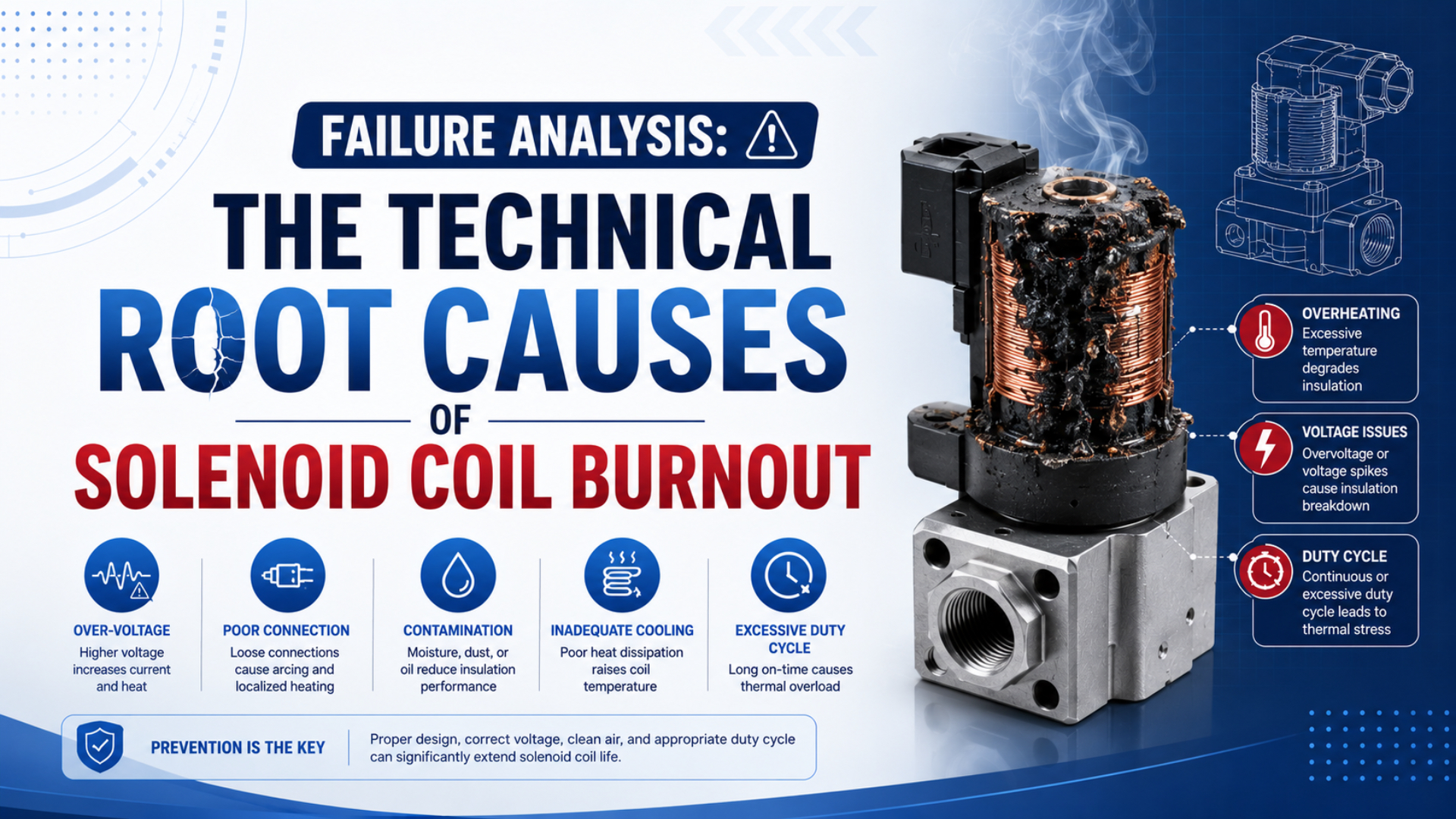 Failure Analysis: The Technical Root Causes of Solenoid Coil BurnoutDiagnose solenoid coil burnout by separating 4 coil architectures and checking voltage, current, duty rating, heat, moisture, connectors, and core movement.