
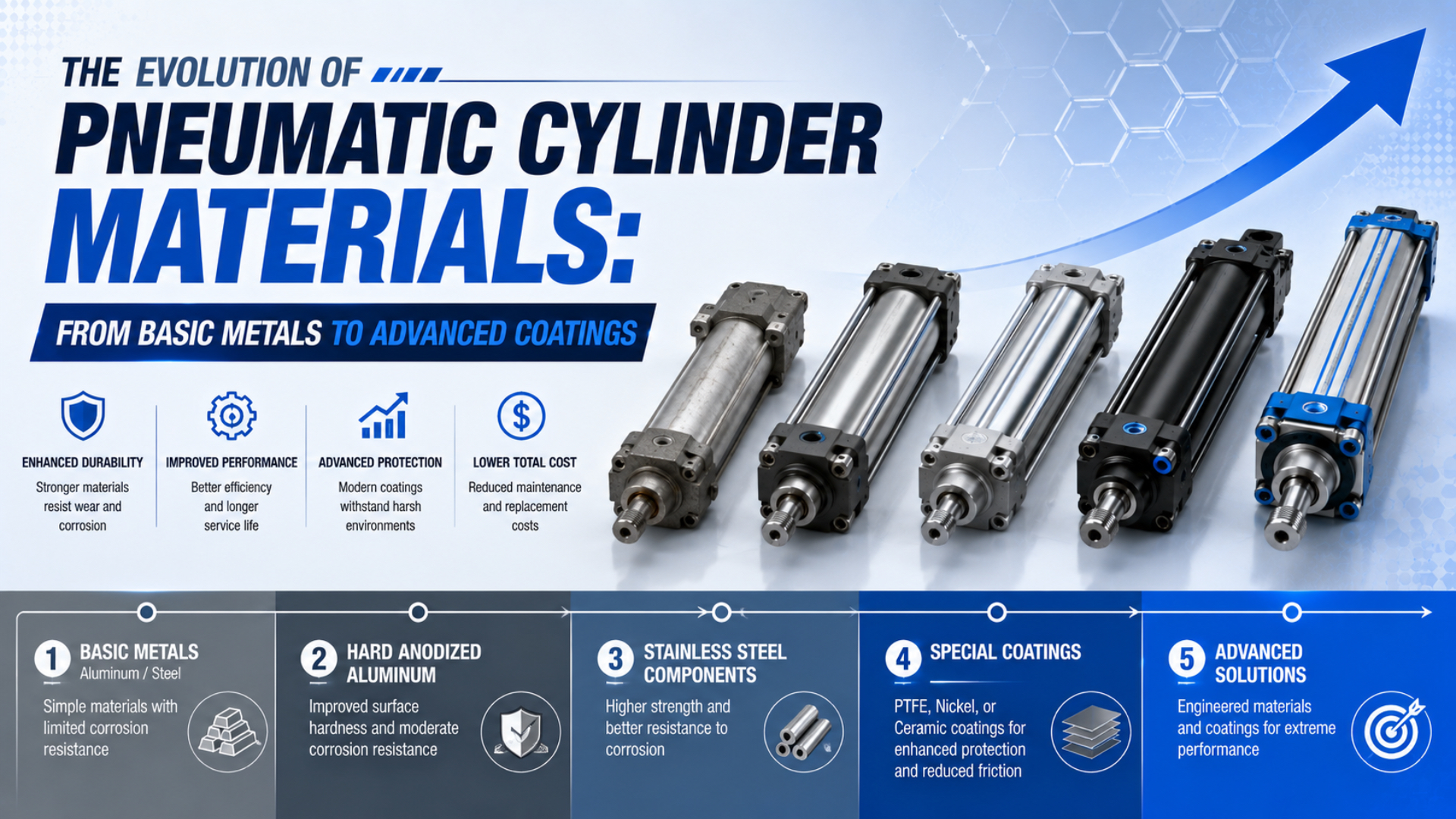
The Evolution of Pneumatic Cylinder Materials: From Basic Metals to Advanced CoatingsTrace pneumatic cylinder materials across the ISO 15552 32-320 mm range, from steel and anodized aluminum to stainless assemblies and advanced surface films.→Blog Author
Jason Tan
Hello, I'm Jason, a Bepto Pneumatic manufacturing engineer. I help connect drawings, machining tolerance, sealing interfaces, assembly checks, and inspection needs with build-ready pneumatic parts.
Author Reading Path
Articles by Jason Tan
89 articles sorted newest first for readers who want one author's pneumatic selection notes in one place.
Showing 89 articles
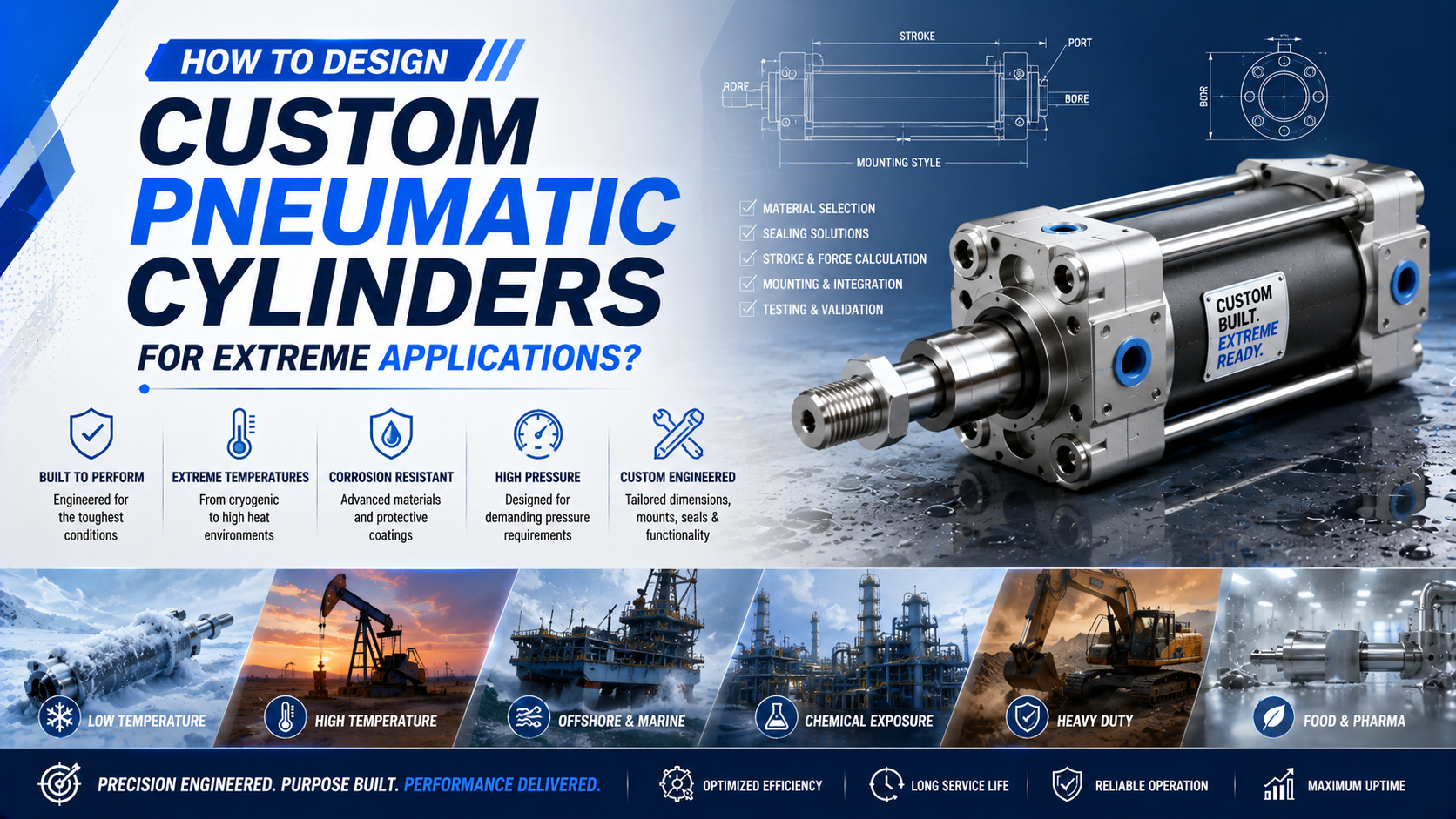
How to Design Custom Pneumatic Cylinders for Extreme Applications?Design custom pneumatic cylinders with 8 engineering checks for load, pressure, heat, seals, long-stroke stability, tolerances, and validation evidence.→
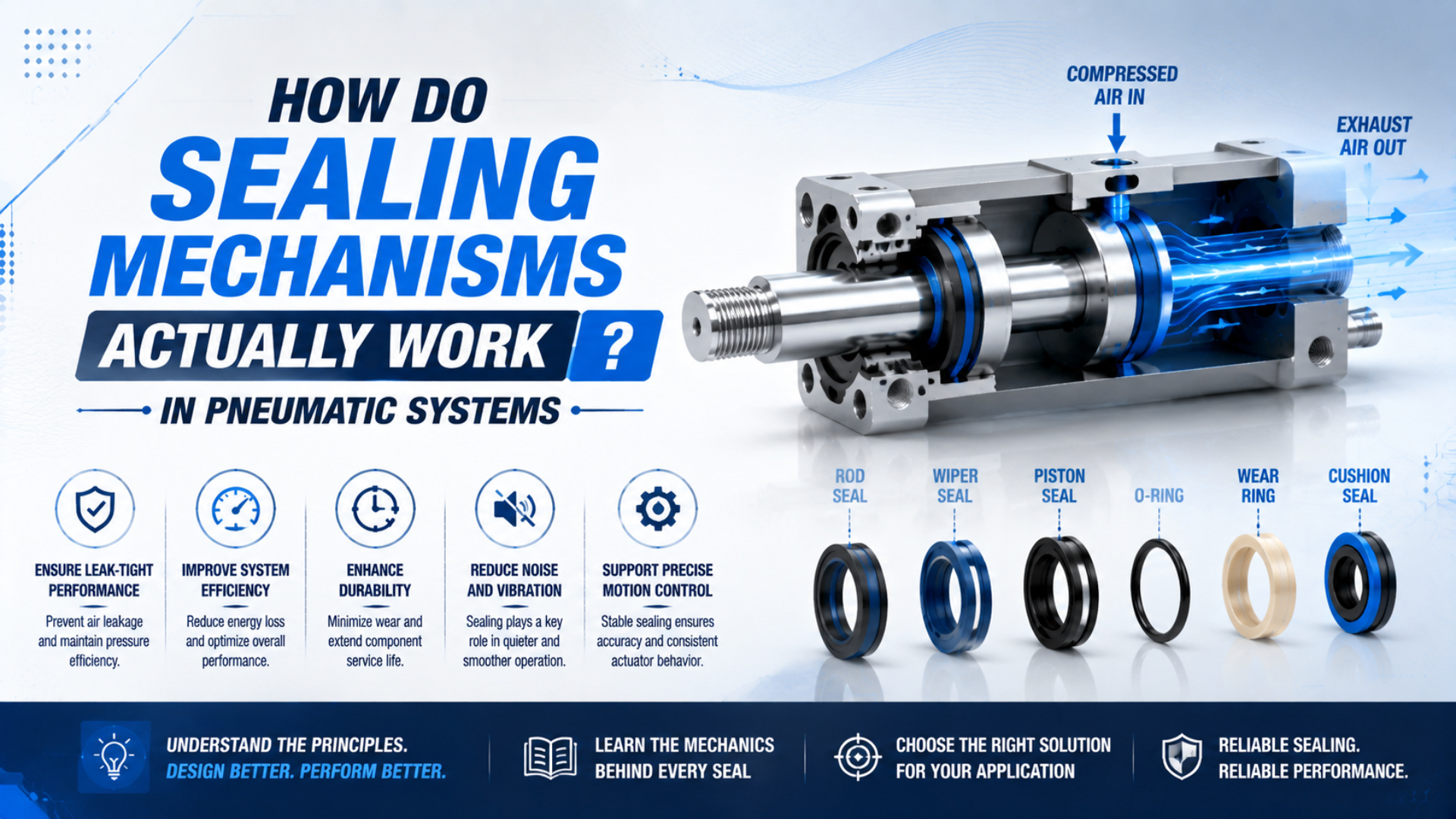
How Do Sealing Mechanisms Actually Work in Pneumatic Systems?Learn how pneumatic seals use squeeze, pressure energization, glands and lubrication; a 2019 study attributed 90% of cylinder friction to piston seals.→
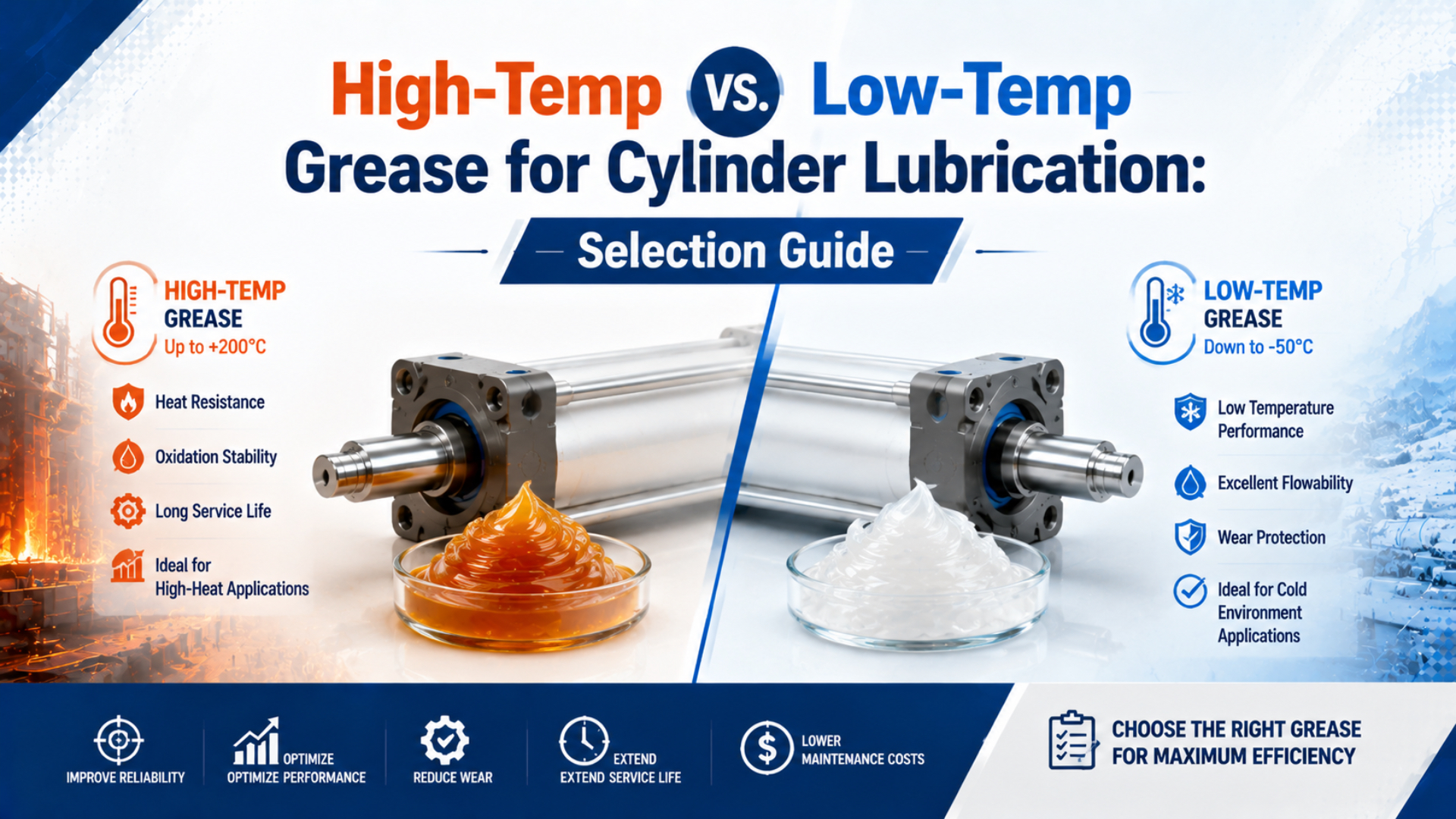
High-Temp vs. Low-Temp Grease for Cylinder Lubrication: Selection GuideSelect high- or low-temperature cylinder grease using 4 measured temperatures, exact seal compatibility, ASTM limits, and in-service commissioning checks.→
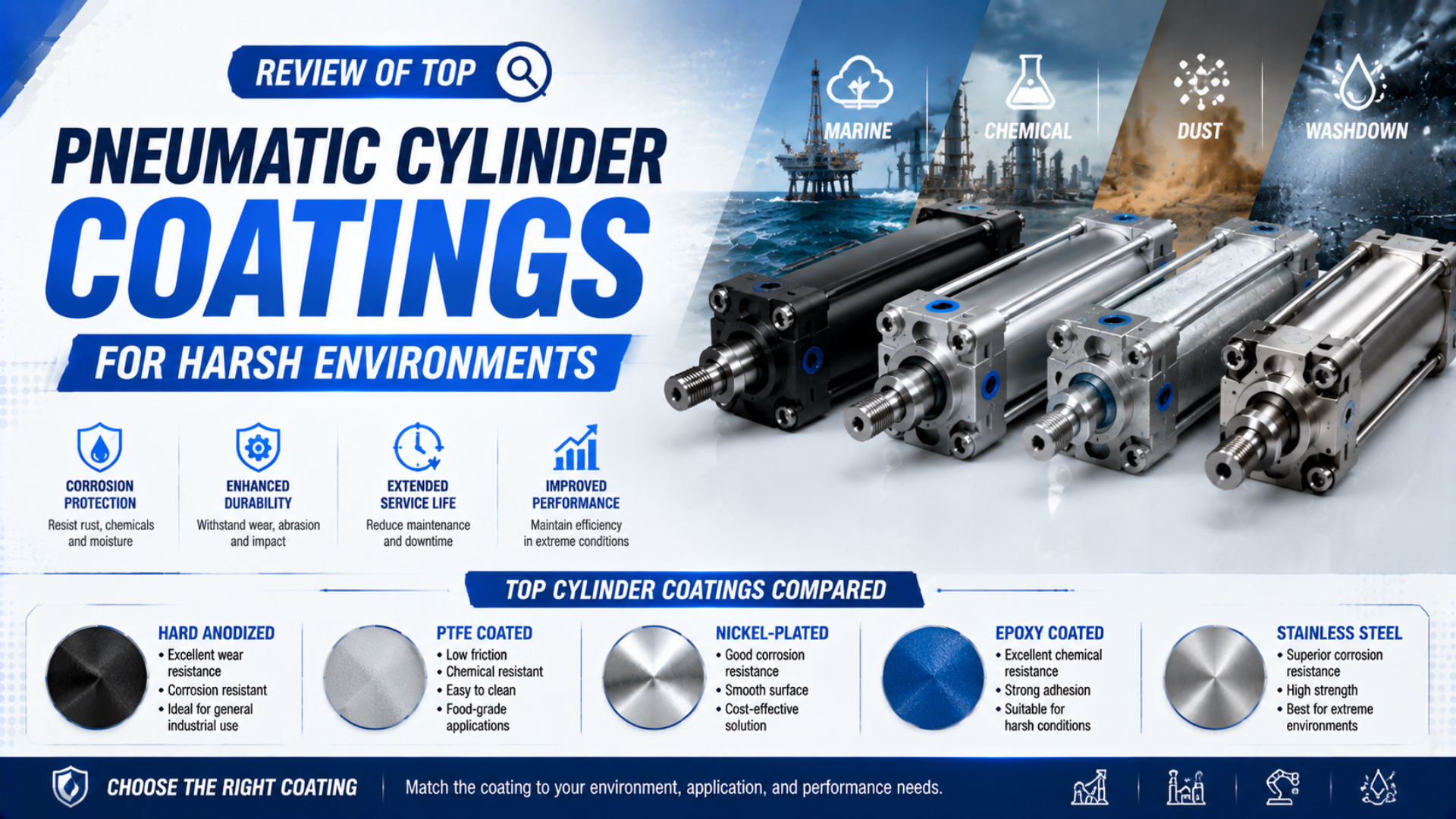
Review of Top Pneumatic Cylinder Coatings for Harsh EnvironmentsSelect pneumatic cylinder coatings by exposure, component, ISO 9227 limits, anodizing, ENP, rod finishes, stainless grades, and acceptance evidence.→
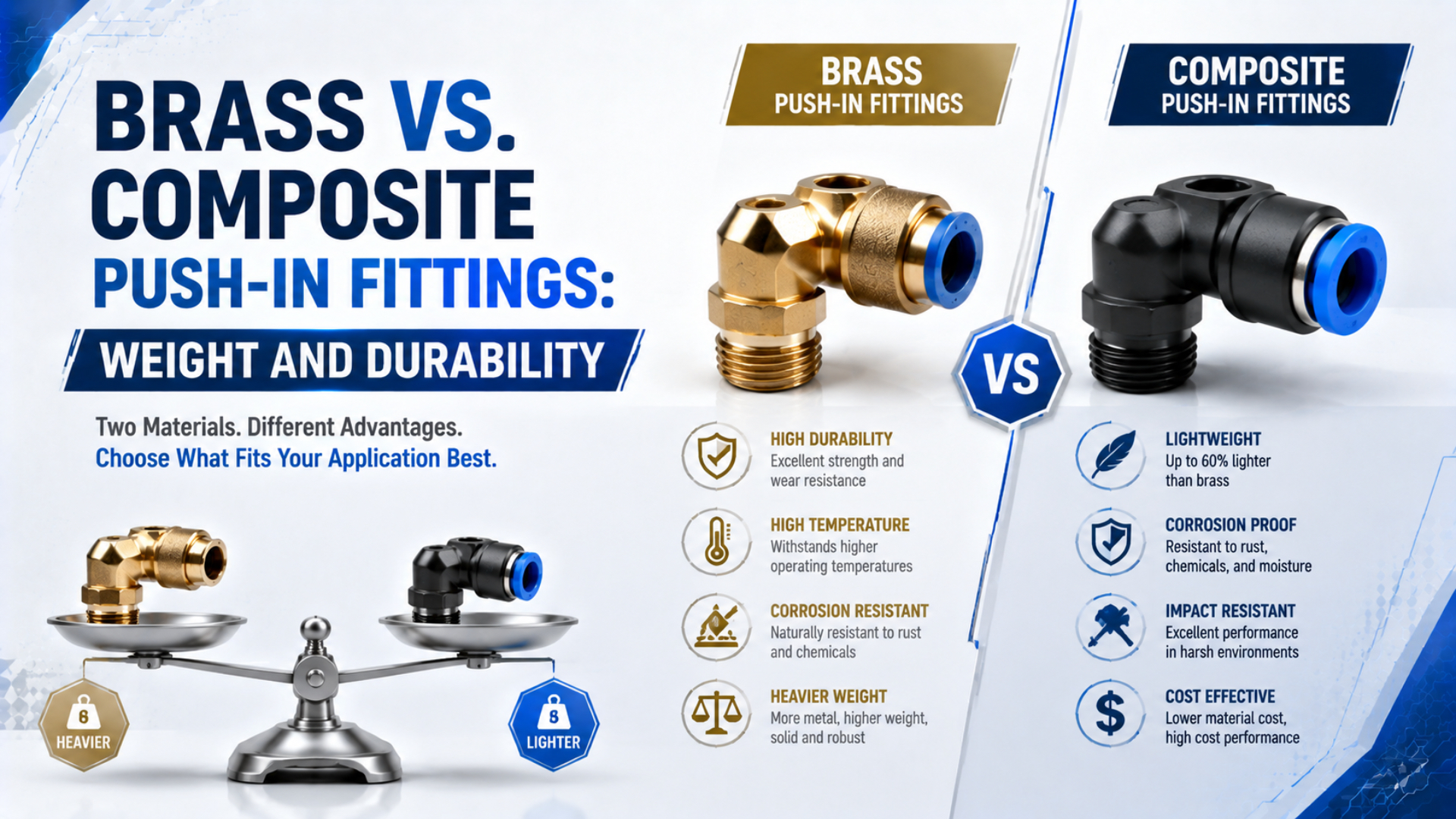
Brass vs. Composite Push-in Fittings: Weight and DurabilityCompare brass and composite push-in fittings using ISO 14743 assembly tests, exact catalog weights, and pressure, temperature, chemical, and vibration limits.→
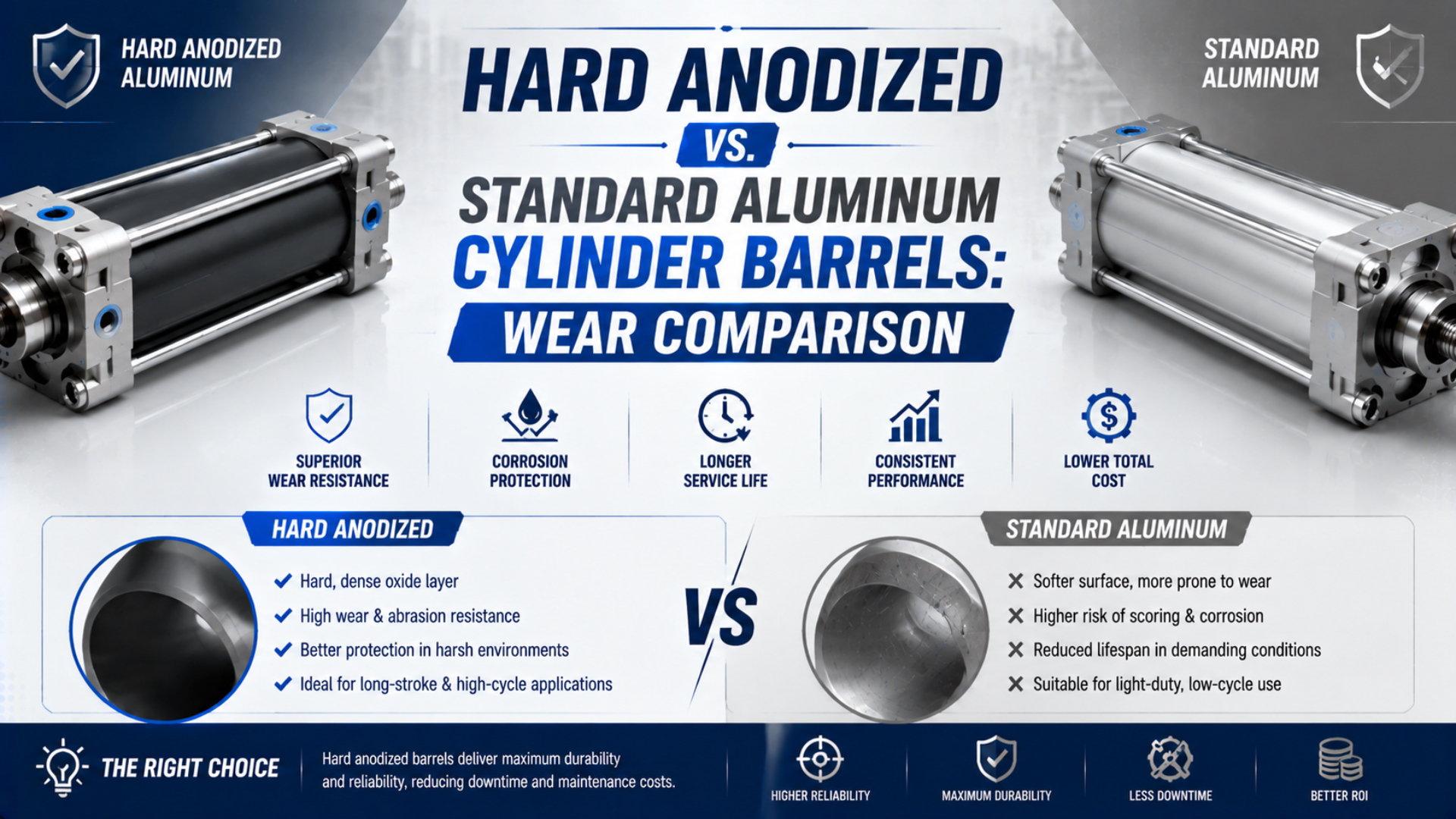
Hard Anodized vs. Standard Aluminum Cylinder Barrels: Wear ComparisonCompare hard and standard anodized cylinder barrels using 3 abrasion methods, controlled life testing, bore inspection, failure evidence, and TCO checks.→
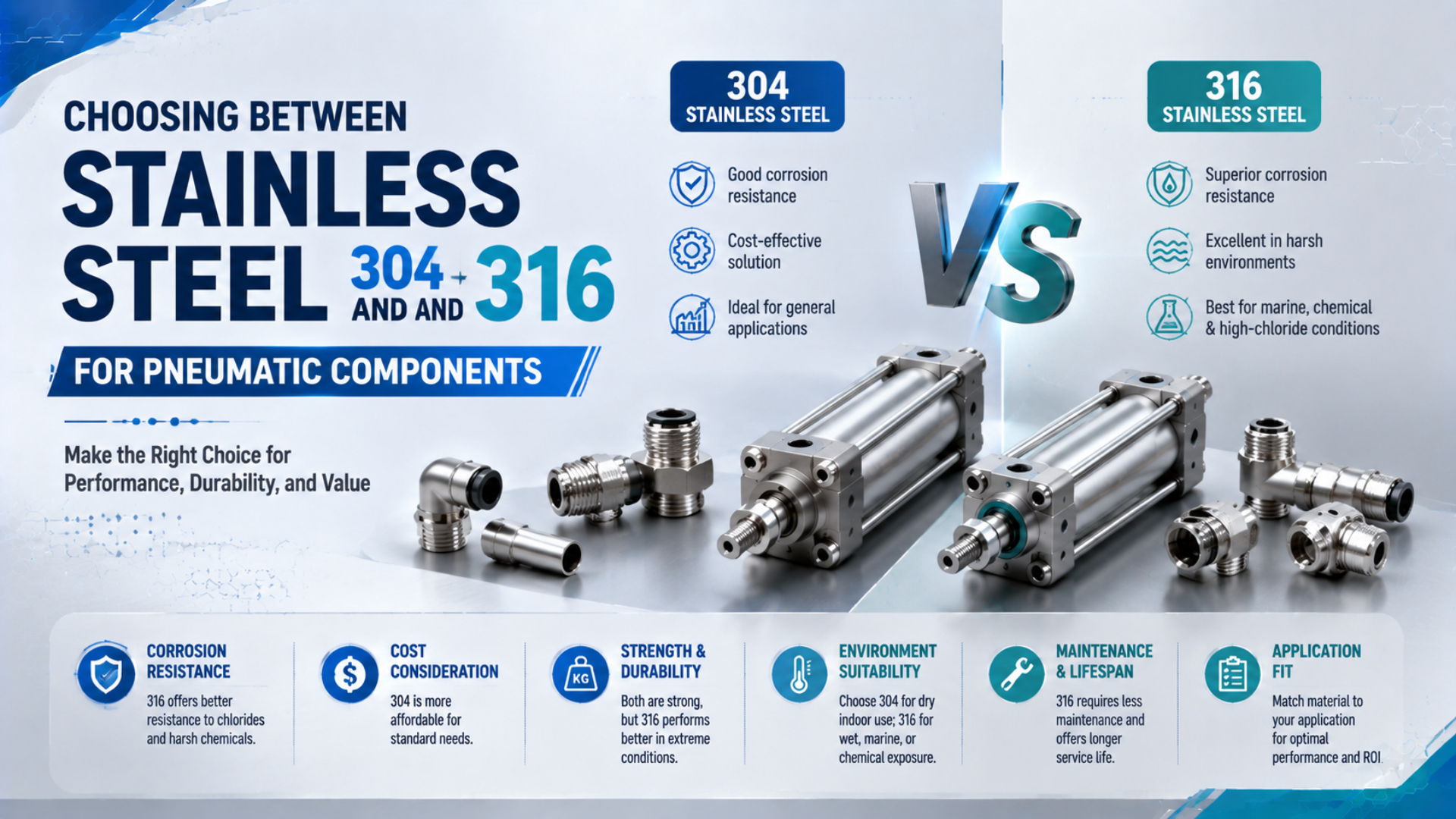
Choosing Between Stainless Steel 304 and 316 for Pneumatic ComponentsChoose stainless steel 304 or 316 pneumatic components using 2.1% molybdenum context, chloride exposure, cleaning chemistry, MTRs, and PMI checks in service.→
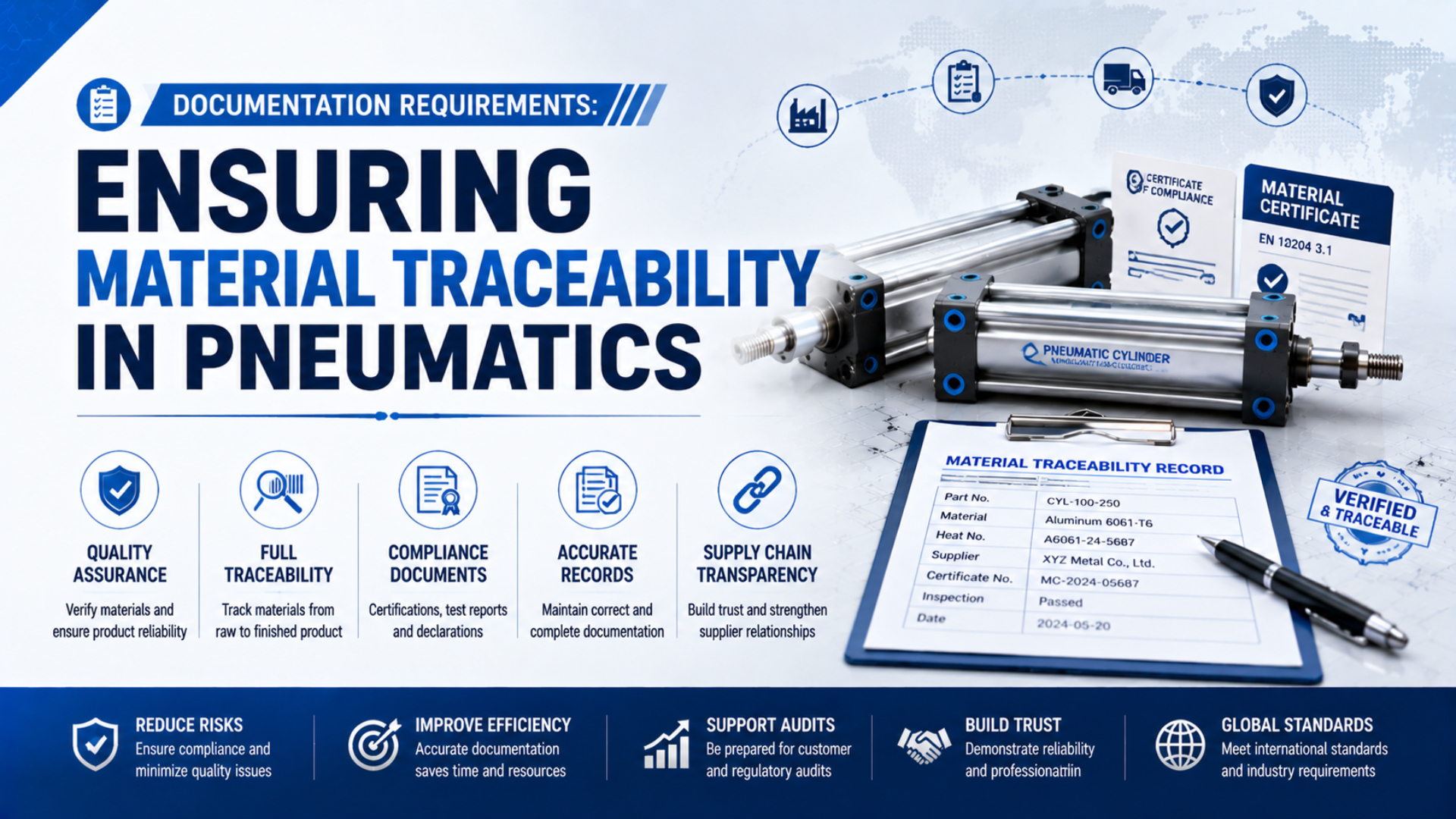
Documentation Requirements: Ensuring Material Traceability in PneumaticsBuild pneumatic material traceability with 4 identity levels, linked evidence, supplier audits, retention rules, and ISO 9001 and FDA scope checks for buyers.→
How to Protect Pneumatic Cylinders from Corrosion in Harsh Washdown EnvironmentsProtect washdown cylinders using 21 CFR 117.40, 304L/316L PRE data, drainage, compatible seals, ingress evidence, and corrosion inspections for field use.→
Temperature Extremes: Sourcing Cylinders for Freezers and FoundriesA practical RFQ and qualification guide for sourcing pneumatic cylinders that must work in freezers, near furnaces, or through repeated temperature cycles.→
Understanding Thread Types: A Complete Guide to BSP, NPT, G, and R ThreadsCompare NPT, G, R, Rc, and Rp pneumatic threads using 55° and 60° profiles, sealing locations, field measurements, pairing rules, and precise RFQ callouts.→
Verifying Supplier Certifications: ISO Standards for Pneumatic ManufacturersVerify pneumatic supplier ISO certificates through 6 checks covering identity, site, status, accreditation, scope, and product evidence before approval.→
Evaluating Factory Capabilities: What to Look for in a Cylinder ManufacturerEvaluate a cylinder manufacturer with a 7-step audit covering machining evidence, QMS scope, test records, traceability, capacity, samples, and delivery.→
Inner Band Fatigue: Analysis of Steel Strip Failure in Rodless CylindersDiagnose rodless cylinder inner band fatigue using Parker's 5-size RC inspection criteria, bending-strain screening, damage morphology, and repair decisions.→
Guide Rail Parallelism: Tolerance Stack-Up in Rodless Cylinder MountingBuild a datum-based rodless cylinder alignment budget using model limits, worst-case and RSS methods, angular error, torque checks, and 3-position verification.→
Root Cause Analysis of Piston Rod Fracture: Bending vs. Tensile FailureDiagnose piston rod fracture by separating bending, axial load, fatigue, and final overload with a 3-stage evidence-preserving root cause analysis workflow.→
Re-greasing Intervals: Calculating Lubricant Film Breakdown in Rodless SlidesCalculate rodless-slide exposure from cycles and travel, then validate it: Festo DGC-8 specifies 3,000 km or 3 years, not one universal interval for service.→
Pneumatic Hammering: Causes and Structural Damage AssessmentDiagnose pneumatic hammering after cylinder end-of-stroke impact, trace structural damage, apply OSHA 1910.147 isolation, and set evidence-based repair gates.→
Contamination Analysis: Identifying Particle Origins in Cylinder FailureTrace pneumatic-cylinder particle origins through 4 evidence groups: sampling location, morphology, composition and timing, with ISO-based air checks.→
Thread Stripping Mechanics in Aluminum Cylinder PortsLearn why aluminum cylinder ports strip, why fixed NPT torque tables fail, and how 2-3 turns from finger tight guide safer assembly and repair decisions.→
Correlating Cycle Count with Seal Lip Wear RateCorrelate seal lip wear with cycle count using 2sN sliding distance, non-contact profile scans, controlled conditions, interval slopes, and confidence limits.→
Understanding Creep Deformation in Polymer Cylinder End-StopsLearn how sustained load, temperature, moisture, impact, and test method change polymer cylinder end-stop creep, using ISO 899 and 1,000-hour grade data.→
Cryogenic Pneumatics: Material Selection for -40°C OperationAt -40°C, qualify the exact seal, grease, metal, sensor, tubing, and valve package; NIST places true cryogenic service below about -153°C before release.→
Cleanroom Class Calculations: Particle Generation Rates from Rod SealsMeasure rod-seal particle generation, subtract background counts, calculate particles per cycle, and compare results with the ISO Class 5 limit of 3,520 particles/m³.→
Food Safety Engineering: Surface Topography and Bacterial Retention in CylindersLearn why Ra alone cannot predict bacterial retention, how 0.8 µm guidance fits hygienic design, and how to validate cylinder cleanability in food equipment.→
Finite Element Analysis (FEA) of Cylinder End Caps Under Shock LoadsLearn how to model pneumatic cylinder end caps under shock loads using transient FEA, convergence checks, fatigue assessment, and physical validation.→
Stress Concentration Factors in Cylinder Thread RootsSeparate 3 cylinder thread load paths, calculate nominal and local stress, distinguish Kt from Kf, and learn when fatigue testing or FEA is required in service.→
Fatigue Life Prediction Models for Aluminum Cylinder BodiesBuild aluminum cylinder-body fatigue estimates from stress range, R-ratio and cycle counts; ISO 19973-3 reports cylinder life in cycles or kilometres.→
Vibration Damping: The Structural Advantages of Polymer vs. Metal End CapsCompare polymer and metal cylinder end caps through damping, stiffness, creep, temperature, noise testing, and a published 10 bar polymer-cover example.→
Hard Chrome vs. Nitriding: Piston Rod Surface Treatment ComparisonCompare hard chrome and nitriding for pneumatic piston rods through 6 controls: substrate, layer, finish, corrosion, distortion, and process compliance.→
Hard Anodizing Depth: How Oxide Layers Protect Aluminum CylindersLearn why 50 µm is a common Type III reference, how coating growth changes cylinder dimensions, and which ISO and ASTM checks validate hard anodizing.→
Stress Corrosion Cracking in Stainless Steel Cylinders in Chloride EnvironmentsStress corrosion cracking needs 3 conditions: susceptible stainless steel, tensile stress, and chloride exposure. Learn inspection and prevention steps.→
Galvanic Corrosion Risks: Pairing Stainless Rods with Aluminum HeadsA Norgren cylinder pairs a 303 stainless rod with aluminum end caps and a bronze bushing. Learn when galvanic corrosion can occur and how to isolate the joint.→
Elastomer Science: The Glass Transition Temperature (Tg) of Cylinder SealsLearn how 4 low-temperature tests, Tg, TR10, Gehman stiffness, and brittleness, differ and how to qualify pneumatic cylinder seals.→
Polyurethane Hydrolysis: Why Seals Crumble in Humid EnvironmentsDiagnose polyurethane seal hydrolysis using 5 evidence groups, material chemistry, ISO test methods, and retained-property data that separates it from wear.→
Material Compatibility: FKM Swell Rates in Synthetic Compressor OilsLearn why FKM swell rates require 7 controlled test inputs, how ASTM D471 measures volume change, and how to qualify synthetic compressor oils reliably.→
Ceramic Coatings for Cylinder Rods in Abrasive Mining ApplicationsOerlikon’s Metco 5241 HVOF coating is over 98% dense. Learn how to specify carbide-coated cylinder rods for abrasion, corrosion, seals, and mining service.→
Die-Cast vs. Extruded Aluminum: Metallurgical Differences in Cylinder BarrelsCompare die-cast and extruded aluminum cylinder barrels by alloy, temper, defects, bore finish, inspection, and verified pneumatic pressure ratings in service.→
Analyzing Permeation Rates of Gases Through Cylinder Seal MaterialsLearn how Parker's five-input O-ring approximation estimates gas permeation, why film data cannot prove cylinder leakage, and how to specify a valid hold test.→
Wiper Ring Mechanics: Exclusion Efficiency vs. Rod DragLearn how pneumatic wiper rings balance contamination exclusion and rod drag using 2 friction measurements, product limits, inspection evidence, and ISO 6195.→
Lip Profile Optimization: Balancing Sealing Force and FrictionUse a 2019 pneumatic-seal study and matched friction, leakage, wear, surface, and duty tests to validate lip profiles without universal geometry rules.→
Quad-Ring vs. O-Ring: Cross-Sectional Dynamics in Reciprocating MotionCompare a four-lip X-ring with a circular O-ring in reciprocating service, covering twist risk, groove compatibility, friction, materials, and validation.→
Leakage Pathways: Micro-Analysis of Scratched Cylinder BoresLearn when cylinder-bore scratches become leak paths, how to isolate competing faults, inspect damage, quantify leakage, and choose repair or replacement.→
The Physics of Extrusion Gaps: Preventing Seal Failure at High PressuresCalculate radial extrusion gap, use 2 backup rings for reversing-pressure O-rings, account for heat and wear, and diagnose pneumatic seal nibbling correctly.→
Failure Analysis: Understanding Galvanic Corrosion Between Cylinder ComponentsFour conditions create a galvanic cell: dissimilar materials, electrical contact, a shared electrolyte, and potential difference. Diagnose cylinder failures.→
Thermal Imaging Analysis: Heat Generation in High-Cycle Cylinder SealsUse a 6-step thermal imaging workflow to diagnose high-cycle seal heat, correct emissivity errors, verify hot spots, and set model-specific action limits.→
Pressure Drop Dynamics Across Cylinder Ports and FittingsMeasure pressure drop across cylinder ports and fittings with dynamic gauges, ISO 6358 flow data, and a 0.4 bar example to prevent weak, slow strokes.→
The Role of Surface Finish (Ra vs. Rz) in Cylinder Barrel LongevityCompare Ra and Rz for cylinder barrels using ISO 21920, Parker's 0.2 and 0.4 um seal examples, measurement settings, inspection maps, and practical RFQ checks.→
Grease Aging Mechanisms: Why Cylinder Lubrication Fails Over TimeLearn why ASTM D942 cannot predict cylinder grease life, how four failure paths develop, and what evidence should trigger safe pneumatic cylinder service.→
Tribological Comparison: PTFE vs. Polyurethane Seals in Dry Air ApplicationsCompare PTFE-based and polyurethane pneumatic seals in dry air using 6 operating variables, model-specific limits, and a practical validation plan for buyers.→
The Physics of Seal Lip Geometry: Radiused vs. Sharp Edge DesignsCompare 3 pneumatic sealing functions and learn how lip radius, preload, rod finish, lubrication, and wiper pairing control friction, leakage, and wear.→
Solid Lubricants: MoS2 Coatings for Oil-Free Cylinder OperationNASA tests of 6 MoS2 coatings show why humidity, binder, film thickness, seals, and acceptance testing define oil-free pneumatic cylinder performance.→
Boundary Lubrication Failure: The Root Cause of Scoring in Cylinder RodsDiagnose 5 cylinder rod scoring patterns, separate boundary lubrication from root causes, and verify alignment, debris, lubricant, surfaces, and repair limits.→
The Impact of Anodizing and Surface Treatments on Valve Spool LifeLearn how anodizing changes valve spool clearance, why ISO 10074:2021 limits universal life claims, and which inspections prevent wear, leakage, and sticking.→
A Guide to pneumaitc Valve Port Thread Types (NPT, BSP, G) and Sealing MethodsCompare 3 valve-port thread families: ASME NPT, ISO 7 R/Rc/Rp, and ISO 228 G, with sealing checks for manifolds, adapters, and replacement valves in service.→
The Physics of Pre-Lube Greases and Their Role During Cylinder Break-inLearn how compatible pre-lube grease can cut seal installation friction by up to 60%, prevent dry starts, and guide pneumatic cylinder rebuild checks.→
A Guide to Specifying Cylinder Piston Rod End Thread TypesSpecify cylinder rod end threads with ASME and ISO classes, supplier drawings, and a drawing-ready checklist that prevents costly interface mismatches.→
Failure Analysis: Fatigue Failure in Cylinder Tie Rods and MountsDiagnose cylinder tie-rod and mount fatigue with NASA's 3-stage fracture model, pressure-cycle stress reconstruction, NDT limits, and corrective actions.→
A Deep Dive into the Material Science of Cylinder Piston SealsLearn how 3 ASTM D395 compression-set methods, compound chemistry, swelling, friction, and groove geometry govern pneumatic piston-seal leakage and wear.→
The Impact of Port Geometry on Cylinder Fill and Exhaust TimesLearn why 2x port area cannot promise 2x flow, and how ISO 6358 conductance, chamber demand, and dynamic pressure tests set cylinder timing.→
Does Chrome or Nitride Rod Finish Really Double Your Pneumatic Seal Life?Learn why chrome or nitriding cannot guarantee 2x seal life and how to specify rod Ra, Rz, Rmax, Rmr, hardness, integrity, and cycle tests.→
How Does Cylinder Barrel Honing Impact Performance and Seal Life in Modern Pneumatic Systems?Cylinder barrel honing guide using Parker Ra 0.2-0.4 um limits, ISO 21920 measurement rules, inspection steps, seal-life evidence, and repair decisions.→
How Does End Cap Design Impact Cylinder Strength and Mounting Integrity?Learn how pneumatic cylinder end cap design contains pressure, transfers mounting loads, and why ISO 15552's 32-320 mm scope does not rate strength alone.→
How Does Temperature Affect Cylinder Seal Performance and Material Selection?Learn how low, high, and cycling temperatures change pneumatic cylinder seals and how to select NBR, HNBR, FKM, EPDM, PUR, or PTFE safely.→
How Can You Prevent Costly Barrel Scoring and Piston Damage in Pneumatic Cylinders?Prevent barrel scoring and piston damage using ISO 8573-1's 3 contaminant groups, damage-pattern diagnosis, cushion checks, and documented restart testing.→
How Do Tie Rod Design and Torque Specifications Determine Cylinder Longevity?Learn how tie-rod preload, friction, and model-specific torque affect pneumatic cylinder life, using a 7-step rebuild and acceptance workflow for repairs.→
How Do Dynamic vs. Static Cylinder Seals Impact Performance and Reliability?Compare 4 cylinder sealing interfaces by motion, friction, leakage, wear, groove fit, and failure evidence before specifying a pneumatic seal kit.→
Which Cylinder Port Thread Types Deliver the Most Reliable Connections?Compare NPT's 1:16 taper with ISO 7 R threads, ISO 228 G ports, and M5 seals to identify cylinder ports and prevent mismatched fittings.→
How Does Air Lubrication Impact the Performance of Different Cylinder Seal Materials?Learn how airline oil affects NBR, polyurethane, FKM, and PTFE cylinder seals, with a 5-step approval process for safe lubrication changes and maintenance.→
Which Cylinder Construction Method Delivers Better Performance for Your Application?Compare profile and tie-rod cylinders using ISO 15552's 10 bar scope, matched 63 mm force data, service access, envelope, sensors, and retrofit checks.→
What Materials and Functions Make Piston Wear Rings Critical for Rodless Cylinder Performance?Learn how piston wear rings carry side load, protect seals and bores, compare 4 material families, and define 8 replacement checks for rodless cylinders.→
Which Actuator Seal Material Will Survive Your Chemical Environment Without Costly Failures?Use a 7-input actuator seal review covering chemical, concentration, temperature, exposure, motion, lubricant, and validation before approving a compound.→
How Do You Select FDA-Compliant Actuators That Meet Strict Food Safety Standards Without Compromising Performance?Select FDA-compliant actuators using 21 CFR 117.40, exact material declarations, food-contact evidence, washdown limits, and loaded performance tests.→
How Can You Accurately Measure and Eliminate Rotational Backlash to Achieve Precision Positioning in Pneumatic Actuators?Measure rotational backlash with a dial indicator or output encoder, separate clearance from compliance, and choose verifiable fixes for pneumatic actuators.→
How Can Custom Gripper Finger Design Transform Your Complex Parts Handling Challenges?Design custom gripper fingers using SMC's 10-to-20-times load guidance, contact geometry, jaw moments, materials, tolerances, and validation tests.→
How Can You Eliminate Costly Pneumatic Leaks Through Proper Push-in Fitting Installation?Stop push-in fitting leaks on 3-16 mm tube with ISO 14743-aligned selection, square cuts, full insertion, pull checks, support, safe testing, and diagnosis.→
Why Are Stainless Steel Pneumatic Fittings Essential for Your Critical Industrial Applications?Select stainless steel pneumatic fittings using ISO 14743, 304/316L material checks, tube compatibility, environment limits, and installation evidence.→
How Do You Match the Perfect Pneumatic Fitting to Your Specific Hose Type for Maximum System Performance?Match pneumatic fittings to hose and tubing using ISO 14743's 3-16 mm scope, exact OD, material, pressure, temperature, installation checks, and safe use.→
The Benefits of Aluminum Alloy Cylinders in Modern AutomationAluminum can weigh up to 65% less than steel, but cylinder speed and air use still depend on moving mass, bore, pressure, seals, and duty cycle in automation.→
A Guide to Cylinder Stroke Length Tolerances and Their ImpactRead cylinder stroke length tolerances correctly. Parker lists +0.3/+2.0 mm up to 500 mm; learn how to specify, measure, and verify actual cylinder travel.→
What Causes Internal Leakage in Pneumatic Cylinders and How Can You Fix It?Diagnose pneumatic cylinder internal leakage using Parker seal limits, SMC's 10 cm3/min example, safe isolation tests, and repair criteria.→
Low-Friction Cylinders: Enhancing Precision in Medical Device ManufacturingSelect low-friction cylinders for medical device manufacturing using SMC's 0.5 mm/s CQ2X range, cleanroom checks, force margins, and validation tests.→
From Spec to Install: The Lifecycle of a Custom Pneumatic CylinderFollow a custom pneumatic cylinder from specification and drawing approval through manufacturing, FAT, installation, commissioning, and documentation.→
Stainless Steel Cylinders: A Guide for Washdown Environments in Food ProductionSpecify stainless steel cylinders for food washdown using 21 CFR 117.40, 0.8 µm surface guidance, seal chemistry, drainage, IP tests, and clear RFQ checks.→
High-Temperature Pneumatic Cylinders: What Engineers Need to KnowSelect high-temperature pneumatic cylinders by heat source, seal material, lubrication, air quality, thermal growth, installation, and RFQ data.→
How Do Pneumatic Cylinder Sealing Systems Revolutionize Industrial Automation Reliability?Improve pneumatic cylinder sealing systems with CAGI's 80% silent-leak warning, ISO 8573-1 air quality checks, leak tests, and seal-kit RFQ data.→
What Is NPT National Pipe Thread Standard ASME B1.20.1 and Why Does It Matter for Pneumatic Systems?ASME B1.20.1 defines NPT pipe threads with a 1:16 taper, 60 degree form, and size-specific TPI so pneumatic ports seal without guesswork, rework, or air leaks.→
What Is a Honed Cylinder Tube and Why Is It Critical for Your Pneumatic System Performance?Honed cylinder tube guide using SKF's 0.05-0.2 um bore finish range, ISO 15552's 10 bar context, seal wear, leakage, inspection, and RFQ checks.→