
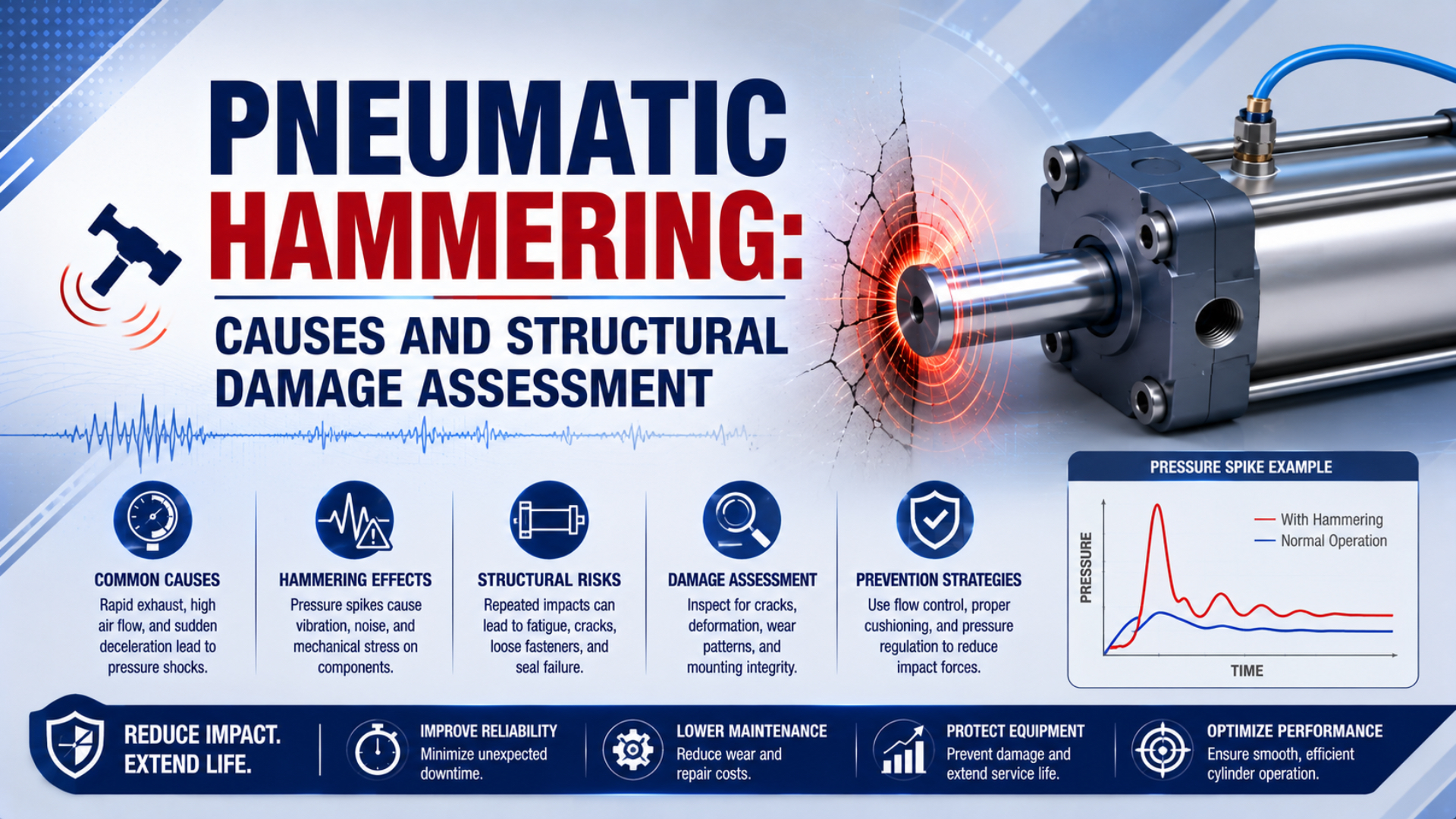
 Pneumatic Hammering: Causes and Structural Damage AssessmentDiagnose pneumatic hammering after cylinder end-of-stroke impact, trace structural damage, apply OSHA 1910.147 isolation, and set evidence-based repair gates.→
Blog Author
Jason Tan
Hello, I'm Jason, a Bepto Pneumatic manufacturing engineer. I help connect drawings, machining tolerance, sealing interfaces, assembly checks, and inspection needs with build-ready pneumatic parts.
Author Reading Path
Articles by Jason Tan
89 articles sorted newest first for readers who want one author's pneumatic selection notes in one place.
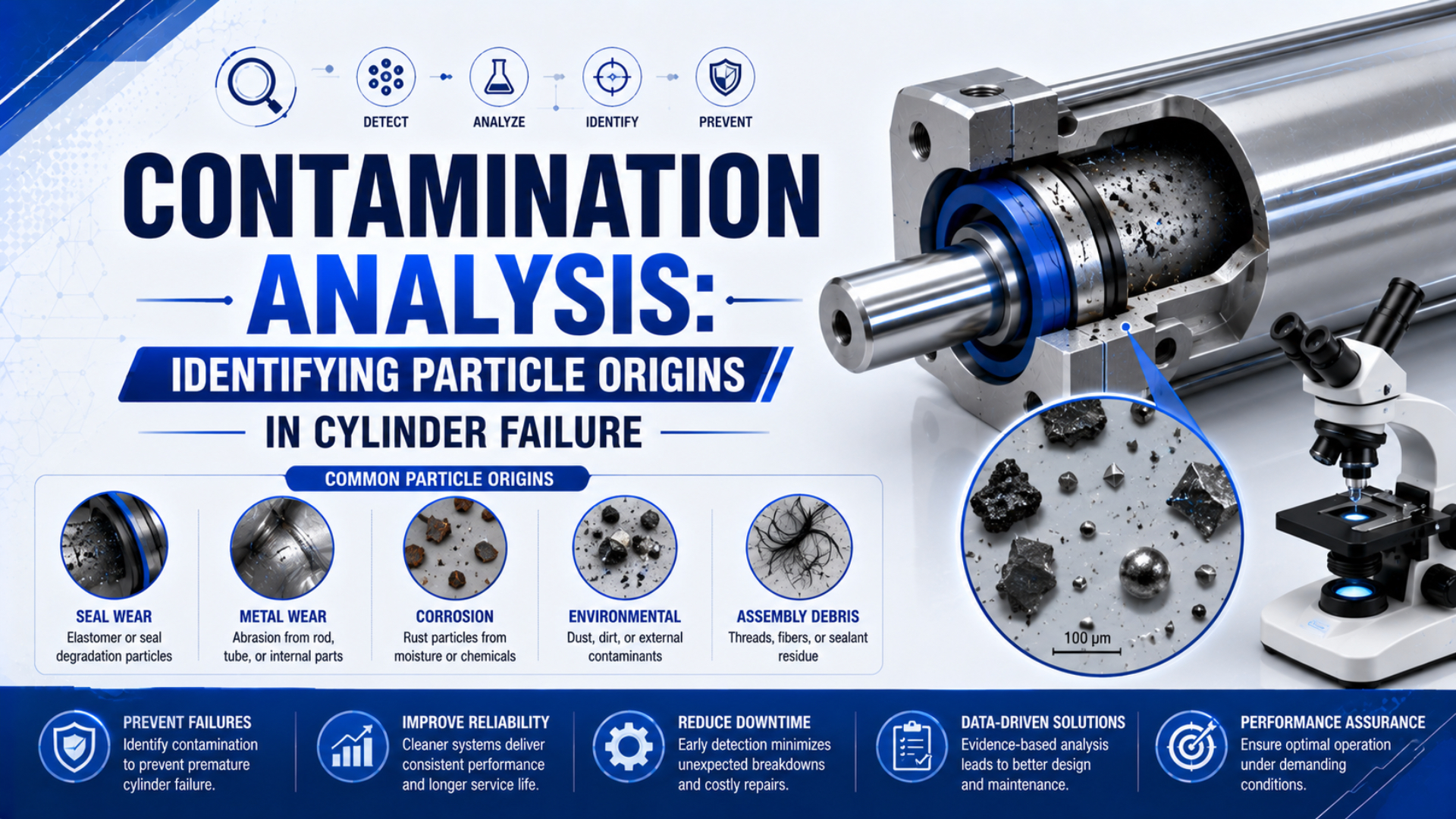 Contamination Analysis: Identifying Particle Origins in Cylinder FailureTrace pneumatic-cylinder particle origins through 4 evidence groups: sampling location, morphology, composition and timing, with ISO-based air checks.→
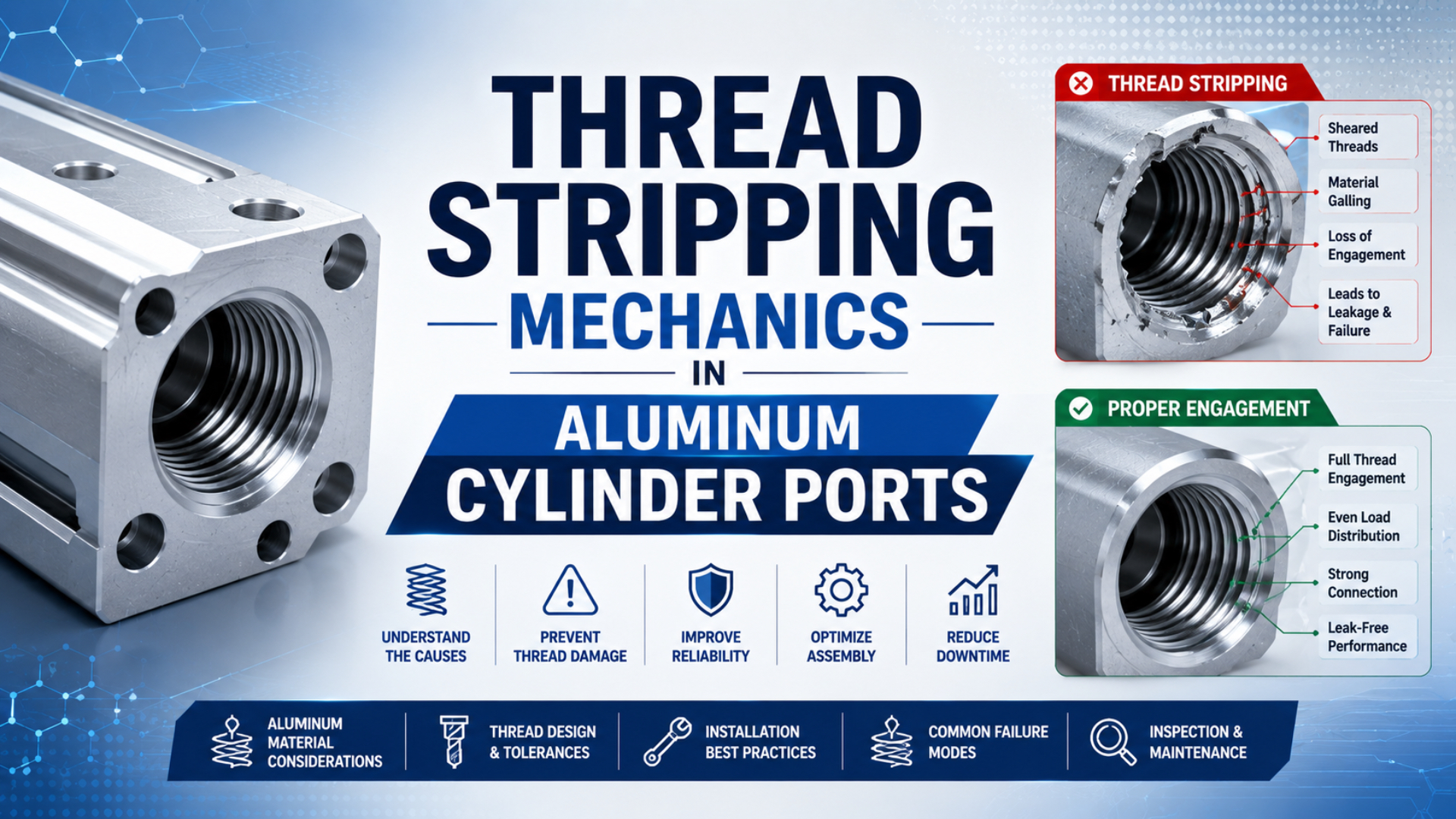 Thread Stripping Mechanics in Aluminum Cylinder PortsLearn why aluminum cylinder ports strip, why fixed NPT torque tables fail, and how 2-3 turns from finger tight guide safer assembly and repair decisions.→
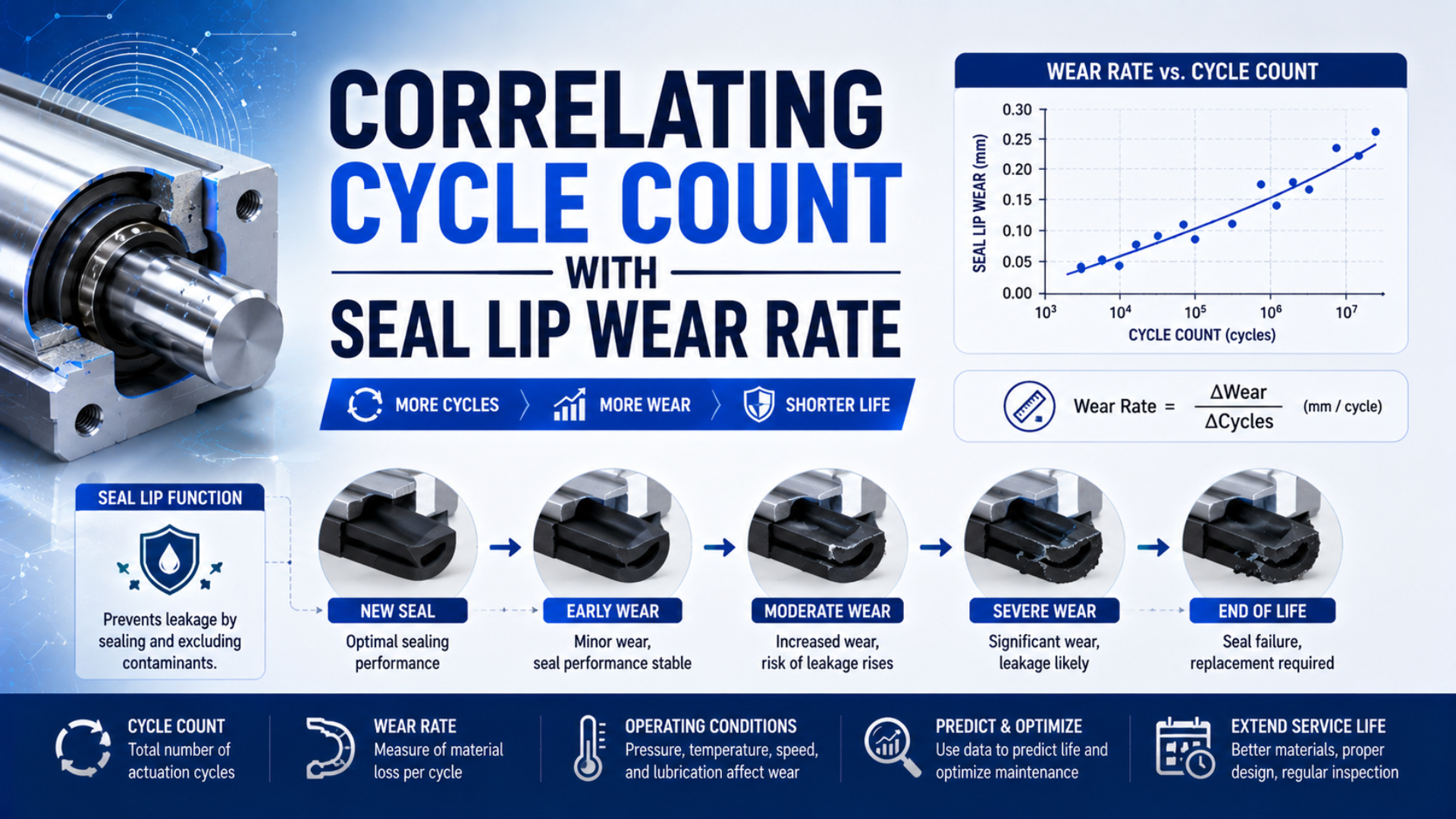 Correlating Cycle Count with Seal Lip Wear RateCorrelate seal lip wear with cycle count using 2sN sliding distance, non-contact profile scans, controlled conditions, interval slopes, and confidence limits.→
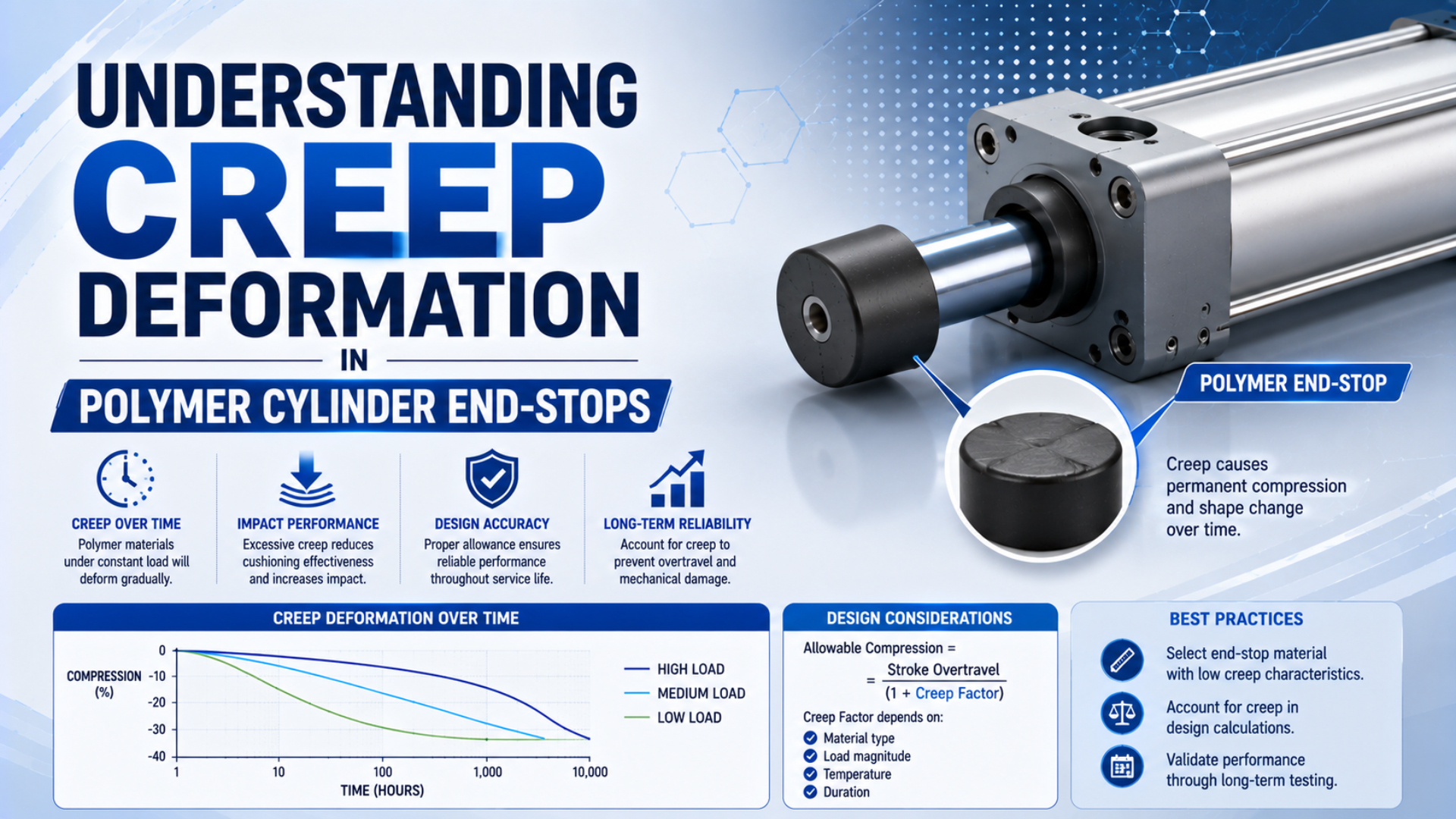 Understanding Creep Deformation in Polymer Cylinder End-StopsLearn how sustained load, temperature, moisture, impact, and test method change polymer cylinder end-stop creep, using ISO 899 and 1,000-hour grade data.→
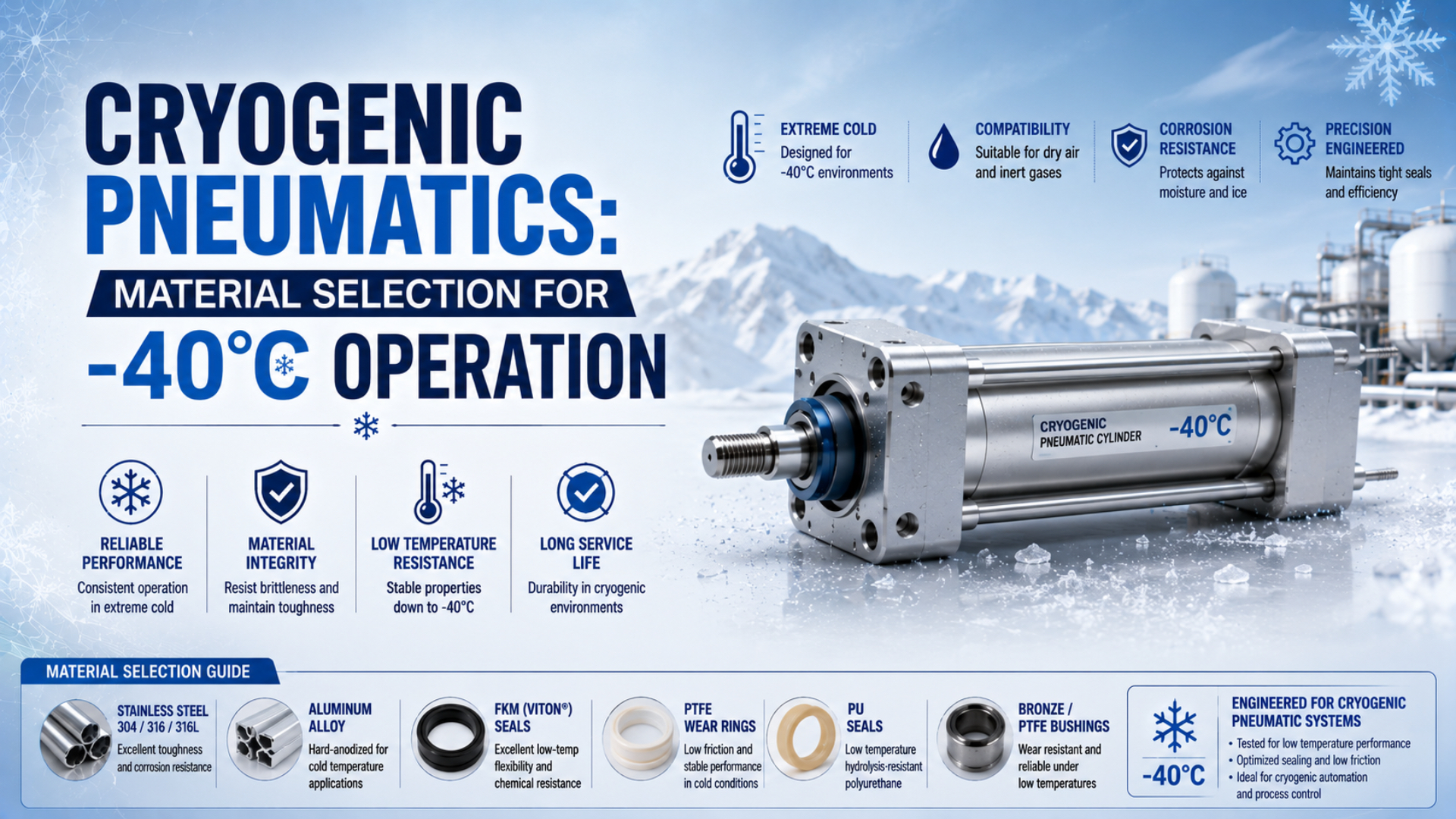 Cryogenic Pneumatics: Material Selection for -40°C OperationAt -40°C, qualify the exact seal, grease, metal, sensor, tubing, and valve package; NIST places true cryogenic service below about -153°C before release.→
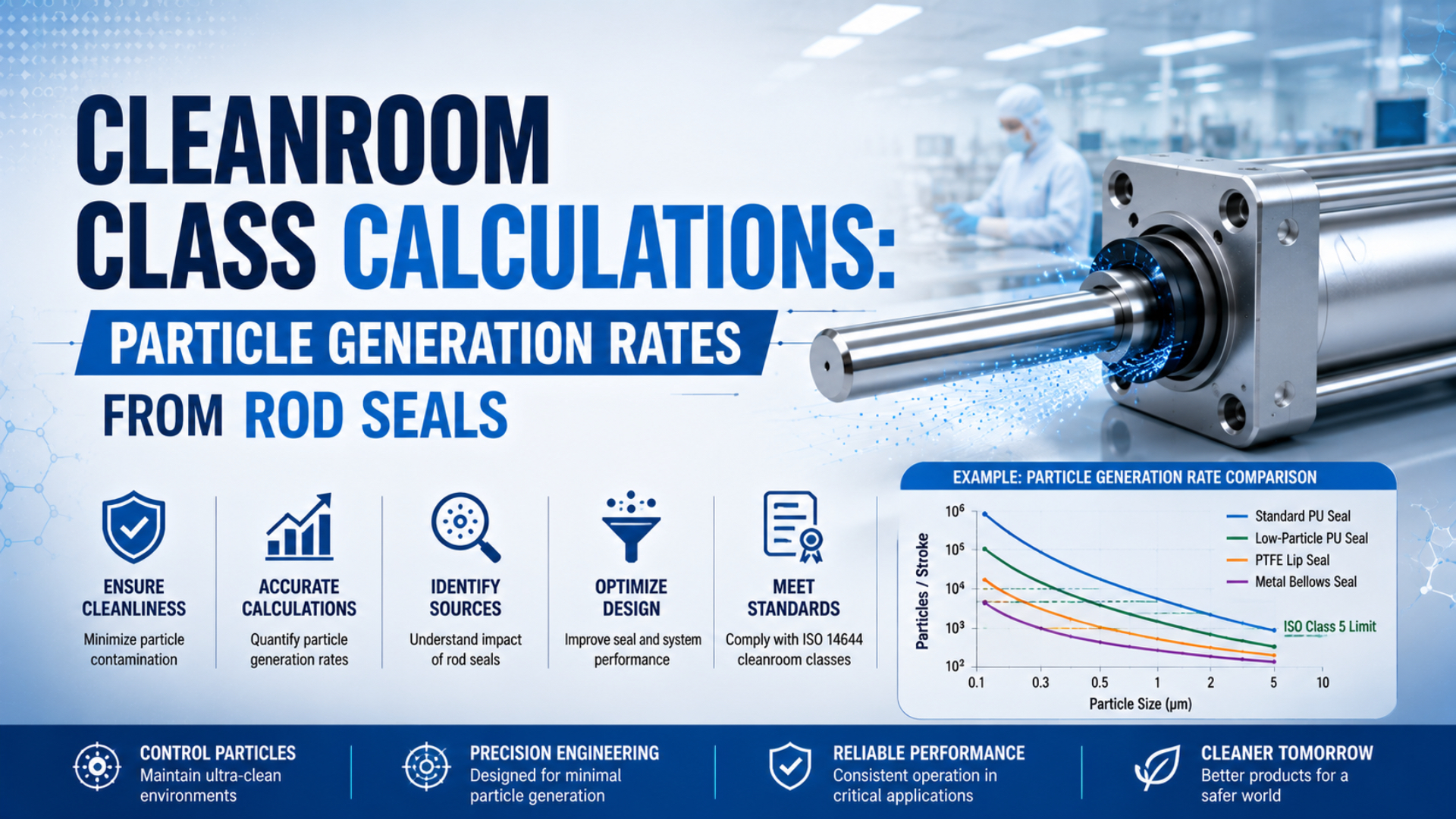 Cleanroom Class Calculations: Particle Generation Rates from Rod SealsMeasure rod-seal particle generation, subtract background counts, calculate particles per cycle, and compare results with the ISO Class 5 limit of 3,520 particles/m³.→
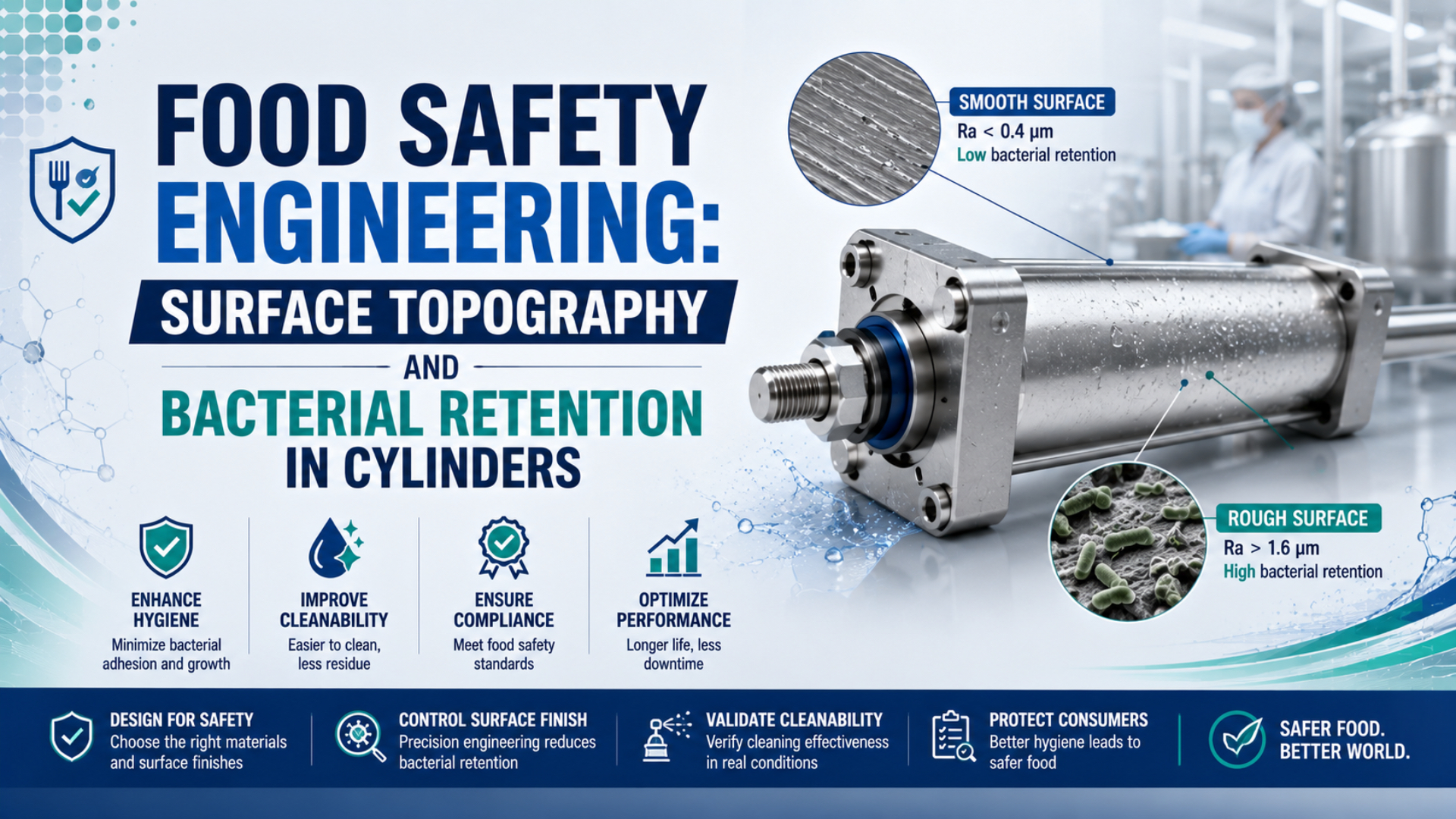 Food Safety Engineering: Surface Topography and Bacterial Retention in CylindersLearn why Ra alone cannot predict bacterial retention, how 0.8 µm guidance fits hygienic design, and how to validate cylinder cleanability in food equipment.→
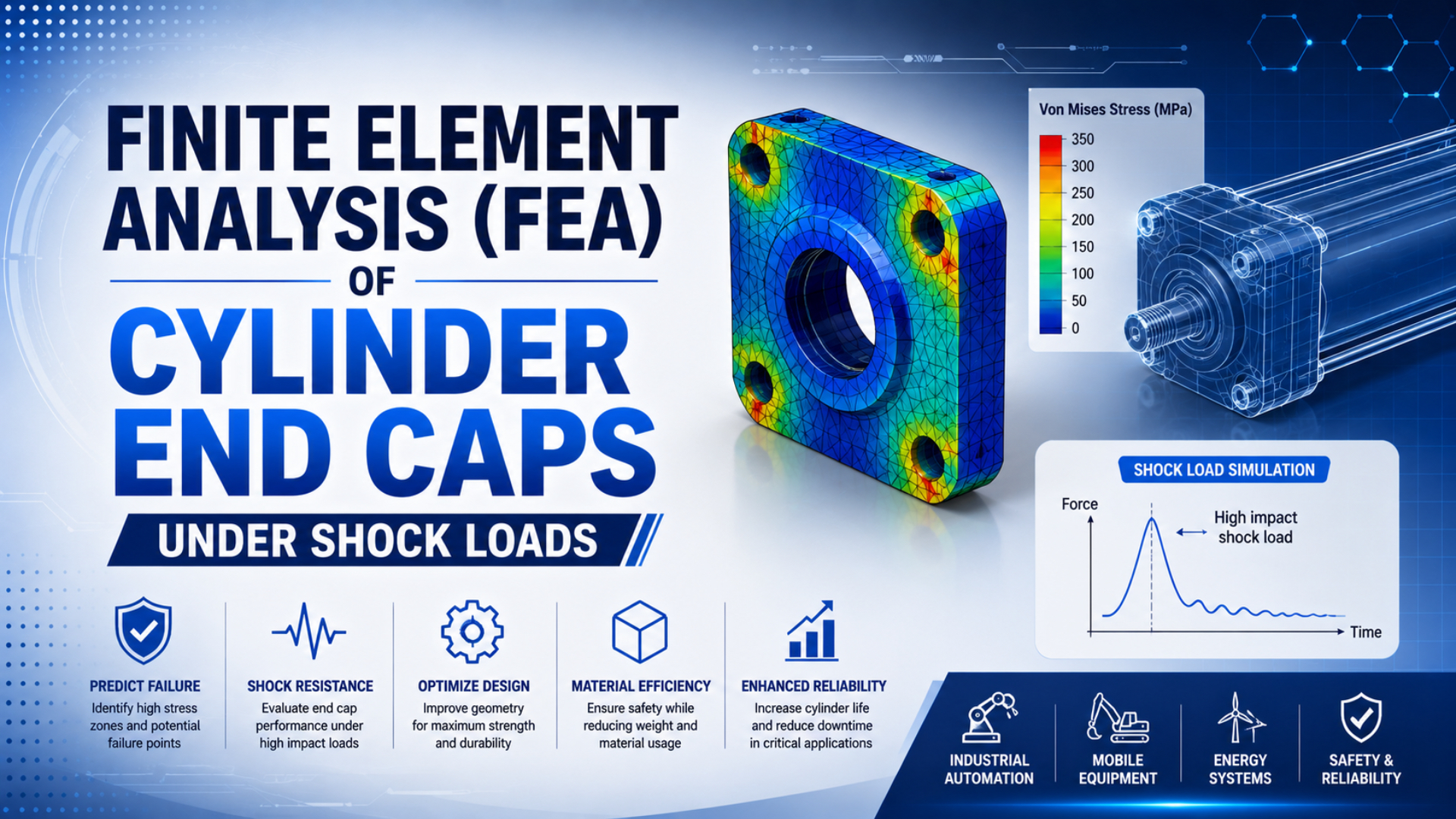 Finite Element Analysis (FEA) of Cylinder End Caps Under Shock LoadsLearn how to model pneumatic cylinder end caps under shock loads using transient FEA, convergence checks, fatigue assessment, and physical validation.→