
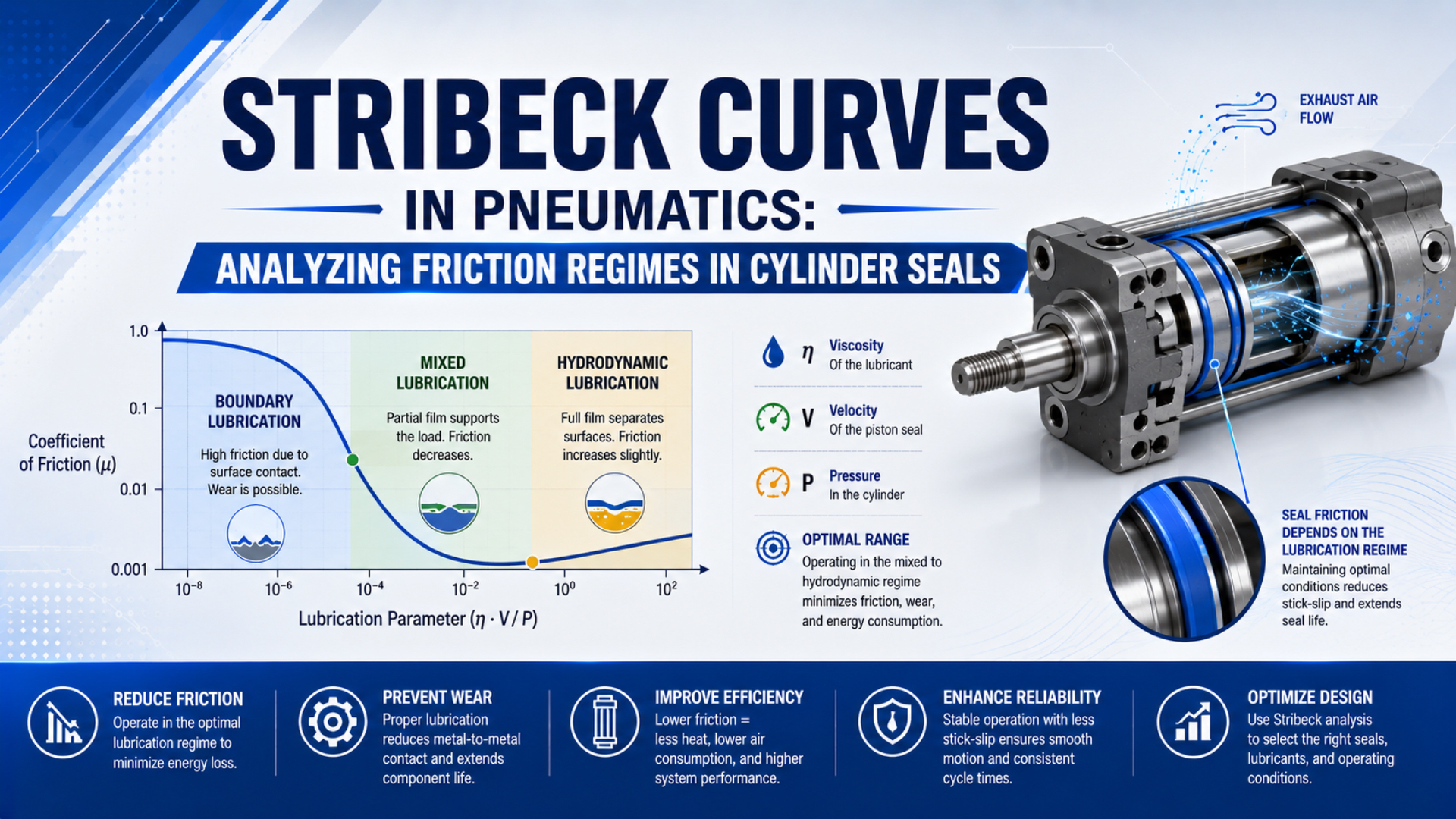
 Stribeck Curves in Pneumatics: Analyzing Friction Regimes in Cylinder SealsLearn how to measure and interpret Stribeck-type friction maps for pneumatic cylinder seals without relying on universal friction coefficients or regime thresholds.→
Blog Author
Jack Chen
Hello, I'm Jack, a Bepto Pneumatic pneumatics engineer. I help review cylinder sizing, rodless replacement details, stroke, guides, mounting, seals, and load direction.
Author Reading Path
Articles by Jack Chen
179 articles sorted newest first for readers who want one author's pneumatic selection notes in one place.
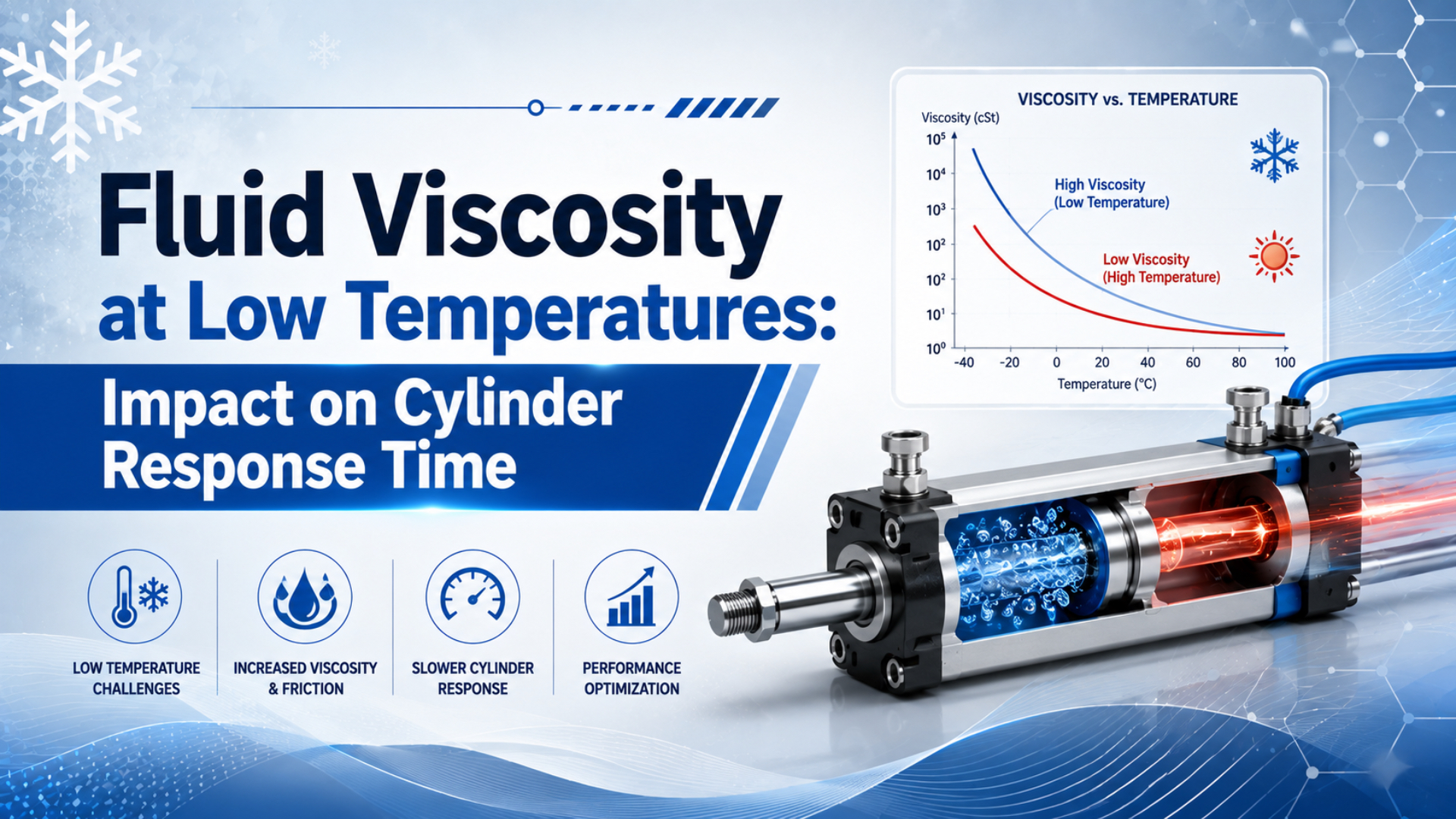 Fluid Viscosity at Low Temperatures: Impact on Cylinder Response TimeLearn why air viscosity falls about 11% from +20°C to -20°C, what really delays cold cylinders, and how to test seals, air, valves, pressure, and motion.→
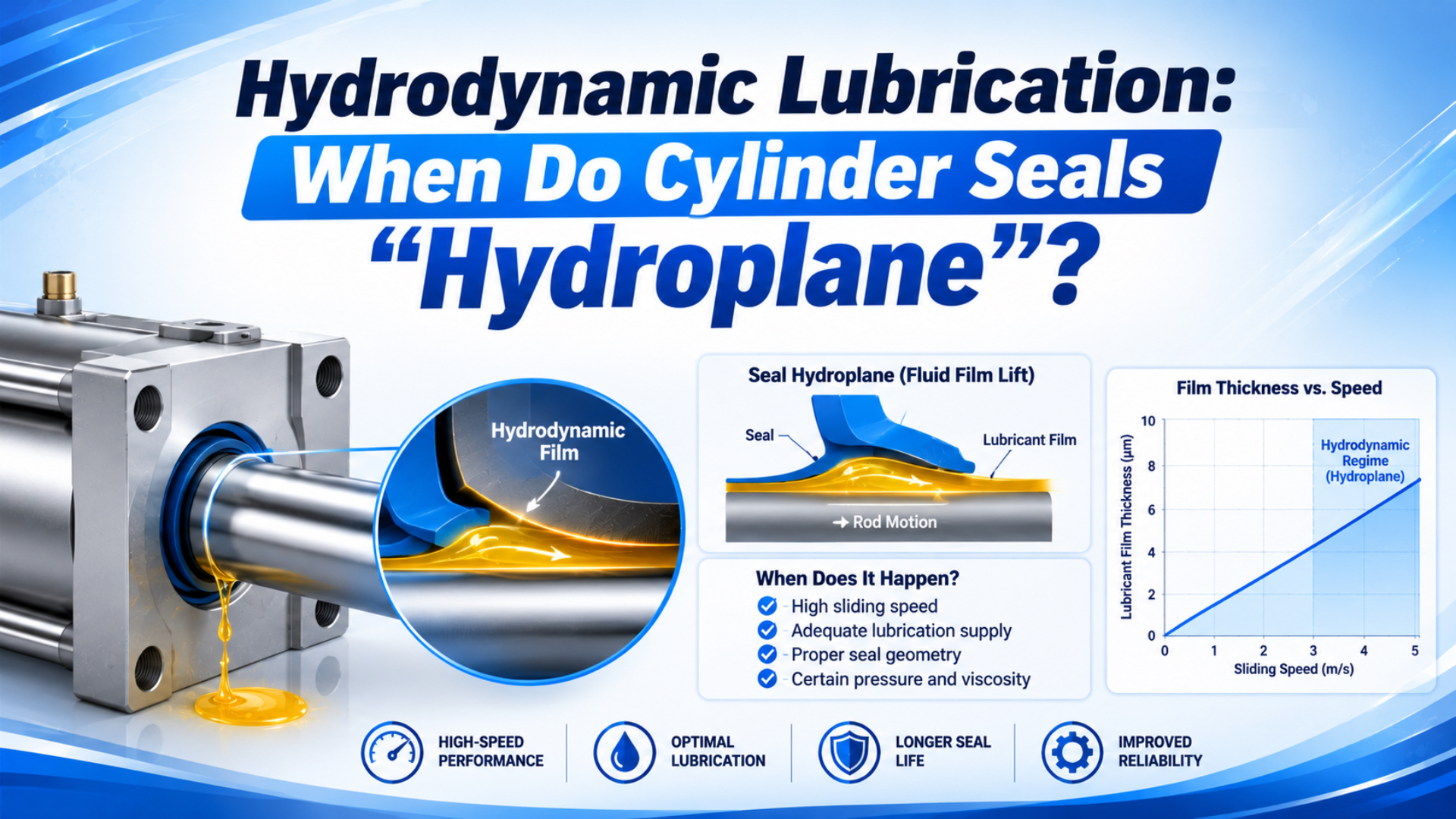 Hydrodynamic Lubrication: When Do Cylinder Seals “Hydroplane”?One pneumatic-cylinder study found piston seals produced about 90% of measured friction; learn why speed alone cannot predict seal hydroplaning reliably.→
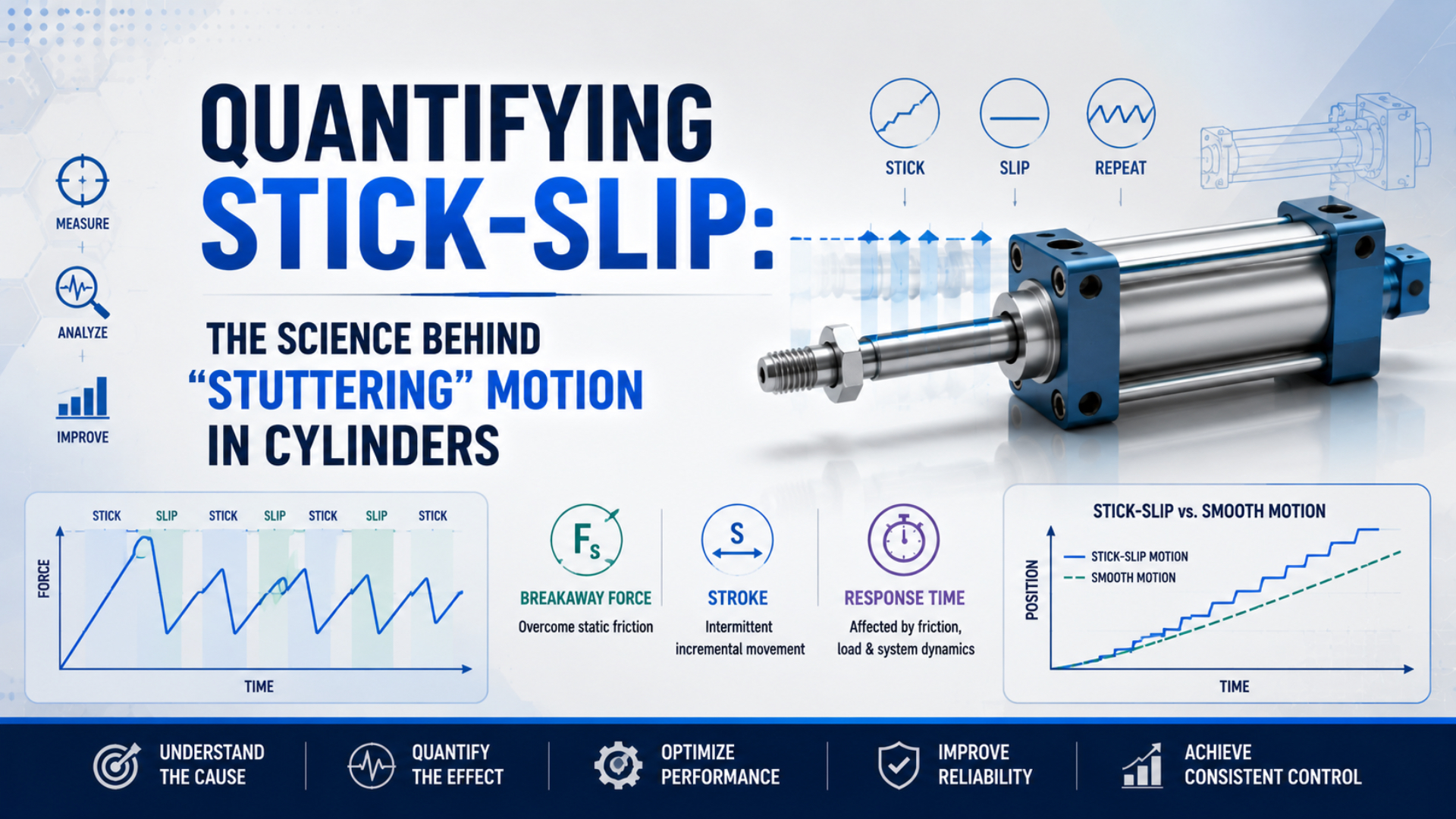 Quantifying Stick-Slip: The Science Behind “Stuttering” Motion in CylindersA 2026 three-cylinder study synchronized position, velocity, and chamber pressure. Learn to quantify stick-slip without a universal SSI threshold.→
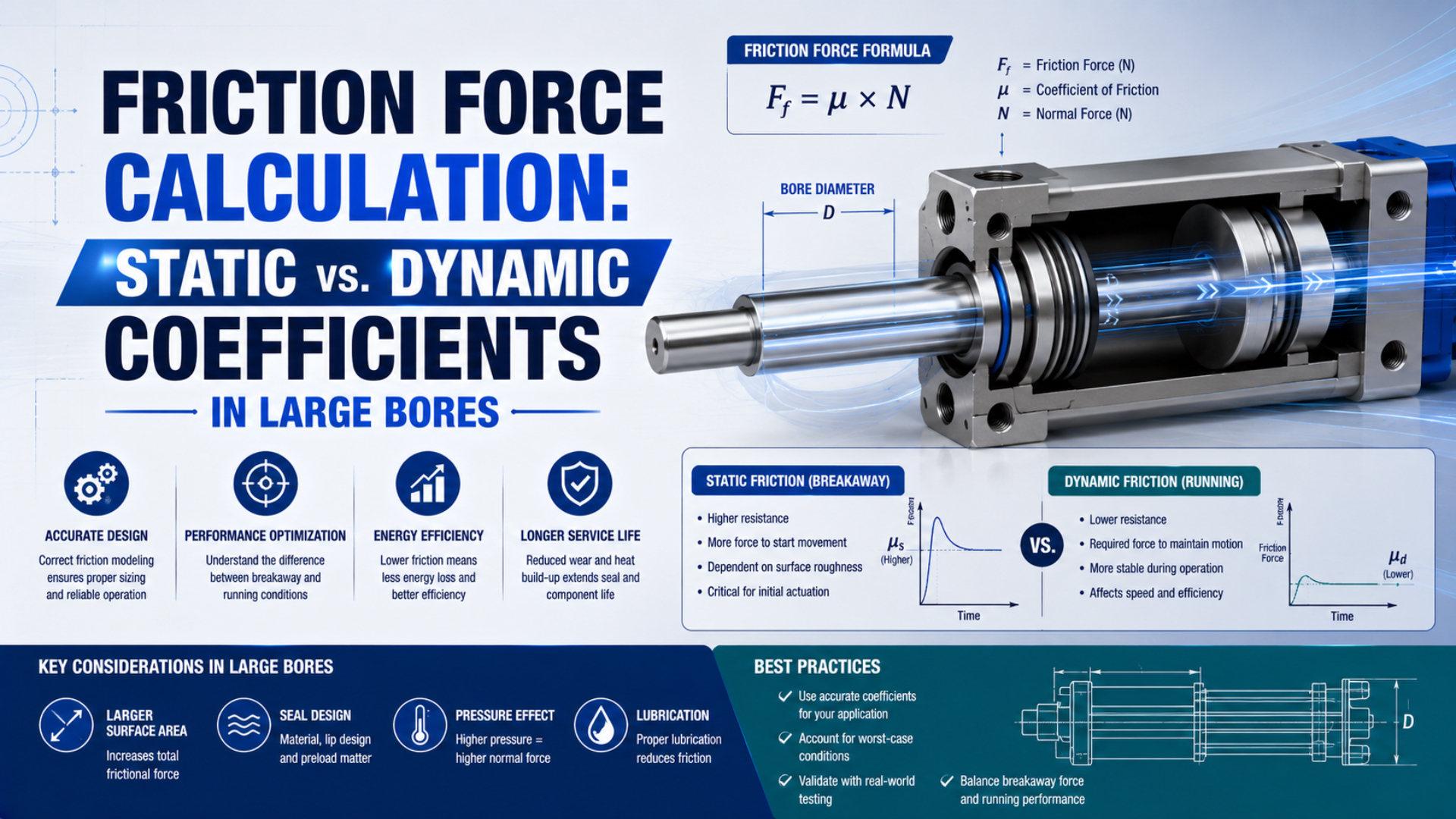 Friction Force Calculation: Static vs. Dynamic Coefficients in Large BoresMeasure static breakaway and dynamic running friction in large-bore pneumatic cylinders using synchronized port pressures, effective piston areas, dwell time, and a defined running window.→
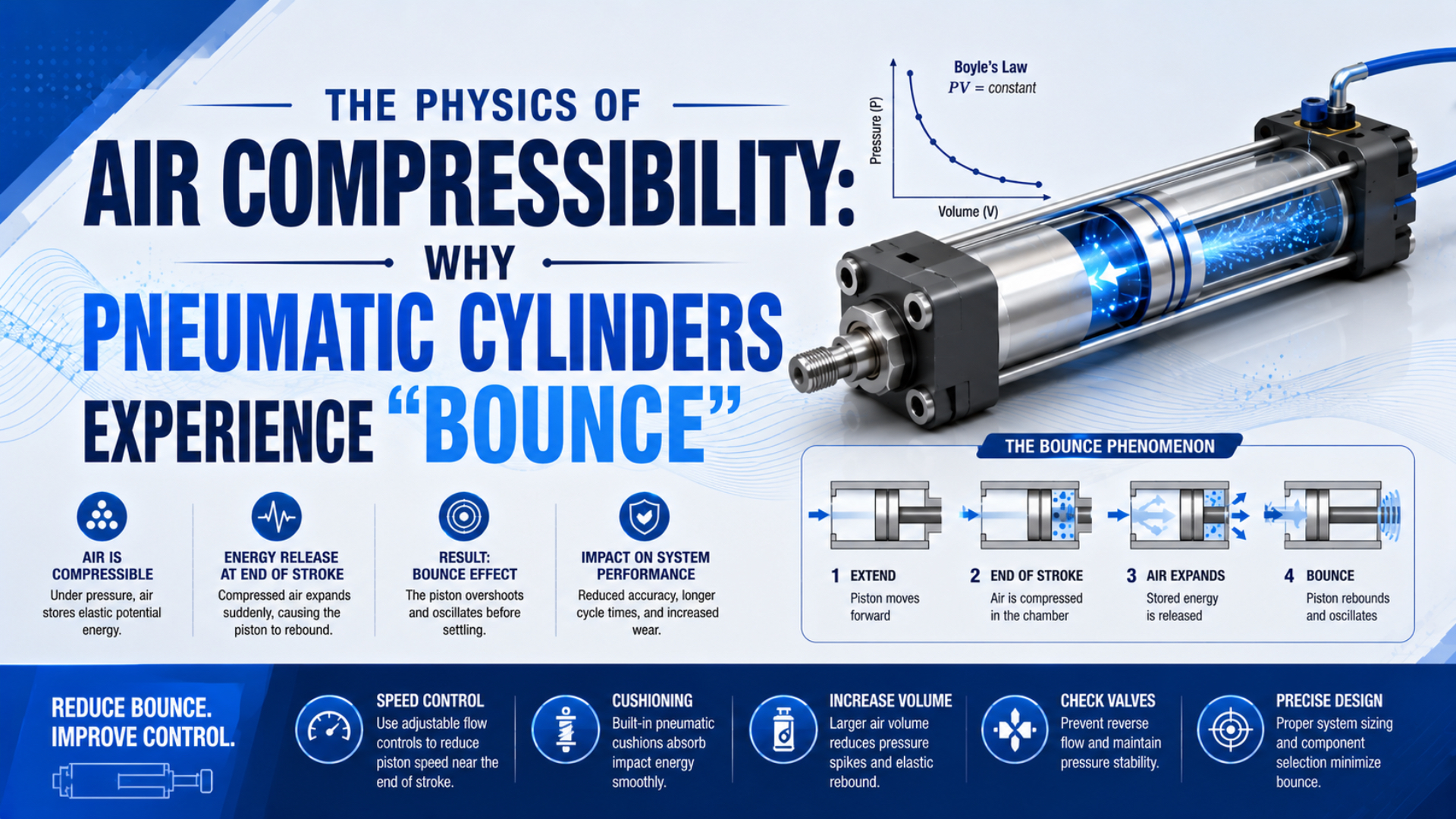 The Physics of Air Compressibility: Why Pneumatic Cylinders Experience “Bounce”Learn why cylinder speed, trapped air, cushioning, friction, and control tuning cause pneumatic cylinder bounce, plus how to diagnose and stop it.→
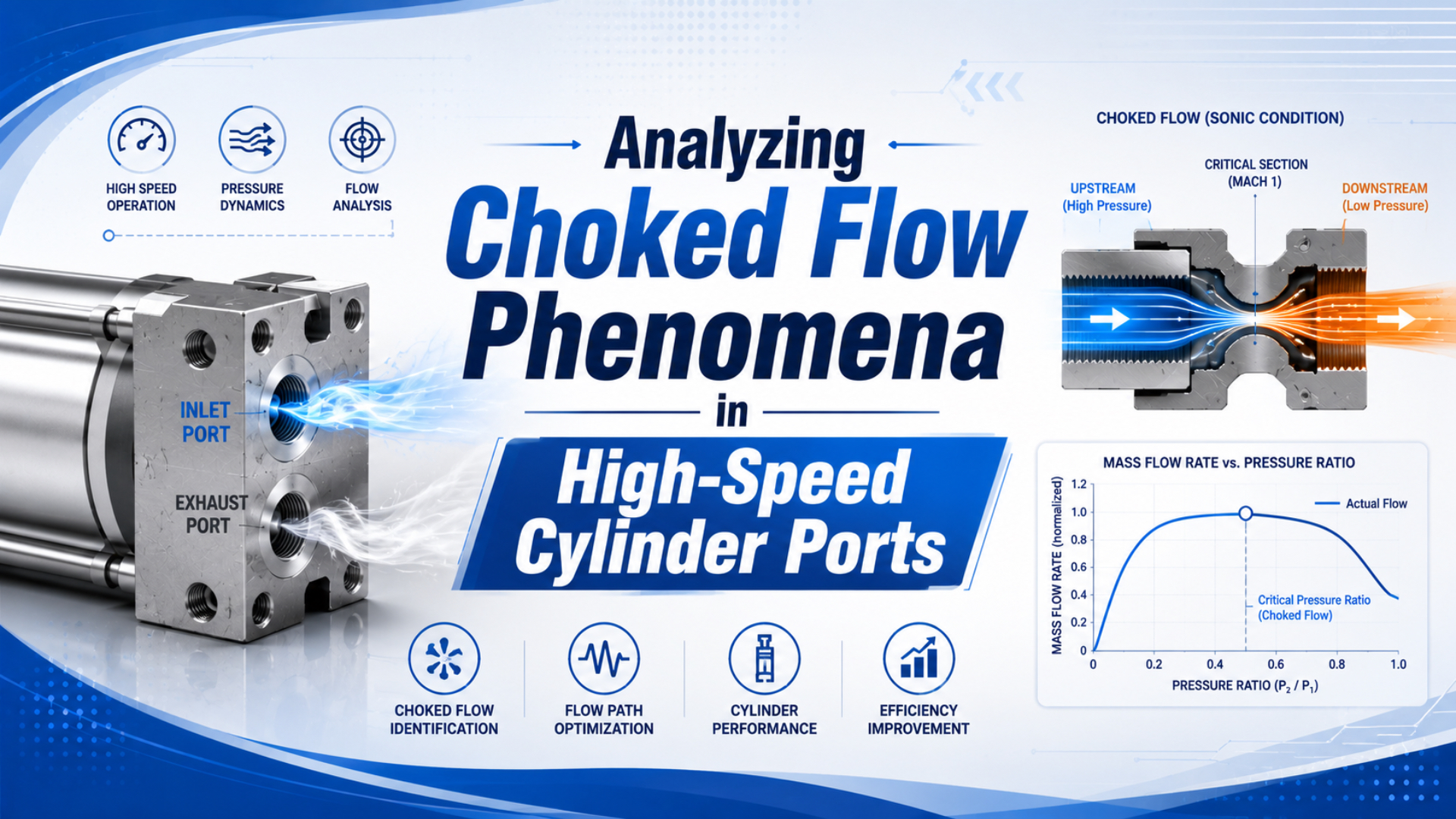 Analyzing Choked Flow Phenomena in High-Speed Cylinder PortsIdeal dry air chokes near p2/p1 = 0.528. Learn to measure cylinder-port pressure, locate restrictions, and verify flow for high-speed strokes.→
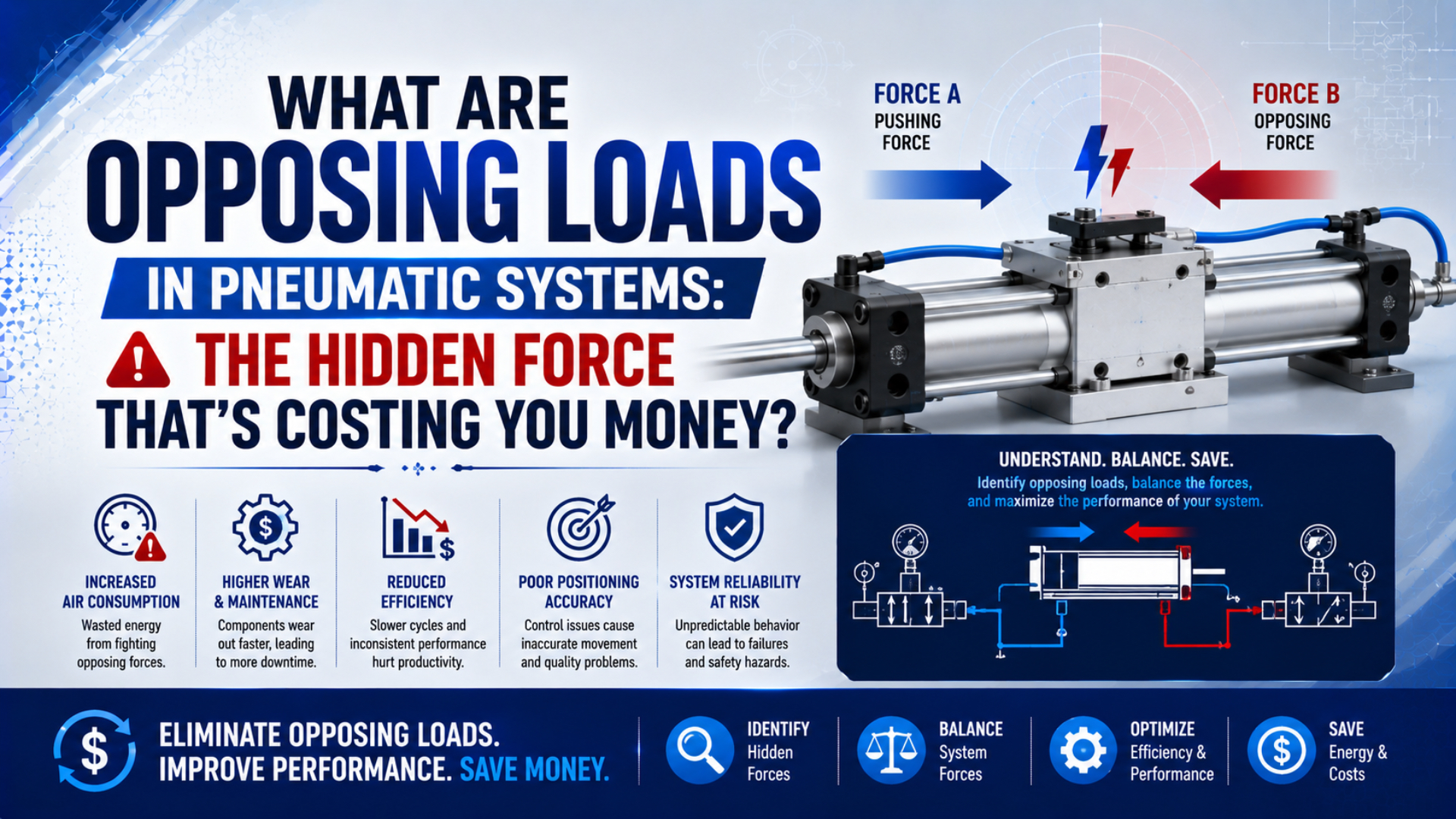 What Are Opposing Loads in Pneumatic Systems: The Hidden Force That’s Costing You Money?Identify opposing loads in pneumatic systems, build a directional force budget, and size cylinder thrust without relying on fixed pressure percentages.→
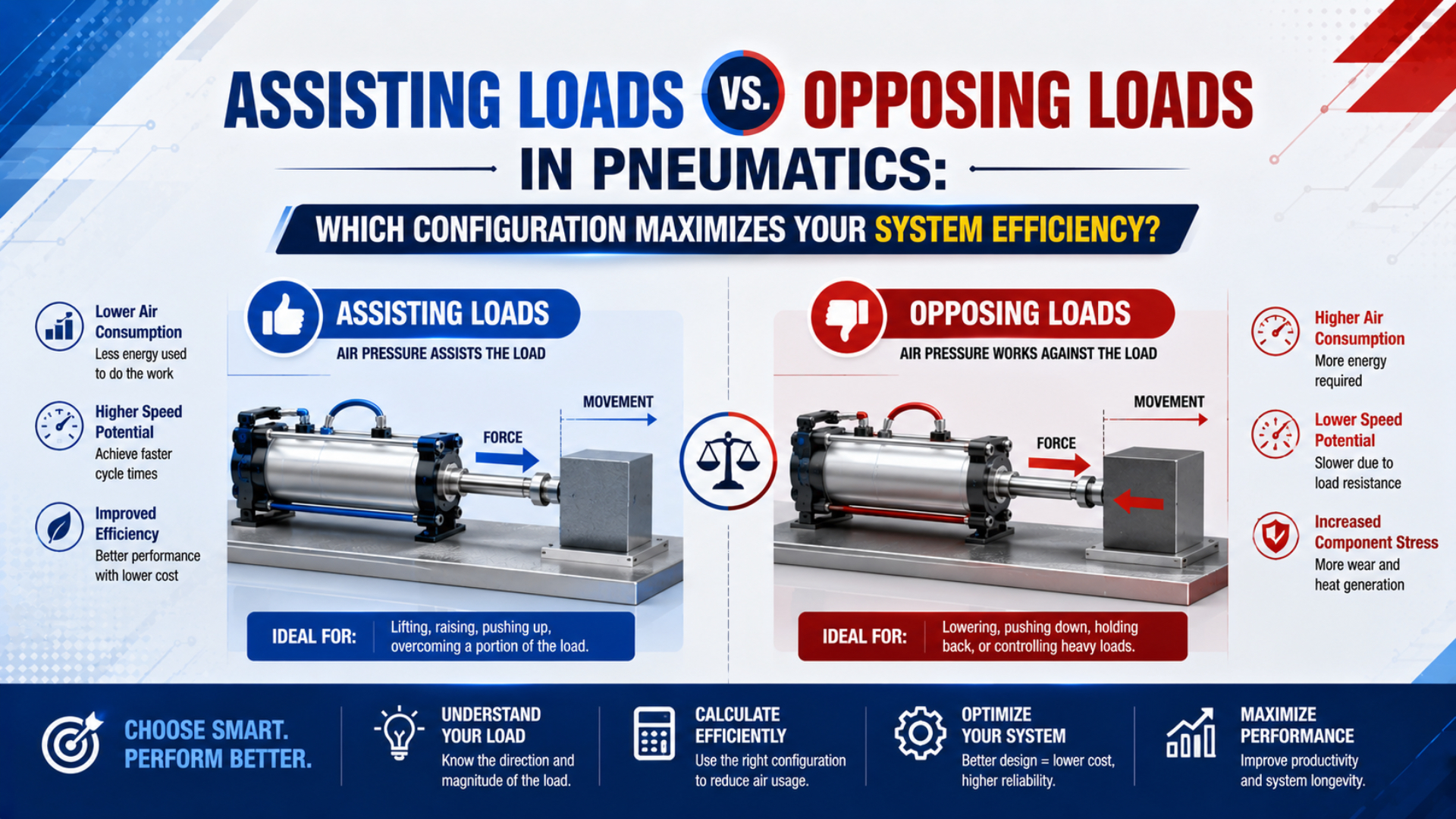 Assisting Loads vs. Opposing Loads in Pneumatics: Which Configuration Maximizes Your System Efficiency?Compare assisting and opposing pneumatic loads using two-chamber force balance, vertical-axis examples, pressure checks, and safe motion-control rules.→