

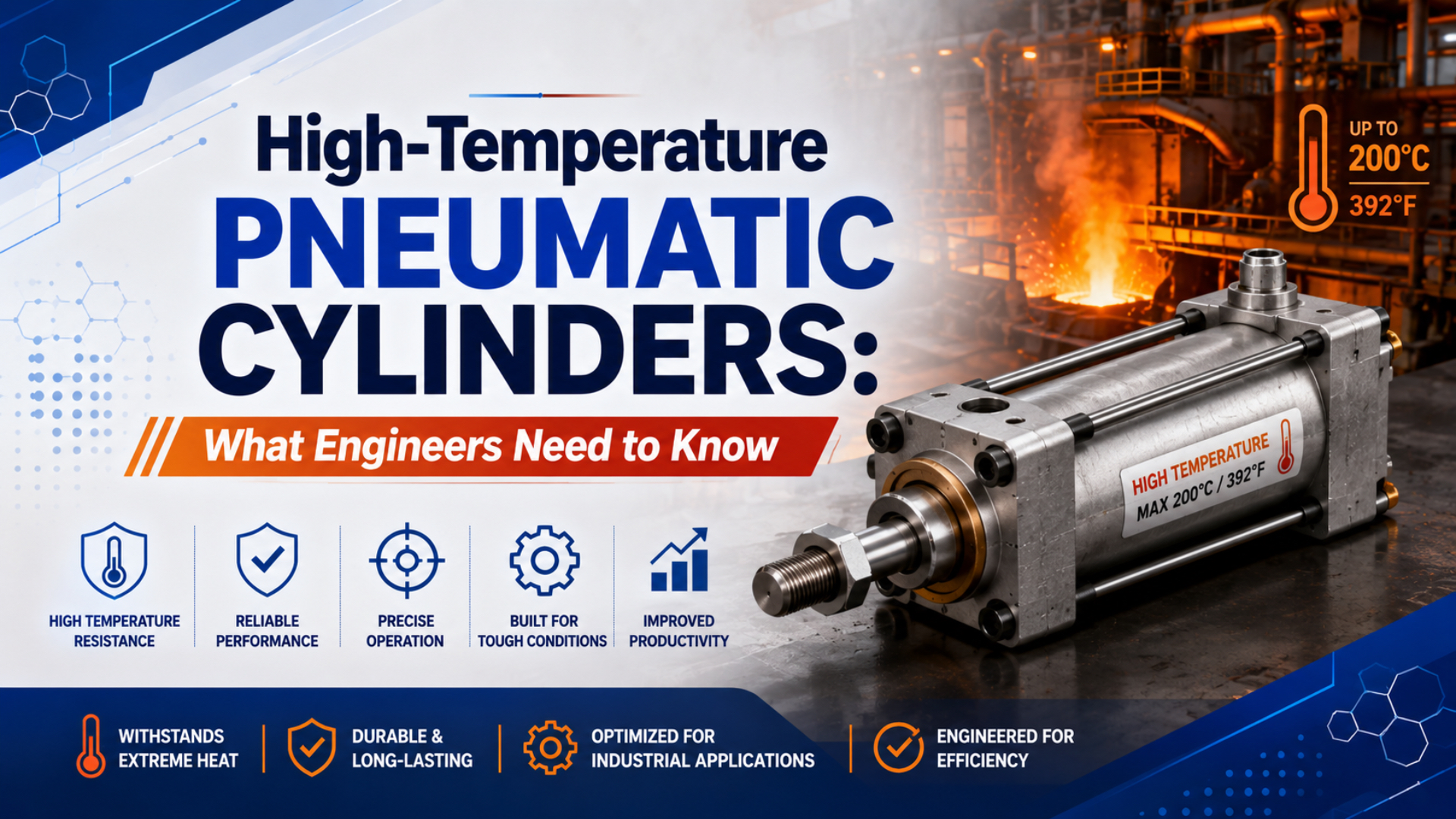
High-temperature pneumatic cylinders are cylinders selected or modified for a hot installed environment, not just cylinders with one high-temperature seal. The real limit is the lowest-rated part in the assembly: dynamic seals, static O-rings, lubricant, magnet, sensor, guide material, grease, coating, fittings, tubing, and mounting hardware.
High-temperature pneumatic cylinder is a pneumatic cylinder assembly selected for measured hot-body service where seals, lubrication, guides, sensors, fittings, and mounting hardware are all checked against the installed heat exposure.
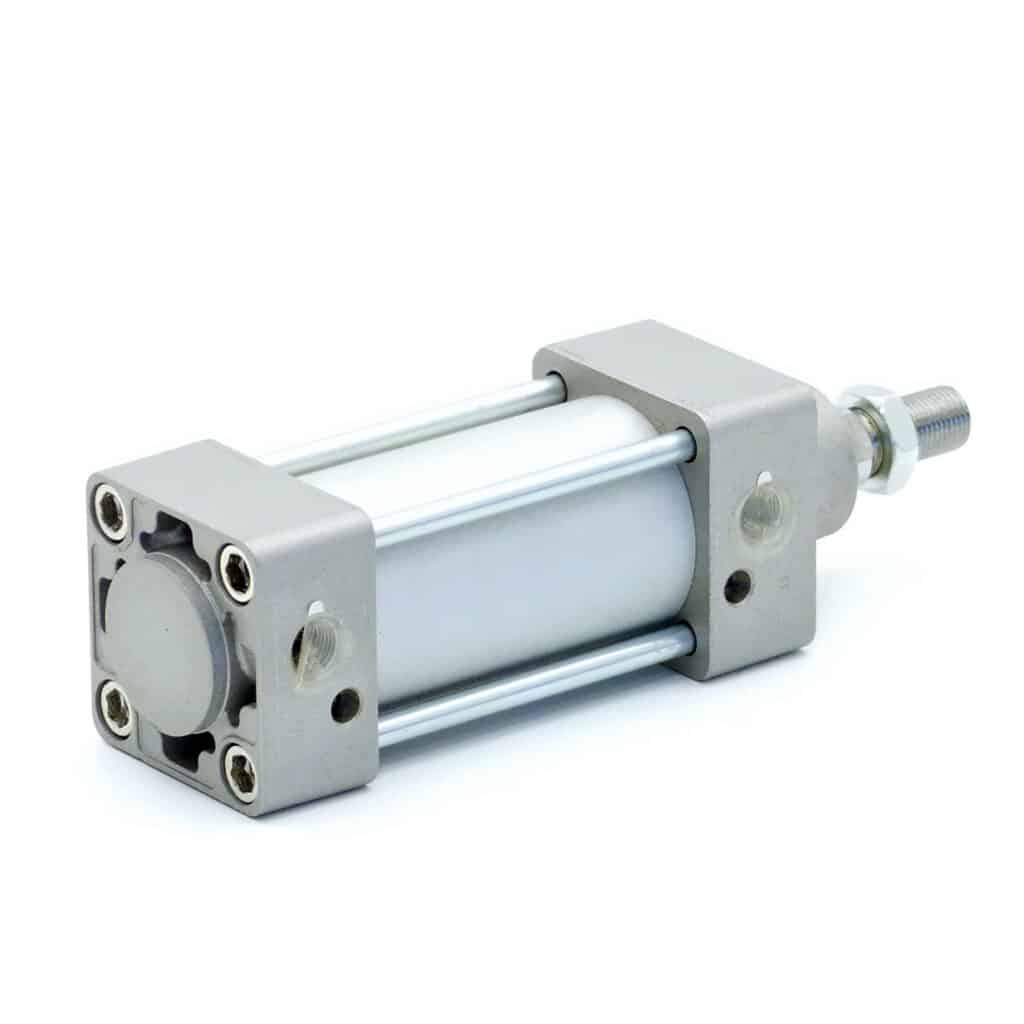
For many standard pneumatic cylinders, the normal catalog temperature range is far below furnace, glass, drying, or hot washdown conditions. Parker’s OSP-P rodless-cylinder catalog, for example, lists an ambient temperature range from -10°C to +80°C, NBR seals with Viton seals as an option, filtered unlubricated compressed air, and permanent grease lubrication (Parker OSP-P catalog, 2026 retrieval). That is a useful baseline: once the installed temperature moves above normal catalog range, the whole actuator package needs review.
The most expensive mistake is asking only for “PTFE seals” or “a 200°C cylinder.” A supplier still needs to know whether 200°C is ambient air, radiant heat from an oven wall, a short cleaning cycle, a part-transfer zone, or a measured cylinder-body temperature during motion.
Key Takeaways
- A high-temperature pneumatic cylinder should be selected by measured cylinder-body temperature, heat source, duty cycle, air quality, seal material, lubricant, sensors, and mounting, not by ambient plant temperature alone.
- Standard pneumatic cylinders often use NBR seals and grease systems intended for ordinary factory temperatures; Parker’s OSP-P data gives -10°C to +80°C as one standard rodless-cylinder example.
- Above normal catalog range, material choice is only one decision. Thermal expansion, side load, rod finish, guide clearance, grease loss, and sensor location can decide service life.
- Do not treat generic PTFE, FKM, PEEK, or FFKM values as a cylinder rating. The finished seal grade, energizer, groove, speed, pressure, and lubricant must match the application.
- For an RFQ, send photos, measured temperatures, stroke, bore, load, speed, cycle rate, nearby radiant heat, cleaning chemicals, air quality target, and failure history.
The practical field rule is simple: if you cannot touch the cylinder body after the machine stabilizes, do not quote the job from a seal material table. Measure the body temperature first, then design the actuator around that number.
What Counts as a High-Temperature Pneumatic Cylinder?
A pneumatic cylinder becomes a high-temperature selection problem when the actuator body, rod, carriage, seals, or accessories operate outside the standard range of the catalog cylinder being considered. The number is not universal because each cylinder family has its own materials, grease, magnet, switch, and sealing system.
ISO 15552 covers a metric series of pneumatic cylinders with detachable mountings, 1,000 kPa or 10 bar maximum rated pressure, and bores from 32 mm to 320 mm (ISO 15552, 2018, confirmed current in 2025). That standard helps with dimensional interchangeability. It does not mean every ISO-size cylinder is automatically suitable for a hot zone.
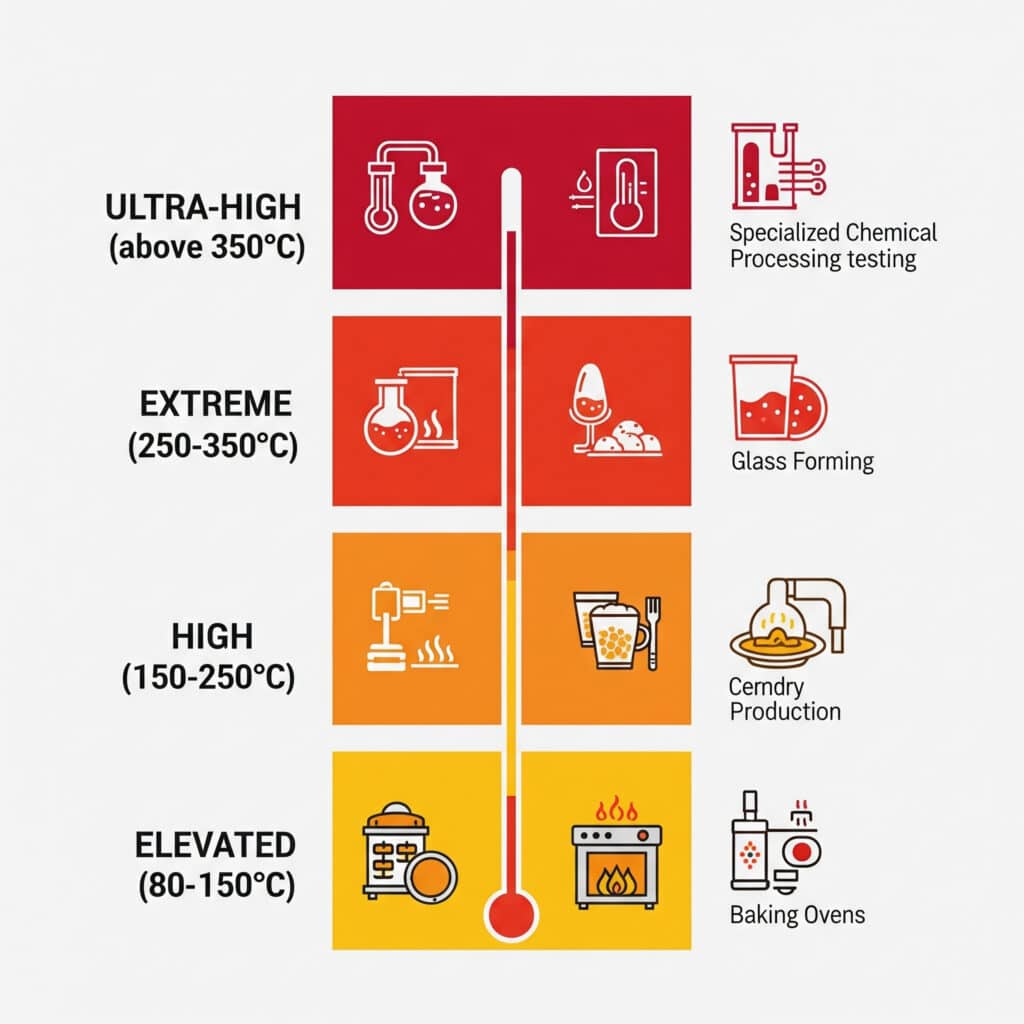
Use the table below as a decision guide, not as a substitute for a supplier rating.
| Installed condition | What it usually means | Selection response |
|---|---|---|
| Within the catalog temperature range | Standard cylinder may be acceptable | Confirm seals, grease, air quality, sensors, and mounting |
| Slightly above normal catalog range | Seal and grease options may be enough | Ask for high-temperature seal option, compatible grease, and switch rating |
| Hot nearby equipment but cooler cylinder body | Heat shielding or distance may solve the issue | Measure body temperature during steady production before changing cylinder type |
| Cylinder body runs hot during every cycle | Whole assembly is exposed | Review seals, guides, lubricant, expansion, fittings, tubing, and sensor location |
| Radiant heat, furnace opening, glass, or hot metal | Body temperature can rise faster than ambient readings suggest | Add shields, reflective barriers, standoff brackets, remote valves, and measured temperature logging |
| Hot washdown or food equipment | Heat combines with water, chemicals, and sanitation rules | Check IP rating, cleanability, corrosion resistance, lubricant control, and air treatment |
For a broader cylinder refresher, read What Is the Basic Concept of a Pneumatic Cylinder?. This article assumes the basic force and motion decision is already valid, then focuses on heat.
Which Temperature Should Engineers Measure?
Measure the temperature the cylinder actually sees. Ambient temperature is useful, but it can hide the real failure mode. A cylinder mounted near a furnace door may see moderate air temperature most of the time and severe radiant heat during a door-open event. A cylinder above a dryer may run hotter than the room because warm air rises around the body. A food washdown cylinder may see short hot-water exposure, chemical exposure, and cooling shock in the same shift.
Cylinder-body temperature is the temperature measured on the actuator surface near the gland, barrel, end cap, carriage, or switch bracket after the machine has reached normal production conditions.
Record at least four values:
- Ambient air temperature around the actuator during steady production.
- Cylinder body temperature at the seal gland, end cap, and barrel or tube.
- Peak temperature during startup, cleaning, door opening, or part-transfer events.
- Cooling rate after the hot event ends.
That last point matters because a seal can survive one hot reading and still fail from repeated thermal cycling. A gland, rod, and tube do not expand at the same rate. If the guide clearance is already tight, the hot cycle can add friction. If the seal lip hardens, the same side load that was acceptable at room temperature can become a leak path.
In our replacement reviews, the useful photo set is usually boring: a temperature gun reading on the gland, one on the tube, one on the bracket, and one on the nearby heat source. Those four photos tell more than a message that says “the area is around 180°C.”
How Do Seal Materials Change the Decision?
Seal material matters, but the seal name alone is not enough. Pneumatic cylinder seals work at moving interfaces. That means heat interacts with friction, dry air, pressure, speed, rod finish, groove support, and lubricant film.
Trelleborg’s public sealing library separates rod seals, piston seals, wipers, scrapers, PTFE piston-seal installation, and PTFE rod-seal installation as different topics (Trelleborg Sealing Solutions, 2026 retrieval). That split is the right way to think about high-temperature cylinders. A static O-ring, a rod seal, a piston seal, a wiper, and a rodless sealing band do not have the same job.
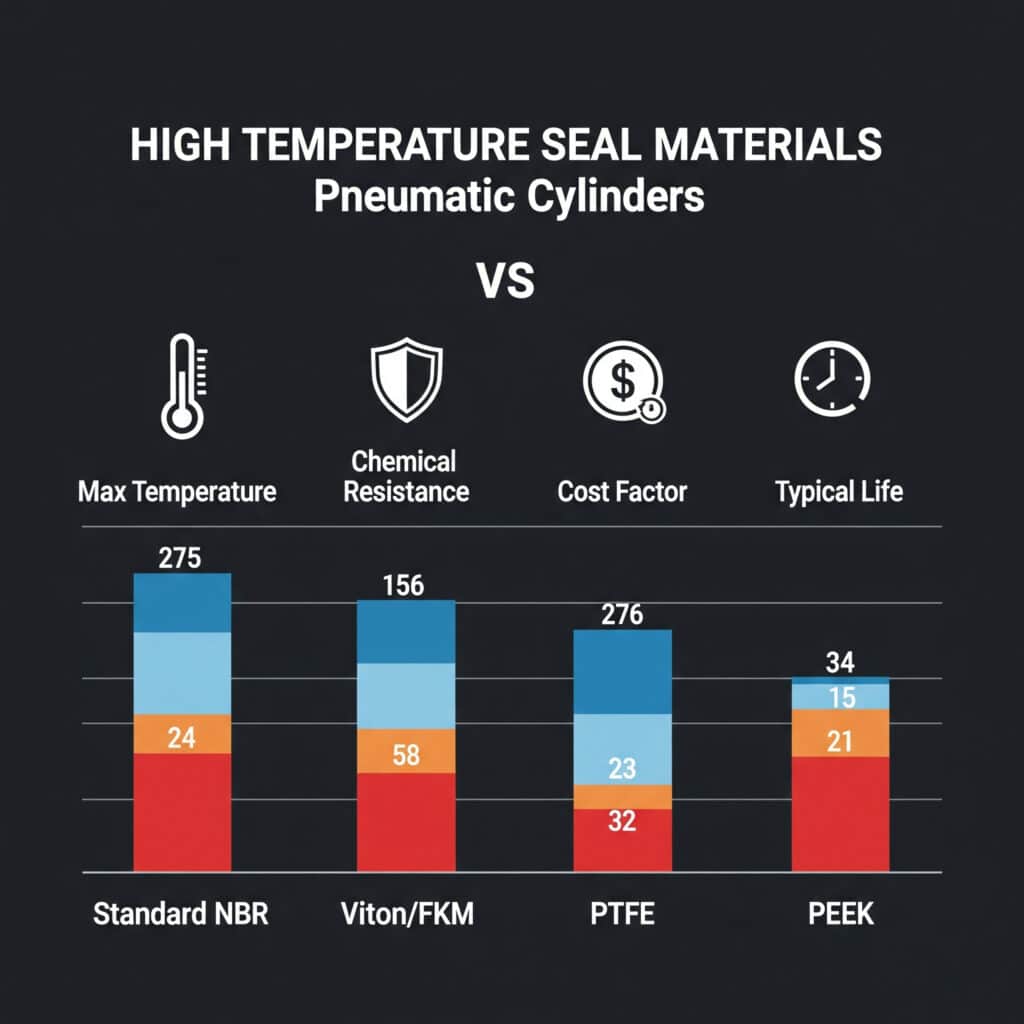
| Material family | Where it may help | Watch points in pneumatic cylinders |
|---|---|---|
| NBR | Ordinary factory air and cost-sensitive standard cylinders | Heat, ozone, dry running, and chemicals can shorten life |
| FKM | Higher heat and chemical exposure than many standard elastomers | Low-temperature flexibility, friction, compound grade, and cost must be checked |
| PTFE or filled PTFE | Low friction, chemical resistance, and special dynamic seal profiles | Needs correct energizer, groove support, surface finish, and installation tools |
| PEEK or engineered plastics | Wear rings, guides, or special components in hot or aggressive areas | Grade, clearance, thermal expansion, and machining tolerance matter |
| FFKM | Severe chemical and high-temperature sealing where cost is justified | Usually reserved for demanding static or special sealing positions, not casual upgrades |
| Metal or graphite-based sealing approaches | Very hot or special process equipment | Often changes the actuator concept, friction model, and leakage expectation |
Qnity’s Kalrez page describes Kalrez perfluoroelastomer parts as being used for demanding environments and designed for chemical resistance and high-temperature stability (Kalrez, 2026 retrieval). That supports the material direction, but it does not make every FFKM part suitable for every cylinder groove. The seal compound, size, pressure, motion, lubricant, and installation still set the useful limit.
For seal taxonomy and failure diagnosis, use the related guide on industrial cylinder seal types and applications. The high-temperature decision here is narrower: which part of the cylinder package is being overheated?
Why Do Lubrication, Air Quality, and Heat Belong Together?
Heat changes lubrication first. Grease can thin, oxidize, migrate, or lose its film. Oil mist can carbonize or create deposits in hot zones. Dry compressed air can increase friction at dynamic seals. Water carryover can flash, attack grease, or accelerate corrosion in hot/cool cycles.
Compressed-air purity is the cleanliness level of the air supplied to the cylinder, usually described by particle, water, and oil limits. In hot service, those contaminants can shorten seal and grease life faster than they would at room temperature.
ISO 8573-1 defines compressed-air purity classes for particles, water, and oil, independent of where the air is measured in the system (ISO 8573-1, 2010). That framework is useful because high temperature does not remove the need for clean air. It often makes contamination more damaging.
Check these items before changing the cylinder:
- Confirm the air quality target near the machine, not only at the compressor room.
- Check whether the cylinder is designed for unlubricated air, oil-mist lubrication, or a special grease.
- Confirm that any added lubricant is compatible with the seal material and the hot environment.
- Inspect the exhaust path. Hot exhaust, mufflers, and nearby tubing can become failure points.
- Record whether failures appear as leakage, sticking, slow return, seal hardening, swollen seals, or blackened lubricant.
For air-quality background, use What Are the Key ISO Air Quality Standards for Pneumatic Systems?. If the machine also has pressure loss during motion, compare the symptoms with pressure drop causes and fixes.
How Does Thermal Expansion Affect Cylinder Mounting?
Thermal expansion turns a normal mounting detail into a reliability detail. The cylinder body, mounting bracket, rod, carriage, machine frame, and fasteners may be made from different materials. When they heat at different rates, the actuator can be pulled out of alignment.
Thermal expansion compensation is the use of slots, floating mounts, spherical joints, flexible couplings, standoff brackets, or external guides so hot machine parts can grow without forcing side load into the cylinder rod, carriage, or seals.
The risk is higher on long strokes, rodless cylinders, guided slides, and cylinders bolted between rigid machine members. A short compact clamp may tolerate small growth. A long actuator near an oven wall may not.
Look for these failure patterns:
- The cylinder works cold and binds after warmup.
- Rod seals leak on one side after a short service interval.
- A rodless carriage drags or leaves seal-band wear marks.
- Mounting bolts loosen after repeated heat cycles.
- Sensors drift because their bracket or magnet path changes with temperature.
- Cushions change behavior after the body warms.
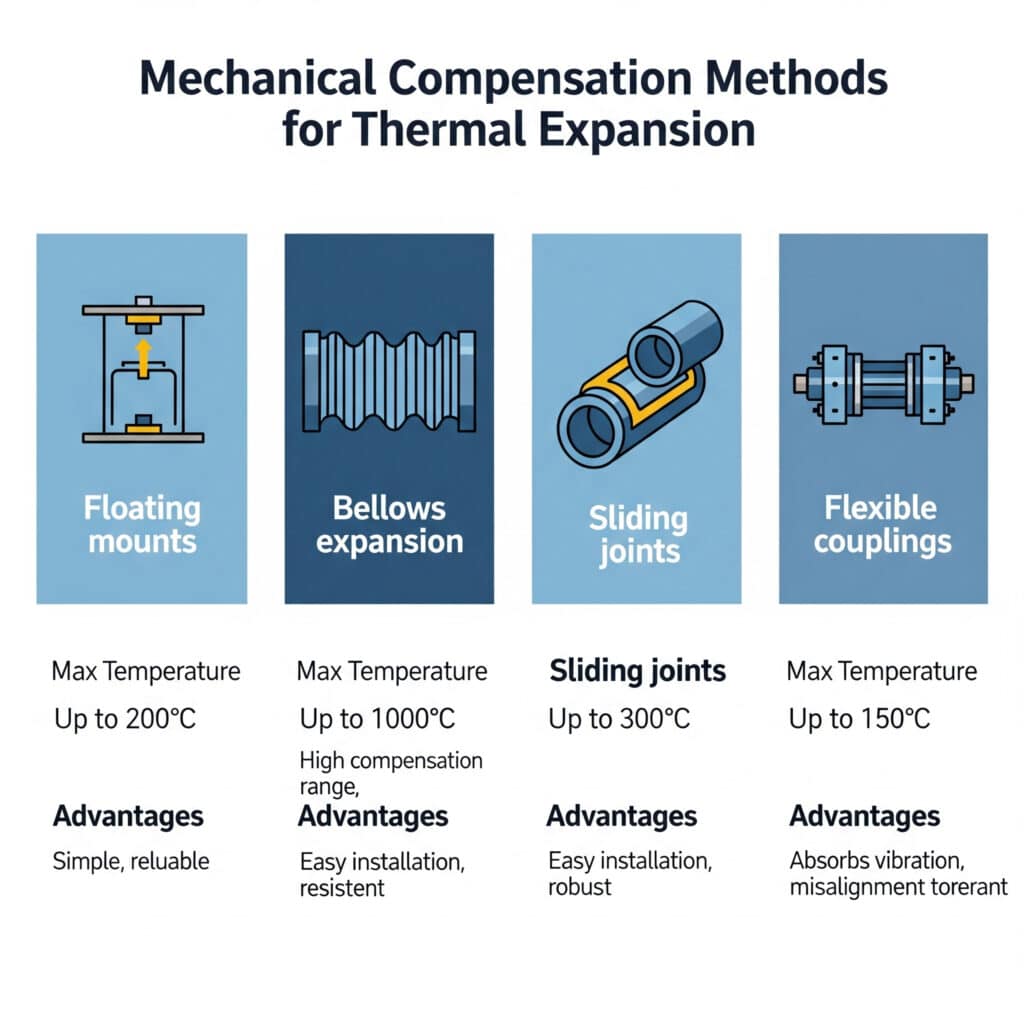
Use floating mounts, slots, spherical rod ends, flexible couplings, external guides, and standoff brackets where the machine geometry allows them. Do not use the cylinder rod as the structural alignment tool. The rod or carriage should transfer motion, not correct a hot frame.
For rodless axes, compare the heat review with What Are the Different Types of Rodless Pneumatic Cylinders Available?. Magnetic, mechanically jointed, cable, and guided designs do not react to heat in the same way.
What Should Change in the Installation?
Start by moving heat away from the actuator before specifying expensive seals. The best high-temperature cylinder is often a cooler standard cylinder with a better bracket, shield, linkage, or remote valve layout.
Useful installation changes include:
- Mount the cylinder farther from radiant heat when stroke geometry allows it.
- Add a heat shield between the source and the cylinder body.
- Use standoff brackets to create an air gap.
- Keep valves, coils, sensors, and plastic fittings out of the hot zone.
- Use metal tubing or rated hose where tubing sees heat.
- Protect reed switches and cable jackets from direct heat.
- Avoid trapping hot debris around the rod, wiper, or rodless slot.
- Leave access for seal inspection after the machine has cooled.
Festo’s actuator-selection guidance makes the broader point that the right technology depends on load, precision, dynamics, environment, and cost rather than a universal pneumatic-versus-electric answer (Festo, 2026). Apply the same discipline here. If the heat zone is too severe for practical pneumatic hardware, remote actuation, a mechanical linkage, an electric axis outside the hot area, or a different process layout may be the more reliable choice.
What About Food, Washdown, and Hot Water?
Food and washdown applications add a second problem: the cylinder must survive heat and be cleanable. A high-temperature seal does not solve trapped residue, corrosion, wrong lubricant, or contaminated compressed air.
The eCFR food equipment rule says plant equipment used in manufacturing, processing, packing, or holding food must be designed and made so it is adequately cleanable and maintained to protect against contamination. It also says pneumatic and automated systems must be constructed so they can be kept in an appropriate clean and sanitary condition, and compressed air introduced into food or used to clean food-contact surfaces must be treated so food is not contaminated (21 CFR 117.40, 2026).
IEC’s IP-rating explanation is also relevant because the second IP numeral rates liquid ingress protection up to 9 for high-pressure hot water from different angles (IEC IP ratings, 2026). IP rating still does not prove food-contact suitability, chemical compatibility, cleanability, or lubricant compliance. It is one input.
For hot washdown, ask:
- Is the cylinder body directly sprayed?
- What are the water temperature, pressure, angle, and cleaning duration?
- Which cleaning chemicals contact seals, rods, switches, tubing, and fittings?
- Is the actuator above product, near food-contact surfaces, or outside the hygiene zone?
- Is compressed air used near food-contact surfaces?
- Can maintenance inspect wipers, crevices, mounts, and fittings without creating a sanitation issue?
How Should Engineers Specify a High-Temperature Pneumatic Cylinder?
The RFQ should describe the installed condition, not just the cylinder size. If you only send bore, stroke, and “high temperature,” the supplier has to guess the failure mode.
Send this data:
| RFQ item | Why it matters |
|---|---|
| Measured cylinder-body temperatures | Separates real actuator exposure from room temperature |
| Heat source and distance | Radiant heat, hot air, hot product, and hot washdown create different risks |
| Duty cycle and dwell time | Short hot events and continuous hot exposure need different designs |
| Bore, stroke, orientation, load, and speed | Heat changes friction, but the load path still has to be correct |
| Cylinder type | Rod-style, rodless, guided slide, compact, or special actuator |
| Air quality and lubrication policy | Particles, water, and oil can accelerate hot seal failure |
| Current failure photos | Seal color, wear pattern, rod marks, and grease condition are evidence |
| Nearby valves, sensors, fittings, and tubing | Accessories often have lower heat limits than the metal body |
| Cleaning chemicals or process vapors | Heat plus chemistry is not the same as heat alone |
| Required certifications or hygiene rules | Food, hazardous, cleanroom, and validated systems change the boundary |
In our experience reviewing high-temperature cylinder replacement requests, the best notes include one sentence that explains the old failure: “Rod seal hardens after six weeks near the oven door,” “carriage binds after warmup,” or “switch cable jacket cracks during hot washdown.” That sentence usually tells the supplier where to look first.
When Is a Pneumatic Cylinder the Wrong Answer?
Use a different actuator strategy when keeping the pneumatic cylinder cool would require too many assumptions. Common warning signs include direct furnace exposure, large radiant heat spikes, poor access for seal replacement, heat-sensitive sensors inside the hot zone, repeated guide binding after warmup, or a hygiene requirement that the chosen cylinder cannot meet.
That does not mean pneumatics are unsuitable for every hot process. Pneumatic cylinders can still work well when the motion is simple, the heat path is controlled, and the exposed components are rated for the measured condition. The problem is pretending that one seal upgrade turns a standard cylinder into a furnace-duty actuator.
For mixed-technology decisions, compare the high-temperature review with When Should I Choose a Cylinder Over an Electric Actuator for My Application?. Heat, controls, maintenance access, and process risk should be part of the same decision.
High-Temperature Pneumatic Cylinder Checklist
Use this checklist before ordering a replacement:
- Measure the cylinder body at the gland, barrel, mounting bracket, and sensor location during steady production.
- Record peak temperature during startup, washdown, door opening, or hot-product transfer.
- Identify the current seal material, cylinder series, lubricant rule, and switch type.
- Inspect the old seal, rod, bore, guide, wiper, and mounting for heat-related wear.
- Confirm air quality for particles, water, and oil at the machine.
- Move valves, coils, plastic tubing, and sensors away from the hot zone where possible.
- Add heat shielding or standoff distance before paying for exotic sealing materials.
- Allow for thermal growth in mounts, couplings, and long-stroke supports.
- Check hot washdown, chemical, food, or cleanroom requirements separately from temperature.
- Ask for the finished cylinder assembly rating, not only the seal compound rating.
FAQs About High-Temperature Pneumatic Cylinders
What temperature counts as high temperature for a pneumatic cylinder?
High temperature starts when the measured cylinder body, seal area, or accessories operate above the catalog temperature range of the selected cylinder family. For example, Parker’s OSP-P rodless-cylinder data lists -10°C to +80°C as the standard ambient range, with other ranges on request. Treat anything beyond the chosen catalog range as a special review.
Can I upgrade a standard pneumatic cylinder with high-temperature seals?
Sometimes, but it is not enough by itself. The grease, static seals, piston seal, rod seal, wiper, magnet, sensor, cable, fittings, tubing, and mounting all need to survive the installed condition. A seal upgrade can fail quickly if the rod is hot, dry, misaligned, or contaminated.
Are PTFE seals always better for hot pneumatic cylinders?
No. PTFE or filled PTFE can help with friction and chemical resistance, but the seal still needs the right energizer, groove, surface finish, pressure, speed, and installation method. In some cylinders, an FKM option, better shielding, or a cooler mounting position may be the better first step.
How should I measure temperature before ordering a cylinder?
Measure the cylinder body during real production, not only the room air. Record the gland, tube, end cap, bracket, sensor, nearby heat source, and peak event temperature. Add photos of the readings and explain whether the heat is continuous, cyclic, radiant, washdown-related, or caused by hot product.
What causes high-temperature cylinder failures besides seals?
Common causes include grease breakdown, dry air, contaminated air, rod scoring, side load, thermal expansion, guide clearance loss, sensor damage, loose fasteners, hot tubing, exhaust restrictions, chemical attack, and poor mounting alignment. Heat usually exposes the weakest part of the whole actuator package.
Should valves and sensors stay near a high-temperature cylinder?
Usually no. Keep solenoid valves, coils, reed switches, cables, plastic fittings, and standard tubing away from direct heat when the layout allows it. The metal cylinder body may tolerate more heat than the accessory package.
What should I send to a supplier for a high-temperature cylinder RFQ?
Send bore, stroke, load, speed, duty cycle, cylinder type, measured body temperatures, heat source, air quality, lubrication rule, photos, failure history, cleaning chemicals, sensor requirements, tubing material, mounting orientation, and any food, washdown, hazardous-area, or cleanroom requirements.
Sources
- Parker Hannifin OSP-P rodless pneumatic cylinder catalog, standard ambient range, NBR seals, Viton option, filtered unlubricated air, permanent grease lubrication, and load/moment selection notes. Retrieved 2026-07-08.
- ISO 15552:2018, pneumatic fluid power cylinders with detachable mountings, 1,000 kPa or 10 bar series, bores from 32 mm to 320 mm, confirmed current in 2025. Retrieved 2026-07-08.
- ISO 8573-1:2010, compressed-air purity classes for particles, water, and oil. Retrieved 2026-07-08.
- Trelleborg Sealing Solutions films and animations, seal families and installation topics including PTFE piston and rod seals. Retrieved 2026-07-08.
- Kalrez specialty sealing, perfluoroelastomer sealing for demanding chemical and high-temperature environments. Retrieved 2026-07-08.
- IEC IP ratings, enclosure protection against dust and liquid ingress, including the second numeral liquid scale up to high-pressure hot water. Retrieved 2026-07-08.
- 21 CFR 117.40 Equipment and utensils, cleanability, sanitary maintenance, pneumatic systems, and compressed-air contamination requirements for food facilities. Retrieved 2026-07-08.
- Festo: Pneumatics or electrics? How to make the right choice, actuator selection by task, environment, load, dynamics, and cost. Retrieved 2026-07-08.