

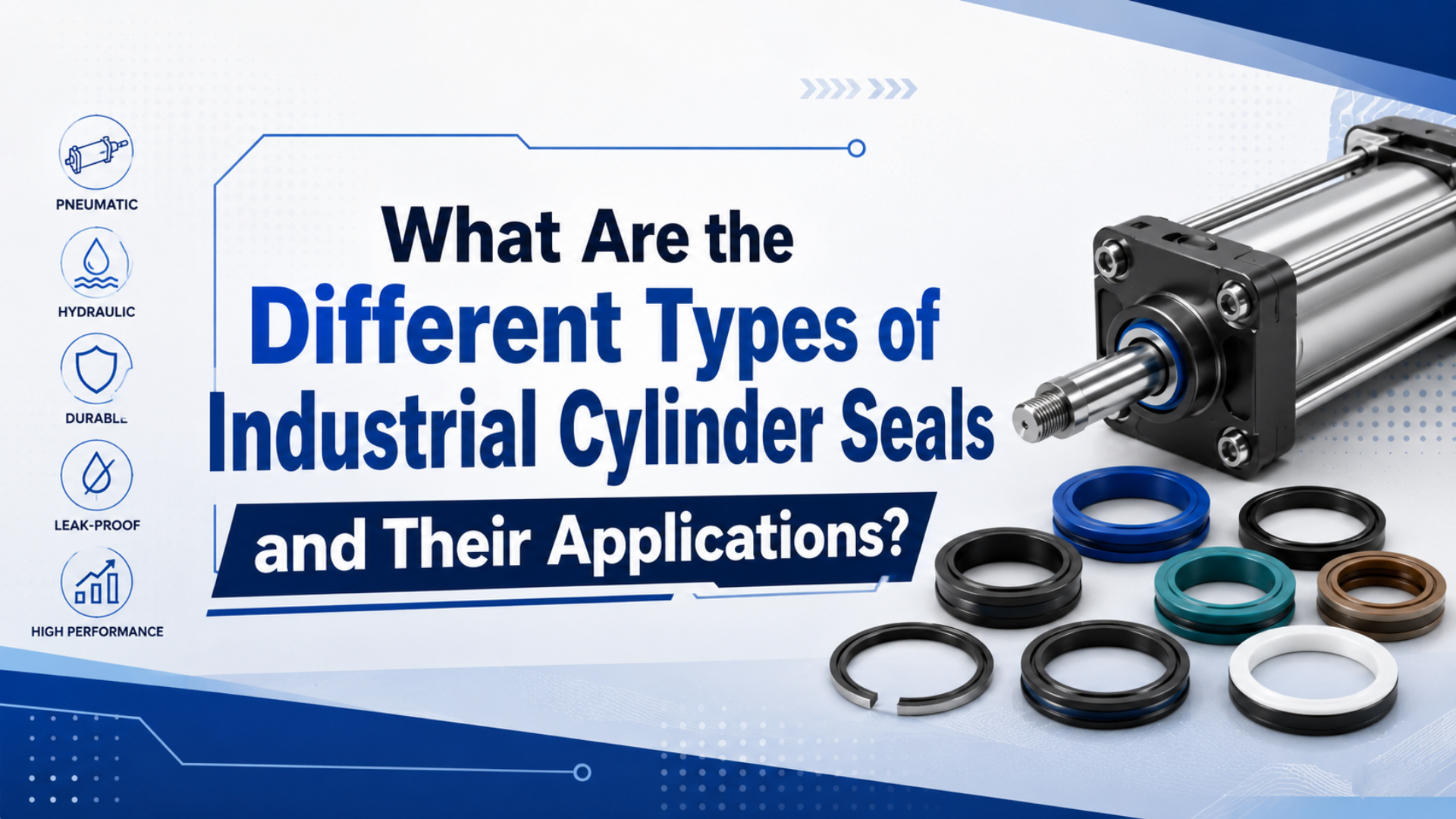
Industrial cylinder seals are the static O-rings, piston seals, rod seals, wipers, wear rings, cushion seals, and rodless-cylinder seal bands that keep compressed air or fluid inside the actuator while keeping contamination, side load, and wear under control. The right seal is chosen by sealing position, motion type, pressure, speed, temperature, air quality, lubrication, surface finish, and replacement access.
That is the practical answer. However, the mistake is treating “a seal” as one spare part. A rod seal has a different job from a piston seal. A wiper can protect the rod seal without being the pressure seal. A wear ring may not seal at all, yet it can decide whether the dynamic seals survive.
Key Takeaways
- The main industrial cylinder seal types are O-rings, piston seals, rod seals, wipers or scrapers, wear rings or guide rings, cushion and end-cap seals, and rodless-cylinder seal bands.
- In other words, static seals stop leakage across fixed joints. Dynamic seals work against moving rods, pistons, carriers, or sealing strips.
- In pneumatic cylinders, dirty air, dry operation, rod scratches, side load, and incorrect groove fit usually cause more repeat failures than the seal material alone.
- U-cups and lip seals are common dynamic sealing profiles, but V-packings are usually reserved for heavier duty adjustable gland sets, often in hydraulic or older equipment.
- For replacement, send the seal position, cylinder bore, rod diameter, stroke, pressure, speed, medium, temperature, groove dimensions, and photos of the worn parts before asking for a seal kit.
What Do Key Seal Terms Mean?
Static seal is a seal used between parts that do not slide during normal cylinder motion. Dynamic seal is a seal that works against a moving rod, piston, carriage, or band. Pressure seal is the part that keeps compressed air or hydraulic fluid inside the working chamber. Wiper seal is an exclusion seal that removes dust, moisture, chips, and washdown residue before they reach the rod seal. Wear ring is a guide element that carries side load rather than acting as the main pressure seal. Rodless seal band is the long strip that closes the slot in a rodless cylinder while the carriage moves. For example, a rodless cylinder can leak even when the piston seal is healthy if the band is scratched. However, a rod-style cylinder may leak at the gland because the wiper failed first.
What Are the Main Industrial Cylinder Seal Types?
The useful way to classify industrial cylinder seals is by job, not by catalog name. Specifically, industry references such as Trelleborg’s sealing pages separate rod seals, U-cup rod seals, wipers, scrapers, piston seals, and guide-related products by where they sit and what they protect. In pneumatic cylinder service, this position-first view prevents most selection errors.
| Seal type | Location in the cylinder | Main job | Typical application | Common mistake |
|---|---|---|---|---|
| Static O-ring | End cap, port, tube joint, cushion screw, valve body | Seal fixed metal-to-metal joints | Cylinder caps, fittings, manifolds, cushions | Using a dynamic O-ring where a lip seal is needed |
| Piston seal | Around the piston inside the tube | Separate pressure chambers | Double-acting and single-acting cylinders | Ignoring tube wear or bore scoring |
| Rod seal | In the gland around the piston rod | Keep pressure inside the cylinder | Rod-style pneumatic and hydraulic cylinders | Replacing the rod seal while leaving rod scratches |
| Wiper or scraper | Outermost gland position | Remove dust, chips, coolant, and moisture from the rod | Outdoor, packaging, woodworking, washdown, machining | Treating the wiper as optional |
| Wear ring or guide ring | Piston or rod guiding surface | Carry side load and keep metal parts separated | Long stroke cylinders, side-loaded actuators | Blaming piston seals for guide wear |
| Cushion or end-cap seal | End-cap cushion passages and fixed joints | Control end-of-stroke leakage and cushion response | High-cycle pneumatic cylinders | Replacing main seals without checking cushion needles |
| Rodless seal band or strip | Along the cylinder slot in rodless cylinders | Seal the slot while allowing carriage movement | Rodless cylinders, air slides, gantry axes | Reusing a damaged band after contamination damage |
The fastest field shortcut is this: if the failed part touches a moving surface, diagnose motion, finish, alignment, and contamination before choosing material. If the failed part sits between fixed parts, diagnose compression, groove fill, chemical compatibility, and assembly damage first. In our experience, this single split prevents more wrong seal-kit requests than starting with rubber grade or color.
Static Seals vs Dynamic Seals
Static seals sit between parts that do not slide across each other in normal operation. In other words, dynamic seals touch moving rods, pistons, carriage bands, or rotating parts. This distinction matters because the dynamic seal must balance leakage control with friction, wear, heat, and lubrication film.
Pressure Seals vs Exclusion Seals
A pressure seal keeps compressed air or hydraulic fluid inside the actuator. However, an exclusion seal, usually called a wiper or scraper, keeps contamination outside the actuator. Both can sit in the same gland, but they do not do the same job.
Seals vs Guides
Wear rings and guide rings are often included in seal kits, but their primary job is guidance. They protect the pressure seals by preventing piston-to-bore or rod-to-gland metal contact. As a result, when side load is high, the guide ring is often the part that decides whether the seal set lasts.
Where Do Static O-Rings Fit in Cylinder Assemblies?
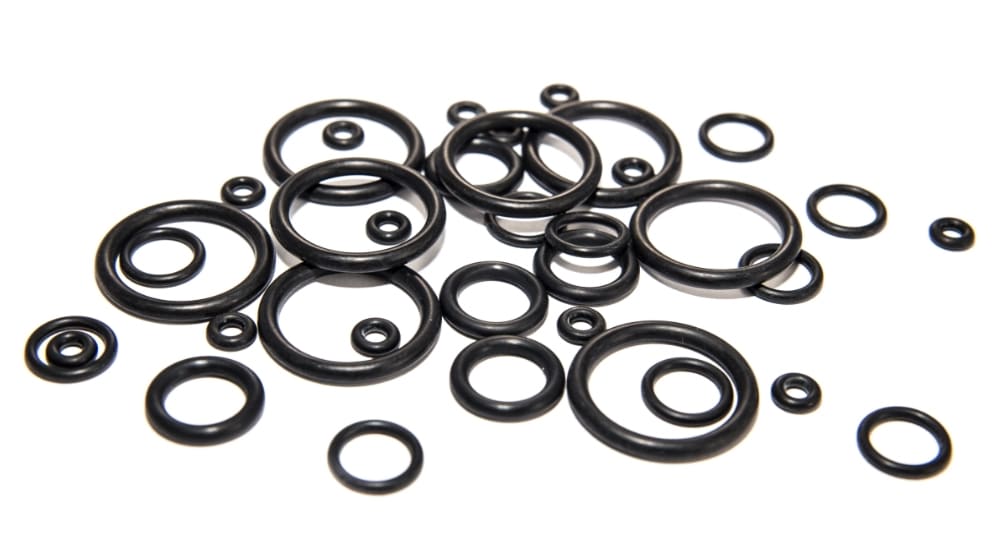
O-rings are the simplest cylinder seal type, but they are also easy to misuse. For example, they work best in static joints such as end caps, ports, cushion screws, sensor fittings, and valve manifolds. In dynamic cylinder positions, an O-ring may work only in light or occasional motion, and a purpose-made lip profile is usually safer.
| O-ring use | Good fit? | Why |
|---|---|---|
| Tube-to-end-cap sealing | Yes | Fixed joint with controlled compression |
| Port and fitting sealing | Yes | Static contact and easy replacement |
| Cushion needle sealing | Yes | Small static or low-motion seal point |
| Piston dynamic sealing | Sometimes | Works only when groove, pressure, speed, and lubrication allow it |
| Rod dynamic sealing | Usually no | Friction, twist, dry air, and rod wear make lip seals more suitable |
When a static O-ring leaks after replacement, the cause is often not the material. However, common causes include a nicked groove, dirt trapped under the seal, wrong cross-section, over-stretching during installation, missing backup ring where required, or a sharp port edge cutting the rubber.
For pneumatic cylinders, check three things before changing material:
- Is the groove clean, smooth, and free from corrosion?
- Is the seal compressed enough to seal but not so much that it is pinched?
- Is the replacement seal compatible with the air-line lubricant, cleaning fluid, or washdown chemical used nearby?
In our experience, cylinder replacement reviews often start with buyers requesting “all O-rings” when the failed parts are actually a rod seal, a wiper, and a guide ring. Asking for the seal position first prevents the wrong spare-kit conversation before it starts.
How Do Piston Seals and Rod Seals Differ?
Piston seals and rod seals are both dynamic pressure seals, but they face opposite leakage problems. A piston seal controls leakage between cylinder chambers. In contrast, a rod seal controls leakage from the pressurized chamber to the outside environment. Mixing these two functions leads to repeat repairs even when the replacement material looks correct.
| Feature | Piston seal | Rod seal |
|---|---|---|
| Main location | Around the piston inside the bore | In the gland around the piston rod |
| Leakage path | Chamber-to-chamber bypass | Cylinder-to-atmosphere leakage |
| Main moving surface | Cylinder bore or tube ID | Piston rod OD |
| Common symptom | Weak thrust, drift, slow extension or retraction | Air or oil escaping at the rod end |
| Root-cause checks | Bore scoring, piston wear, guide wear, seal orientation | Rod scratches, gland wear, wiper failure, rod runout |
Piston seal bypass can be hard to see from outside the cylinder. The actuator may move but fail to hold load, drift under pressure, or lose speed. As a result, a pneumatic system can use more compressed air because the valve keeps feeding a cylinder that cannot maintain differential pressure.
Rod seal leakage is easier to see. In a pneumatic cylinder it may sound like a hiss at the gland. In a lubricated or hydraulic cylinder it may leave an oil film. That said, the repair still needs discipline: if the rod is scratched or contaminated, a new rod seal can fail quickly.
What About Single-Acting and Double-Acting Cylinders?
Single-acting cylinders may need a seal profile that works with pressure on one side and a spring or external load on the return stroke. Similarly, double-acting cylinders need the correct piston seal direction, symmetry, and extrusion control because pressure can act from both sides.
For a broader refresher on cylinder structure, read What Is the Basic Concept of a Pneumatic Cylinder?. This article stays focused on the seal set rather than the complete actuator.
Why Are Wipers and Wear Rings Not Optional Accessories?
Wipers and wear rings often look secondary because they may not be the primary pressure seal. Importantly, they protect the dynamic pressure seals from the two repeat-failure causes most technicians recognize: contamination and side load. Trelleborg’s seal animation catalog lists wiper and scraper products separately from rod seals, which reflects this functional split.
| Protective part | What it protects | Failure pattern if ignored |
|---|---|---|
| Wiper or scraper | Rod seal and gland from dust, chips, water, washdown fluid | New rod seal leaks after a short service interval |
| Wear ring or guide ring | Piston seal, rod seal, bore, and gland from side load | Seal lips wear on one side, bore shows scoring |
| Seal band in rodless cylinder | Internal pressure chamber and carriage slot | Air leakage along the slot, unstable carriage movement |
Dirty compressed air is a seal problem, not just a valve problem. For example, water, oil carryover, pipe scale, and particles can abrade lips, swell elastomers, or wash away the lubricant film. If your plant is reviewing compressed-air quality, connect the seal failure review with ISO air quality classes for pneumatic systems.
Wear rings deserve the same attention. A long-stroke or side-loaded cylinder can load the piston unevenly. Therefore, once the guide surface wears, the piston seal is forced into an oval or tilted contact pattern. Replacing only the piston seal may restore function briefly, but the same side-load path remains.
For maintenance planning, compare the seal workload with the duty cycle guidance in How Do Maintenance Requirements Compare Between Cylinders and Actuators?.
When Should U-Cups, Lip Seals, and V-Packings Be Used?
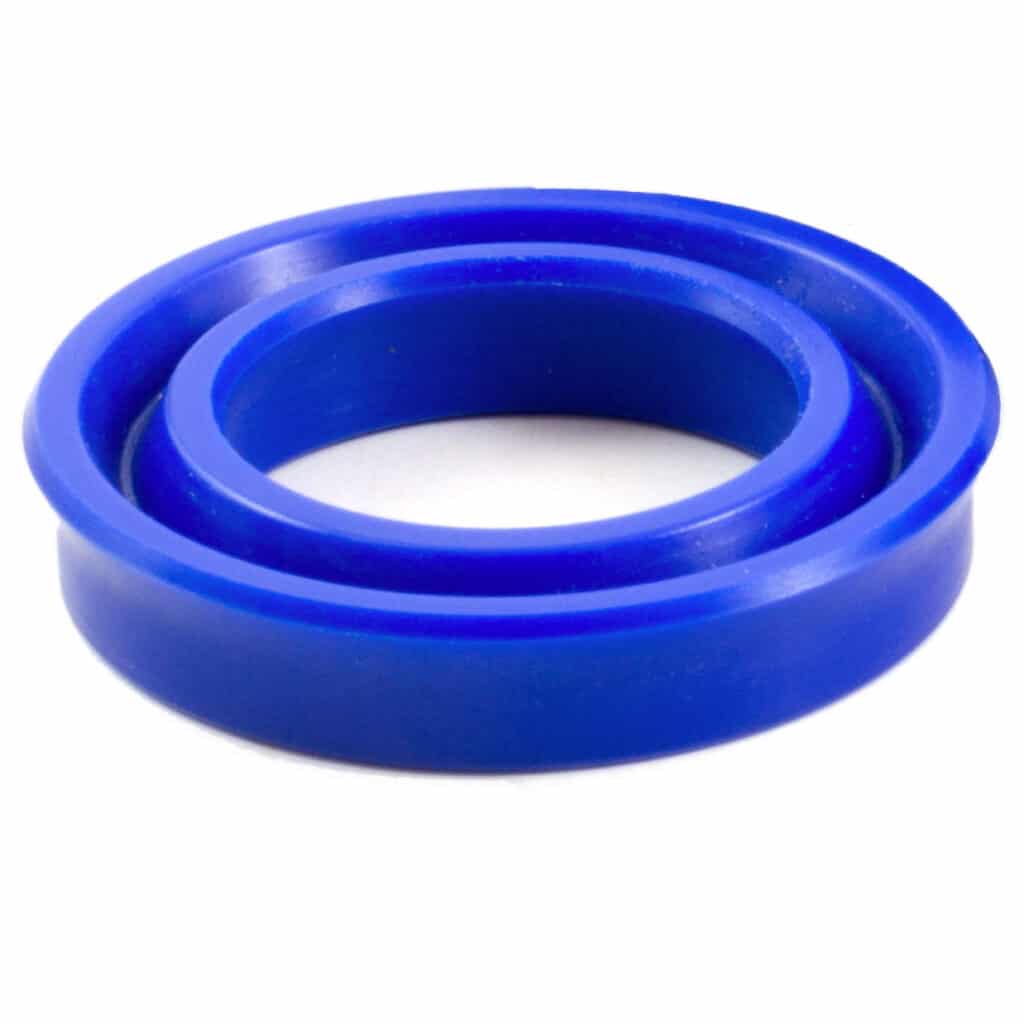
U-cups and lip seals are common choices for dynamic reciprocating sealing because the flexible lip can maintain contact while motion continues. Specifically, Trelleborg’s U-Cup RU9 page describes a hydraulic U-cup rod seal for mobile and industrial hydraulic applications, which is a useful example of how lip geometry is matched to a moving rod rather than treated as a generic ring.
| Profile | Best use | Pneumatic note | Avoid when |
|---|---|---|---|
| U-cup | Dynamic rod or piston sealing | Works well when orientation, groove support, and lubrication are correct | You cannot confirm pressure direction or groove size |
| Lip seal | Low-friction dynamic sealing and exclusion | Often used in rod seals, wipers, and compact glands | Rod finish is rough or contaminated |
| V-packing | Adjustable gland sealing in heavy service | Less common in modern standard pneumatic cylinders | You need compact, low-friction, high-speed pneumatic motion |
| Composite seal | PTFE, elastomer, or energized profile combinations | Useful when friction, wear, or chemical exposure is outside normal elastomer range | The application is ordinary and a standard kit is available |
That said, the embedded Trelleborg animation is hydraulic rather than pneumatic, so use it as a visual reference for U-cup rod-seal geometry, not as a pressure-rating source for your pneumatic cylinder.
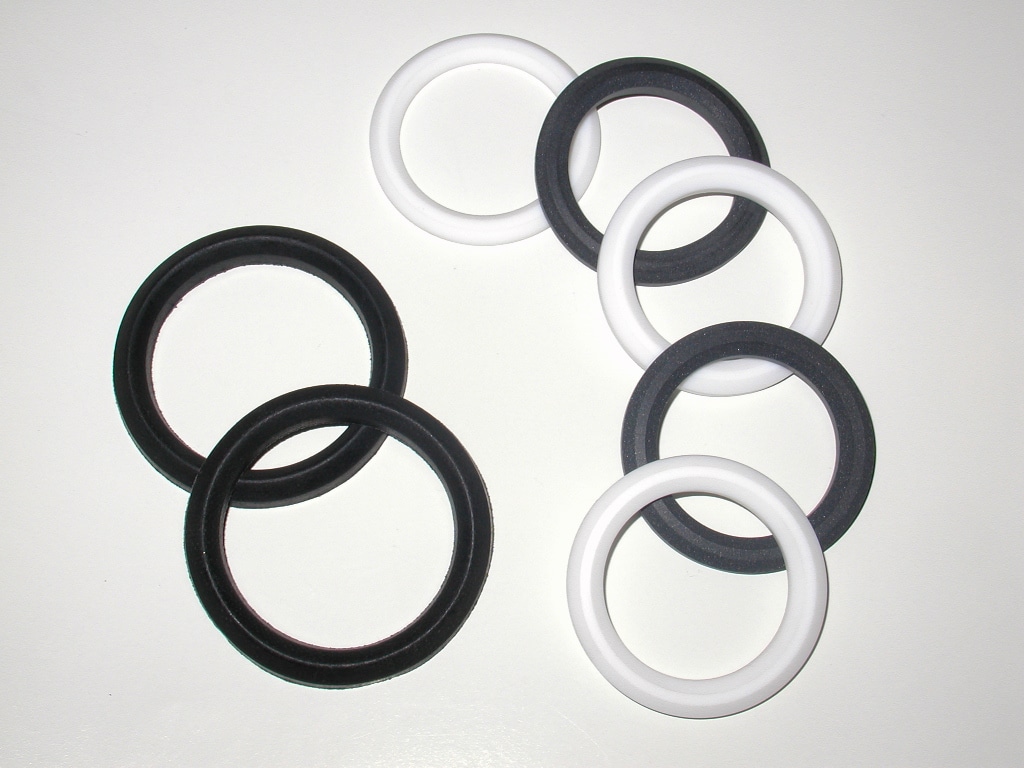
V-packings are worth mentioning because many older machines and heavy-duty cylinders still use them. They are stackable and adjustable, which can help in worn glands or high-load service. However, for standard pneumatic cylinders, they are usually not the first choice because compact lip seals, piston seals, and seal kits are easier to install and create less friction.
Which Seal Material Should You Choose?
Material selection should come after the sealing job is clear. Polyurethane, NBR, FKM, EPDM, PTFE, and filled PTFE all appear in industrial sealing, but none is universally correct. Therefore, match the material to medium, temperature, friction, wear, chemical exposure, installation risk, and the supplier’s groove recommendation.
| Material family | Common strengths | Watch points | Typical cylinder use |
|---|---|---|---|
| NBR | General oil resistance and cost control | Ozone, heat, and some chemicals | Static O-rings, general pneumatic seals |
| Polyurethane | Wear resistance and tear strength | Hydrolysis, heat, and chemistry depend on grade | Dynamic U-cups, rod seals, piston seals, wipers |
| FKM | Heat and chemical resistance | Cost and low-temperature flexibility | Chemical exposure, high-temperature areas |
| EPDM | Water, steam, and weathering resistance | Not for petroleum oils | Washdown, water-based media, selected air service |
| PTFE or filled PTFE | Low friction and chemical resistance | Needs proper energizer and groove support | Low-friction dynamic seals, special media |
Pressure units also create selection errors. In addition, seal catalogs, actuator datasheets, and maintenance tags may use bar, MPa, kPa, or psi on the same project. Convert the pressure before you compare seal data or request a replacement kit.
For pneumatic cylinders, do not choose material from pressure alone. For example, a modest-pressure cylinder in a dusty woodworking plant can be harder on wipers and rod seals than a cleaner, higher-pressure cylinder in an enclosed machine. From our work on pneumatic cylinder replacement requests, we found that air preparation, rod exposure, and cycle frequency usually explain repeat seal failures faster than material charts alone.
How Do Seal Failures Point to the Real Root Cause?
A failed cylinder seal is evidence, not just a spare part order. In other words, the wear pattern usually points to the true cause: contamination, side load, wrong installation, wrong groove, dry running, thermal damage, or chemical attack. Diagnose that pattern before repeating the same replacement.
| Symptom | Likely seal involved | Probable cause | First checks |
|---|---|---|---|
| Hissing or leakage at rod end | Rod seal | Rod scratch, worn gland, damaged wiper, dry rod | Inspect rod finish, wiper lip, gland bore, lubrication |
| Cylinder drifts or loses thrust | Piston seal | Bore scoring, piston wear, seal cut, pressure bypass | Test chamber leakage, inspect bore and piston guide |
| Seal lip worn on one side | Rod seal or piston seal | Side load or misalignment | Check mounting, guide rings, rod straightness |
| New seal fails quickly | Any dynamic seal | Contamination or installation damage | Check chamfers, tools, cleaning, air quality |
| O-ring pinched or sliced | Static O-ring | Sharp edge, wrong size, over-compression | Measure groove, deburr edge, verify cross-section |
| Rodless cylinder leaks along slot | Seal band or strip | Band damage, debris under strip, carriage misalignment | Inspect slot, strip surface, carriage bearings |
For rodless cylinders, seal diagnosis is different because the sealing element runs along the slot. Meanwhile, a damaged band, debris trapped under the strip, or worn carriage bearing can cause leakage that looks like a seal-material issue. For the motion layout, see How Does a Rodless Air Slide Work?.
What RFQ Data Should You Send for Cylinder Seal Replacement?
The best seal quotation is not based on a photo alone. Specifically, a supplier needs enough geometry and operating context to identify the seal position, profile, material, and failure risk. This is especially important when replacing non-standard cylinders, older hydraulic cylinders, or rodless pneumatic actuators with slot seals.
Send these details with the RFQ:
- Cylinder type: pneumatic, hydraulic, guided, rodless, compact, ISO-profile, or custom.
- Seal position: static O-ring, piston seal, rod seal, wiper, wear ring, cushion seal, or rodless seal band.
- Main dimensions: bore, rod diameter, stroke, groove width, groove depth, and seal cross-section.
- Operating data: pressure, speed, cycle rate, temperature, medium, air preparation, and lubrication.
- Environment: dust, chips, coolant, washdown, outdoor exposure, food contact, chemical vapors, or abrasive particles.
- Failure evidence: leakage location, photos of the damaged seal, rod surface, bore surface, gland, and guide rings.
- Replacement goal: standard spare kit, upgraded material, lower friction, longer interval, or full cylinder replacement.
If the pressure requirement is part of the conversation, also compare it with working pressure guidance for air cylinders. In addition, if the cylinder is obsolete or repeatedly failing, review the available pneumatic cylinder options or the rodless cylinder range before ordering another seal kit.
For application review, include your photos and operating data when you contact Bepto Pneumatic. You can also review the manufacturing background on the About Us page.
FAQs About Industrial Cylinder Seals
What is the most common industrial cylinder seal?
The most common simple seal is the O-ring, especially in static joints such as ports, fittings, end caps, and valve bodies. For example, moving cylinder parts usually need piston seals, rod seals, and wipers because they are designed for reciprocating contact.
Can I replace a rod seal without replacing the wiper?
You can, but it is often a weak repair. However, if the wiper is worn, hard, cut, or loose, contamination will reach the new rod seal. Inspect the rod surface and wiper together before deciding which parts to replace.
Are hydraulic cylinder seals and pneumatic cylinder seals the same?
They can share similar names, such as U-cup, rod seal, piston seal, and wiper, but the operating conditions differ. In contrast, pneumatic systems are usually lower pressure, faster, drier, and more sensitive to friction. Hydraulic systems usually demand stronger extrusion control and fluid compatibility.
Why does a new cylinder seal fail quickly?
Fast repeat failure usually points to the surrounding system: scratched rod, damaged bore, sharp groove edge, wrong seal size, poor installation tool, dry running, dirty compressed air, side load, or chemical incompatibility. Therefore, the failed seal should be inspected as evidence.
What should I measure before ordering a seal kit?
Measure bore diameter, rod diameter, groove width, groove depth, seal cross-section, and stroke. In addition, record pressure, medium, temperature, speed, cylinder type, and leakage location. Photos of the old seal, groove, rod, and bore reduce ordering mistakes.
External Technical References
These external references are included for terminology checks and visual context. They should not be treated as substitute specifications for your pneumatic cylinder seal kit; always confirm groove dimensions, material grade, and operating limits with the cylinder or seal supplier.
- Trelleborg films and animations: Useful for cross-checking seal family names such as rod seals, U-cup rod seals, piston seals, wipers, scrapers, buffer seals, and seal installation examples.
- Trelleborg Hydraulic U-Cup Rod Seal: Zurcon U-Cup RU9: Used as the visual reference for U-cup rod-seal lip geometry in the embedded video. The example is hydraulic, so it should not be copied directly as a pneumatic pressure-rating reference.