

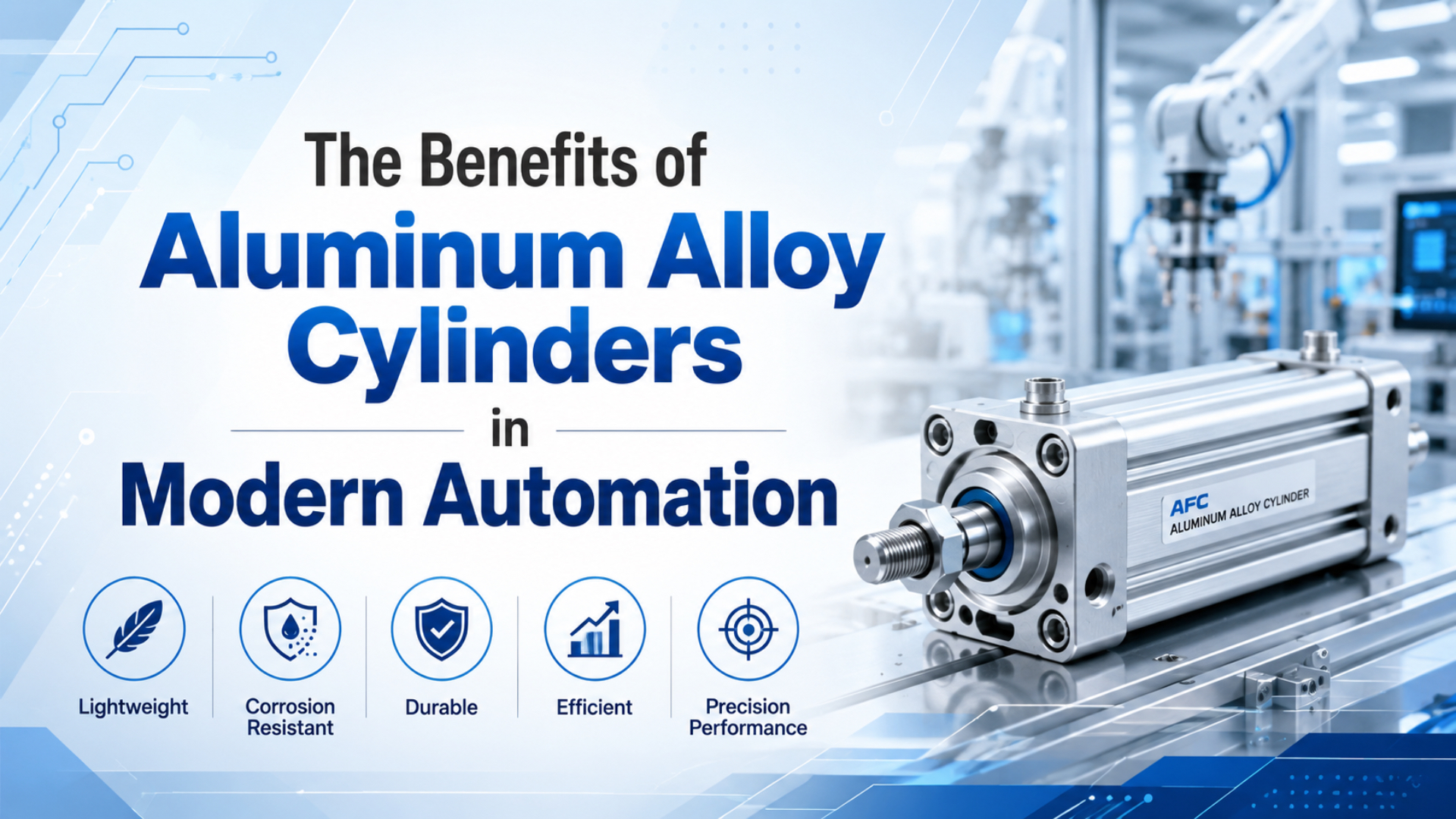
Aluminum alloy cylinders are widely used in modern automation because they can reduce installed machine weight, resist ordinary indoor corrosion, dissipate heat, and support compact extruded profiles. Those advantages are real, but they do not make every aluminum cylinder faster, more efficient, or suitable for every environment. Performance still depends on the complete actuator design.
The useful engineering question is not whether aluminum is universally better than steel. It is where an aluminum barrel and end-cap package improves the machine without compromising the piston rod, seals, mounting interface, pressure rating, washdown resistance, or service life.
Installed mass is the total actuator weight supported by the machine. Moving mass is the portion accelerated during a stroke. Air consumption is the compressed-air volume required by the cylinder’s chamber geometry, pressure, dead volume, leakage, and cycle rate. Keeping these terms separate prevents material properties from being mistaken for complete-system performance.
Key Takeaways
- Aluminum can weigh up to 65% less than steel by material comparison, but the weight reduction of a complete cylinder depends on its rod, piston, guides, fasteners, and mounting hardware.
- A lighter cylinder body reduces installed machine mass. It reduces moving inertia only when that body or another lightened component actually moves.
- Bore, stroke, pressure, dead volume, and cycle rate determine pneumatic air consumption. Barrel material alone does not reduce the air volume required per cycle.
- Smooth-anodized aluminum suits many indoor applications, while aggressive washdown, chloride exposure, abrasive contamination, or chemical attack may require stainless steel or a documented coating package.
- Confirm the exact series data sheet. Pressure, temperature, corrosion class, cushioning, and seal options cannot be inferred from the word “aluminum.”
What Benefits Do Aluminum Alloy Cylinders Provide?
Aluminum’s high strength-to-weight ratio is its clearest advantage in automation. The Aluminum Association reports that aluminum can weigh up to 65% less than steel in structural comparisons, while alloying and heat treatment allow designers to balance strength, machinability, and corrosion resistance (The Aluminum Association, retrieved July 11, 2026).
For a pneumatic cylinder, that lower density can reduce the mass carried by a machine frame, robot arm, gantry, guard door, or end-of-arm assembly. It can also make long actuators easier to install and support. The actual saving must be calculated from the bill of materials because the piston rod, bearings, guide rails, fasteners, and brackets may still be steel.
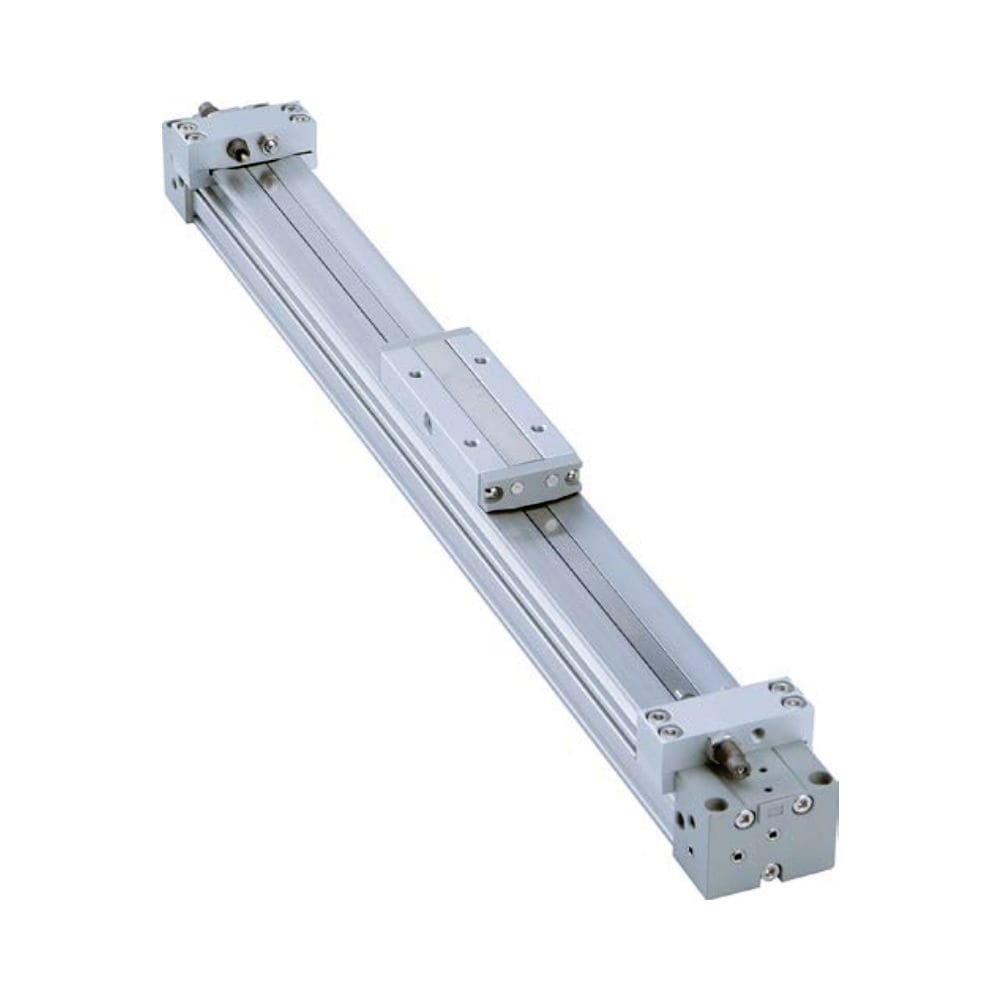
Extrusion is another practical benefit. An aluminum profile can combine the pressure tube, sensor grooves, mounting channels, and stiffening features in one section. This helps manufacturers build compact ISO-profile and rodless cylinders without welding several separate parts.
Aluminum also conducts heat more readily than carbon steel. That can reduce local temperature gradients around the barrel, but it does not override the rated temperature of the seals, grease, sensors, or cushioning components. The lowest-rated component controls the application limit.
Does a Lighter Cylinder Always Move Faster and Use Less Air?
No. A lighter actuator improves acceleration only when the reduced mass belongs to the moving assembly. Festo’s DNC-125 ISO 15552 example separates 6,771 g of basic cylinder weight from 2,809 g of moving mass at zero stroke, showing why engineers must distinguish installed mass from moving mass (Festo, retrieved July 11, 2026).
In a conventional fixed-body cylinder, the barrel and end caps stay on the machine. The piston, rod, rod-end tooling, and external load move. Replacing a steel barrel with aluminum reduces the frame load, but it may have little effect on the inertia seen during each stroke.
The result changes when the whole cylinder moves with a robot axis, when a mobile carriage carries the actuator, or when an integrated rodless carriage and guide package removes other structure. In those layouts, lower assembly mass can reduce the load on the parent axis. The machine designer should compare the mass that actually accelerates, not the catalog headline.
Air consumption follows the pressure-volume relationship. For a double-acting cylinder, the relevant inputs are bore, rod diameter, stroke, working pressure, dead volume, and cycles per minute. An aluminum and a steel cylinder with the same internal geometry and leakage will require approximately the same compressed-air volume for the same motion.
This distinction matters for energy projects. The U.S. Department of Energy recommends system-level analysis, pressure control, leak reduction, storage review, and appropriate end-use design for compressed-air savings; it does not treat cylinder-body material as a stand-alone efficiency measure (U.S. Department of Energy, retrieved July 11, 2026).
For high-speed duty, review valve flow, tubing size, cushioning energy, external guides, side load, and moving mass together. The high-speed pneumatic cylinder specification checklist covers those interacting variables in more detail.
Aluminum Cylinder Construction Is a System
An aluminum cylinder is rarely made entirely from aluminum. Festo’s DNC ISO 15552 data identifies a smooth-anodized wrought-aluminum barrel and aluminum covers, but also a high-alloy steel piston rod and polyurethane seals. Its listed operating range is 0.6 to 10 bar and -20 to 80°C (Festo, retrieved July 11, 2026).
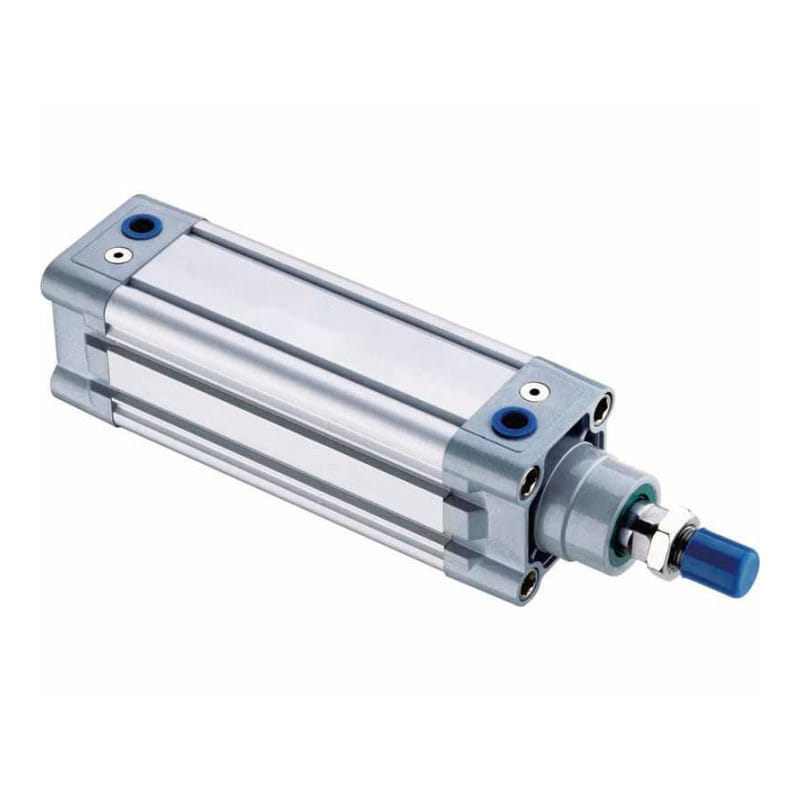
That mixed construction is normal. Each material solves a different problem:
| Cylinder element | Common material choice | Main design job | Selection risk |
|---|---|---|---|
| Barrel or profile | Smooth-anodized aluminum alloy | Pressure containment, guidance surface, sensor and mounting features | Scratches, chemical compatibility, coating quality |
| End caps | Cast or machined aluminum alloy | Porting, cushioning, mounting interface | Thread damage, impact, galvanic contact |
| Piston rod | Chrome-plated or stainless steel | Carries compression, tension, bending, and seal contact | Corrosion, scoring, buckling, side load |
| Piston and bearing elements | Aluminum, polymer, or steel | Separates chambers and supports motion | Wear, friction, temperature |
| Seals and wipers | Polyurethane, nitrile, fluorocarbon, or other compounds | Retains air and excludes contamination | Temperature, lubricant, chemical and washdown compatibility |
| Fasteners and mounts | Plated steel, stainless steel, or aluminum | Transfers load into the machine | Loosening, corrosion, thread stripping |
ISO 15552:2018 standardizes basic, mounting, and accessory dimensions for detachable-mount pneumatic cylinders from 32 to 320 mm bore at a maximum rated pressure of 1,000 kPa, or 10 bar. It supports dimensional interchangeability, but it does not make all cylinders equal in materials, corrosion class, cushioning, seals, or life (ISO, 2018, confirmed 2025; retrieved July 11, 2026).
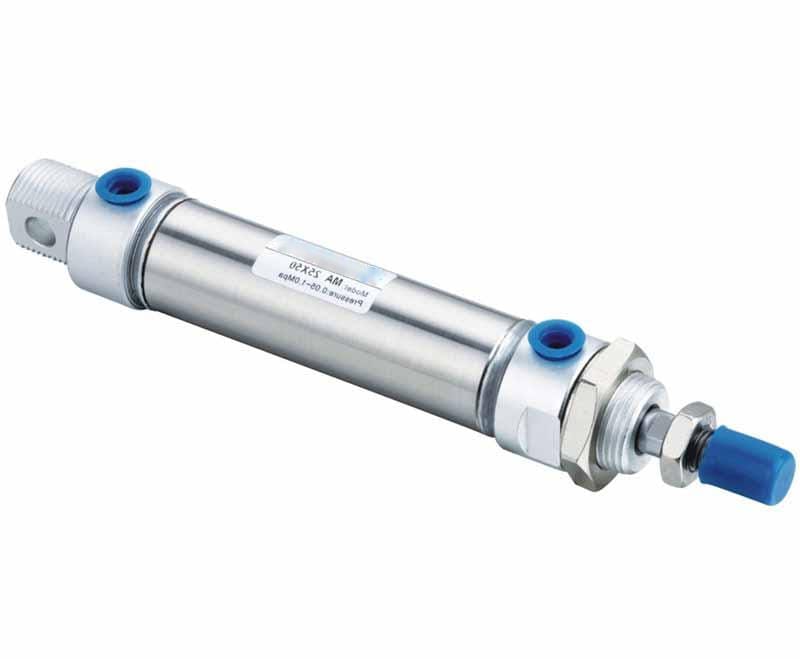
The same caution applies to ISO 6432 mini cylinders. That standard defines mounting dimensions for 8 to 25 mm bores and a 10 bar series, while allowing manufacturers design freedom (ISO, 2015; retrieved July 11, 2026). Check the actual product data before treating the standard pressure series as the permitted working range for a specific model.
How Much Corrosion Resistance Does Aluminum Provide?
Aluminum naturally forms a protective oxide film, and anodizing can make that surface thicker and more controlled. The Aluminum Association describes aluminum as corrosion resistant and notes that alloy composition changes strength, density, workability, and corrosion behavior (The Aluminum Association, retrieved July 11, 2026).
This protection is useful in ordinary factory air, dry assembly equipment, packaging machinery, and many guarded indoor systems. It is not a blanket approval for salt spray, alkaline cleaners, acidic chemicals, abrasive dust, repeated high-pressure washdown, or permanent outdoor exposure.
Damage also matters. A deep scratch, worn bore, cut thread, or galvanic junction can expose a local weak point. Direct contact between aluminum and a dissimilar metal in a wet, conductive environment may require isolation washers, compatible fasteners, drainage, and a coating specification.
Product corrosion classes are more useful than generic material labels. Festo rates the cited DNC example at corrosion-resistance class 2, described as moderate corrosion stress. Parker lists the aluminum-body OSP-L rodless cylinder at a maximum 8 bar and -10 to 80°C, with corrosion resistance included (Parker, retrieved July 11, 2026).
For chloride exposure, splash zones, or aggressive washdown, compare the complete package against corrosion-resistant cylinder selection for marine applications and the stainless-steel cylinder guide for food-production washdown.
Where Aluminum Cylinders Fit Best
Aluminum cylinders fit best where moderate corrosion resistance, low installed mass, compact profile geometry, and easy sensor integration matter more than extreme chemical or washdown resistance. Nearly 75% of all aluminum ever produced remains in use, and recycled aluminum needs about 5% of the energy used for new aluminum, according to industry recycling data (The Aluminum Association, retrieved July 11, 2026).
Strong application candidates include:
- General factory automation in controlled indoor environments
- Packaging, sorting, labeling, and light assembly machinery
- Robot or gantry assemblies where the complete actuator travels with another axis
- Compact machines that benefit from extruded sensor slots and mounting channels
- Long-stroke rodless layouts where the profile combines actuation and attachment features
- Equipment that must be installed, adjusted, or replaced without heavy lifting gear
Aluminum is less attractive when the environment attacks the coating or when the application concentrates high loads in threads and mounting faces. Stainless-steel bodies, stainless rods, special coatings, external boots, heavy-duty wipers, or custom seals may be more appropriate for wet food plants, marine decks, foundries, abrasive woodworking dust, and chemical processing.
Rodless construction can offer a separate space advantage because the actuator does not project a piston rod beyond the stroke. That benefit comes from architecture, not aluminum alone. See the rodless versus standard cylinder comparison before combining the material and actuator-style decisions.
A Practical Aluminum Cylinder Selection Checklist
Start with the load and environment, then evaluate material. ISO 19973-3 evaluates rod-cylinder reliability in cycles or kilometres and defines controlled test and reporting methods, which reinforces a useful purchasing rule: service-life claims need documented conditions rather than a bare “long life” statement (ISO, 2015; retrieved July 11, 2026).
Before approving an aluminum alloy cylinder, record:
- Function: clamp, lift, push, transfer, guide, index, or position.
- Load case: force, moving mass, side load, overturning moment, rod buckling risk, and impact energy.
- Motion target: stroke, cycle rate, extension time, retraction time, and acceptable end impact.
- Air conditions: minimum point-of-use pressure, flow, air quality, lubrication policy, and expected leakage limit.
- Environment: temperature, humidity, dust, salt, chemicals, washdown agent, ultraviolet exposure, and condensation.
- Materials: barrel alloy and treatment, end-cap material, rod material, fasteners, seals, wiper, and bearing strips.
- Interfaces: mounting standard, port thread, sensor type, cable exit, accessories, and available service clearance.
- Evidence: series data sheet, dimensional drawing, pressure and temperature limits, corrosion class, reliability test basis, and material or coating certificates when required.
Do not specify “6061-T6 aluminum cylinder” unless the supplier confirms that alloy and temper for the relevant pressure-bearing components. Many pneumatic profiles use wrought aluminum alloys, while end caps may use die-cast alloys. The correct requirement may be a performance specification covering pressure, bore finish, anodizing, corrosion exposure, dimensions, and inspection rather than one alloy name applied to the whole assembly.
Frequently Asked Questions
Are aluminum alloy cylinders strong enough for industrial use?
Yes, when the cylinder is designed and rated for the load and pressure. ISO 15552 covers a 10 bar dimensional series, and commercial aluminum-profile cylinders commonly publish model-specific ranges up to 10 bar. That does not mean every aluminum cylinder is suitable for 10 bar, shock loading, side load, or long unsupported strokes.
Do aluminum cylinders consume less compressed air than steel cylinders?
Not because of the barrel material. Cylinders with the same bore, rod diameter, stroke, pressure, dead volume, leakage, and cycle rate have similar air demand. Aluminum can reduce machine mass, but compressed-air savings require changes to internal volume, pressure, leakage, cycle strategy, or control design.
Are aluminum cylinders suitable for food and pharmaceutical equipment?
They can be suitable in dry, guarded, non-product-contact zones when the surface finish, lubricant, seals, and cleaning method are approved. Repeated aggressive washdown or exposed product zones may require stainless steel and hygienic design. Material alone does not establish food-contact or cleanroom compliance.
What temperature can an aluminum pneumatic cylinder handle?
Use the model data sheet. The aluminum body may tolerate a wider range than its seals, grease, magnets, sensors, or cushioning parts. The cited Festo DNC example lists -20 to 80°C, while specialized high-temperature variants from some manufacturers use different seals and carry different limits.
Is anodized aluminum maintenance-free?
No. Anodizing improves surface protection, but rods, wipers, seals, fasteners, sensor grooves, and damaged areas still need inspection. Keep the rod clean, prevent side loading, control condensate, use compatible cleaners, and replace worn wipers before contamination reaches the sealing system.
Conclusion
The main benefits of aluminum alloy cylinders are lower installed mass, extrusion-friendly construction, moderate corrosion resistance, thermal conductivity, and easy integration of sensor and mounting features. Those benefits make aluminum a sound default for many indoor automation systems.
The material is only one part of the actuator. Verify which parts move, calculate air consumption from geometry and pressure, check the complete corrosion package, and use the model-specific pressure and temperature ratings. That approach captures aluminum’s advantages without turning a material property into an unsupported performance promise.
Sources
- International Organization for Standardization. ISO 15552:2018, Pneumatic fluid power cylinders with detachable mountings. Published 2018; confirmed 2025. Retrieved July 11, 2026.
- International Organization for Standardization. ISO 6432:2015, single-rod pneumatic cylinders. Published 2015. Retrieved July 11, 2026.
- International Organization for Standardization. ISO 19973-3:2015, assessment of pneumatic cylinder reliability. Published 2015. Retrieved July 11, 2026.
- Festo. DNC-125-125-PPV ISO cylinder technical data. Retrieved July 11, 2026.
- Parker Hannifin. OSP-L aluminum-body rodless pneumatic cylinder technical data. Retrieved July 11, 2026.
- The Aluminum Association. Aluminum sustainability and material properties. Retrieved July 11, 2026.
- The Aluminum Association. Aluminum recycling. Retrieved July 11, 2026.
- U.S. Department of Energy. Compressed Air Systems. Retrieved July 11, 2026.