










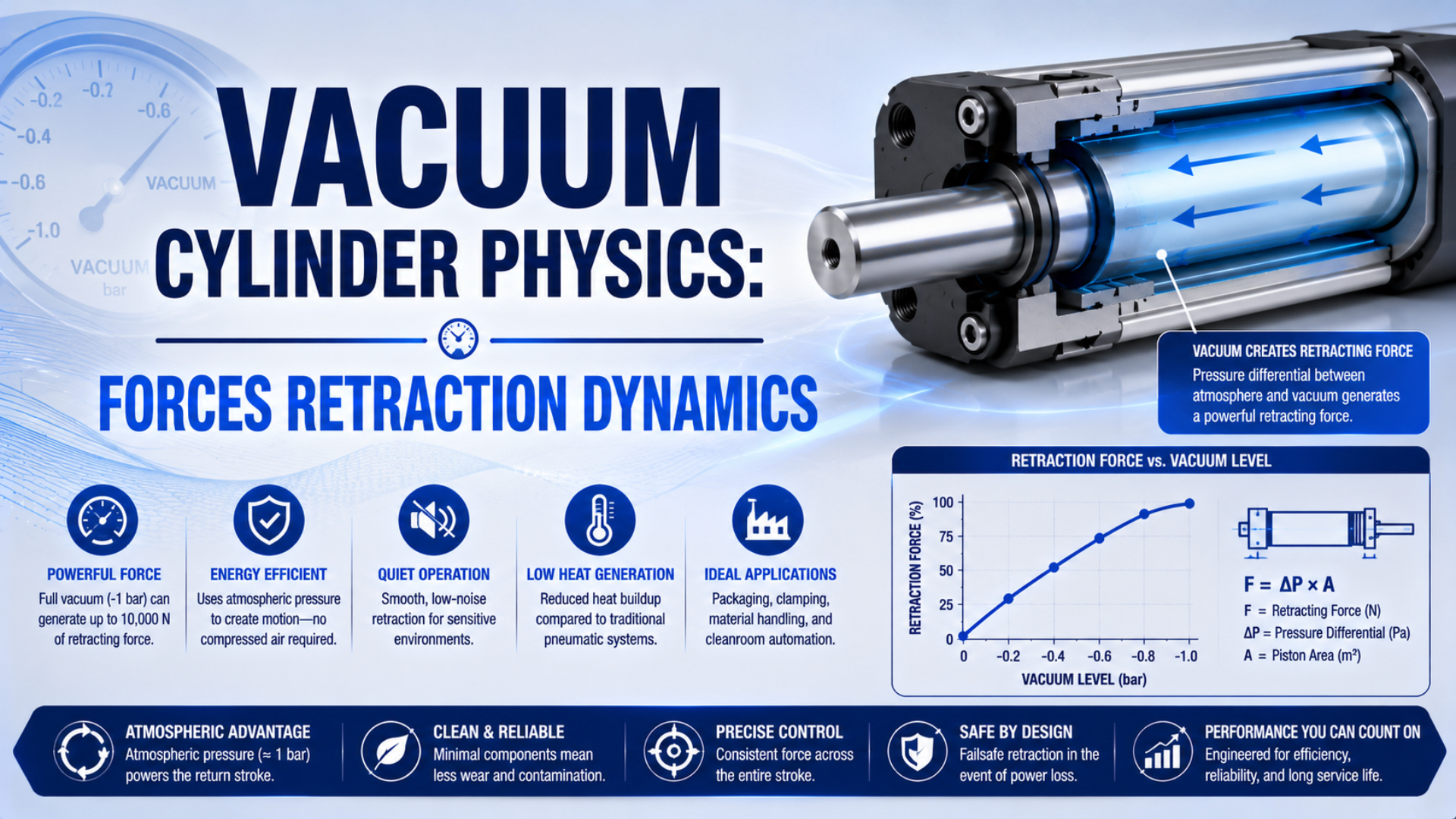
 Vacuum Cylinder Physics: Forces Retraction DynamicsStandard atmosphere is 101.325 kPa. Calculate vacuum-cylinder force from chamber pressures, piston geometry, friction, load, and evacuation flow accurately.
All Articles
Latest pneumatic selection notes
Use the newest Bepto Pneumatic articles to prepare better product questions, compare component options, and shorten technical review.
- Vacuum Cylinder Physics: Forces Retraction DynamicsStandard atmosphere is 101.325 kPa. Calculate vacuum-cylinder force from chamber pressures, piston geometry, friction, load, and evacuation flow accurately.
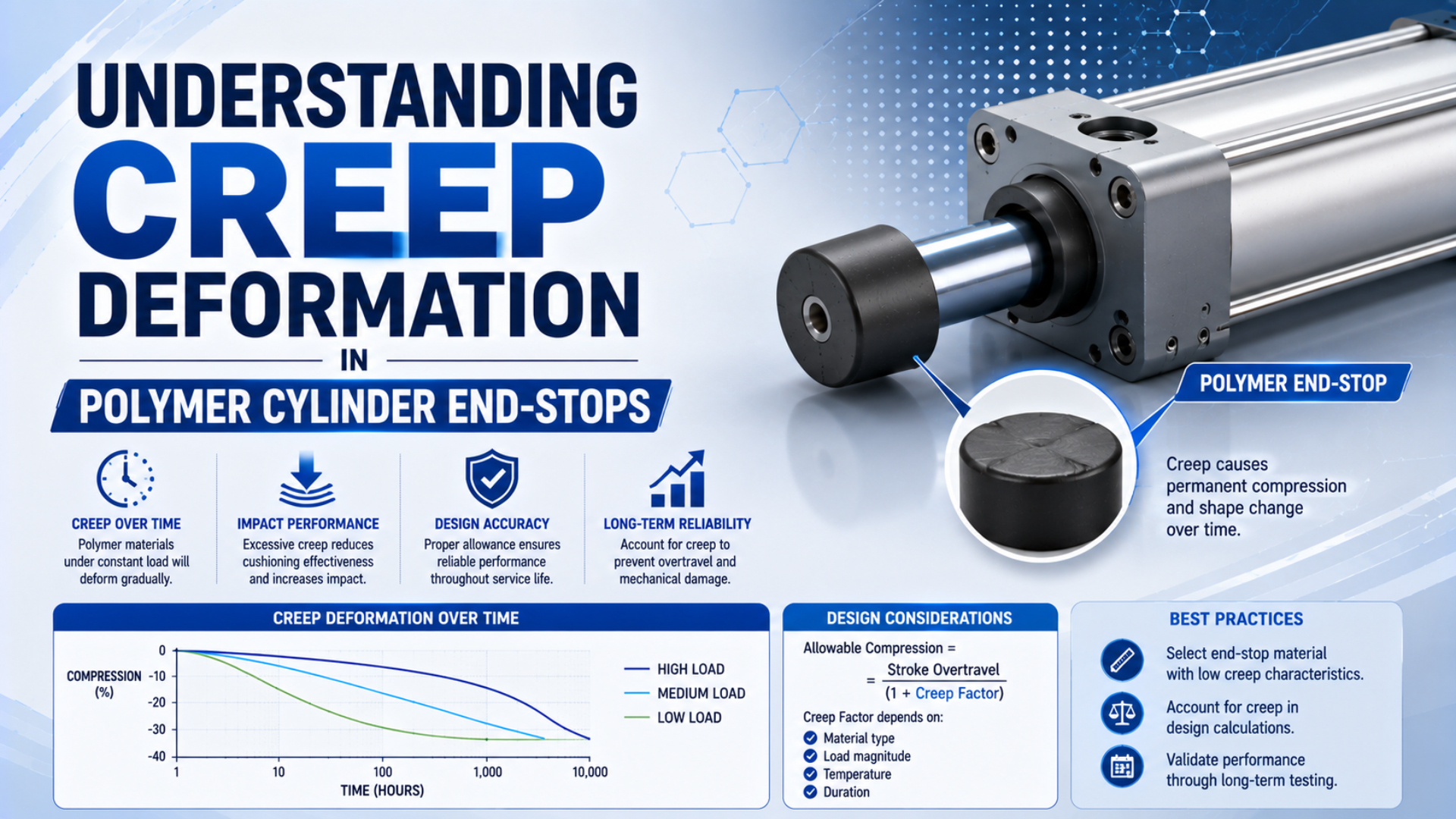 Understanding Creep Deformation in Polymer Cylinder End-StopsLearn how sustained load, temperature, moisture, impact, and test method change polymer cylinder end-stop creep, using ISO 899 and 1,000-hour grade data.
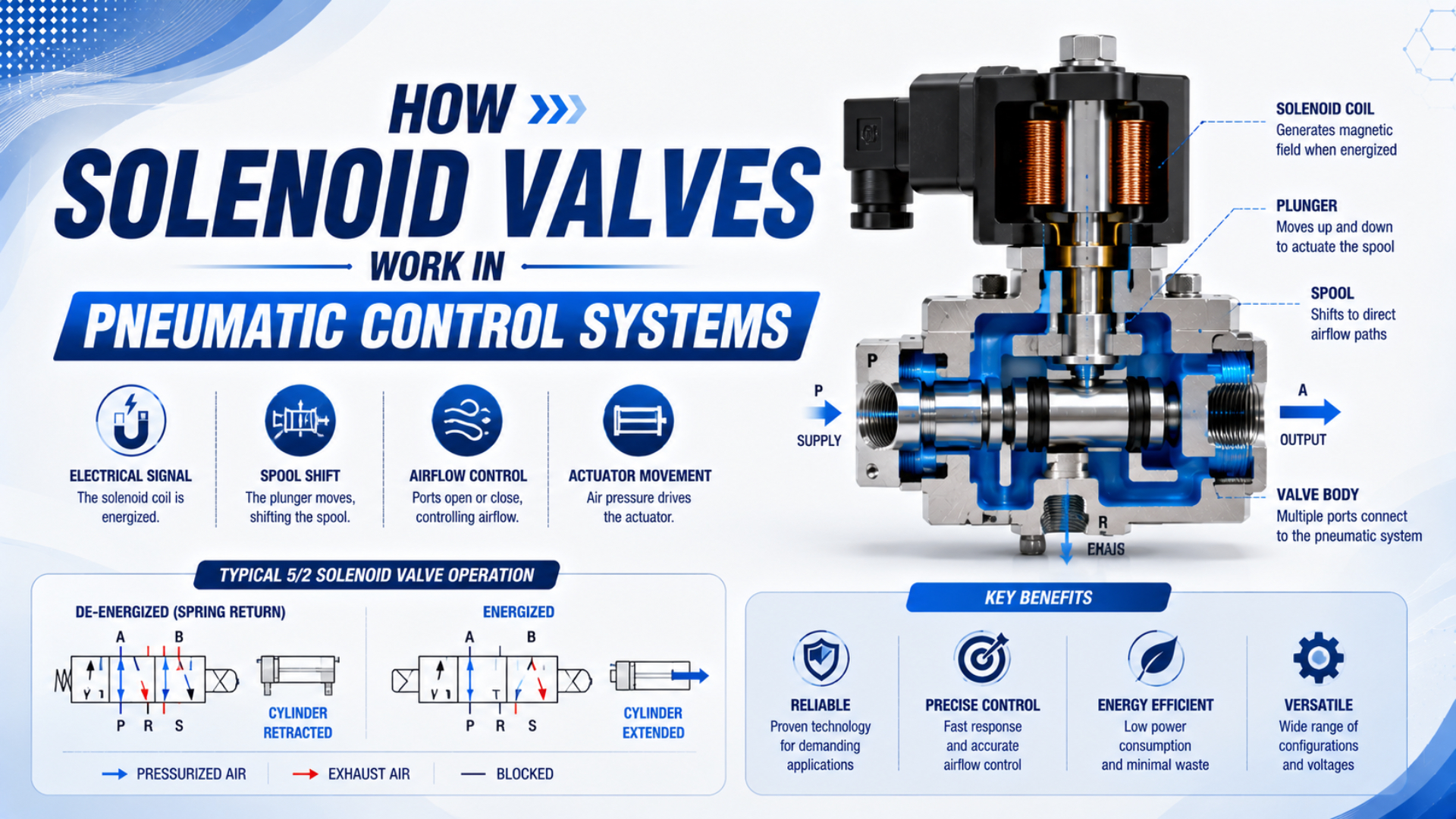 How Solenoid Valves Work in Pneumatic Control SystemsTrace a pneumatic solenoid valve through 7 control stages, from PLC output and coil current to pilot pressure, spool position, air paths, and actuator motion.
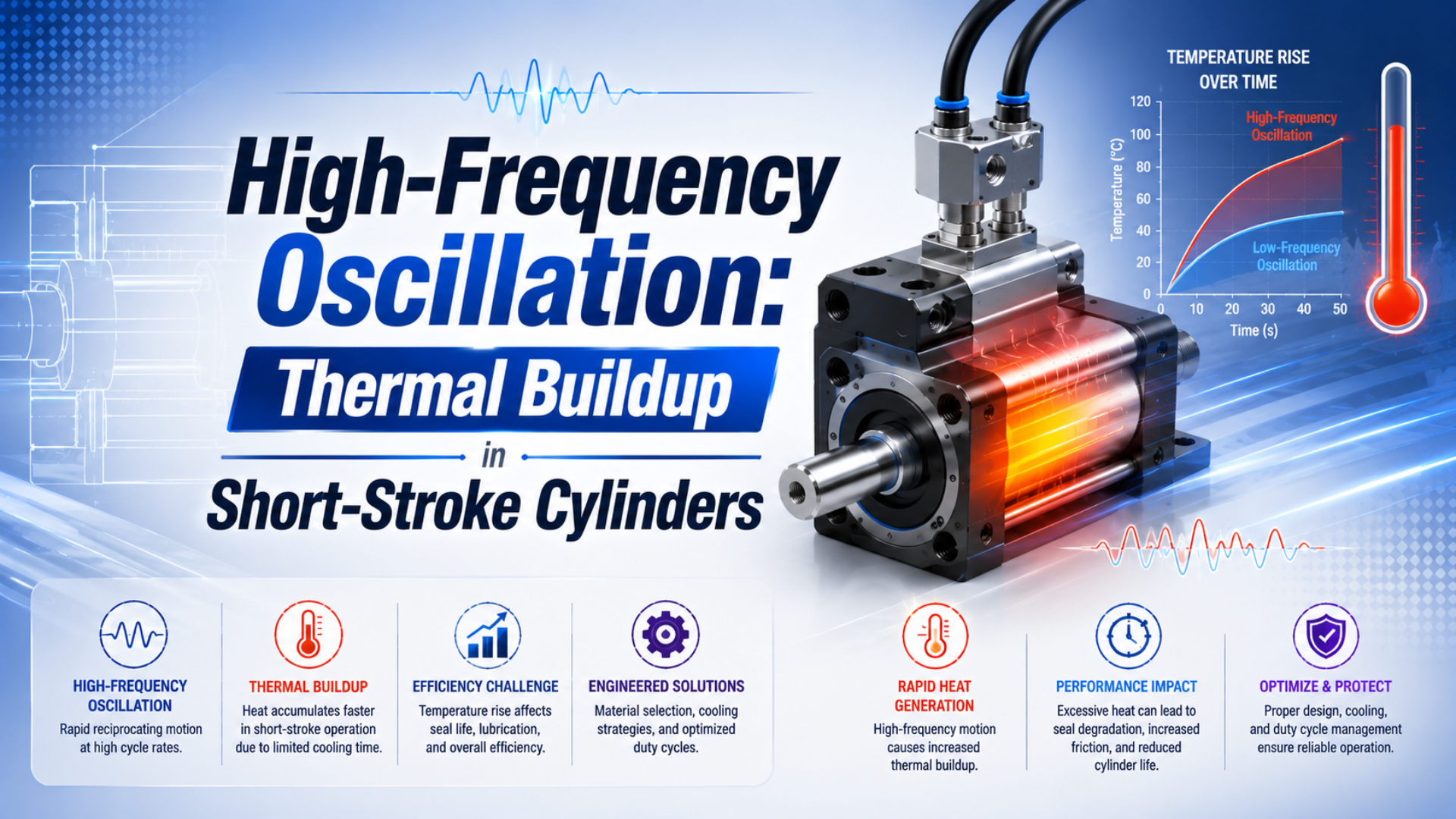 High-Frequency Oscillation: Thermal Buildup in Short-Stroke CylindersLearn why 2 Hz cannot define short-stroke cylinder heat risk; calculate sliding distance and reversal energy, then test against model-specific limits.
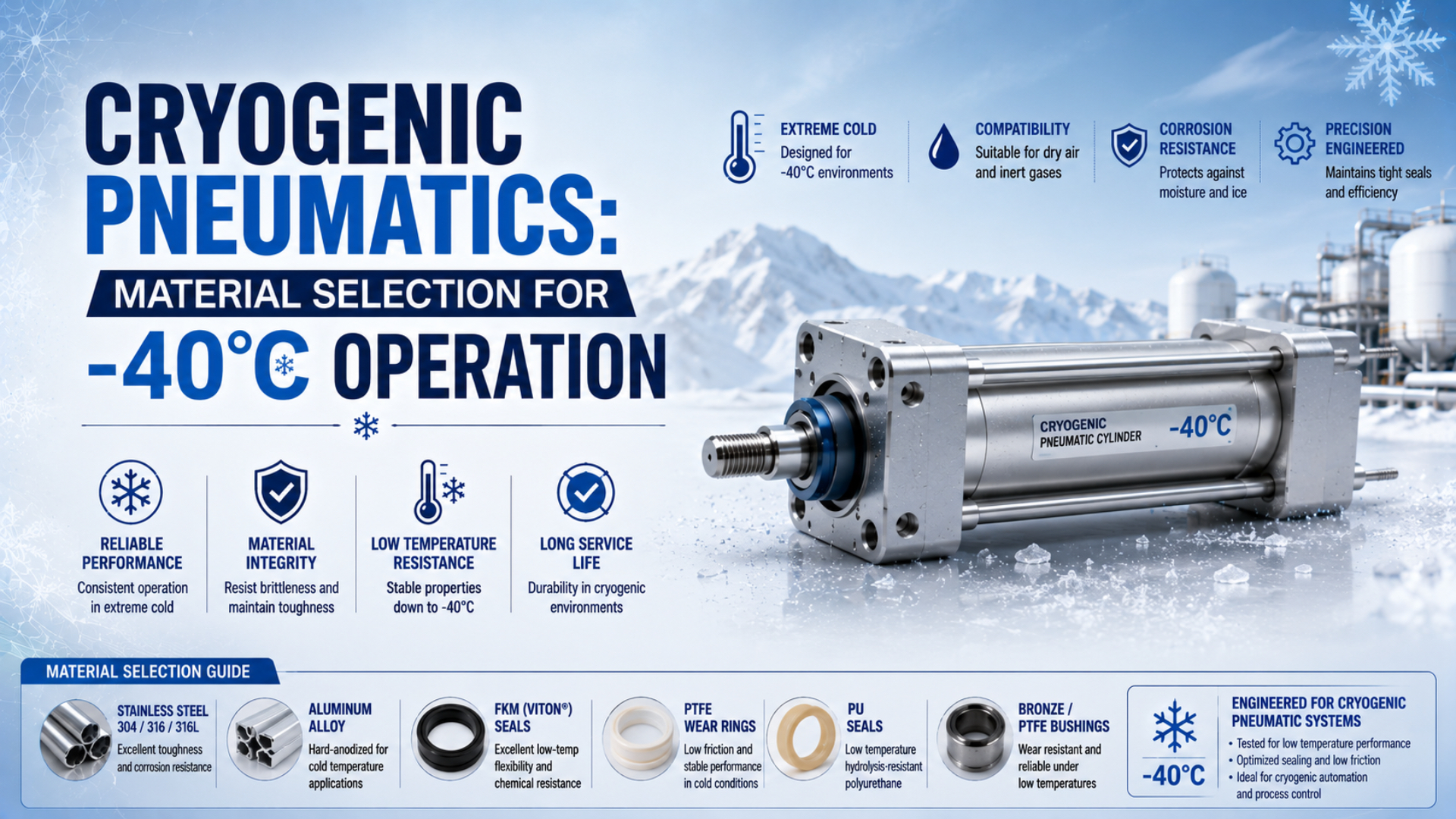 Cryogenic Pneumatics: Material Selection for -40°C OperationAt -40°C, qualify the exact seal, grease, metal, sensor, tubing, and valve package; NIST places true cryogenic service below about -153°C before release.
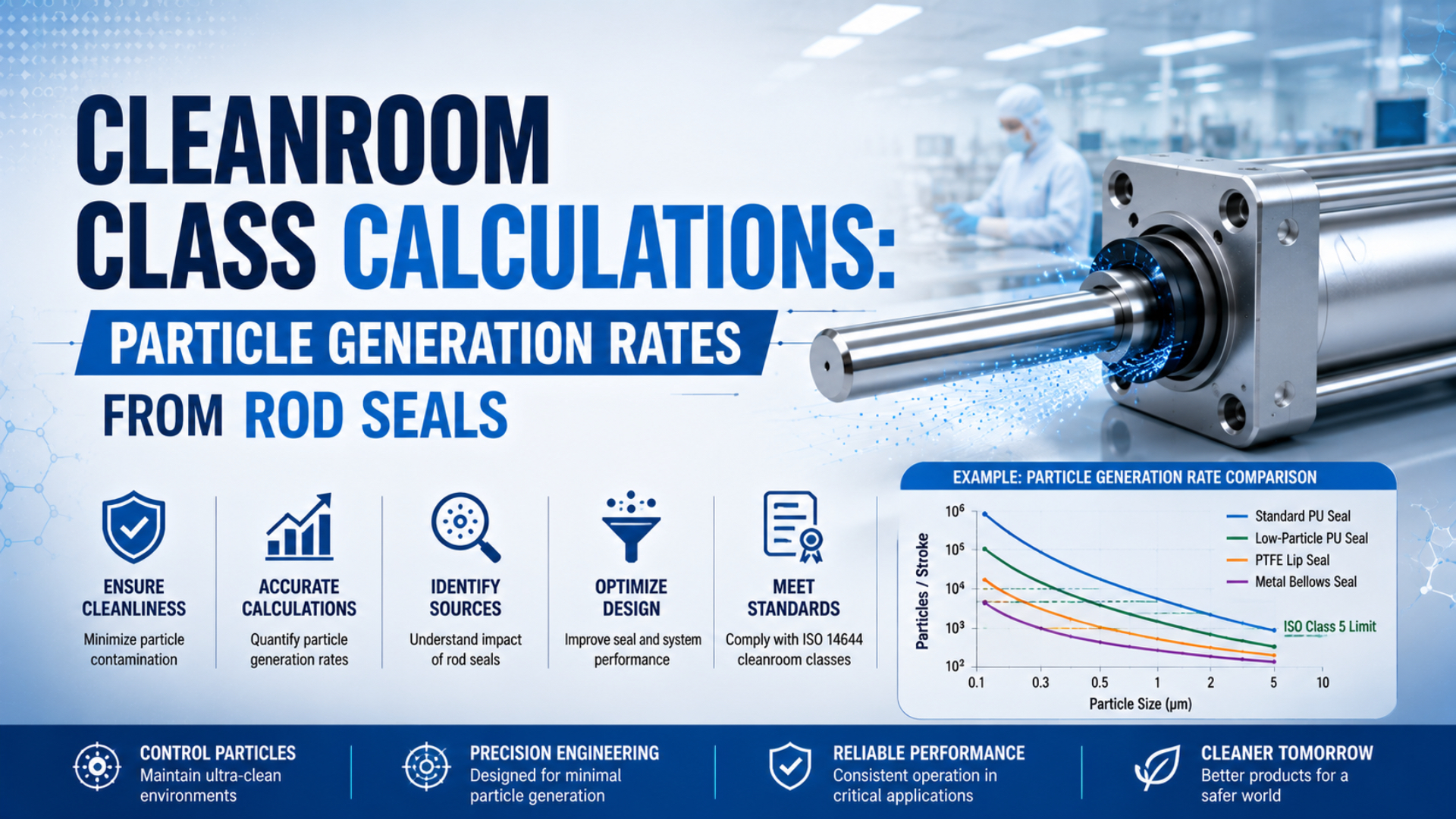 Cleanroom Class Calculations: Particle Generation Rates from Rod SealsMeasure rod-seal particle generation, subtract background counts, calculate particles per cycle, and compare results with the ISO Class 5 limit of 3,520 particles/m³.
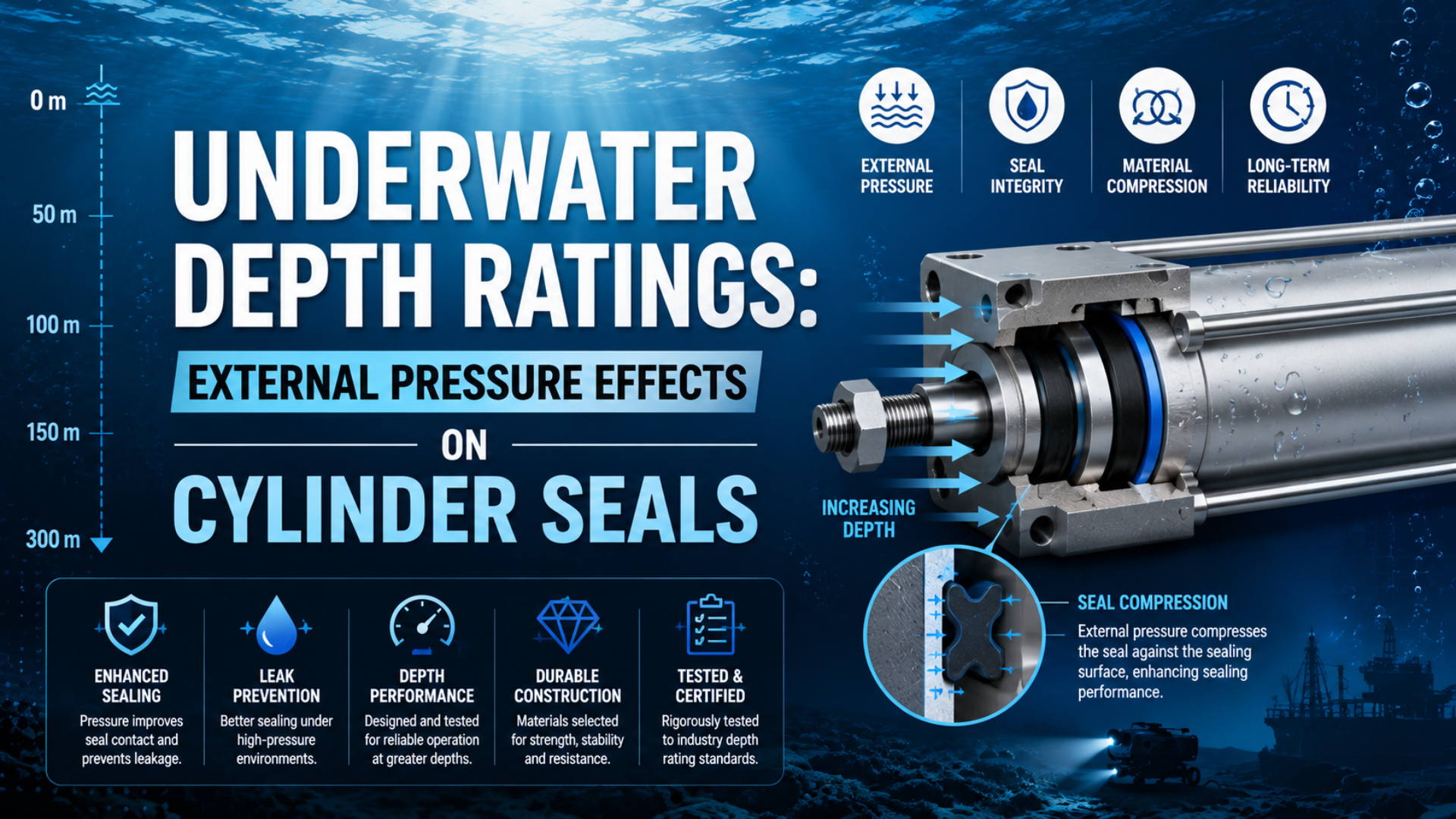 Underwater Depth Ratings: External Pressure Effects on Cylinder SealsLearn how external pressure changes underwater cylinder seals, structure, and force, with a verified 30 m example and a qualification checklist for buyers.
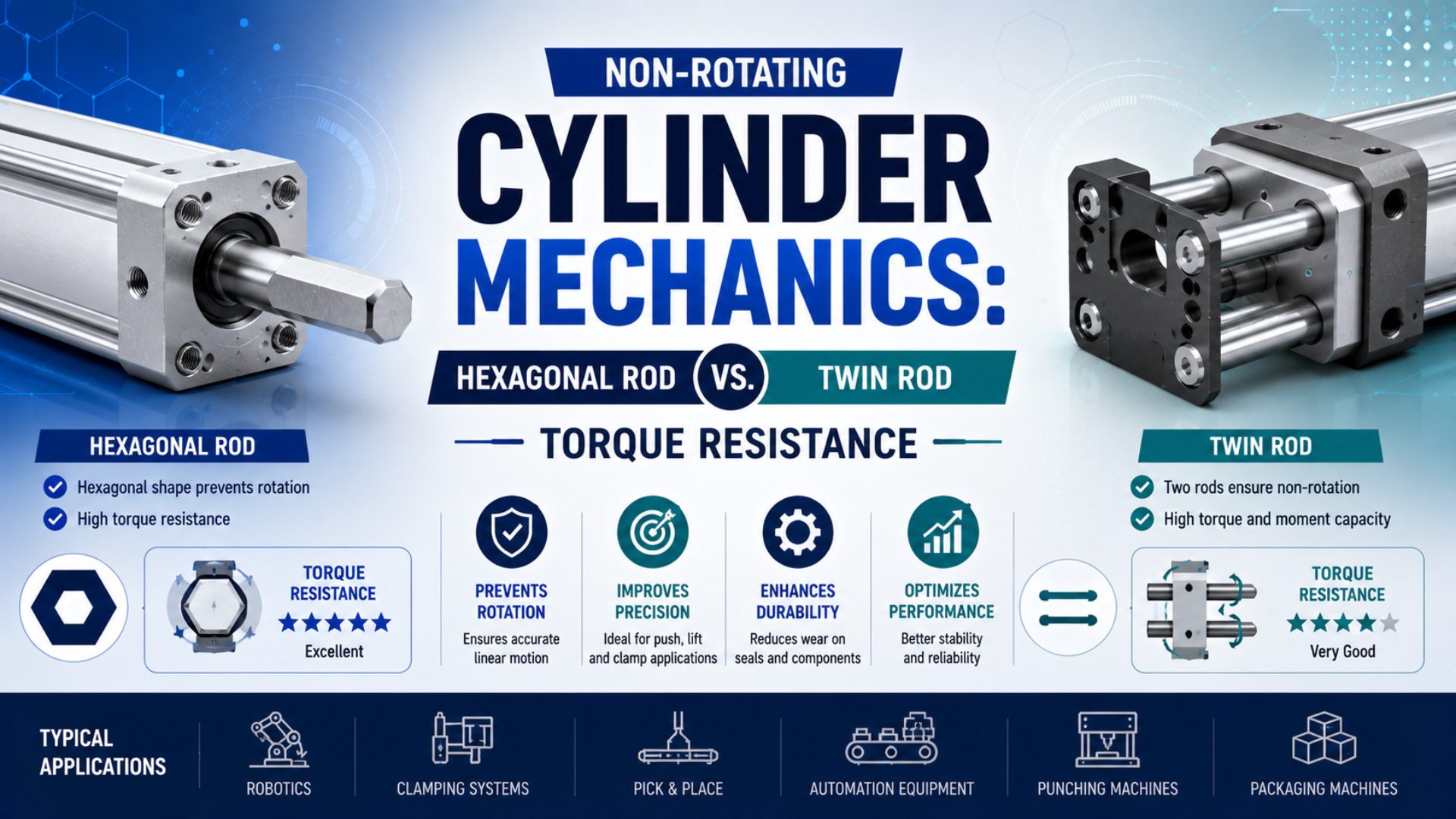 Non-Rotating Cylinder Mechanics: Hexagonal Rod vs. Twin Rod Torque ResistanceCompare hexagonal-rod and twin-rod mechanics using SMC's ±1.5° to ±0.1° examples, torque equations, wear limits, and validation steps.
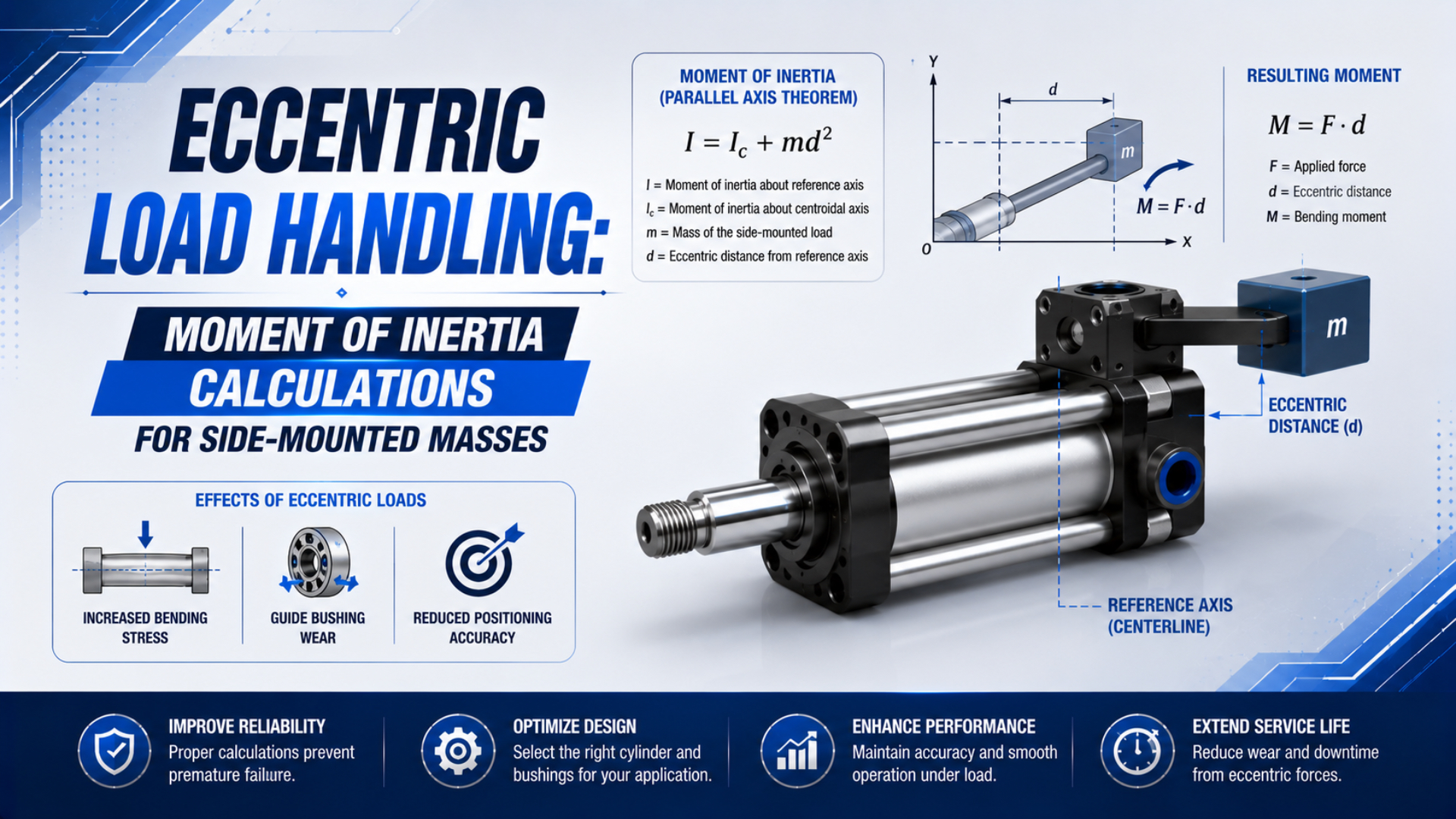 Eccentric Load Handling: Moment of Inertia Calculations for Side-Mounted MassesCalculate eccentric loads with signed force moments, linear inertia, and true rotational inertia, then verify Mx, My, and Mz limits for rodless cylinders.